What Factors Affect the Phase Shift Accuracy of Waveguide Phase Shifters? How to Minimize Errors?






2019-02-14 09:10:00
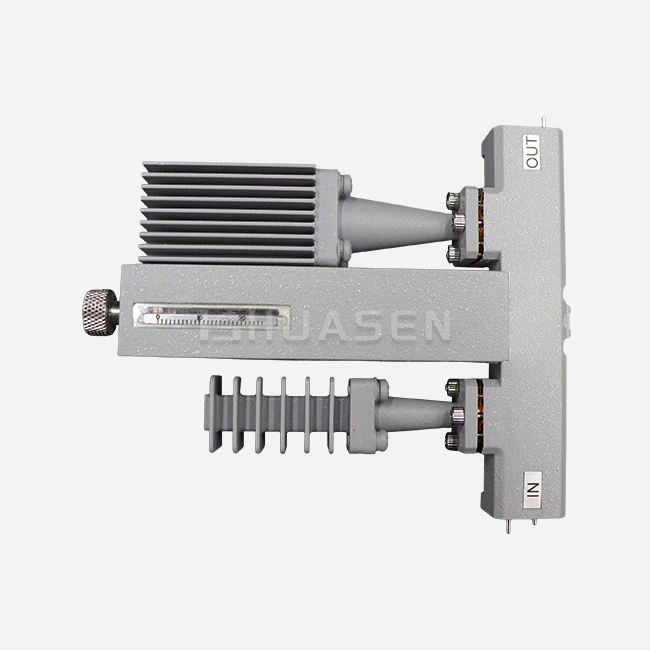
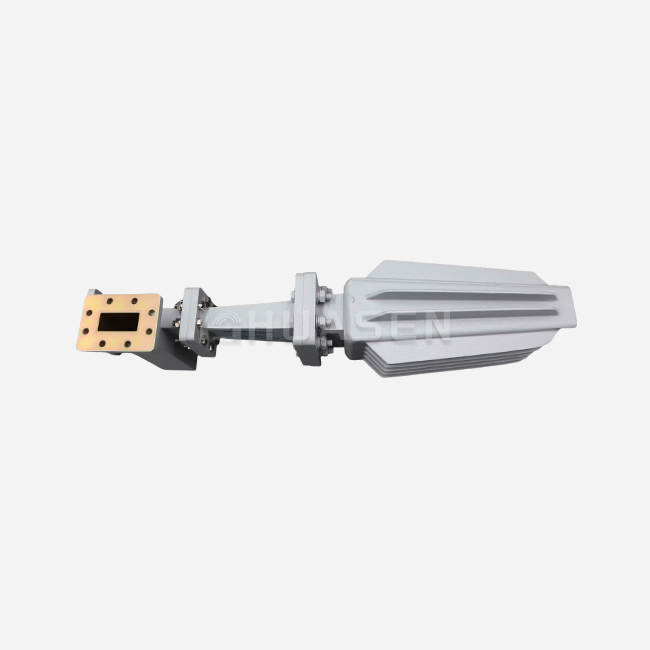
In today's RF and microwave systems, precision is very important. The waveguide phase shifter is a key part that affects signal quality in telecommunications, radar, and aerospace applications. Engineers who build high-performance systems need to know about the many elements that affect phase shift accuracy. The waveguide phase shifter's ability to give precise phase control has a direct effect on the system's dependability and performance metrics. This in-depth study looks at all the factors that affect accuracy and gives useful tips for reducing mistakes. It also makes sure that performance is at its best under tough operational settings throughout a wide range of frequency bands, from microwave to millimeter-wave applications.
Key Factors Influencing Phase Shift Accuracy
Temperature Stability and Thermal Effects
Temperature fluctuations represent one of the most significant challenges affecting waveguide phase shifter performance. As operating temperatures vary, material properties within the device undergo subtle changes that directly translate into phase deviation errors. The heat expansion of metal parts and dielectric materials causes changes in size that change how electromagnetic waves go through them. In real-world situations, such satellite and aircraft systems that have to work in very hot or very cold temperatures, thermally induced phase errors can build up and make the system less accurate. The waveguide phase shifter's coefficient of phase change per degree Celsius must be carefully characterized during design and testing phases. Engineers must use advanced thermal management methods, such as heat sinks that are precisely designed and environmental control systems, to keep performance consistent across the whole range of operating temperatures. Selecting materials with minimal thermal expansion coefficients and implementing active temperature compensation algorithms significantly reduces phase error accumulation in critical applications.
Manufacturing Tolerances and Material Quality
The fabrication precision of waveguide phase shifter components directly determines baseline accuracy specifications. Manufacturing tolerances in waveguide dimensions, dielectric material properties, and precision mechanical positioning mechanisms establish the foundation for system performance. Even microscopic deviations in waveguide cross-sectional dimensions can produce measurable phase shift variations due to the sensitivity of electromagnetic wave propagation to geometric parameters. The waveguide phase shifter requires stringent quality control measures, including precision CNC machining for tight tolerances and advanced plating techniques, ensuring superior conductivity. High-grade materials such as aluminum alloys and PTFE composites provide consistent electromagnetic properties essential for maintaining phase accuracy across production batches. Rigorous testing protocols at each production stage identify potential variations before components reach end-users. Implementing ISO9001 and RoHS certification standards ensures consistent material quality and manufacturing processes that minimize phase error contributions from dimensional and material property variations.
Frequency-Dependent Phase Characteristics
The relationship between operating frequency and phase shift accuracy reveals inherent limitations in waveguide phase shifter design. Different frequency bands exhibit varying phase response characteristics due to waveguide dispersion properties and component resonance effects. At lower frequencies within the microwave bands, certain error sources dominate, while higher millimeter-wave frequencies present alternative challenges related to manufacturing tolerances and material consistency. The waveguide phase shifter's phase shifting capability spanning 0° to 360° across frequency ranges from 2.60 GHz to 112 GHz requires careful consideration of frequency-dependent error mechanisms. Resonance phenomena at specific frequencies can cause unexpected phase variations if not properly accounted for during design. Engineers must characterize frequency response across the entire operating bandwidth and implement frequency-compensated designs that normalize phase accuracy across multiple octaves. Understanding group delay characteristics and phase linearity across operational bands enables optimization of waveguide phase shifter performance in multi-band systems serving satellite communication and advanced radar applications.

Minimizing Phase Shift Errors Through Design and Implementation
Precision Control and Calibration Strategies
Achieving minimal phase shift errors requires implementing sophisticated control architectures combined with comprehensive calibration methodologies. Modern waveguide phase shifter systems employ digital control mechanisms enabling fine-grained phase adjustment with sub-degree accuracy across the full 0° to 360° range. Implementing feedback-based control systems that continuously monitor and correct phase deviations represents an advanced approach to error minimization. The waveguide phase shifter benefits significantly from periodic recalibration procedures that account for temporal drift and environmental variations. High-speed electronic digital phase shifter modules provide automated phase adjustment capabilities, eliminating manual tuning errors common in earlier generations. Thermal compensation algorithms dynamically adjust phase settings based on real-time temperature measurements, effectively canceling temperature-induced errors. Laboratory validation against precision reference standards ensures calibration accuracy within system requirements. Integration of temperature sensors and environmental monitoring systems enables predictive error correction before deviations exceed acceptable thresholds, maintaining consistent performance throughout extended operational periods in aerospace and satellite applications.
System Integration and Environmental Control
The operational environment surrounding the waveguide phase shifter significantly influences achievable accuracy specifications. Environmental factors, including humidity, vibration, and electromagnetic interference, introduce additional error sources often overlooked during initial design phases. Proper mechanical mounting techniques minimize vibration-induced variations in waveguide dimensions and component alignment. The waveguide phase shifter achieves optimal performance when installed within environmentally controlled enclosures that stabilize temperature and humidity parameters. Electromagnetic shielding prevents external interference from affecting sensitive phase detection circuits used in feedback control systems. Careful cable routing and connector selection eliminate unnecessary phase variations from interconnection losses and impedance mismatches. System-level integration approaches incorporating multiple waveguide phase shifter units recognize potential error accumulation and implement cross-channel synchronization mechanisms. Testing under representative operational conditions, including thermal cycling, vibration stress, and electromagnetic interference exposure, validates performance margins and identifies potential failure modes before deployment in critical applications.
Advanced Materials and Thermal Management
Selecting appropriate materials and implementing advanced thermal management solutions directly reduces phase error magnitudes. Precision engineering of copper and aluminum constructions provides optimal thermal conductivity while maintaining electromagnetic performance requirements. The waveguide phase shifter's thermal performance directly correlates with achievable accuracy, necessitating designs prioritizing efficient heat dissipation from internal components. Advanced thermal interface materials between active elements and heat sinks minimize thermal gradients that cause localized phase variations. Passive thermal management through optimized mechanical design precedes active solutions, reducing system complexity and improving reliability. The waveguide phase shifter benefits from predictable thermal characteristics, enabling accurate compensation algorithms. Material selection considers not only electrical properties but also thermal stability coefficients and mechanical durability. Hybrid approaches combining multiple materials enable simultaneous optimization of electrical performance, thermal management, and mechanical rigidity essential for maintaining phase accuracy in demanding aerospace and defense environments.
Performance Validation and Long-Term Reliability
Testing Protocols and Quality Assurance
Comprehensive testing methodologies establish confidence in waveguide phase shifter accuracy specifications throughout operational lifetime. Phase response measurement across frequency bands and temperature ranges validates actual performance against design targets. At every step of the production process, the waveguide phase shifter goes through strict quality checks to find any possible sources of accuracy loss before it is sent to customers. Shock and vibration testing mimics the demands of transit and operation, proving that the machine is strong enough to handle them. Thermal cycling between very high and very low temperatures speeds up the aging process, which makes it possible to forecast how well something will work over time. The waveguide phase shifter's warranty coverage typically spans one year, supported by responsive technical support addressing field issues. Traceability in documentation enables rapid identification of manufacturing batches demonstrating anomalous performance characteristics. Statistical analysis of test data reveals systematic variations requiring design adjustments or process improvements. Compatibility verification with various RF system architectures confirms seamless integration and prevents unexpected phase errors from impedance mismatches or connector issues.
Long-Term Performance Stability
Extended operational periods reveal degradation mechanisms not apparent during initial testing phases. The waveguide phase shifter maintains performance specifications when properly installed and operated within design parameters. Time-dependent effects, including connector oxidation and mechanical relaxation, can gradually shift baseline phase characteristics. Preventive maintenance schedules, including periodic calibration checks, extend system reliability and maintain accuracy throughout extended deployments. The waveguide phase shifter's design, incorporating high-grade materials and robust manufacturing processes, minimizes aging effects commonly observed in lower-quality alternatives. Proper storage conditions and protective packaging during shipment preserve component characteristics from manufacturing until installation. Documentation of historical phase measurements enables trend analysis, predicting maintenance requirements before accuracy degradation becomes problematic.
Conclusion
To get the best accuracy from a waveguide phase shifter, you need to know a lot about technical things like how to manage heat, how to make things accurately, and how to put systems together. Huasen Microwave Technology Co., Ltd. specializes in delivering high-performance waveguide components engineered for demanding applications across telecommunications, radar, aerospace, and defense sectors. Using modern manufacturing methods, precision control structures, and strict quality assurance procedures can help reduce phase shift mistakes. The freedom to customize solutions, high power, and precise control ensure that the system works reliably and meets industry standards for important applications that need very high levels of accuracy and reliability.
FAQ
1. What is the typical phase accuracy specification for waveguide phase shifters?
Modern waveguide phase shifter designs typically achieve phase accuracy within ±1° to ±3°, depending on frequency band and temperature range. High-performance variants targeting aerospace applications achieve superior accuracy specifications through precision engineering and temperature compensation. The waveguide phase shifter's accuracy depends substantially on environmental stability and implementation methodology. Huasen Microwave offers customizable solutions achieving accuracy specifications tailored to specific project requirements across frequency ranges from microwave to millimeter-wave bands.
2. How does temperature affect waveguide phase shifter performance?
Temperature variations directly alter material properties and component dimensions, causing phase deviation proportional to thermal coefficient values. The waveguide phase shifter exhibits characteristic temperature drift rates requiring active compensation in temperature-sensitive applications. Environmental control systems and thermal management engineering minimize temperature-induced errors. Huasen's waveguide phase shifters incorporate thermal optimization design,s maintaining performance across extended temperature ranges typical in satellite and aerospace systems.
3. Can waveguide phase shifters be recalibrated in field applications?
Many waveguide phase shifter configurations support field recalibration procedures using portable calibration equipment and reference standards. Digital control interfaces enable straightforward recalibration without component replacement. The waveguide phase shifter's modular design facilitates quick installation and calibration in existing system architectures. Huasen provides comprehensive technical documentation and support, enabling efficient field maintenance and recalibration procedures.
4. What frequency ranges do modern waveguide phase shifters support?
Contemporary waveguide phase shifter designs cover frequency ranges from 2.60 GHz to 112 GHz, encompassing critical bands including X-band, Ku-band, and Ka-band, essential for telecommunications and radar applications. The waveguide phase shifter technology supports phase adjustment capabilities across the complete 0° to 360° range. Huasen's product portfolio includes variable, fixed, and high-power configurations optimized for specific frequency bands and application requirements.
Waveguide Phase Shifter Solutions | Huasen Microwave
Huasen Microwave Technology Co., Ltd. stands as a leading waveguide phase shifter manufacturer and supplier, delivering innovative RF and microwave solutions since its establishment in 1993. With decades of technological expertise, we provide high-performance waveguide phase shifters featuring precise phase control, minimal insertion loss, and exceptional reliability across demanding telecommunications, radar, aerospace, and defense applications. Our comprehensive product range includes fixed, variable, and high-power configurations spanning 2.60 GHz to 112 GHz, backed by state-of-the-art manufacturing processes and rigorous quality assurance. Whether you require customizable solutions for satellite communication systems, military radar arrays, or 5G network infrastructure, our waveguide phase shifter offerings deliver superior performance, meeting the most stringent industry requirements. Discover how Huasen serves as your trusted waveguide phase shifter supplier and manufacturer, providing solutions engineered for mission-critical applications. Contact our technical team today at sales@huasenmicrowave.com to discuss your specific requirements and explore how our waveguide phase shifter solutions can optimize your RF systems.
References
1. Marcuvitz, N. (1986). Waveguide Handbook. Dover Publications, Technical Reference on Waveguide Theory and Component Design.
2. Collin, R. E. (2001). Foundations for Microwave Engineering. IEEE Press, Comprehensive Coverage of Microwave Component Theory and Applications.
3. Pozar, D. M. (2004). Microwave Engineering. John Wiley & Sons, Advanced Topics in Phase Shifter Design and Implementation.
4. Montgomery, C. G., Dicke, R. H., & Purcell, E. M. (1948). Principles of Microwave Circuits. Dover Publications, Foundational Work on Waveguide Phase Control Systems.
5. Ishii, T. K. (1995). Handbook of Microwave Technology. Academic Press, Practical Applications of Waveguide Phase Shifters in Commercial Systems.
6. Bhartia, P., Bahl, I. J., & Garg, R. (2003). Millimeter-Wave Engineering and Applications. John Wiley & Sons, High-Frequency Phase Shifter Characteristics and Performance Optimization.
Send Inquiry