Waveguide Termination in Radar Transmit Systems






2026-06-05 17:05:28
In radar transmit systems, it is essential to keep the purity of the signal and keep sensitive parts safe from damaging reflections. A waveguide termination is an important safety measure because it absorbs microwave energy that would otherwise be reflected back into the transmission chain, which could damage expensive amplifiers or change the accuracy of measurements. This passive part basically works as a matched dummy load that turns electromagnetic energy into heat. This keeps the Voltage Standing Wave Ratio (VSWR) close to the ideal 1.00:1 value. If you don't properly terminate, there are terrible things that could happen with radar systems, like magnetrons failing or signal integrity breaking down.
Understanding Waveguide Termination in Radar Systems
What Is Waveguide Termination and Why Does It Matter?
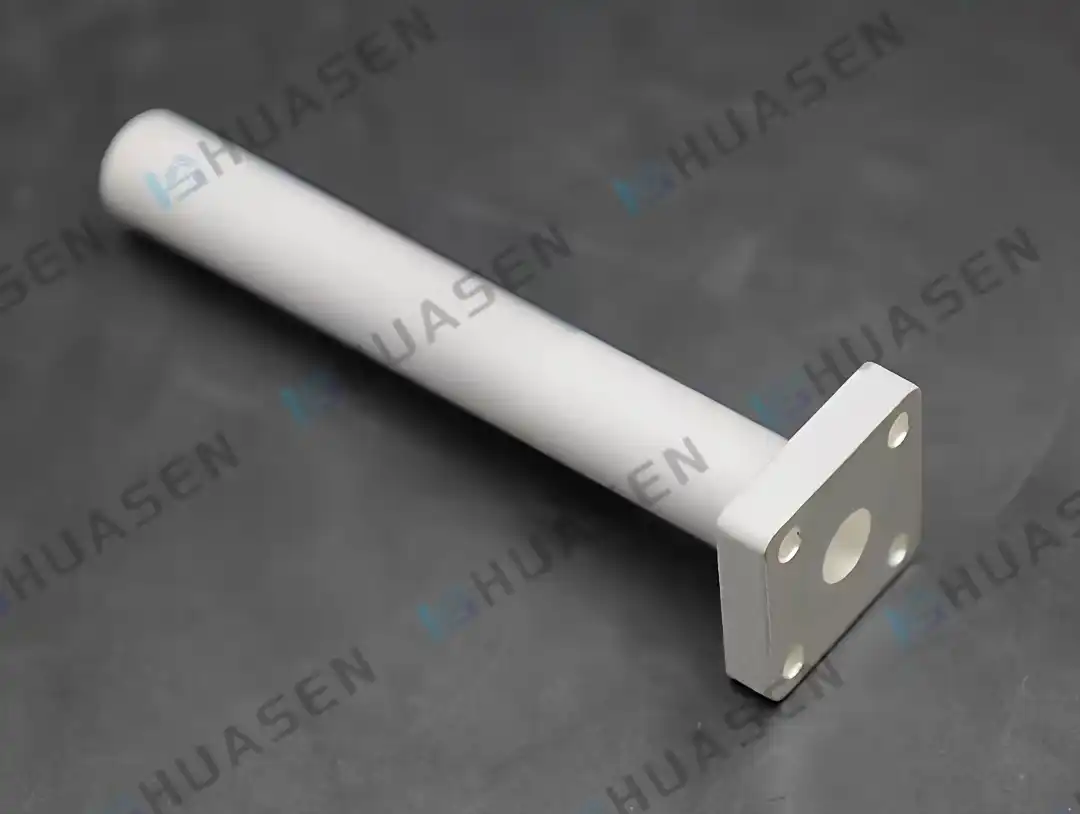
Waveguide terminations are designed to take in electromagnetic waves that are moving through waveguide structures and release the energy as heat with little reflection. Waveguide dummy loads are different from simple resistive loads used in coaxial systems because they have to deal with the unique propagation properties of waveguide shapes that are either rectangular or circular. In radar transmit systems, these parts keep high-power sources like solid-state power amplifiers and traveling wave tube amplifiers safe from reflected energy that could damage the hardware permanently or cause arcing.
Matching the resistance is the main role. When radar sensors aren't lined up right, there is interference from the weather, or the load changes, and mirrored energy moves backward. This energy is stopped from going back into the emitter chain by a pinpoint waveguide termination. Engineers can check the performance of a transmitter without sending out signals that could mess up operating frequencies or make it less stealthy in defense applications while the system is being calibrated or performing non-radiating tests.
Operating Principles and Energy Absorption Mechanisms
Microwave energy is taken in by resistant materials that are built into the waveguide frame. Through dielectric losses, electromagnetic fields are changed into heat by carbon-loaded polymers, ceramic filters, or tapered resistive cards. The taper design is especially smart because it smoothly changes the characteristic impedance of the waveguide to that of the absorber, reducing breaks that could cause reflections.
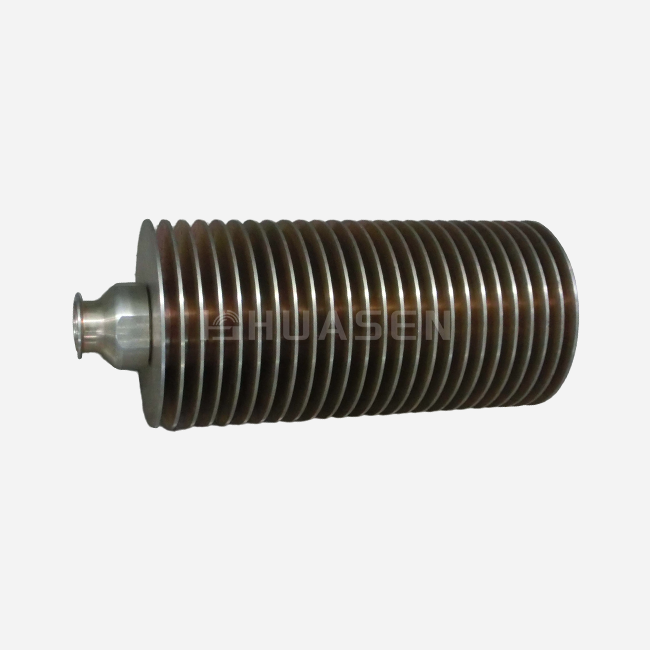
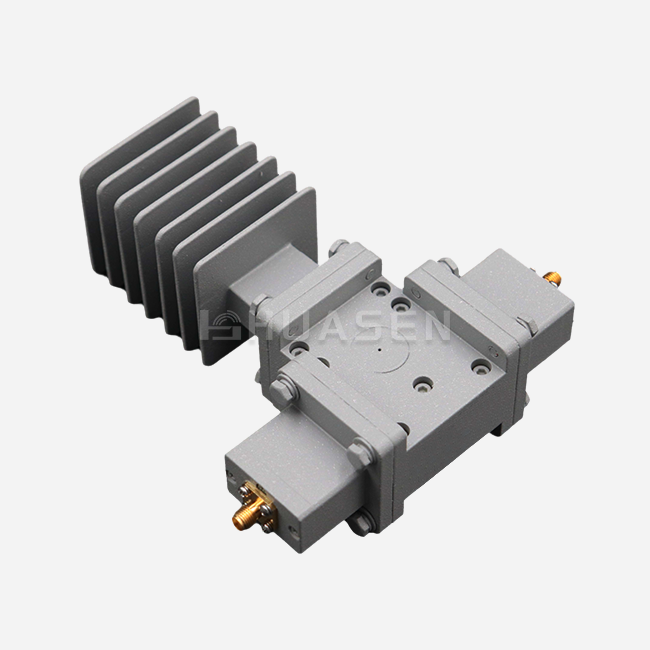
When using a lot of power, thermal control is very important. Finned heatsinks in air-cooled waveguide terminations allow natural airflow to work, and they can handle power levels up to several hundred watts. Water-cooled versions have cooling ducts inside that move heat away from the absorbing element, allowing them to keep working at kilowatt levels. The choice of cooling methods has a direct effect on how hard it is to integrate the system and how much it costs to run.
Common Termination Types and Material Comparisons
Different uses for radar call for different waveguide termination designs. When you match loads, you get broadband performance across whole waveguide bands. For example, WR90 covers 8.2 to 12.4 GHz for X-band radar. Absorbing loads try to get rid of as much power as possible, which means they often give up some bandwidth to get more heat capacity. Even though sliding waveguide terminations aren't used as much in real systems, they're useful in calibration labs because they let phase adjustments be made to leftover reflections for accurate vector network analyzer corrections.
When choosing materials, electrical function and mechanical reliability must be balanced. Brass housings are standard for industrial radar systems because they are good at transferring heat and can be machined easily. Ceramic absorbers can handle higher peak temperatures, which is important for burst radar uses that have sudden power spikes. Carbon-loaded composites have loss traits that can be changed, which lets makers make the best absorption designs for different frequency ranges. Each material has pros and cons. For example, metal is heavier, ceramics are more expensive, and mixtures need to be carefully cured to be consistent.
Frequency Range Considerations for Radar Applications
Radar systems use a range of frequencies, from L-band marine radar (1-2 GHz) to millimeter-wave car radar over 76 GHz. The choice of waveguide termination must match these operating bands. The most popular radar frequencies for ground-based air surveillance and fire control systems are X-band (8-12 GHz) and Ku-band (12-18 GHz). This means that WR90 and WR62 waveguide terminations are in great demand.
As radar technology moves toward higher frequencies to get better clarity, there are new problems that need to be solved in waveguide termination design. Since waveguide cross-sections shrink proportionally with millimeter-wave bands, tighter limits on dimensions are needed. At Ka-band (26.5-40 GHz) and higher, surface roughness is a key factor that affects return loss. To make sure that providers can keep up with precision machining, procurement teams must use calibrated vector network analyzers to do full-band VSWR sweeps and check performance across the required range.
Performance Considerations and Common Challenges
Critical Performance Metrics That Define Quality
Evaluation of a waveguide termination is based on three main factors: return loss, power handling capacity, and temperature stability. Return loss measures how well the waveguide termination takes incoming energy. Values above 20 dB across the working band show less than 1% reflected power, which keeps sensitive sources safe. Power handling specs need to take into account both peak pulse power and average continuous wave power. This is especially important for radar emitters that work in burst modes with high duty cycles.
Thermal stability makes sure that the electrical performance stays the same even as the waveguide termination heats up during use. When there isn't enough thermal contact between the absorbing element and the heatsink, hot spots show up on thermal imaging, which means the part is about to fail. VSWR drift is affected by the temperature coefficients of the absorber material. Premium waveguide terminations keep their return loss standards across their rated temperature range, which is usually -40°C to +85°C for military uses or 0°C to +50°C for commercial systems.
Distinguishing Terminations from Loads and Absorbers
Even though these words seem to mean the same thing, there are small differences that matter in purchase requirements. A dummy load is any gadget that absorbs RF power and doesn't send it out. This includes cable resistors. Waveguide termination refers to devices that are built into waveguides. It's more important for a matched load to match resistance than to handle raw power. Absorbing load puts power loss first, and sometimes a little higher VSWR is okay for kilowatt-level capability.
Specification mistakes can be avoided by understanding these differences. When checking high-power transmitters, radar system operators need absorbing loads with water cooling and coolant lines that have been tested for pressure. For lab testing sets to work, the waveguide terminations must be matched to have low VSWR and stable phase characteristics. When these needs are mixed up, either too many expensive high-power units are bought for low-power uses, or even worse, parts that aren't specified properly fail badly during testing.
Addressing Overheating and Impedance Mismatch Issues
The most common cause of waveguide termination failure is still overheating. When heat sinks are too small, airflow gets stopped, or cooling flow rates are too low, absorber temperatures rise above the limits of the material. This destroys the VSWR permanently. To make sure the thermal design gaps are correct, engineers should use thermal tracking tools like thermocouples built into the waveguide termination housing or infrared cameras during testing.
Problems with the flange contact or physical tolerance stack-up can cause impedance mismatches. To keep air gaps from letting RF energy out and possibly starting an arc in high-power systems, flange sides must meet the flatness requirements of MIL-DTL-3922. During fitting, pressure-sensitive paper or blueing powder can help make sure that the flanges touch evenly. Tolerances are important because not tightening enough leaves holes and tightening too much bends flanges, both of which hurt electrical performance.
Installation Best Practices and Maintenance Protocols
Aligning the waveguides is the first step in a proper fitting. When the waveguide termination and transmission line are not lined up correctly, it causes mechanical stress and lowers return loss. Alignment pins or dowels make sure that the position is always the same. Gaskets that are compatible with the working environment—silicone for business use and fluorosilicone for military use—seal the environment without adding too much entry loss.
VSWR testing should be a regular part of maintenance plans, especially after system changes or being exposed to the environment, using a waveguide dummy load. Maritime radar systems need to clean the flange faces of rust caused by salt spray with isopropyl alcohol and reapply anti-corrosion chemicals. Checking the quality of the coolant is important for water-cooled waveguide terminations because dissolved minerals cause scaling inside the cooling channels, which lowers the efficiency of heat transfer and forces early replacement.
Procurement Guide: How to Choose and Source Waveguide Termination?
Specification Development Based on System Requirements
For procurement to work well, there must be clear technical specs that are based on radar system factors. Waveguide size is based on the frequency range. For example, WR187 waveguide terminations are needed for a C-band radar (4-8 GHz), but WR90 waveguide terminations are needed for an X-band system. The transmitter's peak power, pulse width, and duty cycle must be taken into account when figuring out the power level. For a radar to send out 10 kW of power at 10% duty cycle, the waveguide terminations need to be rated for 1 kW of average power and have enough peak handling buffer.
Conditions in the environment determine other needs. MIL-STD-167 says that shipboard radar systems have to deal with salt fog, temperature changes from -20°C to +50°C, and shaking. Waveguide terminations need coats that don't rust, like nickel plating or chromate conversion, and mechanical systems that keep the shock absorber from coming off when the load is high. Airborne radar needs to be built as light as possible, which forces people to choose metal housings even though they aren't as good at keeping heat in.
Evaluating Suppliers and Comparing Product Portfolios
There are well-known companies with unique strengths in the global waveguide component market. Pasternack has a lot of products and short wait times, which makes it good for prototyping and small sales. Bird Technologies makes high-power waveguide dummy loads for television and telecommunications. They have decades of experience managing heat that can be used in radar systems. Flann Microwave specializes in making unique millimeter-wave waveguide terminations and precise calibration parts for research centers.
Delivery times have a big effect on project plans when comparing suppliers. Items that are in stock usually ship within days, but wait times for custom waveguide terminations that need specific frequency bands or power rates can be 8 to 12 weeks. Availability by region changes shipping costs and import duties. For example, European sellers can serve continental customers more quickly, while North American buyers can save money by buying from suppliers in their own country. Certification standards, especially MIL-STD compliance for military contracts, limit the suppliers to those who keep their manufacturing processes up to par.
Understanding Pricing Structures and Cost Drivers
The price of a waveguide termination depends on how much the materials cost, how hard it is to make, and how many are ordered. The price for standard X-band air-cooled waveguide terminations varies from $200 to $800 based on power output and VSWR requirements. The price of water-cooled kilowatt-class units goes up to $2,000 to $5,000 because of the cost of making tubes for the coolant and the need to test them under pressure. Due to tight standards and special absorption materials, millimeter-wave waveguide terminations cost a lot—$1,500 to $4,000.
After 10 units, volume prices start to make sense, with 20–30% off orders of 50 units or more. System integrators that are putting together more than one radar system should talk to suppliers about framework deals that lock in prices for annual volumes while still allowing for call-off deliveries. Customization costs are very different. For example, changing a current design to work with a slightly different frequency band could add 15% to the unit price, while creating a new waveguide termination for a different waveguide size could cost $10,000 to $25,000.
Addressing Lead Times and Global Shipping Considerations
Along with the time it takes to make something, lead times also include the time it takes to find parts and make sure they are of good quality. Suppliers who keep standard absorber materials and waveguide blanks in stock keep production processes between two and four weeks. Custom projects that need unique ceramic or finishes can take 10 to 14 weeks. Rush services usually cost 30–50% more and cut plans in half, which is helpful when dates for deploying radar systems are coming up.
International shipping adds more complications than just the cost of freight. High-power waveguide terminations, such as a waveguide dummy load that uses rare-earth materials, might need export licenses, which could add two to four weeks to the delivery time. Duty rates are based on how goods are classified under Harmonized System numbers. For example, waveguide components usually fall under HS 8529.10, but rates can change depending on the country where the goods are going. Precision flanges need to be protected from damage by pressure during packaging. Foam-lined cases with flange covers stop nicks that hurt electrical performance.
Conclusion
Waveguide terminations are small parts that have a big effect on the performance and dependability of a radar transmit system. When choosing the right waveguide terminations for a radar application, you have to balance electrical requirements, thermal capacity, weather resistance, and cost considerations. Procurement teams can make smart choices when they know the differences between waveguide termination types, recognize key performance indicators, and find their way around the provider landscape. As radar technology moves toward higher frequencies and higher power densities, waveguide termination designs change to incorporate new materials and smart monitoring features. This makes sure that these basic parts continue to protect valuable assets while also allowing for the development of next-generation system features.
FAQ
1. What materials provide the best performance in high-power radar terminations?
Carbon-loaded ceramic absorbers work best for high-power radar uses because they are very stable at high temperatures and have the same dielectric loss properties across a wide range of temperatures. When the power density is very high, beryllium oxide ceramics are the best at transferring heat, and silicon carbide absorbers can handle the highest peak temperatures during rapid operation.
2. How do I determine the correct power rating for my radar system's termination?
To find the average power, increase the top transmitter power by the duty cycle and then add a 50% safety margin to account for changes in operation and wear and tear. Peak power handling is also important—the waveguide termination must be able to handle high amounts of power at any given time without arcing or damaging the absorber. For pulsed radar devices to work, the waveguide terminations need to be rated for both factors.
3. Can waveguide terminations be customized for non-standard frequency ranges?
Custom waveguide terminations can handle special frequency assignments, changed waveguide dimensions, or different flange setups. Engineering costs that don't happen again usually run from $8,000 to $20,000, based on how complicated the job is. When ordering more than 25 pieces, the price per unit gets closer to standard goods. For fully custom designs that need new tools and proof tests, lead times can go up to 10 to 14 weeks.
Partner with Huasen Microwave for Premium Waveguide Termination Solutions
Choosing the right waveguide termination provider affects not only the performance of individual parts but also the long-term dependability of your whole radar system. Huasen Microwave has been making high-frequency microwave and millimeter-wave parts for over 30 years, and they work with system designers in the defense, aircraft, telecommunications, and radar industries around the world. Our waveguide termination portfolio includes standard bands from L to Ka. We can also do custom building for frequency ranges and power needs that off-the-shelf goods can't meet.
We have strict quality control procedures that include full-band VSWR sweeps, thermal imaging under rated power, and measurement verification to MIL-STD standards. These make sure that every waveguide termination meets the performance standards that have been written down before it is shipped. Whether you need water-cooled high-power units for testing transmitters or air-cooled X-band waveguide terminations for ground radar, our technical team can help you with specific suggestions based on test results. Get in touch with our engineering sales team at sales@huasenmicrowave.com to talk about your radar system needs with a reputable waveguide termination maker that will deliver high-quality parts that will protect your investment.
References
1. Pozar, David M. Microwave Engineering, 4th Edition. Hoboken: John Wiley & Sons, 2011.
2. Skolnik, Merrill I. Radar Handbook, 3rd Edition. New York: McGraw-Hill Education, 2008.
3. Saad, Theodore S. Microwave Engineers' Handbook, Volume 1. Dedham: Artech House, 1971.
4. Montgomery, Carol G., Robert H. Dicke, and Edward M. Purcell. Principles of Microwave Circuits. London: Peter Peregrinus Ltd., 1987.
5. Matthaei, George L., Leo Young, and E.M.T. Jones. Microwave Filters, Impedance-Matching Networks, and Coupling Structures. Norwood: Artech House, 1980.
6. Collin, Robert E. Foundations for Microwave Engineering, 2nd Edition. New York: IEEE Press, 2001.
Send Inquiry