How to Choose Parabolic Antenna for Outdoor Communication






2026-06-05 17:05:32
To pick the best parabolic dish antenna for outdoor transmission, you need to think about the technical specs, how long it will last in different environments, and your unique needs. For satellite lines, microwave backhaul, or point-to-point wireless systems, a well-chosen parabolic antenna guarantees maximum gain, little disturbance, and long-term dependability. It is suggested that you check the frequency compatibility, polarisation type, mechanical robustness, and supplier credentials to make sure they are right for your deployment scenario, whether it's for 5G backhaul, maritime communications, or radar applications. You should also make sure they meet the relevant industry standards to make sure they work well in harsh outdoor conditions.
Understanding Parabolic Antennas and Their Role in Outdoor Communication
Parabolic dish antennas are now an important part of all outdoor transmission systems. Their special bent reflector shape focuses electromagnetic waves on a single point, making it possible for signals to travel over long distances and with very high directional gain. Side-lobe interference is greatly reduced by this focused beam method, which makes these antennas perfect for mission-critical uses.
How Do Parabolic Reflectors Achieve High Directional Gain?
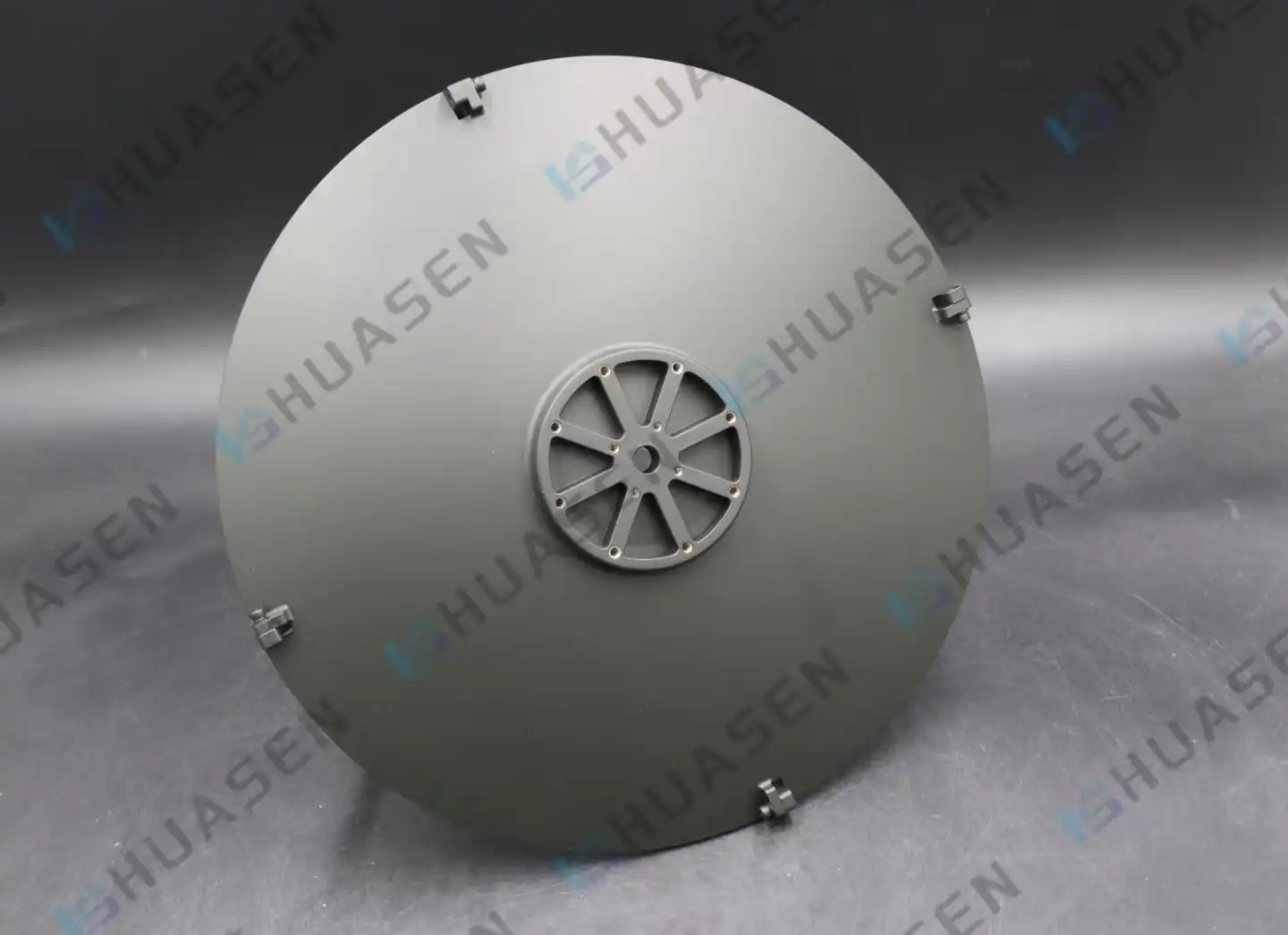
The parabolic mirror works with a basic but strong geometry idea. When radio waves hit the bent surface, they bounce back toward the feed horn, which is in the centre. During transmission, this concentration changes circular wavefronts into collimated plane waves, which often results in gains of more than 30 dBi. For industrial-grade models, the opening efficiency is usually between 55% and 70%. It depends on how precise the surface is and how the feed is designed. More aperture sizes mean more gain, which directly means longer transmission lengths and better signal-to-noise ratios in places where propagation is hard.
Key Benefits for Satellite and Point-to-Point Links
Outdoor communication methods need to be reliable even when the weather changes. Parabolic dish antennas are great for uplinking and downlinking satellite signals over C-band, Ku-band, and Ka-band frequencies. They can support VSAT networks and provide internet access for rural areas. Their narrow beamwidth reduces interference from neighbouring channels, which is very helpful in urban locations where the spectrum is limited. Microwave point-to-point backhaul systems benefit from the antenna's ability to keep lines stable over more than 50 kilometres, even in areas with a lot of interference. The high front-to-back ratio—often more than 60 dB—makes sure that unwanted signals from the back are blocked, which keeps the link quality high.
Comparing Parabolic Antennas with Alternative Designs
A Yagi antenna has a modest gain and is less expensive, but it can't match the focused beam accuracy of a parabolic antenna for long-distance use. Panel antennas can pick up more signals, but they lose some of their directed gain. This makes them less useful for radar systems or satellite earth stations. When maximum gain, minimum beamwidth, and better interference avoidance are absolute musts, the parabolic shape is still the best choice. Knowing about these trade-offs helps buying teams choose antennas that will help them reach their business goals.
Criteria for Choosing the Right Parabolic Antenna
To choose the right parabolic antenna, you have to look at a lot of scientific and environmental aspects. We need to think about how each element affects the general performance of the system and how long it will last.
Evaluating Antenna Gain and Beamwidth Requirements
The actual radiated power and receiving sensitivity are both controlled by the antenna gain. Applications that need lines longer than 30 kilometres usually need gains higher than 35 dBi, which means that the reflectors need to be bigger. Beamwidth goes down as gain goes up, so antennas with higher gains have smaller beams that need to be carefully aligned when they are installed. When you figure out the link budget, you should include the free-space path loss, the air attenuation, and the equipment noise numbers. We suggest setting gain gaps that are at least 10 dB higher than the theoretical minimums to account for changes in yearly weather and parts that are getting old.
Frequency Compatibility and Polarisation Options
The operating frequency bands decide how accurate the mirror surface is. For millimetre-wave systems working above 30 GHz, surface RMS mistakes must be less than λ/16 in order to keep the gain from going down, which is particularly critical for a parabolic antenna. Through orthogonal polarisations, dual-polarised setups make it possible to recover frequencies, which doubles the spectral efficiency of backhaul networks. For MIMO and XPIC to work, cross-polarisation detection numbers must be higher than 30 dB. Make sure that the materials used for the feed horn and radome keep the low insertion loss over the whole bandwidth that is being used, especially for wideband uses that use several gigahertz.
Assessing Environmental Durability and Mechanical Design
When installed outside, they have to deal with wind loads, ice buildup, UV light, and changes in temperature. Industrial antennas are made of materials that don't rust, like spun metal that has been powder-coated or fibreglass radomes that are rated for IP67 water protection. Wind survival ratings should be based on the conditions at the spot. For example, coastal towers may need survival rates above 200 km/h. The attachment hardware has to be able to handle tower vibrations without causing an alignment shift. We've seen that antennas that meet the MIL-STD-810 environmental testing standards are more reliable in the field, which means they need less upkeep and last longer.
Supplier Reliability and Certification Standards
Decisions about procurement aren't just based on scientific datasheets. Track records with suppliers, quality management certifications like ISO 9001, and compliance with ETSI or FCC rules are all signs of mature manufacturing. Ask for test records that confirm the performance of the VSWR, radiation patterns measured in echo-free rooms, and salt spray test findings. Reliable sellers are different from transactional vendors because they have clear wait times, full warranty terms, and quick technical support. We give more weight to partners who can help with planning, offer sample evaluation programs, and provide post-installation testing services.
Comparing Popular Parabolic Antennas and Solutions on the Market
There are many different parabolic antenna options on the global market that can be used for different communication needs. Knowing what makes a product different helps you cut down your choices.
Performance Characteristics of Leading Models
Antennas from well-known brands come in sizes ranging from 0.6 metres to 4.5 metres and cover frequency bands from 2 GHz to 86 GHz. High-performance types have radomes built in that protect the feed sections from environmental contamination and lower wind loads. Newer models have mounting bolts that don't need to be tightened with tools and feed horns that are already lined, which makes installation easier. Some companies offer low-noise block downconverters that are built in for satellite uses. This makes wiring easier and lowers system losses. Usually, gain specs run from 23 dBi for small dishes to over 50 dBi for big earth station antennas.
Mapping Antenna Types to Application Needs
For cellular backhaul, Class 3 or Class 4 ETSI-protected antennas work best because they block sidelobes below -28 dB, which stops interference in areas with a lot of towers. Maritime communication systems need radomes that are stable against UV light and bases that don't vibrate too much, so they can handle steady movement and salt air. Radar sites need antennas with pedestals that can rotate and provide precise direction control. For accurate tracking, these antennas often have monopulse feed systems built in. For point-to-point links in rural places with little action on the adjacent channels, groups on a tight budget can use standard unshielded dishes.
Evaluating Supplier Services and Certification Compliance
Suppliers you can trust will give you a lot of detailed information, like mechanical models, mounting templates, and integration guides for a parabolic reflector antenna. Antenna types that are approved for RoHS compliance are good for the environment, and those that meet military standards are good for defence uses. Three- to five-year warranties show that the company that made the product is confident in its durability. We appreciate it when providers offer field help during the commissioning steps. This is because good initial alignment has a huge effect on long-term performance. Infrastructure investments are protected against becoming obsolete by easy access to new parts and update paths for feed components.
Step-by-Step Guide to Selecting and Installing Your Parabolic Antenna
An organised method for choosing and setting up parabolic antennas reduces risks and improves performance.
Conducting Environment and Signal Requirement Analysis
First, use terrain files and radio planning tools to describe the path of the signal. Find possible obstacles, Fresnel zone gaps, and sources of multipath reflection. Figure out how available the link needs to be—carrier-grade services usually need 99.99% uptime, which means you need to do a fade margin study. Use spectrum detectors to find out how much interference is already present across the frequency bands that are being used. Write down the load rates for the mounting structure, because the antenna wind surface area has a direct effect on the tower stress estimates. The size and strength of the antenna are based on these experimental tests.
Choosing Appropriate Diameter and Feed Configuration
Match the width of the reflector to the gain needs that you found in the link budget estimates. Bigger dishes give you more gain, but they also make installation more difficult and subject to wind. The shape of the feed horn—prime focus or offset Cassegrain—affects the amount of space needed and how sensitive it is to ground noise. Dual-polarised lines allow for polarisation variety or capacity doubling, which makes up for their higher cost in situations where bandwidth is limited. To avoid adapter losses, make sure that the types of connectors (SMA, N-type, and waveguide flanges) work with the infrastructure that is already in place.
Sourcing from Qualified Suppliers with Transparent Terms
Get in touch with providers who can show you their clear pricing systems, reasonable delivery times, and willingness to give you sample units for testing. Ask for particular information, like radiation pattern plots, VSWR curves for all working bands, and data on thermal stability. Make sure that the mounting gear fits the pipe width and material of your tower. It's even better when suppliers offer plant acceptance tests and pre-shipment calibration reports. Set clear terms for when expert support will be available, especially during the installation and testing phases, when being able to get help right away with problems is very helpful.
Best Practices for Professional Installation and Alignment
If theoretical link costs are reflected in actual performance, it depends on how well the antennas are aligned. To set the starting azimuth and elevation, use inclinometers and compasses. Then, use spectrum analysers or the built-in modem signal strength displays to fine-tune the settings. Torque the mounting nuts to the stated values. If they are not tightened enough, wind can cause them to move, and if they are tightened too much, the reflector geometry will be damaged. Follow the rules for proper grounding to keep yourself safe from lightning hits. Use weatherproof tape to seal all connections and thread-locking glue to fix hardware. Write down the final alignment angles and signal levels so that you can use them for future maintenance.
Establishing Preventive Maintenance Routines
Set up reviews every six months to check the parabolic reflector antenna’s reflector surface for dirt, the radome’s stability, and the tightness of the mounting hardware. Corrosion at the surfaces of connectors lowers their electrical performance. Use dielectric grease during installation and check again yearly. Network management tools let you keep an eye on link speed metrics and set alarms for changes that could mean alignment drift or component degradation. To keep downtime to a minimum during breakdowns, keep extra feed units and radomes on hand so that they can be quickly replaced. With proper care, parabolic reflector antennas can last longer than 15 years and still work as well as the day they were bought.
Conclusion
To choose the best parabolic antenna for outdoor communication, you need to carefully look at technical specs, weather factors, and the supplier's abilities. We've explained how the needed gain, frequency compatibility, polarisation choices, and mechanical longevity fit with different uses, from microwave backhaul networks to satellite earth stations. Organisations can get effective long-range communication links with little interference by carefully looking at link budgets, making sure that suppliers are certified, and using professional installation methods. When you buy and place parabolic antennas correctly, they give you a measurable return on your investment through better signal quality, lower upkeep costs, and longer operational lifespans, which support mission-critical connectivity across many industries.
FAQ
1. What are the most important things that affect the gain and general performance of a parabolic antenna?
Gain levels are mostly determined by the reflector's width and the accuracy of its surface. A bigger opening lets in more signal energy, and keeping the surface accuracy within λ/16 stops phase mistakes that hurt efficiency. The design of the feed horn, which includes the lighting taper and spilling properties, impacts the efficiency of the opening. Operating frequency is also important. Higher frequencies make the gain bigger for the same width, but they also need tighter production margins. Environmental factors, such as the quality of the radome and the security of the fixing, keep the intended performance over time.
2. Can parabolic antennas be used for both satellite and land-based radio communication?
By changing the feed system, parametric designs can be used for more than one thing. Most satellite earth stations use Ku-band or Ka-band frequencies with circular polarisation. At lower frequency bands, terrestrial microwave lines use linear polarisation. Installing a diplexer or dual-band feed lets you use multiple bands at the same time, but it takes careful planning to get the best results for each use case. Beamwidth, gain, and other physical properties of an antenna don't change, but matched networks and feed polarisation must meet the needs of the link.
3. How can I make sure that the antenna is aligned correctly and that the orientation is correct while it is being installed?
For initial setting, use precise alignment tools such as digital inclinometers that are accurate to 0.1 degrees and GPS-assisted compasses. Spectrum analysers show signal strength during peaking processes, which is helpful for satellite setups. To match the polarisation, you have to turn the feed assembly while keeping an eye on the cross-polarisation discrimination levels. Values above 30 dB show that the alignment is correct. Write down the final settings and check the alignment on a regular basis to make sure it hasn't moved because of wind loading or thermal expansion. This is especially important when the seasons change, and tower structures' sizes change.
Partner with Huasen Microwave for Superior Parabolic Antenna Solutions
Huasen Microwave is a reliable company that has been making high-frequency microwave and millimetre-wave parts for over 30 years. They make Parabolic Antennas. Our carefully designed parabolic dish antennas have great gain stability, great cross-polarisation detection, and a track record of lasting in harsh outdoor conditions. We help defence contractors, telecommunications providers, and system designers by offering flexible frequency options from 2 GHz to 86 GHz, along with full test data and MIL-STD environmental validation. Our engineering team offers application-specific design advice, sample evaluation programs, and help after delivery to make sure that the product works well with your communication infrastructure. Email us at sales@huasenmicrowave.com to talk about your project needs and get thorough technical offers that are made to fit your business. You can count on our years of experience to give you solid Parabolic Antenna options that will make your network work better and last longer.
References
1. Balanis, Constantine A. Antenna Theory: Analysis and Design, 4th Edition. John Wiley & Sons, 2016.
2. IEEE Standard 145-2013. IEEE Standard for Definitions of Terms for Antennas. Institute of Electrical and Electronics Engineers, 2014.
3. ETSI EN 302 217-4-2 V2.2.1. Fixed Radio Systems; Characteristics and requirements for point-to-point equipment and antennas; Part 4-2: Antennas. European Telecommunications Standards Institute, 2017.
4. Rappaport, Theodore S. Wireless Communications: Principles and Practice, 2nd Edition. Prentice Hall, 2002.
5. Maral, Gerard and Bousquet, Michel. Satellite Communications Systems: Systems, Techniques and Technology, 5th Edition. John Wiley & Sons, 2009.
6. ITU-R Recommendation P.530-17. Propagation data and prediction methods required for the design of terrestrial line-of-sight systems. International Telecommunication Union, 2017.
Send Inquiry