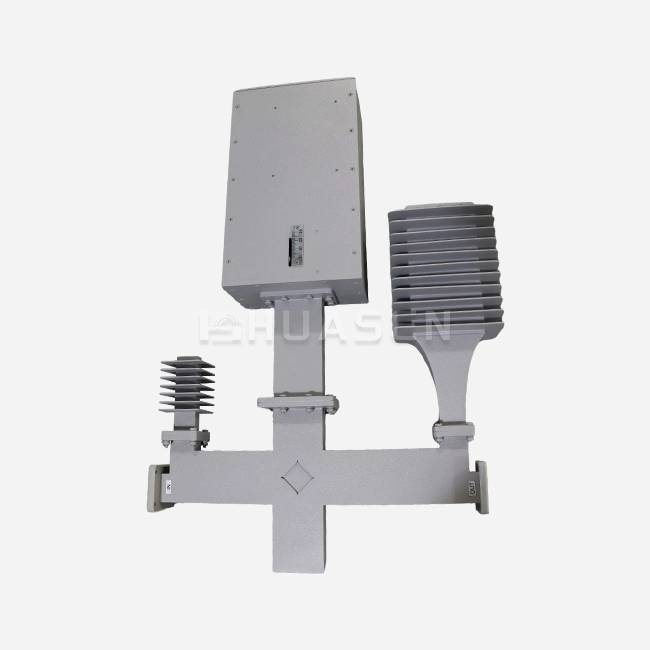
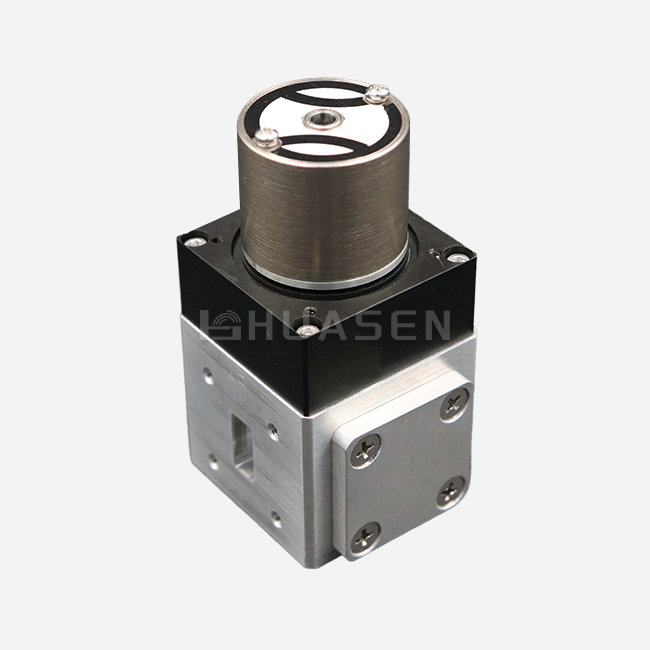
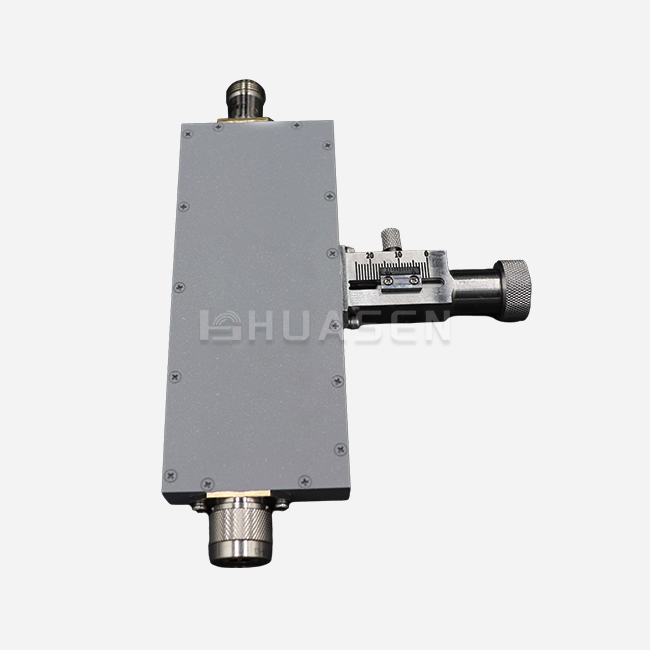
Waveguide Sliding Load for Calibration Applications






2026-04-17 21:39:49
When exact tuning of high-frequency test equipment is needed for mission-critical tasks, engineers use the Waveguide Sliding Load, a specialized tool that has quietly changed the accuracy of measurements. This very accurate microwave termination device is the gold standard in measuring labs all over the world. It lets measurements be very accurate in ways that set loads just can't. A Waveguide Sliding Load is different from other types of loads because it has a tapered absorbing element inside a waveguide section that can be moved along the transmission line to change the reflection phase angles while keeping the magnitude the same. This one-of-a-kind feature lets calibration experts mathematically separate error terms in vector network analyzer measurements, achieving directivity levels above 60 dB—performance levels needed to describe next-generation 5G components, satellite communication systems, and defense radar installations.
Understanding Waveguide Sliding Load Technology
What Makes Sliding Load Calibration Different
The main problem with measuring high frequencies is that there is no one set termination that can work properly across a wide range of frequencies. Manufacturing errors, the qualities of the material, and flaws in the connectors will always cause small mismatches. This is where Waveguide Sliding Load technology changes the way testing is done. The machine lets people move an absorbing element to different spots, usually seven to nine different spots, which makes a number of readings of reflection. There is the same amount of reflection at each point, but the phase angle is different. When these values are drawn on a Smith Chart, they make a circle whose geometric center shows the real system impedance. This mathematically creates a "perfect load."
Core Operating Principles in Calibration Environments
The Waveguide Sliding Load method fixes leftover directivity mistakes that lower measurement accuracy during the calibration of a vector network analyzer. To do this, you have to connect the device to the test port, take some initial readings, and then use a calibrated micrometer to move the moving element forward in very small steps. Positioning methods that are accurate to 0.01 millimeters are often used in modern applications. The VNA software takes the data points it has collected and uses circle-fitting methods to find the center coordinates that show the best port termination. This mathematical method gets rid of the physical problem of not being able to make a perfect broadband match. It also provides directivity performance that is 15 to 20 decibels better than premium fixed standards.
Why Telecommunications and Aerospace Demand This Technology
Industries that use millimeter-wave bands have to follow very strict tuning rules. When testing 5G infrastructure at 28 GHz and 39 GHz bands, the performance of each part must be confirmed with errors of less than 0.05 dB. Ground stations for satellite transmission that are measuring Ka-band uplink chains can't stand the measurement problems that come with regular terminations. Defense companies that want to get their radar front-end units approved for use on aircraft must show that they meet MIL-STD requirements that specifically mention Waveguide Sliding Load calibration methods. This technology is now essential because it's the only way to make measures that can be tracked and repeated at these frequencies, where bands get close to component waveguide termination dimensions.
Comparing Waveguide Sliding Loads with Other Technologies
Performance Metrics: Sliding Versus Fixed Terminations
Above 18 GHz, there is a clear difference in speed between loads that are sliding and loads that are stable. At X-band frequencies, a good fixed cable load could get a VSWR of 1.08:1, which means it would lose about 32 dB of signal. With the Waveguide Sliding Load calibration method, the effective return loss is more than 50 dB, which is a huge increase that has a direct effect on measurement error budgets. When describing low-noise amplifiers or precision attenuators with device return loss close to 25 dB, this difference is very important. When measuring systems are calibrated with moving loads, they can clearly tell the difference between changes in performance of 0.1 dB, but when they are calibrated with fixed loads, they introduce errors of more than 0.3 dB under the same conditions.
Material Selection and Frequency Band Optimization
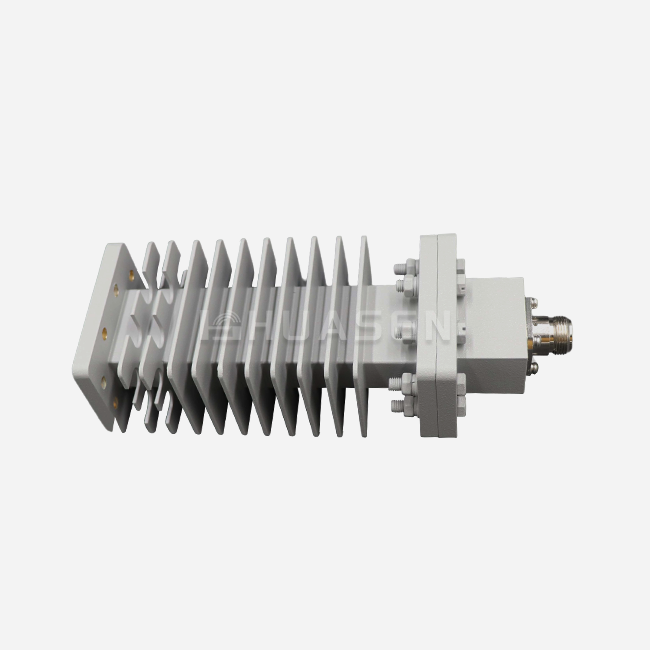
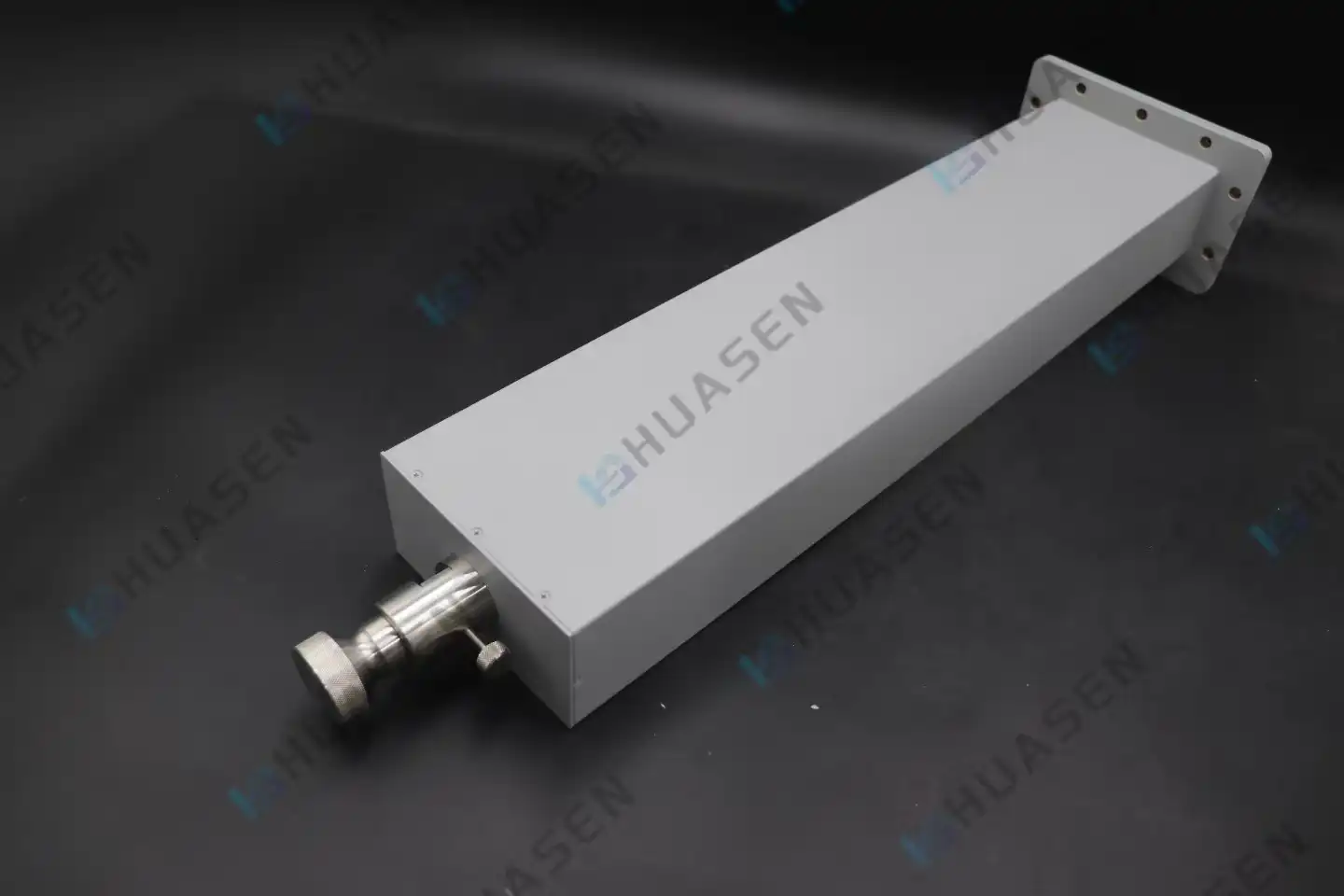
Standardized waveguide sizes are used to make Waveguide Sliding Loads that work with certain frequency bands. The WR-90 units work in the X-band (8.2 to 12.4 GHz), and the WR-28 units work in the Ka-band (26.5 to 40 GHz). The absorbing element is usually made of silicon carbide ceramics and ferrite materials, which are chosen because they are stable at high temperatures and keep their insulating properties even when the temperature changes. Gold-plated waveguide walls in high-end units reduce insertion loss and stop rusting, which is especially important in millimeter-wave bands where surface roughness hurts performance a lot. The mechanical slide assembly is made up of precision stainless steel tracks with anti-backlash mechanisms. These make sure that the absorbing element stays perfectly aligned during motion without moving laterally, which would make it harder to repeat measurements. Knowing about these choices in materials helps buying teams choose the right gadgets. Standard aluminum housings can be used in climate-controlled labs, but field calibration kits for marine satellite stations need anodized finishes that don't rust and sealed bearing assemblies that can handle salt fog according to MIL-STD-810.
Operational Scenario Selection Guide
Which Waveguide Sliding Loads or other calibration methods to use relies on the level of error needed for the measurements and the limitations of the process. For millimeter-wave calibrations, metrology labs that do main standards work always use Waveguide Sliding Loads. The gadgets allow error ranges of less than 0.05 dB, which is very important for calibrating transfer standards that will then be used to measure production test equipment. For regular production testing, quality control settings in manufacturing often use fixed precision loads. Waveguide Sliding Load calibrations are only done every three months to make sure the test system is still working well. This mixed method strikes a balance between accurate measurements and quick operations, taking into account that Waveguide Sliding Load procedures take 15-20 minutes per test port, while automatic fixed-standard calibrations only take 2-3 minutes.
Procurement Guide for Waveguide Sliding Loads
Critical Specifications for System Integrators
When looking for Waveguide Sliding Loads for testing telecommunications infrastructure or military qualification programs, you need to carefully consider a number of requirements. At the lowest working frequency, the travel range must allow at least a half-wavelength shift. If the travel length is not long enough, full phase rotation can't happen, which means the calibration math is wrong. For a WR-90 device to work at 8.2 GHz (λ = 36.6 mm), the minimum movement should be more than 18 mm, but 25–30 mm is fine. Precision signs are very important. Digital micrometers with a precision of 0.01 mm allow for repeatable positioning, but analog scales cause reading mistakes by the user that lower measurement trust.VSWR standards need more than just numbers to be looked at carefully. A Waveguide Sliding Load with a VSWR of 1.03:1 should come with proof that the size difference stays within ±0.005 throughout the whole journey range. If a device doesn't meet this stability requirement, it may show changes in the size of the reflection while moving, which can mess upwaveguide termination circle-fitting methods and cause systematic calibration mistakes. Reputable makers give swept-frequency VSWR data at several slide points, showing that the data is consistent across the given bandwidth.
Certification Requirements and Compliance Verification
Certain rules must be followed for large-scale operations that support defense contracts or international telecoms standards. The waveguide flange measurements and limits are set by MIL-DTL-3928. Verification makes sure that mating systems from different vendors can work together. Calibration papers that are ISO 17025-approved show that the equipment can be traced back to national metrology centers. This is necessary for measuring tools that support type-approval testing. RoHS compliance is now the norm, even in industrial settings. However, military projects sometimes allow lead-based solder to be used in important RF parts without following the rules. Instead of self-declarations, procurement specifications should make it clear that manufacturers need to show proof of compliance, such as test results from third-party conformity assessment groups.
Customization Options and Volume Pricing
Because Waveguide Sliding Load mechanisms are more complicated, customization is restricted compared to passive parts like filters or couplers, but there are still choices that make sense. The main way that customization works is by choosing the frequency band. Manufacturers can make the best absorber taper profiles and trip ranges for narrow fractional bandwidths within standard waveguide cutoffs. This can improve VSWR performance by 0.01-0.02 over stock wideband designs. Different types of flanges are available to fit different interface standards, such as UG-style round flanges and rectangular MIL-DTL types. There are also special low-PIM plating choices for passive intermodulation testing needs. Buying more than ten units often gets you a 15–25% discount, and if you sign an annual supply deal to support ongoing production projects, you can get price cuts of up to 30%. Lead times are very different. Products from the store usually ship within 3–4 weeks, but special frequency versions may need 10–12 weeks for qualification testing and optimizing the absorber.
Installation and Maintenance of Waveguide Sliding Loads
Step-by-Step Integration into Calibration Systems
Preparing the flange contact is the first step in a proper fitting. To get rid of any remaining oils, the mating waveguide surface needs to be cleaned with isopropyl alcohol. It should then be checked for flatness with a precision straightedge and feeler gauges. Any changes in flatness that are bigger than 0.05 mm will hurt the electrical performance and could damage the Waveguide Sliding Load's gasket seal when the bolts are tightened. Before putting in flange bolts, the alignment pins should fully seat, and the torque should be exactly as the maker says it should be, which for WR-90 sizes is usually 20 to 25 inch-pounds. Over-torquing bends the sides of the flanges and adds stress that can break ceramic absorbing elements. Under-torquing, on the other hand, lets RF leak through and makes intermittent contact resistance. Once you have a real link, use the VNA to do an initial verification check. As the absorber element moves all the way through its range, the Waveguide Sliding Load should show smooth, expected changes in VSWR. If there are sudden breaks or wavy patterns, it means that there is contamination in the waveguide channel or mechanical binding. Checking for debris in the slide rails, making sure that the mounting brackets don't put mechanical stress on the waveguide body, and making sure that the room temperature has stabilized are all common ways to fix problems. This is because thermal transients can cause VSWR shifts of 0.02 or more in the first 30 minutes after turning on the VNA.
Maintenance Protocols for Long-Term Accuracy
Routine repair times rely on Waveguide Sliding Loadandhow often they are used, but in busy calibration labs, they are usually done every three months. During inspections, the micrometer device and waveguide flange state are the main things that are looked at. To check for backlash in the alignment micrometer, move the slide forward, then backward, and measure the play before the element starts to move. Backlash above 0.02 mm means the bearings need to be serviced because they are worn out. Even though the absorption element surface is inside, designs that aren't protected can let dust build up on it. Cleaning once a year with filtered compressed air stops the buildup that weakens absorption over time. When waveguide flanges are mated over and over, they wear down. The gasket mounting area wears down the most. Visual checking should be done after about 100 connection cycles to look for circular ring wear patterns that mean the flange is properly aligned and asymmetric marks that mean the flange is misaligned and will get worse over time. Re-plating services can fix electrical problems on flanges that have rust or mechanical damage. They usually cost 30 to 40 percent of the price of a new unit and keep the adjusted absorber assembly. These upkeep tasks have a direct effect on the validity times of calibrations. Well-kept Waveguide Sliding Loads only need to be recalibrated every 12 months, but units that aren't taken care of may drift enough that they need to be recalibrated every 6 months, which doubles running costs and equipment downtime.
Conclusion
Waveguide Sliding Loads are essential measuring tools for businesses that need accurate measurements in high-frequency settings. Their unique mathematical ability to get rid of systematic mistakes through phase-rotation methods gives them a level of accuracy that can't be reached with traditional set standards. The technology solves important problems in the fields of defense electronics development, aircraft system testing, and telecommunications infrastructure deployment. In these fields, measurement uncertainty has a direct effect on product performance, regulatory compliance, and mission success. As wireless systems move toward millimeter-wave frequencies and higher, the Waveguide Sliding Load's role in keeping the accuracy of the calibration becomes more important. This is why it's important to make careful purchasing choices based on mechanical precision, proven tracking, and long-term supplier partnerships.
FAQ
1. What frequency ranges do waveguide sliding loads cover?
Standard waveguide bands that cover about 8 GHz to 110 GHz are used to make Waveguide Sliding Loads. WR-90 is often used for X-band (8.2-12.4 GHz), WR-62 is often used for Ku-band (12.4-18 GHz), WR-28 is often used for Ka-band (26.5-40 GHz), and WR-15 is often used for V-band (50-75 GHz). Each device is specially designed for its own band, with absorber taper curves and motion ranges that are perfect for getting the best VSWR performance over the whole frequency range.
2. How does sliding load calibration improve upon fixed load methods?
Fixed loads have flaws in the way they were made that cause lingering mismatches, which limit the calibration directivity to about 35 to 40 dB. Waveguide Sliding Load methods move the reflection phase to different places while keeping its size the same. This lets circle-fitting algorithms figure out where the real center of the system is. This mathematical method gets effective directivity levels above 55 dB. Performance gains of 15 to 20 dB directly lead to lower measurement error in describing the device.
3. Can these devices handle high-power applications?
Waveguide Sliding Loads are precision measuring tools, not tools for dissipating power. Power values for continuous waves usually fall between 20 and 50 watts, but this depends on the frequency band and the form of the absorber. Applications that need to lose more energy than these amounts should use high-power terminations that are specifically made for that purpose. The Waveguide Sliding Load's main job is to improve the accuracy of the calibration. Its stable VSWR and precise placement make it useful in ways that power-handling ability alone can't.
Partner with a Waveguide Sliding Load Manufacturer You Can Trust
Huasen Microwave has been making high-quality RF and microwave parts for over 30 years and works with companies that expect the highest level of accuracy in testing. Our range of Waveguide Sliding Loads covers the X-band to the V-band, and their VSWR performance always meets the requirements of 1.03:1 across all bandwidths. As required by MIL-DTL-3928 standards, each unit goes through strict quality checks that include swept-frequency VSWR characterization at multiple slide points, mechanical backlash testing, and flange planarity checking. We know that your measurement systems are a big part of making sure the quality of your products. That's why we offer full calibration certificates that can be tracked back to national metrology centers and help with application engineering to make your calibration processes run more smoothly.
Our team can help you choose the right Waveguide Sliding Load setups for your frequency bands and accuracy needs, whether you're setting up a new measurement lab, improving the test capabilities of a satellite ground station, or qualifying 5G infrastructure components. Custom solutions can be made to meet specific interaction needs or better environmental standards, and the wait time is usually less than 12 weeks. Get in touch with our technical sales specialists at sales@huasenmicrowave.com to talk about your problems with precise calibration and find out how our Waveguide Sliding Load solutions can help you get the measurement trust your important applications need.
References
1. IEEE Standard 1478-2022, "IEEE Recommended Practice for Waveguide Sliding Short and Sliding Load Construction," Institute of Electrical and Electronics Engineers, 2022.
2. Fantom, A.E., "Radio Frequency and Microwave Power Measurement," IET Electrical Measurement Series, Institution of Engineering and Technology, 2020.
3. Ridler, N.M. and Salter, M.J., "Propagating Uncertainties in Complex-Valued Quantities Using Automatic Differentiation with Application to VNA Calibration," IEEE Transactions on Instrumentation and Measurement, vol. 68, no. 6, pp. 2047-2053, 2019.
4. Hickman, B.T., "Precision Coaxial and Waveguide Metrology at the National Institute of Standards and Technology," NIST Technical Note 1897, National Institute of Standards and Technology, 2021.
5. MIL-DTL-3928/20E, "Detail Specification: Flanges, Waveguide (Rectangular) Pressurizable and Non-Pressurizable, General Specification For," U.S. Department of Defense, 2018.
6. Rumiantsev, A. and Ridler, N., "VNA Calibration," IEEE Microwave Magazine, vol. 19, no. 3, pp. 86-99, 2018.
Send Inquiry