Waveguide Probe Coupler Selection Guide for Aerospace Applications






2026-04-21 21:25:04
Selecting the right waveguide probe coupler for aerospace applications demands meticulous attention to environmental resilience, signal integrity, and mechanical compatibility. Aerospace systems—from satellite transponders to radar installations on UAVs—operate under extreme thermal cycling, vibration loads, and vacuum conditions where component failure is not an option. Engineers must evaluate coupling range, directionality specifications, insertion loss budgets, and connector interface standards while ensuring compliance with MIL-STD-202 and outgassing requirements per ASTM E595. This guide walks through critical selection parameters to help system integrators specify couplers that deliver reliable performance throughout mission lifecycles.
Understanding Waveguide Couplers in Mission-Critical Aerospace Systems
Aerospace platforms impose unique constraints rarely encountered in terrestrial communications. A satellite's transponder must maintain signal fidelity through 15-year missions while enduring solar radiation, atomic oxygen exposure, and temperature swings from -180°C to +120°C. Aircraft-mounted phased array radar systems face repetitive shock loads during carrier landings, while stratospheric drones require ultra-lightweight components that don't compromise electromagnetic performance.
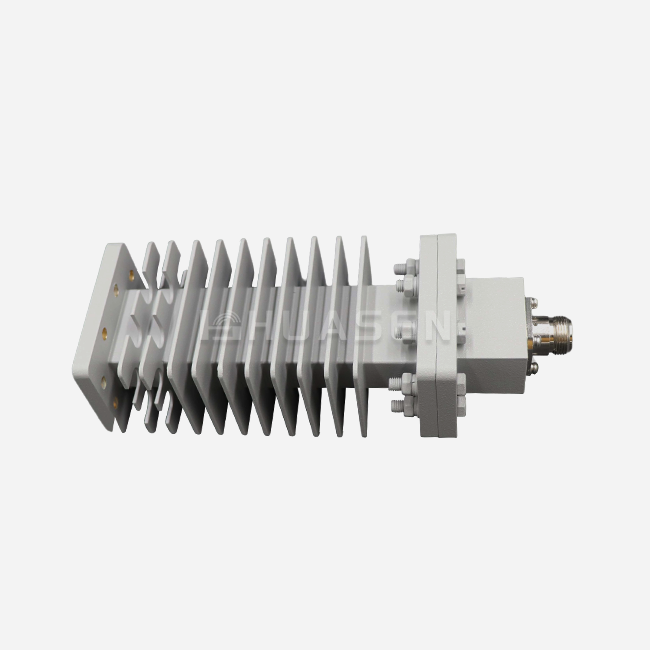
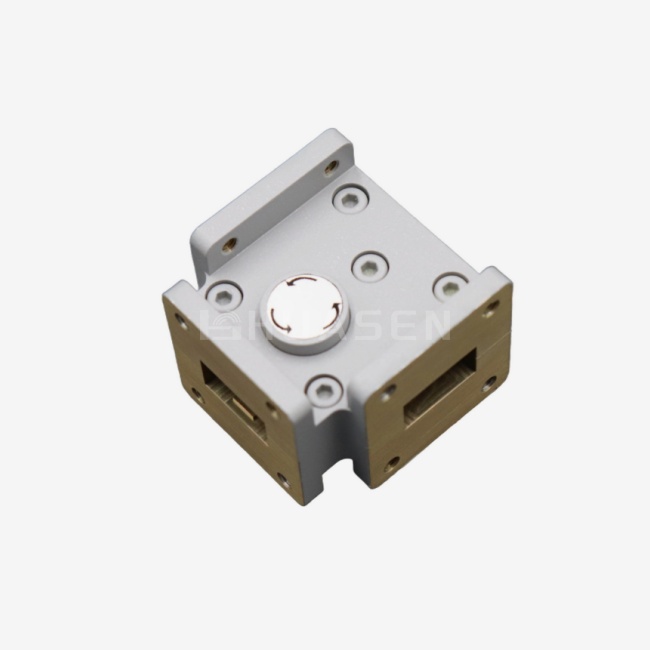
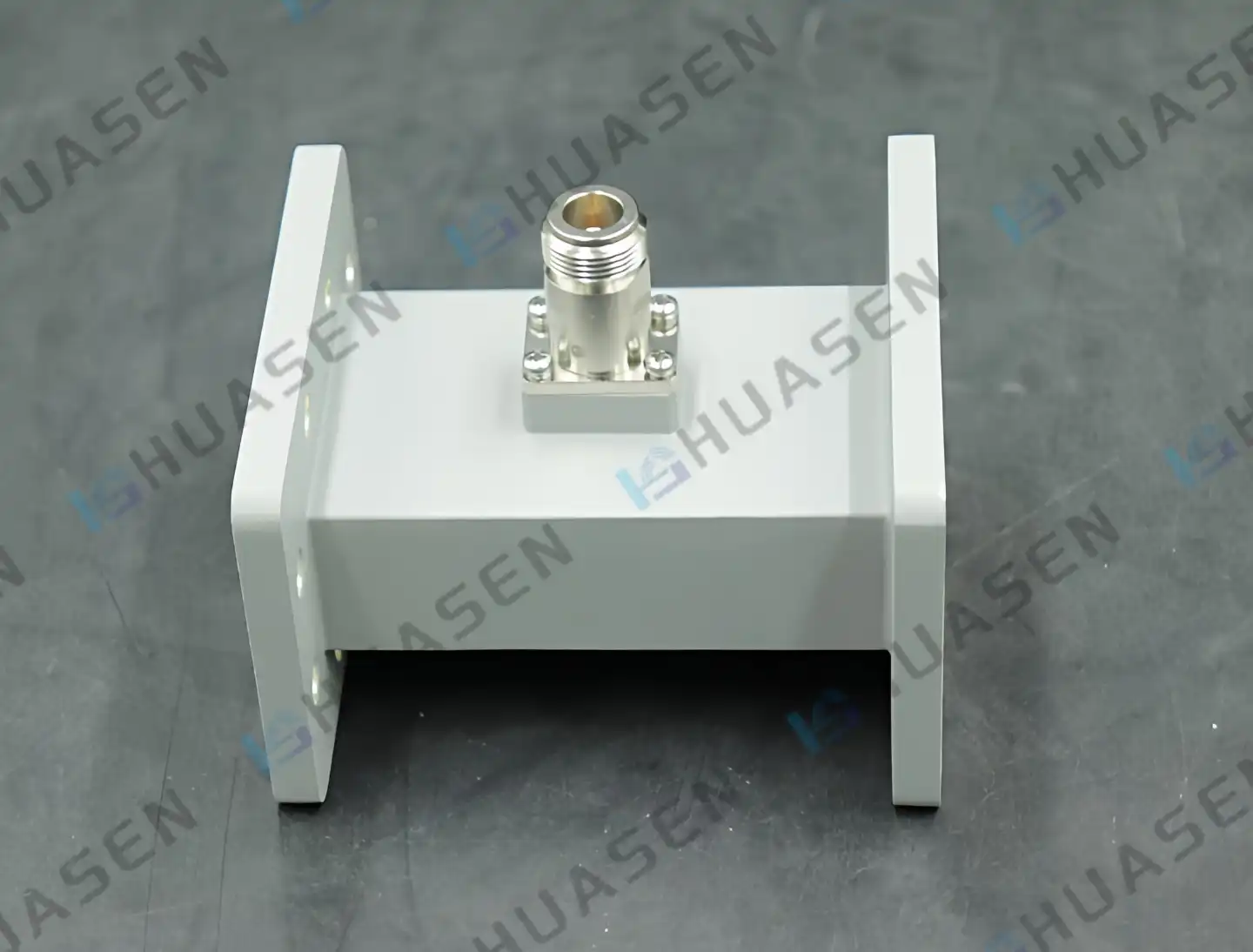
Waveguide probe couplers serve as the transition interface between solid-state RF electronics and hollow waveguide distribution networks feeding antenna arrays. Unlike bulky orthomode transducers, probe couplers offer compact form factors essential in space-constrained avionics bays. Their core function involves extracting a controlled fraction of forward-traveling electromagnetic energy for monitoring purposes—power sampling for automatic level control loops, fault diagnostics in redundant amplifier chains, or spectrum analysis during payload commissioning.
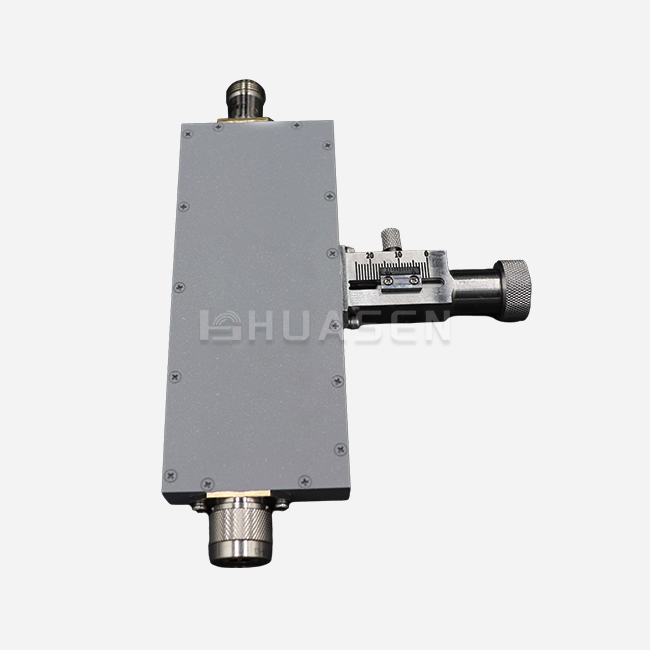
Fixed coupling models (WTC designation) provide factory-set attenuation values ranging from 10 dB to 60 dB. A 20 dB coupler in a Ka-band satellite uplink chain allows engineers to monitor transmit power without disrupting the main signal flow. Adjustable variants (WVTC) incorporate sliding backshort mechanisms or rotational probe adjustments, enabling in-field calibration—particularly valuable during ground station antenna alignment procedures where precise power measurements drive pointing accuracy.
The absence of directionality in certain coupler designs simplifies bi-directional monitoring setups. Reflection measurements from antenna feed networks become straightforward when a single coupler captures both incident and reflected waves, eliminating the need for dual-component circulators in diagnostic test points.
Critical Performance Parameters Driving Aerospace Coupler Selection
Insertion Loss and Frequency Flatness
Aerospace communication links operate on razor-thin link budgets where every 0.1 dB matters. A geostationary satellite's downlink might allocate only 0.3 dB for all passive component losses between the traveling wave tube amplifier and feed horn. Probe couplers must exhibit insertion loss below 0.15 dB across the full operational bandwidth—typically 500 MHz instantaneous bandwidths in military SATCOM bands.
Frequency flatness becomes crucial in wideband electronic warfare systems scanning 2-18 GHz. Coupling variation exceeding ±0.5 dB across octaves introduces amplitude errors in direction-finding algorithms. High-grade couplers achieve ±0.3 dB flatness through precision machining of probe geometry and waveguide cavity dimensions, with post-manufacturing tuning correcting for material property variations.
Voltage Standing Wave Ratio Thresholds
VSWR specifications directly impact receiver sensitivity in low-noise applications. A 1.25:1 VSWR limit represents the aerospace industry standard for Ka-band low-noise block converters, translating to -32 dB return loss. Couplers feeding cryogenically cooled receivers in radio astronomy payloads demand even tighter 1.15:1 specifications to prevent standing wave patterns that degrade noise figure by fractions of a Kelvin—measurable impacts when chasing 20K system temperatures.
Impedance matching involves coordinated design of probe penetration depth, waveguide cutoff characteristics, and coaxial port transitions. Manufacturers employ full-wave electromagnetic simulation (HFSS, CST Microwave Studio) to optimize these interdependent variables before prototype fabrication.
Power Handling and Peak Field Strengths
Waveguide Probe Coupler, in pulsed radar applications, stresses couplers with microsecond-duration megawatt bursts. A fighter aircraft's X-band fire control radar might generate 50 kW of peak power at a 10% duty cycle. The 30 dB monitoring coupler in the transmit chain experiences 50 W peak transients—manageable for robust designs, but catastrophic if voltage breakdown occurs at the waveguide probe coupler's probe-dielectric interface.
Dielectric material selection proves critical here. Polytetrafluoroethylene (PTFE) insulation offers excellent loss tangent but lower breakdown thresholds compared to ceramic-loaded alternatives. Alumina-based dielectrics withstand 100 kV/cm field strengths while maintaining low outgassing rates required for vacuum operation, though at higher material costs.
Environmental Qualification Standards for Aerospace Deployment
Thermal Cycling and Coefficient of Thermal Expansion Matching
Low Earth orbit satellites experience 16 sunrise-sunset cycles daily, each inducing 200°C temperature differentials across sun-facing and shadow-side surfaces. Coupler assemblies must survive 50,000+ thermal cycles without developing micro-cracks in brazed joints or shifts in RF tuning.
Material pairing becomes an engineering art: aluminum waveguide bodies (CTE: 23 ppm/°C) mated to Invar probe assemblies (CTE: 1.2 ppm/°C) create destructive stresses unless transition zones incorporate stress-relief features. Kovar alloy interfaces provide CTE-matched transitions between dissimilar metals, maintaining hermetic seals across temperature extremes.
Operational temperature ranges vary by mission profile. Geostationary communication satellites specify -40°C to +65°C for internally mounted components, while Mars lander payloads require -120°C qualification. Cryogenic cooling systems for superconducting receivers push lower limits to 4 Kelvin, demanding specialized coupler designs with minimal thermal mass and conductive heat leaks.
Vibration and Shock Loading Profiles
Launch vehicle environments subject avionics to 14.1 Grms random vibration across 20-2000 Hz, with resonant amplification potentially tripling loads at structural modes. Probe couplers must demonstrate no performance degradation after exposure to these qualification levels per MIL-STD-810G Method 514.
Mechanical design focuses on eliminating cantilevered masses and ensuring rigid mounting interfaces. The waveguide probe coupler's probe assembly—the coupler's most vulnerable element—requires staking compounds on threaded retention hardware and locking wire on adjustment mechanisms. Some manufacturers pot entire cavity volumes with space-qualified epoxies, trading field adjustability for ultimate ruggedness.
Pyroshock events during satellite separation or stage jettison generate 10,000g transients in millisecond pulses. Qualification testing employs pyroshock simulation tables or explosive-driven fixtures to replicate these extreme accelerations. Couplers passing these tests demonstrate solder joint integrity and freedom from particulate contamination that might later cause RF arcing.
Outgassing and Material Compatibility
NASA's ASTM E595 standard mandates that spacecraft materials exhibit less than 1.0% total mass loss (TML) and 0.1% collected volatile condensable material (CVCM) when exposed to 125°C vacuum for 24 hours. Volatile organics released from non-compliant adhesives or lubricants contaminate optical surfaces, degrade solar cell efficiency, and condense on cryogenic detector windows.
Coupler manufacturers maintain approved materials lists including vacuum-grade epoxies (Emerson & Cuming Stycast 2850), cleaned-and-baked hardware, and electroless nickel plating over copper waveguide interiors. Even fingerprint oils from assembly handling require removal through vapor degreasing processes.
Atomic oxygen erosion affects low-orbit satellites below 600 km altitude. Exposed polymer surfaces degrade at 10-100 nm per orbital pass through reactions with atomic oxygen flux. External waveguide runs require protective coatings or all-metal construction to survive multi-year missions.
Mechanical Interface Considerations and System Integration
Waveguide Flange Standards and Mating Repeatability
Aerospace systems standardize on MIL-DTL-3922 UG-series flanges or equivalent commercial designations (CPR, CMR). A WR-90 rectangular waveguide coupler (X-band, 8.2-12.4 GHz) typically employs UG-135/U flanges with 0.250-inch dowel pin alignment and captive hardware.
Flange flatness tolerances of 0.001 inches across contact surfaces ensure repeatable electrical performance during multiple mate-demate cycles. Surface finishes smoother than 32 microinches RMS prevent gap-induced RF leakage. Pressure-sensitive indium wire gaskets conform to mating irregularities, providing electromagnetic continuity while maintaining hermetic seals in pressurized spacecraft enclosures.
Mounting provisions accommodate thermal expansion without inducing mechanical stress. Slotted bolt holes allow lateral float in one axis while constraining the perpendicular direction. Flexural waveguide sections absorb differential thermal growth between avionics chassis and antenna platforms, preventing stress concentration at coupler flanges.
Connector Interface Selection for Signal Ports
The sampled output port requires coaxial connectors rated for the operational frequency and environmental extremes. Common aerospace choices include:
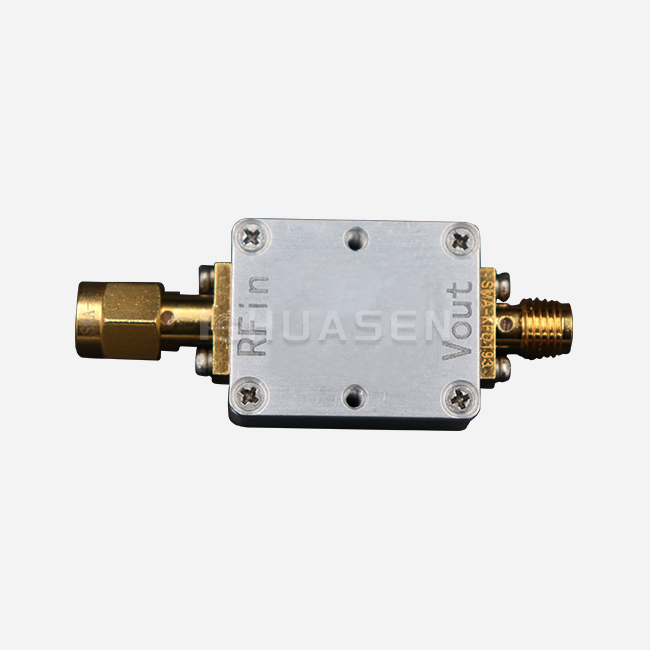
- SMA connectors (DC-26.5 GHz): Ubiquitous in test equipment interfaces, available in hermetic glass-bead versions for pressure vessel feedthroughs. Threaded coupling provides 10 inch-pounds retention force, surviving 50g launch loads.
- 2.92mm (K) connectors (DC-40 GHz): Extended bandwidth for Ka-band applications, with phase-stable variants offering ±3° stability over temperature for calibrated measurement systems.
- WR-series rectangular waveguide outputs: Some high-power couplers provide waveguide ports on both main and coupled paths, eliminating coaxial-to-waveguide transitions and their associated losses. This topology suits millimeter-wave systems where coaxial cable losses become prohibitive.
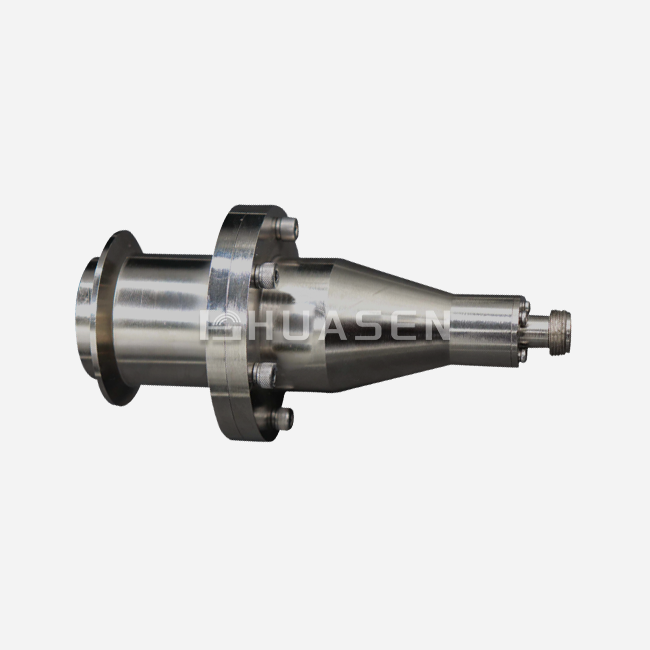
Connector mounting transitions must avoid creating resonant cavities or abrupt impedance steps. Gradual taper transitions from waveguide field distributions to coaxial TEM mode minimize reflections. Manufacturers characterize these transitions through vector network analyzer measurements, providing S-parameter data files for system-level modeling.
Application-Specific Selection Scenarios
Satellite Transponder Monitoring Chains
A typical bent-pipe transponder incorporates couplers at multiple signal chain stages: post-LNA monitoring verifies receiver health, pre-TWT sampling enables automatic level control, and post-TWT monitoring detects amplifier saturation. Coupling values follow signal strength progression—lighter coupling (-50 dB) at sensitive receiver inputs, where noise contribution matters, and tighter coupling (-20 dB) at high-power transmit stages where dynamic range is available.
Multi-band satellites operating C, Ku, and Ka frequencies simultaneously require frequency-selective coupling. Diplexed coupler assemblies incorporate internal filtering, routing each band to dedicated monitoring receivers. This architecture reduces component count compared to parallel single-band couplers, saving precious payload mass.
Phased Array Radar Calibration Networks
Active electronically scanned arrays (AESAs) contain hundreds of transmit-receive modules requiring amplitude and phase calibration. An embedded waveguide coupler network samples each element's output, routing signals to a centralized calibration receiver via RF switch matrices.
Tight amplitude tracking across array elements demands couplers with ±0.3 dB coupling tolerance from unit to unit. Phase-matched sets maintain ±5° insertion phase variation, preventing beam-pointing errors. Manufacturers bin production runs, supplying matched sets with serialized S-parameter data for system calibration algorithms.
Temperature-stable performance prevents calibration drift during mission thermal cycling. Couplers with ±0.05 dB/°C amplitude sensitivity and ±1°/°C phase sensitivity minimize recalibration intervals, enhancing system availability for time-critical defense applications.
UAV and Missile Datalink Systems
Unmanned platforms prioritize weight reduction—every gram saved extends flight duration or payload capacity. Miniaturized probe couplers achieve 40% mass reduction through advanced manufacturing: photo-chemical machining creates thin-wall waveguide structures, while 3D-printed titanium housings reduce volume without sacrificing strength.
High-vibration rotary-wing UAV environments demand additional strain relief on coaxial pigtails and waveguide couplers, including the waveguide probe coupler. Manufacturers specify minimum bend radii and provide support brackets bonded to the coupler housing, preventing fatigue failures at the connector-to-probe junction. Conformal coating over solder joints adds moisture resistance for maritime operations.
Customization Capabilities Addressing Unique Mission Requirements
Standard catalog couplers cover 80% of aerospace applications, but specialized missions often require tailored solutions. Waveguide couplers, as part of standard catalog couplers, cover 80% of aerospace applications, but specialized missions often require tailored solutions. Experienced manufacturers like Huasen Microwave maintain in-house design teams capable of rapid customization cycles—a critical capability when supporting prototype platforms with compressed development schedules.
Frequency Band Translation
A standard X-band coupler design adapts to Ku-band through proportional scaling of cavity dimensions and probe geometry. Engineers apply electromagnetic scaling laws, adjusting all linear dimensions by the frequency ratio (12 GHz / 10 GHz = 1.2x). Material properties and fabrication tolerances require verification through prototype testing, but parametric design databases accelerate this process from months to weeks.
Coupling Range Adjustments
Altering coupling strength involves probe penetration depth modifications. Deeper insertion into the waveguide's electric field maximum increases energy extraction. Manufacturers maintain coupling vs. depth calibration curves derived from empirical measurements, enabling predictable custom coupling values. Adjustable models provide ±10 dB tuning range via precision threaded adjusters with lockwire provisions.
Multi-Port Monitoring Configurations
Some applications require simultaneous monitoring of multiple frequencies or polarizations. Dual-probe assemblies with orthogonal orientations sample both TE10 and TE01 modes in circular waveguides, supporting polarization diversity systems. Diplexed couplers integrate internal filtering, providing separate coupled ports for transmit and receive bands occupying the same waveguide.
Quality Assurance and Supply Chain Reliability
Aerospace programs span decades from design inception to end-of-life support. Component obsolescence represents a major risk—a satellite designed in 2015 for a 2025 launch requires spare parts through 2040. Established manufacturers maintain production tooling and material stocks for legacy designs, contractually guaranteeing availability throughout program lifecycles.
Traceability and Documentation
Each aerospace-grade coupler ships with serialized test data: full 2-port S-parameters across frequency, VSWR plots, and visual inspection records. Material certifications trace raw stock to mill test reports, documenting alloy composition and heat treatment. This documentation satisfies AS9100 quality management requirements and enables failure analysis if anomalies occur on-orbit.
Qualification Testing and Lot Acceptance
Production lots undergo sample-based qualification per MIL-PRF-39023: thermal cycling, vibration, humidity exposure, and salt fog. Lot Acceptance Testing (LAT) subjects random samples to electrical performance verification, ensuring manufacturing process control. Large procurement contracts may specify source inspection, where customer quality representatives witness testing at the manufacturer's facility before shipment authorization.
Export Control Compliance
Military radar and secure communications applications involve components such as waveguide probe couplers and waveguide couplerssubject to International Traffic in Arms Regulations (ITAR) or Export Administration Regulations (EAR). Manufacturers handling defense programs maintain registered facilities with controlled access, employee background screening, and secure data management. Country-of-origin documentation proves domestic content percentages for "Buy American" compliance.
Conclusion
Aerospace waveguide coupler selection balances electromagnetic performance, environmental resilience, and lifecycle supportability. Engineers must navigate trade-offs between coupling range precision and adjustment flexibility, weight constraints versus mechanical robustness, and standard catalog availability against customization timelines. Successful specification begins with a comprehensive mission profile definition—operating frequencies, power levels, thermal environments, and vibration spectra—then progresses through detailed vendor qualification. Partnering with experienced manufacturers offering design collaboration, qualification testing, and long-term supply chain stability ensures mission success across decades-long program lifecycles.
Partner with Huasen Microwave for Aerospace-Grade Waveguide Solutions
Huasen Microwave brings three decades of RF engineering heritage to your most demanding aerospace programs. As a vertically-integrated waveguide probe coupler manufacturer, our capabilities span electromagnetic design, precision CNC machining, and environmental qualification testing under one roof—eliminating supply chain vulnerabilities that plague multi-vendor approaches. Our engineering team collaborates on custom coupler specifications from initial concept sketches, providing rapid prototyping and S-parameter optimization within 4-week cycles. Contact sales@huasenmicrowave.com to discuss your mission-specific requirements and receive application-tailored recommendations backed by test data.
References
1. Pozar, David M. (2011). Microwave Engineering, 4th Edition. Hoboken: John Wiley & Sons, Chapter 7: Power Dividers and Directional Couplers.
2. Harrington, Roger F. (2001). Time-Harmonic Electromagnetic Fields, 2nd Edition. New York: IEEE Press, Section 5.8: Waveguide Discontinuities and Coupling Mechanisms.
3. Saad, Theodore S. (1985). Microwave Engineers' Handbook, Volume 1: Components and Subsystems. Dedham: Artech House, pp. 234-267.
4. Collin, Robert E. (1992). Foundations for Microwave Engineering, 2nd Edition. New York: McGraw-Hill, Chapter 6: Waveguide Transitions and Couplers.
5. Larson, Wiley J. and Wertz, James R. (1999). Space Mission Analysis and Design, 3rd Edition. El Segundo: Microcosm Press, Section 11.6: Spacecraft RF Subsystems.
6. MIL-HDBK-978-B (1995). NASA Handbook for Limiting Orbital Debris. Washington: Department of Defense, Appendix C: Materials Outgassing Data for Spacecraft Applications.
Send Inquiry