Waveguide Directivity Coupler Optimization for High-Frequency Measurements






2026-06-02 20:44:51
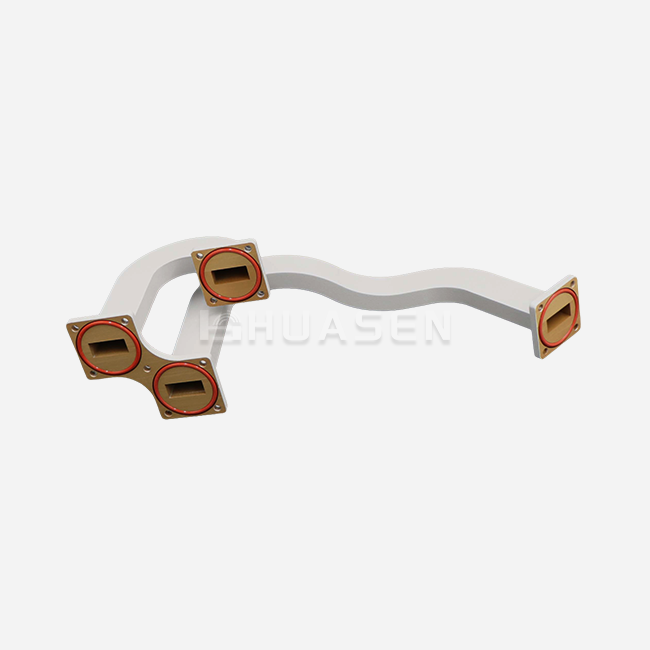
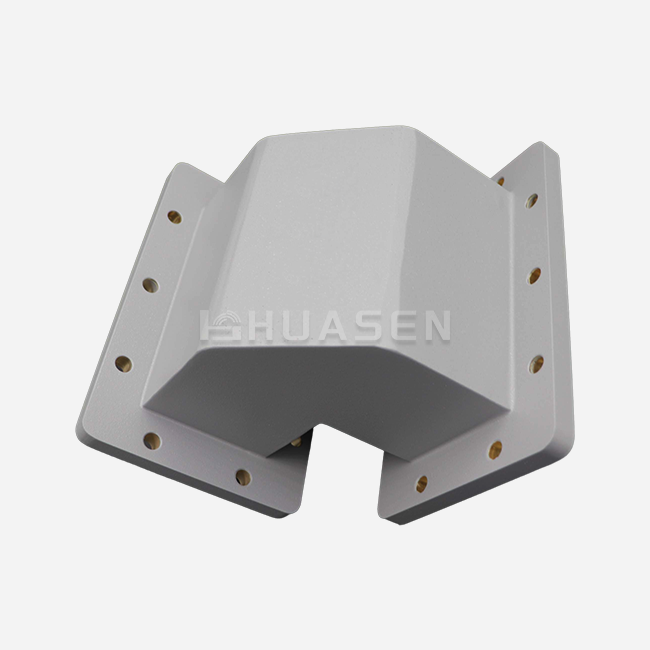
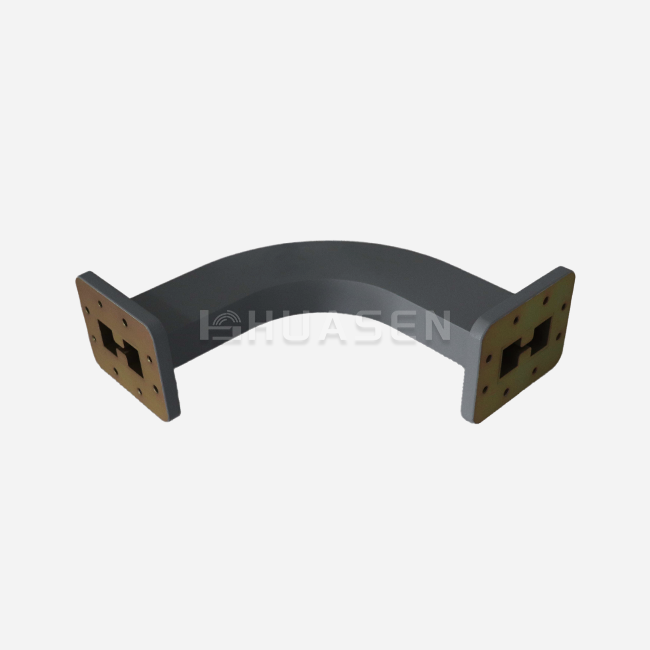
The goal of waveguide directivity coupler improvement is to make a part better at picking up electromagnetic signals going in one direction while strongly blocking reflections from the other direction. A good directivity coupler can get directivity values above 40dB, which makes sure that measurement tools get real forward power without load differences messing it up. This accuracy is very important in places like RF testing labs, satellite communications uplinks, and radar calibration sites where measurement error needs to be kept to a minimum. Engineers can improve performance levels that change the accuracy of high-frequency measurements used in defense, aircraft, and telecommunications by making smart changes to the shape, choosing the right materials, and making the manufacturing process better.
Understanding Waveguide Directivity Couplers
Fundamental Operating Principles
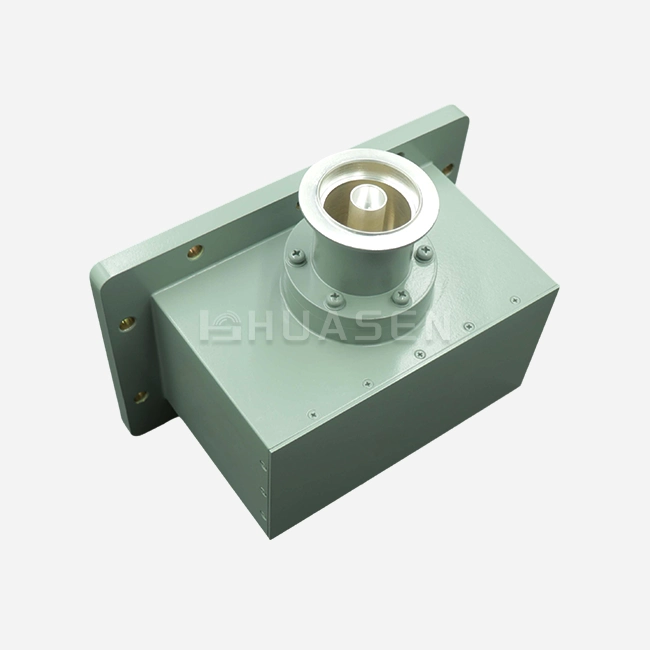
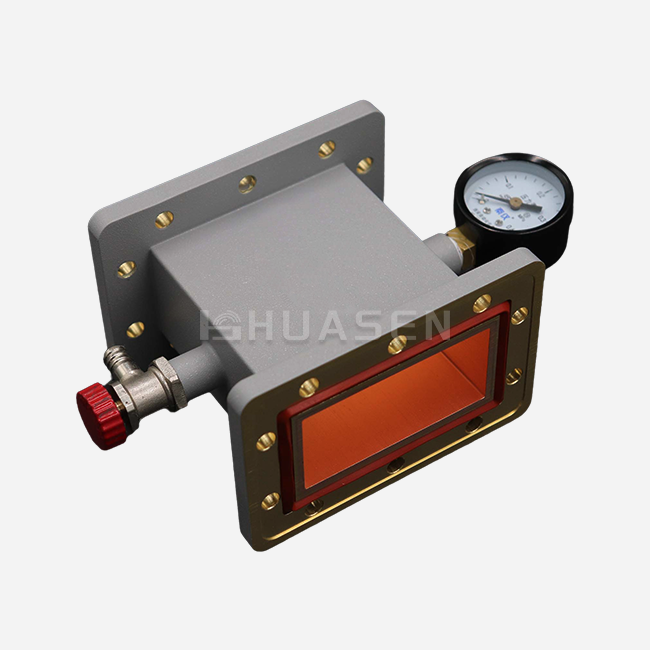
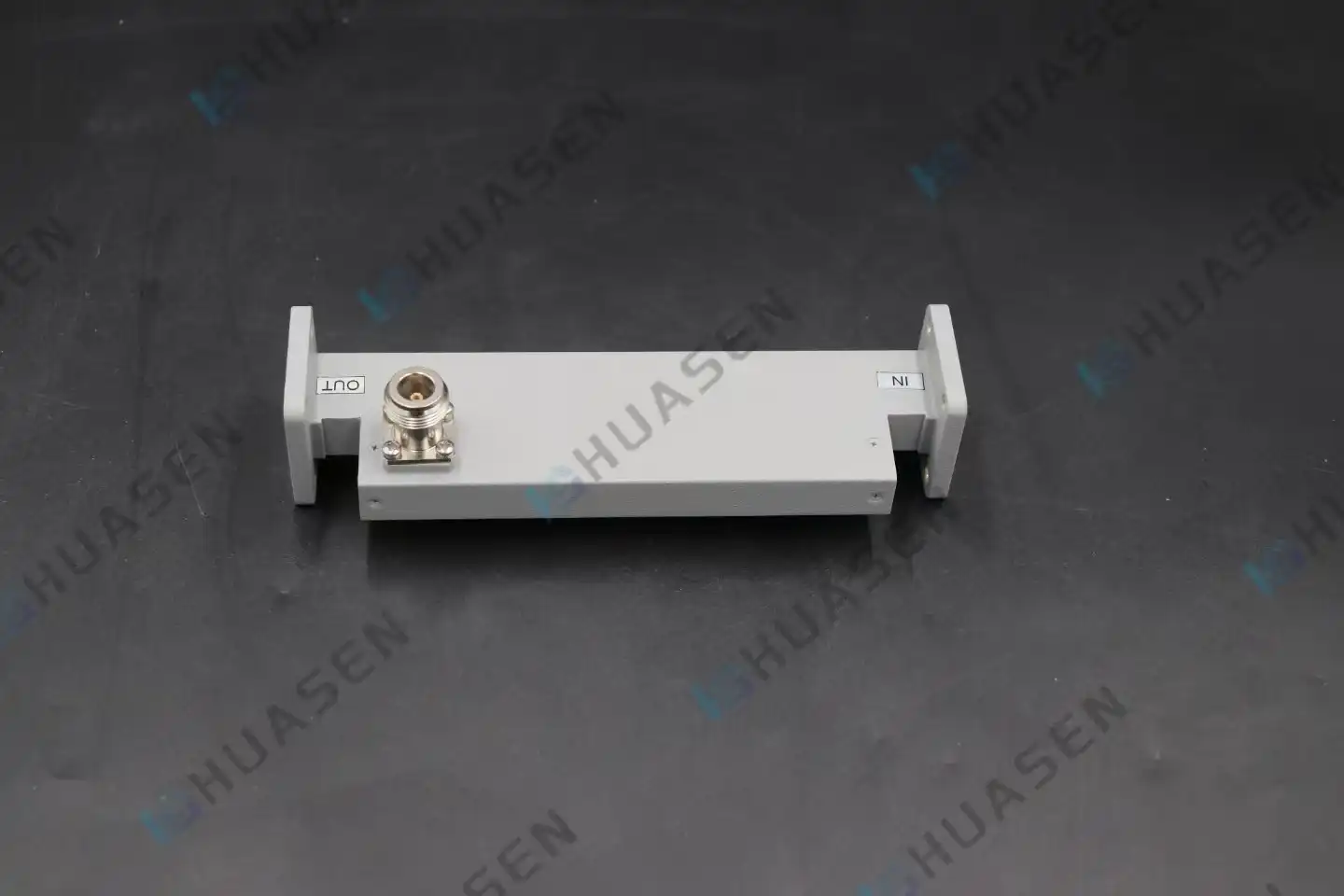
A waveguide directivity coupler is an inactive device that takes a proportional sample of the electromagnetic energy that is moving along the main transmission line. Advanced types offer 40 to 60dB of space between forward and backward signal samples, while basic directional couplers only offer 15-20dB of directivity. This sorting is possible because multi-hole coupling arrays are made with Chebyshev distributions, which make exact phase relationships that get rid of useless reverse coupling while keeping the purity of the forward signal. The main waveguide keeps the insertion loss low, usually below 0.2 dB, and the linked ports give tracking or measurement tools calibrated samples.
Procurement teams are frequently confused by the difference between directional and directivity couplers. Directivity couplers focus on the accuracy of recorded signals, while directional couplers focus on wide coupling ratios that can be used for power division. When Vector Network Analyzers (VNAs) check for return loss or when high-power amplifiers need to be protected against antenna mismatches, directivity is the most important property. Huasen Microwave has been making products for 30 years, and our customers in satellite ground stations and 5G backhaul systems always choose directivity over coupling flatness because they know that coupling flatness affects the accuracy of the whole system.
Critical S-Parameters and Performance Metrics
Four-port S-parameter matrices are used by engineers to test waveguide couplers. S21 stands for mainline insertion loss, S31 for coupling factor, and S41 for separation. The math equation that shows directivity is directivity (dB) = isolation (S41) - coupling (S31). Metrology-grade units keep the coupling level within ±0.5dB across all waveguide bands, whether they are WR-90 for X-band uses or WR-28 for Ka-band ones. Mainline VSWR staying below 1.05:1 makes sure that the coupler doesn't mess up transmission systems too much, which is something that radar engineers stress is important because they can't have signal distortion during target acquisition processes.
Frequency Range Considerations for Modern Applications
5G networks that use the 28GHz and 39GHz millimeter-wave bands need couplers that are designed to work with these frequencies. Standard waveguide sizes determine the ranges that can be used. For example, the WR-28 covers 26.5 GHz to 40 GHz, and the WR-15 covers 50 GHz to 75 GHz for new 6G studies. Ku-band (12-18 GHz) and Ka-band (26.5-40GHz) satellite communications need couplers that can keep the signal's direction even when the weather outside of earth stations changes a lot. As part of Huasen Microwave's production process, we test our products at temperatures as low as -55°C and as high as +85°C. This makes sure that the performance stability that phone companies need to provide uninterrupted service in harsh environments is met.
Common Challenges in Waveguide Directivity Coupler Performance
Material Limitations and Thermal Stability
Waveguide bodies made of aluminum 6061-T6 are lighter for flying radar systems, but they have thermal expansion factors that can change the spacing between coupling holes when the temperature changes. Copper is better at conducting electricity and keeping its shape, but it makes parts heavier, which is an important consideration for data payloads that are placed on drones. The quality of the surface finish has a direct effect on skin-effect losses at millimeter-wave frequencies. Roughness greater than 0.8 micrometers lowers insertion loss and causes phase mistakes that hurt directivity performance. For lab-grade couplers, silver plating is still the best finish. However, gold plating is used for military uses that need rust protection in saltwater. Performance issues with waveguide Directivity coupler units are often linked to these material constraints.
The connection system depends on holes that are machined to within 0.025 mm of a millimeter. Standard CNC cutting has trouble keeping these specs the same across production runs, which causes differences in the units' directivity. Wire EDM (Electrical Discharge Machining) makes tolerances smaller, but it costs more to make. When procurement managers have to balance tight budgets with performance demands, they often ask for detailed inspection reports that include measurements of each unit's directivity instead of depending on the average values shown on datasheets.
Manufacturing Precision and Interface Mismatches
The amount of RF leakage and passive intermodulation (PIM) is directly related to the smoothness of the waveguide flange. MIL-DTL-3928 standards say that the flatness must be within 0.0254 mm, but flanges that were bent during shipping or not torqued properly during assembly often show up in the field. When an interface isn't lined up right, it causes phase gaps that mess up the carefully balanced field patterns that are needed for high directivity. We saw directivity drop from 45dB to 28dB, which was caused only by misaligned flanges in Ka-band units. This is a failure mode that only shows up during thorough VNA testing.
Another problem is that not all connectors work with each other. Precision 2.92mm or 2.4mm plugs are often used in lab instruments, while UG-style waveguide-to-coax connections with lower return loss may be used in field equipment. When switching from waveguide to coaxial detecting equipment, there may be an extra 0.3dB of loss and 20dB of worse VSWR, which is too much for the coupler to handle. Integrated coaxial output ports with tuned transitions help with this problem, but they need to be customized, which adds to lead times and is a pain point for system integrators who have tight rollout plans.
Strategies for Optimizing Waveguide Directivity Couplers
Geometry Refinements and Multi-Hole Array Design
To get directivity above 50dB, you have to give up single-hole coupling and switch to multi-aperture arrays, where each hole adds a different amplitude and phase component. Bethe-hole coupling theory tells us how big an opening should be, and Chebyshev polynomials tell us how to spread out the spacing so that directivity is flat across the bandwidth. A four-hole grid can provide 20dB better directivity than a single-hole version, but it takes 40–60% longer to make. When better separation keeps sensitive receivers from picking up transmitter leakage during transmit-receive switching, radar module makers are willing to take on this size cost. These refinements are essential for high-performance directivity couplers.
Numerical electromagnetic simulation using finite element methods lets you try different ways to improve things before making a real prototype. We change the opening ellipticity, hole eccentricity, wall thickness at coupling regions, and hole eccentricity to fine-tune the strength of the field coupling. To get simulations to agree, mesh densities must be less than λ/20 at the highest operating frequency. This means that models must have millions of elements, which requires powerful computers. This investment pays off in first-pass yield, which cuts down on the expensive revision cycles that are common in the development of waveguide components.
Advanced Material Selection and Surface Treatment
High-grade oxygen-free copper (OFC) lowers resistance losses to theoretically very low levels, but it costs 40% more than regular copper alloys. For uses where 0.05dB makes a difference, like radio astronomy sensor chains, this cost is worth it. Electroless nickel plating with a gold overcoat protects naval radar systems from rust while still allowing enough electricity for X-band uses. New developments in material science have led to the creation of carbon nanotube-enhanced coatings that promise better heat transfer and conductivity. However, these coatings are still being tested before they can be used in business applications.
Performance Verification Through Rigorous Testing
In a full two-port VNA analysis over the given frequency range done on every production unit, we include the directivity of a directional coupler. We record S-parameters at 201 places per band and figure out the direction of the signal at each point to make sure they meet the basic requirements. The most difficult part of measuring is dealing with the VNA's residual directivity, which is usually between 35 and 40dB for good instruments and can hide coupler performance. When you use sliding-load methods or precise short-open-load-thru (SOLT) calibrations, you can raise the measurement floors to 55dB, which lets you check that premium couplers work.
Testing in a temperature-controlled room confirms performance at all working levels. To meet flight standards, a coupler that has 48dB of directivity at +25°C must keep at least 42 dB at -40°C. It is a known fact that differences in thermal expansion between waveguide bodies and coupling arrays lead to loss of directivity. At Huasen Microwave, our quality standards include thermal correction methods that were created using data from thousands of test cycles. Because of our experience, we can promise standards across temperature ranges that other companies only call "typical" or "guaranteed minimum."
Making Informed Procurement Decisions for Directivity Couplers
Evaluating Supplier Capabilities and Documentation
Transparency in the datasheet tells the difference between experienced makers and wholesalers who rebrand generic parts. Specifications should be very exact and include measured values for directivity (not just nominal values), test frequency points, and temperature factors. If you ask for sample test results for recent production lots, you can find out if providers test each unit individually or use statistical sampling. Companies that offer calibration certificates that can be tracked back to national standards bodies like NIST in the US or NPL in the UK show a dedication to accurate measurements that lab and metrology customers appreciate. Choosing a reliable source for your directivity couplers is a strategic necessity.
Lead time variability poses planning challenges for system integrators who are working toward set release dates and have trouble planning when lead times change. Standard catalog items from well-known sources usually ship within two weeks. However, for special frequency ranges or flange setups, the time frame can be as long as six to eight weeks. Huasen Microwave keeps popular waveguide bands (WR-90, WR-62, and WR-42) in stock with a range of coupling factors. This lets them quickly meet the needs of urgent 5G base station installs or radar repair depots. Knowing how suppliers handle supplies and how much they can make helps procurement teams avoid project delays that affect plans for system integration.
Comparing Coupler Technologies and Architectures
Waveguide designs can naturally handle more power than coaxial designs; a waveguide coupler can safely handle kilowatts of steady power, while coaxial designs break at hundreds of watts. This edge is very important for defense radar systems and radio transmitters. Waveguide parts, on the other hand, take up more space and weigh more, which is not ideal for flying platforms where every gram counts when it comes to fuel economy. Hybrid microstrip couplers are small options for uses with modest power, but their directivity rarely goes above 30dB, and they have bandwidth limits at millimeter-wave frequencies.
Three-port couplers have precisely matching terminations on the separated ports. This makes system design easier by getting rid of external loads that can cause connection problems. For diagnostic reasons, four-port units let engineers check reverse power levels during setup by giving them access to the isolated port. At Huasen Microwave, our application engineering team helps clients make these design decisions by matching the coupler topology to the exact measurement needs while taking into account budget and technical limitations. With this consultative method, relationships are formed that go beyond just buying parts.
Balancing Cost Against Performance Requirements
Premium couplers with 50dB+ directivity cost three to five times more than normal 30dB types. This is only acceptable for measurement tasks that need uncertainty of less than 0.1dB. Communications test labs that measure amplifier return loss can benefit from this purchase. On the other hand, mid-level specs are usually enough for production line tracking systems to work well. When you buy a lot, you get a discount. For example, when you buy 10 units, you get a 15% discount, and when you buy 50 units or more, you get a 25% discount. However, procurement teams should make sure that volume pricing doesn't affect shipping times or the strictness of quality checks.
Customization is what sets complete solution partners apart from component sellers. Changing coupling factors, adding temperature monitors, or putting in non-standard flanges, as well as adjusting the directivity of a directional coupler, can meet specific system needs that can't be met by off-the-shelf goods. When projects involve making more than 20 units, Huasen Microwave's engineering staff can handle unique requests without charging too much for tools. During the quotation process, it's important to be clear about the mechanical connections, electrical specs, and environmental qualification requirements. This will keep you from having to make expensive redesigns after samples fail integration testing.
Conclusion
To get the most out of waveguide directivity couplers for high-frequency measurements, you need to use methods that combine material science, precise manufacturing, and strict testing processes. As millimeter-wave bands become more common in telecommunications networks and measurement systems need to be able to handle smaller and smaller errors, directivity performance is what sets good options apart from great ones. When making a purchasing choice, it's better to look at the technical depth, customization options, and quality documentation of a provider rather than just the price. As additive manufacturing and advanced materials become more popular, directivity coupler technology has the potential to make huge improvements that will push the limits of performance in RF measurement, satellite communications, and next-generation radar systems.
FAQ
1. What differentiates a directivity coupler from a standard directional coupler?
A directivity coupler works better than normal directional couplers at separating forward and backward coupled signals, with a 40-60dB separation compared to 15-20 dB. This differentiation makes it possible to measure reflected signals accurately even when there is a lot of forward power. This is very important for calibrating the VNA and checking for return loss. For signal route tasks where reverse separation is not as important, directional couplers put power division ratios first.
2. How does operating frequency influence coupler selection?
Waveguide size determines frequency range. For example, the WR-90 covers the X-band (8-12GHz) and the WR-28 covers the Ka-band (26.5-40 GHz). To keep the directivity, higher frequencies need tighter production tolerances and better surface finishes. When used above 40 GHz, millimeter-wave uses usually need custom designs with special measurement proof. This makes lead times longer and costs 40–60% more than with normal microwave frequencies.
3. What factors justify investing in custom coupler designs?
Customization is needed when there aren't any standard frequency bands, special power handling needs, or environmental requirements. When off-the-shelf goods make design compromises, adding temperature sensors, changing the types of flanges, or finding the right coupling factor combinations for a system layout can be useful. When making more than 20 units, custom tools are usually worth the money because they improve speed and make system interaction easier.
Partner with Huasen Microwave for Superior Directivity Coupler Solutions
Huasen Microwave has been making waveguides for 30 years and can help engineers and purchasing managers who need stable, high-performance Directivity Couplers. Our quality-controlled production methods make sure that the directivity specifications are higher than 40dB at temperatures ranging from -55°C to +85°C. This meets the strict needs of 5G infrastructure, satellite communications, and radar systems. If you need catalog parts that can be shipped within a week or designs that are made just for your system, our application engineering team can help. They can give you expert advice that turns choosing the right parts into a strategic edge. As a trusted Directivity Coupler manufacturer that wants you to succeed, contact our experts at sales@huasenmicrowave.com to talk about your measurement problems, get specific test data for current projects, or look into volume prices.
References
1. Montgomery, C.G., Dicke, R.H., and Purcell, E.M. "Principles of Microwave Circuits." Boston Technical Publishers, 1964.
2. Rizzi, Peter A. "Microwave Engineering: Passive Circuits." Prentice Hall, 1988.
3. Saad, Theodore. "Microwave Engineers' Handbook, Volume 1: Passive Components and Transmission Lines." Artech House, 1971.
4. Pozar, David M. "Microwave Engineering, 4th Edition." John Wiley & Sons, 2011.
5. Harvey, A.F. "Microwave Engineering Components and Circuits." Academic Press, 1963.
6. Cheng, David K. "Field and Wave Electromagnetics, 2nd Edition." Addison-Wesley Publishing, 1989.
Send Inquiry