Waveguide Detection Sensors: Types and Applications






2026-05-28 21:32:01
Waveguide detection sensors use electromagnetic wave propagation to detect structural defects, power transmission irregularities, and arc formation in high-frequency systems. Instead of surface-based inspection instruments, waveguide detection integrates directly into microwave and RF transmission pathways to prevent catastrophic failures in radar installations, satellite communication networks, and industrial plasma equipment in real time. This technology helps system integrators and equipment manufacturers meet accuracy and operational continuity requirements in contexts where downtime means mission failure or considerable financial loss.
Understanding Waveguide Detection Technology
Waveguide detection monitors electromagnetic wave activity in enclosed metallic or dielectric structures. When signals face impedance mismatches, physical contamination, or dielectric breakdown, reflection coefficients, standing wave patterns, and optical emissions are altered. Advanced detection systems use fibre-optic viewports or sound transducers in sensor ports to detect these irregularities.
Core Physics Behind Detection Mechanisms
The key process is collecting the plasma formation's spectral signature during arcing. When voltage gradients surpass the dielectric strength of air, pressurised SF₆ gas, or vacuum, ionisation emits UV and infrared light. Photodetectors at the viewport assembly transform this optical signal into electrical interrupts in microseconds, enabling preventive shutdown procedures before expensive klystrons or travelling wave tubes are thermally damaged.
Using directional couplers to measure voltage standing wave ratios (VSWR) complements optical detection. Reflections from physical barriers or moisture infiltration create VSWR values above 1.15:1. This dual-mode method protects 5G base station frontends and aerial weather radar systems from various failure situations.
Industrial Applications Driving Adoption
Petrochemical pipeline monitoring uses guided waves to detect corrosion-induced wall weakening across kilometres. Echo examination of ultrasonic transducers' low-frequency guided waves along pipe walls reveals problem sites and severity. Compared to point-by-point manual ultrasonic testing, this technology cuts inspection expenses by 60%.
Medical linear accelerators use arc detection waveguides to safeguard RF windows between klystron amplifiers and accelerating structures. A single undetected spark can break the vacuum seal, polluting the electron beam path and generating weeks of unexpected downtime in cancer departments. To ensure patient safety, leading cancer treatment facilities require sub-5-microsecond reaction times.
S- and L-band defence radars use arcing-detecting waveguides to stay ready during high-pulse operations. Electrical warfare stresses transmission components, making arc-induced failures a major issue for maintenance planners. Sapphire viewports on detection systems survive nuclear blast overpressure while preserving UV/IR optical clarity.
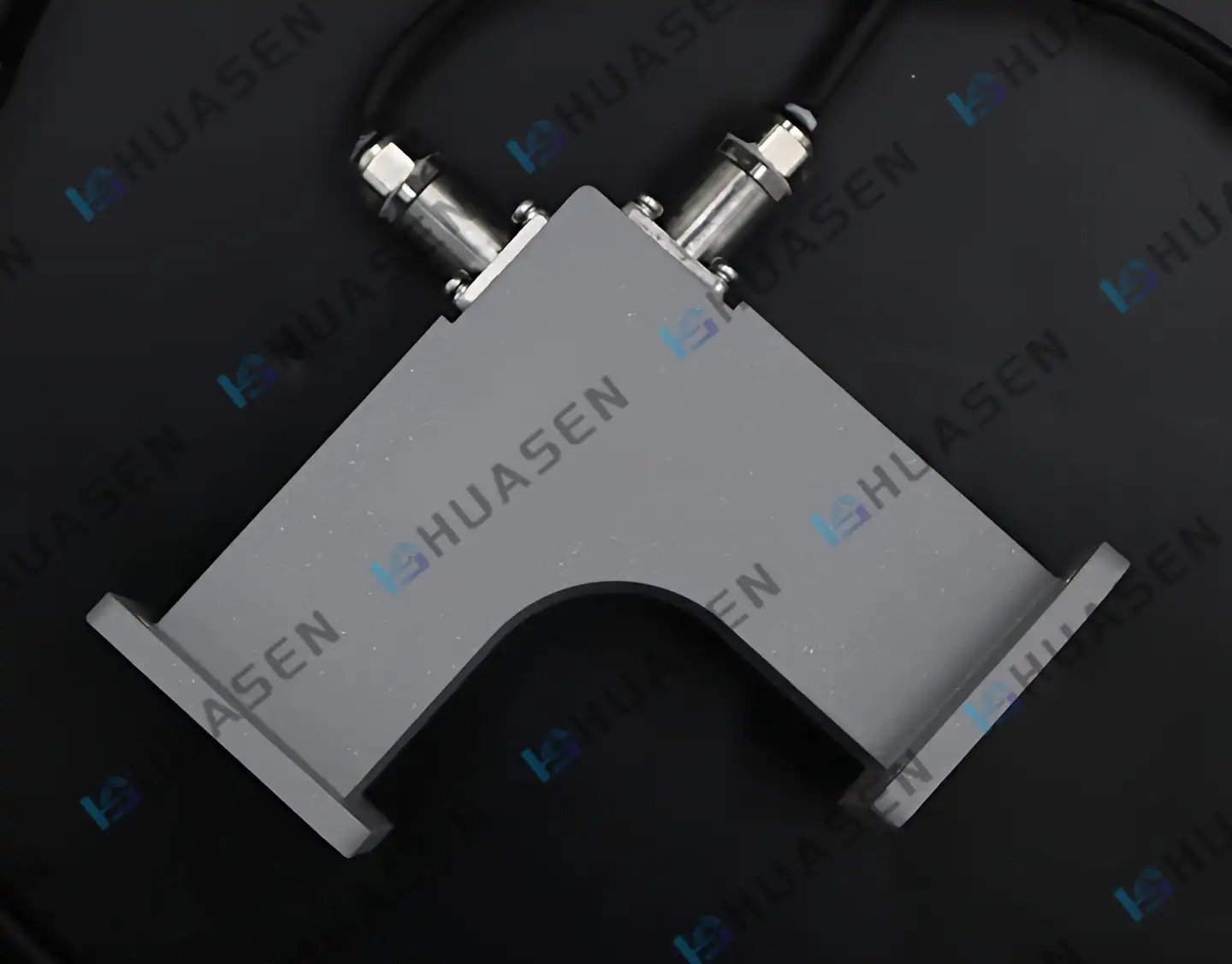
Types of Waveguide Detection Sensors and Their Characteristics
Optical Fibre-Based Detection Systems
Within or near waveguide structures, optical fibre sensors use distributed Bragg gratings or Fabry-Pérot interferometers. These strain, temperature, and vibration sensors have three orders of magnitude more resolution than electrical sensors. Fibre optic arrays monitor thermal expansion of giant parabolic reflectors in satellite communication ground stations, enabling dynamic surface correction algorithms to maintain beam focus throughout daily temperature cycles.
Ultrasonic Guided Wave Sensors
Ultrasonic detection uses piezoelectric transducers to generate Lamb or shear horizontal waves at structural boundaries. Acoustic impedance discontinuities cause partial wave reflection at cracks, corrosion pits, and delamination. Time-of-flight analysis and amplitude mapping recreate millimetre-scale defect patterns.
Maritime communication masts with salt spray corrosion benefit from permanent ultrasonic monitoring arrays that track wall thickness degradation. Preventing catastrophic tower collapses that might cripple offshore platform operations, predictive maintenance algorithms notify inspectors months before structural integrity falls below safety criteria.
Electromagnetic Arc Detection Assemblies
Waveguide detection elements showcomparative benefits. Ultrasonic technologies excel in long-range pipeline inspection, optical systems give unequalled sensitivity for progressive deterioration monitoring, and electromagnetic arc detectors provide the fastest intervention reaction for high-power protection. Fibre optic systems have greater sensor prices but lower installation complexity than ultrasonic arrays, which need precision mounting and acoustic coupling maintenance. Procurement teams must assess upfront costs against lifespan costs.
How to Choose the Right Waveguide Detection System for Your Business?
Defining Operational Requirements
Preventing catastrophic component failures, optimising maintenance intervals, or assuring regulatory compliance are monitoring objectives that guide system selection. To conserve connection budgets, 5G base station integrators seek insertion loss below 0.2 dB, whereas radar manufacturers prefer reaction times under 3 microseconds to safeguard magnetron cavities. Laboratory equipment evaluators require NIST-traceable calibration, which requires sensors with uncertainty budgets and temperature compensation algorithms.
Environmental circumstances determine mechanical specs. Offshore wind farms need IP68 enclosures with corrosion-resistant coatings, while cleanroom semiconductor processing instruments need particle-free Class 10 atmospheric controls. Aerospace applications require sensor materials with matching thermal expansion coefficients to minimise stress-induced calibration drift at -55°C at altitude and +125°C near engine bays.
Evaluating Supplier Capabilities
Supplier evaluation goes beyond product data sheets to production quality and technical support. AS9100 compliance shows aerospace industry knowledge, whereas ISO 9001 certifies process-control maturity. Ask for heat cycling, vibration profiles, and humidity exposure testing to verify product robustness.
When typical catalogue goods cannot suit particular frequency bands, polarisation requirements, or mechanical connections, customisation is essential. For OEM clients incorporating detection systems into unique equipment designs, suppliers with in-house RF modelling, precision machining, and prototype iteration speed development. Check our industry-specific customised case studies.
After-sales support quality directly impacts long-term satisfaction. Check technical support response times, replacement part availability beyond product lifecycles, and on-site commissioning help. Distributors supplying international organisations should ensure local service presence across deployment locations to minimise costly remote installation and troubleshooting delays.
Budget Optimisation Strategies
Acquisition price, installation labour, calibration periods, and maintenance downtime must be included in total cost of ownership estimates. In cases where sensor removal requires production shutdowns, a higher-priced system with 10-year calibration stability may offer a greater ROI than budget options needing yearly recertification.
Volume procurement talks should consider blanket purchase agreements that lock costs for multi-year rollouts and allow project milestone-aligned progressive delivery. Validation testing before full-scale purchases reduces risk when integrating new technologies into mission-critical infrastructure.
Installation, Calibration, and Maintenance Best Practices
Pre-Installation Site Assessment
Environmental studies detect interference, temperature gradients, and mechanical vibration characteristics that might impair sensor accuracy. In closely packed equipment racks like those in telecommunications central offices, electromagnetic compatibility testing ensures that detection devices will not produce erroneous signals in nearby control circuits.
Waveguide routeing pathways must be analysed for gentle bend radii and correct flange torque sequences to reduce insertion loss. Finite element modelling forecasts viewport assembly stress concentrations, guiding mounting bracket designs to minimise thermal cycling cracks. Cleanroom assembly techniques minimise particle contamination from causing high-power arcs.
Calibration Procedures Ensuring Accuracy
The network analyser sweeps over operating bandwidths and sets insertion and return loss baselines. Before system commissioning, investigate manufacturer specification deviations above 0.1 dB. By calibrating optical detection channels with traceable light sources across predicted arc emission spectra, photodetector gain settings can record weak precursor events without saturating during the entire arcs.
Helium mass spectrometry leak testing is required for gas-filled waveguide pressure vessel certifications. ASME pressure vessel paperwork is re-verified annually. To ensure calibration under operational stress profiles, aviation and spacecraft systems undergo MIL-STD-810 vibration testing.
Maintenance Protocols Extending Service Life
Monthly viewport cleaning is advised for industrial heating settings where process vapours may deposit films, limiting optical transmission. Non-abrasive solutions for quartz or sapphire substrates avoid detector sensitivity loss from surface scratches.
During planned maintenance periods, calibrated light sources simulate arc conditions to evaluate shutdown signal propagation across control chains in electronic interlock circuits. Manufacturer firmware upgrades may improve detection algorithms or offer diagnostic capabilities, justifying remote maintenance access.
Trending operational data shows steady degradation, enabling component replacement before breakdowns. VSWR statistical process control charts detect transmission line deterioration, whereas photodetector dark current monitoring forecasts sensor age. These predictive maintenance methods cut unexpected outages by 40% over reactive repairs.
Future Trends and Innovations in Waveguide Detection Technology
Artificial Intelligence Integration
Machine learning systems trained on historical arc event data sets can differentiate hazards from benign transients induced by switching procedures or weather factors. Spectral signature neural networks minimise false alarms by 85%, boosting operator trust in automatic shutdown systems. On defence locations without network access, edge computing allows real-time inference without cloud connectivity.
Digital twin technologies employ sensor data to simulate waveguide networks and forecast component lifespan. Maintenance techniques are tested in simulation settings to balance safety margins and operational availability.
Miniaturisation and Multi-Function Designs
Advances in photonic integrated circuits allow several sensor functionalities in one viewport assembly. Arc detection, power monitoring, and temperature sensors simplify installation and improve diagnostic accuracy with connected datasets. Compact size allows incorporation into space-constrained UAV communication pods and microsatellite transponders.
Microsonic transducers with bandwidths of 1-20 MHz and smaller packages than piezoelectric elements enable higher-resolution flaw imaging in thin-walled aerospace structures. These advancements open up waveguide detection markets previously limited by size and weight.
Sustainability and Regulatory Compliance
Detection is incorporated into sensor assemblies that use lead-free solders and RoHS-compliant materials due to environmental requirements. Companies with circular economy goals are increasingly interested in product take-back initiatives that recycle precious metals from decommissioned equipment. In solar-powered remote monitoring stations, energy-efficient photodetector designs decrease parasitic power use and operational expenses.
Networked sensor systems are protected against unauthorised intervention by evolving cybersecurity standards. Communication protocols and boot processes are encrypted to avoid firmware alterations that disable protection. Security improvements address rising concerns in critical infrastructure sectors exposed to state-sponsored cyberattacks.
Conclusion
Waveguide detection sensors now defend critical RF and microwave infrastructure in telecommunications, defence, and industry. From ultrasensitive optical fibre systems to rapid-response electromagnetic arc detectors, detection methods may be adapted to operational needs and budgets. Successful adoption requires thorough supplier evaluation, site preparation, and disciplined maintenance to maintain calibration fidelity throughout long service lifetimes. AI, downsizing, and sustainability trends promise continuous innovation, making waveguide detection a sensible investment for enterprises emphasising operational dependability and asset protection in demanding applications.
FAQ
1. What advantages do arc detection waveguides offer over standard protection relays?
Compared to millisecond delays in current-monitoring relays, arc detection waveguides directly optically sense plasma generation to give microsecond reaction times. High-power tubes avoid heat damage due to this speed differential. Waveguide integration prevents relay coil circuits from experiencing electromagnetic interference false trips.
2. How does waveguide detection compare to ultrasonic testing in pipeline monitoring?
Traditional ultrasonics need point-by-point human examination, whereas guided wave approaches provide continuous monitoring across kilometres from single transducers. In order to facilitate predictive maintenance, waveguide detection devices can spot corrosion trends before catastrophic thickness loss occurs. Manual surveys need scaffolding and work disruptions. Permanent installations avoid this.
3. What maintenance procedures ensure long-term reliability?
Quarterly viewport cleaning with authorised chemicals preserves optical transmission. Annual pressure vessel leak testing ensures the pressured system's gas retention. Maintenance window interlock circuit testing verifies protection chain integrity. Trend study of baseline VSWR data shows transmission line deterioration before breakdowns.
Partner with a Trusted Waveguide Detection Manufacturer
Huasen Microwave provides precision-engineered arc detection waveguides and monitoring systems for critical infrastructure protection. Our engineering teams have provided bespoke waveguide components to telecommunications carriers, defence contractors, and research institutes worldwide since 1993, winning praise for their high VSWR and MIL-STD-compliant designs. We provide WR-75 through WR-650 waveguide diameters with UV/IR viewport assemblies to match your photodetector systems.
We understand system integrator procurement challenges—balancing performance demands, delivery timeframes, and budgets. Our applications engineers offer free design consulting to help you choose sensor combinations for your power levels, frequency ranges, and environmental exposures. Request product catalogues with technical information or a sub-5-microsecond interlock response demonstration. Contact sales@huasenmicrowave.com to discuss your Waveguide Detection needs with our experts and learn why top enterprises choose us for mission-critical RF protection components.
References
1. Thompson, R.B. & Gray, T.A. (2019). Guided Wave Ultrasonics for Structural Health Monitoring. Cambridge University Press.
2. Miller, J.L. (2020). "Arc Detection Methods in High-Power Microwave Systems," IEEE Transactions on Microwave Theory and Techniques, 68(4), pp. 1542-1556.
3. Chen, W. & Liu, H. (2021). Fiber Optic Sensors: Principles and Applications in Infrastructure Monitoring. Springer Nature.
4. International Electrotechnical Commission (2018). IEC 61000-4-12: Testing and Measurement Techniques – Oscillatory Waves Immunity Test. IEC Standards Publication.
5. Anderson, K.S. (2022). "Predictive Maintenance Using Waveguide Sensor Networks," Journal of Industrial Engineering and Management, 15(2), pp. 298-317.
6. Defense Technical Information Center (2020). MIL-STD-1377: Effectiveness of Cable, Connector, and Weapon Enclosure Shielding and Filters in Precluding Hazards of Electromagnetic Radiation to Ordnance. U.S. Department of Defense Standards.
Send Inquiry