Design Guide: Building a Compact Circularly Polarized Microstrip Antenna






2025-11-25 23:03:26
Planning a compact circularly polarized microstrip antenna is a challenging, however fulfilling, endeavor in the world of RF and microwave building. These receiving wires are basic components in different applications, including GPS collectors, toady communications, and radar frameworks. Their capacity to transmit and receive electromagnetic waves with circular polarization makes them priceless in scenarios where flag introduction is eccentric or continually changing. This plan will walk you through the key considerations and strategies for making a proficient, compact circularly polarized microstrip antenna that meets the demanding requirements of present-day remote communication systems. When setting out on the plan handle, engineers must adjust a few basic components. These incorporate radio wire measure, transmission capacity, radiation effectiveness, and polarization purity. The objective is to accomplish ideal execution within the smallest conceivable frame calculation. This frequently includes making trade-offs between these parameters, as advancements in one region may come at the cost of another. By understanding the fundamental standards and utilizing progressed plan strategies, it's possible to make a compact circularly polarized microstrip antenna that conveys unique performance over a wide range of applications.
Size vs performance: miniaturizing circularly polarized microstrip antennas
Miniaturization is a steady challenge in radio wire plan, especially for circularly polarized microstrip antennas. As remote gadgets have become smaller and more coordinates, the demand for compact receiving wires has developed. Be that as it may, diminishing the length of a radio wire regularly impacts its execution, especially in terms of transfer speed and effectiveness. This size-performance trade-off is an essential thought in radio wire design.
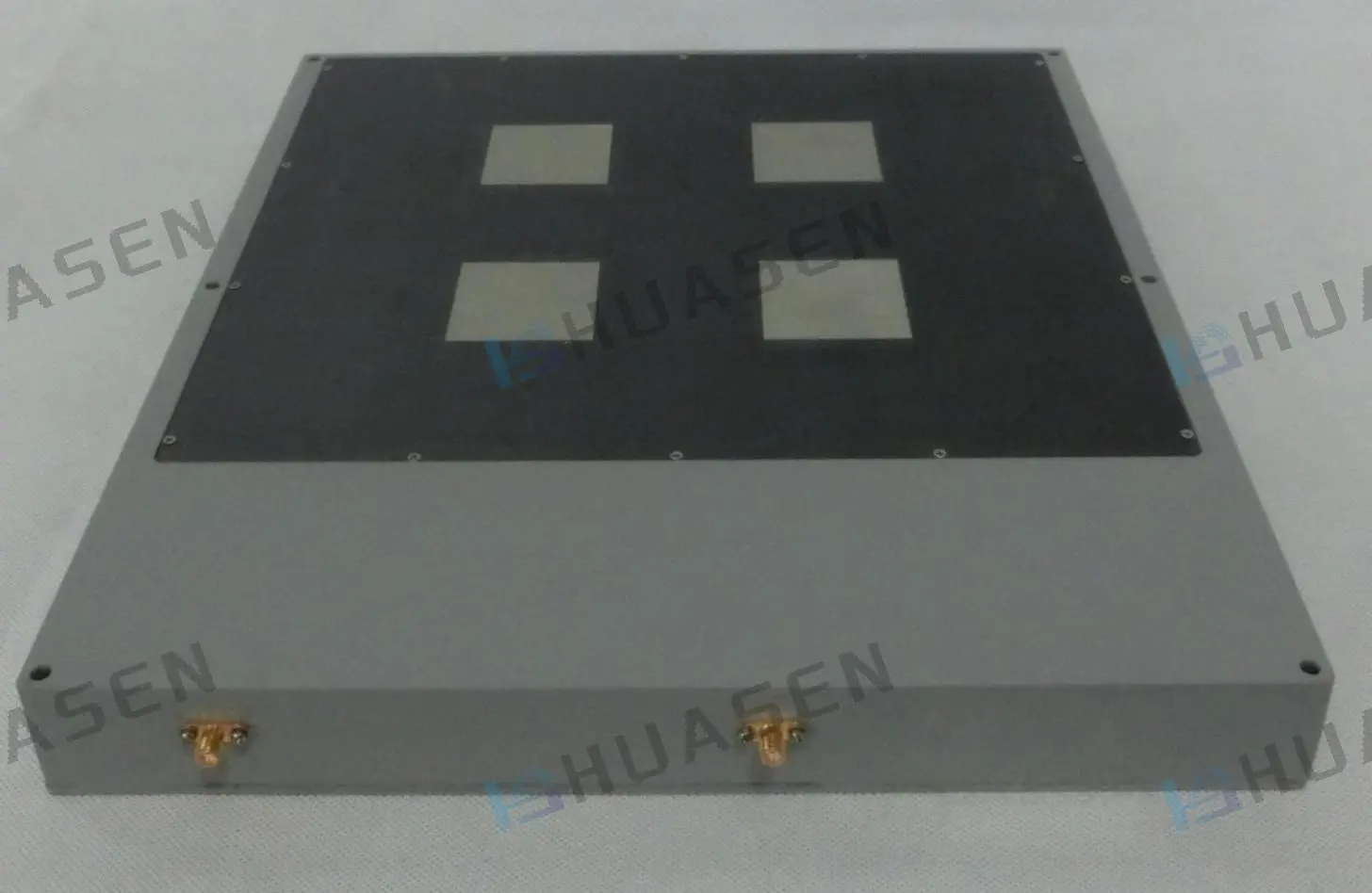
Techniques for antenna miniaturization
Several techniques can be employed to reduce the size of circularly polarized microstrip antennas while maintaining acceptable performance:
- Use of high-permittivity substrates: These materials permit wavelength diminishment, empowering littler receiving wire dimensions.
- Meandering and collapsing: Altering the fix geometry can increment the electrical length, whereas keeping the physical estimate compact.
- Stacking: Numerous layers can be utilized to make a more compact structure with increased bandwidth.
- Metamaterial-inspired plans: Novel structures can be made to control electromagnetic properties and accomplish miniaturization.
When actualizing these methods, originators must carefully consider the effect on the receiving wire execution. For instance, whereas high-permittivity substrates permit for measure lessening, they can also lead to diminished transfer speed and effectiveness. Winding and collapsing procedures may present extra misfortunes and influence the radiation design. The key is to discover an ideal adjustment that meets the particular requirements of the application.
Performance considerations in miniaturization
As antennas are miniaturized, several performance aspects require careful attention:
- Bandwidth: Littler receiving wires, by and large, have smaller transmission capacities. Strategies such as stacking or utilizing broadband coordinating systems can help moderate this issue.
- Efficiency: Compact receiving wires may endure from diminished radiation productivity due to increased misfortunes. Optimizing fabric determination and bolster plan can help keep up satisfactory productivity levels.
- Polarization virtue: Keeping up great circular polarization over the desired recurrence run becomes more challenging as the radio wire length diminishes. Progressed bolster methods and cautious geometry optimization are crucial.
- Gain: Littler radio wires ordinarily have lower pick up. This may be achieved through cluster arrangements or by consolidating gain-enhancing structures.
By carefully considering these factors and employing advanced design techniques, it's possible to create compact circularly polarized microstrip antennas that meet the stringent requirements of modern wireless systems.
Techniques for generating circular polarization in patch antennas (e.g., dual feeds, perturbations)
Generating circular polarization in microstrip fixed radio wires is a vital aspect of the plan that requires cautious thought of support strategies and fix geometry. A few methods can be utilized to accomplish circular polarization, each with its possess focal points and trade-offs.
Dual-feed method
The dual-feed method is a popular technique for generating circular polarization in microstrip antennas. This approach involves feeding the patch at two orthogonal points with a 90-degree phase difference. The key aspects of this method include:
- Feed arrangement plan: A control divider and stage shifter are regularly utilized to make the required adequacy and stage relationships.
- Improved pivotal proportion: Dual-feed arrangements regularly result in way better hub proportion execution compared to single-feed methods.
- Bandwidth contemplations: Whereas advertising great circular polarization, the dual-feed strategy may have transmission capacity impediments due to the frequency-dependent nature of the nourish network.
Designers must carefully optimize the feed locations and network components to achieve the desired circular polarization over the required frequency range.
Single-feed with perturbations
An alternative approach to generating circular polarization is the use of a single feed point combined with geometric perturbations to the patch. This method can offer simplicity and cost advantages over dual-feed designs. Key considerations include:
- Perturbation sorts: Common annoyances include truncated corners, spaces, or jutting segments.
- Optimization handle: The measure and area of irritations must be carefully tuned to accomplish the desired circular polarization.
- Bandwidth trade-offs: Single-feed plans may have smaller circular polarization transfer speed compared to dual-feed configurations.
The choice between dual-feed and single-feed circularly polarized microstrip antennas with perturbations often depends on the specific requirements of the application, including bandwidth, complexity, and cost considerations.
Advanced techniques for circular polarization
In addition to the basic methods, several advanced techniques can be employed to enhance the circular polarization performance of microstrip antennas:
- Stacked patches: Multiple layers can be used to improve bandwidth and axial ratio performance.
- Metamaterial-inspired designs: Novel structures can be created to manipulate electromagnetic properties and achieve improved circular polarization.
- Hybrid techniques: Combining multiple methods, such as using both perturbations and a dual-feed approach, can lead to optimized performance.
These advanced techniques offer designers additional tools to meet the demanding requirements of modern circularly polarized antenna applications.
Substrate and dielectric choice for bandwidth and efficiency
The selection of substrate and dielectric materials plays a crucial role in determining the performance characteristics of circularly polarized microstrip antennas. The choice of these materials significantly impacts key parameters such as bandwidth, efficiency, and overall antenna size.
Substrate considerations
When choosing a substrate for a circularly polarized microstrip antenna, several factors must be taken into account:
- Dielectric constant (εr): The value of εr affects the antenna's size, bandwidth, and efficiency. Lower εr values generally result in wider bandwidth and higher efficiency, but larger antenna size.
- Thickness: Substrate thickness impacts bandwidth and efficiency. Thicker substrates can increase bandwidth but may lead to surface wave excitation and reduced efficiency.
- Loss tangent: This parameter directly affects the antenna's efficiency. Materials with lower loss tangents are preferred for high-efficiency designs.
- Thermal and mechanical properties: The substrate must be able to withstand the environmental conditions of the intended application.
Common substrate materials for microstrip antennas include:
- FR-4: A low-cost option suitable for lower frequency applications.
- Rogers RO4350B: Offers a good balance of performance and cost for many applications.
- Rogers RT/duroid 5880: Provides excellent performance at high frequencies but at a higher cost.
Balancing bandwidth and efficiency
The choice of substrate and dielectric properties involves a trade-off between bandwidth and efficiency:
- Bandwidth enhancement: Using thicker substrates or materials with lower dielectric constants can increase bandwidth. However, this may come at the cost of increased antenna size and potential efficiency reduction due to surface wave excitation.
- Efficiency optimization: Thinner substrates and materials with lower loss tangents can improve efficiency. However, this may result in reduced bandwidth.
Designers must carefully balance these factors based on the specific requirements of their application. In some cases, advanced techniques such as stacked patches or the use of engineered substrates may be employed to achieve both wide bandwidth and high efficiency.
Advanced material considerations
In addition to traditional substrate materials, several advanced options are available for optimizing the performance of circularly polarized microstrip antennas:
- Engineered substrates: Materials with tailored electromagnetic properties can be designed to enhance specific antenna characteristics.
- Composite materials: Combining different materials in a layered structure can offer unique performance benefits.
- Flexible substrates: For applications requiring conformality or flexibility, materials such as polyimide films may be considered.
The selection of substrate and dielectric materials is a critical aspect of designing high-performance circularly polarized microstrip antennas. By carefully considering the trade-offs between various material properties and employing advanced materials where appropriate, designers can create antennas that meet the demanding requirements of modern wireless communication systems.

Conclusion
Designing a compact circularly polarized microstrip antenna requires a cautious adjustment of different components, including estimation, execution, polarization methods, and fabric choice. By understanding the trade-offs included and utilizing progressive plan methods, engineers can make receiving wires that meet the requesting requirements of advanced remote communication systems.
As the request for compact, high-performance antennas proceeds to develop over businesses such as broadcast communications, aviation, and defense, the significance of meeting these plan standards becomes ever more basic. Whether you're creating an unused 5G base station, upgrading obsolete communication frameworks, or progressing radar innovation, the capacity to make proficient, compact circularly polarized microstrip antennas is a valuable skill.
If you're looking to execute cutting-edge receiving wire arrangements in your ventures, consider collaborating with Huasen Microwave Technology Co., Ltd. With our broad involvement in high-frequency microwave and millimeter-wave components, we can give custom-designed circularly polarized microstrip antennas that meet your particular requirements. Our group of specialists is prepared to help you optimize your radio wire plans for maximum execution and proficiency. Contact us nowadays to investigate how our progressed RF and microwave arrangements can lift your following extend.
FAQ
1. What are the main advantages of circularly polarized microstrip antennas?
Circularly polarized microstrip antennas offer several benefits, including reduced multipath interference, improved signal reception regardless of antenna orientation, and better performance in challenging environments such as urban areas or satellite communications.
2. How does the size of a circularly polarized microstrip antenna affect its performance?
Generally, as the size of the antenna decreases, challenges such as reduced bandwidth, lower efficiency, and potential degradation of circular polarization purity may arise. However, advanced design techniques can help mitigate these issues to achieve compact yet high-performing antennas.
3. What are the key factors to consider when choosing a substrate for a circularly polarized microstrip antenna?
Important factors include the dielectric constant, thickness, loss tangent, and thermal/mechanical properties of the substrate. These properties affect the antenna's size, bandwidth, efficiency, and overall performance.
4. How can the bandwidth of a circularly polarized microstrip antenna be improved?
Bandwidth can be enhanced through techniques such as using thicker substrates, employing stacked patch designs, implementing broadband matching networks, or utilizing advanced materials with optimized electromagnetic properties.
Optimize Your Wireless Systems with Custom Circularly Polarized Microstrip Antennas | Huasen Microwave
Ready to elevate your wireless communication systems with high-performance, compact circularly polarized microstrip antennas? Huasen Microwave Technology Co., Ltd. offers custom-designed solutions tailored to your specific requirements. Our team of expert engineers can help you navigate the complexities of antenna design, ensuring optimal performance for your applications in telecommunications, radar, aerospace, and defense.
Don't settle for off-the-shelf components that may not meet your exact needs. Contact us today at sales@huasenmicrowave.com to discuss how our advanced RF and microwave solutions can enhance your projects. Let's work together to push the boundaries of wireless technology and drive innovation in your industry.
References
1. Kumar, G., & Ray, K. P. (2003). Broadband Microstrip Antennas. Artech House.
2. Garg, R., Bhartia, P., Bahl, I., & Ittipiboon, A. (2001). Microstrip Antenna Design Handbook. Artech House.
3. Pozar, D. M., & Schaubert, D. H. (1995). Microstrip Antennas: The Analysis and Design of Microstrip Antennas and Arrays. Wiley-IEEE Press.
4. Balanis, C. A. (2016). Antenna Theory: Analysis and Design, 4th Edition. Wiley.
5. Chen, Z. N., Liu, D., Nakano, H., Qing, X., & Zwick, T. (2017). Handbook of Antenna Technologies. Springer.
6. Maci, S., & Gentili, G. B. (1997). Dual-frequency patch antennas. IEEE Antennas and Propagation Magazine, 39(6), 13-20.
Send Inquiry