Top Applications of Twistable Flexible Waveguide in Rotating Platforms






2026-01-23 22:59:24
Rotating platforms present unique challenges in microwave signal transmission where traditional rigid waveguide systems fail catastrophically. Misalignment during rotation causes signal degradation, mechanical stress fractures, and system downtime that costs organizations thousands in maintenance and lost operational capability. Twistable Flexible Waveguide technology solves these critical pain points by maintaining consistent electrical performance during continuous rotational movement while absorbing mechanical stresses that would otherwise compromise system reliability. This article explores the essential applications where Waveguide Flex components enable mission-critical rotating platform operations across radar, satellite tracking, aerospace, and telecommunications industries.
Understanding Twistable Flexible Waveguide Technology for Dynamic Systems
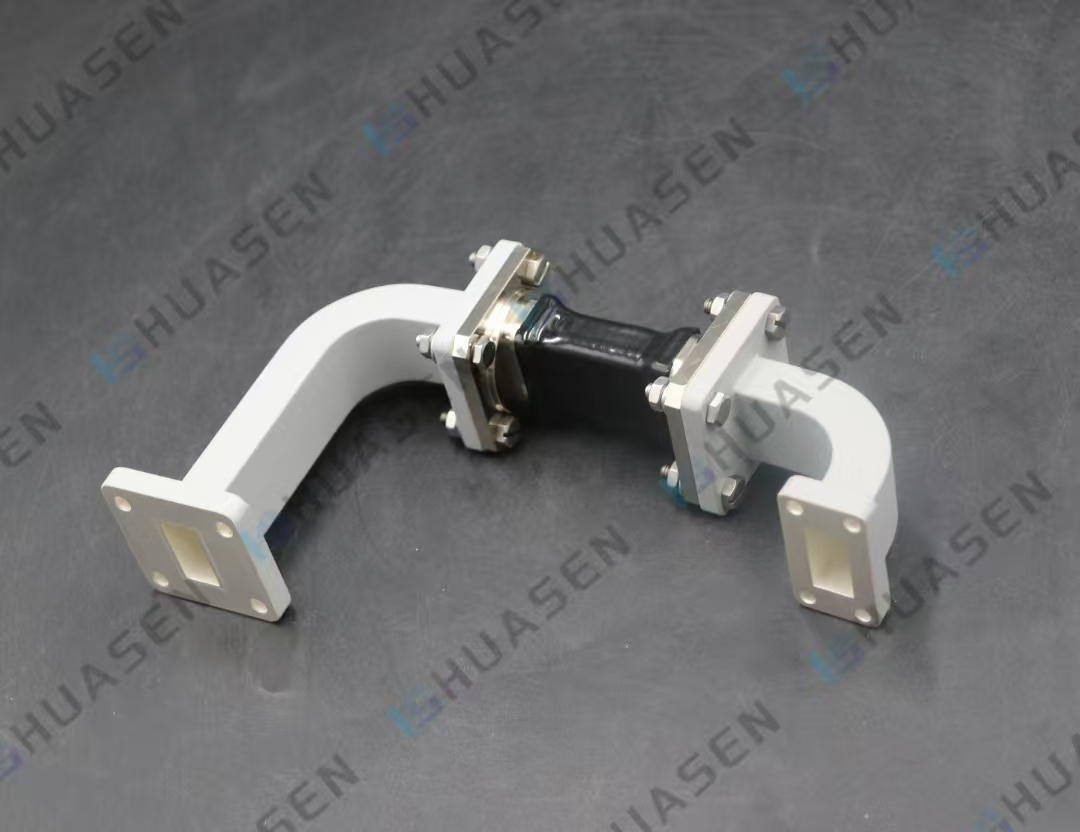
Twistable Flexible Waveguide represents a fundamental advancement in microwave transmission engineering, specifically designed to accommodate both bending and twisting movements while preserving optimal signal integrity. The construction methodology employs helically wound silver-coated brass strips that form a continuous rectangular tube with specialized interlocking layers, surrounded by protective neoprene jackets that provide mechanical support and environmental sealing. This sophisticated design enables the waveguide to flex in both E-plane and H-plane orientations while simultaneously twisting along its longitudinal axis, a capability impossible with rigid waveguide alternatives or even non-twistable flexible variants.
The manufacturing process for Twistable Flexible Waveguide involves precision winding techniques where silver-plated brass strips are helically formed around rectangular mandrels to extremely close tolerances, ensuring consistent internal geometry throughout the operational range of motion. The interlocking structure creates electrical continuity through friction joints while maintaining the rectangular waveguide cross-section essential for proper mode propagation. External jackets manufactured from neoprene or specialized silicone materials are vulcanized to the core using thermal compression techniques, creating an integrated assembly that provides vibration isolation, pressure sealing capabilities, and protection against environmental contaminants including moisture ingress and ozone degradation.
Critical Performance Parameters in Rotating Applications
The electrical performance characteristics of Twistable Flexible Waveguide in rotating platforms depend on several critical parameters that engineering teams must carefully evaluate during system design. Insertion loss represents the primary electrical consideration, as the helical construction inherently introduces higher attenuation compared to rigid waveguide sections, typically ranging from additional losses of several tenths of a decibel per meter depending on frequency band and flexure state. The dynamic insertion loss variation during rotation cycles must remain within acceptable tolerances to maintain link budget margins, particularly in applications where continuous rotation occurs over extended operational periods.
Voltage standing wave ratio performance in Waveguide Flex assemblies remains stable across the operational frequency band when properly installed, though designers must account for the impedance discontinuities created at the transition points between rigid and flexible sections. The twisting capability introduces additional complexity in VSWR performance, as the helical structure experiences varying degrees of mechanical deformation throughout rotation cycles. Modern Twistable Flexible Waveguide designs from manufacturers like Huasen Microwave Technology maintain VSWR specifications below critical thresholds through precision manufacturing tolerances and advanced surface treatment processes that ensure consistent electrical properties throughout the component's operational envelope.
Radar Systems with Continuous Azimuth Rotation Requirements
Rotating radar antenna systems represent one of the most demanding applications for Twistable Flexible Waveguide technology, where antennas must complete continuous 360-degree rotations while maintaining uninterrupted signal transmission between stationary RF equipment and the rotating antenna assembly. Air traffic control radar installations, marine navigation systems, and military surveillance platforms require reliable microwave connections that withstand millions of rotation cycles without degradation in electrical performance or mechanical integrity. The unique twisting capability of WEL-type Waveguide Flex enables direct connection between the fixed transmitter/receiver equipment and the rotating antenna platform without requiring complex rotary joints that introduce additional losses and potential failure points.
The mechanical design considerations for radar applications demand careful attention to the installation geometry of the Twistable Flexible Waveguide to ensure optimal performance throughout the rotation envelope. Engineers must calculate the appropriate length and routing path that allows the waveguide to accommodate the full rotation range while maintaining minimum bend radius specifications and avoiding excessive mechanical stress accumulation. The helical construction naturally absorbs torsional forces generated during rotation, distributing mechanical loads across the entire waveguide structure rather than concentrating stress at specific points as occurs with rigid connections.
Military and Defense Radar Platform Integration
Military radar installations operating on mobile platforms including ground vehicles, naval vessels, and temporary deployment sites require Twistable Flexible Waveguide solutions capable of withstanding extreme environmental conditions while maintaining mission-critical performance standards. These applications demand waveguides that perform reliably across wide temperature ranges from arctic conditions to desert environments, resist corrosion from salt spray exposure in maritime deployments, and maintain electrical specifications despite exposure to shock loads and sustained vibration from vehicle operation or weapon system recoil events. The aluminum and copper construction options with specialized surface treatments including silver plating and protective oxidation layers provide the necessary corrosion resistance and mechanical strength for these demanding operational scenarios.
The rapid deployment requirements of tactical radar systems benefit significantly from the installation advantages of Waveguide Flex components compared to rigid waveguide assemblies requiring precise alignment and custom fabrication. Field technicians can install Twistable Flexible Waveguide connections in minutes rather than hours, reducing system deployment time and enabling faster operational readiness. The flexibility eliminates the need for perfectly aligned mounting structures, accommodating field conditions where precise positioning may be impossible due to terrain constraints or vehicle mounting limitations. This installation efficiency translates directly to operational advantages in scenarios where rapid radar deployment determines mission success or failure.
Satellite Ground Station Tracking Antenna Applications
Satellite tracking ground stations employ large parabolic antennas that must continuously adjust their azimuth and elevation angles to maintain alignment with orbiting satellites as they traverse the sky. These tracking movements create complex three-dimensional motion patterns that would be impossible to accommodate with rigid waveguide connections between the antenna feed system and the stationary RF equipment housed in temperature-controlled shelters. Twistable Flexible Waveguide provides the essential mechanical compliance needed for these tracking applications while maintaining the low-loss signal transmission required for satellite communication links operating at frequencies from C-band through Ka-band and beyond.
The dual-axis tracking motion characteristic of satellite ground stations presents unique challenges for waveguide routing that capitalize on the simultaneous bending and twisting capabilities of advanced Waveguide Flex designs. As the antenna pedestal executes elevation adjustments while simultaneously rotating in azimuth to follow satellite orbital paths, the waveguide assembly must accommodate both angular motions without binding, kinking, or exceeding minimum bend radius limitations that would compromise signal integrity. Proper installation techniques specify controlled routing paths with adequate service loops that allow the natural flexibility of the Twistable Flexible Waveguide to accommodate the full range of tracking motions without introducing excessive mechanical stress or electrical performance degradation.
High-Frequency Millimeter-Wave Tracking Systems
Advanced satellite communication systems operating in millimeter-wave frequency bands including Ka-band and W-band place exceptional demands on Twistable Flexible Waveguide performance characteristics due to the increased sensitivity to insertion loss and the tighter dimensional tolerances required at these higher frequencies. The precision manufacturing capabilities demonstrated by suppliers like Huasen Microwave Technology become critical for these applications, where variations in the helical winding consistency or internal waveguide dimensions of even a few micrometers can cause significant degradation in electrical performance. Specialized dual-ridge flexible waveguide variants designated as DRWEL types extend operational bandwidth while maintaining acceptable loss characteristics for wideband millimeter-wave tracking applications.
The environmental protection requirements for satellite ground station installations necessitate robust jacketing materials and sealing technologies that prevent moisture ingress into the waveguide interior, as water contamination causes catastrophic increases in insertion loss at millimeter-wave frequencies. The non-twistable WWEL variants offer superior airtightness through solder-filled interlocks that eliminate RF and pressure leakage paths, making them suitable for portions of the waveguide run where twisting motion is not required but maximum environmental sealing is essential. System designers often specify hybrid waveguide assemblies combining both twistable and non-twistable sections to optimize the balance between mechanical flexibility and electrical performance across the complete signal path from equipment shelter to antenna feed.
Aerospace Platform Communication Systems
Aircraft and spacecraft communication systems require Waveguide Flex solutions that accommodate the unique mechanical environments characteristic of aerospace platforms, including sustained vibration from propulsion systems, thermal cycling between extreme temperature ranges during flight operations, and the need for lightweight construction to minimize payload penalties. Twistable Flexible Waveguide assemblies serve critical functions connecting avionics bay equipment to exterior antenna installations on both manned and unmanned aircraft, where the vibration isolation capabilities prevent mechanical stress transmission that could damage sensitive RF components or create intermittent electrical connections in rigid waveguide assemblies.
The aerospace qualification requirements demand extensive testing and certification processes to verify Waveguide Flex performance under the environmental conditions specified in standards including DO-160 for airborne equipment and various military specifications for defense applications. These qualification protocols evaluate insertion loss stability across temperature cycling from -55°C to +125°C, mechanical integrity during sustained vibration testing at acceleration levels exceeding operational requirements, and hermeticity maintenance after thermal shock exposure. Manufacturers like Huasen Microwave Technology with ISO certification and comprehensive testing capabilities including thermal chambers, vibration test benches, and coordinate measuring machines provide the necessary quality control infrastructure to support aerospace qualification programs.
Unmanned Aerial Vehicle Communication Links
The proliferation of unmanned aerial vehicles for applications ranging from military reconnaissance to commercial package delivery creates substantial demand for lightweight, reliable Twistable Flexible Waveguide assemblies that enable communication between ground control stations and airborne platforms. These systems typically employ gimbaled antenna platforms mounted on the UAV airframe that must track the ground control station position while the aircraft executes flight maneuvers, creating complex relative motion between the antenna gimbal and the fixed RF equipment housed within the aircraft fuselage. The Waveguide Flex connection accommodates this articulation while maintaining the signal integrity required for command uplink and data downlink transmissions.

The space and weight constraints characteristic of UAV platforms favor elliptical waveguide variants designated as TWEL or EWEL types that provide reduced cross-sectional dimensions compared to standard rectangular waveguide while maintaining acceptable electrical performance for the application frequency bands. The precision manufacturing of elliptical waveguide geometries requires specialized tooling and quality control processes to ensure consistent dimensions along the entire waveguide length, as variations in the elliptical cross-section parameters directly impact cutoff frequency and mode propagation characteristics. Advanced surface treatments including silver plating enhance conductivity and reduce insertion loss while protective coatings prevent oxidation that would degrade performance during the extended operational lifetimes demanded by aerospace applications.
Shipboard Rotating Communication and Navigation Systems
Naval vessels employ numerous rotating communication and radar systems for navigation, threat detection, and tactical communications that require robust Twistable Flexible Waveguide installations capable of withstanding the harsh maritime environment including salt spray exposure, temperature variations, and the continuous vibration and shock loads generated by wave action and shipboard machinery operation. Rotating mast-mounted antenna systems for satellite communications must maintain link connectivity while the ship maneuvers and the antenna pedestal continuously adjusts to compensate for vessel motion, creating a demanding operational scenario where waveguide reliability directly impacts mission capability.
The corrosion resistance provided by specialized surface treatments becomes paramount for maritime Waveguide Flex applications, where salt-laden atmosphere accelerates oxidation and degradation of exposed metal surfaces. The protective neoprene jackets standard on Huasen Microwave products provide the first line of defense against environmental contamination, while the underlying aluminum or copper construction with oxidized or silver-plated surface finishes ensures long-term performance even if the outer jacket sustains damage during operational use. The mechanical strength of these materials combined with the shock-absorbing properties of the flexible construction enable waveguide assemblies to survive the severe impact events that occur during heavy weather operations or combat damage scenarios.
Integration with Stabilized Maritime Platforms
Advanced maritime communication systems employ gyro-stabilized antenna platforms that maintain precise pointing angles despite ship motion in rough seas, enabling continuous satellite communication links for applications including internet connectivity, secure military communications, and vessel tracking systems. These stabilized platforms incorporate multiple axes of motion correction that create complex waveguide routing challenges, as the antenna assembly must articulate in azimuth and elevation while the stabilization system introduces additional relative motion between the antenna and the shipboard equipment installation. Twistable Flexible Waveguide accommodates these multi-axis movements through proper installation design that provides adequate service loops and routing paths allowing the natural flexibility to absorb all motion components without excessive stress accumulation.
The testing and verification processes for maritime waveguide installations must confirm performance across the full operational envelope including maximum rotation rates, extreme angular excursions, and combined motion scenarios representing actual at-sea conditions. The comprehensive testing capabilities available from manufacturers like Huasen Microwave including microwave anechoic chambers for antenna pattern measurements and vector network analyzers for insertion loss verification enable complete characterization of installed waveguide assembly performance prior to vessel deployment. These pre-installation testing protocols identify potential issues with routing geometry, bend radius violations, or mechanical interference that could compromise system reliability during operational use, preventing costly failures after vessel commissioning.
Conclusion
Twistable Flexible Waveguide technology enables critical rotating platform applications across radar, satellite tracking, aerospace, and maritime communication systems where rigid connections fail. The superior mechanical compliance and electrical performance of modern Waveguide Flex designs from qualified manufacturers ensure reliable operation in demanding environments.
Cooperate with Huasen Microwave Technology Co., Ltd.
As a China Twistable Flexible Waveguide manufacturer with over 30 years of industry expertise, Huasen Microwave Technology Co., Ltd. delivers high-quality Twistable Flexible Waveguide solutions at competitive Twistable Flexible Waveguide prices. Our ISO-certified production facilities spanning over 3,000 square meters employ advanced CNC machining, comprehensive testing capabilities including multiple anechoic chambers, and over 60 precision measurement instruments ensuring every Waveguide Flex component meets exacting specifications. Whether you need WEL twistable variants, WWEL non-twistable seamless designs, DRWEL dual-ridge configurations, or TWEL elliptical waveguides, our experienced engineering team provides customized solutions for your specific application requirements. As your trusted China Twistable Flexible Waveguide supplier and China Twistable Flexible Waveguide factory, we offer High Quality Twistable Flexible Waveguide for sale with complete technical support, rapid prototyping capabilities, and China Twistable Flexible Waveguide wholesale options for volume requirements. Contact our sales team at sales@huasenmicrowave.com to discuss your project specifications and receive detailed quotations for custom waveguide assemblies backed by our comprehensive quality assurance and one-year warranty coverage.
References
1. Balanis, Constantine A. "Advanced Engineering Electromagnetics," John Wiley & Sons, 2012. Chapter on waveguide propagation and flexible waveguide design considerations.
2. Pozar, David M. "Microwave Engineering," Fourth Edition, Wiley, 2011. Sections covering waveguide theory, flexible waveguide construction, and insertion loss analysis.
3. Clarricoats, P.J.B. and Olver, A.D. "Corrugated Horns for Microwave Antennas," IEE Electromagnetic Waves Series, 1984. Discussion of flexible waveguide feed systems for tracking antennas.
4. Skolnik, Merrill I. "Radar Handbook," Third Edition, McGraw-Hill Education, 2008. Coverage of rotating antenna feed systems and waveguide rotary joint alternatives.
5. Maral, Gerard and Bousquet, Michel. "Satellite Communications Systems: Systems, Techniques and Technology," Fifth Edition, Wiley, 2009. Sections on ground station antenna tracking mechanisms and waveguide routing considerations.
Send Inquiry