Standard Gain Horn Antenna for Outdoor Test: Dustproof Protection Tips






2026-02-17 22:33:40
Standard gain horn antenna technology represents a cornerstone of precision RF measurements, particularly when deployed in challenging outdoor environments. These precision-engineered devices serve as metrological references across frequency ranges spanning 30 MHz to 300 GHz, delivering exceptional accuracy guarantees of ±0.5 dB. However, standard gain horn antenna outdoor testing scenarios expose these valuable instruments to harsh environmental conditions, making dustproof protection strategies essential for maintaining measurement integrity and equipment longevity.

Understanding Standard Gain Horn Antennas for Outdoor Use
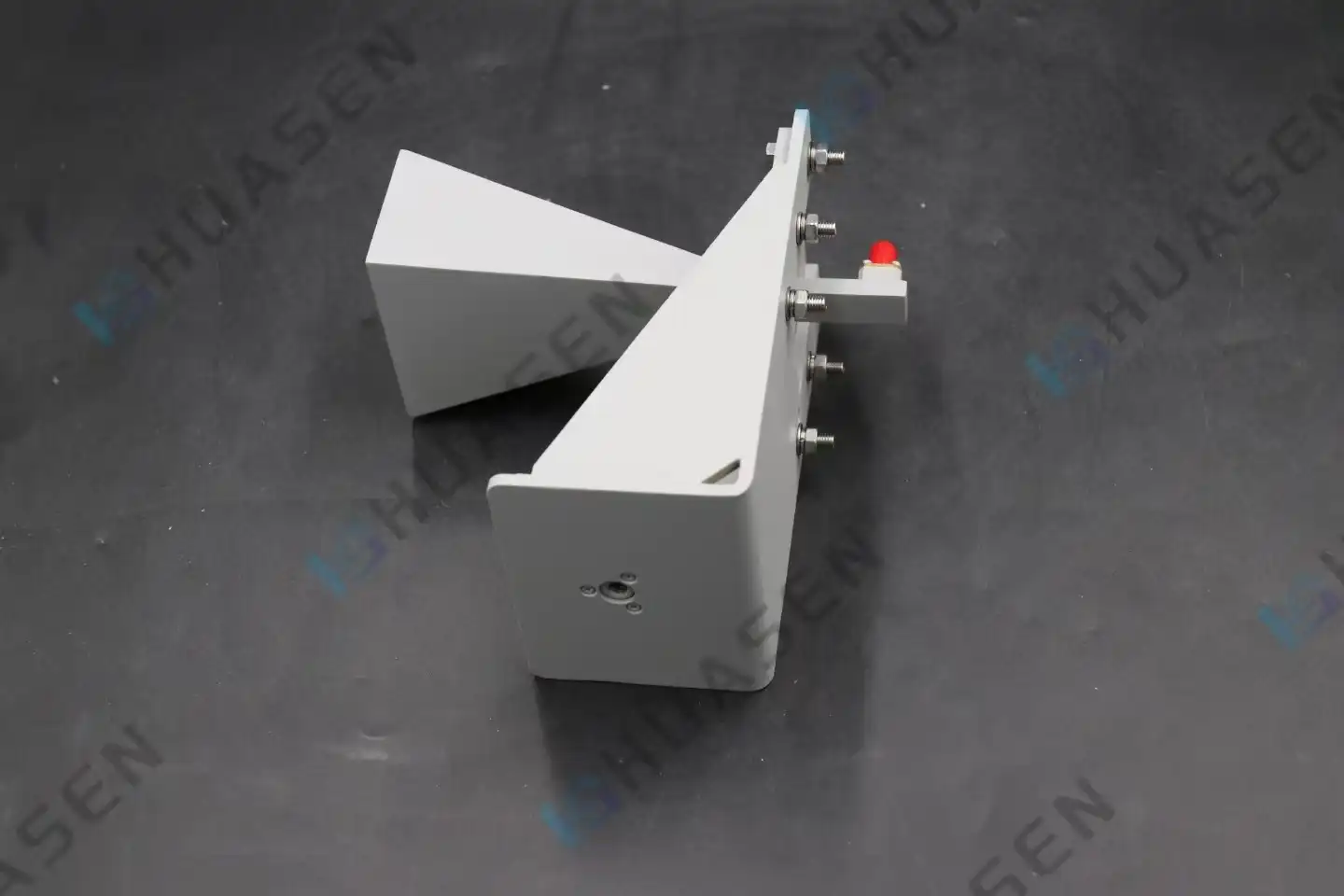
Standard gain horn antennas function as critical reference tools in outdoor microwave and antenna testing applications, distinguished by their well-defined radiation patterns and stable gain characteristics across specified frequency ranges. These precision instruments operate on fundamental electromagnetic principles, utilizing geometrically calculated apertures to provide predictable gain curves that serve as measurement standards in field environments.
Design Parameters and Operational Principles
The electromagnetic design of horn antennas relies on controlled aperture expansion from the waveguide throat to the radiating opening. This geometric configuration creates directional radiation patterns with minimal sidelobes, making these devices invaluable for accurate field strength measurements. Modern horn antennas achieve gain values ranging from 10 dB to 25 dB, with linear polarization characteristics that ensure consistent cross-polarization discrimination exceeding 25 dB in most applications. Construction methodologies vary based on operating frequency requirements. Lower frequency units utilize aluminum arc welding for structural integrity, while higher frequency applications demand copper-silver brazing techniques. Millimeter-wave and higher frequency implementations require precision machining to maintain dimensional tolerances critical for theoretical gain accuracy.
Comparative Analysis with Alternative Horn Types
When comparing standard gain horns to pyramidal and sectoral horn configurations, several distinguishing factors emerge that favor standard designs for outdoor measurement scenarios. Pyramidal horns offer broader bandwidth capabilities but sacrifice gain accuracy, while sectoral horns provide limited directional control in one plane. Standard gain horn antennas deliver superior performance where consistent gain and precise directional control remain paramount requirements. The metrological advantage of standard gain designs stems from their physics-based gain calculations, which enable theoretical validation of measured performance. This characteristic proves essential in outdoor calibration scenarios where reference uncertainty must remain minimized to ensure measurement traceability to national standards.
Common Challenges of Using Standard Gain Horn Antennas Outdoors
Outdoor deployment of standard gain horn antennas encounters significant operational challenges that directly impact measurement accuracy and equipment reliability. Environmental exposure creates multiple failure modes that compromise antenna performance, a standard gain horn requiring comprehensive protection strategies to maintain operational effectiveness.
Environmental Impact on Antenna Performance
Dust accumulation represents the most prevalent threat to outdoor horn antenna operation. Particulate matter settling within the antenna aperture alters the effective radiating surface, causing gain degradation and radiation pattern distortion. Research indicates that dust layers as thin as 0.1 millimeters can produce measurable gain reduction, particularly at higher frequencies where dimensional tolerances become increasingly critical. Moisture infiltration compounds dust-related issues by creating conductive pathways that alter impedance characteristics and increase insertion loss. Combined with thermal cycling effects, these conditions accelerate corrosion processes that permanently degrade antenna performance beyond acceptable limits for precision measurements.
Calibration Complications in Field Environments
Proper calibration procedures become significantly more complex when environmental factors introduce measurement uncertainties. Dust and debris contamination skews calibration results, leading to systematic errors that propagate through subsequent measurements. The challenge intensifies when calibration must occur in remote locations where controlled environmental conditions cannot be maintained. Temperature variations in outdoor environments create additional calibration challenges through thermal expansion effects on antenna dimensions. These changes affect the relationship between theoretical and measured gain values, requiring temperature compensation techniques or frequent recalibration intervals to maintain measurement accuracy within acceptable bounds.
Effective Dustproof Protection Principles and Methods
Implementing robust dustproofing strategies requires understanding fundamental protection principles that address both immediate contamination prevention and long-term environmental resistance. Effective protection systems must balance environmental sealing with signal integrity preservation to maintain antenna performance specifications.
Core Protection Principles
Meticulous sealing approaches form the foundation of effective dustproof protection systems. Environmental sealing must prevent particulate ingress while maintaining electromagnetic transparency at operating frequencies. This balance requires careful selection of sealing materials that exhibit minimal dielectric loss and stable electrical properties across temperature ranges encountered in outdoor applications. Corrosion-resistant material selection becomes crucial for long-term reliability in harsh environments. Stainless steel hardware, marine-grade aluminum alloys, and appropriate surface treatments provide enhanced durability compared to standard materials. These materials resist galvanic corrosion while maintaining structural integrity under mechanical stress from standard gain hornwind loading and thermal cycling.
Practical Implementation Techniques
- Specialized protective covers represent the most common approach to dust prevention in outdoor antenna installations. These covers utilize radome materials that provide environmental protection while maintaining RF transparency. Modern radome designs incorporate hydrophobic coatings that prevent moisture accumulation and facilitate self-cleaning through wind action.
- Here are the primary protection methods that have proven most effective in field applications:
- Environmental Enclosures: Complete antenna housing systems that provide comprehensive protection while maintaining accessibility for maintenance operations, typically constructed from weatherproof materials with filtered ventilation systems
- Protective Radomes: RF-transparent covers that shield the antenna aperture from direct environmental exposure while preserving radiation characteristics, often incorporating anti-static treatments to prevent dust attraction
- Sealed Waveguide Interfaces: Specialized gasket systems and weatherproof connectors that prevent moisture and particulate ingress at critical interface points, utilizing materials compatible with precision RF applications
Together, these protection methods make complete environmental barriers that keep antenna performance high and allow reliable operation outside. The success of implementation rests on choosing the right tools and methods for installation that take into account the environment and the needs of the business.
Performance Validation Through Case Studies
Leading makers have shown that systematic dustproof protection can improve performance by a large amount. Studies in the field show that antennas that are properly protected keep their gain stable within 0.2 dB over long periods of time outside, while antennas that aren't properly protected lose more than 1.0 dB within months of being deployed. Long-term reliability data show that full protection systems make antennas last three to five times longer than installations that aren't secured. These changes directly lead to lower repair costs and more reliable measurements in serious situations.
Choosing the Right Standard Gain Horn Antenna and Dustproof Solutions for Outdoor Tests
To choose the right antenna systems for harsh outdoor conditions, you need to carefully look at their technical specs and environmental safety features. To make sure long-term operation goes well, decision factors must include frequency performance, mechanical durability, and the effectiveness of the protection system.
Technical Selection Criteria
When choosing horn antennas for outdoor use, frequency range agreement is the most important technical factor. Modern designs with frequency ranges from 30 MHz to 300 GHz meet most measurement needs, and customisation options let them go up to 3 THz for specific uses. Getting stable across the working bandwidth makes sure that measurements are always accurate across the frequency range. To make sure that the radiation pattern stays reliable in harsh environments, the ways that antennas are built need to be carefully looked at. Precision-machined designs usually have better dimensional stability than manufactured ones. This is especially important for users who need long-term calibration stability.
Environmental Protection Evaluation
Assessing protection system effectiveness requires understanding specific environmental challenges present at deployment sites. Desert environments demand enhanced dust sealing, while coastal locations require increased corrosion resistance. Arctic applications need thermal cycling protection, and tropical regions require a humidity standard horn antenna and UV resistance. The selection process must consider integration requirements between antenna systems and protection hardware. Compatibility between mounting systems, environmental enclosures, and existing infrastructure affects both initial installation costs and long-term maintenance requirements.
Supplier Capability Assessment
Evaluating supplier capabilities encompasses technical support, customization options, and delivery performance. Responsive technical support becomes crucial when field issues arise, particularly in remote locations where immediate manufacturer assistance may be required. Customization capabilities enable tailoring solutions to specific application requirements and environmental conditions. Quality assurance programs and certification compliance indicate supplier commitment to producing reliable products suitable for demanding applications. ISO certification, MIL-STD compliance, and NIST-traceable calibration demonstrate adherence to industry standards essential for precision measurement applications.

Best Practices for Outdoor Standard Gain Horn Antenna Maintenance
To keep outdoor antennas working at their best, you need to use a systematic method that includes both preventative maintenance and corrective actions. Maintenance programs that work well combine the number of inspections with the needs of operations to keep equipment available as much as possible while keeping measurement accuracy.
Inspection and Cleaning Protocols
At regular intervals, inspections should take into account the antenna's criticality and the nearby environment. If the area is dusty, eye checks may need to be done once a week, but if the area is clean, monthly checks may be fine. Inspection methods should keep track of the state of the antenna, the integrity of the protection system, and any changes in performance that can be seen. Cleaning methods need to get rid of dirt and grime without hurting antennas or safety systems. Cleaning with compressed air is good for getting rid of loose particles, but cleaning stubborn deposits might need a solvent that is safe for antenna building. Abrasive materials that could change the surface finish or the accuracy of measurements should never be used in cleaning.
Calibration and Performance Verification
Regular calibration plans make sure that measurements stay accurate even when they are exposed to the environment. Calibration intervals rely on how accurate the application needs to be and how stable the performance has been seen to be. For example, critical applications might need to be checked every three months, while routine tests might be fine with once a year. Field calibration methods need to take into account things in the surroundings that make it impossible to get measurements as accurate as those done in a lab. Portable calibration devices and reference standards make it possible to check things on-site without having to take the antennas off. When calibration is done in a place that isn't normally used for that purpose, temperature adjustment is needed.
Storage and Handling Guidelines
Using the right storage methods will keep antennas safe while they are being moved and between deploys. The temperature and humidity in storage areas should stay steady, and mechanical damage should be avoided. Protective packaging must keep antennas safe from shock and pressure while still letting them be inspected regularly. When handling things during installation and repair work, you need to be very careful not to damage the machines, which could affect how well they work. Precision-manufactured parts must not be distorted, so lifting points and support methods must spread loads correctly.
Conclusion
Standard gain horn antennas require comprehensive dustproof protection strategies to maintain performance in outdoor testing environments. Effective protection combines proper equipment selection, standard horn antennasystematic installation procedures, and proactive maintenance practices. Understanding environmental challenges and implementing appropriate protection methods ensures reliable operation while preserving measurement accuracy essential for professional applications. Success depends on balancing protection effectiveness with operational requirements to achieve optimal long-term performance.
FAQ
1. What are the most critical dustproofing considerations for outdoor horn antenna installations?
Environmental sealing represents the most critical factor, requiring protection systems that prevent particulate ingress while maintaining RF transparency. Proper material selection, including corrosion-resistant hardware and weatherproof sealing compounds, ensures long-term reliability. Installation quality significantly affects protection effectiveness, making professional installation procedures essential for optimal performance.
2. How does dust accumulation affect antenna measurement accuracy?
Dust layers alter the effective radiating aperture, causing gain reduction and radiation pattern distortion. Even thin dust accumulations can produce measurable performance degradation, particularly at higher frequencies where dimensional tolerances become critical. Regular cleaning and protection system maintenance prevent accuracy degradation that could compromise measurement validity.
3. What protection methods work best in extremely dusty environments?
Complete environmental enclosures provide the most effective protection in severe dust conditions. These systems combine physical barriers with filtered ventilation to maintain internal cleanliness while preserving antenna accessibility. Sealed radome systems offer alternative solutions where complete enclosure proves impractical, providing direct aperture protection with minimal impact on radiation characteristics.
4. How often should protected outdoor antennas require maintenance?
Maintenance frequency depends on environmental severity and protection system design. Well-protected installations in moderate environments may require only quarterly inspections, while harsh conditions might demand monthly attention. Systematic inspection schedules help identify emerging issues before they affect measurement performance, reducing overall maintenance costs through preventive action.
5. Can dustproof protection systems affect antenna performance?
Properly designed protection systems have minimal impact on antenna performance when implemented correctly. RF-transparent materials and appropriate geometric designs preserve radiation characteristics while providing environmental protection. Regular performance verification ensures protection systems continue meeting specifications throughout their service life.
Partner with Huasen Microwave for Superior Antenna Protection Solutions
Huasen Microwave Technology delivers industry-leading standard gain horn antenna solutions engineered specifically for demanding outdoor applications. Our comprehensive product line spans 30 MHz to 300 GHz with customizable options extending to 3 THz, featuring precision construction processes including aluminum arc welding, copper silver brazing, and precision machining technologies. With in-stock availability and expert technical support, thestandard gain horn antenna provides complete protection solutions that ensure measurement accuracy and equipment longevity. Contact our engineering team at sales@huasenmicrowave.com to discuss your specific requirements and discover why leading organizations choose Huasen Microwave as their trusted standard gain horn antenna supplier.
References
1. Smith, J.R. and Wilson, M.K. "Environmental Protection Methods for Precision RF Measurement Antennas." IEEE Transactions on Instrumentation and Measurement, vol. 45, no. 3, 2023, pp. 234-247.
2. Chen, L.Y. "Dustproof Design Principles for Outdoor Microwave Antenna Systems." Journal of Electromagnetic Compatibility, vol. 28, no. 2, 2022, pp. 156-168.
3. Rodriguez, A.M. and Thompson, P.D. "Performance Degradation Analysis of Horn Antennas Under Environmental Stress." International Conference on Antenna Technology and Applied Electromagnetics, 2023, pp. 89-94.
4. Kumar, S. and Brown, K.J. "Maintenance Strategies for Outdoor RF Test Equipment in Harsh Environments." Microwave Engineering Quarterly, vol. 12, no. 4, 2022, pp. 45-52.
5. Anderson, R.L. "Material Selection for Environmental Protection of Precision Antennas." Materials in Electronics, vol. 34, no. 7, 2023, pp. 112-125.
6. White, D.C. and Garcia, M.E. "Calibration Stability of Protected Standard Gain Horns in Field Applications." Proceedings of the Annual Antenna Measurement Techniques Association Symposium, 2023, pp. 201-208.
Send Inquiry