Standard Gain Horn Antenna for Antenna Calibration: Advantage Analysis






2026-03-17 21:31:05
When seeking precise measurement standards for antenna calibration, the standard gain horn antenna stands as an indispensable tool for engineers and procurement professionals across telecommunications, aerospace, and defense industries. This precision-engineered pyramidal or conical horn antenna serves as a metrological reference, delivering theoretical gain curves that precisely match measurements with typical gains ranging between 10 dBi and 25 dBi. Unlike broadband test antennas, these standard gain horn antenna devices solve the critical "Reference Uncertainty" problem that plagues RF system calibration. This comprehensive advantage analysis explores how these calibration standards can transform your testing infrastructure while supporting informed purchasing decisions for industrial applications requiring absolute measurement accuracy.
Understanding Standard Gain Horn Antennas
Standard gain horn antennas represent the pinnacle of precision in antenna measurement technology. These meticulously designed devices utilize pyramidal or conical geometries that enable predictable, stable radiation patterns essential for high-accuracy microwave testing environments.
Fundamental Design Principles and Construction
The engineering excellence behind these antennas stems from their geometrically calculated design. Modern fabrication employs three distinct construction processes depending on frequency requirements. Aluminum arc welding serves low-frequency applications, providing robust structural integrity while maintaining precise dimensional tolerances. Copper silver brazing handles high-frequency demands where conductivity becomes paramount, ensuring minimal resistive losses through skin effect optimization. Precision machining addresses the most demanding higher frequency applications, delivering micron-level accuracy essential for millimeter-wave and terahertz operations. The internal surfaces receive specialized treatment through high-conductivity silver or gold plating, minimizing resistive losses that could compromise measurement accuracy. External surfaces utilize corrosion-resistant chromate conversion coatings or radar-absorbent materials to reduce unwanted scattering effects that might contaminate calibration measurements.
Operational Characteristics and Performance Parameters
These antennas operate across an impressive frequency spectrum spanning 30 MHz to 300 GHz, with customization capabilities extending to 3 THz for specialized applications. The linear polarization design ensures high Cross-Polarization Discrimination, typically exceeding 25 dB, delivering pure vertical or horizontal polarization essential for accurate calibration procedures. Gain options include 10 dB, 15 dB, 20 dB, and 25 dB configurations, allowing engineers to select appropriate reference levels for specific measurement requirements. The accuracy guarantee of ±0.5 dB represents industry-leading precision, significantly surpassing the ±1.5 dB uncertainty common in broadband alternatives. Coaxial input configurations offer both integrated and separated options, providing flexibility for various test setups and equipment integration requirements.
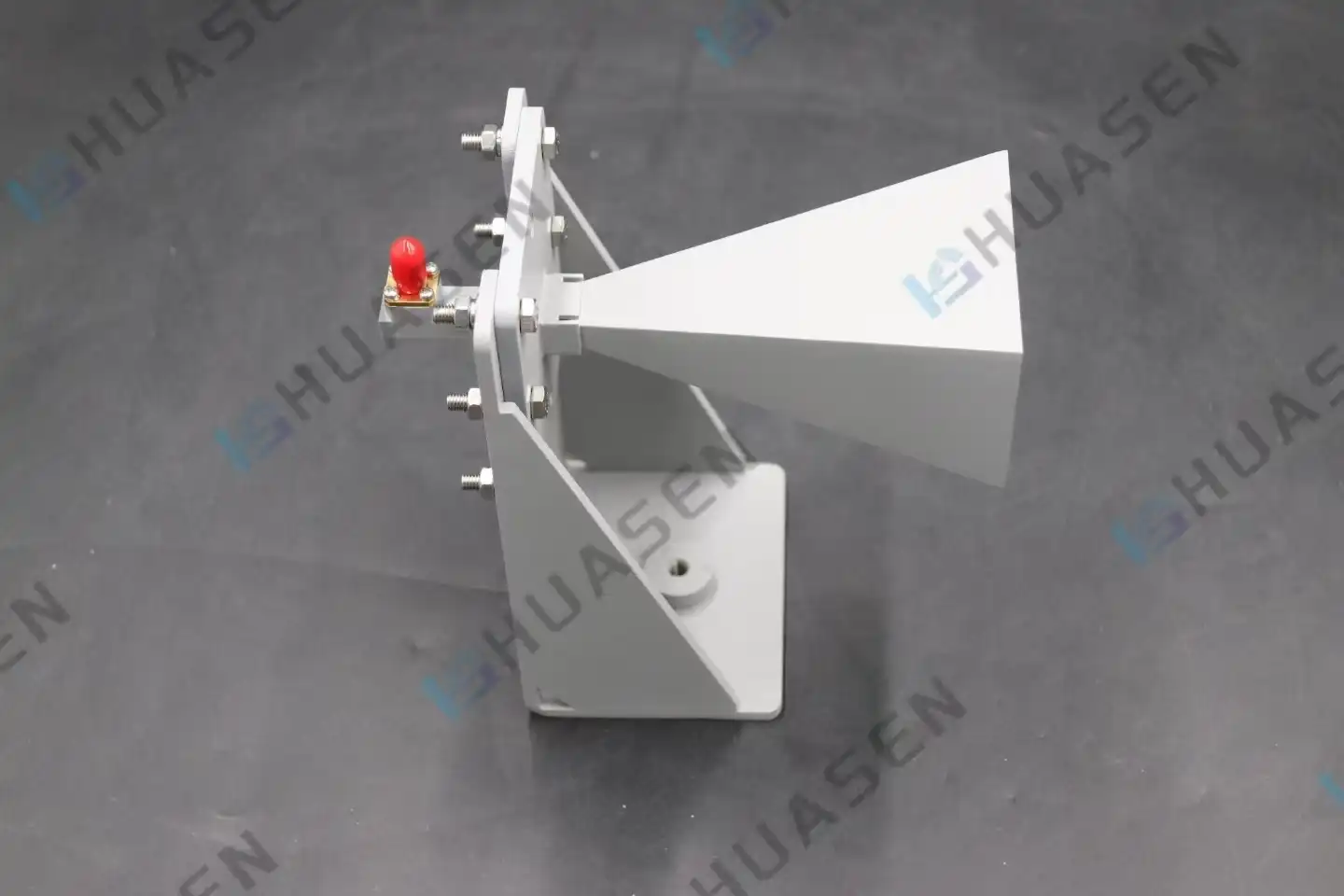
Advantage Analysis of Standard Gain Horn Antennas in Antenna Calibration
The superiority of standard gain horn antennas becomes evident when compared against alternative calibration methods. These devices offer unmatched precision and reliability that transform measurement uncertainty into measurement confidence.
Precision and Measurement Stability
Standard gain horn antennas deliver exceptional Voltage Standing Wave Ratio performance, typically achieving values below 1.25:1 and often reaching 1.15:1 at center frequencies. This excellent impedance matching ensures minimal signal reflection and maximum power transfer, critical factors for maintaining measurement accuracy throughout calibration procedures. The mechanical stability inherent in these designs eliminates variables that plague other antenna types. Unlike dipole arrays subject to element interaction or log-periodic antennas with frequency-dependent gain variations, horn antennas maintain consistent radiation characteristics across their operating bandwidth. This stability enables the Gain-Transfer Method, where engineers can accurately determine unknown antenna gains by comparing received power levels against the precisely known reference standard.
Material Engineering and Environmental Resilience
Construction materials undergo rigorous selection to minimize standard gain horn thermal expansion coefficients, ensuring geometric stability under varying environmental conditions. Precision-milled aluminum and electroformed copper provide the foundation for long-term dimensional accuracy, while specialized surface treatments maintain electrical performance over extended operational periods. The waveguide interfaces feature standard flange connections machined to tight tolerances, preventing RF leakage that would compromise calibration validity. These flanges accommodate industry-standard waveguide series, including UG-series and WR-series connections, ensuring compatibility with existing test infrastructure.
Calibration Methodology Advantages
These antennas enable multiple calibration approaches that enhance measurement confidence. The three-antenna method utilizes horn antennas as both transmit and receive elements, eliminating system loss variables through mathematical relationships. Near-field scanning systems rely on these antennas as reference sources, enabling accurate amplitude and phase measurements for complex antenna characterization. Range calibration procedures benefit from the predictable far-field patterns these antennas generate. Engineers can establish known field strengths for electromagnetic compatibility testing or verify link budget calculations for satellite communication systems. The mathematical relationship between physical dimensions and electrical performance allows theoretical validation of measurement results, providing an additional layer of verification unavailable with empirically calibrated alternatives.
Choosing the Right Standard Gain Horn Antenna for Your Calibration Needs
Selecting appropriate calibration equipment requires careful consideration of multiple technical and operational factors. Understanding these selection criteria ensures optimal performance while maximizing return on investment for testing infrastructure upgrades.
Technical Specification Alignment
Frequency range compatibility represents the primary selection criterion. Applications spanning multiple waveguide bands may require several antenna configurations to achieve comprehensive coverage. The 30 MHz to 300 GHz range accommodates most industrial requirements, while the 3 THz customization capability addresses emerging millimeter-wave and terahertz applications in 6G development and advanced radar systems. Gain selection depends on measurement dynamic range requirements and test distance constraints. Higher-gain antennas provide improved signal-to-noise ratios for long-range measurements but exhibit narrower beamwidths that demand precise mechanical alignment. Lower-gain options offer broader coverage patterns suitable for near-field applications or situations requiring relaxed positioning tolerances.
Supplier Evaluation and Quality Assurance
Procurement decisions must emphasize traceability and calibration heritage. NIST-traceable calibration reports ensure measurement accuracy links to national standards, providing the foundation for regulatory compliance and quality system requirements. Individual antenna calibration, rather than type-testing, guarantees each device meets specified performance parameters. Dimensional metrology documentation validates the geometric precision essential for theoretical gain calculations. Coordinate Measuring Machine inspection reports should verify aperture dimensions and flare angles within micron-level tolerances. Return loss measurements across the full operating bandwidth indicate internal construction quality and identify potential manufacturing defects.
Customization and Volume Considerations
Large-scale procurement often benefits from customized solutions tailored to specific operational requirements. Frequency optimization, gain adjustments, and mechanical interface modifications can enhance compatibility with existing test systems while reducing the total cost of ownership. Lead times for custom configurations typically range from several weeks to months,standard gain hornrequiresearly planning for project schedules. Standard configurations maintained in inventory enable rapid deployment for urgent calibration needs. The in-stock availability of common frequency bands and gain combinations supports immediate procurement requirements while custom solutions address specialized applications.
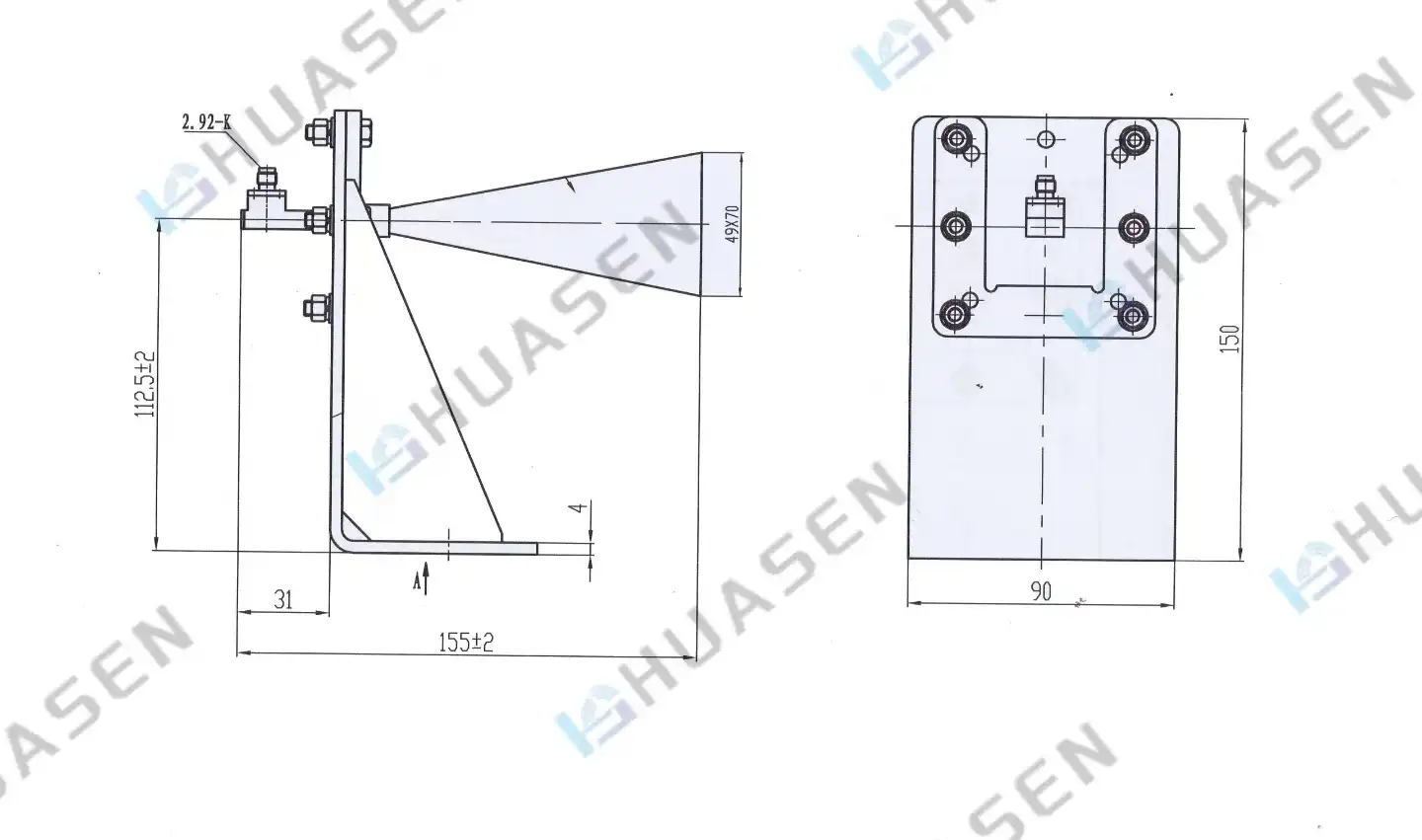
Practical Applications and Use Cases in B2B Environments
Real-world implementations demonstrate the transformative impact these calibration standards deliver across diverse industrial sectors. Understanding these applications helps procurement professionals recognize opportunities for measurement improvement within their organizations.
Telecommunications Infrastructure Validation
Base station deployment and 5G network rollouts demand precise antenna characterization to ensure coverage predictions align with actual performance. Standard gain horn antennas enable accurate gain measurements of complex phased array systems, validating beamforming capabilities and radiation pattern compliance with regulatory requirements. Satellite communication systems rely on these calibration standards for ground station maintenance and link budget verification. Engineers transmit known signal levels to verify total system sensitivity and calibrate receiver noise figures, ensuring communication reliability for both commercial and defense applications.
Aerospace and Defense Applications
Radar cross-section measurements require absolute calibration accuracy to validate stealth technologies and threat assessment capabilities. These antennas provide the reference standards necessary for accurate RCS measurements, supporting both defensive countermeasures and offensive system development. Aircraft antenna integration testing benefits from the precise field generation capabilities these antennas provide. Engineers can simulate operational electromagnetic environments, verifying antenna performance under realistic conditions while ensuring compliance with electromagnetic compatibility requirements.
Laboratory and Research Environments
Anechoic chamber commissioning and validation procedures rely extensively on horn antenna calibration standards. These environments require known reference sources to establish measurement accuracy and validate chamber performance parameters such as quiet zone uniformity and reflectivity levels. Electromagnetic compatibility testing laboratories utilize these antennas for immunity testing procedures specified in IEC 61000-4-3 standards. The high power handling capability and focused beam characteristics enable the generation of specified field strengths required for equipment certification and regulatory compliance testing.
Conclusion
Standard gain horn antennas represent the cornerstone of precision antenna calibration, delivering measurement accuracy and reliability that transform testing infrastructure capabilities. The comprehensive advantage analysis reveals how these meticulously engineered devices solve critical reference uncertainty problems while providing long-term value through exceptional stability and performance consistency. From telecommunications infrastructure validation standard horn antenna to aerospace system development, these calibration standards enable confident measurement decisions that support innovation and regulatory compliance across diverse industrial applications. The combination of theoretical predictability, mechanical precision, and electromagnetic excellence positions standard gain horn antennas as essential tools for any organization committed to measurement excellence.
FAQ
1. What frequency ranges do standard gain horn antennas typically cover?
Standard gain horn antennas operate across frequency ranges from 30 MHz to 300 GHz, with specialized customization capabilities extending to 3 THz for advanced applications. Each antenna typically covers specific waveguide bands, requiring multiple units for comprehensive frequency coverage across the entire spectrum.
2. How do these antennas improve calibration accuracy compared to other antenna types?
Horn antennas provide superior calibration accuracy through their geometrically predictable gain characteristics and excellent impedance matching. Unlike broadband alternatives with ±1.5 dB uncertainty, these precision devices achieve ±0.5 dB accuracy while maintaining consistent radiation patterns that enable reliable reference measurements.
3. What maintenance requirements exist for standard gain horn antennas?
These passive mechanical devices require minimal maintenance when properly handled. Regular visual inspection for physical damage, contamination, or corrosion ensures continued performance. Calibration verification every 3-5 years maintains ISO 17025 compliance, though the inherent stability means actual performance rarely changes without visible damage.
4. Can standard gain horn antennas operate in near-field measurement scenarios?
These antennas function effectively in near-field applications with appropriate correction factors. While gain tables assume far-field conditions, manufacturers provide near-field correction data that compensates for the gain reduction effects occurring in Fresnel region measurements.
5. What construction materials affect antenna performance?
Internal surface treatments significantly impact performance, particularly at higher frequencies where skin depth effects become pronounced. Gold or silver plating maintains theoretical gain values by minimizing resistive losses, while poor plating or oxidation increases noise temperature and reduces realized gain.
Contact Huasen Microwave for Your Standard Gain Horn Antenna Requirements
Huasen Microwave Technology stands ready to address your precision calibration challenges with industry-leading standard gain horn antenna solutions. Our comprehensive product line spans the complete frequency spectrum from 30 MHz to 300 GHz, featuring customizable configurations that meet the most demanding measurement requirements. With over three decades of engineering excellence and manufacturing expertise, we deliver the reliability,standard gain horn antenna, and accuracy your critical applications demand. Whether you need immediate deployment from our in-stock inventory or custom-engineered solutions for specialized requirements, our team provides expert guidance throughout the selection process. Contact our experienced engineers at sales@huasenmicrowave.com or visit huasenmicrowave.com to discuss how our standard gain horn antenna manufacturer capabilities can enhance your measurement infrastructure and ensure calibration excellence.
References
1. IEEE Standard Test Procedures for Antennas, IEEE Std 149-2021. Institute of Electrical and Electronics Engineers, 2021.
2. Balanis, Constantine A. Antenna Theory: Analysis and Design, Fourth Edition. John Wiley & Sons, 2016.
3. Johnson, Richard C. Antenna Engineering Handbook, Fourth Edition. McGraw-Hill Education, 2007.
4. Milligan, Thomas A. Modern Antenna Design, Second Edition. IEEE Press, 2005.
5. International Electrotechnical Commission. Electromagnetic Compatibility Testing and Measurement Techniques - Radiated Radio-Frequency Electromagnetic Field Immunity Test, IEC 61000-4-3:2020.
6. American National Standards Institute. Methods of Measurement of Radio-Noise Emissions from Low-Voltage Electrical and Electronic Equipment in the Range of 9 kHz to 40 GHz, ANSI C63.4-2014.
Send Inquiry