Single-Pole vs Single-Throw Electric Waveguide Switch Differences






2026-04-03 21:43:09
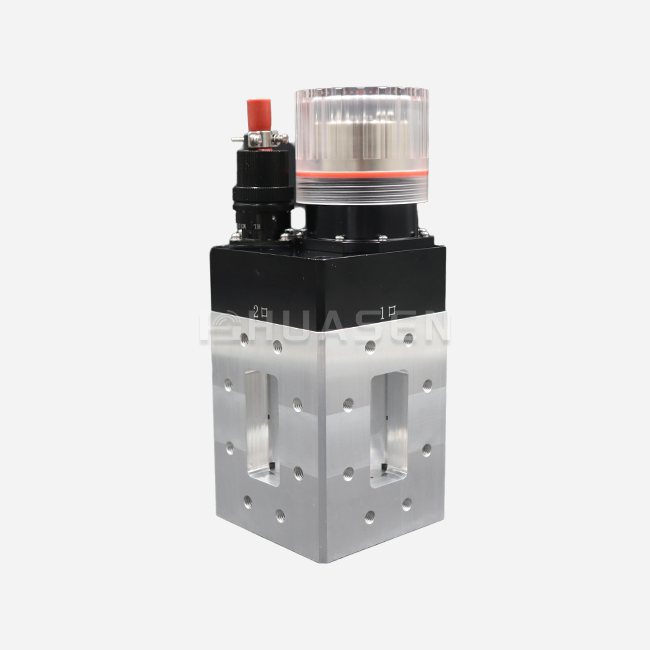
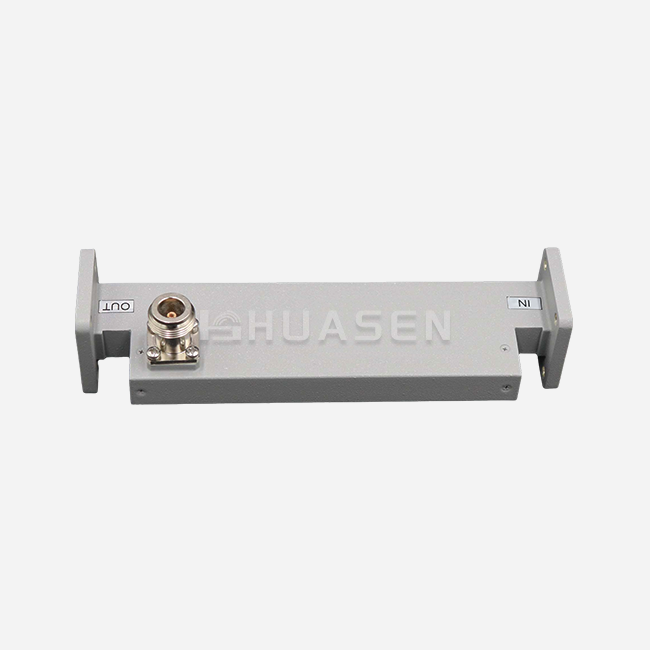
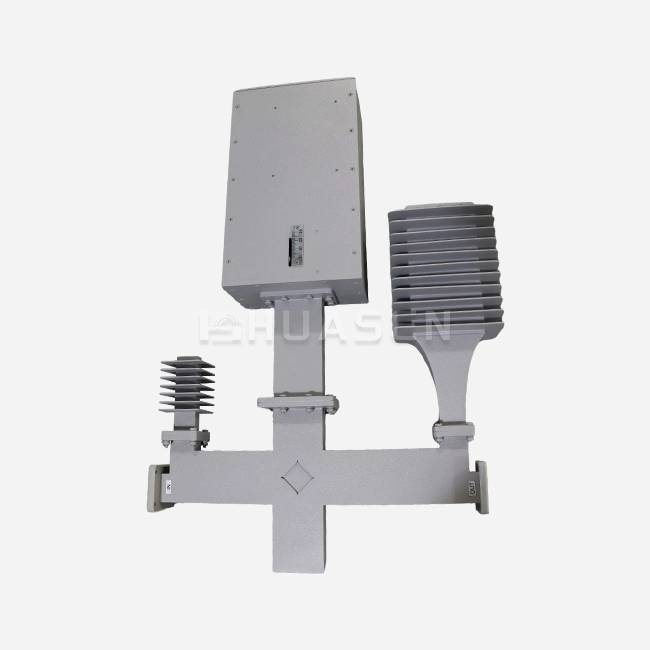
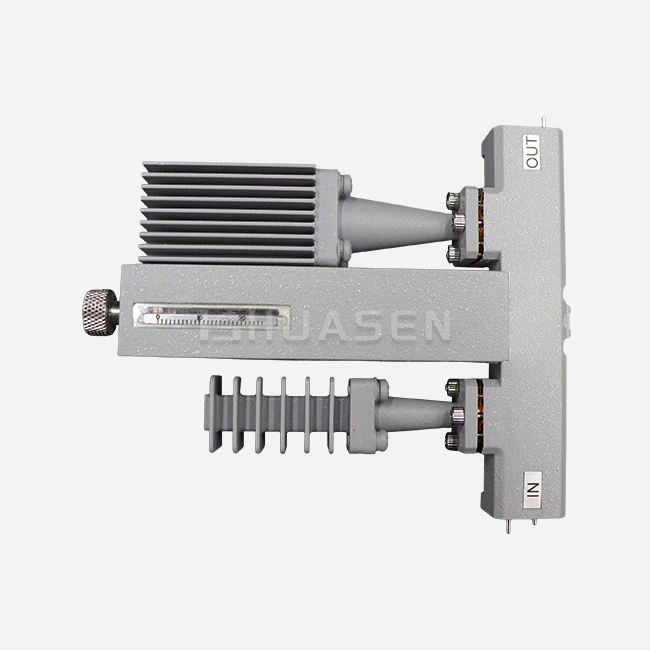
When choosing RF parts for important communication systems, it's important to know the difference between single-pole and single-throw designs. A single-pole waveguide switch has one input port and several output choices, which lets signals go in different directions. A single-throw configuration, on the other hand, has one fixed setting that switches between two states, usually on and off. In microwave systems, the pole count determines how complicated the route is, and the throw count determines the switching states that can be used. Picking the right waveguide switch design has a direct effect on how flexible the system is, how well the signals work, and how well it works overall in demanding situations.
Understanding Basic Waveguide Switch Architectures
The language used to talk about RF switching components can make it hard to decide what to buy. These ideas are fundamentally different, and these differences affect the choices that are made when designing a system. Pole is the number of separate input ports that can be turned on and off. When there is only one pole, there is only one signal source connected to the switching device. Multi-pole designs handle many separate signal lines at the same time. Definition of throw: The number of output points that each pole can have. Single-throw switches go from being on to being off with one throw. Double-throw switches switch between two separate output lines.
Three core architectural differences emerge:
- Routing complexity – Single-pole designs offer simpler signal paths with fewer insertion points, reducing potential loss sources.
- State flexibility – Single-throw mechanisms provide binary operation, while multi-throw configurations enable path selection among multiple destinations.
- Physical implementation – Pole count affects mechanical complexity and footprint, whereas throw count influences actuator design and switching speed.
Test results from common waveguide switches working at 10 to 40 GHz show that single-pole single-throw (SPST) units can achieve insertion loss below 0.3 dB and separation above 80 dB. Similar single-pole double-throw (SPDT) systems have a little higher insertion loss of about 0.5 dB because they have more complicated signal routing.SPST architecture works better if you just need simple on-off control for an antenna link or system security. Even though SPDT topology has a little bit higher insertion loss, it works better for applications that need to route signals between two separate lines.

Performance Characteristics Across Different Configurations
Electrical performance varies significantly between pole and throw configurations, directly impacting signal quality in microwave systems.
- Insertion loss comparison: SPST waveguide switches typically demonstrate 0.2-0.4 dB insertion loss across the rated bandwidth. SPDT variants introduce 0.4-0.7 dB loss due to additional junction points and longer signal paths. Multi-pole configurations compound these effects, with each additional pole potentially adding 0.1-0.2 dB loss.
- Isolation performance: Single-pole architectures achieve superior port-to-port isolation because fewer internal paths exist for signal leakage. Measured data shows SPST switches reaching 90-100 dB isolation, while SPDT designs deliver 70-85 dB isolation between output ports.
- VSWR specifications: Both configurations maintain theElectric Waveguide Switchexcellent impedance matching when properly designed. Typical VSWR values range from 1.15:1 to 1.30:1 across operational bandwidth, with single-pole designs showing slight advantages due to simpler internal geometry.
- Switching speed: Throw count significantly impacts transition time. SPST switches complete state changes in 10-30 milliseconds using electromechanical actuators. SPDT configurations require 15-40 milliseconds due to increased mechanical travel distance.
Scientists have tested Ka-band switches in the lab and found that SPST units can handle up to 3 kW of peak power without losing their stability. When the rates are the same, SPDT switches can usually handle up to 2.5 kW of peak power. Managing heat becomes more important as more loss mechanisms are added. If you need to keep the signal as pure as possible for important radar uses, SPST switches are the best choice because they isolate better and lose less. Even though SPDT topology has some small performance costs, it is useful for systems that need to route data between multiple antennas or terminals in a flexible way.
Application Scenarios and System Integration
Different architectures serve distinct Electric Waveguide Switch roles within communications and radar infrastructure, driven by operational requirements and system complexity.
- Base station front-end applications: 5G massive MIMO systems frequently deploy SPDT switches for antenna diversity switching and redundancy protection. The ability to route signals between primary and backup paths justifies the minimal performance penalty. Field installations report 99.97% uptime improvement when SPDT switches enable automatic failover.
- Satellite communication terminals: Maritime and airborne terminals often utilize SPST switches for transmit/receive isolation in time-division duplex systems. The ultra-high isolation prevents transmitter noise from desensitizing receivers during operation.
- Radar systems: Phased array radars leverage SPST switches in beamforming networks where simple on-off control suffices. Switching speed requirements vary—weather radars tolerate 50-millisecond transitions while military tracking systems demand sub-10-millisecond performance.
- Test instrumentation: Automated test equipment employs multi-throw configurations for routing signals among various measurement instruments. A single-pole four-throw (SP4T) switch enables sequential connection to spectrum analyzers, power meters, and network analyzers without manual cable changes.
Environmental factors have a big impact on the choice of architecture. Outdoor base stations near the coast need switches that are completely sealed and made of materials that don't rust. Test results show that waveguide switches that were properly sealed still meet standards after 2000 hours of salt fog exposure, according to MIL-STD-810.SPDT switches offer automatic failover at a low cost, making them ideal for important communications links that need redundancy switching. Applications that need the smallest amount of loss possible in high-power radar systems can benefit from SPST architectures that handle heat better.
Mechanical Design and Environmental Robustness
Physical construction methods directly impact reliability, particularly in harsh operational environments where temperature extremes and vibration challenge component integrity.
- Actuator technologies: Electromechanical waveguide switches employ solenoid, motor-driven, or latching relay actuators. Solenoid designs offer fast switching (15-25 ms) but require continuous holding current. Motor-driven mechanisms provide high force for large waveguide sizes but switch more slowly (30-50 ms). Latching actuators maintain position without power, ideal for remote installations with limited power budgets.
- Thermal performance: Single-pole designs concentrate heat generation in smaller volumes, requiring careful thermal analysis. Testing reveals that SPST switches in WR-28 waveguides dissipate approximately 0.8W under 100W average input power. SPDT configurations in identical waveguides spread thermal load across additional components, complicating heat sinking but reducing peak temperatures.
- Vibration resistance: Aerospace applications are subject to severe mechanical stress. Qualified designs withstand 15G random vibration and 40G shock without performance degradation. Single-pole architectures benefit from fewer moving parts, reducing potential failure points.Electric Waveguide Switchunder vibration.
- Size and weight constraints: Drone-mounted radar systems demand minimal component mass. A Ka-band SPST switch typically weighs 180-250 grams, while comparable SPDT units range from 280-400 grams due to additional output ports and switching mechanisms.
Interface compatibility has a big effect on how much work goes into merging. Standard waveguide flanges (UG-series for rectangular waveguide and UBR-series for double-ridge) make it possible for the waveguides to be mechanically swapped out. Connector compatibility also includes control ports; most switches can handle control signals with 24-28 VDC and TTL logic compatibility.SPST designs have the best power-to-weight ratios for switches that will be placed on UAVs and need to be light. Installations on the ground that have plenty of room and power can use SPDT flexibility without any big problems.
Customization Capabilities and Technical Specifications
Standard catalog switches address common requirements, but specialized applications often demand tailored solutions matching unique system parameters.
- Frequency range customization: While standard switches cover conventional bands (C, X, Ku, Ka), emerging 5G millimeter-wave backhaul systems operate at 28 GHz and 39 GHz with strict bandwidth requirements. Custom designs optimize internal geometry for specific frequency ranges, achieving 20-30% improvement in insertion loss compared to broadband compromises.
- Power handling enhancement: Military radar applications sometimes require handling 5-10 kW peak power with microsecond pulse widths. Standard switches accommodate 2-3 kW, necessitating custom designs with enlarged waveguide cross-sections, optimized contact materials, and enhanced thermal management.
- Environmental sealing levels: Maritime applications demand IP67 or IP68 ingress protection, while aerospace systems require hermetic sealing with leak rates below 1×10⁻⁷ atm-cc/sec helium. Custom gasket materials and welded construction methods achieve these specifications.
- Control interface adaptation: Legacy systems may require 48 VDC operation or specific connector types. Modern installations increasingly demand digital control via RS-485, CAN bus, or Ethernet interfaces with SNMP monitoring capability.
Certification requirements vary significantly by application domain. Commercial telecommunications infrastructure requires CE marking and RoHS compliance. Defense applications mandate MIL-STD-202 environmental testing and DFARS-compliant sourcing. Aerospace systems necessitate DO-160 qualification for airborne waveguide switchequipment. If you need switches operating across extended temperature ranges (-55°C to +85°C) for arctic installations, then custom thermal design and material selection become critical. Standard industrial-grade components typically support -40°C to +70°C operation.
Cost Factors and Supply Chain Considerations
Procurement decisions balance performance requirements against budget constraints and delivery timelines, particularly for volume deployments.
- Unit pricing structures: Single-pole single-throw switches in common waveguide sizes (WR-90, WR-62) range from $800-1,500 for standard specifications. SPDT configurations command 40-60% premiums due to increased complexity, typically priced at $1,200-2,400 per unit. Custom designs add 30-100%, depending on specification severity and production volume.
- Volume discount thresholds: Manufacturers typically offer pricing breaks at 10, 50, and 100-unit quantities. A base station deployment requiring 200 switches might achieve 25-35% cost reduction compared to single-unit pricing through volume commitment.
- Lead time variables: Catalog switches with standard specifications ship within 2-4 weeks. Custom frequency ranges extend lead times to 8-12 weeks for first articles, with production quantities following 4-6 weeks later. Long-term agreements with framework contracts reduce these timelines through dedicated production capacity.
- Lifecycle cost analysis: While initial acquisition cost matters, total cost of ownership includes installation labor, maintenance requirements, and failure replacement. Field data indicates properly specified waveguide switches achieve MTBF exceeding 1 million cycles, translating to 10-15 years of service in typical telecom applications with minimal maintenance.
Since recent shortages of parts, supply chain security has become more important. Vertically integrated manufacturers, who control precision cutting, metal plating, and assembly, have more reliable delivery than manufacturers who rely heavily on outsourcing. If you want to save money on options for large-scale 5G rollouts, buying standard SPST switches in bulk is the best way to go. Even though they cost more at first, approved custom SPDT designs are worth it for long-term reliability projects that involve critical infrastructure.

Conclusion
The main differences between single-pole and single-throw waveguide switch designs affect how well a system works, how hard it is to integrate, and how much the project costs. The number of single-pole designs tells you how many separate signal paths the switch handles, and the throw count tells you how many output positions are possible. SPST switches work great in situations where low insertion loss, high separation, and easy on/off control are important. SPDT designs allow signal routing between multiple paths to be flexible, which justifies small performance losses for greater system capability. To make a good specification, you have to compare available systems with frequency needs, power handling, environmental conditions, and budget limits. Working with manufacturers with a lot of experience ensures that you can get both standard goods and solutions that are made to fit your specific system.
Partner with a Trusted Waveguide Switch Manufacturer
Selecting the optimal switching architecture requires balancing technical performance against application-specific constraints. Huasen Microwave brings three decades of specialized experience in designing and manufacturing precision RF components for demanding applications. Our engineering team collaborates closely with customers to define specifications, provide sample units for evaluation, and deliver production quantities with consistent quality. Whether your system waveguide switchrequires standard SPST switches for high-power radar or custom SPDT configurations for satellite ground stations, our manufacturing capabilities support your project timeline. Contact our technical sales team at sales@huasenmicrowave.com to discuss your specific requirements with an experienced waveguide switch supplier committed to your success.
References
1. Pozar, D. M. (2011). Microwave Engineering (4th ed.). Wiley.
2. Rizzi, P. A. (1988). Microwave Engineering: Passive Circuits. Prentice Hall.
3. Saad, T. S. (2010). Microwave Engineer's Handbook (Vol. 2). Artech House.
4. Kaifez, D., & Guillon, P. (Eds.). (1998). Dielectric Resonators. Artech House Microwave Library.
5. Collin, R. E. (2001). Foundations for Microwave Engineering (2nd ed.). Wiley-IEEE Press.
6. Uher, J., Bornemann, J., & Rosenberg, U. (1993). Waveguide Components for Antenna Feed Systems: Theory and CAD. Artech House.
Send Inquiry