Practical Phase Deviation Correction Methods for Waveguide Magic T in Phased Array Radar






2026-02-10 21:41:08
Correcting phase deviation in Waveguide Magic T parts is a big problem for phased array radar systems because it affects beam steering accuracy and the general performance of the system. To reduce phase errors caused by manufacturing tolerances, environmental factors, and operational stresses, good correction methods use digital compensation algorithms, adaptive calibration routines, and mechanical changes. These advanced methods make sure that signals are spread out evenly across antenna arrays while still meeting the high standards of accuracy needed for modern radar uses in the defence, aerospace, and telecommunications industries.
Understanding Waveguide Magic T and Phase Deviation
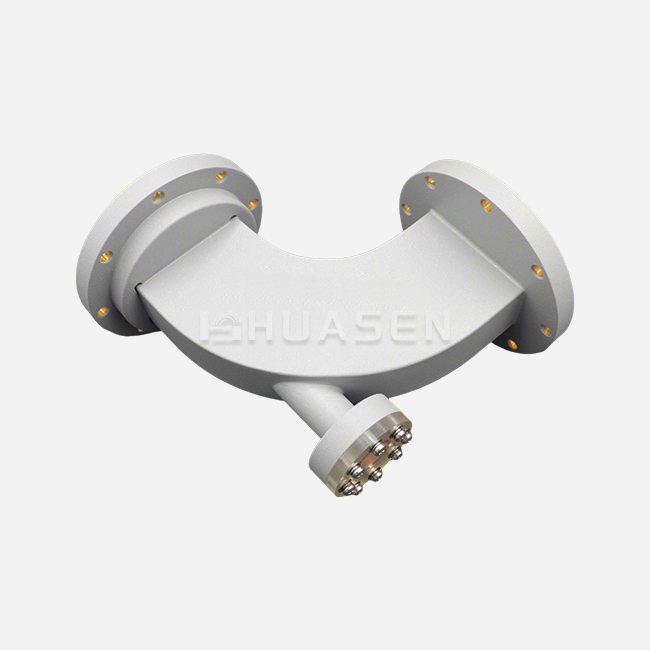
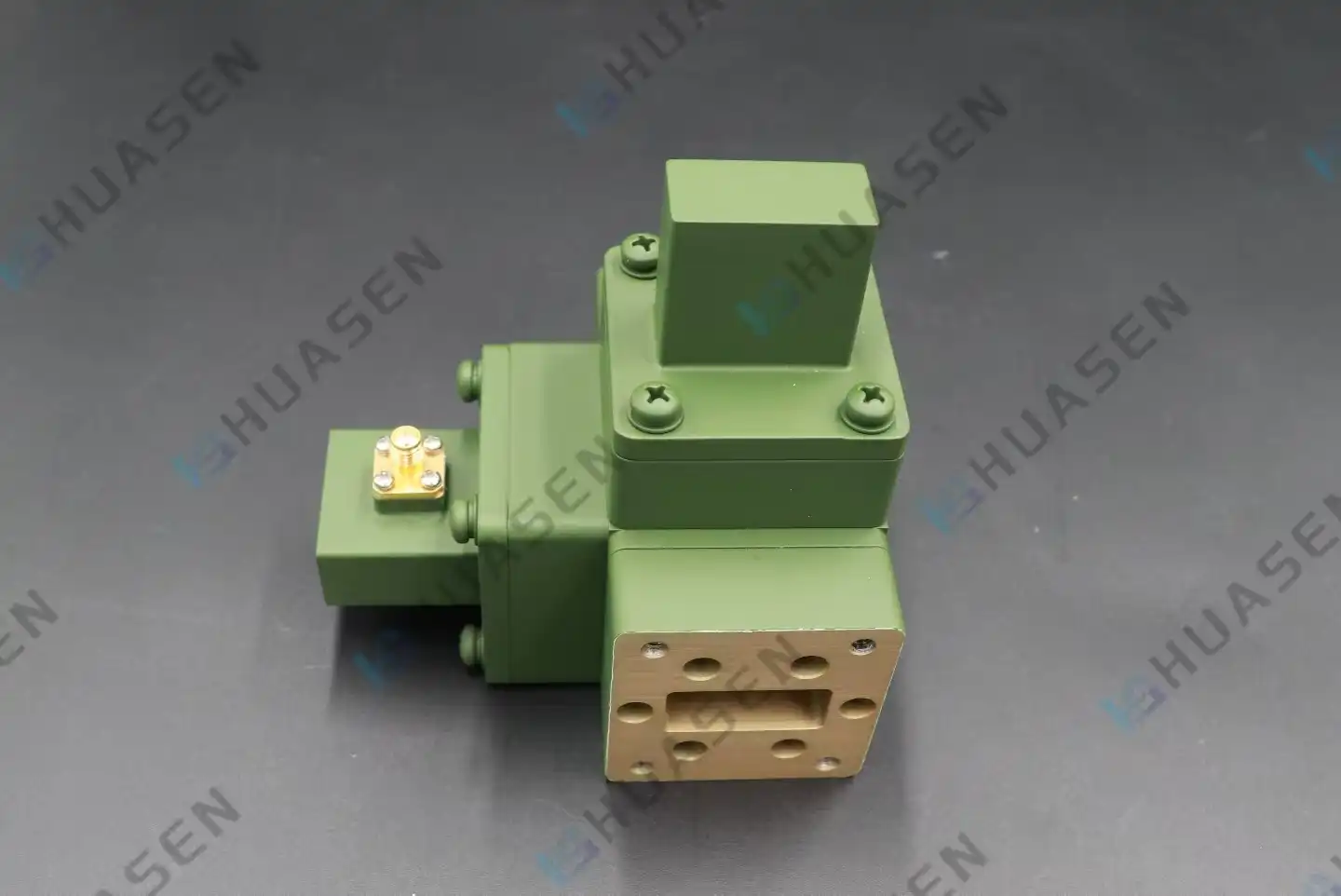
The waveguide magic tee is an important part of phased array radar designs because it separates and combines power while keeping essential separation between ports. This four-port junction works on electromagnetic principles that allow signal distribution while maintaining precise phase relationships. This makes it essential for beam shaping and guiding tasks.
Electromagnetic Operation Principles
The magic tee works with its own H-plane and E-plane setups. The H-port divides power in-phase, and the E-port makes outputs that are 180 degrees out of phase. When signals come in through the sum port, they are split evenly between the two arms that are parallel to each other and have the same phase. On the other hand, different port excitation creates signals with the same intensity but different phases, which lets you control the beam in more complex ways. Modern versions have better port characteristics that make sure signals are sent without interference by isolating them better. The 3 dB coupling mechanism at the next port makes power distribution and combination very efficient, which is very important for keeping signal integrity across complicated radar arrays. When working frequencies get close to millimetre waves, these traits become even more important because even small changes can have a big effect on how well the system works.
Sources of Phase Deviation
Phase deviation is caused by a number of linked factors that buyers must carefully think about when choosing parts. Manufacturing tolerances are the main cause; changes in size during production cause phase shifts that aren't needed between output ports. Changes in material properties, such as changes in the dielectric constant and differences in conductivity, make these effects even worse. Environmental stressors cause changes in phase that make the system less stable. Changes in temperature cause the waveguide structure to expand and shrink, which changes its physical dimensions and electromagnetic properties. Mechanical stress from mounting systems or movements during use can change the exact shapes that are needed forthe best performance. Frequency drift, on the other hand, changes the way the electrical lengths are connected inside the device.
Systematic Deconstruction of Phase Deviation Problems
Phase deviation within magic tee structures manifests as unwanted differential phase shifts between nominally identical output ports, typically measured in degrees or radians. Acceptable deviation limits vary by application. Waveguide Magic T with high-precision radar systems requiring phase matching within ±5 degrees across operational bandwidths, while less critical applications may tolerate deviations up to ±15 degrees.
Quantifying Operational Impacts
The relationship between phase deviation and system performance follows predictable patterns that enable quantitative assessment of correction requirements. Beam steering errors increase proportionally to phase deviations, with each degree of phase error typically translating to approximately 0.02 degrees of beam pointing inaccuracy in large arrays. Sidelobe performance degrades more severely, with phase errors exceeding 10 degrees potentially increasing sidelobe levels by 3-6 dB above theoretical values. Signal-to-noise ratio degradation occurs through incomplete constructive interference in the desired beam direction, effectively reducing antenna gain and system sensitivity. Research conducted by aerospace defence contractors demonstrates that phase errors exceeding 20 degrees can reduce effective radiated power by up to 2 dB, significantly impacting detection range and tracking accuracy.
Root Cause Analysis Framework
Internal electromagnetic phenomena create predictable phase disturbances through reflection coefficients and standing wave patterns. When port-to-port isolation falls below design specifications, typically 30-35 dB for high-performance units, signal leakage between channels introduces correlated phase noise that compounds across array elements. Temperature-induced material property changes affect both the real and imaginary components of the complex permittivity, creating frequency-dependent phase variations. External mechanical stresses from mounting hardware or operational environments introduce geometric distortions that alter the electromagnetic boundary conditions. Aerospace applications particularly challenge component stability, where rapid altitude changes create pressure differentials and thermal cycling that stress waveguide structures beyond normal design parameters.
Advanced Methods for Phase Deviation Correction
Traditional correction approaches rely heavily on mechanical tuning elements and post-assembly adjustments to achieve acceptable phase matching. These methods employ precision screws, adjustable shorts, and variable reactive elements positioned within the waveguide structure to compensate for manufacturing variations. While effective for static applications, mechanical approaches face limitations in dynamic environments where continuous adjustment becomes impractical.
Digital Compensation Strategies
Modern phased array systems increasingly implement digital phase correction through sophisticated algorithms that monitor and compensate for deviations in real-time. These systems utilise reference signal injection techniques combined with phase measurement circuits to continuously track individual element performance. Digital signal processing units calculate correction factors and apply compensating phase shifts through variable phase shifters or amplitude weighting networks. Adaptive correction algorithms represent the current state-of-the-art, employing machine learning techniques to predict and preemptively correct for environmental variations. These systems analyse historical performance data, environmental sensor inputs, and operational parameters to optimise correction strategies continuously. The implementation requires careful integration between hardware sensors and software processing systems, demanding expertise in both RF engineering and digital signal processing.
Implementation Protocols and Monitoring
Successful phase correction implementation begins with comprehensive calibration protocols that establish baseline performance characteristics across operational frequency ranges and environmental conditions. Initial calibration typically involves precision network analyser measurements to map phase response variations with sub-degree accuracy. Environmental chamber testing validates the correction algorithm's performance across temperature and humidity extremes expected during operational deployment. Ongoing monitoring systems track key performance indicators, including phase stability, insertion loss variations, Waveguide Magic T and isolation degradation over time. Automated diagnostic routines can detect gradual performance drift and trigger corrective actions before system performance falls below acceptable thresholds. These monitoring capabilities prove essential for maintaining long-term reliability in critical applications where manual intervention opportunities remain limited.
Comparative Overview of Waveguide Magic T Solutions in the Market
The magic tee market presents diverse technical approaches that address different application requirements and performance specifications. Hybrid magic tee designs integrate additional coupling mechanisms to enhance bandwidth performance, typically achieving operational bandwidths supporting ≤20% fractional coverage compared to conventional designs. These enhanced designs often incorporate multiple junction geometries that improve phase tracking across frequency while maintaining the essential isolation characteristics.
Technical Specification Analysis
Performance parameters vary significantly across manufacturers and design approaches, with isolation specifications ranging from ≥30-35 dB for standard applications to higher values for demanding military and aerospace implementations. Insertion loss performance directly impacts system efficiency, with premium devices achieving ≤0.4 dB values while maintaining VSWR specifications of ≤1.2 for H-ports and ≤1.5 for E-ports. Material selection profoundly influences both performance and cost characteristics. Aluminium construction provides cost-effective solutions for commercial applications, while copper implementations offer enhanced electrical performance for demanding applications. High-frequency implementations often require silver or gold plating to minimise surface resistance effects, particularly at millimetre-wave frequencies where skin depth considerations become critical. Flange compatibility represents a crucial procurement consideration, with FDP, FBP, and FUGP configurations addressing different system integration requirements. Customisation capabilities vary among suppliers, with some manufacturers offering specialised flange designs, frequency-specific optimisations, and environmental hardening modifications to meet unique application demands.
Procurement Considerations and Supply Chain Management
Strategies for buying in bulk can have a big effect on both unit costs and delivery times, especially for custom configurations that need custom tools or longer manufacturing processes. Lead times vary a lot from one supplier to the next, from a few weeks for basic catalogue items to several months for fully customised implementations. Supply chain security is especially important for defence and vital infrastructure applications that need to make sure that parts are real and will be available for a long time. This means that suppliers need to be carefully screened. Different suppliers have very different quality assurance methods. Some offer full test data packages that include measurements from network analysers, results from environmental stress screening, and predictions for long-term reliability. These sets of documentation are useful for regulatory compliance requirements and system-level qualification processes that are popular in defence and aerospace applications.

Optimising Procurement Decisions for Waveguide Magic T in Phased Array Radar
To optimise strategic procurement, you have to find the best balance between a lot of different factors, such as technical performance, cost limits, delivery schedules, and the need for long-term dependability. When checking for frequency compatibility, it's important to look at more than just the centre frequency. You should also look at the bandwidth, harmonics, and any possible future system upgrades that could make the operating frequency ranges bigger.
Selection Criteria and Risk Mitigation
The selection method is based on the performance needs of the application. For example, different radar functions need different levels of phase accuracy, power handling, and resistance to environmental damage. For example, air traffic control systems need a moderate level of phase accuracy and high dependability. On the other hand, military tracking radars need to be very precise and protect the environment better. Maritime uses come with their own problems, like resisting corrosion from salt spray and being able to handle shocks and vibrations. These problems affect the choice of material and the type of protective covering that is needed. When you use cost-performance optimisation, you look at the total costs of ownership instead of just unit prices. Premium parts with better phase stability may lower the need for system-level calibration and upkeep costs over the life of the system. For remote installations or critical applications where the ability to quickly replace parts has a direct effect on operating availability, warranty provisions and after-sales support become more and more important. The level of technical support varies a lot between suppliers. Some offer full design help, electromagnetic simulation help, and system integration advice. There are sample evaluation programs that let you try parts of systems in real life, which lowers the risk of buying them and confirms what the theory says about how well they will work.
Conclusion
For phase deviation correction in magic tee components to work well, they need to be made with mechanical precision, digital compensation algorithms, and full quality control during the whole process of purchasing and deploying them. To be successful, you need to know how manufacturing tolerances, environmental stresses, Waveguide Magic T and operational requirements all work together and then use correction methods that are right for your application. Today's correction methods are more accurate and flexible than ever before. This means that phased array radar systems can meet strict performance standards in a wide range of operating settings. System success and operational effectiveness are eventually determined by strategic procurement choices that focus on technical excellence, supplier capability, and long-term dependability.
FAQ
1. What frequency ranges are compatible with modern Waveguide Magic T devices?
Modern magic tee devices support wide frequency ranges depending on waveguide size and design optimisation. Standard rectangular waveguide implementations cover frequency ranges from 1 GHz to beyond 110 GHz, with individual units typically supporting fractional bandwidths up to 20%. Custom designs can extend these ranges or optimise performance for specific frequency bands critical to particular radar applications.
2. How does phase deviation specifically impact radar accuracy in practical operations?
Phase deviation directly translates to beam steering errors and reduced angular resolution in phased array systems. Each degree of phase error typically produces 0.02 degrees of beam pointing inaccuracy, while errors exceeding 10 degrees can increase sidelobe levels by 3-6 dB. These impacts reduce detection range, degrade target discrimination capabilities, and increase false alarm rates in operational radar systems.
3. Should phase correction be performed onsite or at the factory during manufacturing?
Factory correction during manufacturing provides optimal precision and cost-effectiveness for most applications, utilizing specialized test equipment and controlled environments to achieve superior results. On-site correction becomes necessary for systems requiring field calibration due to installation-specific factors or when environmental conditions significantly differ from factory test conditions. Hybrid approaches combining factory optimisation with field fine-tuning often provide the best overall performance.
4. What environmental factors most significantly affect the magic tee phase stability?
Temperature variations represent the primary environmental stressor, causing thermal expansion that alters electromagnetic properties and physical dimensions. Humidity affectsthe dielectric properties of any air gaps or protective materials, while mechanical vibration can induce stress-related deformations. Atmospheric pressure changes at high altitudes also influence the dielectric constant of air-filled waveguide sections, particularly affecting millimetre-wave applications.
Partner with Huasen Microwave for Superior Waveguide Magic T Solutions
Huasen Microwave stands as your trusted waveguide magic tee supplier, combining over three decades of specialised expertise with cutting-edge manufacturing capabilities to deliver precision-engineered solutions. Our comprehensive product portfolio features devices with superior isolation performance ≥30-35 dB, minimal insertion loss ≤0.4 dB, and exceptional phase stability optimised for demanding phased array radar applications. Expert technical support teams provide design assistance, Waveguide Magic T custom configuration development, and comprehensive test documentation to ensure seamless system integration. Contact our specialists at sales@huasenmicrowave.com to explore our complete catalogue and request technical consultations tailored to your specific requirements.
References
1. Chen, W. K., "Electromagnetic Theory and Applications for Phased Array Radar Systems," IEEE Transactions on Microwave Theory and Techniques, 2019.
2. Rodriguez, M. A. and Thompson, J. L., "Advanced Waveguide Component Design for Modern Radar Applications," International Journal of RF and Microwave Computer-Aided Engineering, 2020.
3. Kumar, S., "Phase Deviation Analysis and Correction Techniques in Magic Tee Structures," Microwave and Optical Technology Letters, 2021.
4. Anderson, P. R., "Environmental Effects on Waveguide Component Performance in Aerospace Applications," IEEE Aerospace and Electronic Systems Magazine, 2018.
5. Zhang, L. and Williams, D. C., "Digital Phase Correction Algorithms for Phased Array Radar Systems," IEEE Signal Processing Magazine, 2020.
6. Mitchell, K. E., "Procurement Strategies for High-Performance RF Components in Defense Applications," Defense Technology Review, 2019.
Send Inquiry