Power Amplifier Selection Criteria for Wireless Networks






2026-07-15 17:26:30
The power amplifier is the most important part of current wireless networks. It affects the signal strength, coverage area, and broadcast quality for 5G base stations, satellite communication systems, and aerospace radar platforms. When looking for the right RF power amplifier, you need to carefully consider its frequency range, output power, uniformity, and heat stability. When things are at stake, like with mobile communications infrastructure and military electronic defences, the choice of booster has a direct effect on how reliable the system is, how well it works, and how much it costs to maintain over time. By knowing these selection criteria, buying teams can make sure that amplifier specs match the needs of mission-critical applications, avoiding costly mistakes that could hurt network performance.
Understanding Power Amplifiers in Wireless Networks
The Operational Role of RF Amplification
RF amplification is the last step in a transmit chain. It raises modulated signals to levels high enough to send them over the distances that were meant. Power amplifiers can handle large amounts of power, ranging from a few watts in small-cell uses to hundreds of watts in base station deployments. This is in contrast to preamplifiers, which condition weak received signals. It is important for the amplifier to keep complicated modulation methods (like OFDM used in 5G) intact while sending enough power to get around path loss and interference.
Amplifier Classes and Their Wireless Applications
In radio infrastructure, different amplifier designs are used for different things. Class A amplifiers have great uniformity, but they are not very efficient and use power even when there is no data input. Class AB designs are popular in base station front-end applications where signal quality is important because they combine linearity and economy. Class D and Class E switching amplifiers are more than 85% efficient, but they produce switching artefacts that need to be carefully filtered out. Even though they are not linear, burst Class C amplifiers are still useful in radar systems that need high peak power with short duty cycles.
Decoding Technical Specifications for Procurement
Professional datasheets show factors that are necessary to make smart buying choices. Gain compression points (P1dB) show where the output of the amplifier starts to distort, which is a very important level for keeping the signal quality. The third-order intercept point (IP3) measures intermodulation distortion when working with multiple carriers at the same time. This is especially important when using a lot of frequencies at once, like in 5G operations in cities. As a result of efficiency measures (PAE), cooling needs and running costs are directly affected. Knowing these specs helps buyers tell the difference between what a company says on its marketing materials and how well it actually works when it's under operational stress.
Core Selection Criteria for Wireless Network Power Amplifiers
Matching Power Output to Coverage Requirements
Link budget estimates that take into account broadcast antenna gain, path loss, receiver sensitivity, and fade margins are the first step in figuring out the right output power. In the country, a 5G macro cell might need 40–60W per sector to cover several kilometres, but 1–5W per node is enough for indoor distributed antenna systems (DAS). Power that is too broad loses money and energy, while power that is too narrow leads to service gaps and customer complaints. The process of choosing must find a balance between theory estimates and real-world spread factors like geography, foliage, and building penetration losses.
Efficiency and Thermal Management Considerations
The efficiency of an amplifier has a direct effect on how much power it uses, how much it costs to run, and how much it costs to cool. When a base station amplifier is only 35% efficient, it loses almost two-thirds of the power it receives as heat. This means that it needs active cooling systems that are more complicated and have more places where things can go wrong. Modern GaN (gallium nitride) transistor technology can reach 50–60% efficiency in wideband uses, which greatly lowers heat loads. When buying amplifiers, procurement teams should ask for thermal performance data across the entire working temperature range. This is especially important for sites that will be exposed to harsh weather or equipment housings that don't let much air flow through them.
Linearity Requirements for Signal Integrity
Wireless standards set strict limits on error vector magnitude (EVM) and spectral emission covers, which need linear amplification power amplifiers. To get the data rates that are needed, 5G NR signals with 256-QAM modulation need amplifiers that can keep EVM below 3-5%. When linearity isn't high enough, crosstalk from neighbouring channels happens, and regulations aren't followed. Digital predistortion (DPD) methods help to some degree with amplifier nonlinearity, but the linearity performance should be checked in the procurement specs both with and without correction algorithms. Simple two-tone tests are not as accurate as readings done in a lab using sample waveforms.
Compatibility with Network Infrastructure Standards
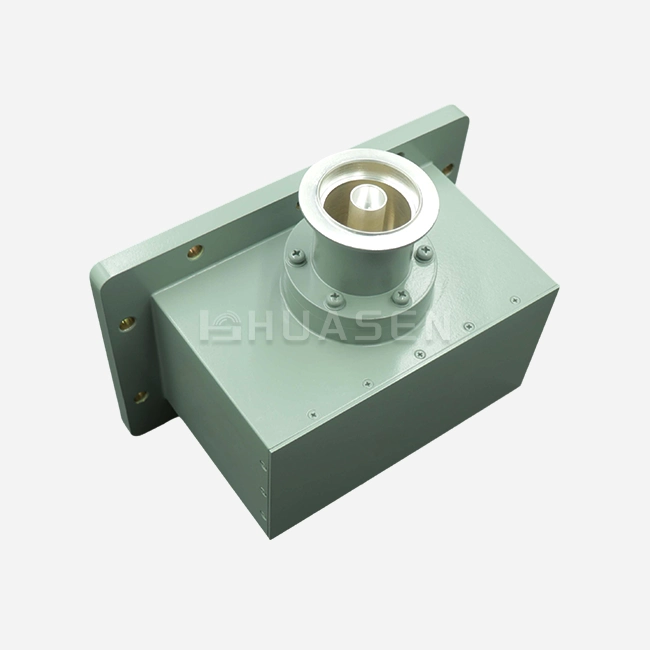
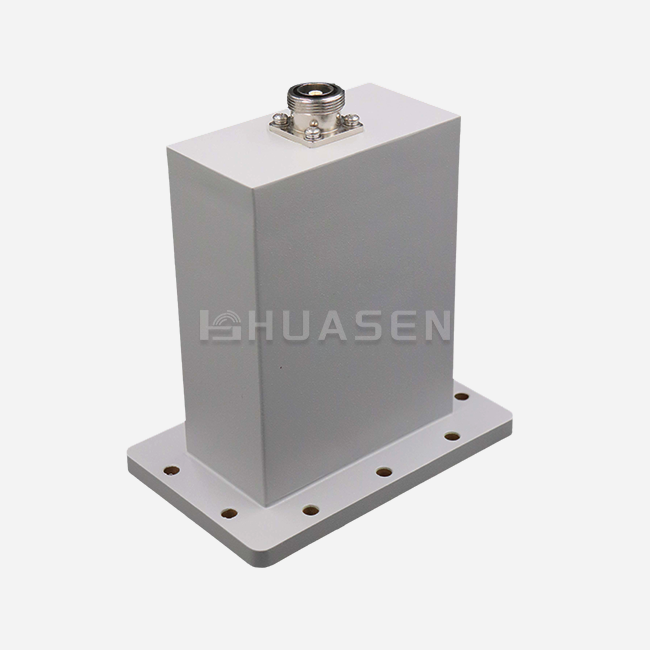
RF parts must work well with the designs of current systems. It is important that the connections work with each other. Below 18 GHz, SMA interfaces are most common, while 2.92 mm and K-connectors are used for millimetre-wave applications. Coverage of frequency bands should fit the range that is given; an amplifier designed for 3.7–4.2 GHz in the C band can't be used in S-band radar systems. Matching the impedance (usually 50Ω) makes sure that power is transferred efficiently and that there are no reflected losses. Huasen Microwave solves these problems with connections by offering a wide range of RF coaxial adapter products that work with N-type, SMA, and 2.92mm connectors. These products have wide frequency coverage and low insertion loss, which allows systems to be integrated in a variety of ways, even when existing infrastructure is limited.
Comparing Power Amplifier Solutions in the Market
Class AB Versus Class D Topology Trade-offs
Class AB amplifiers are most common in base station settings where uniformity makes up for small drops in efficiency. Broadband data spanning hundreds of megahertz can be handled by these systems with little distortion. Class D switching amplifiers counter with better efficiency, but they produce high-frequency switching noise that needs to be aggressively filtered. When sending messages over point-to-point microwave links with a constant envelope, Class D efficiency benefits are greater than linearity issues. The choice is based on the modulation format, the frequency, and whether the extra cost and difficulty of filtering are worth the efficiency gains.
Solid-State Technology Advantages
Nowadays, solid-state amplifiers using GaN and LDMOS (laterally diffused metal oxide semiconductor) transistors have mostly replaced travelling-wave tube amplifiers (TWTAs), unless they are used in very specific high-power situations. Solid-state units can turn on instantly, have small sizes, and are designed to fail slowly over time instead of completely. GaN's wide bandgap lets it work at higher temperatures and voltages, so it can handle designs that range from 2 to 6 GHz in a single chip. For narrowband uses below 3.5 GHz, LDMOS is still a good value. When making a purchase choice, people should look at the performance specs along with the age of the semiconductor, the vendor's roadmaps, and the long-term availability.
Evaluating Vendor Reliability and Support
Stability in the supply chain is just as important as the specs on the paper. Manufacturers with a good reputation can show their track records through qualification tests, long-term reliability data, and quick expert help. Customisation options from vendors, like changing frequency response, mounting arrangements, or adding tracking features, make goods more valuable than just looking at a catalogue. Bulk buying deals often give you better prices and make sure you get the parts you need when they're in short supply. Asking, for example, units to be tested in a lab before placing large orders lowers the risk of buying something and makes sure it will work with the current infrastructure.
Practical Steps for B2B Procurement of Power Amplifiers
Defining Precise Network Requirements
A thorough list of RF power amplifier needs is the first step to a successful purchase. Coverage maps show how much power needs to be released, taking into account antenna gains and losses. According to MIL-STD-810, environmental requirements include working temperature ranges, humidity exposure, and profiles for mechanical shock and vibration for tough uses. The interface needs to list the types of connectors, control methods (such as digital SPI vs. analogue gain control), and tracking options. To avoid expensive redesigns or import restrictions, regulatory compliance needs like FCC, CE marking, and RoHS must be clearly stated in the purchase specs.
Screening Vendors and Products
Once the needs are clear, buying teams should make weighted evaluation models that rate candidates based on technical performance, cost, delivery timelines, and the ability to provide support. Not just the nominal specs; ask for full datasheets with performance curves across temperature and frequency ranges. Guarantees and estimates of the mean time between failures (MTBF) show how confident the seller is in the product and how much it will cost over its entire life. Features for remote tracking and control make proactive repair possible in distributed networks, which lowers running costs. Total cost of ownership estimates should be part of the evaluation process. These should include power use, cooling needs, and expected upkeep over five to ten-year deployment periods.
Engaging Vendors Effectively
Requests for general quotes don't get as many replies as professional ones. Give enough technical information, like an application description, an outline of the current system design, and specific problems, so that vendors can offer the best options instead of just catalogue items. Ask for application notes that talk about similar setups, reference designs, and measurement data that show how well the system works in real-world situations. Talk about sample evaluation deals that let you test the product in-house before making a promise. Set up clear ways to talk to technical support staff so they can answer questions about integration during the launch phase.
Case Studies: Power Amplifier Selection in Real Wireless Network Deployments
Rural 5G Macro Cell Infrastructure
To keep solar and battery backup systems to a minimum, a regional carrier that wanted to provide 5G service in rural areas needed amplifiers that could output 50W per sector across 3.4–3.8 GHz and have an efficiency of more than 45%. The purchasing team looked at GaN-based options from several suppliers and did tests in the field to compare real coverage to estimates. Some amplifiers had digital predistortion and adaptable bias control built in. These helped them reach the required uniformity while using 30% less power than older LDMOS designs. For outdoor radios that are subject to temperature changes and farm dust, tough packaging with IP67 environmental sealing was necessary.
Indoor Enterprise Wireless Bridging
Point-to-multipoint wireless connectivity was needed to connect output buildings spread out over a 2 km² area of an industrial campus. The system engineer chose 5.8 GHz amps with a 2W output so that multiple HD video streams could run at the same time with little delay. Class AB linear amplifiers kept the signal quality high for 802.11ac MIMO transmissions, and their small sizes made them easy to fit into outdoor shelters that are resistant to weather. Low VSWR standards made sure that power could be sent efficiently through 50-metre wire runs to antennas on roofs. Over the course of 18 months, the operation had 99.7% uptime and no amplifier problems.
Small Cell and IoT Network Density
Urban small-cell deployments that support both 5G and IoT communication need small amplifiers (RF power amplifiers) that could balance power output (5–10 W), wide frequency coverage (1.8–2.6 GHz multi-band), and be as small and light as possible so they could be mounted on lampposts. Procurement put efficiency first to cut down on the need for cooling in protected cases and chose GaN units that achieved a 50% PAE. SNMP standards for integrated monitoring made it possible to track performance from afar and plan repair ahead of time. The modular method lets the capacity grow gradually as the number of subscribers rises without having to update any equipment.
Conclusion
When choosing power amplifiers for wireless networks, you have to weigh a lot of technical factors against the facts of operation and your budget. For procurement to go well, theoretical link costs need to be balanced with real factors like hardening the environment, ensuring vendor trustworthiness, and getting long-term support. The latest GaN transistor technology makes things more efficient, which lowers costs and lets more bandwidth be used. Integration problems can be avoided by making sure the new equipment works with the old equipment by using the right port connections and matching the impedance. By using organised evaluation methods and working with informed vendors, procurement teams can choose amplifier solutions that work reliably over long rollout lifetimes while still being adaptable to future changes in the network.
FAQ
1. How do I choose between linear and switching amplifier designs?
Linear amplifiers (Class A, AB) work very well in situations where complex modulated signals need to be reproduced accurately. This is especially true in multicarrier base stations and wideband communication systems, where spectral purity is important. Class D and E switching systems are more efficient, but they produce harmonic material that needs to be filtered. If signal quality is important for performance, choose linear topologies. If economy and thermal control are more important, especially in battery-powered or high-duty-cycle uses, choose switching designs.
2. What factors most influence amplifier efficiency in practice?
Aside from the topology itself, other factors that affect efficiency are the type of semiconductor used (GaN vs. LDMOS), how well the impedance matches the working frequency, and how well the drive level is optimised. Running amps with average power levels well below maximum makes them more linear but less efficient. By changing the source voltage based on the immediate power needs, dynamic bias techniques and envelope tracking can make modulated signals work better.
3. Can audio power amplifiers substitute in RF applications?
Without a doubt, not. Audio amps work best at frequencies between 20 Hz and 20 kHz, and they don't think much about impedance stability at radio frequencies. Power amplifiers use transmission-line design concepts, the right impedance matching networks, and stable compensation to keep working frequencies from oscillating. When audio amplifiers are used in RF systems, they cause poor efficiency, possible noise, and regulatory noncompliance because they give off unwanted signals.
Partner with Huasen Microwave for Your RF Amplification Needs
Huasen Microwave Technology can help you set up your wireless network because they have thirty years of experience making high-frequency parts. Our engineering team works with system designers and equipment makers to find amplifier solutions that meet exact needs for frequency, power, and environment. These needs can be for anything from 5G base stations to communication systems in space. Our RF coaxial converter product line does more than just boost signals; it also solves connection problems between N-type, SMA, and 2.92mm interfaces with low insertion loss and broad frequency coverage. We'd like to talk about special application needs with procurement professionals and RF experts. You can email our expert sales team at sales@huasenmicrowave.com to get datasheets, review samples, or advice from Power Amplifier suppliers with a lot of experience who want your project to succeed.
References
1. Cripps, S.C. (2006). RF Power Amplifiers for Wireless Communications (2nd ed.). Artech House Publishers.
2. Kenington, P.B. (2000). High-Linearity RF Amplifier Design. Artech House Microwave Library.
3. Raab, F.H., et al. (2002). "Power amplifiers and transmitters for RF and microwave." IEEE Transactions on Microwave Theory and Techniques, 50(3), 814-826.
4. Walker, J.L.B. (2011). Handbook of RF and Microwave Power Amplifiers. Cambridge University Press.
5. Grebennikov, A., Sokal, N.O., & Franco, M.J. (2012). Switchmode RF and Microwave Power Amplifiers (2nd ed.). Academic Press.
6. 3GPP Technical Specification 38.104. (2020). "NR; Base Station (BS) radio transmission and reception." European Telecommunications Standards Institute.
Send Inquiry