Performance Considerations for Dual Polarized Horn Antenna






2026-03-18 21:36:44
When designing dual-polarized horn antennas, the most important things to keep in mind are how to get the best isolation between polarizations, the best gain, and reliable operation across all frequency bands. These special antennas use orthogonal mode transducers (OMT) to send and receive perpendicular polarization states at the same time. This makes them essential for modern 5G networks, satellite communications, and radar systems that need to keep signals pure and block out interference.
Understanding Dual Polarized Horn Antennas and Their Performance
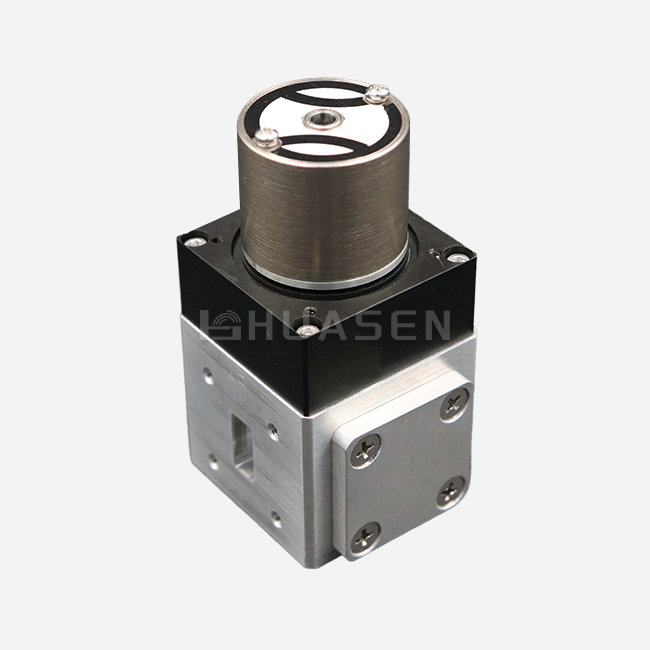
Dual-polarized horn antennas represent a sophisticated solution for modern communication challenges, utilizing advanced feed structures to manage two orthogonal polarization states within a single physical aperture. The fundamental principle revolves around an Orthogonal Mode Transducer (OMT) that separates or combines electromagnetic waves based on their polarization orientation, typically vertical and horizontal linear polarizations.
Working Principles and Dual Polarization Significance
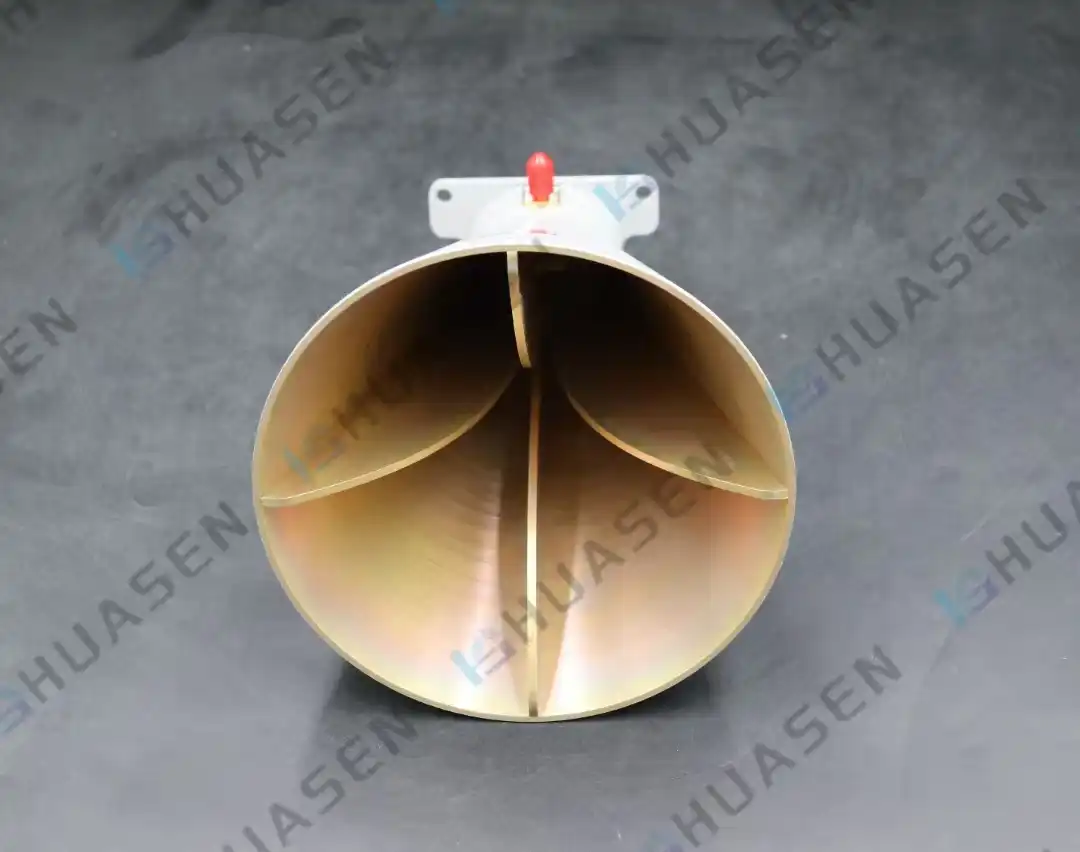
The OMT design is the most important part that makes polarization variety possible. The electromagnetic field patterns inside the waveguide structure are what make this gadget work. Different polarization modes move along different paths. The circular or square conical horn shape improves radiation patterns while keeping polarization purity across the operational bandwidth. In communication systems, polarization diversity is very useful. When signals go through multipath transmission or atmospheric interference, they lose signal strength in different ways depending on their polarization state. Through spatial diversity methods, systems get better signal reliability and more channel capacity by using both polarizations at the same time.
Critical Performance Parameters
A simple way to measure performance is antenna gain, which has a direct impact on coverage areas and system link costs. Most horn antennas have gain values of 15 to 25 dBi, but this can change based on the frequency bands being used and the size of the opening. The gain pattern must stay the same on both polarization ports for the system to work well. It is possible to use frequencies ranging from 1 to 40 GHz for microwaves to 40 to 300 GHz for millimeter waves. Limits on bandwidth change a lot based on how complicated the OMT system is. Narrowband operation is possible with standard OMT setups that have bandwidths of 5% or less. Ultra-wideband performance can be reached with advanced symmetrical feed designs that have bandwidths above 40% fractional bandwidth. How the radiation pattern is made determines the coverage areas and the chances of interference. There will be sidelobe levels that are generally less than -20 dB from the main beam on a horn antenna that is well put together. To keep signals from crossing over between polarization channels, cross-polarization detection needs to be more than 30 dB.
Design Principles Affecting Performance
Polarization purity and total antenna efficiency are affected by structural factors in a big way. The angle of the horn flare affects both the gain and the beamwidth. For example, wider apertures give higher gain but narrower beamwidth. To keep polarization isolation, manufacturing accuracy is needed because mechanical tolerances have a direct effect on how electromagnetic fields are distributed inside the antenna structure. The choice of material is very important for how well an antenna works and how long it lasts in different environments. Materials with a high conductivity level reduce ohmic losses, and the right surface processes make them more resistant to corrosion for use outside. When you choose between aluminum and copper-plated surfaces, you have to weigh the pros and cons of weight, cost, and electricity performance.
Identifying Performance Bottlenecks in Dual Polarized Horn Antennas
Understanding performance limitations enables procurement teams to make informed decisions when selecting antenna solutions for demanding applications. Several bottlenecks commonly affect system performance and require careful evaluation during the specification process.
Common Performance Limitations
Signal interference represents a primary dual-polarized horn concern in dense electromagnetic environments. Cross-polarization leakage occurs when the antenna fails to maintain adequate isolation between orthogonal polarization channels, resulting in signal contamination and reduced system capacity. Environmental factors such as rain, snow, and temperature variations can degrade polarization purity through mechanical deformation or surface contamination. Limited gain and bandwidth constraints often stem from design compromises necessary to achieve specific size or weight requirements. Compact antenna designs typically sacrifice gain for reduced physical dimensions, while ultra-wideband capabilities may compromise polarization isolation performance. These trade-offs require careful balance based on application priorities.
Root Causes and Design Compromises
Manufacturing tolerances significantly impact antenna performance, particularly for millimeter-wave applications where dimensional accuracy becomes critical. Variations in horn flare geometry, OMT machining precision, and assembly alignment can degrade polarization isolation and introduce unwanted reflections that increase VSWR. Installation considerations often create additional performance bottlenecks. Mounting structure interference, nearby metallic objects, and ground plane effects can distort radiation patterns and reduce antenna efficiency. Proper site surveying and installation planning become essential for achieving specified performance levels.
Optimization Principles
Polarization isolation enhancement techniques focus on improving OMT design and manufacturing precision. Advanced symmetrical feed configurations utilize sophisticated waveguide geometries to achieve superior isolation performance while maintaining broad bandwidth capabilities. Careful attention to surface finish quality and dimensional tolerances ensures consistent performance across production quantities. Antenna geometry refinement involves optimizing horn flare profiles and aperture dimensions for specific application requirements. Computer-aided design tools enable detailed electromagnetic simulation to predict performance characteristics and identify potential issues before physical prototyping. This approach reduces development time and ensures robust design solutions.
Practical Strategies to Optimize Dual Polarized Horn Antenna Performance
Procurement managers seeking to maximize antenna performance can implement several proven strategies that address both design and operational considerations. These approaches focus on achieving superior electrical characteristics while maintaining practical manufacturing and deployment requirements.
Advanced Design and Testing Methodologies
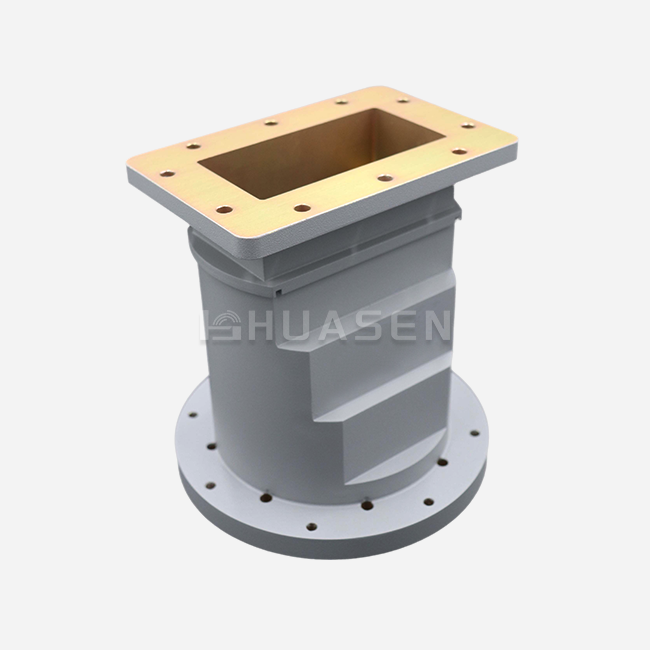
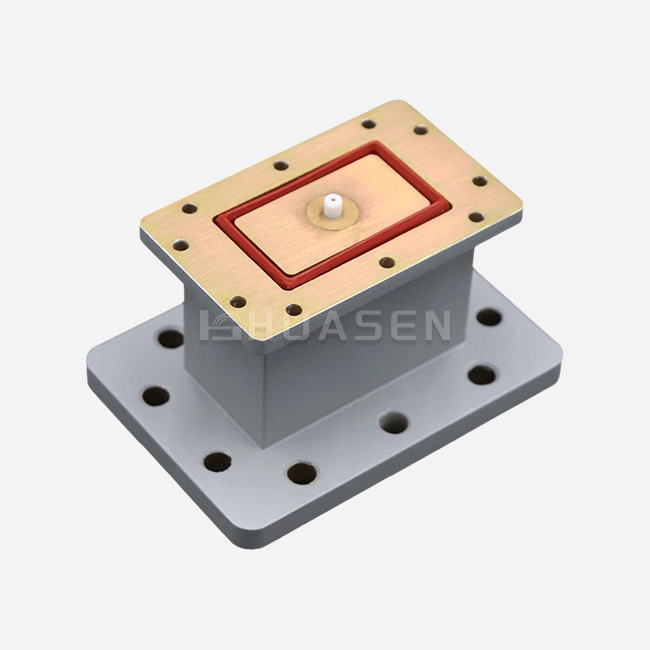
Dual-feed system implementation enhances polarization diversity performance through improved isolation and reduced coupling between orthogonal channels. The Huasen Microwave Dual-Polarized Horn Antenna (DPHA) exemplifies this approach, employing sophisticated OMT designs with circular or square conical horn configurations to achieve independent radiation and reception of linear polarized waves.
Here are the two primary OMT configurations available:
- Conventional OMT Design: Features simplified construction with straightforward manufacturing processes, making it cost-effective for narrowband applications. The bandwidth typically remains limited to 5% or less, but provides reliable performance for specific frequency requirements with excellent mechanical stability.
- Symmetrical Feed OMT Design: Incorporates complex geometric structures that enable ultra-wideband operation up to 40% fractional bandwidth. The sophisticated design achieves polarization isolation exceeding 30 dB while maintaining VSWR below 1.5 across the entire operational band.
- These configurations address diverse application requirements while providing scalable solutions for different performance and budget constraints.
Low-loss materials and precision machining contribute significantly to overall antenna efficiency. Advanced manufacturing techniques enable tight tolerances essential for millimeter-wave applications, while surface treatment processes enhance long-term durability and electrical performance stability.
Validation and Testing Protocols
Simulation software validation ensures design robustness through comprehensive electromagnetic modeling before physical production. Advanced computational tools enable detailed analysis of electric field distributions, current densities, and radiation patterns under various operating conditions. This approach identifies potential performance issues early in the development process. Key testing parameters include VSWR measurements across the operational bandwidth, gain pattern verification in both polarization channels, and cross-polarization discrimination assessment. Noise figure characterization becomes particularly important for receive applications where system sensitivity directly impacts performance. Field testing protocols validate real-world performance under actual operating conditions. Environmental stress testing confirms antenna stability across temperature ranges, humidity variations, dual-polarized horn, and mechanical vibration exposure. These comprehensive evaluations ensure reliable operation in demanding deployment scenarios.
Case Studies and Performance Validation
Successful 5G infrastructure deployments demonstrate the effectiveness of dual-polarized horn antennas in high-density urban environments. These installations achieve improved spectral efficiency through MIMO techniques while reducing antenna site complexity by combining multiple polarization channels in a single physical unit. Millimeter-wave applications showcase the importance of precision manufacturing and advanced OMT designs. Successful deployments in point-to-point communication links demonstrate reliable performance at frequencies exceeding 60 GHz, where traditional antenna technologies often struggle to maintain adequate performance levels.
Comparative Insights: Dual Polarized Horn Antenna vs Other Antennas
Understanding the performance characteristics of different antenna technologies enables procurement professionals to select optimal solutions for specific applications. Each antenna type offers distinct advantages and limitations that must be carefully evaluated against system requirements.
Performance Differences and Polarization Advantages
Dual-polarized horn antennas provide superior interference rejection compared to single-polarization alternatives through spatial diversity techniques. When one polarization channel experiences signal degradation, the orthogonal channel often maintains reliable communication, ensuring system availability in challenging propagation conditions. Gain characteristics vary significantly between antenna types. While parabolic reflector antennas can achieve higher absolute gain values, horn antennas offer more predictable patterns with better sidelobe control. Patch antennas provide compact form factors but typically sacrifice gain and bandwidth performance compared to horn designs.
Application-Specific Considerations
Different antenna technologies excel in specific deployment scenarios. Here are the key considerations for common industrial applications:
- 5G Network Infrastructure: Dual-polarized horn antennas enable advanced MIMO techniques while reducing site complexity through combined polarization channels. The ability to achieve high gain with controlled radiation patterns makes them ideal for sector coverage applications where interference control is critical.
- Point-to-Point Communication Links: Horn antennas provide excellent directivity and pattern stability essential for reliable long-distance communication. The dual polarization capability enables frequency reuse and improved link availability through diversity techniques.
- Multipoint Communication Systems: The predictable radiation patterns and polarization isolation of horn antennas facilitate network planning and interference coordination in complex deployment scenarios where multiple communication links must coexist.
These application considerations help guide technology selection based on specific performance requirements and operational constraints.
Omnidirectional antennas serve different purposes entirely, providing 360-degree coverage but with significantly lower gain and limited polarization control. The choice between antenna technologies depends heavily on coverage requirements, gain specifications, and installation constraints specific to each application.
Cost-Benefit and ROI Analysis
When making an investment choice, it's important to think about how much the whole system will cost, not just the antennas. When compared to other options that need multiple antenna elements, dual-polarized horn antennas often offer better long-term value because they are easier to install, work better, and are more reliable. However, maintenance needs vary a lot between antenna technologies. Because they are mechanically strong and don't have any working parts, horn antennas usually don't need much upkeep. This edge in reliability means lower operational costs and better system availability over the lifecycle of the antenna.
Sourcing and Procurement Considerations for Dual Polarized Horn Antennas
Effective procurement strategies encompass technical specifications, supplier capabilities, and logistical considerations that ensure successful project outcomes. Selecting appropriate vendors requires evaluation of multiple factors beyond initial pricing considerations.
Vendor Capabilities and Customization Options
OEM customization is very important when a job needs certain frequency bands, link types, or mechanical connections. Top companies that can both design and make things can make unique solutions that save money and work best in certain deployment situations. Lead times that are reliable affect both project plans and planning for inventory. Companies that have been around for a while, have good supply chains, and can make a lot of products can stick to their plans even when they have a lot of orders. Being able to count on this is very important for deployments that need to happen fast or at certain times of the year. When used on a large scale, bulk order price models save a lot of money. Costs can be kept as low as possible while still giving buyers the freedom to make choices for project implementations that happen in stages, thanks to volume discounts, flexible payment terms, and scalable delivery schedules.
Quality Assurance and Support Services
As long as the antenna is being used, you can get professional help, a warranty, and new parts as part of the after-sales support. Help programs that cover a lot of ground keep the system running smoothly and lower the chance of downtime due to broken parts or bad performance. There are a lot of differences between suppliers when it comes to warranty terms. Protection periods can be anywhere from one year to several years. Procurement teams can figure out the total cost of ownership and ways to lower risk by knowing what guarantees cover and what they don't cover. Certification compliance checks that antennas follow the rules in their area and the standards set by the industry. When goods meet MIL-STD standards, they work better in tough situations, and when they get business certifications, it takes less time to get them approved for common uses.
Best Practices for Supplier Engagement
Initial inquiry processes should clearly communicate technical requirements, quantity expectations, dual-polarized horn antennas, and delivery timelines. Providing comprehensive specifications enables suppliers to propose optimal solutions while avoiding costly misunderstandings during project execution. Quotation evaluation requires consideration of total value rather than simple price comparison. Factors including technical performance, delivery reliability, support services, and long-term supplier stability contribute to overall project success beyond initial cost considerations.

Conclusion
Performance factors for dual-polarized horn antennas include a lot of technical and practical things that have a direct effect on how well the system works and how well the project goes. Key factors like polarization isolation, gain characteristics, bandwidth capabilities, and environmental longevity need to be carefully weighed against the needs of the application. Advanced OMT designs allow for better performance by using complex feed systems that keep isolation high and allow for wideband operation. Before making a purchase choice, it's helpful to look at a supplier's skills, customization options, and long-term support promises that guarantee the antenna will work reliably throughout its lifecycle.
FAQ
1. What factors determine polarization isolation performance in dual-polarized horn antennas?
Polarization isolation performance depends primarily on OMT design precision, manufacturing tolerances, and assembly quality. Symmetrical feed OMT configurations achieve superior isolation exceeding 30 dB through sophisticated waveguide geometries, while conventional designs provide adequate performance for narrowband applications with simplified construction.
2. How does bandwidth affect dual-polarized horn antenna performance?
Bandwidth capabilities vary significantly based on OMT design complexity. Conventional configurations typically provide narrowband operation with 5% fractional bandwidth, while advanced symmetrical feed designs enable ultra-wideband performance up to 40%. Wider bandwidth operation requires more sophisticated design approaches that may increase complexity and cost.
3. What environmental factors impact antenna performance and reliability?
Environmental conditions, including temperature variations, humidity, precipitation, and mechanical vibration, can affect antenna performance through physical deformation, surface contamination, and electrical property changes. Proper material selection, surface treatments, and mechanical design ensure reliable operation across specified environmental ranges.
Ready to Enhance Your Communication Systems with Premium Dual Polarized Horn Antennas?
Huasen Microwave Technology delivers cutting-edge dual-polarized horn antenna solutions engineered for demanding applications across 5G networks, satellite communications, and radar systems. Our DPHA series features advanced OMT designs with polarization isolation exceeding 30 dB and VSWR below 1.5, supporting both narrowband and ultra-wideband configurations up to 40% fractional bandwidth. As a trusted dual-polarized horn antenna manufacturer with over 30 years of industry expertise, we provide comprehensive customization capabilities, rigorous quality standards, and responsive technical support to ensure optimal system performance. Contact our engineering team at sales@huasenmicrowave.com to discuss your specific requirements and discover how our proven antenna solutions can enhance your communication infrastructure.
References
1. Balanis, Constantine A. "Antenna Theory: Analysis and Design, Fourth Edition." John Wiley & Sons, 2016.
2. IEEE Standards Association. "IEEE Standard for Definitions of Terms for Antennas." IEEE Std 145-2013, Institute of Electrical and Electronics Engineers, 2013.
3. Milligan, Thomas A. "Modern Antenna Design, Second Edition." IEEE Press Series on Electromagnetic Wave Theory, Wiley-IEEE Press, 2005.
4. Pozar, David M. "Microwave Engineering, Fourth Edition." John Wiley & Sons, 2011.
5. Stutzman, Warren L. and Gary A. Thiele. "Antenna Theory and Design, Third Edition." John Wiley & Sons, 2012.
6. Zhang, Xiaojun and Antonio-Daniele Capobianco. "Dual-Polarized Horn Antennas for Modern Communication Systems." IEEE Transactions on Antennas and Propagation, vol. 68, no. 4, 2020.
Send Inquiry