Parabolic Antenna Working Principle: How Reflectors Focus RF Signals






2026-02-13 22:22:29
One of the most basic and useful technologies in modern RF transmission systems is the parabolic antenna. The geometric qualities of a parabolic reflector are used by these high-tech devices to focus electromagnetic signals very precisely and effectively. For engineers, procurement managers, and system designers who need reliable,Parabolic Antennacommunication links for important tasks like 5G backhaul and satellite communications, it's important to know how these reflectors focus RF signals.


Introduction
This detailed study goes into great detail about how parabolic antennas work, focusing on how important they are for focusing radio waves for better contact. This study shows how understanding how things work and what factors go into their design can have a big impact on buying decisions. It was made for global B2B procurement clients like telecommunications companies, satellite technology providers, and industrial manufacturers. Modern communication infrastructure needs antenna solutions that offer high gain, precise directionality, and unwavering reliability in a wide range of environmental conditions. This content is useful for purchasing managers, engineers, distributors, and OEM clients because it gives them useful information on how to choose antennas, compare them, and make smart purchases. This resource helps people trust each other and make decisions that affect the performance of communication networks by giving them a thorough technical analysis and useful advice. Parabolic reflector technology is important for more than just sending signals. These systems make it possible for high-capacity data links that keep our world connected. They help with everything from cellular backhaul networks to projects to communicate with aliens in space. It is very important to understand how they work when looking at options that need to work reliably for decades while meeting strict performance standards.
Understanding the Working Principle of Parabolic Antennas
Parabolic antennas function through a precisely engineered relationship between geometric design and electromagnetic wave behavior. The fundamental principle relies on the unique mathematical properties of a parabola, where parallel rays entering the reflector converge at a single focal point, creating concentrated signal energy that dramatically enhances transmission and reception capabilities.
Geometric Principles Behind RF Signal Focusing
Every point on the reflector surface has an equal path length from the feed horn to the far-field radiation pattern because the parabola shape follows a certain mathematical curve. This geometric relationship makes sure that RF signals reflect coherently, which creates positive interference that boosts signal strength while keeping phase relationships that are necessary for peak performance. When electromagnetic waves hit the bent reflector surface, they are mathematically redirected toward the focal point. This concentrates energy that would otherwise be spread out over a large area. Placing the focal point correctly is essential for getting the most out of the antenna. The method used by engineers to find the focal length is F = D²/16C, where F is the focal length, D is the reflector diameter, and C is the depth of the parabolic curve. This logical relationship tells us where to put the feed horn and has a direct effect on the antenna gain, beamwidth, and how well the whole system works.
Signal Gain and Radiation Pattern Characteristics
It is possible for parabolic reflectors to have a high gain because they can focus radio frequency energy into small paths with strong directions. The link between gain and efficiency is shown by the equation G = η(πD/λ)², where G is the antenna gain, η is the efficiency factor, D is the reflector diameter, and λ is the wavelength. Larger reflectors produce higher gain, which allows for longer transmission distances and better signal-to-noise ratios that are necessary for demanding communication applications. Parabolic antennas have a narrow main lobe and predictable side lobe levels, which makes them perfect for point-to-point communication links where interference reduction and spectrum efficiency are very important. Half-power beamwidth (HPBW) usually falls between 1° and 15°, varying with reflector diameter and operating frequency. This gives exact direction control that stops signal spillover and lowers interference with systems nearby.
Frequency Range Optimization for Industrial Applications
Modern parabolic antenna designs can work with a wide range of frequencies and keep their performance the same across the whole operational parabolic reflector antenna band. The reflector surface accuracy needs to get stricter as the frequency goes up. This means that precise manufacturing methods are needed to make sure that surface variations stay within λ/16 tolerances for best efficiency. Higher frequency uses need a more precise surface finish and mechanical stability to keep up with performance standards. Dual-band and multi-band parabolic antennas meet the needs of modern communication by serving multiple frequency ranges in a single structure. These systems lower the cost of infrastructure while making installation and upkeep easier. They are especially useful for situations where there needs to be both primary and backup communication links or where there are multiple service providers using different frequency bands.

Key Design Principles Behind Parabolic Antennas
The technical brilliance of parabolic antennas comes from basic design rules that make the antennas work well with electromagnetic fields while also making sure they are mechanically reliable in tough working conditions. These rules help choose the right materials, make sure the products are made correctly, and make sure the quality is checked. These things affect how well and reliably the system works in the long run.
Mathematical Foundation of Parabolic Geometry
The equation for the parabolic curve is y² = 4fx, where f is the focal length and x is the curve's length. The curve goes around the focal axis in a straight line. Parallel rays will meet at the focal point because of this geometric relationship. This is what makes the focusing effect necessary for a high-gain antenna to work. The accuracy of this curve has a direct effect on how well an antenna works, and as the frequency goes up, the surface tolerance requirements get stricter. Computer-controlled forming processes are used in modern manufacturing to get the sub-millimeter accuracy needed for millimeter-wave applications. These steps make sure that the parabolic shape is the same across the whole surface of the reflector. This gets rid of phase mistakes that would hurt the performance of the antenna and the efficiency of the whole system.
Reflector Construction and Material Selection
Modern parabolic reflectors are built using a variety of techniques that are best for each purpose. Solid aluminium reflectors have great surface accuracy and can withstand harsh environments, which makes them perfect for long-term installations that need to work at their best for a long time. The thickness of the material and the internal support structures are designed to keep the surface accurate even when the temperature changes, the wind blows, and other environmental stresses occur. Mesh reflectors help reduce wind loads and improve transportation efficiency while still providing good RF performance for many uses. To make sure the right RF reflection properties, the mesh aperture size must stay much smaller than the working wavelength. For big antennas, these designs are especially helpful because solid construction would make them heavy in the wind or hard to move. Finishes and coatings that are resistant to weather make them last longer in difficult conditions. UV-stabilized materials don't break down when they're exposed to sunlight, and corrosion-resistant processes keep them safe from salt spray and other industrial air pollutants. These safety steps make sure that the antenna's performance stays stable over time and reduce the amount of maintenance that needs to be done over its lifetime.
Feed Horn Design and Polarization Capabilities
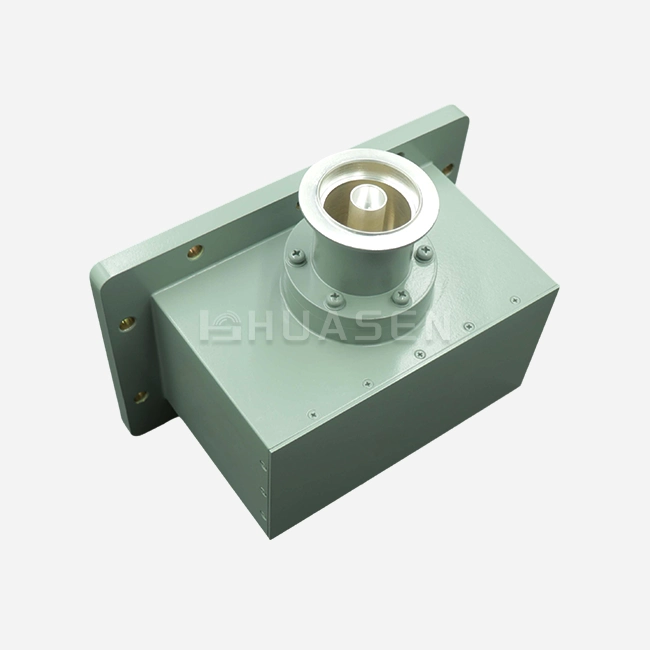
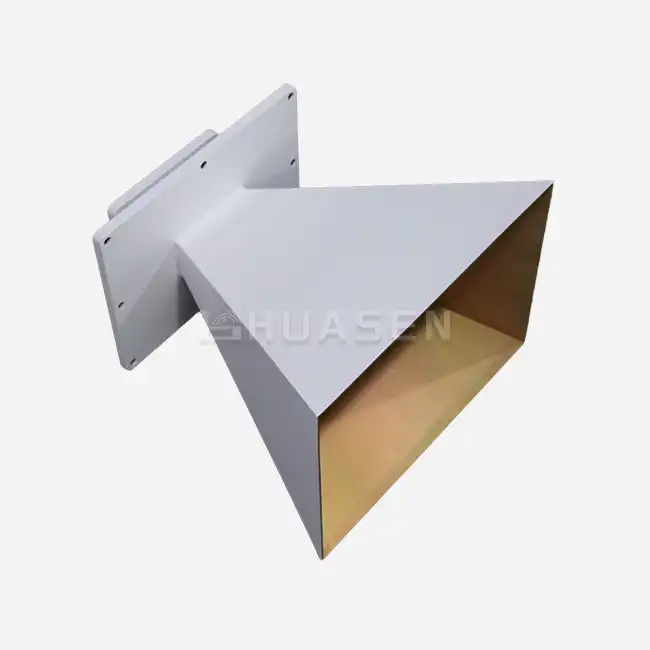
The feed horn shape has a big effect on the antenna's performance, such as its efficiency, sidelobe levels, and ability to tell the difference between different polarisations. Horn antennas light up the reflector surface in a controlled way, finding the best balance between spillover losses and the need for edge taper. The horn's size and flare angle are carefully calculated to get the lighting patterns that work best with the antenna. Huangsen Microwave's dual polarisation solutions are an example of advanced feed system design that can meet the needs of both linear and circular polarisation in small, high-performance packages. The DPRA series uses N-type or SMA connectors and has a working bandwidth of 15% or less. It supports horizontal and vertical dual linear polarisation, which is needed for MIMO systems and capacity-doubling applications. The DCPRA configurations support left-hand and right-hand circular polarisation with axial ratios of 1.5 dB for narrowband applications or 3 dB for wideband operations. You can choose between working bandwidths of ≤ 5% or ≤ 15% on these systems, which gives you options for a wide range of applications while still keeping high levels of polarisation purity and cross-polarization discrimination.
Comparing Parabolic Antennas with Other Antenna Types for B2B Procurement Insights
Strategic antenna selection requires a comprehensive understanding of how parabolic antennas compare with alternative technologies across key performance parameters relevant to B2B procurement decisions. This comparative analysis guides decision-makers through the complex landscape of antenna technologies, highlighting specific advantages and limitations that impact the total cost of ownership and operational effectiveness.
Performance Metrics Comparison
Parabolic antennas consistently outperform most alternative antenna types in gain achievement and directional precision. While Yagi antennas offer moderate gain levels suitable for shorter-range applications, parabolic reflector antennadesigns achieve 20-50 dBi gain levels that enable long-distance communication links essential for backhaul and point-to-point applications. This gain advantage translates directly into extended range capability and improved link margins that enhance system reliability. Horn antennas provide excellent gain and pattern control but typically occupy larger physical volumes for equivalent performance levels. Flat panel antennas offer installation convenience and aesthetic advantages, but generally cannot match the gain levels and efficiency of well-designed parabolic systems. The comparative analysis reveals that parabolic antennas deliver superior performance per unit cost for applications requiring maximum range and signal concentration.
Environmental Durability and Operational Reliability
The robust mechanical design of parabolic antennas provides exceptional environmental durability compared to more complex antenna arrays. Unlike phased array systems with numerous active components, parabolic antennas rely on passive reflector elements that withstand harsh environmental conditions without performance degradation. This inherent reliability advantage reduces maintenance requirements and extends operational life, contributing to lower total cost of ownership. The weatherresistance capabilities of modern parabolic antennas exceed most alternative technologies through proven mechanical designs and protective treatments. The simple construction philosophy eliminates complex electronic components that could fail under extreme temperature conditions, vibration, or atmospheric contamination. This reliability advantage becomes particularly valuable for remote installations where maintenance access is limited or expensive.
Application Scope and Versatility
Parabolic antennas demonstrate remarkable versatility across diverse communication applications, from satellite ground stations to cellular backhaul networks. The broad frequency coverage capabilities, combined with excellent gain and efficiency characteristics, make these systems adaptable to evolving communication requirements. Unlike specialized antenna designs optimized for narrow application ranges, parabolic antennas accommodate future technology upgrades and changing operational requirements. The modular nature of parabolic antenna systems allows for straightforward upgrades and modifications without complete system replacement. Feed horn changes can accommodate new frequency bands or polarization requirements, while reflector assemblies provide long-term infrastructure value. This adaptability reduces lifecycle costs and provides investment protection as communication technologies evolve.
How to Buy Parabolic Antennas: Procurement Guide for B2B Clients
Successful parabolic antenna procurement requires systematic evaluation of technical specifications, supplier capabilities, and total cost considerations that extend far beyond initial purchase price. This comprehensive guide equips procurement professionals with the knowledge and frameworks necessary to make informed decisions that optimize long-term value and operational performance.
Technical Specification Evaluation Framework
Procurement teams must establish clear performance requirements that align with specific application needs and future expansion plans. Key specifications include frequency range coverage, minimum gain requirements, VSWR limits, and environmental operating conditions. The specification process should consider both current operational requirements and anticipated future needs to ensure procurement decisions provide long-term value and flexibility. Certification requirements vary significantly across different markets and applications. Military and aerospace applications typically require MIL-STD compliance, while commercial telecommunications installations focus on ETSI and FCC certification standards. Understanding applicable certification requirements early in the procurement process prevents delays and ensures regulatory compliance throughout the system lifecycle.
Supplier Evaluation and Quality Assurance
Supplier evaluation extends beyond price comparison to encompass manufacturing capabilities, quality systems, microwave parabolic antenna, and long-term support commitments. Established manufacturers like Huasen Microwave bring decades of engineering expertise and proven track records in delivering high-performance RF solutions. Their comprehensive quality control processes ensure consistent product performance and reliability across production batches. Manufacturing facility audits and quality system assessments provide valuable insights into supplier capabilities and production consistency. ISO 9001 certification indicates systematic quality management approaches, while additional certifications like AS9100 demonstrate aerospace industry quality standards. These quality systems directly impact product reliability and long-term operational performance.
Cost Analysis and Value Optimization
Total cost of ownership analysis must consider initial procurement costs, installation expenses, maintenance requirements, and operational lifecycle costs. While higher-performance antennas may command premium pricing, their superior efficiency and reliability often provide better long-term value through reduced operational costs and extended service life. This comprehensive cost analysis guides procurement decisions that optimize overall project economics. Volume pricing considerations become significant for large-scale deployments or multi-site installations. Strategic supplier relationships can provide favorable pricing terms, priority delivery scheduling, and enhanced technical support services. Long-term partnership approaches often deliver superior value compared to transactional procurement strategies, particularly for complex technical products requiring ongoing support.

Advantages and Practical Applications of Parabolic Antennas in Industry
The exceptional performance characteristics of parabolic antennas enable diverse industrial applications that demand reliable, high-capacity communication links across challenging environments. These advantages translate into operational benefits that justify their widespread adoption across telecommunications, aerospace, and industrial sectors where communication performance directly impacts operational success.
High Gain and Focused Signal Transmission
The primary advantage of parabolic antennas lies in their ability to achieve exceptional gain levels that enable long-distance communication links with minimal transmitted power. This high-gain capability reduces infrastructure requirements, lowers operating costs, and enables communication links that would be impossible with lower-gain antenna technologies. The focused beam characteristics also minimize interference with adjacent systems while maximizing spectrum efficiency. Signal concentration capabilities allow parabolic antennas to establish reliable communication links across distances exceeding 50 kilometers in terrestrial applications and thousands of kilometers for satellite communications. This range capability eliminates the need for intermediate relay stations, reducing infrastructure costs and simplifying network topology while improving overall system reliability through reduced complexity.
Industrial Application Scenarios
The main use for parabolic antennas is in telecommunications infrastructure, where they make high-capacity backhaul links possible that connect cell phone base stations to key network facilities. These antennas have great gain and directional properties that support the strict performance needs of 5G networks while also providing the dependability needed for mission-critical communication services. Satellite communication uses the precise beam control and high efficiency of parabolic antennas to make secure connections with geostationary and low-earth-orbit satellites. High-quality parabolic systems are needed for these uses because they offer the best gain and tracking accuracy. This makes them essential for satellite internet, broadcasting, and maritime communications. Maritime and offshore communication systems depend on parabolic antennas to keep links stable in rough ocean environments where other antenna technologies would fail. The strong mechanical design and accurate signal control make it possible for stable communication links, which are important for safety and coordination in offshore activities that are far away.
Future-Proofing and Technology Evolution
Through flexible feed systems and the ability to operate over a wide frequency range, modern parabolic antenna designs can adapt to changing transmission standards and new technologies. This adaptability makes sure that investments in infrastructure will still be valuable as communication technologies improve. It protects against technology obsolescence and meets the needs of network evolution. The basic physics principles behind parabolic antenna operation make them useful for all future communication technologies. Instead of complicated electronic antenna systems that might need to be replaced as standards change, parabolic antennas offer stable platform capabilities that can adapt to new needs by upgrading and changing the feed system.
Conclusion
Parabolic antennas are a tried-and-true technology that blends basic electromagnetic principles with excellent engineering skills to provide better communication in a wide range of industrial settings. Their high gain, precise direction control, microwave parabolic antenna,and ability to withstand harsh environments make them essential for uses that need reliable, high-capacity data links. Because they have benefits over other antenna technologies and can be changed to meet changing communication needs, they will continue to be useful in improving telecommunication infrastructure. When procurement professionals understand these working principles, they can make decisions that improve performance, reliability, and long-term value for their unique communication needs.
FAQ
1. How does antenna size correlate with gain and frequency range?
Antenna gain increases proportionally with the square of the reflector diameter, following the relationship G = η(πD/λ)². Larger reflectors achieve higher gain but also create narrower beamwidths that require more precise pointing accuracy. The frequency range depends on feed horn design and surface accuracy, with higher frequencies demanding more precise manufacturing tolerances to maintain efficiency.
2. What maintenance requirements apply to industrial parabolic antennas?
Industrial parabolic antennas require periodic inspection of mounting hardware, feed horn alignment, and radome integrity. Surface cleaning may be necessary in dusty or corrosive environments, while connector weatherproofing should be verified annually. The passive nature of reflector elements minimizes maintenance requirements compared to active antenna systems.
3. Can parabolic antennas support long-distance wireless internet connections?
Parabolic antennas excel in long-distance wireless internet applications, providing the high gain and directional precision necessary for reliable point-to-point links exceeding 50 kilometers. Their exceptional signal concentration capabilities enable stable connections across challenging terrain while minimizing interference with other wireless systems.
4. What factors determine optimal feed horn positioning?
Feed horn positioning depends on reflector geometry, desired illumination pattern, and efficiency optimization requirements. The focal point location follows precise mathematical relationships, while feed horn orientation affects polarization characteristics and cross-polarization discrimination. Proper positioning maximizes antenna efficiency while minimizing spillover losses and sidelobe levels.
Partner with Huasen Microwave for Advanced Parabolic Antenna Solutions
Huasen Microwave Technology delivers cutting-edge parabolic antenna solutions backed by three decades of RF engineering excellence and manufacturing expertise. Our comprehensive product portfolio includes advanced Dual Linear Polarization and Dual Circular Polarization systems that address the most demanding communication requirements across telecommunications, aerospace, Parabolic Antenna,and industrial sectors.
Our engineering team collaborates closely with clients to optimize antenna specifications for specific applications, ensuring maximum performance and reliability. As a trusted parabolic antenna manufacturer, we maintain rigorous quality standards throughout design, manufacturing, and testing processes that guarantee consistent performance across diverse operating environments. Connect with our technical specialists at sales@huasenmicrowave.com to explore how our innovative solutions can enhance your communication infrastructure performance and reliability.
References
1. Balanis, Constantine A. "Antenna Theory: Analysis and Design." 4th Edition, Hoboken: Wiley, 2016.
2. Stutzman, Warren L., and Gary A. Thiele. "Antenna Theory and Design." 3rd Edition, Hoboken: John Wiley & Sons, 2012.
3. IEEE Standard for Definitions of Terms for Antennas. IEEE Std 145-2013, Institute of Electrical and Electronics Engineers, 2014.
4. Milligan, Thomas A. "Modern Antenna Design." 2nd Edition, Hoboken: IEEE Press, 2005.
5. Kraus, John D., Ronald J. Marhefka, and Ahmad S. Khan. "Antennas and Wave Propagation." 4th Edition, New York: McGraw-Hill Education, 2006.
6. Love, Adrian W. "Reflector Antennas." Los Alamitos: IEEE Computer Society Press, 1978.
Send Inquiry