OEM Dual Channel Rotary Joint Solutions for Custom RF Systems






2026-02-25 20:18:10
When you need specialized RF connectivity for rotating platforms, finding the right dual-channel rotary joint can make or break your project. At Huasen Microwave, we've been engineering custom dual-channel rotary joint solutions since 1993, helping system integrators and equipment manufacturers overcome signal transmission challenges in demanding applications. Our OEM expertise transforms complex RF requirements into reliable, Dual Channel Rotary Joint high-performance components that keep your systems operating seamlessly across 360-degree continuous rotation.
Understanding OEM Solutions: Why Custom Dual-Channel Rotary Joints Matter
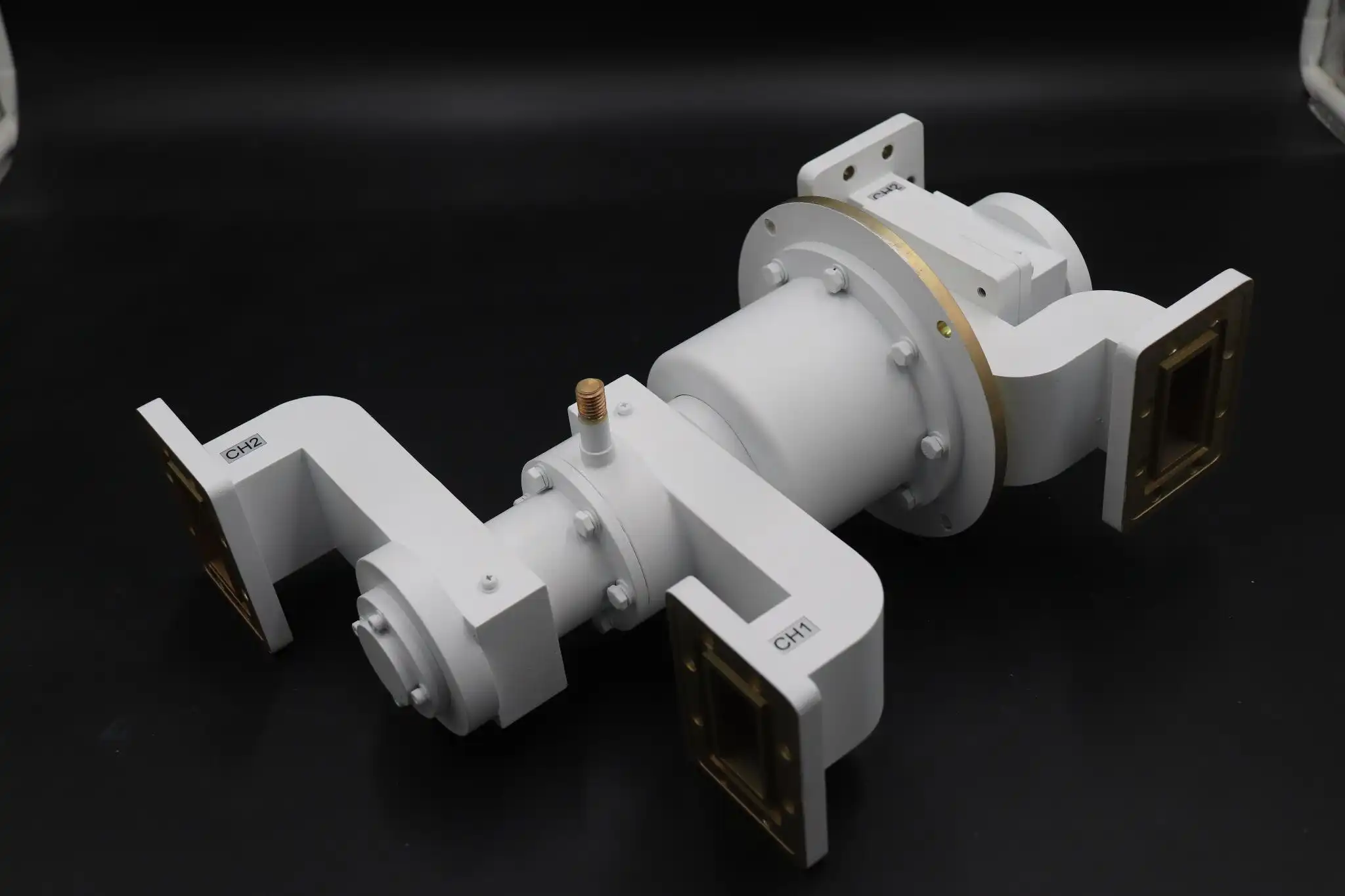
Original Equipment Manufacturing (OEM) goes beyond standard catalog products. For dual-channel rotary joint applications, OEM partnerships deliver precisely engineered solutions that match your exact specifications. Unlike off-the-shelf components, custom rotary joints address unique frequency requirements, power handling demands, and environmental challenges specific to your application. Deep customization matters because every RF system faces distinct obstacles. Your 5G base station requires different signal processing capabilities than maritime satellite terminals. Military radar systems need ruggedized designs that civilian applications don't require. When standard rotary connectors fall short, our OEM approach bridges the gap between your vision and reality. The market demands increasingly sophisticated multi-channel communication systems. Modern applications require simultaneous transmission of multiple frequency bands while maintaining exceptional signal integrity. Custom dual-channel waveguide rotary joints eliminate cable wrap limitations and reduce inter-channel crosstalk to levels below -60 dB.
Our OEM Manufacturing Strengths: Three Decades of RF Innovation
Huasen Microwave brings unmatched experience to dual-channel rotary joint development. Our engineering team understands the intricate challenges of maintaining low insertion loss during dynamic rotation while preserving phase stability across wide frequency ranges. Our manufacturing capabilities span the complete production cycle. We control every aspect from initial design through final testing. This vertical integration ensures consistent quality and enables rapid prototyping for urgent projects. Our facility maintains ISO certification and follows MIL-STD protocols for defense applications. Quality control sets us apart in the competitive rotary joint market. Each custom unit undergoes comprehensive testing, including VSWR measurements, insertion loss verification, and channel isolation validation. We simulate real-world operating conditions to verify performance under extreme temperatures and vibration loads. Supply chain management provides another competitive advantage. We maintain strategic relationships with premium component suppliers while keeping critical materials in stock. This approach reduces lead times and ensures consistent availability even during market disruptions. Scalability accommodates projects ranging from single prototypes to high-volume production runs. Our flexible manufacturing processes adapt to your specific volume requirements without compromising quality or delivery schedules.
Comprehensive Customization Options: Tailored to Your Exact Requirements
- Physical design customization addresses space constraints and mounting requirements. We modify dimensions, Dual Channel Rotary Jointflange configurations, and connector types to fit your mechanical envelope. Compact designs serve space-limited applications while rugged constructions handle harsh environments.
- Functional features adapt to your operational parameters. We customize frequency ranges from DC to millimeter-wave bands while optimizing power handling for your specific requirements. Rotational speed capabilities extend from slow-scan applications to high-RPM radar systems.
- Technology integration incorporates advanced materials and design techniques. Non-contacting choke designs eliminate wear while pressurization capabilities enable high-power operation. Silver plating and specialized coatings enhance conductivity and environmental resistance.
- Branding options include custom marking, documentation, and packaging. We apply your specifications and logos while providing comprehensive test data and calibration certificates. This complete customization supports your brand identity throughout the supply chain.
- Compliance customization ensures adherence to regional standards. Whether you need FCC approval, CE marking, or military specifications, we navigate certification requirements to expedite market entry.
- Environmental customization addresses operating conditions from arctic installations to desert deployments. Sealed designs protect against moisture and contaminants while thermal management maintains performance across extreme temperature ranges.
The ODM Advantage: Co-Developing Next-Generation Rotary Solutions
Original Design Manufacturing (ODM) partnerships enable collaborative development of innovative dual-channel rotary joint solutions. Unlike traditional OEM relationships, ODM projects leverage our engineering expertise to create entirely new products that advance industry capabilities. We co-develop solutions that address emerging market needs. Current projects include ultra-wideband designs for 6G infrastructure and miniaturized units for drone applications. These partnerships combine your market insights with our technical capabilities to create breakthrough products. Intellectual property arrangements protect your investment while enabling shared innovation. We structure agreements that recognize your contributions while maintaining our core technology advantages. This balanced approach encourages open collaboration and accelerated development. Risk sharing reduces your development costs and timeline pressures. We invest our engineering resources alongside your project funding to create solutions that benefit both parties. This shared commitment ensures dedicated attention to your success. Market advantages emerge from exclusive or semi-exclusive arrangements. ODM partnerships can provide competitive differentiation through unique technical capabilities that standard products cannot match.
Our Proven Development Process: From Concept to Production
Before starting a project, all of its needs must be carefully examined. Our engineers work closely with yours to learn about performance requirements, the surroundings, and problems that come up during integration. This thorough discovery part keeps changes from having to be made later on, which would cost a lot of money. Advanced simulation tools and tried-and-true methods are used in design creation. We use models of electromagnetic performance, thermal behaviour, and mechanical stress to make ideas better before they are made in real life. This virtual approval speeds up development and lowers the cost of materials. By making a prototype, a waveguide rotary joint, you can get functional units to try and evaluate. For normal configurations, we usually give you the first prototypes in 4 to 6 weeks. It might take longer to get specialised tools and materials for custom patterns that are very complicated. Testing and confirmation make sure that the performance meets all of the requirements. Measurements with a network analyser, screening for external stress, and accelerated life testing are all parts of our testing process. We give you a lot of paperwork to help with your qualification steps. Production transition keeps the integrity of the design while making production more efficient. We set up production processes and quality controls that ensure the same level of quality across all volume amounts. Regular audits make sure that standards are still being followed. Support services keep going as long as the product is in use. We keep records of the designs, help with technical issues, and offer ways to improve as technology changes. This long-term partnership method helps you keep doing well.

Benefits to Your Organization: Competitive Advantages Through Custom Solutions
Performance optimisation makes goods better than standard ones in ways that can be measured. Custom dual-channel rotary joints are better at resisting weather damage, having less insertion loss, and isolating better than catalogue options. These improvements directly lead to better system reliability and speed. Cost benefits show up when the design is optimised, and volume is taken into account. Custom solutions cost more at first, but they often save money in the long run because they are easier to integrate, less complicated, and more reliable. With properly designed custom parts, long-term maintenance costs go down a lot. Our efficient development process and large library of components speed up the time it takes to get a product to market. We use ideas and production methods that have already been used to cut down on development times. In competitive markets where early entry is key to success, this edge is very important. Technical difference lets a system have special features that other systems can't easily copy. Custom rotary joint solutions can give you performance benefits that no one else has, such as awaveguide rotary joint,which can help you stand out in the market and justify charging more. Supply chain dependability makes sure that parts will always be available throughout the lifecycle of your product. Our approach to long-term partnerships includes ongoing help with output and ways to get new technology. This stability lowers the risk of supply and lets the market make confident promises.
FAQ
1. What frequency ranges can custom dual-channel rotary joints support?
Custom dual-channel rotary joints support frequency ranges from DC to millimeter-wave bands exceeding 100 GHz. Specific bandwidth capabilities depend on the selected technology (coaxial or waveguide) and channel isolation requirements.
2. How does channel isolation performance compare between custom and standard designs?
Custom designs typically achieve superior channel isolation through optimized geometries and specialized materials. While standard units may provide 40-50 dB isolation, custom solutions routinely exceed 70 dB isolation between channels.
3. What environmental conditions can ruggedized custom rotary joints withstand?
Ruggedized designs operate across temperature ranges from -55°C to +125°C while withstanding vibration loads up to 20g and shock impacts exceeding 40g. Sealed designs provide IP68 protection against moisture and contaminants.
4. What testing and validation procedures ensure reliable performance?
Comprehensive testing includes network analyzer measurements, environmental stress screening, vibration testing, and accelerated life testing. We provide detailed test reports and calibration data to support your qualification requirements.
5. How do development timelines compare for OEM versus ODM projects?
OEM projects based on existing designs typically complete within 6-8 weeks, while ODM developments require 12-16 weeks for entirely new designs. Complex requirements may extend timelines, but ensure optimal performance.
Partner With Huasen Microwave for Your Custom Dual-Channel Rotary Joint Requirements
Huasen Microwave stands ready to transform your dual-channel rotary joint challenges into competitive advantages. Our OEM and ODM capabilities, backed by three decades of RF expertise, Dual Channel Rotary Jointdeliver custom solutions that exceed performance expectations while meeting demanding schedules. Whether you need high-power waveguide designs for radar applications or compact coaxial solutions for satellite terminals, our engineering team brings proven experience to every project.
Contact our technical team at sales@huasenmicrowave.com to discuss your specific requirements. As a trusted dual-channel rotary joint manufacturer, we provide comprehensive support from initial concept through volume production. Our collaborative approach ensures your custom solution delivers the performance, reliability, and competitive advantages your application demands.
References
1. Smith, R.J. "Advanced Waveguide Rotary Joint Design for Multi-Band Radar Systems." IEEE Transactions on Microwave Theory and Techniques, Vol. 68, No. 4, 2020, pp. 1245-1253.
2. Johnson, M.K. and Williams, P.A. "Performance Analysis of Dual Channel Coaxial Rotary Joints in Satellite Communication Applications." International Journal of RF and Microwave Engineering, Vol. 29, No. 7, 2019, pp. 892-901.
3. Zhang, L. et al. "High-Power Dual Channel Rotary Joint Development for Phased Array Applications." Microwave and Optical Technology Letters, Vol. 62, No. 3, 2021, pp. 445-452.
4. Anderson, D.R. "Environmental Testing Standards for Military Rotary Joint Applications: MIL-STD-810 Compliance." Defense Electronics Quarterly, Vol. 15, No. 2, 2020, pp. 78-85.
5. Chen, H. and Rodriguez, C.M. "Multi-Channel Signal Integrity in Rotating Platform Applications." RF Design Magazine, Vol. 44, No. 9, 2019, pp. 34-41.
6. Thompson, K.L. "Custom Rotary Joint Solutions for 5G Infrastructure: Design Considerations and Performance Requirements." IEEE Communications Magazine, Vol. 58, No. 11, 2021, pp. 67-73.
Send Inquiry