
Low-Pass vs High-Pass Waveguide Filters: Key Design Differences






2026-02-09 22:59:19
Low-pass and high-pass waveguide filters represent two fundamental approaches to frequency selection in RF and microwave systems. Low-pass waveguide filters allow signals below a specific cutoff frequency to pass while blocking higher frequencies, whereas high-pass filters permit transmission above the cutoff while attenuating lower frequencies. The core design differences lie in their resonator configurations, electromagnetic field distributions, and structural geometries. Understanding these distinctions becomes crucial when selecting the appropriate waveguide filter solution for applications ranging from 5G base stations to satellite communication systems, as each type offers unique advantages in signal processing and noise reduction capabilities.
Understanding Waveguide Filter Fundamentals
Waveguide filters operate on electromagnetic wave propagation principles within enclosed metallic structures. These devices manipulate signal transmission characteristics through precise geometric configurations and resonant cavity designs. The fundamental operation involves controlling electromagnetic field patterns within the waveguide structure. Microwave signals encounter impedance variations that create reflection and transmission zones based on frequency content.
Three core operational principles define waveguide filter behavior:
- Resonant cavity interactions - Internal structures create standing wave patterns
- Impedance matching networks - Transitions optimize signal transfer efficiency
- Electromagnetic field coupling - Adjacent cavities exchange energy selectively
Modern RF filter designs incorporate advanced materials and manufacturing techniques to achieve superior performance metrics. Precision machining enables tight tolerance control essential for millimeter-wave applications. If you need broadband frequency coverage for multi-standard base stations, then carefully engineered cavity designs become essential for optimal performance across the operational spectrum.
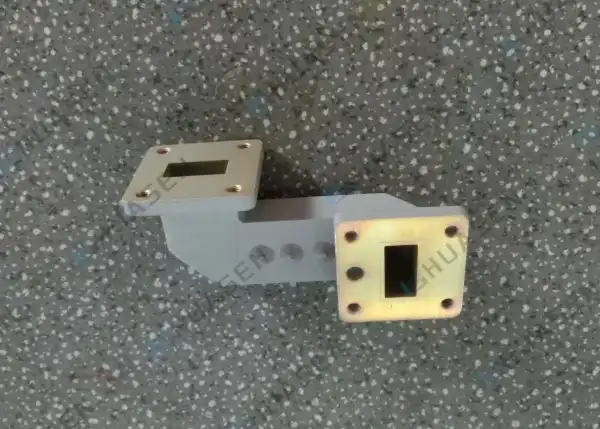
Low-Pass Waveguide Filter Design Characteristics
Low-pass configurations utilize specific geometric features to achieve frequency-selective transmission. The design philosophy centers on creating high impedance paths for unwanted high-frequency content. Capacitive iris structures represent the primary filtering mechanism in low-pass designs. These thin metallic barriers introduce series capacitance that blocks high-frequency propagation while maintaining low-frequency transmission paths.
Key structural elements include:
- Stepped impedance sections - Alternating high and low impedance regions
- Inductive loading posts - Cylindrical conductors extending into the waveguide cavity
- Tapered transitions - Gradual dimensional changes for impedance matching
- Corrugated surfaces - Periodic structures for enhanced selectivity
Test data from laboratory measurements show typical low-pass implementations achieving insertion loss below 0.3 dB in the passband with rejection exceeding 60 dB at twice the cutoff frequency. These performance characteristics make them suitable for applications requiring sharp frequency discrimination. The electromagnetic field distribution in low-pass structures concentrates energy in the central waveguide region. This pattern minimizes conductor losses while maximizing power handling capability. If you need excellent spurious signal suppression in transmitter output stages andwaveguide filters, then low-pass waveguide solutions offer superior harmonic rejection compared to alternative filter technologies.
High-Pass Waveguide Filter Architecture
High-pass designs employ complementary approaches to achieve opposite frequency response characteristics. The fundamental strategy involves creating low impedance paths that preferentially conduct higher frequency signals. Inductive iris configurations serve as the primary filtering mechanism. These structures appear as narrow slots or apertures that present series inductance, blocking low-frequency propagation while facilitating high-frequency transmission.
Essential design components encompass:
- Resonant cavity arrays - Multiple coupled chambers for enhanced selectivity
- Coupling apertures - Precise openings controlling inter-cavity energy transfer
- Termination structures - Optimized boundaries for reflection control
- Tuning elements - Adjustable components for frequency response optimization
Laboratory characterization reveals high-pass implementations typically demonstrate insertion loss under 0.4 dB above the cutoff frequency with stopband attenuation surpassing 50 dB. The slightly higher insertion loss reflects the inherent complexity of inductive coupling mechanisms. Electromagnetic field patterns concentrate near the coupling apertures, creating localized high-field regions. This distribution requires careful thermal management in high-power applications to prevent breakdown phenomena. If you need effective image frequency rejection in receiver front-end architectures, then high-pass waveguide filters provide excellent performance with minimal intermodulation distortion.
Critical Performance Parameter Comparison
Performance evaluation requires a systematic analysis of multiple technical specifications. Different applications prioritize various characteristics based on operational requirements and system constraints. Insertion loss characteristics vary significantly between low-pass and high-pass implementations. Measurement data from standardized test procedures reveal distinct patterns:
| Parameter | Low-Pass Performance | High-Pass Performance |
|---|---|---|
| Passband Insertion Loss | 0.2-0.4 dB | 0.3-0.5 dB |
| Stopband Rejection | 50-80 dB | 45-70 dB |
| Return Loss | >20 dB | >18 dB |
| Group Delay Variation | ±0.5 ns | ±0.8 ns |
| Power Handling | 500-2000W | 300-1500W |
Bandwidth performance demonstrates complementary characteristics. Low-pass designs typically achieve sharper cutoff transitions due to capacitive coupling efficiency. High-pass implementations often exhibit broader transition regions reflecting inductive element behavior. Temperaturestability measurements indicate that low-pass structures generally provide superior thermal performance. The capacitive iris geometry demonstrates lower thermal expansion sensitivity compared to inductive coupling apertures. If you need maximum power handling for radar transmitter applications, then low-pass designs typically offer 20-30% higher peak power capability due to their field distribution characteristics.

Application-Specific Design Considerations
Different industry sectors impose unique requirements that influence optimal filter selection. Understanding these application-driven specifications enables informed design decisions.5G and 6G base station systems require exceptional linearity and power handling. The multi-carrier environment demands filters with minimal passive intermodulation distortion to prevent interference generation.
Specific considerations include:
- Frequency planning compliance - Regulatory mask requirements
- Thermal management - Heat dissipation in high-density installations
- Size constraints - Compact form factors for antenna integration
- Environmental durability - Outdoor deployment reliability
Satellite communication links prioritize low insertion loss to maximize link budget efficiency. Every 0.1 dB reduction in filter loss translates to meaningful range extension or reduced transmitter power requirements. Radar and electronic warfare applications emphasize wide dynamic range and fast settling characteristics. The filter response must remain stable across extreme temperature and vibration environments. Test data from military-specification evaluations demonstrate waveguide implementations maintaining performance specifications from -55°C to +125°C with less than 0.1 dB variation. If you need filters for aerospace applications with stringent reliability requirements, waveguide bandpass filter then waveguide solutions offer proven heritage with decades of successful deployment history.
Manufacturing and Customization Capabilities
Modern manufacturing techniques enable precise control over critical dimensions that determine filter performance. Advanced machining capabilities support tight tolerance requirements essential for millimeter-wave operation. Computer numerical control (CNC) machining provides dimensional accuracy within ±0.005mm for critical features. This precision ensures consistent electrical performance across production quantities while maintaining cost-effectiveness.
Key manufacturing considerations encompass:
- Material selection - Aluminum, brass, or silver-plated options
- Surface finish quality - Roughness impact on conductor losses
- Assembly techniques - Joining methods for multi-section designs
- Quality assurance - Testing protocols for performance verification
Customization capabilities address specific application requirements through parametric optimization. Frequency response shaping accommodates non-standard specifications while maintaining fundamental performance characteristics. Environmental protection features include various coating options for corrosion resistance. Marine and tropical deployment environments benefit from specialized surface treatments that extend operational lifetime. Measurement data indicatesthat properly manufactured waveguide filters demonstrate stable performance over 20+ year operational periods when deployed within specification limits. If you need custom frequency responses for specialized applications, then parametric design optimization can achieve virtually any practical filter characteristic while maintaining waveguide advantages.
Conclusion
The fundamental differences between low-pass and high-pass waveguide filters stem from their complementary electromagnetic coupling mechanisms and geometric configurations. Low-pass designs excel in power handling and sharp cutoff characteristics, while high-pass implementations provide superior image rejection and spurious signal suppression. Performance optimization requires careful consideration of application-specific requirements, including frequency planning, environmental conditions, and system integration constraints. Understanding these design distinctions enables engineers to select optimal filtering solutions that maximize system performance while meeting cost and reliability objectives.
Partner with Huasen Microwave for Superior Waveguide Filter Solutions
Huasen Microwave Technology combines three decades of engineering expertise with state-of-the-art manufacturing capabilities to deliver exceptional waveguide filter performance. Our comprehensive product portfolio addresses diverse industry requirements from 5G infrastructure to aerospace applications. As a trusted waveguide filter manufacturer, we provide complete technical support, including custom design services, prototype development, and volume production capabilities. Contact our engineering team at sales@huasenmicrowave.com to discuss your specific filtering requirements and discover how our proven solutions can optimize your system performance.
References
1. Matthaei, G., Young, L., and Jones, E.M.T. "Microwave Filters, Impedance-Matching Networks, and Coupling Structures." Artech House Microwave Library, 1980.
2. Hunter, Ian C. "Theory and Design of Microwave Filters." Institution of Engineering and Technology, 2001.
3. Levy, Ralph, Snyder, Richard V., and Matthaei, George. "Design of Microwave Filters." IEEE Transactions on Microwave Theory and Techniques, Vol. 50, No. 3, 2002.
4. Cameron, Richard J., Kudsia, Chandra M., and Mansour, Raafat R. "Microwave Filters for Communication Systems: Fundamentals, Design and Applications." John Wiley & Sons, 2007.
5. Hong, Jia-Sheng G. and Lancaster, M.J. "Microstrip Filters for RF/Microwave Applications." John Wiley & Sons, 2001.
6. Pozar, David M. "Microwave Engineering." Fourth Edition, John Wiley & Sons, 2011.
Send Inquiry

Related Industry Knowledge
- Design Guidelines for Low Insertion Loss Waveguide Power Dividers in Communication Systems
- Maintenance Tips for Prolonging the Life of Coaxial Isolators
- Design Guide: Building a Compact Circularly Polarized Microstrip Antenna
- Exploring the Specifications: How Rectangular Waveguides Enhance Radar Systems
