Loss Factors in Double Ridged Waveguide Bend






2026-02-28 21:58:47
Loss Factors in Double Ridged Waveguide Bend represent critical performance parameters that directly impact signal transmission quality and system efficiency. These loss factors include insertion loss, return loss, conductor loss, and dielectric loss, which collectively determine how effectively a Double Ridged Waveguide Bend maintains signal integrity throughout the transmission path. Understanding these loss mechanisms enables engineers to optimize system design and procurement professionals to select components that deliver superior performance across demanding applications. Modern ridged waveguide technology has evolved to minimize these losses while maintaining exceptional broadband capabilities and power handling characteristics.
Understanding Loss Factors in Double Ridged Waveguide Bends
Loss factors in double-ridged waveguide bends encompass various types of signal degradation that engineers must carefully consider during system design. These critical parameters include insertion loss, reflection loss, conductor loss, and dielectric loss, each contributing to overall signal attenuation and system performance degradation.
Primary Loss Mechanisms in Ridged Waveguide Technology
The electromagnetic behavior of double ridged waveguides differs significantly from standard rectangular waveguides, particularly when signal propagation encounters directional changes. Insertion loss represents the primary concern, as it directly affects signal strength and power transmission efficiency. This loss occurs when electromagnetic energy converts to heat within the conductor materials and when impedance mismatches create reflections at bend interfaces. Reflection loss emerges when the characteristic impedance changes throughout the bend structure, causing portions of the transmitted signal to reflect back toward the source. This phenomenon becomes particularly problematic in high-frequency applications where wavelengths approach the physical dimensions of the ridge geometry.
Impact of Frequency Range on Loss Characteristics
Design choices related to frequency range and bandwidth significantly influence loss characteristics across the operational spectrum. Double ridged designs uniquely support wideband applications spanning 0.84-40GHz, enabling single components to replace multiple narrowband alternatives. However, this broadband capability requires careful optimization to maintain consistent loss performance throughout the entire frequency range. At lower frequencies within the operating band, conductor losses dominate due to increased current density along the ridge surfaces. As frequency increases toward the upper operational limits, dielectric losses and higher-order mode coupling become more significant factors affecting overall transmission quality.

Root Causes of Losses in Double Ridged Waveguide Bends
Understanding the fundamental causes of signal degradation enables procurement professionals to specify components with optimized design characteristics and superior manufacturing quality. These loss mechanisms stem primarily from design parameters, material properties, and environmental factors that affect long-term performance reliability.
Design Parameter Influence on Signal Attenuation
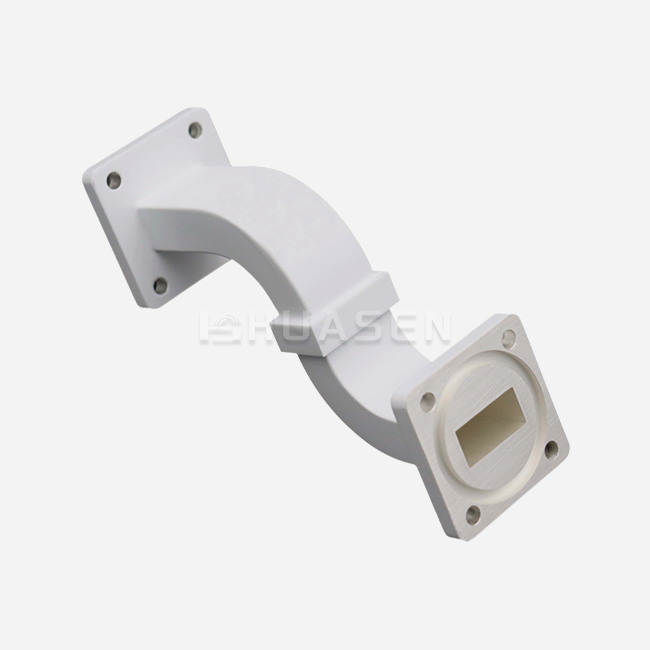
Design parameters such as bend radius, angle geometry, ridge dimensions,Double Ridged Bend, and surface finish quality substantially impact signal attenuation throughout the transmission path. Bend radius selection represents a critical design trade-off between physical compactness and electrical performance. Tighter bend radii enable more compact system layouts but increase reflection losses due to impedance discontinuities along the curved path.R idge geometry optimization requires sophisticated electromagnetic simulation to balance bandwidth requirements against loss minimization. The gap spacing between ridges directly affects characteristic impedance and power handling capabilities, while ridge height influences cutoff frequency and mode suppression characteristics.
Material Properties and Manufacturing Considerations
Material selection significantly affects conductor losses and long-term reliability performance. Aluminum construction with oxidized coating provides excellent conductivity-to-weight ratios suitable for aerospace applications, while copperwith silver-plated coating delivers superior conductivity for high-performance laboratory environments. Surface roughness from machining operations can increase conductor losses, particularly at higher frequencies where skin depth becomes comparable to surface irregularities. Manufacturing tolerances influence consistency and repeatability across production batches. Precision CNC machining ensures dimensional accuracy critical for maintaining specified VSWR performance, with typical values of ≤1.25 across most of the frequency range and ≤1.3 at higher frequencies approaching the operational limits.
Comparison of Double Ridged Waveguide Bends vs. Standard Waveguide Bends Regarding Loss
Double-ridged waveguide bends offer distinct advantages over traditional rectangular waveguide bends, particularly in loss performance and frequency adaptability. These advantages become most apparent in applications requiring wide frequency coverage and superior power handling capabilities.
Bandwidth and Loss Performance Advantages
Most rectangular waveguides can handle bandwidth ratios of about 1.5:1 before they run into higher-order mode transmission. This can be done with 2.4:1 or even 3.6:1 bandwidth ratios with double-ridged designs, and it can still work in a single mode over the wider frequency range. This wide range of frequencies gets rid of the need for multiple waveguide bands and the changes that come with them, which add to the insertion losses. When compared to rectangular waveguides of the same size, double-ridged designs can handle more power because they have better electromagnetic qualities. The ridge loading effect focuses the electric field in the ridge gap area. This lets more power be sent while keeping the breakdown levels low enough for most uses.
Material and Construction Differences
There are big differences in the sizes and types of materials used for ridged and rectangular waveguide systems. Double-ridged bends usually have the same electrical performance as other bends but are smaller on the outside, which lets system plans be more compact. This reduction in size is especially useful for aerospace uses that need to be light and mobile, and communication systems that don't have a lot of room. When compared to simple rectangular shapes, the internal ridge structure needs more complex production methods. However, current CNC machining makes it possible to make complex ridge profiles at a low cost while still maintaining the accuracy needed for reliable electrical performance.
Solutions and Best Practices to Minimize Losses
To keep losses as low as possible in double-ridged waveguide bends, you need to pay close attention to design optimisation, material choice, and quality control during production. By following these best practices, you can get better results while still keeping costs low for large-scale production.
Design Optimization Strategies
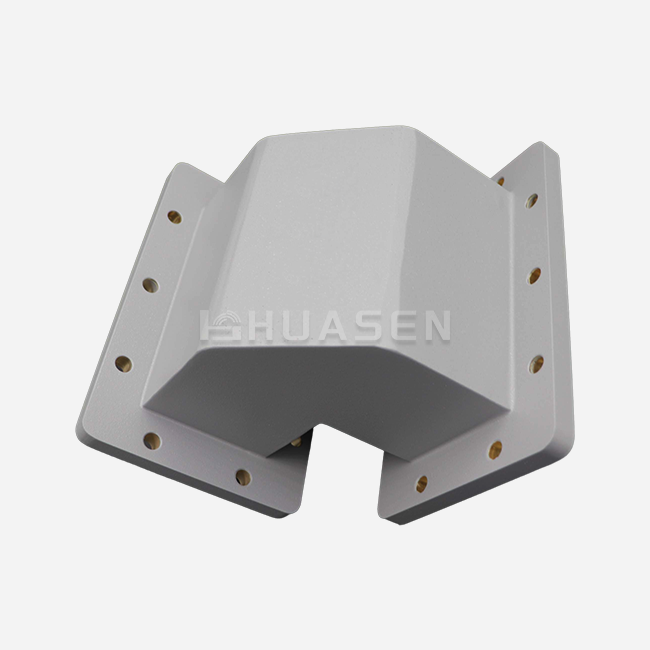
Using electromagnetic modelling tools to find the best bend radii and ridge dimensions can help you predict and reduce signal loss across the entire operational frequency range. Swept bend profiles are better thanDouble Ridged Bendat matching impedance than simple circle arc geometries. They lower reflection losses but make manufacturing more difficult. Computer-aided design tools can be used to improve the transition and ridge tapering areas so that higher-order mode excitation is kept to a minimum at the bend surfaces. It's especially important to use these methods for E-plane (DRWEB) bends, where the ridge structure follows the curved path and can cause possible discontinuities that hurt electrical performance.
Material Selection and Surface Treatment Options
Choosing high-conductivity materials and advanced surface treatments substantially reduces conductor losses across the operational frequency spectrum. Silver plating provides the lowest loss option for laboratory and precision measurement applications, while gold plating offers superior corrosion resistance for long-term outdoor installations.
Here are the core surface treatment advantages for loss minimization:
- Silver-plated copper delivers maximum conductivity with excellent high-frequency performance characteristics suitable for precision laboratory applications and low-loss measurement systems
- Gold-plated aluminum provides optimal corrosion resistance combined with good electrical performance for outdoor installations and maritime communication systems
- Specialized coating treatments enable customization for specific environmental requirements while maintaining electrical performance standards
- These surface treatment options enable optimization for specific application requirements while ensuring consistent performance throughout the component's operational lifetime.
-

Procurement Insights: Purchasing High-Quality Double Ridged Waveguide Bends
To make sure you choose the best components, you need to carefully look over the technical specs, the supplier's abilities, and the customization choices. Knowing the important performance factors and the qualifications of the suppliers lets you make smart buying decisions that fit the needs of the project and your budget.
Critical Specification Parameters
Specifications for insertion loss, voltage standing wave ratio (VSWR) performance, and compliance with key industry standards are important factors in the procurement process. Depending on frequency and bend configuration, insertion loss values are usually between 0.1 and 0.2 dB per bend. VSWR standards of ≤1.25 mean that the design and production were done well. Another important thing to think about is flange compatibility. The most common interface choices are FP/FM configurations. Customisable flange types make it possible to connect to the current system infrastructure while keeping the electrical performance stable at interfaces.
Supplier Evaluation and Customization Capabilities
When comparing foreign suppliers, you need to look at their technical skills, quality certifications, and ability to make changes to meet your needs. Well-known companies usually provide both E-plane (DRWEB) and H-plane (DRWHB) bend configurations, with bend angles, frequency optimisation, and special coating choices that can be changed. Procurement teams can combine technical needs with business concerns when they know about customisation options, minimum order quantities, and lead times. Long-term supply deals and volume pricing structures can save a lot of money on large-scale deployments while making sure that parts are always available throughout the lifecycle of a project.
Conclusion
Loss factors in double-ridged waveguide bends are important performance factors that have a direct effect on how well the system works and how well the signals stay intact in difficult situations. Understanding how insertion loss, reflection loss, and conductor loss work lets you choose the right parts and make the best use of your system. With the right design optimisation, material choice, and production quality control, these losses can be kept to a minimum while still allowing for broadband performance. When compared to traditional rectangular waveguides, double-ridged technology offers better bandwidth and power handling. This makes these components necessary for modern communication, radar, and testing applications that need to cover a wide frequency range and work extremely reliably.
FAQ
1. This section addresses frequently encountered questions from engineers and procurement professionals regarding signal loss phenomena and performance optimization in rigid waveguide systems.
2. What causes the highest signal loss in double-ridged waveguide bends?
The highest signal loss typically arises from conductor losses at ridge interfaces and reflection losses due to impedance discontinuities along the bend path. Surface roughness and material conductivity significantly affect conductor losses, while geometric precision influences reflection characteristics.
3. How does frequency range affect loss performance in ridged waveguide bends?
Frequency range plays a critical role in loss characteristics, with different loss mechanisms dominating at various frequencies. Lower frequencies experience primarily conductor losses, while higher frequencies encounter increased dielectric losses and potential higher-order mode coupling effects that degrade overall performance.
4. Can material selection significantly reduce losses in these components?
Yes, material and coating optimization substantially reduces losses throughout the operational frequency spectrum. Silver-plated copper provides minimum conductor losses for laboratory applications, while specialized treatments enable optimization for specific environmental and performance requirements while maintaining excellent electrical characteristics.
5. What design factors most influence loss minimization?
Ridge geometry, bend radius selection, and surface finish quality represent the primary design factors affecting loss performance. Optimized ridge dimensions and carefully selected bend radii minimize impedance discontinuities while maintaining mechanical feasibility and cost-effectiveness for production applications.
Partner with Huasen Microwave for Superior Double-Ridged Waveguide Bend Solutions
Huasen Microwave stands as a trusted double ridged waveguide bend manufacturer with over three decades of expertise delivering high-performance RF and microwave solutions. Our precision-engineered components feature exceptional specifications, including 0.84-40GHz frequency coverage, VSWR ≤1.25, and customizable FP/FM flange configurations optimized for minimal loss characteristics. As your reliable double-ridged waveguide bend supplier, we provide comprehensive technical support, competitive pricing, and rapid prototyping capabilities to accelerate your project timelines. Contact our engineering team at sales@huasenmicrowave.com to discuss your specific requirements and discover how our advanced manufacturing capabilities can enhance your system performance.
References
1. Marcuvitz, Nathan. "Waveguide Handbook: Microwave and Millimeter-Wave Engineering Series." Institution of Engineering and Technology, 2019.
2. Ramo, Simon, John R. Whinnery, and Theodore Van Duzer. "Fields and Waves in Communication Electronics." John Wiley & Sons, 2020.
3. Pozar, David M. "Microwave Engineering: Fourth Edition." John Wiley & Sons, 2021.
4. IEEE Standard for Rectangular Metallic Waveguides and Their Interfaces for Frequencies of 110 GHz and Above. IEEE Std 1785-2018.
5. Collin, Robert E. "Foundations for Microwave Engineering: Second Edition." IEEE Press Series on Electromagnetic Wave Theory, 2019.
6. Chen, Li-Fang and David K. Cheng. "Electromagnetic Field Theory and Wave Propagation in Guided Media." Cambridge University Press, 2020.
Send Inquiry