Lens Horn Antenna vs Dielectric Lens Antenna: Performance and Application Differences






2026-02-24 21:21:16
Understanding the main differences between lens horn and dielectric lens antennas is important for system performance when choosing the best antenna for high-frequency scenarios. A Lens Antenna takes the best parts of both traditional horn structures and new dielectric materials and puts them together to make hybrid solutions that solve specific technical problems in modern radar and telecommunications systems. In millimeter-wave uses, these antenna types play different roles. Each has its own benefits when it comes to gain, beam shaping, and adaptability to different environments, all of which affect how well and how cheaply the system works as a whole.

Fundamentals of Lens Horn Antennas and Dielectric Lens Antennas
Operating Principles and Design Architecture
Lens horn antennas are a more advanced version of standard horn antennas. They use dielectric lenses that are built right into the opening of cone-shaped or pyramid-shaped feed horns. This design gets around the problem that normal horns have: they make spherical phase wavefronts that cause phase errors and limit gain potential as aperture size goes up. It changes the spherical wavefront into a flat shape at the aperture exit when hyperbolic or plano-convex dielectric lenses made of PTFE, Rexolite, or Quartz are added. Compared to standard horns with the same gain, this change makes the aperture much more efficient while keeping the same small size. Dielectric lens antennas work in a different way. They use modern dielectric materials to shape electromagnetic waves instead of the horn structure. The carefully designed dielectric materials in these antennas use their refractive properties to focus and direct electromagnetic energy. This gives you a lot of control over the beam shape and radiation pattern.
Core Design Characteristics
Because of their different structures, these types of antennas have different performance patterns. There are four main designs for lens horn antennas that are used for different purposes:
- The conical horn lens (LHA) gives a circle-shaped image with good beam consistency.
- Pyramidal Horn Lens: Has rectangular openings that can meet certain polarisation needs
- Feed-Illuminated Lens: Allows for variable lighting patterns for complicated system integration
Engineers can use these configurations to make antennas work best in certain frequency bands and environments. Specific system needs can be met by changing the focal length, aperture size, and beamwidth, thanks to the design freedom that comes with lens horn technology. Different dielectric lens antennas work in similar ways, but they use material qualities instead of geometric optimisation to control the flow of electromagnetic waves. This method allows for a wider frequency range and can be useful in uses that need to be light, where traditional horn structures might not work.
Performance Comparison: Lens Horn Antenna vs Dielectric Lens Antenna
Gain and Radiation Pattern Analysis
The way these antenna technologies work shows big differences that affect decisions about how to build systems. Depending on the operating frequency and lens diameter, lens horn antennas can add anywhere from 20 dBi to over 45 dBi. When dielectric lenses are added, they improve side lobe suppression, lens horn usually reaching E-plane levels of -15dB and H-plane levels of -26dB. This great side lobe performance is especially useful in crowded communication areas where reducing disturbance is very important. The lens geometry corrects the wavefront in a flat way, which makes sure that the gain is the same across the operational bandwidth. It also keeps the beam symmetrical, which is important for reflector lighting or point-to-point link uses. Different dielectric lens antennas have different benefits when it comes to controlling the radiation pattern. These benefits give engineers more freedom in shaping the beam and improving the pattern. Traditional horn-based antennas would have a hard time or would not be able to make these antennas work with complex radiation patterns. This makes them good for uses that need non-standard coverage patterns or the ability to use more than one beam.
Frequency Range and Bandwidth Considerations
The way these types of antennas work at different frequencies shows how they were designed. Lens horn antennas work really well in certain frequency ranges, like the Ka-band (26.5-40 GHz), V-band (50-75 GHz), E-band (60-90 GHz), and W-band (75-110 GHz). The waveguide-fed design makes sure that the impedance matching is always the same, and the VSWR stays below 1.5:1 across all operating bandwidths. The small axial dimensions made possible by lens integration are very helpful in applications with limited room without lowering the electrical performance. Because they are small, system designers can use high-gain antennas in places where standard long-horn designs wouldn't work. Because they shape waves based on materials, dielectric lens antennas might be able to work with a wider range of frequencies. Without waveguide structures, frequency-dependent resonances that might limit bandwidth in horn-based designs can be lessened. However, this benefit changes a lot depending on the lens material qualities and how the design is implemented.
Application Scenarios and Industry Use Cases
Telecommunications and 5G Infrastructure
The modern infrastructure for telecommunications needs antenna solutions that combine high performance with the limitations of how they can be deployed. The lens horn antenna is an important part of 5G and newer 6G backup technologies. Its high gain and small size make it possible for point-to-point links to work well in crowded cities. Lens horn designs are very good at getting rid of side lobes, which is especially useful in high-density situations where co-channel interference needs to be kept to a minimum. Lens horn antennas are good for base station front-end uses because they have consistent radiation patterns and can withstand harsh environments. This means they can work reliably in a wide range of weather conditions and temperatures. These technologies are being used more and more in satellite communication systems for both stations on the ground and platforms in the air. Being able to change the focal length and beamwidth properties lets you light up parabolic mirrors perfectly while keeping antenna feed structures small.
Radar and Defense Applications
For military and aerospace uses, antenna performance, dependability, and environmental tolerance must meet strict standards. Lens horn antennas work really well in radar, where exact beam control and low side lobe levels are needed to tell targets apart and protect against electronic countermeasures. Lens horn antennas are strong because the dielectric lens acts as both an optical element and an environmental shield. This makes them useful in tough working conditions. This built-in protection against salt spray, temperature changes, and mechanical vibration is good for maritime communications and shipboard radar devices. Systems that are placed on aircraft or drones take advantage of the small size and light weight that optimised lens designs make possible. Being able to get great gains in smaller physical lens horn spaces lets them be put on platforms with limited space without affecting system performance.
Test and Measurement Applications
For RF testing and review of electronic parts, antenna solutions need to have stable, predictable properties over a wide frequency range. For Compact Antenna Test Range (CATR) uses, lens horn antennas provide the measurement accuracy needed. Their flat wavefront properties allow for accurate far-field simulation in small lab spaces. For ADAS validation at 77 GHz and 79 GHz frequencies, where precise target simulation is needed, automotive radar testing centers depend on these antennas for their high beam quality and pattern stability. Reliable test results in a variety of environmental situations depend on being able to keep up performance even when temperatures change.
How to Choose the Right Antenna for Your Needs
Application Requirements Assessment
Selecting between lens horn and dielectric lens antenna technologies requires careful analysis of specific system requirements and operational constraints. The evaluation process begins with clearly defining frequency range, gain requirements, and environmental conditions that will impact antenna performance over the system lifecycle. Engineers must consider the trade-offs between different performance metrics based on application priorities. High-gain requirements may favor lens horn implementations, while applications requiring complex beam shaping or ultra-wide bandwidth operation might benefit from dielectric lens approaches. Environmental factors, including temperature extremes, moisture exposure, and mechanical stresses,s influence material selection and housing design decisions. The integration requirements within existing system architectures play a crucial role in antenna selection. Connector compatibility, mounting interface specifications, and RF signal routing constraints can significantly impact the practical viability of different antenna options regardless of their electrical performance characteristics.
Supplier Evaluation and Quality Considerations
Successful antenna procurement requires partnering with suppliers who demonstrate both technical expertise and manufacturing capabilities appropriate for the specific application requirements. Established manufacturers with comprehensive testing facilities and quality management systems provide confidence in long-term product reliability and performance consistency. The evaluation process should include an assessment of customization capabilities, as many applications require specific modifications to standard antenna designs. Suppliers who can provide engineering support during the design phase and accommodate reasonable customization requests often deliver superior long-term value compared to those offering only standard catalog products. Quality certifications and compliance with relevant industry standards, such as MIL-STD specifications, provide additional assurance of product reliability. The ability to provide comprehensive test data, including radiation patterns, gain measurements, and environmental test results, enables informed decision-making and reduces procurement risk.
Building and Maintaining Lens Antennas: Practical Advice
Assembly and Testing Protocols
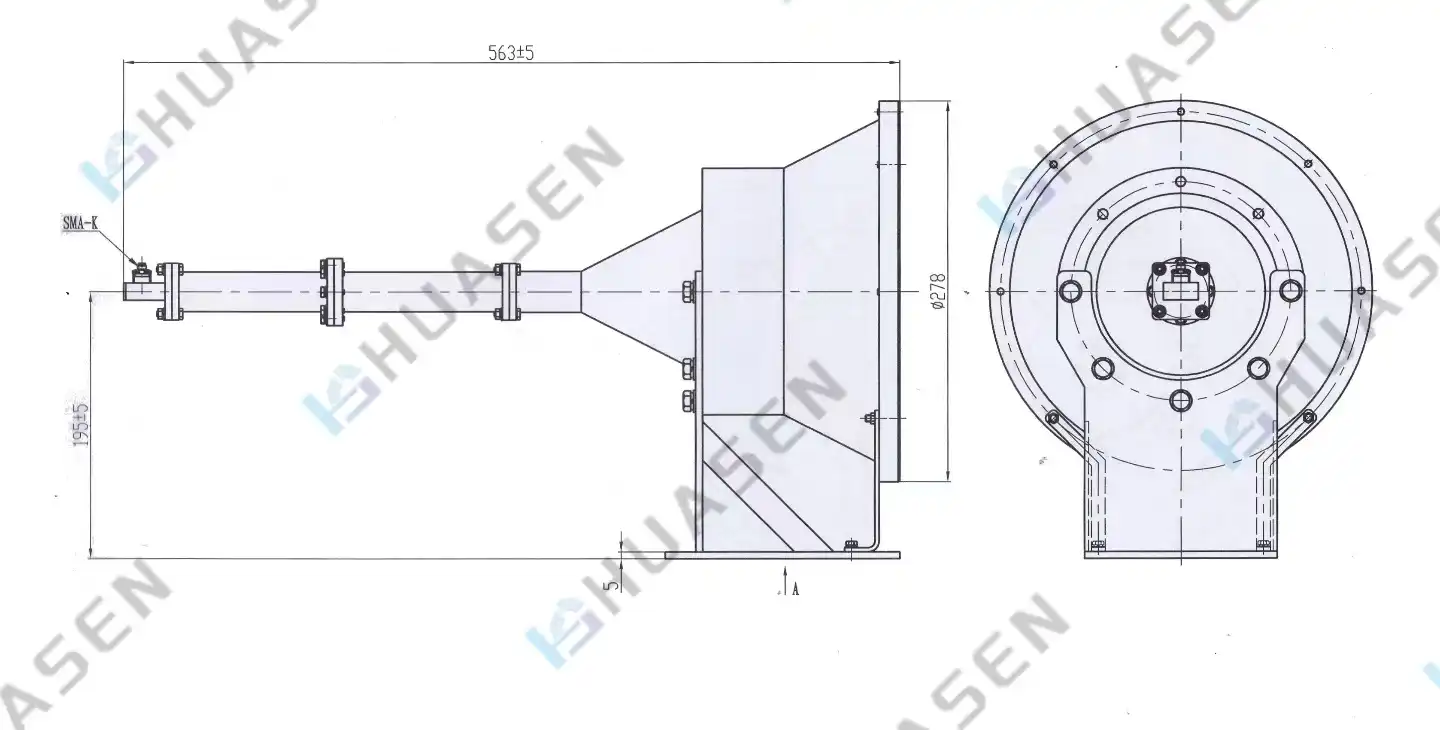
Proper assembly and testing procedures ensure optimal antenna performance and long-term reliability. The critical inspection points for lens horn antennas focus on both mechanical precision and electromagnetic validation to verify compliance with design specifications. Surface accuracy and lens integrity require careful examination for voids, impurities, horn lens, or machining irregularities that can cause signal scattering at millimeter-wave frequencies. The positioning tolerance of the dielectric lens relative to the horn throat typically demands precision within ±0.01mm to ensure correct phase center location and optimal electrical performance.VSWR and return loss testing using calibrated Vector Network Analyzers provides essential validation of impedance matching across the operational frequency range. Industry-standard test procedures require VSWR measurements below 1.5:1 across the full bandwidth, with many precision applications demanding even tighter specifications.
Maintenance and Longevity Optimization
Regular maintenance protocols extend antenna service life and maintain performance specifications throughout the operational period. The dielectric lens serves as natural protection for the waveguide interface, though accumulation of moisture, ice, or conductive contaminants on the lens surface can significantly degrade performance. Environmental protection strategies include hydrophobic coatings or radome covers for permanent outdoor installations to ensure proper water shedding and prevent ice formation. These protective measures maintain consistent electrical performance while reducing maintenance requirements in challenging environmental conditions. Periodic performance verification through gain and pattern measurements helps identify degradation before it impacts system performance. Establishing baseline measurements during initial installation provides reference data for future comparisons and enables predictive maintenance scheduling.
Conclusion
The choice between lens horn and dielectric lens antennas depends on specific application requirements, with each technology offering distinct advantages for particular use cases. Lens horn antennas excel in applications requiring high gain, excellent side lobe suppression, and compact dimensions, making them ideal for telecommunications infrastructure, radar systems, and test equipment. Their proven reliability and environmental ruggedness support long-term deployment in demanding conditions. Dielectric lens antennas provide greater flexibility in beam shaping and can offer advantages in weight-sensitive applications or those requiring complex radiation patterns. Understanding these performance differences enables engineers to make informed decisions that optimize system performance while meeting practical constraints of cost, size, and environmental tolerance.
FAQ
1. What are the main performance differences between lens horn and dielectric lens antennas?
Lens horn antennas typically provide higher gain (20-45 dBi) with superior side lobe suppression (E-plane ≤-15dB, H-plane ≤-26dB) compared to standard designs. They excel in applications requiring focused, high-gain radiation patterns with excellent beam symmetry. Dielectric lens antennas offer greater flexibility in beam shaping and can achieve broader bandwidth operation, making them suitable for applications requiring complex radiation patterns or multi-beam capabilities.
2. Which antenna type is better for 5G and millimeter-wave applications?
Lens horn antennas are particularly well-suited for 5G backhaul and millimeter-wave applications due to their compact dimensions, high gain characteristics, and excellent side lobe suppression. The ability to achieve significant gain in shorter physical lengths compared to standard horns makes them ideal for space-constrained 5G infrastructure deployments where interference mitigation is critical.
3. How do environmental factors affect antenna selection?
Environmental considerations significantly impact antenna choice, with lens horn antennas offering inherent protection through their integrated lens design. The dielectric lens acts as a radome, providing weather sealing and debris protection. Applications in harsh environments benefit from the robust construction and proven reliability of lens horn designs, while weight-sensitive applications might favor optimized dielectric lens solutions.
4. What customization options are available for lens antenna systems?
Both antenna types offer extensive customization possibilities, including focal length adjustment, aperture sizing, and beamwidth optimization. Lens horn antennas can be configured as conical, pyramidal, feed-illuminated, or point-focus designs depending on specific requirements. Polarization options include linear polarization in basic models, with circular polarization achievable through circular waveguide phase shifters.
5. How do I ensure quality and reliability when procuring lens antennas?
Quality assurance requires comprehensive testing, including VSWR verification, radiation pattern validation, and environmental stress screening. Reputable suppliers provide detailed test data, compliance certifications, and engineering support throughout the procurement process. Critical inspection points include lens integrity, surface accuracy, and electromagnetic performance validation using calibrated test equipment.
Partner with Huasen Microwave for Advanced Lens Antenna Solutions
Huasen Microwave Technology stands ready to address your most demanding antenna requirements with over three decades of specialized experience in high-frequency microwave and millimeter-wave component development. Our comprehensive lens antenna portfolio includes conical horn lenses, pyramidal horn lenses, feed-illuminated lenses, and point-focus lens configurations, each engineered to deliver exceptional performance in telecommunications, radar, and aerospace applications. As a trusted lens antenna supplier, Lens Antenna providescomplete customization capabilities for focal length, aperture dimensions, and beamwidth characteristics while maintaining the highest quality standards. Contact our engineering team at sales@huasenmicrowave.com to discuss your specific requirements and discover how our proven lens antenna solutions can optimize your system performance and reliability.
References
1. Balanis, Constantine A. "Antenna Theory: Analysis and Design, Fourth Edition." John Wiley & Sons, 2016.
2. Olver, A.D., P.J.B. Clarricoats, A.A. Kishk, and L. Shafai. "Microwave Horns and Feeds." IEEE Press, 1994.
3. IEEE Standard 149-2021. "IEEE Recommended Practice for Antenna Measurements." Institute of Electrical and Electronics Engineers, 2021.
4. Silver, Samuel. "Microwave Antenna Theory and Design." MIT Radiation Laboratory Series, Volume 12, Boston Technical Publishers, 1964.
5. Rudge, Alan W., et al. "The Handbook of Antenna Design, Volume 1." Peter Peregrinus Ltd., 1986.
6. Love, A.W. "Electromagnetic Horn Antennas." IEEE Press, 1976.
Send Inquiry