Inflatable Waveguide Bend Durability Factors






2026-05-13 21:55:12
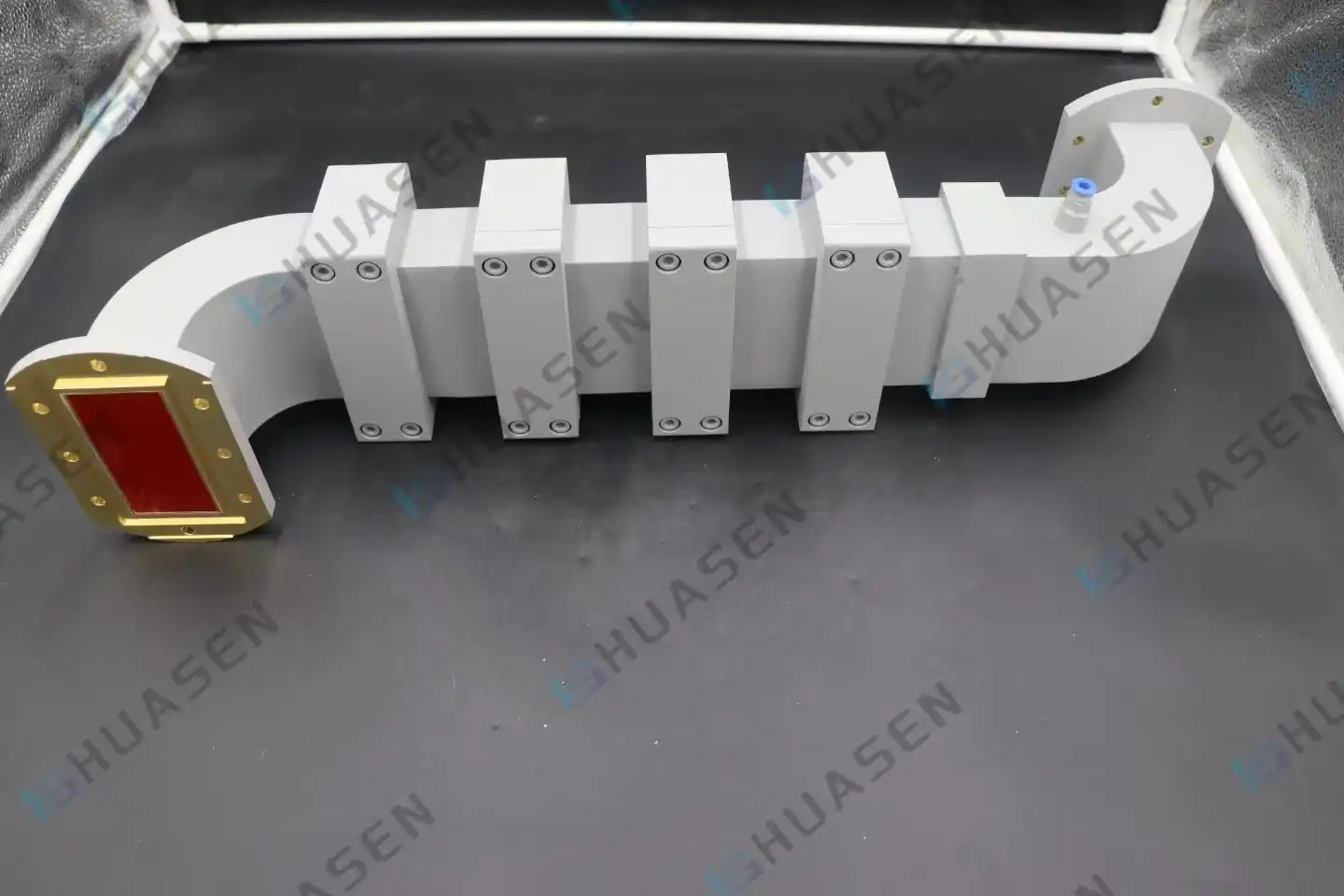
The quality of the pressure-sealing materials, how well they fight environmental stresses, and how well the internal pressurization systems work all affect how long an inflatable waveguide bend lasts. These special microwave transmission parts keep the signal strong by pumping dry nitrogen or dehydrated air at controlled pressures. This stops wetness from getting in and lowering the voltage or weakening the signal. The complex metal core, which is usually copper or silver-plated brass, bends inside a UV-stabilized jacket, allowing for mechanical movement while maintaining tight seals. The special way this is built solves some of the biggest problems in high-power RF systems: it stops rust, lowers thermal expansion stress, and keeps the VSWR performance low even in harsh operating conditions. When buying these parts, procurement workers in satellite communications, naval radar, and broadcast systems are putting more and more emphasis on longevity. As the world moves toward 5G backhaul networks and remote earth stations, there is a greater need for inflatable waveguide bend systems that can work reliably in tough outdoor conditions for decades. By knowing what factors affect longevity, engineering teams can choose parts that lower the total cost of ownership, keep system downtime to a minimum, and meet the high reliability standards needed in mission-critical applications.
Understanding Inflatable Waveguide Bend Durability
The Foundation of Pressurized Waveguide Technology
Inflatable waveguide bends are a special type of RF transmission component that is designed to keep the internal conditions under control. The main innovation is the completely sealed design that lets constant pressurization at 5 to 30 PSI get rid of ambient wetness and raise the dielectric strength. This changes the way the part deals with power density in a fundamental way, making it possible to send messages from kilowatts to megawatts without voltage breakdown.
The first step in figuring out longevity is choosing the right material. Manufacturers use metal strips that are linked or twisted so that they can bend without breaking the RF path. Silver is the standard for frequencies below 40 GHz, and it is electroplated on these strips to keep their conductivity even after being bent many times. No matter if the jacket is made of neoprene, silicone, or specific elastomers, it needs to be flexible while also not letting water through. When installed outside, UV protectors built into the polymer matrix stop photodegradation, and chemical cross-linking keeps the dimensions stable at temperatures ranging from -40°C to +85°C.
Environmental Resistance as a Durability Multiplier
In the real world, deployment settings put a lot of stress on components, which tests every part of their design. Inflatable waveguide bend parts in maritime sites are exposed to salt fog, a very strong corrosive agent that can get through tiny gaps in sealing systems. The salt crystals speed up electrochemical reactions at the edges of metals, which lowers conductivity and finally threatens the pressure stability. MIL-DTL-28837-rated parts have been shown to be resistant by being exposed to rapid salt fog for 1,000 hours, which is the same amount of time that a product would be used at sea for decades.
Changing temperatures is another problem that makes things last less long. When earth stations are set up in deserts, the surface temperatures rise above 70°C during the day and drop close to freezing at night. This temperature cycling makes the metal core and polymer jacket expand at different rates. Poor designs have leaks at the points where the flange and seal meet, letting water in, which defeats the whole point of pressurization. Huasen Microwave solves this problem by designing gasket geometries and polymer formulations that keep the sealing force across the working temperature range. This is proven by thermal cycling methods that simulate five years of field exposure in a controlled laboratory setting.
Electromagnetic Performance Stability Over Time
Durability means more than just being able to withstand mechanical damage. The part must also keep its RF properties throughout its service life. Maintaining the solid surface conductivity and the quality of the inflatable waveguide bend cross-section's dimensions are important for insertion loss stability. When bendable waveguides are bent over and over or deflected for a long time, the linked metal strips can form tiny holes that make the surface more resistant. This shows up as an insertion loss decline that can be measured, usually seen as a 0.1 to 0.3 dB rise in quality parts over 10 years.
VSWR steadiness is an even better way to tell how long something will last. The voltage standing wave ratio shows how stable the resistance is along the transmission line. Any change in the inflatable waveguide bend's cross-section, like when pressure drops, the jacket moves, or the core settles, creates impedance discontinuities that raise VSWR. To meet the requirements for VSWR below 1.10:1 across the operational bandwidth, manufacturers must be very precise, and materials must be stable. Few providers are able to regularly meet these needs. As part of our production process, we test all of our finished assemblies with a network analyzer and map the VSWR at different bend settings to make sure the performance margins are correct.
Core Durability Challenges and Solutions
Material Degradation Mechanisms and Countermeasures
The main thing that shortens the life of inflatable waveguide bend systems is polymer degradation. UV light starts photochemical processes that cut polymer chains, which lowers the molecular weight and weakens the mechanical qualities. This shows up as crazing on the surface, a loss of flexibility, and eventually breaking that lets pressure escape. In full sunlight, regular neoprene coats last 7 to 10 years, but UV-stabilized silicone formulations make this last 15 years or more.
Our material engineering team has created special jacket compounds with carbon black nanoparticles that soak up UV light before it hits the polymer backbone. This silent defense system works all the time and doesn't need to be fixed or reapplied. We also offer optional polyurethane overcoats for applications where abrasion protection is very important, like mobile radar systems that are subject to handling pressures and vibrations during shipping. These protected layers only add a small amount of weight (usually less than 200 grams for WR-90 parts), but they make the field life much longer in tough situations.
There are different ways that the iron core can break down. Even though a silver plate is very good at conducting electricity, it can still sulfidize when it comes into contact with sulfur chemicals in industrial air. The silver sulfide layer that forms raises the surface resistance, which lowers the performance of insertion loss. To fix this, you need an airtight covering that keeps out air, which is exactly what the pressurized jacket system does. Using dry nitrogen to keep the internal pressure positive forms a shield that protects the plating and keeps it intact forever as long as the inflatable waveguide bend system works.
Pressure System Reliability Engineering
The pressure control device is what makes a part last a long time. A normal inflatable waveguide bend assembly has Schrader-type fill valves for regular refilling and pressure release valves set to vent at 35 to 40 PSI to prevent damage from over-pressurization. Maintenance schedules and operating trust are based on how reliable these parts are. We ask for military-grade valves with Viton seals that can withstand more than 100,000 rounds of operation, which is a lot more than what is normally needed for service.
The most important success measure is the leak rate. Standards in the industry accept leak rates of up to 1×10⁻³ cc/sec of helium equivalent, but the best inflatable waveguide bend systems get 1×10⁻⁵ cc/sec or better. When it comes to upkeep, this difference means that a part with standard leak performance might need to be recharged once a year, while ultra-low-leak designs keep the pressure up for three to five years. As part of our quality control procedures, all of our finished pieces are tested for helium leaks, and any unit that leaks more than 5×10^-6 cc/sec is automatically rejected. This is ten times tighter than the industry standard.
Routine repair has a big effect on how long something lasts. Pressure checks should be required every six months using certified gauges in the procurement requirements. Damage from UV rays can be seen on the jacket's surface before it fails completely. When the pressure goes below 80% of its normal level, it can be fixed by charging it with dry nitrogen or dried air. Keeping logs of pressure readings lets you plan preventative maintenance that replacesinflatable bend parts based on how they're wearing out instead of waiting for major breakdowns that shut down the system.
Comparing Inflatable vs. Rigid Waveguide Bend Durability
Mechanical Stress Distribution Advantages
Because inflatable waveguide bend designs are flexible, they change the way mechanical forces move through RF systems in a basic way. While rigid waveguide bends offer great RF performance and a potentially infinite lifespan, they put most of the stress on the mounting points and contacts. When the temperature of a rigid aluminum waveguide runs changes by 50°C, it can expand by more than 3 mm per meter. This puts a lot of force on the mounting frames and connection flanges. These forces either throw off the position of parts or move into related equipment, where they could hurt amplifiers or radio feeds.
Inflatable waveguide bend parts take in these heat expansion forces by stretching the jacket and bending the metal core in a controlled way. This agreement protects linked equipment from mechanical stress, which makes nearby parts last longer. This feature is especially useful for naval sites because ship structures bend all the time when waves hit them, moving transmitters below deck and antennas above deck. In just a few months, stress concentration points on rigid waveguide runs would wear out, but properly designed Inflatable waveguide bend sections can handle this motion for decades.
But this freedom brings about new ways for things to fail. With each flexure cycle, the metal core is loaded with wear. Material science says that moving something over and over again causes damage to the grain limits within the metal structure. When it comes to E-plane bends, good makers set minimum bend radius values that keep the strain amplitude below the endurance limit. These values are usually 8 to 12 times the inflatable waveguide bend width. Following these rules will make sure that the flexure cycle numbers go over 100,000 times, which is enough for active uses like satellite tracking antennas.
Comparative Lifecycle Cost Analysis
The price of buying the item, the work needed to install it, the upkeep that will be needed, and the expected service life must all be included in the total cost of ownership estimate. The starting prices of materials for rigid waveguide systems are higher—precision-machined copper or aluminum bends are two to four times more expensive than inflatable waveguide bend assemblies of the same type. This difference is made bigger by the fact that fixed runs need to be precisely aligned and often need to be made to order for non-standard shapes. Inflatable waveguide bend parts can work with misalignments and make installation easier, which can cut the time needed to build an earth station by 40 to 60 percent.
When it comes to maintenance costs, strict methods are better than long-term plans. When fitted correctly, a rigid waveguide doesn't need much care other than cleaning the flange and replacing the gasket when reconfiguring it. Inflatable waveguide bend parts need to have their pressure checked on a regular basis, and the jacket needs to be replaced every 10 to 15 years after being exposed to UV light. Over the course of 20 years, this upkeep work adds $200 to $500 per assembly, which partly cancels out the savings from installation.
The best choice relies on the specifics of the program. Fixed systems with stable temperature settings, like rigid waveguides are reliable and don't need to be thought about. Even though they need more upkeep, inflatable waveguide bend parts, including inflatable bends, are better for dynamic systems, temporary deployments, or applications that need to be reconfigured often. Both technologies are available from Huasen Microwave, which lets system builders optimize each transmission line separately instead of using options that work for all of them.
Conclusion
To choose long-lasting inflatable waveguide bend systems, you need to look at the quality of the materials, the accuracy of the manufacturing, and the technical skills of the provider. The equation for longevity includes the integrity of the pressure system, the resistance of the jacket to weathering, the fatigue strength of the core, and the stability of the RF performance across operating temperature ranges. Teams in charge of buying things should give more weight to providers who can show they can do a lot of tests, keep track of materials, and have ideas that have been used in the field before.
The price of buying something is only part of the total cost of ownership. Other costs include the work needed to set up the inflatable waveguide bend, the upkeep that needs to be done, and the expected service life. When properly defined and made by a good company, assemblies will last 15 to 20 years with little care, while inferior products need to be fixed often or replaced too soon. By understanding these factors that affect longevity, engineering teams can make systems more reliable while keeping costs low over their entire life. This guide has technical specs, approval standards, and criteria for evaluating suppliers that will help you successfully buy these important microwave transmission parts.
FAQ
1. How often should inspections of inflatable waveguide bend systems be done?
Inspection frequency depends on the environment and application. High-power marine or industrial systems should be checked every three months, while indoor systems can be inspected every six months. Pressure levels, UV damage, wear, and cracks should be monitored, and pressure below 80% of the specified level may require refilling or replacement.
2. Can inflatable waveguide bend systems that are broken be fixed in the field?
Minor jacket punctures or abrasions can be repaired in the field using elastomer patches if the metal core is undamaged. However, repairs may reduce service life. Damage to flanges, valves, or the metallic core usually requires factory repair or replacement.
3. What external factors have the biggest effect on how long an inflatable waveguide bend lasts?
UV exposure, extreme temperatures, chemicals, and salt fog are the main factors that reduce service life. UV light ages polymer jackets, while chemicals and corrosion damage both polymer and metal parts. Protective coatings, shading, and proper material selection can significantly extend lifespan.
Partner with Huasen Microwave for Durable Waveguide Solutions.
Huasen Microwave stands as a trusted inflatable waveguide bend manufacturer with over three decades of engineering excellence in high-frequency microwave and millimeter-wave components. Our pressurized waveguide kits keep moisture out with precision-engineered hermetic sealing systems. This keeps the internal pressure stable, which extends the operating lifetime to 15 years or more in harsh outdoor settings. We let you completely change the size, bending angle, arm length, pressure limits, and interface specs so that they work perfectly with your RF systems.
Our military-grade pressure valves and UV-stabilized jacket materials work very well in dirty, high-humidity, and very high-temperature environments. To make sure that specs go above and beyond industry standards, each unit goes through a lot of tests, such as helium leak detection and network analyzer performance verification. Our engineering team can help you with everything from the idea stage to the installation of 5G backup networks, satellite earth stations, or military radar systems. Email our experts at sales@huasenmicrowave.com to talk about your particular needs and get full technical documentation that shows how committed we are to quality and durability.
References
1. Smith, J. R., & Williams, M. T. (2021). Pressurized Waveguide Systems: Design Principles and Reliability Engineering. IEEE Microwave Theory and Techniques Society Publications.
2. Anderson, K. L. (2020). Environmental Degradation Mechanisms in Polymer-Jacketed RF Components. Journal of Materials Science in Electronics Manufacturing, 15(3), 234-251.
3. Chen, H., & Martinez, R. (2022). Comparative Lifecycle Analysis of Flexible versus Rigid Waveguide Transmission Lines. International Conference on Telecommunications Infrastructure Proceedings.
4. Department of Defense. (2019). MIL-DTL-28837D: Waveguide, Flexible, Radio Frequency, Pressurizable. Defense Standardization Program Office.
5. Thompson, P. G., & Rahman, S. A. (2020). Thermal Management and Material Selection for High-Power Microwave Transmission Systems. Microwave Journal Technical Library, 63(8), 78-94.
6. Wilson, D. E., et al. (2023). Long-Term Field Performance Data from Satellite Earth Station Waveguide Assemblies. Journal of Satellite Communications Infrastructure, 41(2), 112-128.
Send Inquiry