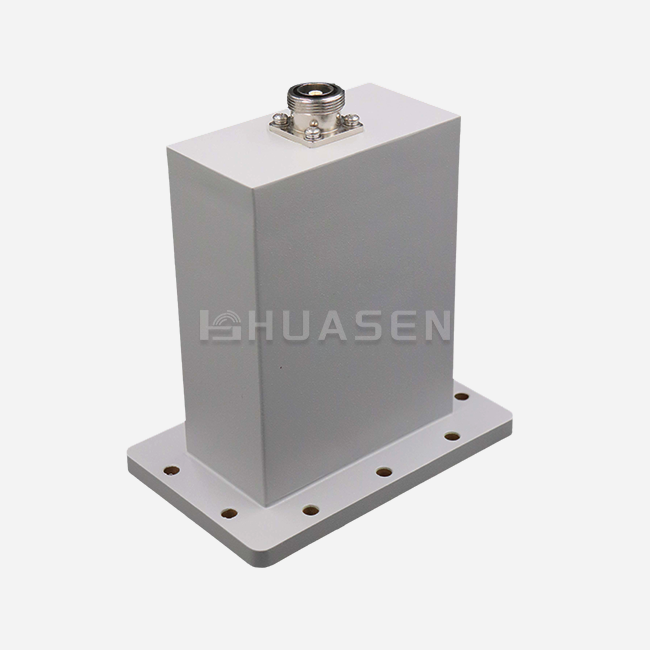
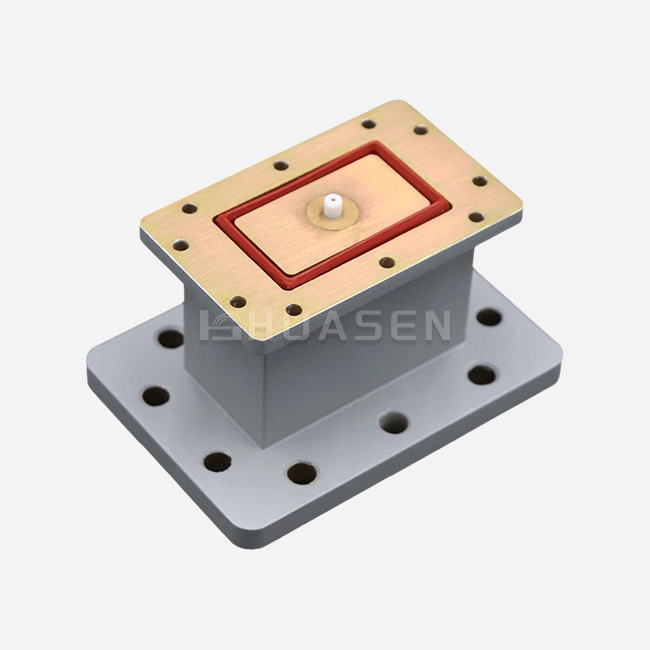
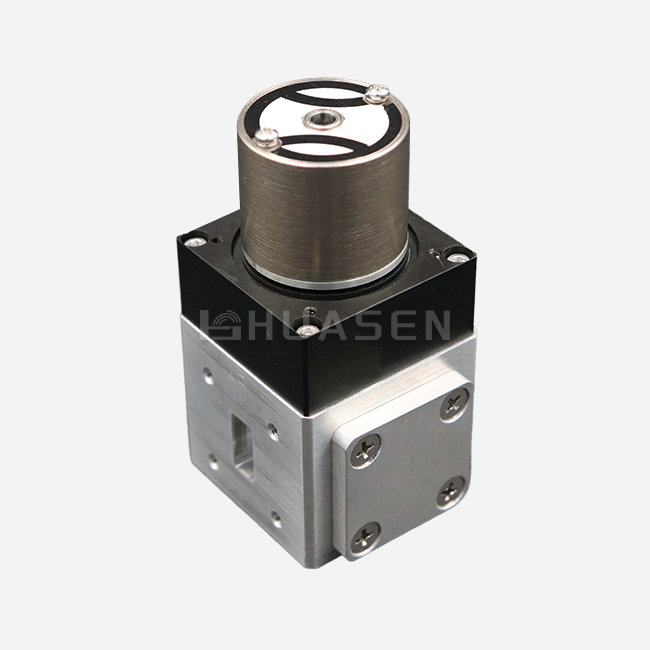
How Waveguide Matching Load Minimizes VSWR?






2026-03-04 22:01:29
A Waveguide Matching Load lowers VSWR by precisely matching the impedance, which takes electromagnetic energy that comes in and sends as little of it back to the source as possible. This important RF part does this with special materials that absorb electromagnetic waves and a geometric design that fits the waveguide system's characteristic impedance. For precise applications, this usually means keeping VSWR ratios below 1.05:1. These loads protect sensitive transmission parts by getting rid of standing waves and signal reflections. They also make sure that signals stay pure throughout high-frequency systems.
Understanding Waveguide Matching Load and VSWR
RF experts always have to deal with problems when they have to keep signals intact in microwave systems that are very complicated. One of the most important parts of improving system performance is figuring out how waveguide terminations affect VSWR reduction. When electromagnetic energy moves through a waveguide system and hits an impedance mismatch, some of that energy bounces back toward the source, causing standing wave patterns that can make the system work very badly.
The Physics of VSWR Minimization
When forward and mirrored waves come together in the transmission line, they make standing wave patterns. In an ideal world, the Voltage Standing Wave Ratio (VSWR) would be 1:1, which means that the amplitude of these combined waves changes by one unit. In the real world, though, VSWR values should be less than 1.10:1 for most uses, and even lower ratios are needed for precision instruments. Waveguide matching loads minimise VSWR by using carefully designed absorbing elements that turn electromagnetic energy into heat. The material that absorbs power must have the right impedance profile across the working frequency band and be able to get rid of the absorbed power quickly without making the temperature unstable, which could hurt performance.
Impact on System Performance
Too much VSWR causes a number of performance issues that lower signal quality and shorten the life of equipment. Reflected power can pull the frequency of oscillators, change the output of amplifiers, and mess up measurements in test equipment. When using a lot of power, reflected energy builds up at voltage peak points, which can lead to arcing or component failure. Bad VSWR control has a bigger effect on the economy than just performance problems. System makers have to figure out how to deal with reflected power margins, which means they have to use bigger parts and pay more for them. Stress linked to VSWR can also cause intermittent failures that can cost a lot of money in mission-critical applications.

Key Design Principles and Theory Behind Waveguide Matching Load
The engineering excellence of modern waveguide terminations relies on sophisticated material science and electromagnetic theory. Understanding these fundamental principles enables engineers to select optimal solutions for their specific applications while avoiding common pitfalls that compromise system performance.
Material Selection and Electromagnetic Properties
Advanced absorbing materialsmatching load form the foundation of effective VSWR reduction. Silicon carbide ceramics, loaded polymers, and specialized ferrite compositions each offer distinct advantages depending on frequency range, power levels, and environmental requirements. These materials must maintain stable electrical properties across temperature variations while providing consistent absorption characteristics throughout the operational bandwidth. The geometric tapering of absorbing elements plays an equally important role in VSWR minimization. Gradual impedance transitions from the waveguide characteristic impedance to the absorbing material impedance prevent abrupt discontinuities that would generate reflections. Mathematical modeling of these transitions involves complex electromagnetic field calculations that optimize the taper profile for minimal reflection across the desired frequency range.
Frequency-Dependent Design Considerations
Different frequency bands present unique challenges for VSWR optimization. Millimeter-wave applications require extremely precise mechanical tolerances since small dimensional variations create significant impedance discontinuities. Lower frequency designs can accommodate larger absorbing elements but must address increased power density requirements. The relationship between waveguide dimensions and frequency response creates natural bandwidth limitations. Standard rectangular waveguides operate effectively within specific frequency ranges determined by their cutoff characteristics. Broadband applications may require specialized dual-ridge or circular waveguide configurations that maintain proper impedance matching across extended frequency ranges.
Comparative Analysis with Alternative Termination Methods
Traditional sheet-type absorbing loads suffer from mechanical stability issues that can degrade VSWR performance over time. Vibration and thermal cycling cause delamination and dimensional changes that create impedance discontinuities. Bulk absorption materials address these limitations through monolithic construction that eliminates bonding interfaces susceptible to failure. Water-cooled terminations provide superior power handling capabilities but introduce complexity and potential reliability concerns in harsh environments. Air-cooled designs offer greater simplicity and reliability while maintaining adequate performance for most applications within their power ratings.
Practical Applications and Troubleshooting in Industrial Environments
Real-world deployment of waveguide matching loads spans diverse industrial sectors, each presenting unique operational challenges and performance requirements. Understanding these application-specific demands enables engineers to implement effective solutions that maintain optimal VSWR performance throughout equipment lifecycles. Industrial environments present significant challenges for maintaining consistent VSWR performance. The aerospace sector utilizes high-reliability terminations in radar systems and satellite communications, where failure consequences extend beyond economic considerations. These applications demand extensive qualification testing, including thermal cycling, vibration exposure, and extended life validation under realistic operational conditions.
Telecommunications Infrastructure Applications
5G and 6G base station deployments increasingly rely on precise VSWR control to maximize spectral efficiency and minimize interference between adjacent channels. Waveguide matching loads terminate unused ports in antenna feed networks and provide calibration references for beamforming systems. The compact size requirements of modern base stations create space constraints that favor specialized short-length designs optimized for narrowband operation. Maritime and satellite communication systems face additional environmental stresses, including salt spray corrosion, temperature extremes, and mechanical shock from vessel motion or launch vibrations. These applications benefit from ruggedized designs featuring corrosion-resistant materials and enhanced mechanical stability through improved mounting interfaces.
Defense and Electronic Warfare Applications
Military radar and electronic countermeasure systems operate at high power levels that amplify the consequences of poor VSWR control. Reflected power can damage expensive transmitter components or create detectable signatures that compromise stealth capabilities. Advanced terminations for these applications incorporate features such as arc detection, thermal monitoring, and fail-safe mechanisms that protect critical systems. The frequency agility requirements of modern electronic warfare systems demand broadband terminations that maintain consistent VSWR across rapid frequency changes. Specialized designs accommodate these requirements through optimized absorbing material profiles and enhanced thermal management capabilities.
Troubleshooting Common VSWR Issues
Systematic approaches to VSWR troubleshooting begin with comprehensive measurement using calibrated vector network analyzers. Frequency-dependent VSWR variations often indicate mechanical issues such as loose connections or damaged absorbing elements. Temperature-dependent changes suggest thermal expansion mismatches or absorbing material degradation. Environmental factors contribute significantly to VSWR degradation over time. Moisture ingress can alter the dielectric properties of absorbing materials, while contamination from dust or other particles creates impedance discontinuities. Regular inspection protocols help identify these issues before they impact system performance.
How to Choose and Procure the Best Waveguide Matching Load
Procurement decisions for waveguide matching loads involve balancing technical performance requirements against cost constraints and delivery schedules. Understanding key specification parameters enables engineers and purchasing managers to evaluate competing solutions effectively while avoiding costly specification mismatches.
Critical Performance Parameters
VSWR specification represents the primary performance criterion, but understanding measurement conditions and frequency dependence provides essential context for meaningful comparisons. Specifications measured across the full waveguide bandwidth provide more comprehensive performance indicators than single-frequency measurements. Power handling capabilities must account for both continuous wave and peak power requirements, with adequate safety margins for operational reliability. Environmental specifications become increasingly important in harsh operating conditions. Temperature range, humidity tolerance, shock resistance, and corrosion protection requirements vary significantly between applications. Military and aerospace applications typically require compliance with specific environmental standards that exceed commercial specifications.
Supplier Evaluation and Quality Assurance
Reputable manufacturers matching loadprovide comprehensive test data demonstrating compliance with specified performance parameters. This documentation should include VSWR measurements across the full frequency range, power handling validation, and environmental qualification results. Suppliers with ISO 9001 certification and established quality management systems typically provide more consistent product quality and reliable delivery performance. Technical support capabilities vary significantly between suppliers and can impact long-term project success. Manufacturers offering design assistance, custom configuration options, and responsive technical support provide greater value for complex applications requiring specialized solutions.
Cost Optimization Strategies
Most of the time, standard catalogue items are the best value for regular use with set requirements. When there are a lot of them or when normal designs can't meet certain performance needs, custom configurations become the most cost-effective option. Standard products are often better because they have shorter lead times, especially for making prototypes and replacing parts quickly. Volume purchasing deals can save you a lot of money and make sure that you always have the products you need for production. But if the specifications change during an extended contract, the terms may need to be renegotiated to meet new technology needs.
Installation, Calibration, and Performance Optimization
The VSWR performance that can be achieved with waveguide matching loads is directly affected by how well they are installed and calibrated. By knowing these steps, field engineers can make sure that the system works at its best and that common installation mistakes don't affect the accuracy of measurements or the trustworthiness of the system.
Installation Best Practices
The most important part of installing a waveguide termination is making sure the flanges are lined up correctly. Mechanical imbalance causes impedance discontinuities that hurt VSWR performance, no matter what the load is made of. Accurate alignment gauges and torque specs make sure that the quality of installation is the same across multiple jobs. The choice of gasket and how it is installed affects both electrical performance and sealing against the environment. Conductive gaskets protect against the surroundings and keep the electricity flowing across flange interfaces. Proper gasket compression stops both under-sealing, which lets water in, and over-compression, which puts stress on the parts.
Calibration Procedures and Intervals
Regular testing keeps measurements accurate and lets you find problems with performance early. The amount of time between calibrations depends on how important the application is, the surroundings, and past performance data. Critical applications may need to be checked every month, while stable labs may be able to go up to once a year for calibration. Calibration of a vector network analyser using precision waveguide standards gives measurements the accuracy needed for a useful VSWR assessment. When choosing a calibration kit, it's important to make sure that it works with the application's waveguide size and frequency range and can be traced back to national measurement standards.
Performance Monitoring and Optimization
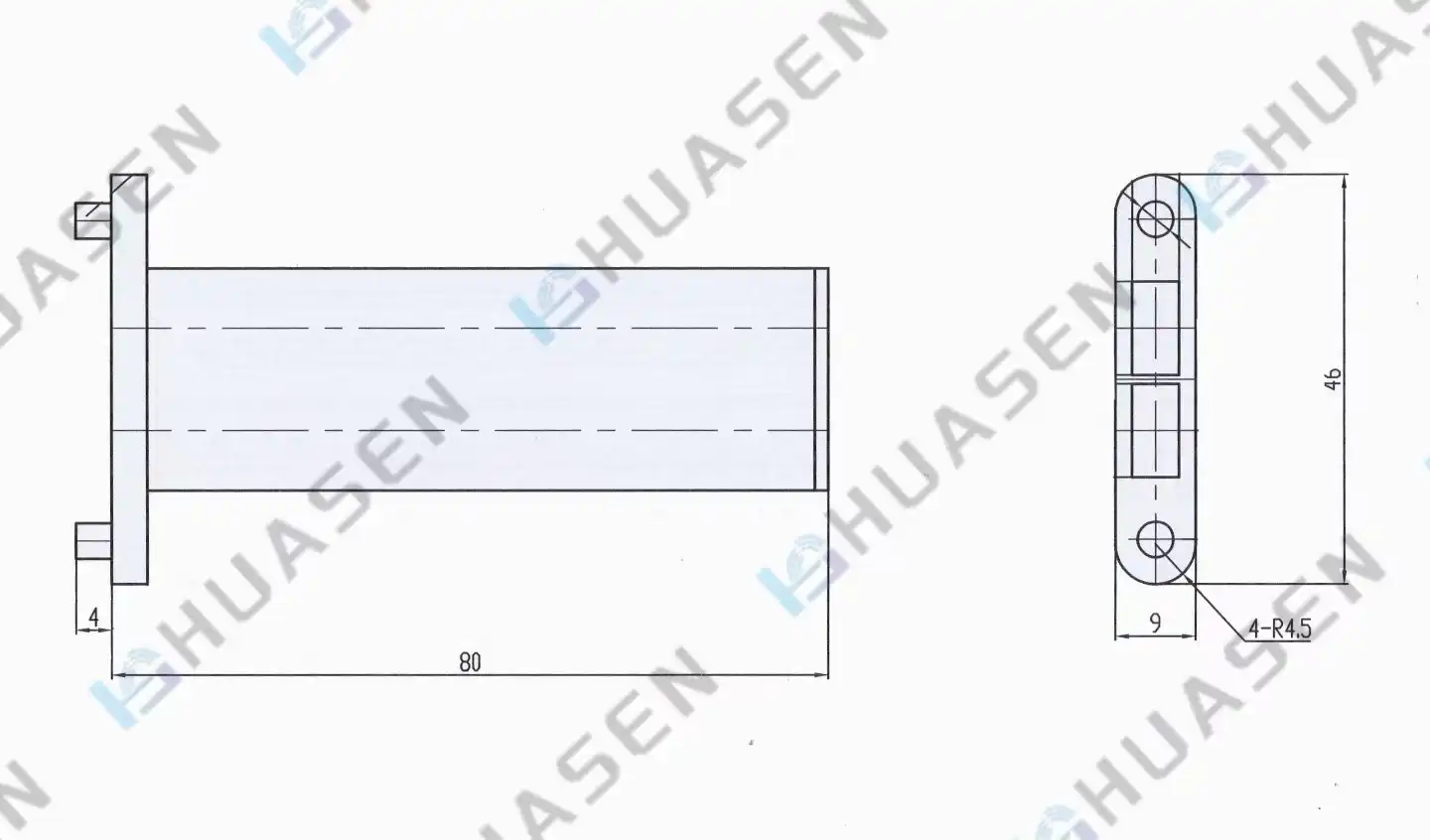
Continuous monitoring tools let you check the VSWR in real time and set off an alarm automatically when performance drops too far. These systems are especially helpful for high-value setups where unplanned downtime can have big effects on operations or the economy. Data logging lets you look at patterns that can help you figure out when to do maintenance and when to replace parts. Historical performance data helps find external factors that speed up degradation and allows for proactive strategies to stop it. Huangsen Microwave's new bulk absorption technology solves reliability problems related to vibrations that are common in sheet-type designs. The monolithic design gets rid of bonding surfaces that can break mechanically, while still providing better electrical performance across the 0.32-330 GHz frequency range.
Conclusion
In many RF and microwave uses, waveguide matching loads are necessary to keep VSWR as low as possible. The complex engineering that goes into these gadgets mixes high-level materials science with precise electromagnetic design to get the low reflection coefficients that are needed for the best system performance. Whenengineers know how design principles, application needs, and performance optimisation work together, they can come up with good solutions that keep expensive equipment safe and the integrity of the signals. As wireless communication systems keep getting better at handling higher frequencies and more complex signals, precision waveguide terminations play an even more important role in meeting the performance needs of modern apps.
FAQ
1. What factors determine the minimum achievable VSWR in a waveguide system?
The minimum achievable VSWR depends on several interconnected factors, including the precision of mechanical tolerances, the quality of absorbing materials, and the frequency of operation. Manufacturing variations in waveguide dimensions create unavoidable impedance discontinuities that limit theoretical performance. High-quality laboratory-grade loads typically achieve VSWR below 1.02:1, while ruggedized field equipment commonly achieves 1.05:1 to 1.10:1 depending on environmental requirements.
2. How does power handling capability relate to VSWR performance?
Power handling and VSWR performance exhibit complex relationships involving thermal management and material properties. Higher power levels generate increased heating in absorbing materials, potentially causing thermal expansion that affects impedance matching. Additionally, absorbed power creates temperature gradients that can alter material dielectric properties, leading to VSWR degradation at elevated power levels. Proper thermal design maintains stable performance across the full power range.
3. Can waveguide matching loads maintain performance across multiple frequency bands?
Broadband waveguide matching loads can maintain acceptable VSWR across the full waveguide bandwidth, but performance optimization typically focuses on specific frequency ranges. The impedance matching characteristics of absorbing materials and geometric transitions create frequency-dependent behavior that may favor certain portions of the operating band. Applications requiring uniform performance across multiple bands may benefit from specialized dual-ridge designs or multiple narrow-band loads.
4. What environmental factors most significantly impact long-term VSWR stability?
Temperature cycling represents the most significant environmental stress affecting long-term VSWR stability. Repeated thermal expansion and contraction can create mechanical stress in absorbing materials and mounting interfaces. Moisture ingress also affects the dielectric properties of absorbing elements, while contamination from dust or other particles creates impedance discontinuities. Proper environmental sealing and material selection mitigate these effects in harsh operating conditions.
5. How do you verify waveguide matching load performance in field installations?
Field verification requires calibrated vector network analyzer measurements taken at the installation site under actual operating conditions. Portable VNA systems enable comprehensive VSWR characterization across the full frequency range while accounting for installation-specific factors such as cable losses and environmental conditions. Regular performance monitoring using consistent measurement procedures enables trend analysis and predictive maintenance scheduling.
Partner with Huasen Microwave for Superior VSWR Solutions
Huasen Microwave Technology delivers industry-leading waveguide matching load solutions engineered to minimize VSWR across demanding applications from 0.32 to 330 GHz. Our innovative bulk absorption technology eliminates the vibration sensitivity issues common in traditional sheet-type designs while maintaining exceptional electrical performance. With over three decades of microwave engineering expertise, we provide comprehensive product lines including standard WL configurations, compact WLS designs for space-constrained applications, and precision WSL sliding loads for calibration requirements. As a trusted waveguide matching load manufacturer, we support custom flange configurations and specialized dual-ridge designs that meet your exact specifications. Contact our technical team at sales@huasenmicrowave.com to discuss how our proven solutions can optimize your system's VSWR performance and reliability.
References
1. Montgomery, C.G., Dicke, R.H., and Purcell, E.M. "Principles of Microwave Circuits: Radiation Laboratory Series Volume 8." Institution of Engineering and Technology, 1987.
2. Ragan, G.L. "Microwave Transmission Circuits: Radiation Laboratory Series Volume 9." Institution of Engineering and Technology, 1964.
3. Baden Fuller, A.J. "Microwaves: An Introduction to Microwave Theory and Techniques." Pergamon Press, 1990.
4. IEEE Standard 149-2021. "IEEE Recommended Practice for Antenna Measurements." Institute of Electrical and Electronics Engineers, 2021.
5. Harvey, A.F. "Microwave Engineering: Fundamentals and Practice." Academic Press Professional, 1993.
6. Collin, Robert E. "Foundations for Microwave Engineering: IEEE Press Series on Electromagnetic Wave Theory." Wiley-IEEE Press, 2001.
Send Inquiry