How Waveguide Isolator Protects RF Sources from Reflections






2026-06-05 17:05:27
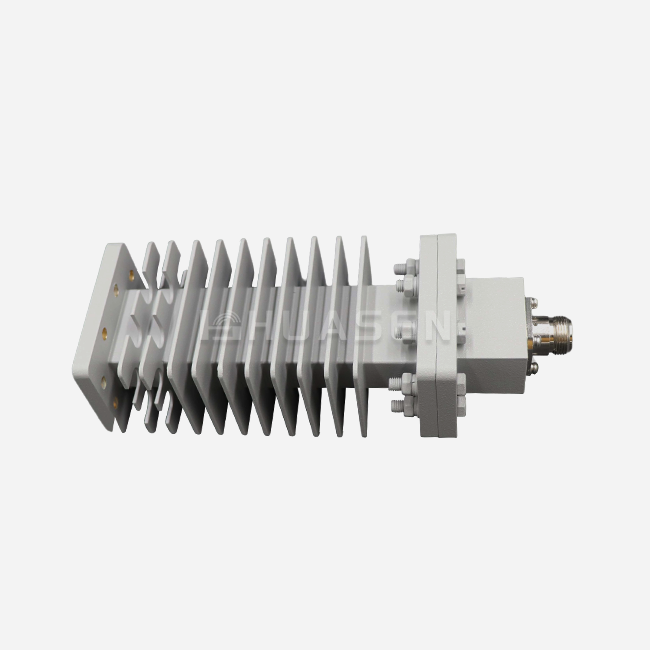
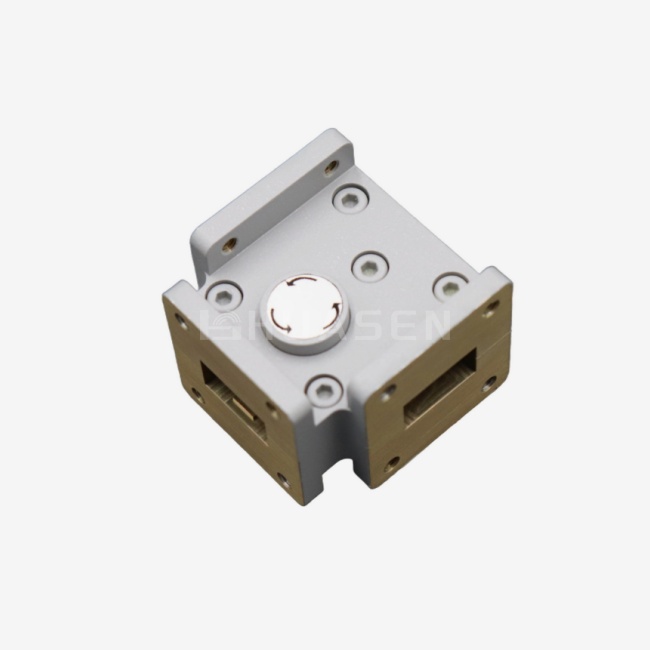
Another important inactive part in RF systems is the waveguide isolator, which works like a one-way valve to let signals go forward while collecting energy that tries to go backward. To keep reflected power from getting to sensitive receivers, amplifiers, and oscillators, this non-reciprocal gadget uses ferrite materials that are magnetically biased. It protects expensive RF sources from impedance mismatches that could otherwise lead to frequency instability, signal degradation, or catastrophic component failure in high-power microwave applications. This is done by turning reverse-traveling energy into heat through an internal termination load.
Understanding the Problem: Reflections and Their Impact on RF Sources
Impedance mismatches happen automatically when parts, connectors, or antennas connect to each other in any RF communication system. Some of the information that is being sent back toward the source is reflected when the characteristic impedance is not the usual 50 ohms in coaxial systems or certain values in rectangular waveguide structures. The Voltage Standing Wave Ratio (VSWR) is a way to measure how these echoes show up as standing waves that cause voltage and current peaks along transmission lines.
There are more effects than just losing power. Frequency pulling happens in solid-state power amplifiers when reflected power changes the working frequency from what was planned. As reflected energy builds up in output holes, traveling wave tubes and magnetrons become thermally unstable. When changes in the load feed back into resonant circuitry, oscillators lose their ability to handle phase noise. As a result, equipment lasts less long, system behavior is less predictable, and repairs need to be done more often, which can delay operations in mission-critical settings.
To solve these problems, protective parts must be put carefully between the RF source and loads that might not be a good match. Solutions need to be able to work with the power amounts, frequency bands, and environmental factors that are common in industry settings. When working with kilowatt-level receivers or millimeter-wave bands, where managing heat is very important, waveguide-based security is naturally better than coaxial options.
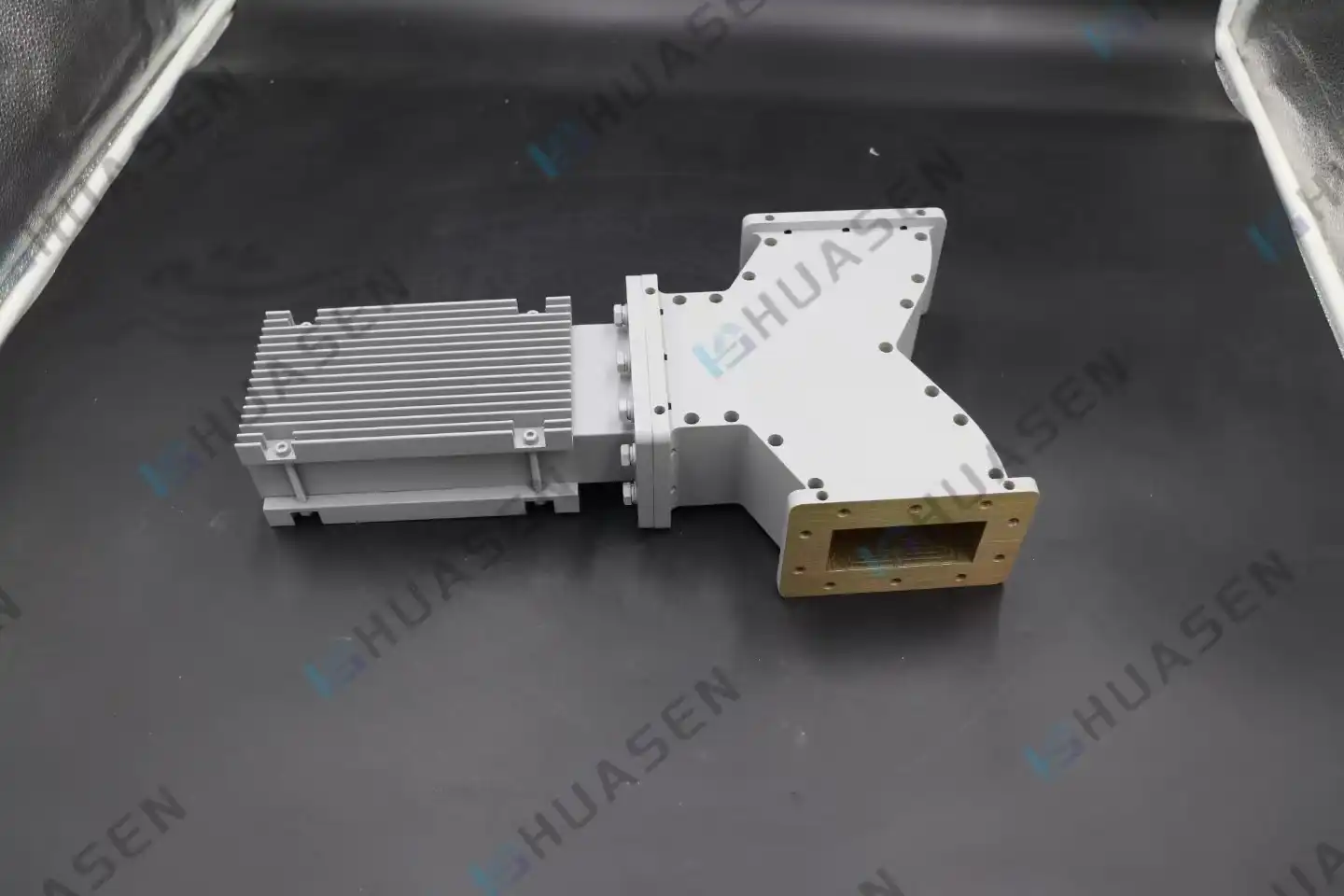
Waveguide Isolator Principles: How Do They Work to Protect RF Sources?
Ferrite Material Physics and Non-Reciprocal Behavior
At the center of each isolator is a carefully made ferrite material, which is usually yttrium iron garnet (YIG) or doped versions with gadolinium or holmium. These materials show gyromagnetic resonance when put in a steady magnetic field made by fixed magnets or electromagnets. When electromagnetic waves meet the biased ferrite, they move in different ways based on which way they are traveling.
A lot of ideas are based on the Faraday rotation concept. As the electromagnetic field vector moves through the ferrite part, the waves moving forward keep their direction so they can pass through with little loss. Reverse-traveling waves turn into orthogonal polarization and couple well into resistive termination loads, where the energy is lost as heat. This uneven behavior makes the separation between the output and input ports very high, usually above 20 dB, while keeping the insertion loss in the forward path below 0.5 dB.
Critical Performance Specifications for System Protection
How well an isolator guards RF sources is based on three factors. The amount of power loss in the desired transmission direction is measured by insertion loss. This has a direct effect on system performance and link costs. Lower numbers keep the output of the transmitter stable and lower the cost of running. Isolation tracks how well signals that travel backwards are blocked. Higher numbers offer better source protection. VSWR at both ports shows how well the isolator fits the system impedance, which keeps it from adding to the echoes.
Bandwidth decides how flexible operations can be. Narrowband designs work best at certain frequencies, providing excellent separation over a 5–10% fractional frequency. Using advanced ferrite loading and multi-section designs, broadband setups can cover whole waveguide bands, like WR-90's 8.2 to 12.4 GHz range. Power handling runs from watts in lab equipment to hundreds of kilowatts in radar emitters. Depending on the amount of received reflection energy, thermal management can be done with convection cooling, forced air circulation, or liquid circulation.
Practical Design Variants and Selection Criteria
Ferrite elements tuned to specific frequencies are used in resonance absorption isolators, which are small and work very well for fixed-frequency uses. Field displacement designs use a non-resonant ferrite placed to cause differential phase changes. This makes the bandwidth wider but the insertion loss a little higher. Circulator-based designs have three ports and send reflected power to external loads or extra pathways instead of terminating internally.
Selection is based on the needs of the program. Strong thermal design with water cooling and precise flange connections meeting MIL-STD dimensional limits are needed for high-power radar systems, along with a waveguide isolator. Low insertion loss is important for satellite transmission ground stations to keep the link gap even when temperatures are as low as -40°C and as high as +85°C. For accurate system evaluation, test and measurement methods need to cover a wide range of frequencies and use calibrated S-parameters. Procurement experts can choose parts that balance efficiency, reliability, and total cost of ownership when they understand these trade-offs.
Comparing Ferrite Isolators with Alternative Protection Strategies
There are different ways to handle reflections, and each has its own pros and cons. Putting a resistive divider between the source and the load lowers the amount of reflection, but it wastes the same amount of forward power. A 10 dB suppressor cuts the signal being sent and the power being returned by 20 dB round-trip. This protects the source but makes the system 90% less efficient. This method works well for low-power uses where heat transfer is not a problem.
Circulators have three ports that let mirrored power go to matching loads outside the circulator instead of being used internally. In some architectures, this configuration lets you watch power, find faults, or rebound from reflections. Even though they are more complicated and cost more, circulators are perfect when system design benefits from being able to access mirrored signals separately. When it comes to pure source protection, dedicated two-port isolators usually do better than circulators when comparing isolation per unit insertion loss.
When waveguides get too big to use, coaxial isolators step in to fight in lower frequency bands and moderate power levels. For frequencies below 2 GHz, the coaxial design is small and easy to connect. As the frequency goes above the X-band, waveguide structures handle power better, lose less, and handle heat better because they are bigger and have an air insulator. The point of change depends on the needs of the application, but waveguides are most common in high-power microwave systems above 10 GHz, where getting rid of heat is very important.
Material science keeps making progress on ferrite formulas. New developments include temperature-compensated formulas that keep working well across a bigger range of temperatures without needing to be actively tuned. Modern rare-earth magnets make designs smaller and more compact by lowering the magnetic field needs. These changes make things more reliable while also making them smaller and lighter, which are very important in aerospace uses where every gram affects fuel use and payload capability.
Practical Applications and Case Studies in B2B Microwave Systems
Telecommunications Infrastructure Protection
These days, 5G base stations use solid-state power amps that can make hundreds of watts of power across many frequency bands. Antenna systems have changing impedance as the environment changes. VSWR changes can be caused by ice buildup, close metal buildings, or parts wearing out over time. Putting isolators between amplifiers and antenna lines makes sure that the emitter always works, even if the load changes. Telecommunications companies say that amplifiers last longer and break down less often, which leads to lower total costs of ownership and better network uptime measures that have a direct effect on service quality agreements.
Radar System Reliability Enhancement
Weather surveillance radar sends out megawatt-level waves through spinning antennas that are loaded and stressed by the air and the radar itself. These waves are made by magnetron tubes that are very sensitive to reflected power. This can lead to arcing, frequency instability, or catastrophic failure. Waveguide broadband isolators rated for peak pulse power protect these pricey tubes so they can keep working in important meteorological tracking jobs. Waveguide broadband isolators are also used by air traffic control systems to keep them available 24 hours a day, seven days a week, even when equipment fails and could put flight safety at risk.
Satellite Communication Ground Stations
To connect to geostationary satellites, Ku-band and Ka-band transfer devices in teleports and gateway stations use big parabolic antennas to send signals. Even if the weather causes the antennas to not match, the high-power amplifiers that drive these feeds must keep the frequency stable and the output power high. Broadband isolators that work between 17.7 and 21.2 GHz protect traveling wave tube amplifiers and allow for the frequency flexibility needed for managing data across multiple satellite transponders. Performance data from major ground station owners shows that unplanned repair events went down after isolators were put in key signal paths.
Defense and Electronic Warfare Systems
RF systems are built into military weapons in harsh settings with big changes in temperature, shock, and vibration. Fighter aircraft's radar and transmission systems in the air are subject to sudden changes in altitude and temperature, which affect how the parts work. Isolators that meet MIL-STD-202 standards protect sources reliably across all operating ranges. Some electronic defense systems that send out a lot of power over a wide range of frequencies rely on isolators to keep the signal strong even when the frequency or modulation changes.
These real-world examples show how proper separation can help with certain problems in the business. All of them have to do with keeping high-value RF sources safe from load situations that are hard to predict while keeping signal quality and system uptime high. Purchasing choices are becoming more aware that the cost of a component is only a small part of the total cost of a system. Reliability and performance are better reasons to pay more for solutions from well-known providers.
Evaluating Suppliers and Procurement Best Practices
To find suitable providers, you need to look at more than just unit price. If a vendor can regularly meet technical requirements across output lots, that's a sign of their manufacturing potential. Companies that have been around for 30 years, like RF component makers who have been around since 1993, have improved their processes to control important factors that affect performance and dependability.
Suppliers who see business relationships as partnerships instead of one-time sales stand out because they offer technical help. System integrators can get help with design to find the best places to put isolators and the right specs for each application. Sample review apps let you test in real-world settings before committing to large-scale production. Calibrated S-parameter data with readings that can be tracked helps with accurate system models and predicting performance.
Certification and quality control methods make sure that the products are always made the same way. Getting registered with ISO 9001 means that your quality methods are organized. RoHS compliance proves care for the environment. Performance under certain environmental circumstances is confirmed by MIL-STD tests. Stability in the supply chain is important for long-lasting goods in defense and aircraft, where the cost of lifecycle support is affected by how long parts are available.
The ability to customize meets the specific needs of particular uses. Changes to the frequency band, the power level, the flange interface, and the environmental grade make it possible to tailor solutions to exact needs. When it comes to freedom, suppliers who make their own ferrite and can put together magnets offer more options than sellers who sell standard catalog items. Lead times and minimum order amounts are very different, which has an impact on project plans and strategies for managing supplies.
Building partnerships with providers who offer solutions that can be scaled up or down—such as a waveguide broadband isolator—helps future growth. A common progression in buying is to start with evaluation numbers for testing, move on to small production runs, and finally switch to volume prices. As a company grows, it needs vendors that can keep up with quality standards and provide technical help. These vendors become important partners instead of just suppliers of goods.
Conclusion
In current microwave systems used in telecommunications, military, defense, and industry, keeping RF sources safe from reflections is a basic requirement. Using non-reciprocal electromagnetic features to soak up reverse-traveling energy before it hurts sensitive emitters, ferrite-based isolators have been shown to work. Understanding the physics, specs, and application factors helps buying workers and system designers choose the right components that keep signals intact, extend the life of equipment, and lower the overall cost of ownership. Working with skilled suppliers who offer technical help, the ability to make changes, and quality control is the best way to make sure that implementation goes smoothly in tough settings where dependability directly impacts practical success.
FAQ
1. What frequency ranges do waveguide isolators typically cover?
There are isolators for the whole range of radio frequency and microwave frequencies, from L-band (1-2 GHz) to W-band (75-110 GHz) and even millimeter-wave frequencies. The WR-90 standard waveguide covers the X-band (8.2-12.4 GHz), the WR-62 standard waveguide covers the Ku-band (12.4-18 GHz), and the smaller guides cover higher frequencies. Broadband designs can work across the whole waveguide, while narrowband designs work best over a 5–10% fractional bandwidth around the center frequencies.
2. How do isolators differ from circulators in protecting RF sources?
Both devices use ferrite materials to make them act in a way that isn't mutual, but circulators have three or four ports that send messages in certain directions. Isolators are two-port devices that have a termination inside that absorbs reflected power. Circulators let you get to mirrored energy at a different port for tracking or getting it back. Isolators usually have better isolation-to-insertion-loss ratios, are easier to set up, and cost less for pure source security uses.
3. Can isolators be customized for non-standard applications?
Manufacturers with a lot of experience regularly change environmental specs, frequency bands, power rates, and flange connections. Custom ferrite formulas are made to fit specific temperature ranges or bandwidth needs. Changes were made to the shapes of the housings to account for limited room or different mounting options. By talking about the specifics of the application with engineering teams, it's possible to find customization choices that will work. However, compared to catalog goods, these may come with lower minimum order quantities and longer wait times.
Partner with Huasen Microwave for Reliable RF Source Protection
The choice of waveguide isolator has a direct effect on the performance of the system, the life of the equipment, and the costs of running vital RF infrastructure. Huasen Microwave has been making high-performance ferrite parts for the military, defense, telecommunications, and industrial businesses around the world since 1993. Our isolators are reliable even in harsh environments because they meet strict requirements for insertion loss, isolation, and power handling. Our engineering team can help you with technical questions, evaluating samples, and quick service after the sale, whether your application needs standard waveguide band coverage or custom solutions for specific frequency ranges and power levels. You can email our waveguide isolator manufacturer team at sales@huasenmicrowave.com to talk about your RF security needs, get technical specs, or get quotes for prototypes or production amounts that meet your project's deadlines and quality standards.
References
1. Pozar, David M. Microwave Engineering, 4th Edition. Wiley Publishing, 2011.
2. Baden Fuller, A.J. Ferrites at Microwave Frequencies. Institution of Engineering and Technology, 1987.
3. Linkhart, Douglas K. Microwave Circulator Design, 2nd Edition. Artech House Publishers, 2014.
4. Helszajn, Joseph. The Stripline Circulator: Theory and Practice. Wiley-IEEE Press, 2008.
5. Collin, Robert E. Foundations for Microwave Engineering, 2nd Edition. IEEE Press, 2001.
6. MIL-STD-202: Test Method Standard for Electronic and Electrical Component Parts. United States Department of Defense, 2015.
Send Inquiry