How Variable Waveguide Attenuator Improves Test Accuracy






2026-04-14 21:33:46
Variable Waveguide Attenuators fundamentally improve test accuracy by enabling precise, adjustable control of signal power levels in RF and microwave testing environments. These components allow engineers to simulate real-world signal conditions, calibrate sensitive measurement equipment within optimal operating ranges, and maintain consistent test parameters across frequency bands from 0.96 GHz to 112 GHz. By offering attenuation ranges of 0-30 dB with minimal insertion loss and exceptional VSWR stability, they eliminate signal saturation risks in receivers, protect expensive test instruments from overload damage, and deliver repeatable measurement results that fixed attenuators simply cannot achieve in dynamic test scenarios.
Understanding Variable Waveguide Attenuators and Their Role in Test Accuracy
What Makes Variable Waveguide Attenuators Essential for Precision Testing
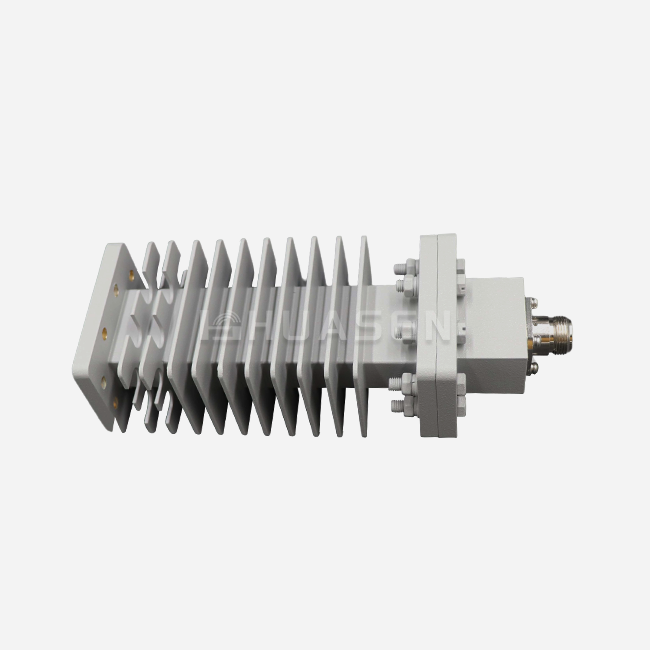
At our testing facilities, we've witnessed how variable waveguide attenuators transform measurement reliability. Unlike fixed attenuators that provide only one attenuation level, these precision instruments deliver adjustable signal reduction, allowing engineers to dial in exact power levels needed for specific test conditions. The mechanism typically involves a resistive vane that moves within the waveguide structure, absorbing electromagnetic energy as it penetrates deeper into the electric field. This mechanical simplicity translates into remarkable measurement consistency, particularly important when calibrating satellite communication systems or validating radar receiver sensitivity across multiple power thresholds.
Critical Parameters That Define Test Performance
Three parameters dominate the performance profile of waveguide attenuators in test environments. Frequency coverage determines application suitability—our devices span 0.96 GHz to 112 GHz, accommodating everything from cellular base station testing to millimeter-wave research. Insertion loss at the zero-attenuation setting must remain below 0.5 dB to preserve signal integrity, while return loss specifications ensure minimal reflections that could corrupt measurement data. Temperature stability becomes paramount in high-power applications where devices handle 10W to 4000W; thermal drift in attenuation characteristics can skew test results by several tenths of a decibel, rendering calibration efforts meaningless in precision work.
Real-World Applications Driving Demand
Weather radar calibration represents one compelling use case we regularly support. Engineers must verify receiver's dynamic range by introducing controlled signal attenuation without changing test frequencies. Drone data link validation presents another scenario where adjustable attenuation simulates distance-related path loss, allowing developers to determine link budget margins before field deployment. In 6G research laboratories operating above 90 GHz, coaxial cables introduce prohibitive losses—waveguide attenuators become the only viable option for controlling signal levels while maintaining phase stability and power handling capability that solid-state alternatives cannot match.

Core Factors Affecting Test Accuracy with Variable Waveguide Attenuators
Frequency Range and Band Compatibility
The relationship between waveguide size and operating frequency directly impacts measurement precision. Each waveguide standard—whether WR-90 for X-band or WR-10 for W-band—exhibits optimal waveguide variable attenuator performance within specific frequency boundaries. Operating beyond these limits introduces higher-order modes that distort attenuation linearity. We engineer our attenuators with operating bandwidths of ≤10% or ≤5% of center frequency, ensuring single-mode propagation that maintains consistent attenuation accuracy across the specified range. This bandwidth discipline prevents the measurement anomalies that plague broadband designs attempting to cover excessive frequency spans with a single device.
Insertion Loss Stability and Its Impact on Data Integrity
Even at zero attenuation settings, waveguide components introduce some insertion loss due to conductor surface resistance and flange mismatch. In our designs, this baseline loss typically measures under 0.5 dB, but what matters more is stability—how this parameter varies with temperature, mechanical stress, and repeated adjustment cycles. During a recent project involving high-power amplifier characterization, insertion loss drift of just 0.2 dB over a four-hour test session corrupted gain measurements, necessitating a complete data retake. We address this through precision-machined aluminum housings with thermal mass sufficient to dampen temperature fluctuations, plus silver plating that maintains conductivity across environmental extremes.
Environmental Robustness in Harsh Operating Conditions
Test accuracy degrades rapidly when environmental factors compromise attenuator performance. Humidity infiltration causes resistance changes in absorbing elements; vibration loosens mechanical adjustment mechanisms; temperature swings alter dimensional tolerances that affect electromagnetic characteristics. Our waveguide attenuators incorporate multiple flange types—FDP, FBP, FUGP—each selected for specific environmental demands. The FUGP flange configuration, with its robust pressure-seal design, maintains RF integrity in aerospace applications subject to altitude pressure variations and extreme temperatures. Material selection plays an equally vital role; we specify corrosion-resistant alloys and employ conformal coatings on internal absorbing elements to prevent performance degradation in maritime communication testing environments where salt fog accelerates oxidation.
Comparing Variable Waveguide Attenuators: Choosing the Best for Your Test Needs
Variable vs. Fixed Attenuators: Flexibility Benefits
Fixed attenuators serve well in static test configurations, but variable designs unlock capabilities that transform test efficiency. During radar cross-section measurements, we routinely adjust attenuation across a 20 dB range to accommodate targets with vastly different reflective properties—a task that would require swapping multiple fixed attenuators, introducing measurement delays, and flange wear. The investment premium for variable devices pays dividends in labor savings and test throughput. One defense contractor calculated that variable attenuators reduced their test cycle time by 40% compared to fixed-attenuator workflows, translating to substantial cost savings across production runs.
Waveguide vs. Coaxial: Power Handling and Loss Characteristics
Coaxial attenuators dominate below 18 GHz due to connector convenience, but waveguide designs become indispensable at higher frequencies and power levels. The physics are straightforward—coaxial center conductors concentrate current density, generating heat that limits average power handling to tens of watts. Waveguide structures distribute current across broad metal surfaces, enabling our devices to dissipate kilowatts without thermal runaway. We recently supplied a waveguide variable attenuator for a satellite uplink test system handling 2000W average power at 30 GHz; coaxial alternatives simply don't exist at these specifications. Insertion loss advantages compound at millimeter-wave frequencies, where coaxial cables exhibit losses exceeding 10 dB per meter, while waveguide transmission maintains losses below 1 dB for equivalent lengths.
Rotary Vane vs. Flap-Type Mechanisms
Two mechanical approaches dominate variable waveguide attenuator design, each with distinct advantages. Rotary vane attenuators rotate a resistive element in the circular waveguide cross-section, providing exceptional phase stability and VSWR constancy across the adjustment range. Their precision suits network analyzer calibration, where phase coherence matters. Flap-type designs, which we employ extensively, insert a resistive blade into rectangular waveguide structures. This approach offers more compact packaging and higher power handling due to superior thermal conduction paths. The tradeoff involves modest VSWR variation at maximum attenuation settings, typically manageable in applications focused on amplitude control rather than phase-sensitive measurements.
Optimizing Procurement: Ensuring Quality and Reliability in Variable Waveguide Attenuator Selection
Specification Validation and Documentation Requirements
Procurement success begins with rigorous specification verification. We recommend requesting full two-port S-parameter data measured across the device's frequency range at multiple attenuation settings—this reveals insertion loss uniformity, return loss consistency, and attenuation flatness that specification sheets often summarize too optimistically. Power handling claims deserve particular scrutiny; they demand both peak and average power ratings with duty cycle specifications. One telecommunications integrator learned this lesson expensively when "high-power" attenuators failed during pulse radar testing because vendor specifications only guaranteed CW performance. Our documentation packages include worst-case performance data, thermal analysis reports, and conditioning recommendations that eliminate ambiguity about operational limits.
Supplier Technical Support and Calibration Services
Beyond component specifications, supplier capabilities significantly impact long-term test accuracy. We've built calibration infrastructure that provides traceable measurement data for every shipped unit, documenting attenuation accuracy to ±0.3 dB across the specified range. This calibration pedigree proves invaluable during quality audits and when troubleshooting system-level measurement discrepancies. Technical support responsiveness equally matters—when a European research institute encountered unexpected VSWR anomalies at specific frequencies, our engineering team provided field-effect simulation data within 48 hours, identifying a subtle higher-order mode interaction at band edges. This level of support separates manufacturers with deep RF expertise from catalog vendors simply reselling commodity components.
Balancing Cost, Delivery, and Customization Needs
Standard attenuator models serve most applications, but customization unlocks optimal solutions for challenging requirements. We routinely modify flange types to match customer test fixtures, extend attenuation ranges beyond standard 30 dB limits, and adapt power handling through enhanced cooling provisions. These modifications typically add 2-4 weeks to delivery schedules and 15-30% cost premiums—investments justified when they eliminate system design compromises. A defense contractor recently requested custom attenuation resolution finer than our standard 0.1 dB steps for amplifier linearity characterization; we implemented a precision micrometer drive achieving 0.01 dB resolution. This customization cost $3,200 per unit but enabled measurements impossible with standard products, validating their procurement decision through enhanced test capability.
Maintenance, Calibration, and Troubleshooting to Sustain Test Accuracy
Installation Best Practices That Preserve Performance
Proper installation establishes the foundation for sustained accuracy. We specify flange torque values precisely—over-tightening warps waveguide apertures, creating mode conversion and VSWR degradation,Variable WaveguideAttenuators,whileunder-tightening allows RF leakage that corrupts measurements. Clean mating surfaces using lint-free cloths and isopropyl alcohol before each connection; metal particles or oxidation introduce resistance variations at the flange interface. Orientation matters too—mount attenuators with adjustment mechanisms accessible yet protected from inadvertent contact. In vibration environments like aircraft test rigs, secure the housing with supplemental brackets rather than relying solely on flange connections to bear mechanical loads.
Calibration Schedules and Performance Verification
We recommend annual calibration for laboratory instruments and semi-annual verification for production test environments where measurement accuracy directly affects product quality decisions. Calibration involves measuring insertion loss and return loss at the zero-attenuation setting, then verifying attenuation accuracy at multiple settings across the frequency range. Temperature cycling reveals thermal stability characteristics that degrade over time as mechanical tolerances drift. One aerospace contractor discovered through calibration that their five-year-old attenuators exhibited 0.8 dB calibration errors at maximum attenuation—still functional but introducing systematic measurement bias. Timely calibration detected this drift before it compromised acceptance testing results.
Troubleshooting Common Performance Issues
Sudden VSWR increases often indicate flange contamination or mechanical damage to waveguide apertures. Disassemble connections, inspect for deformation, and replace damaged components immediately. Gradual attenuation drift suggests absorbing element degradation, typically from moisture ingress or repeated thermal cycling beyond design limits. We've resolved several cases where customers operated attenuators at twice their rated average power, causing resistive element oxidation that altered absorption characteristics. When attenuation adjustment feels rough or exhibits backlash, internal mechanisms require service—continued operation risks catastrophic failure during critical test activities. Our field service team can refurbish mechanisms, restoring smooth adjustment and eliminating hysteresis that compromises measurement repeatability.
Conclusion
Variable waveguide attenuators represent indispensable tools for achieving and maintaining test accuracy across telecommunications, radar, and aerospace applications. Their ability to provide adjustable, precise signal control with minimal insertion loss and exceptional power handling makes them superior to fixed, coaxial, or solid-state alternatives in demanding RF environments. Success requires careful attention to specification validation, supplier selection, and ongoing maintenance practices that preserve calibration integrity throughout the device lifecycle. By understanding the technical factors that influence performance and establishing rigorous procurement criteria, engineering teams can deploy waveguide attenuators that deliver measurement reliability essential for product development, production testing, and regulatory compliance in increasingly complex wireless systems.
FAQ
1. How does frequency range affect attenuator selection?
Waveguide attenuator performance depends critically on matching the device's frequency range to your application. Each waveguide size exhibits a cutoff frequency below which signals won't propagate and an upper limit where higher-order modes cause measurement errors. Selecting an attenuator with 0.96-112 GHz coverage doesn't mean a single unit covers this entire span—rather, different waveguide standards serve specific bands. We help customers identify the correct waveguide size for their operating frequencies, ensuring single-mode operation and the measurement accuracy that comes from proper electromagnetic field distribution within the guide structure.
2. What maintenance do high-power attenuators require?
High-power waveguide attenuators handling 1000W or more demand periodic inspection of absorbing elements for thermal stress damage and verification that cooling provisions remain unobstructed. Check flange connections for arcing evidence—small pits or discoloration indicate contamination or insufficient contact pressure that must be corrected. We recommend documenting baseline insertion loss measurements when devices are new, then comparing against these references during annual maintenance to detect degradation trends before they compromise test accuracy. Preventive maintenance costs a fraction of emergency replacements and the production disruptions they cause.
3. Can variable attenuators replace fixed attenuators in all applications?
Variable designs offer superior flexibility but aren't always optimal. Applications requiring absolute insertion loss stability or operating in high-vibration environments may benefit from fixed attenuators lacking mechanical adjustment components that introduce potential failure modes. Cost considerations also matter—test setups requiring only two or three attenuation levels might economically employ multiple fixed units. We evaluate customer requirements holistically, recommending variable attenuators when their adjustment capability delivers tangible benefits in test efficiency, measurement range, or system flexibility that justify their higher acquisition costs.
Partner with Huasen Microwave for Superior Variable Waveguide Attenuator Solutions
Huasen Microwave brings over three decades of RF engineering expertise to every waveguide attenuator we manufacture. Our devices deliver the measurement precision that satellite communication providers, radar system integrators, Variable Waveguide Attenuators,and telecommunications equipment manufacturers demand for critical test applications. With frequency coverage from 0.96 GHz to 112 GHz, power handling up to 4000W, and customization capabilities that address unique system requirements, we serve as your trusted Variable Waveguide Attenuator supplier committed to solving complex test challenges. Our engineering team provides comprehensive technical support from specification development through field deployment, backed by calibration services that maintain measurement traceability. Contact us at sales@huasenmicrowave.com to discuss how our waveguide attenuators can enhance your test accuracy and streamline procurement for your next project.
References
1. Pozar, David M. "Microwave Engineering, 4th Edition." Wiley, 2011. Chapter 7: Power Dividers and Directional Couplers, pp. 345-392.
2. Gupta, K.C., Ramesh Garg, and Prakash Bhartia. "Microstrip Lines and Slotlines, 3rd Edition." Artech House, 2013. Section 4.5: Attenuators and Terminations, pp. 198-221.
3. Saad, Theodore S. "Microwave Engineers' Handbook, Volume 2: Components and Systems." Artech House, 1971. Chapter 12: Variable Attenuators, pp. 427-458.
4. IEEE Standard 474-1973. "IEEE Standard Specifications and Test Methods for Fixed and Variable Attenuators, DC to 40 GHz." Institute of Electrical and Electronics Engineers, 1973.
5. Collin, Robert E. "Foundations for Microwave Engineering, 2nd Edition." Wiley-IEEE Press, 2001. Chapter 5: Waveguide Components, pp. 312-354.
6. Rizzi, Peter A. "Microwave Engineering: Passive Circuits." Prentice Hall, 1988. Chapter 8: Control Devices and Passive Circuit Elements, pp. 285-319.
Send Inquiry