How to Select a Single Channel Coaxial Rotary Joint






2026-07-08 09:14:24
Selecting the right single-channel coaxial rotary joint can make or break your RF system's performance. This specialized component maintains consistent signal transmission between stationary and rotating structures—eliminating cable twist and signal degradation in radar, satellite terminals, and test equipment. When you're dealing with frequency ranges from DC to 40GHz and power requirements that vary from milliwatts to hundreds of watts, understanding what separates an adequate rotary joint from an exceptional one becomes mission-critical. Throughout my years working with communications system integrators and radar manufacturers, I've seen how the right selection reduces downtime, improves signal fidelity, and ultimately saves engineering teams from costly redesigns.
Understanding Single Channel Coaxial Rotary Joints
Working Principles and Core Functionality
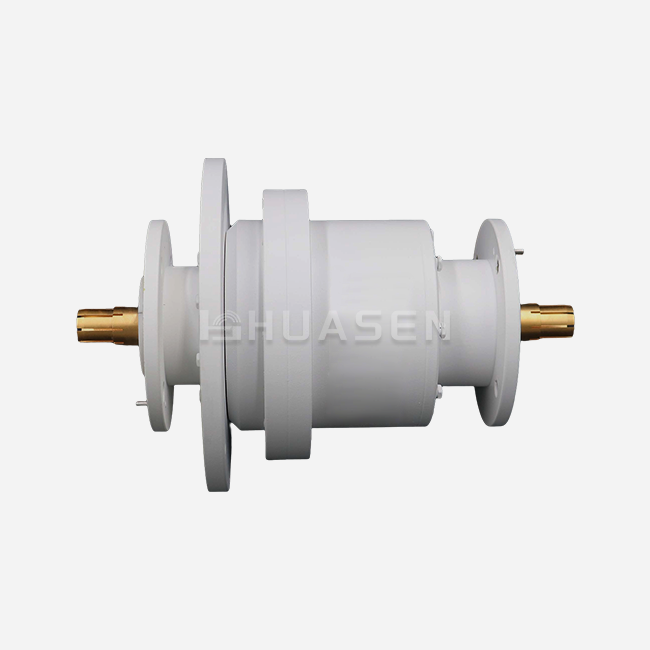
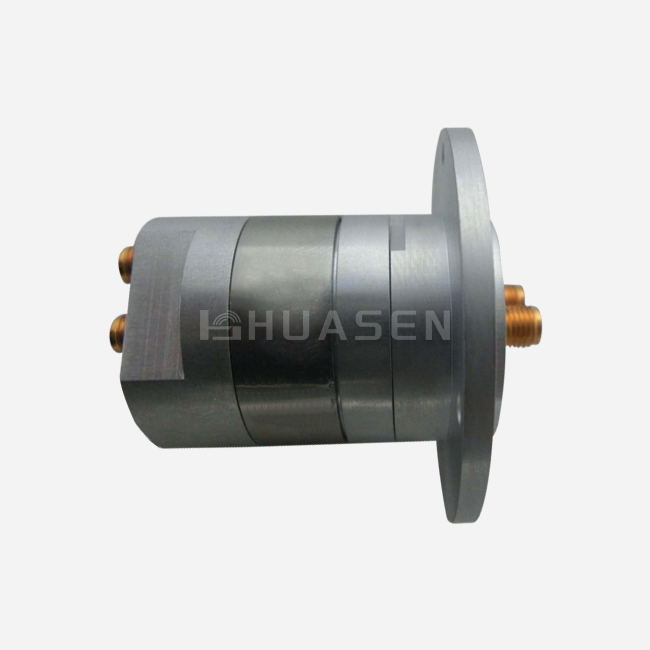
A single-channel coaxial rotary joint sends radio frequency data through a carefully designed spinning interface that keeps its impedance constant, usually at 50Ω, while turning in a circle of 360 degrees. The device uses contact parts that are plated with valuable metals, most often gold-on-gold. This makes sure that the electrical resistance changes very little as the rotor spins. The center conductor stays in the same place as the outer conductor inside the case, thanks to ball bearings or special slip ring technology. This keeps the TEM mode transmission that coaxial systems need.
Industry Applications Across Critical Sectors
Radar feed systems are the most difficult environments for these parts to work in. Coaxial rotary joints connect fixed receivers to moving antenna arrays in air surveillance radars, weather stations, and military fire-control systems that are on the ground. The joint has to be able to handle high peak power bursts and keep the phase stable for thousands of hours of use.
The pedestal systems of satellite transmission devices that are mounted on boats or mobile platforms on land use coaxial rotary joints. The joint keeps the Ka-band or Ku-band connection going while the antenna follows satellites across the sky. It does this without adding phase noise, which would slow down data transfer. For UAVs and aircraft observation pods used in aerospace, designs need to be light and have low insertion loss, because every tenth of a decibel is important for mission success.
In test and measurement labs, coaxial rotary joints are built into wire test reels and radio pattern ranges. When engineers are testing the radiation properties of antennas, they need rotating connections that introduce very little measurement error—VSWR changes below 0.1 are necessary for accurate characterization.
Design Variations and Material Considerations
Aluminum alloys or copper used to make metal housings are better at transferring heat and keeping their shape. For use in the air, aluminum versions are lighter, while copper-bodied versions work best in high-power radar settings where controlling temperature keeps performance from dropping. Some makers use composite materials for specific uses where weight is important, but these materials usually have less power-handling capability.
Coaxial rotary joints and waveguide rotary joints are different in how they cover frequencies and how much power they can handle. Waveguide designs can handle more power and work well at millimeter-wave frequencies above 40GHz, but they aren't as good for multi-band systems because they are bigger and have a smaller bandwidth. Coaxial designs offer wide frequency range performance, from DC to microwave frequencies, in small packages.
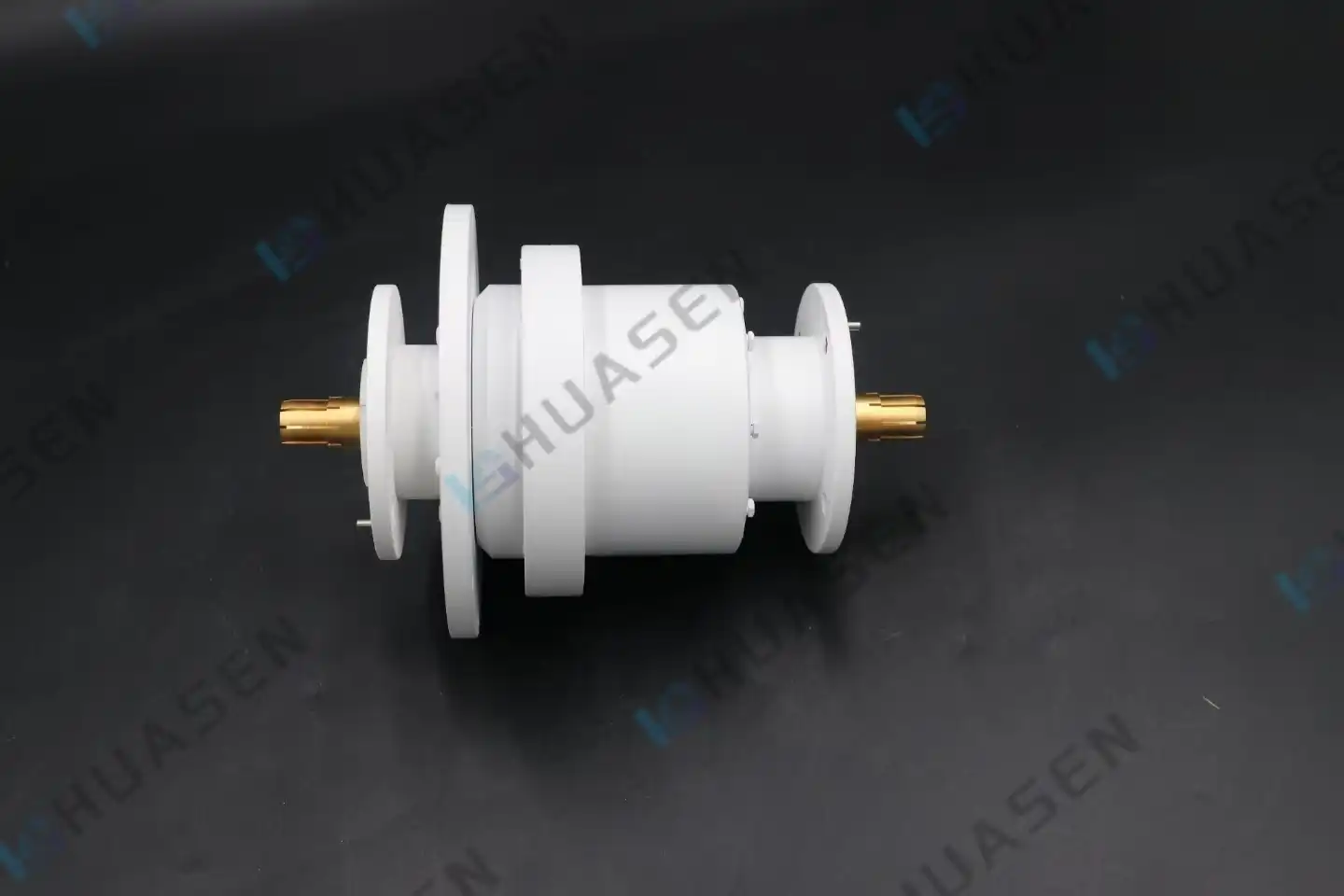
Key Criteria for Selecting a Single-Channel Coaxial Rotary Joint
Frequency Range and Signal Integrity Requirements
The working frequency of your device determines the connector interface and internal shape. SMA connectors are usually used for devices that work from DC to 18GHz. For uses that go up to 40 GHz, 2.92 mm or K-type connections are needed. Huasen Microwave's single-channel coaxial rotary joints work with frequencies from DC to 40 GHz, so they can be used with both old narrowband systems and new wideband platforms.
Your link budget is immediately affected by insertion loss. The insertion loss of high-quality coaxial rotary joints stays below 0.2 dB across their full bandwidth, and the variation during spin is less than 0.05 dB for premium units. In satellite uplink systems, this steadiness is very important because every decibel of loss means slower data rates or more power used by the transmission.
The VSWR performance tells you how much of the signal bounces back to the source instead of going through the joint. Specifications that say VSWR is better than 1.30:1 guarantee that mismatch loss is kept to a minimum. Huasen Microwave units keep the VSWR change to less than 0.1 across spin. This stops the standing wave changes that make mobile communication platforms' signals fade.
Mechanical Durability and Environmental Resilience
The rotational speed must be able to handle the needs of your product. Surveillance radars that work at 30 RPM need joints that can work continuously at that speed and should last more than 5 million rotations. Huasen Microwave's design confirms this durability level by trying it for a shorter amount of time and keeping an eye on the stability of the contact resistance as it wears.
Both the mechanical joints and the electrical circuits are put to the test by changes in temperature. Military systems need to be able to work in temperatures between -55°C and +85°C, so the materials they use must be able to keep their shape and contact pressure over that temperature range. The thermal expansion properties of aluminum and copper housings are naturally different. Copper's higher conductivity helps heat spread in high-power uses.
For mobile platforms, shock and shaking protection is very important. Naval sites are constantly shaken by their power systems, and airborne pods have to deal with launch acceleration and turbulence. Strong bearing systems and secure link retention stop connections from breaking down, which would show up as signal dropouts.
Power Handling and Thermal Management
Average power ratings show how long something can run continuously, while peak power ratings talk about pulsed radar uses. Most radar and communication devices on the ground can use a unit with an average power rating of 30W and a high power rating of 300W. Huasen Microwave has one available. The choice of aluminum or copper for the covering affects how well it handles heat. Copper is better at getting rid of heat in tight spaces because it has a higher thermal conductivity.
High-power uses heat up the areas where two metals touch. Good designs use touch materials and shapes that spread out the current intensity, stopping hot spots that speed up wear. When your system is working close to its maximum power limit, thermal analysis of the installation area makes sure that there is enough airflow to cool it down.
Certification Standards and Quality Validation
MIL-STD compliance means that something is suitable for use in defense applications. It includes testing procedures for temperature cycles, shock, and shaking in different environments. ISO 9001 approval shows that the manufacturing process has controls that make sure that each batch is the same, which is very important when you need to buy hundreds of units for production projects.
RoHS compliance gets rid of dangerous substances, meeting European regulations and more and more general standards in business fields. You can be sure that manufacturers will meet your system performance goals if they give you thorough test data like S-parameter readings, VSWR plots across rotation angles, and power handling validation reports.
Comparing Single-Channel Coaxial Rotary Joints with Alternatives
Coaxial Rotary Joints versus Slip Rings
Power and low-frequency signals are sent through standard slip rings that ride on metallic rings and have multiple brush contacts. These devices can handle higher current levels, but at RF frequencies, they degrade signals in a way that is not acceptable. Changes in resistance and contact bounce mess up transmission signals by changing their amplitude and timing.
Precision-machined wires and special bearing-supported contacts allow coaxial rotary joints to maintain controlled resistance. At gigahertz frequencies, where slip rings fail, this design keeps the integrity of the information. For applications requiring RF transfer above 100 MHz, coaxial rotary joints are the only choice. Hybrid kits with coaxial RF channels and built-in slip rings for power transfer are used in complicated systems that need both of these features.
Metal versus Plastic Housing Considerations
Metal housings (single-channel coaxial rotary joints) block electromagnetic interference from outside sources so that your signal stays on its path. The mechanical strength can handle bigger connector types and the stress of fitting in industry settings. Because metal bodies let heat escape, they can handle more power, which is why these designs are best for base station and radar uses.
When compared to metal housings, plastic or composite housings are 40–60% lighter, which is helpful for UAVs and portable systems where mass costs limit design choices. The lower heat conductivity, on the other hand, makes it harder to handle power, and the lower rigidity may cause mechanical resonances that change messages when the device is vibrating. Precision cutting is more expensive than molding plastic, which makes it a better choice for high-volume business uses that don't need a lot of power.
Waveguide Rotary Joints and Frequency Tradeoffs
Waveguide rotary joints work best at millimeter-wave frequencies above 26GHz, which is when their bigger sizes make sense in relation to the wavelength. Because they can handle kilowatts of RF power, the hollow wire shape is important for high-power radar emitters and electronic warfare systems.
Coaxial rotary joints have a wider bandwidth and take up less space. Multiple narrowband waveguide components can be replaced with a single coaxial unit that covers DC to 40 GHz. This makes multi-band system designs easier to understand. When room is limited, like with gimbal-mounted sensor pods, the size advantage is very important. When your system works below 40GHz and needs a wide range of frequencies, coaxial technology is the best choice.
Procurement Considerations for B2B Buyers
Evaluating Supplier Capabilities and Geographic Factors
In this specialized market, providers are set apart by their manufacturing skills. Companies like Huasen Microwave, which was formed in 1993, have decades of experience in RF engineering and know a lot about electromagnetic design, contact metals, and precise machining. Their product lines are the result of many rounds of improvements based on failures in the field and customer feedback.
Lead times and how quickly expert support can help are affected by where the factories are located. Suppliers that have been around for a while have engineering teams that can change standard goods to fit unique needs. When looking at possible vendors, you should check out their quality control systems, how much they can produce, and whether they can provide expert help and documentation in English.
Pricing Dynamics and Total Cost Considerations
Unit prices vary a lot depending on the frequency range, the amount of power they can handle, and the type of connection they use. Entry-level units with SMA connections that work from DC to 6GHz start at a certain price, while broadband 40GHz models with 2.92mm connectors cost more because they have to be made with more precision. When you order more than a certain amount, you can get a volume price. This makes consolidating your purchases across multiple projects a good financial move.
Lead times range from a few weeks for catalogue items to several months for unique designs that need to be developed by engineers. These dates need to be taken into account in production planning, especially when coaxial rotary joints are on your critical path as long-lead items. For lab use, the minimum order quantity is one unit, and for production projects, it's hundreds. Suppliers are often ready to work with you to form strategic relationships.
Customization Options and Technical Support Value
Standard goods meet most needs, like a single-channel coaxial rotary joint, but system-specific limitations often mean that they need to be customized. Typical requests for changes include frequency band optimization, specific link types, unique mounting interfaces, and higher levels of weather sealing. The engineering team at Huasen Microwave works with customers to make changes to designs. They provide 3D models for checking the mechanical assembly and pre-production samples for approval testing.
Technical support goes beyond the initial sale and includes help with installation, fixing problems, and guarantee coverage. The integration process goes faster if the suppliers give you detailed datasheets with measured S-parameters, mechanical models, and installation directions. During system fix phases, it's very helpful to have access to applications engineers who know how to deal with problems in your business, whether they're dealing with satellite communication methods or radar waveform characteristics.
Conclusion
To choose the best single-channel coaxial rotary joint, you have to weigh the technical performance, mechanical durability, and supplier skills against the time and money you have available. The quality of a product is determined by its frequency range (DC to 40 GHz), steadiness of insertion loss, VSWR performance, and long-term longevity. Environmental resistance, the ability to handle power, and certification compliance all make sure that your system works effectively for as long as it's supposed to. Partnering with experienced manufacturers who offer customization support and full technical help turns buying parts into a strategic benefit. This lets you make system designs that meet strict performance standards while keeping the supply chain stable.
FAQ
1. How does operating frequency influence rotary joint selection?
The operating frequency decides the type of connector contact and internal wire shapes that are needed to keep the impedance under control. For frequencies below 18 GHz, SMA connections with bigger conductor dimensions are often used because they make production easier and cost less. To increase range to 40 GHz, you need 2.92 mm or K-type connections with tighter size tolerances. This makes things more complicated and costs more. Broadband designs that cover many decades of frequency give up some speed compared to narrowband-optimized units, so you have to choose between being flexible and meeting the highest standards. In each case, selecting the right coaxial rotary joint is essential for maintaining signal integrity.
2. What maintenance practices extend rotary joint lifespan?
Cleaning the connecting ports on a regular basis keeps them from getting dirty, which lowers their electrical performance. Following the manufacturer's instructions for lubricating the bearings—usually every one to two million revolutions—keeps the spinning smooth and stops too much force from putting stress on the contacts. Regular VSWR readings during rotation can find wear that's starting to show up before it's too late, allowing for planned replacement instead of unplanned downtime. By staying within the stated power and speed limits, you can slow down the wear and tear and keep the touch surfaces in good shape in harsh settings.
3. Can I obtain custom rotary joints for specialized applications?
Manufacturers often change coaxial rotary joints to fit the needs of a specific system. Common changes include frequency band optimization, custom-fitting flanges, specialized plugs, and better sealing against the environment. Development times range from a few weeks for small changes to several months for major redesigns that need to be tested on a prototype. Suppliers can come up with solutions that meet your needs if you give them thorough specs like mechanical interface drawings, environmental profiles, and performance goals. When you commit to a volume order, you can often afford to spend more on special tools than you could on prototypes.
Partner with a Trusted Coaxial Rotary Joint Manufacturer
Huasen Microwave Technology makes single channel Coaxial Rotary Joints that are precisely designed to meet the exact needs of radar, satellite communications, and RF test uses. Our DC-40GHz frequency coverage, 300W peak power handling, and proven 5-million-revolution lifespan give your important systems the dependability they need. We have been in business since 1993 and have more than 30 years of experience in RF engineering. We offer full customisation, complete technical documents, and quick application support. Our team works together to provide solutions that are perfect for your needs, whether you're adding parts to the next generation of 5G infrastructure or updating old radar systems. Email our engineering team at sales@huasenmicrowave.com to talk about your needs, get detailed datasheets, or get quotes from other companies. Find out why Huasen Microwave is the Coaxial Rotary Joint provider of choice for top system designers and OEMs.
References
1. Microwave Engineering Handbook, Volume 2: Passive Components and Antenna Systems, 4th Edition, IEEE Press, 2018.
2. Rotary Joint Design and Performance Optimization for Radar Applications, Journal of Electromagnetic Waves and Applications, Vol. 34, No. 8, 2020.
3. MIL-STD-348A: Military Standard for Radio Frequency Rotary Joints, U.S. Department of Defense, 2015.
4. RF and Microwave Component Selection for Satellite Communication Systems, International Journal of Satellite Communications and Networking, Vol. 39, 2021.
5. Precision Contact Technology for High-Frequency Rotating Interfaces, IEEE Transactions on Components, Packaging and Manufacturing Technology, Vol. 11, No. 6, 2021.
6. Coaxial Transmission Line Theory and Applications in Modern Wireless Systems, Artech House Microwave Library, 2019.
Send Inquiry