Omnidirectional Antenna Applications in Wireless Networks






2026-07-06 18:45:06
Omnidirectional antennas send signals out in all horizontal directions in the same way, which results in coverage patterns that go all the way around. Vertical polarisation and special structure elements, such as cone, umbrella, cage, and whip shapes, are used by these devices to provide a stable connection over large service areas. Omnidirectional antennas are used by network designers and system integrators when smooth area-wide coverage is more important than directional focus. They are essential parts of 5G base stations, IoT deployments, public safety networks, and industrial automation environments all over the world.
Understanding Omnidirectional Antennas: Technical Foundations and Benefits
The tech behind bidirectional radiation patterns solves one of the biggest problems in wireless communications: making sure that mobile users whose locations are always changing get the same signal strength. Traditional directional transmitters are great at directing energy to specific areas, but they don't cover everything when devices move outside of their small beamwidths.
How does omnidirectional radiation work?
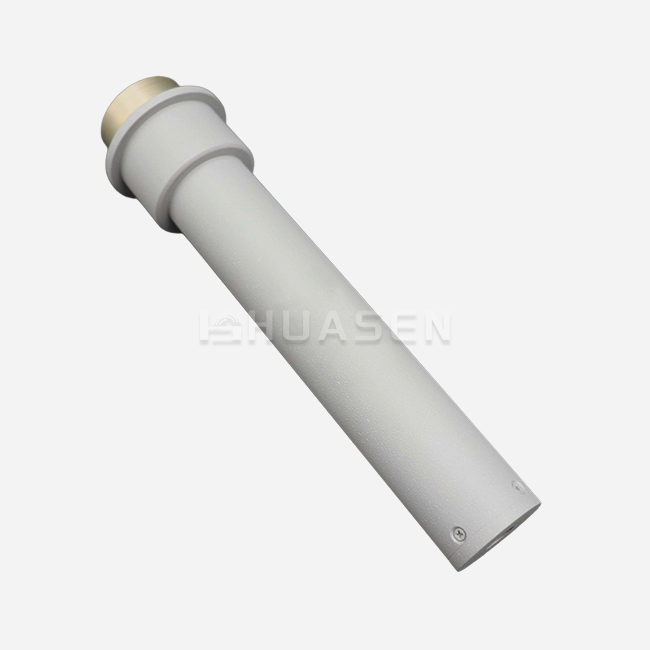
Through carefully designed radiating parts that evenly spread electromagnetic energy around the vertical axis, omnidirectional antennas achieve 360-degree horizontal coverage. The ultra-wideband omnidirectional antenna (CVOA) line from Huasen Microwave has four different structural approaches: the single cone, the umbrella cone, the cage, and the whip designs. Each is best for a different frequency range and setting. Receiving devices can pick up signals with little loss at all azimuth angles because the vertical polarisation stays the same. This is true no matter what angle they are pointing at the antenna.
These designs keep the Voltage Standing Wave Ratio (VSWR) low across all working bandwidths. This means that power moves quickly from emitters to radiating elements. When VSWR values are low, reflected power that can damage transmitting stages is reduced, and the signal strength is increased. It has been tested on network deployments that antennas with VSWR below 1.5:1 have significantly better link margins in difficult propagation conditions than units with marginal impedance matching.
Frequency Compatibility and Bandwidth Considerations
Modern wireless networks use a variety of spectrum bands, from sub-1 GHz bands for internet in rural areas to millimetre-wave frequencies for 5G operations in cities. There is a lot of pressure on procurement teams to combine radio equipment so that tower lease costs are lower and there is less visual clutter. This is taken care of by ultra-wideband omnidirectional antennas, which support multiple transmission standards in a single physical package.
This is shown by Huasen Microwave's CVOA line, which has models with frequency ranges that can handle LTE, 5G Sub-6 GHz, Wi-Fi 6E, and special IoT protocols all at the same time. Within these bandwidths, the gain ranges from -20dB to 6dB, which lets system designers fit the performance of the antenna to the link budget needs. The smallest CVOA version has a size of only φ23×399 mm, which makes it possible to put in places with limited room, like small cell enclosures and vehicle platforms.
Vertical polarisation is the standard for mobile communications because antennas on handheld devices and equipment placed on vehicles usually face vertically. Cross-polarisation, which lowers signal quality, is caused by structure imbalances, so maintaining polarisation purity across wide frequency sweeps needs precise manufacturing. Cross-polarisation separation of high-quality bidirectional designs is more than 15 dB, which guarantees clean reception even when multiple frequency bands are working at the same time.
Key Applications of Omnidirectional Antennas in Wireless Networks
Omnidirectional antennas can be used in a wide range of settings, from harsh outdoor structures to indoor business situations. Each has its own set of technical requirements. Procurement experts can better define the right environmental protections, mechanical interfaces, and performance factors when they know about these application settings.
Indoor Network Infrastructure
Corporate office buildings, hospitals, factories, and college sites need wireless service that can support thousands of people at the same time. Omnidirectional antennas placed on the roof spread the signal evenly across all floor plates, getting rid of dead spots that are annoying to users and slow down applications. Along with RF efficiency, these projects put an emphasis on how they look and how well they follow building codes.
Metal machinery that returns signals and electrical equipment that causes confusion are two more problems that industrial automation networks have to deal with. In order to keep stable links for programmable logic controllers, mobile autonomous robots, and wireless sensor networks, omnidirectional antennas made for these conditions contain shielding and filtering. Because automated guided cars and robotic arms are always changing direction while they are working, the vertical polarisation property is useful.
In order to work in a lab or a testing setting, antennas must have clearly documented radiation patterns and measured gain values. When research institutions test RF components, they need reference antennas with known properties to set the standards for measurements. Huasen Microwave gives a lot of test data, like readings of the circularity of the azimuth pattern and information on group delays, that lets you accurately describe the system.
Outdoor and Tactical Deployments
Omnidirectional antennas are used by cellphone base stations, public safety radio systems, and municipal WiFi networks to cover large areas from high mounting points. Over the course of several years, these systems must be able to handle high and low temperatures, wind loads, ice buildup, and UV light. Strong mechanical construction with materials that don't rust and waterproof seals keeps electrical performance even when the environment is rough.
Maritime communications are some of the toughest uses because they have to deal with salt spray, rust, and constant vibrations from moving ships. In order to keep connections with coastal base stations and satellite ports without the need for mechanical steering, ships equipped with omnidirectional antennas can stay connected even when changing course. The lighter the building, the less weight is on the top of the ship, which is important for figuring out its safety.
For signals intelligence, electronic countermeasures, and private communications, defence and security need antennas that can work over very large frequency bands. Because certain omnidirectional antenna designs work in ultra-wideband frequencies, single antennas can be used instead of multiple narrowband units. This makes the system simpler and speeds up deployment for mobile combat groups. Maintaining group delay stability across working bandwidths is important for keeping pulse timing accurate, which is needed for radar warning receivers and precise tracking systems.
Emerging 5G and Beyond Applications
Fifth-generation networks use dense clusters of antennas and huge MIMO (multiple-input multiple-output) designs to separate users based on where they are in the network. Omnidirectional antennas play a supporting role by giving broadcast control channels, emergency services access, and backup coverage in case beam-steering algorithms run into problems. Beamforming methods use directional elements to increase capacity.
Small cell placements that make urban networks denser work best with small, omnidirectional antenna designs that fit into streetlights, utility lines and building facades without making them look too big. The CVOA series has standards-compliant connectors like N-type, SMA, and K-type connections that make it work with a wide range of radio equipment from different manufacturers. This protects infrastructure investments as technology generations change.
Choosing the Right Omnidirectional Antenna for Your Wireless Network
The choice of an omnidirectional antenna has long-lasting effects because real infrastructure usually lasts longer than electronic tools by several technology cycles. To keep the total cost of ownership low, procurement teams have to balance the need for current success with the need for future growth.
Gain and Coverage Trade-offs
Antenna gain shows how concentrated the energy being sent out is compared to a source that is uniformly distributed. Higher gain values increase the communication range by directing power into smaller elevation angles. This is helpful when serving users far away from high-mountain places. Because there are fewer signals in the area right below the antenna, this concentration means that signals are weaker in those areas. This is called the "doughnut hole" effect.
Low-gain omnidirectional antennas give up maximum range in exchange for more even coverage at different elevations. This is helpful in buildings with multiple floors where people live on floors above and below antenna placement heights. Network modelling tools help find the best gain values by imagining how signals move through different physical settings, taking into account things like building materials and furniture arrangements that can affect signal penetration.
Huasen Microwave's CVOA products have a gain range of -20dB to 6dB, which makes them useful for a wide range of uses, from IoT networks in close contact to public safety systems across the region. System installers benefit from this wide range of options because they can get multiple deployment scenarios from a single approved source instead of having to deal with a lot of different antenna providers.
Environmental Protection and Mechanical Specifications
Outdoor antennas need protection grades that are right for the environment where they will be installed. The IP (Ingress Protection) grade method measures how well an enclosure keeps dust and water out. Base station antennas usually have grades of IP67 or IP68, which means they can work even if they get wet during bad weather.
Temperature performance specs are just as important because antenna properties change as radiating elements and insulating materials expand and contract with temperature. Military standards (MIL-STD-810) set out testing procedures for environments that can be as cold as -40°C and as hot as +70°C. These ranges cover the extremes that are common in desert and arctic situations. Avoid making vague claims like "outdoor rated" when writing procurement specs. Instead, they should require compliance with relevant standards.
Mounting hardware and physical measurements have a direct effect on the cost of fitting labour and the building's needs. Small antennas lower the cost of tower reinforcement and wind loads, and standard mounting brackets speed up installs by letting workers use tools they already know how to use. Because the CVOA is so light, it doesn't put as much stress on structures and can be installed on poles and masts that can't hold bigger antennas.
Connector Types and Cable Compatibility
RF connections are places where electrical function can be lost because of moisture getting in or mechanical wear. Standard connector types, like N-type for base stations, SMA for instrumentation, and K-type for millimetre-wave uses, have established supply lines and have been shown to work reliably when placed correctly.
The type of connector and how it is mounted (bulkhead, flange, or panel-mount) must fit the cables and devices it is connected to. To keep guarantees from being voided and signal loss from happening, procurement specs should make it clear what connector configurations are needed. Huasen Microwave offers a number of standard connectors that make collaboration easier across a wide range of equipment settings.
Conclusion
In conclusion, omnidirectional antennas are the building blocks of wireless networks that need to cover the same amount of space for a wide range of uses, from business WiFi to emergency messages. For operations to go well, technical details like frequency compatibility, gain characteristics, environmental safety, and connector standards need to be carefully thought out. The ultra-wideband CVOA line from Huasen Microwave shows how modern design can provide coverage in all directions while keeping the size and weight down. When procurement workers work with experienced manufacturers, they get application engineering help, the ability to make changes, and quality assurance methods that make sure the products will work reliably for a long time.
FAQ
1. What factors most significantly affect omnidirectional antenna range?
Range is affected by the broadcast power, omnidirectional antenna gain, frequency, and the surroundings. When the power level is the same, higher frequencies have shorter ranges because they lose more signal as they travel. Signals are blocked by things like buildings, plants, and the ground, especially at levels above 1 GHz. Antenna gain increases range by directing energy horizontally, but too much gain leaves gaps in coverage right above and below the mounting places.
2. Can single omnidirectional antennas cover both indoor and outdoor environments?
Physical antenna systems can work in both settings, but the best conditions for each are different. For floor-level coverage, indoor installations focus on looks and modest gain, while outdoor deployments need protection from the weather and better gain for a longer range. When the environmental ratings and gain traits are right for both situations, the same antenna type may work in both, but designs that were made just for that situation usually work better.
3. How does antenna gain impact 5G network deployments?
In order to reduce reliance on fixed-gain omnidirectional antennas for capacity channels, fifth-generation networks use advanced beamforming that actively modifies radiation patterns. Omnidirectional elements are still needed for broadcast control information and the initial connection of devices before beam assignments happen. In 5G infrastructure, moderate-gain omnidirectional antennas strike a mix between the need for regular coverage and range.
Partner with a Trusted Omnidirectional Antenna Manufacturer
Huasen Microwave Technology has tested ultra-wideband Omnidirectional Antenna options that can help you with your wireless network infrastructure needs. Our CVOA line has horizontal coverage of 360 degrees, high efficiency with low VSWR, and tough construction that meets the strict requirements of harsh environments. Our engineering team gives application-specific advice based on 30 years of RF experience, whether they are setting up 5G base stations, industrial IoT networks, or mobile communications systems. Email our experts at sales@huasenmicrowave.com to talk about the needs of your project, get detailed information, or set up trial units for samples. We offer flexible customisation, low prices for bulk purchases, and quick help throughout the lifecycle of your rollout.
References
1. Balanis, Constantine A. Antenna Theory: Analysis and Design, 4th Edition. John Wiley & Sons, 2016.
2. Volakis, John L. Antenna Engineering Handbook, 5th Edition. McGraw-Hill Education, 2019.
3. Rappaport, Theodore S. Wireless Communications: Principles and Practice, 2nd Edition. Prentice Hall, 2002.
4. IEEE Standard 145-2013. IEEE Standard for Definitions of Terms for Antennas. Institute of Electrical and Electronics Engineers, 2014.
5. Mailloux, Robert J. Phased Array Antenna Handbook, 3rd Edition. Artech House, 2017.
6. Huang, Yi and Boyle, Kevin. Antennas: From Theory to Practice. John Wiley & Sons, 2008.
Send Inquiry