EMC Testing Accuracy Improved with Quadridged Horn Antenna Systems






2026-07-06 18:45:04
To get accurate readings of electromagnetic compatibility, you need antennas that can keep working at their best across very large frequency bands. Quadridged horn antennas are a high-tech option for labs and test centers that are having trouble with the repeatability of measurements and controlling polarization. These four-ridge aperture antennas offer dual-orthogonal linear polarization across multiple octave bandwidths, from 100 MHz to 40 GHz. This lets engineers record both horizontal and vertical field components at the same time without having to physically rotate the antennas. This design benefit cuts room time by a huge amount while increasing measurement accuracy during methods for radiated immunity and emission testing.
Understanding Quadridged Horn Antennas and Their Role in EMC Testing
Cutting-edge ridge loading methods led to the basic structure of these specialized radiators. The four evenly placed metallic ridges create controlled impedance transitions that increase the working bandwidth by tens of times or more compared to regular pyramidal horns, which are only able to cover narrow frequency bands.
Multi-Ridge Geometry and Electromagnetic Wave Propagation
The ridge shape serves two very important purposes. The cutoff frequency is lowered by the capacitive loading from the ridge structure. This lets the physical dimensions be small while keeping the effective opening size the same. At the same time, the tapered shape slowly changes waveguide modes to free-space transmission, which reduces reflections across the whole operating range. This design produces voltage standing wave ratios that are always less than 2.0:1. This makes sure that energy is transferred efficiently during both transmission and receiving modes.
Frequency Coverage and Application Versatility
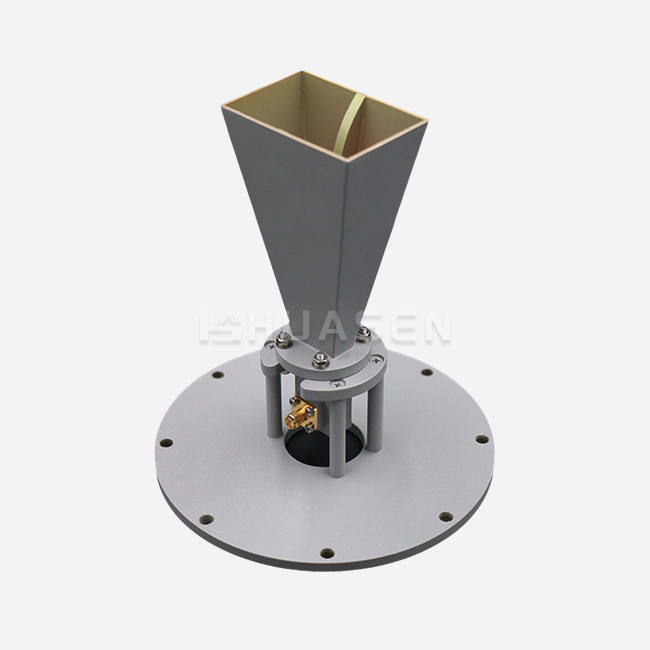
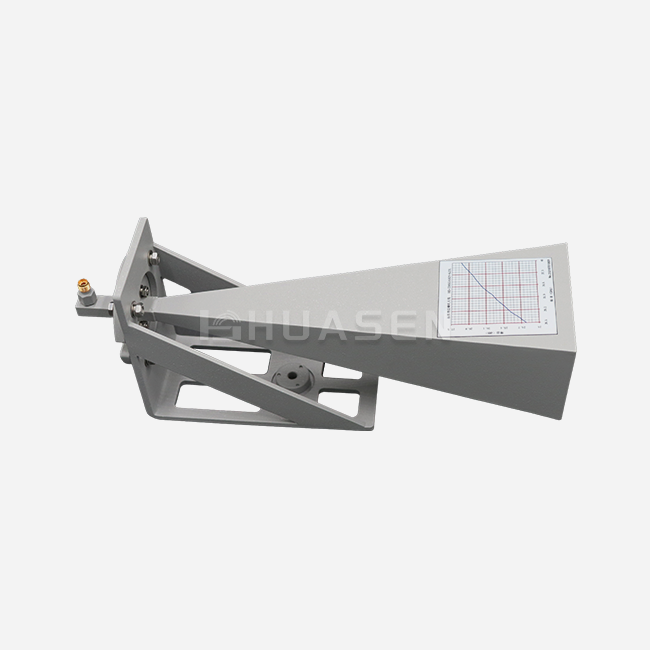
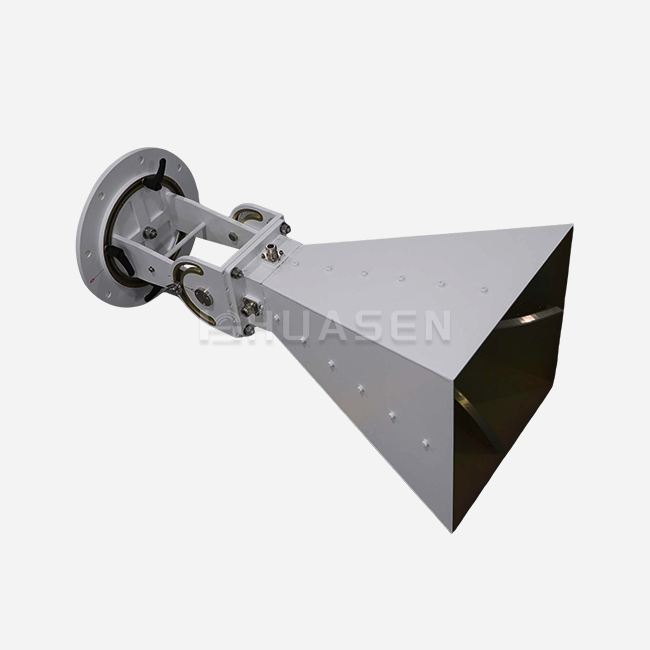
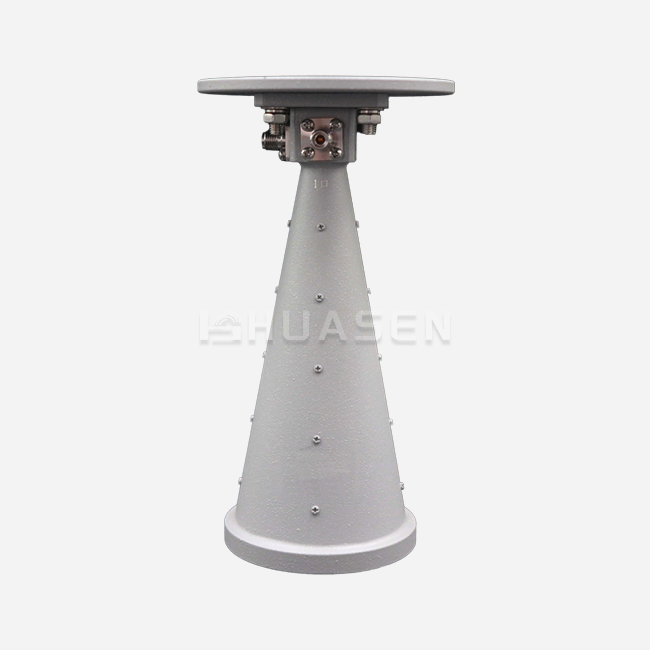
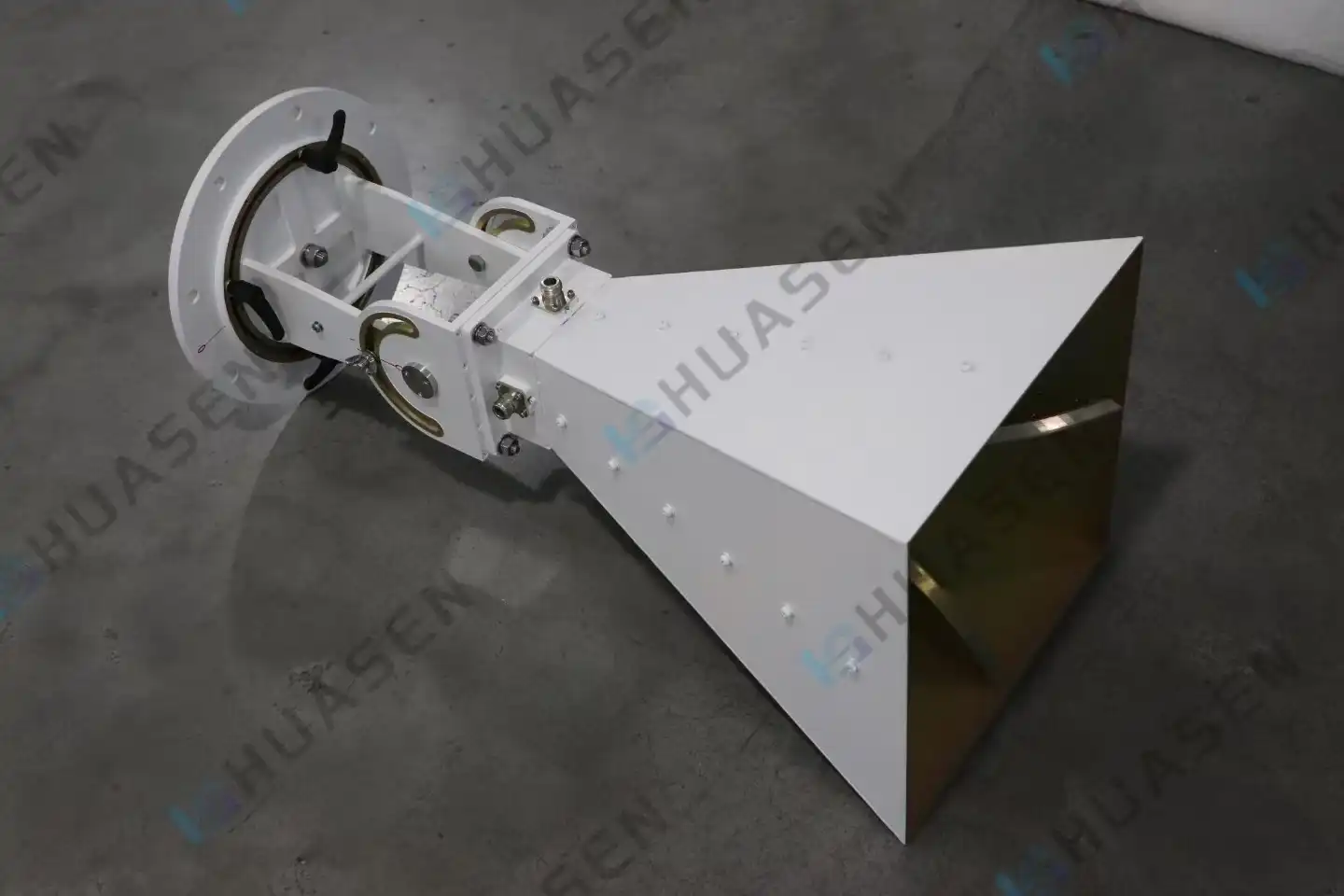
We have the Ultra-Wideband Dual-Polarized Quadridged Horn Antenna Series (DPHA) and the Boundary Open Dual-Polarized Quadridged Horn Antenna (DPOBHA) that can continuously sweep from 0.1 GHz to 40 GHz. With this huge range, you can use a single instrument for VHF to Ka-band uses. This saves you the cost of keeping separate antenna supplies for each test standard. This consolidation is especially helpful for mobile communications engineers trying 5G base station emissions because they can now test sub-6 GHz and millimeter-wave bands without having to wait for reconfiguration.
Polarization Characteristics and Impedance Matching
With a separation of more than 20 dB, the dual-port design lets you access orthogonal polarizations separately. The system creates circular polarization when attached to a 90-degree hybrid coupler, which is necessary for testing satellite communications and measuring radar cross-section. The impedance matching network keeps the 50-ohm features at all frequencies, which stops the phase errors that happen with log-periodic designs. When doing vector field mapping or time-domain measurements, where signal fidelity directly affects compliance choices, this consistency is very helpful.
Key Advantages of Using Quadridged Horn Antenna Systems in EMC Testing
There is more and more pressure on testing labs to speed up their work while still meeting approval standards. Using old methods that require moving the Quadridged Horn Antenna by hand between readings of polarization introduces mistakes and raises the cost of using the chamber.
Simultaneous Dual-Polarization Measurement Capability
When compared to methods that only measure one polarization, the ability to measure both at the same time cuts test time by about 40%. Engineers can get the strongest field during CISPR 25 car radiated emission testing, no matter which way the polarization is facing, without stopping the measurement process. This efficiency gain means lower costs for facilities that charge by the hour for room time. It also makes data matching better because both polarizations are exposed to the same environmental conditions.
Ultra-Wideband Performance Eliminating Antenna Swapping
These systems make setup less complicated by using only one quad-ridged horn antenna to cover frequency bands that used to need three or four different ones. Recently, a defense contractor doing MIL-STD-461 tests found that switching to wideband horn systems cut the time needed for calibration by 60%. The gain ranges from 5 dB at lower frequencies to 19 dB at the upper band. This gives enough sensitivity for both emission and protection protocols, so most of the time, you don't need to add extra amplifiers.
Enhanced Signal Clarity in Complex RF Environments
When compared to biconical antennas in industrial settings, the directed radiation pattern improves signal-to-noise ratios by 8–12 dB because it naturally blocks out-of-band interference. This feature is very useful for aerospace test sites that are close to airports because it filters out background radar signals that could mess up low-level emission readings. Pattern stability across the full bandwidth provides stable spatial selectivity. This makes these antennas useful as standards for calibration labs that are ISO 17025 certified.
Comparing Quadridged Horn Antennas with Other Antenna Types for EMC Testing
To make choices about what to buy, you need to know how the performance of different quad-ridged horn antennas compares. Each type of antenna meets a different set of test standards and has its own strengths and weaknesses.
Performance Against Standard Pyramidal Horns
Pyramidal horns have great gain and pattern control, but they usually only cover 2:1 bandwidths or less. A normal gain horn that works at X-band (8–12 GHz) gives accurate measuring points but isn't useful when test plans include more than one band. When compared to optimized pyramidal designs, quadridged configurations lose about 2 dB of peak gain but increase useful bandwidth to 10:1 ratios, which is a good trade-off for testing settings that use more than one standard.
Advantages Over Log-Periodic Dipole Arrays
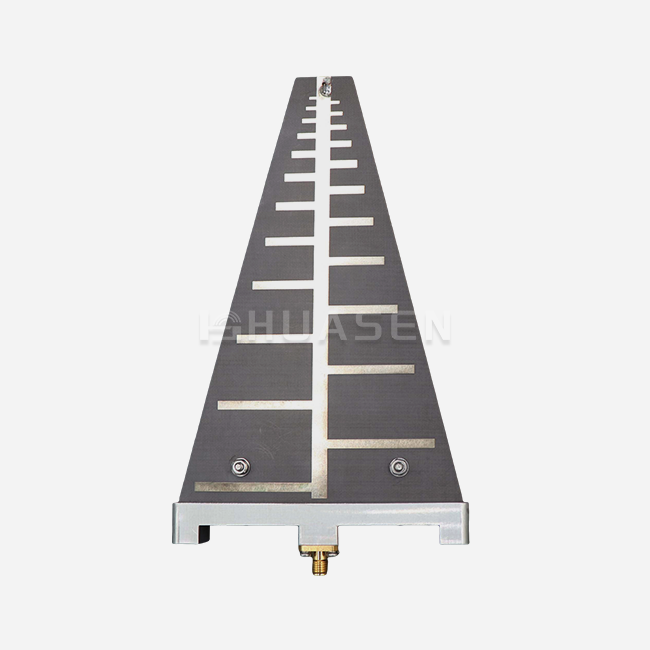
Log-periodic antennas cover a wide range of frequencies and have patterns that work in all directions in a single plane. But because they are dispersive, they cause phase changes that mess up readings of burst signals. Horn antennas are better for checking radar immunity and simulating electromagnetic pulses because the phase center location stays the same. This is important for applications where time accuracy is important. Log-periodic arrays also have gain changes of 4-6 dB across their range, which makes amplitude tuning more difficult.
Distinguishing Double-Ridge from Quadridged Architectures
Double-ridged horns can handle a single linear polarization and have the same benefits for bandwidth as quad-ridged types. When full polarization characterization is needed, this difference becomes very important. Cross-polarization discrimination data are needed for antenna pattern verification and satellite payload testing, and only quadridged designs can provide the dual-port architecture that is needed. The 30 dB average separation between ports lets you get a good idea of how pure the polarization is without having to change the test range.
Procuring Quadridged Horn Antennas: What B2B Clients Need to Know?
Comparing datasheets isn't the only part of strategic buying. Technical requirements, supplier skills, and the total cost of ownership over the lifetime of the tools are all taken into account in successful implementations when selecting Quadridged Horn Antennas.
Critical Technical Parameters for Selection
The frequency range is the most important factor in choosing a speaker, but buyers must also make sure that the coverage is constant and there are no breaks. Some makers list piecewise ranges that need switching networks outside the device. Specifications for voltage standing wave ratios should be carefully looked at—values below 1.8:1 show better impedance matching, which lowers measurement error. Through careful ridge cutting and our own matching networks, our systems get VSWR below 1.5:1 over most of the operating band.
How flat the gain is across the band affects how hard it is to calibrate. When antennas have gain changes of less than ±2 dB, the frequency points that need individual calibration certificates go down. When immunity testing is done in places with field values above 200 V/m, the power handling ability should be taken into account. When paired with 7/16 DIN plugs, our designs can handle continuous wave power of up to 500 W, which lets high-intensity radiated field testing happen without the need for extra attenuators.
Mechanical Integration and Mounting Flexibility
One of the most annoying things about test range alignment (Quadridged Horn Antenna) is that some systems can't adjust for six degrees of freedom. Engineers can set accurate phase centers and make up for chamber irregularities by precisely placing X, Y, and Z and controlling angles around three axes. Our designs work with both European and US mounting patterns by using adaptor plates to make the mounting interface compatible with standard positioners. This cuts down on the time it takes to make unique parts.
Automated tracking systems are affected by weight issues. Our optimized designs keep their stiffness while reducing their mass, which is useful for small antenna test areas that use robotic positioners. Long-term dimensional stability in humidity-controlled rooms is achieved by choosing materials that balance electromagnetic performance with environmental longevity.
Supplier Evaluation and Quality Assurance
Traceability to national standards is made possible by working with makers who offer individual unit testing instead of standard performance data. Huasen Microwave Technology has been around since 1993 and has ISO 17025-certified testing services that make sure every antenna ships with measured antenna factors, VSWR data, and pattern cuts. It is necessary for labs that follow FDA, FCC, or foreign rules to have this paperwork for auditing purposes.
When stock goods don't exactly meet test requirements, the ability to customize them is very useful. People often ask for changes like frequency range extensions, different types of connectors, or environmental grades for outdoor installs. Suppliers who have their own design teams can change standard setups without having to wait as long for full custom developments.
Best Practices for Maximizing EMC Testing Accuracy Using Quadridged Horn Antennas
The powers of the equipment do not promise the quality of the measurements. Systematic installation and operation methods get the most out of precision tools when using quad-ridged horn antennas.
Proper Installation and Calibration Procedures
When chamber reflectivity factors combine with antenna patterns, they change the regularity of the field in different places. Putting the antenna in approved spots in the quiet zone reduces these effects as much as possible. Using laser alignment tools to check the distance between two objects ensures that they are spaced at the right distance, which is important because calculations of field strength are based on conditions that are far away.
The calibration intervals balance the accuracy of measurements with the cost of running the business. Most business testing only needs to be recertified once a year, but military and aerospace projects may need it every six months. Any physical shock or damage to the connectors means that the tuning has to be done right away, no matter what the plan is, because even a small misalignment of the ridges can hurt the high-frequency performance. Vector network analyzer runs that find return loss degradation could mean that there are mechanical problems that need to be looked at.
Integration with Test Systems and Software
These days, EMC receivers and spectrum analyzers have antenna factor adjustment tables that take raw data and adjust it automatically for antenna characteristics. Systematic mistakes can be avoided by importing calibration data properly; engineers should check that the frequency interpolation methods match the data format. Some old systems need correction factors to be entered by hand at set rates. This adds a risk of transcription that data validation processes should be able to catch.
When using external hybrid couplers to make circular polarization, insertion loss and phase balance specs have a direct effect on the precision of the axial ratio. Broadband 90-degree hybrids of good quality keep phase accuracy within ±3 degrees across octave bandwidths and achieve axial ratios below 3 dB, which are good for testing satellite antennas. Differential phase mistakes that hurt polarization purity can be avoided by matching the cable lengths between the hybrid and antenna ports.
Maintenance and Long-Term Performance Verification
The most common type of failure is a loss of connector integrity. Mating cycles that happen over and over again wear down center wires and lower contact resistance, which raises VSWR and makes measurements less accurate. Following the manufacturer's instructions for using a torque wrench keeps it from being overtightened, which can damage dielectric supports. Visual inspection with a magnifying glass can find early signs of connection wear and tear before they affect the electrical performance.
Exposure to the environment in outdoor test areas speeds up the aging process of the quad-ridged horn antenna. Even though the materials in our antennas don't rust, high-frequency patterns can be changed by dirt or dust building up on the opening surfaces. Cleaning it every so often with rubbing alcohol and lint-free materials brings it back to its natural state. Keeping the temperature and humidity in a controlled environment and covering connections with dust caps during storage can greatly increase their service life.
Conclusion
When checking for electromagnetic compatibility, the accuracy of the measurements relies on having instruments that can cover a wide bandwidth, changeable polarization, and stable patterns. These needs are met by Quadridged Horn Antenna systems, which have advanced ridge-loaded designs that work over 0.1–40 GHz and can handle both single and dual polarization. By getting rid of antenna changes between frequency bands and polarizations, working efficiency goes up. This cuts down on chamber time and improves accuracy. Labs will be able to meet changing regulatory standards in the long run if they make purchasing choices that balance technical requirements with the supplier's dependability and support capabilities.
FAQ
1. What frequency ranges do quadridged horn antennas typically cover?
Professional-grade systems can continuously work from 100 MHz to 40 GHz, and some custom versions can go as low as 80 MHz. With this multi-decade bandwidth, antenna sets that needed four or more different units can be replaced with just one. This reduces inventory and makes testing easier.
2. In what ways do these sensors make measurements more accurate than older ones?
When recording orthogonal polarizations one at a time, mistakes can be caused by environmental factors that change over time. However, simultaneous dual-polarization capture gets rid of these problems. The stable phase center position across the full bandwidth keeps spatial relationships steady while pattern measurements are being made, and the better impedance matching cuts down on reflections that cause standing waves and measurement ripple.
3. Can quadridged horn antennas be changed to fit different needs?
Manufacturers with in-house engineering departments offer customization options such as frequency range optimization, special weather rates for use outside, and changes to the interface for mounting systems that are already in use. Connector choices meet the needs of apps that need to handle power, ranging from precise low-power readings to high-intensity immunity tests.
4. How often do these systems need to be serviced?
Most regulations only need to be checked once a year, but military and aircraft uses may need to be checked every six months. In facilities that get a lot of use, the links and mechanical adjustment systems should be checked physically every three months. After any physical collision or connection damage, the system needs to be recalibrated right away.
Partner with Huasen Microwave for Precision EMC Testing Solutions
Because of measurement error and the need to meet compliance deadlines, you need antenna systems that combine tried-and-true dependability with cutting-edge technology. Huasen Microwave Technology's Ultra-Wideband Dual-Polarized Quadridged Horn Antenna Series is the result of 30 years of experience in RF engineering. It is designed to work best in uses that need to be electromagnetically compatible. Our 0.1–40 GHz systems with >20 dB polarisation separation and measured gain performance help labs that need to be able to prove their measurements. Whether you're a Quadridged Horn Antenna maker looking for OEM partnerships or a test center comparing providers, our engineering team can help you with everything, from developing specifications to providing calibration services after delivery. Send an email to sales@huasenmicrowave.com to talk to one of our applications engineers about your particular needs and to ask for full technical documentation with measured performance data.
References
1. Paul, C. R. (2006). Introduction to Electromagnetic Compatibility, 2nd Edition. Wiley-Interscience, Hoboken, New Jersey.
2. Hemming, L. H. (2002). Architectural Electromagnetic Shielding Handbook: A Design and Specification Guide. IEEE Press, New York.
3. Balanis, C. A. (2016). Antenna Theory: Analysis and Design, 4th Edition. John Wiley & Sons, Hoboken, New Jersey.
4. Williams, T. (2017). EMC for Product Designers, 5th Edition. Newnes, Oxford, United Kingdom.
5. Kodali, V. P. (2001). Engineering Electromagnetic Compatibility: Principles, Measurements, Technologies, and Computer Models, 2nd Edition. IEEE Press, Piscataway, New Jersey.
6. Ott, H. W. (2009). Electromagnetic Compatibility Engineering. John Wiley & Sons, Hoboken, New Jersey.
Send Inquiry