How standard gain horn antenna Improves Accuracy in RF Labs?






2026-03-24 21:34:47
In radio frequency (RF) labs, standard gain horn antennas are used as accurate measuring tools because their gain features and stable radiation patterns can be predicted in theory. Problems with reference uncertainty that happen during antenna calibration and gain transfer readings are fixed by these carefully designed devices. Engineers can be sure that their measures of flux density and calibration of anechoic chambers are accurate because standard gain horn antennas work the same way across specific frequency bands and have gain ranges of 10 to 25 dBi. Because they are the "gold standard" in RF testing environments, labs that need to be able to make measurements with absolute accuracy for defence, aircraft, and telecommunications use them all the time.
Understanding Standard Gain Horn Antennas and Their Role in RF Labs
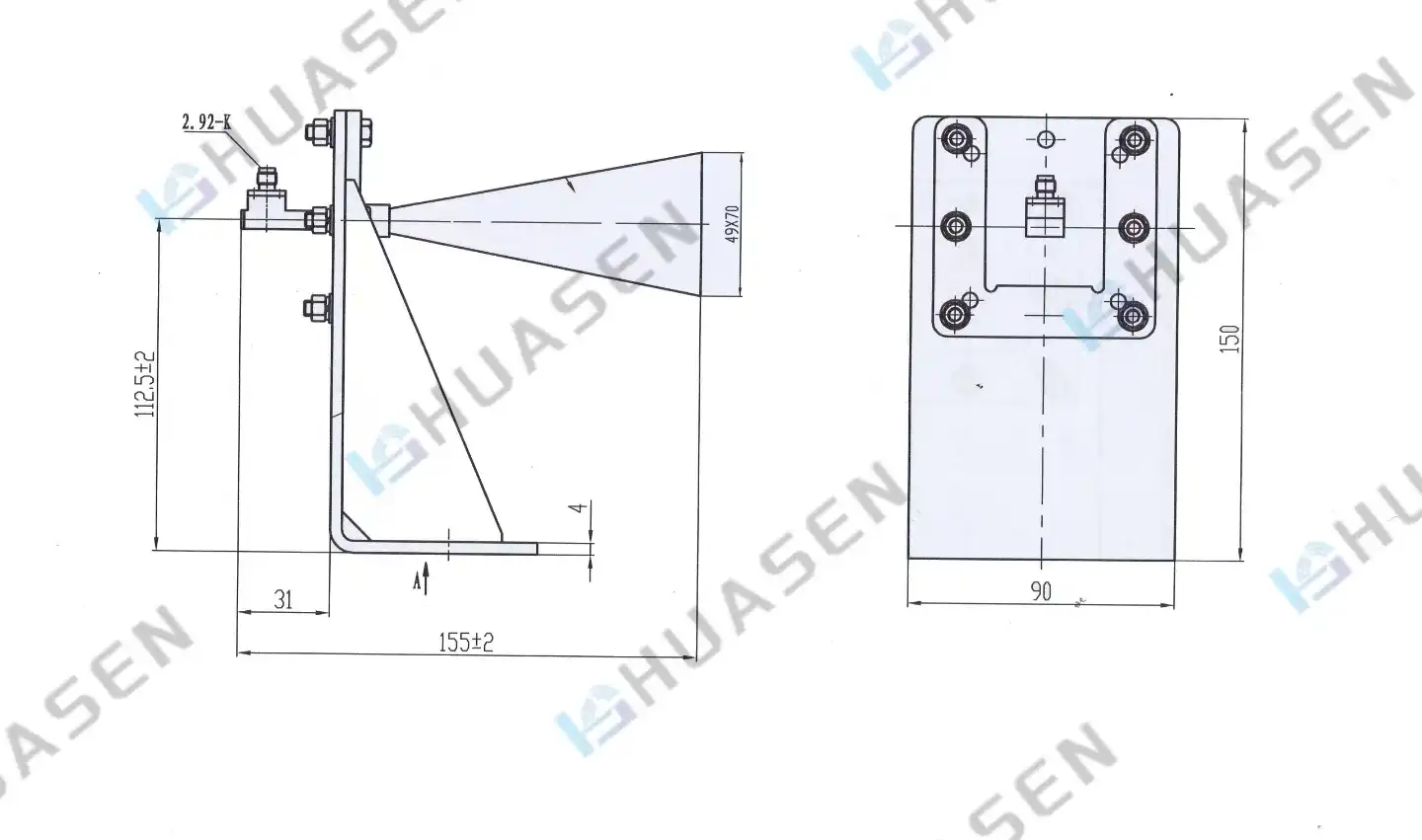
Standard gain horn antennas represent precision-engineered microwave components designed specifically for metrological applications in RF measurement environments. These pyramidal or conical horn structures function as primary reference standards, offering geometrically calculated gain curves that precisely match theoretical predictions across designated frequency ranges.
What Makes Standard Gain Horn Antennas Unique
These antennas work because you can predict how they will behave electromagnetically based on their physical shape. Broadband test antennas get their performance traits from real-world calibration data, but standard gain horn antennas get theirs from well-known physics equations. RF labs use these antennas because they solve the important "reference uncertainty" problem. The aperture size, flare angle, and waveguide dimensions all have direct relationships with radiation patterns and gain values. This makes measurements more reliable. Having a solid reference is very important for engineers who need to measure anechoic chambers or use gain-transfer methods to find out how well an antenna is working. The output is linearly polarised, and the performance is stable across L-Band to millimetre-wave frequencies. This makes it possible to make accurate readings.
Operational Principles and Design Parameters
The electromagnetic qualities of these antennas come from the way they were carefully put together. The beamwidth and directivity are set by the aperture measurements, while the impedance matching and frequency response are affected by the flare angle. Waveguide throat geometry makes sure that the right mode propagates and reduces unwanted resonances that could affect the precision of measurements. Frequency coverage usually covers the whole waveguide band, with each antenna optimised for a certain range, like X-band (8.2-12.4 GHz) or Ka-band (26.5-40 GHz). This design method is specific to a band and maximises performance within certain frequencies while keeping the theoretical gain predictions that are needed for reference uses. As a result, the radiation patterns are very symmetrical and have low side-lobe levels, which makes measurements much more repeatable in controlled test settings.

Challenges in RF Lab Measurements and How Standard Gain Horn Antennas Address Them
RF measurement environments face numerous standard gain horn antennaaccuracy challenges that can compromise test results and calibration procedures. Signal reflections from chamber walls, multipath interference from equipment surfaces, and antenna pattern variations all contribute to measurement uncertainty. Environmental factors such as temperature fluctuations and mechanical vibrations further complicate the pursuit of precise RF measurements.
Common Sources of Measurement Inaccuracies
Impedance mismatches that cause standing wave patterns and signal reflections are a common problem with traditional measurement sets. Because of these reflections, the amplitude and phase change, which makes it hard to set stable reference values. Broadband devices can also have uneven antenna patterns that can cause gain changes across frequency ranges. This makes it hard to keep calibration accuracy during long test sessions. Multipath interference is another big problem in RF labs. Signals make complicated interference patterns that change with frequency and location when they hit metal surfaces or equipment nearby. This problem is especially bad in places where there isn't enough room to separate the antennas properly or when testing needs to work with more than one frequency band at the same time.
How Standard Gain Antennas Provide Solutions
Standard gain horn antennas address these challenges through their inherent design advantages and predictable performance characteristics. The excellent impedance matching typically achieves VSWR values below 1.25:1, often reaching 1.15:1 at centre frequencies. This superior matching minimises signal reflections and ensures maximum power transfer, creating more stable measurement conditions.
The following advantages demonstrate why these antennas excel in precision applications:
- Predictable Radiation Patterns: The horn geometry produces consistent, symmetrical radiation patterns that remain stable across the operating frequency range, eliminating pattern-related measurement variations.
- High Cross-Polarisation Discrimination: Superior XPD performance exceeding 25 dB ensures pure linear polarisation, reducing interference from unwanted polarisation components.
- Low Gain Uncertainty: Typical uncertainties of ±0.3 to ±0.5 dB significantly outperform broadband alternatives that often exhibit ±1.5 dB uncertainty levels.
These characteristics combine to create measurement environments where engineers can confidently establish reference levels and perform accurate antenna characterisation. The reduction in measurement uncertainty translates directly to improved product development cycles and more reliable system performance validation.
Optimising RF Lab Accuracy Through Proper Standard Gain Horn Antenna Selection and Calibration
Selecting the appropriate standard gain horn antenna requires careful consideration of frequency requirements, measurement objectives, and environmental constraints. The optimisation process involves matching antenna specifications to specific test scenarios while ensuring long-term calibration stability and measurement traceability.
Selection Criteria for Maximum Precision
Frequency coverage represents the primary selection criterion, as each antenna design targets specific waveguide bands for optimal performance. Engineers must evaluate their measurement requirements against available frequency ranges, considering both current needs and future expansion plans. The gain characteristics within the selected frequency band directly impact measurement sensitivity and dynamic range capabilities. Mechanical stability becomes crucial in laboratory environments where vibrations or temperature variations could affect antenna alignment and performance. The construction materials and mounting interface specifications must accommodate the physical constraints of the test setup while maintaining positional accuracy. Standard waveguide flange interfaces, such as UG-series or WR-series, provide reliable connections that minimise RF leakage and ensure repeatable measurements.
Calibration Procedures and Best Practices
Establishing proper calibration procedures ensures that standard gain horn antennas maintain their reference accuracy throughout their operational lifetime. The calibration process begins with NIST-traceable measurements that verify the theoretical gain predictions against actual performance. These measurements create the foundation for all subsequent test activities and provide the traceability required for compliance with quality standards. Regular verification schedules help maintain measurement confidence over extended periods. While the passive nature of horn antennas means their characteristics remain stable under normal conditions, periodic checks confirm that no physical damage or contamination has occurred. Environmental factors such as humidity, temperature cycling, and mechanical stress can gradually affect performance, making scheduled verification an essential component of laboratory quality management. The calibration environment must replicate the conditions where the antenna will be used. Factors such as ground plane effects, nearby reflective surfaces, and ambient electromagnetic interference can influence measurements. Proper documentation of these conditions enables consistent application of correction factors and ensures measurement repeatability across different operators and time periods.
Procurement Considerations: Selecting Trusted Manufacturers and Suppliers
Procurement professionals in RF testing environments must evaluate potential suppliers based on technical capabilities, quality assurance programs, and long-term support commitments. The selection process involves assessing manufacturer credentials, reviewing quality documentation, and establishing relationships that support ongoing operational requirements.
Manufacturer Quality Control and Certification Standards
Leading makers have thorough quality standard gain horn antennacontrol programs that check both the design and the consistency of production. Dimensional metrology, which uses coordinate measuring machines to check aperture sizes and throat shapes within micron-level errors, is usually part of these projects. How well these measurements are taken is directly related to how well the antenna meets theoretical gain estimates. Calibration reports that can be tracked back to NIST are the most important quality documents for making choices about purchases. Instead of type-testing, each antenna should be individually calibrated. This will make sure that performance specs match the real characteristics of the device. The manufacturer's dedication to measurement traceability and long-term accuracy upkeep is shown by the uncertainty levels in the calibration and the frequency of recertification. Material standards and surface treatments have a big effect on how well and how long an antenna works. The electrical properties and stability needed for reference uses are provided by precision-milled aluminium construction with the right plating. Silver or gold finishing on the inside of the surface reduces resistive losses, and finishes on the outside keep the metal from rusting and breaking down in the environment.
Customisation Options and Technical Support
Changing antennas is needed for many RF lab tasks to make them work with certain test setups or performance standards. Companies that let you customise their products can change basic designs to fit different frequency ranges, polarisation needs, or mechanical interfaces. Being able to make custom solutions while keeping accuracy levels at the base level shows advanced engineering skills and manufacturing adaptability. More and more, test standards change, and measurement problems show up, making technical support services more important. Quick response from engineers helps answer questions about applications, gives advice on how to set up complicated systems, and fixes speed problems. Having access to calibration services, repair services, and upgrade choices protects the investment in precision test equipment and ensures it stays operational for a long time.
Enhancing Long-Term RF Lab Performance with Standard Gain Horn Antennas
Sustaining high measurement accuracy over extended operational periods requires systematic maintenance programs and strategic planning for technology advancement. RF laboratories must implement procedures that preserve antenna performance while preparing for evolving measurement requirements and emerging technologies.
Maintenance Protocols and Performance Monitoring
Routine maintenance programs focus on preserving the physical and electrical characteristics that determine antenna performance. Cleaning protocols remove contamination that could affect surface conductivity or dimensional accuracy. Visual inspections identify mechanical damage such as dents, corrosion, or flange wear that might compromise electrical performance or measurement repeatability.
The following maintenance practices help ensure consistent performance:
- Surface Inspection: Regular examination of internal and external surfaces for contamination, oxidation, or physical damage that could affect electrical characteristics.
- Flange Condition Assessment: Verification of waveguide flange flatness and plating integrity to prevent RF leakage and ensure reliable connections.
- Dimensional Verification: Periodic measurement of critical dimensions to confirm that mechanical stability has been maintained throughout operational use.
When you put these practices together, you get a full program that finds problems before they affect the accuracy of measurements. Documenting maintenance tasks gives us useful information about trends and helps us plan maintenance in a way that keeps operations running as smoothly as possible.
Technology Trends and Future Capabilities
Standard gain antenna technology,standard gain horn antenna,and related measurement methods are always getting better because RF measurement needs are always changing. New developments in material science offer better stability at high temperatures and lighter weights while still keeping the accuracy needed for reference applications. More complex geometries and tighter tolerance control are possible with today's manufacturing methods. This could increase frequency coverage and make measurements more accurate. Integration with automated measurement systems is a big trend that is changing how labs work. Software-controlled positioning devices, automated data collection, and real-time uncertainty analysis can help make measurements more accurate and less dependent on the operator. These new features need antennas that keep their performance levels stable while also being able to handle automated handling and positioning needs. Forming long-term partnerships with suppliers makes it easier to get these new features and makes sure that existing systems will work with any upgrades that come out in the future. Working together gives you early access to new technologies, personalised development programs, and unified help for the tricky measurement problems that come up as RF apps keep getting better.
Conclusion
The accuracy of RF lab measurements is completely changed by standard gain horn antennas, which have predictable performance traits and are very stable. Traditional test setups have problems with things like uncertainty in the reference, signal reflections, and the accuracy of measurements. These precision-engineered devices solve these problems. When RF labs have good impedance matching, stable radiation patterns, and low gain uncertainty, they can get measurement confidence levels that are needed in current defence, aerospace, and telecommunications. Long-lasting performance is guaranteed by careful selection, testing, and maintenance. Strategic relationships with suppliers give you access to new technologies and customisation options that meet changing measurement needs.
FAQ
1. What factors affect the accuracy of standard gain horn antennas in laboratory environments?
Several environmental and operational factors influence measurement accuracy, including temperature variations that cause thermal expansion, humidity levels that affect surface conductivity, and mechanical vibrations that can alter antenna alignment. The quality of waveguide connections, the cleanliness of internal surfaces, and proper grounding also significantly impact performance. Maintaining stable environmental conditions and following proper handling procedures helps preserve measurement accuracy throughout extended test sessions.
2. How frequently should standard gain horn antennas be recalibrated for optimal performance?
Standard gain horn antennas typically require recalibration every 3-5 years for ISO 17025 compliance, as they are passive mechanical devices with inherently stable characteristics. However, calibration frequency may increase if antennas experience physical stress, environmental extremes, or handling damage. Regular verification measurements between formal calibrations help identify any performance drift and ensure measurement confidence throughout the calibration cycle.
3. Can standard gain horn antennas be customised for specialised RF testing applications?
Yes, reputable manufacturers can customise standard gain horn antennas for specific frequency ranges, polarisation requirements, power handling capabilities, and mechanical interfaces. Custom designs maintain reference-grade accuracy while accommodating unique test configurations such as near-field measurements, high-power applications, or specialised mounting requirements. The customisation process typically involves detailed engineering analysis to ensure theoretical gain predictions remain valid for the modified design.
Partner with Huasen Microwave for Precision Standard Gain Horn Antenna Solutions
Huasen Microwave Technology brings over three decades of expertise in precision RF component manufacturing to support your laboratory's measurement accuracy requirements. Our standard gain horn antenna portfolio delivers the exceptional performance and reliability needed for critical calibration and testing applications. With comprehensive quality control programs, NIST-traceable calibration services, and responsive technical support, we provide complete solutions that enhance measurement confidence and operational efficiency. Contact our engineering team at sales@huasenmicrowave.com to discuss your specific requirements and discover how our standard gain horn antenna manufacturer capabilities can optimise your RF testing environment. Experience the precision and reliability that industry leaders trust for their most demanding measurement challenges.
References
1. Balanis, Constantine A. "Antenna Theory: Analysis and Design, Fourth Edition." John Wiley & Sons, 2016.
2. IEEE Standard for Definitions of Terms for Antennas. IEEE Std 145-2013, Institute of Electrical and Electronics Engineers, 2014.
3. Johnson, Richard C. "Antenna Engineering Handbook, Fourth Edition." McGraw-Hill Education, 2007.
4. Kraus, John D. and Ronald J. Marhefka. "Antennas: For All Applications, Third Edition." McGraw-Hill Science/Engineering/Math, 2001.
5. Milligan, Thomas A. "Modern Antenna Design, Second Edition." IEEE Press Series on Electromagnetic Wave Theory, 2005.
6. Stutzman, Warren L. and Gary A. Thiele. "Antenna Theory and Design, Third Edition." John Wiley & Sons, 2012.
Send Inquiry