How Does a Coaxial Directional Coupler Improve RF Monitoring?






2026-06-16 22:06:23
Coaxial Directional Couplers make RF monitoring a lot better by letting real-time signal sampling happen without getting in the way and with very little insertion loss. These precise inactive devices take out a controlled amount of electromagnetic power that is moving in one direction. This lets engineers measure both the forward and reflected waves at the same time. It can accurately measure VSWR, give real-time input for amplifier control loops, and find faults in base stations, satellite links, and radar systems, all without interfering with major signal paths or lowering the quality of transmission.
Understanding the Fundamentals of Coaxial Directional Couplers
What is a Coaxial Directional Coupler and How Does It Work?
Four-port inactive Coaxial Directional Couplers monitor RF power along a communication cable. Power dividers that employ electromagnetic coupling to transfer a set quantity of power to a secondary port are different. Usually through parallel linked wires in a coaxial arrangement. With little interference, the main line carries the primary signal, and the connected port provides a sample chopped down by the input power.
Electric field interactions are controlled to make this function. As RF energy passes through the main transmission line, its electric and magnetic fields couple to a nearby wire. The coupling factor depends on the wire form and distance. Industrial areas typically have 10 dB to 50 dB. The device's directivity—its ability to distinguish forward and reflected signals—is its most critical performance metric. VSWR testing and network analysis accuracy are affected by this.
Key Technical Parameters That Define Performance
Buying teams may evaluate options by understanding the basics. The coupling factor indicates the power supplied to the connected port. A 20dB coupler removes 1% of the primary signal. Directivity measures forward-backward signal separation. For precise readings, values over 25dB are ideal. Power loss in the main line beyond coupling loss is called insertion loss. Quality devices maintain this below 0.3dB across their range.
Modern designs reach 30MHz to 40GHz, and precision requirements ensure coupling matches across the range. VSWR ≤ 1.3:1 at all ports reduces reflections and preserves signal purity. When working with pulsed radar systems or high-power emitters at base stations, average continuous wave rates and peak power restrictions must be distinguished.
Material Selection and Design Features Impacting Reliability
Precision-machined brass or metal housings with silver plating decrease skin effect losses and improve heat conductivity. From -55°C to +125°C, PTFE dielectrics maintain their electrical characteristics. This is crucial for outdoor communications and aircraft in rapidly changing conditions.
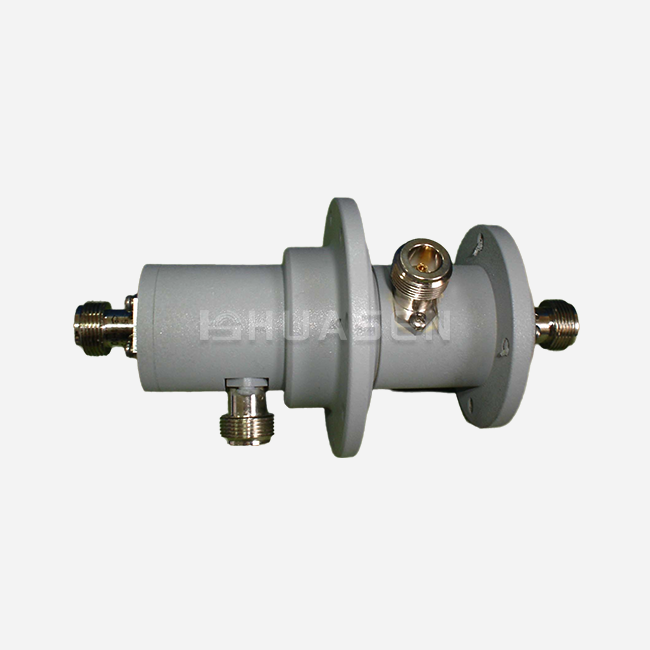
Marine communications and industrial radar systems need fully sealed designs to keep moisture, dust, and corrosive atmospheres out. Normal N-type connections work below 18GHz. SMA-K, 2.92mm-K, and precise 2.4mm connections work for 40GHz millimeter-wave bands. MIL-STD specifications define mechanical sturdiness as shock and vibration resistance. This ensures long-term mobility platform and aircraft system reliability.
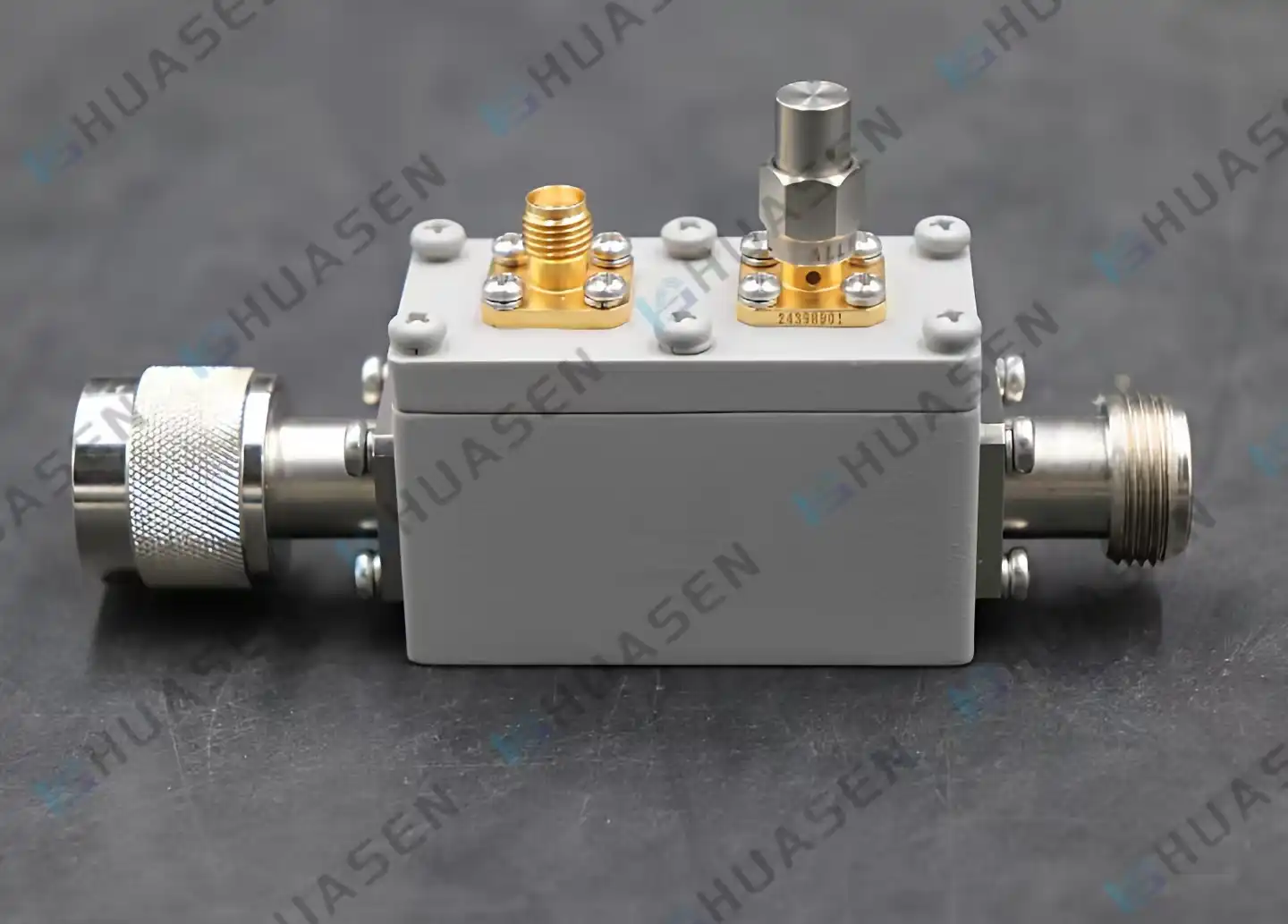
Enhancing RF Monitoring with Coaxial Directional Couplers
Real-Time Signal Analysis Without Transmission Disruption
The key benefit is constant monitoring without impacting system performance. Invasive measuring techniques need signal separation, while these Coaxial Directional Couplers stay in the RF chain. Engineers can monitor gearbox power, impedance mismatches, and defective parts before they bring the system down.
Real-time input from directional couplers helps automated level control circuits maintain transmission output during 5G base station commissioning, even if temperature changes or parts wear out. Without delay or misunderstanding, power meters or spectrum analysers may immediately display signal parameters from the linked port. Both deployment and maintenance are made easier by this.
Superior Directivity Enables Accurate VSWR Measurement
Directivity requirements of above 30dB in lab-grade equipment allow for obvious separation of incoming and returning waves. This function provides precise return loss and VSWR measurements for antenna tuning and transmission line issues. When directivity drops below 20dB, reflected signals distort forward power readings, hiding system performance.
Telecommunications businesses utilise this accuracy to verify antenna locations before turning on services while installing backhaul connections. A well-matched antenna system with VSWR < 1.5:1 boosts transmission power efficiency, saves money, and extends part life. The coupler can detect minor impedance changes to detect water in coaxial cables or mechanical stress on connections before they break.
Application Across Multiple Industry Segments
S-parameters are measured by network analysers using directional couplers. This allows engineers to define filters, amplifiers, and matched networks at many frequencies. Satellite ground stations employ them in send chains to verify uplink power and protect pricey high-power amplifiers from antenna and environmental damage.
Continuous emitter monitoring helps radar systems stay legal and extend detection range. Electronic warfare requires wideband couplers from 2 GHz to 18 GHz or greater. These couplers need a smooth coupling response to reliably measure complicated modulated signals throughout all operational bandwidths. Broadcast receivers employ them to automatically adjust power, maintaining output even when external circumstances change or parts move.
Comparing Coaxial Directional Couplers for Informed Procurement
Critical Selection Criteria for System Integration
To pick the proper device, match its specs to the program's demands. In power tracking, precision is more critical than signal extraction; therefore, coupling values between 10 and 20dB work well. In high-power transmitters, weak coupling of 30–40dB is optimal for maintaining main-line power over measurement sensitivity.
Power rates must account for continual use and high-power spikes. A base station emitter with an average power of 100W may create 400W modulation peaks; the coupler's power standard must allow for power above and below these levels. Measurement precision impacts directivity. For power tracking, 20dB directivity is adequate, but laboratory testing requires 35dB+.
Integration into present systems is difficult due to the connection dimensions and types. Small inline designs under 50mm can fit in equipment racks with limited space. Weatherproofing is more crucial than size for exterior installations. When connections work with present cable assemblies, you don't need expensive adaptors that increase insertion loss and failure points.
Performance Differences Between Coupler Architectures
Resistance couplers have higher insertion loss but better directivity, making them excellent for low-power monitoring. Hybrid couplers provide tremendous separation and uniformly distribute power, but they lack the coupling speeds needed for tracking. Distributed coupling designs feature a flat coupling reaction and octave-bandwidth performance but need more space than lumped-element solutions.
Multi-section stripline couplers possess superior stability throughout 2-18GHz frequency ranges, maintaining coupling within ±0.8dB. Single-section designs typically span a single octave with ±0.5dB smoothness, sacrificing bandwidth for compactness. Understanding these trade-offs helps customers get the optimal frequency coverage and form factor bargain.
Evaluating Manufacturer Options and Supply Chain Factors
Well-known companies, like Mini-Circuits, have huge online stores with lots of technical information and S-parameter files that can be used for simulations. Their normal product lines can be used right away for testing, and their custom engineering services can handle special frequency ranges or power needs. Pasternack focuses on fast delivery of basic setups, which is useful for projects that need to be shipped overnight or the same day.
Werlatone is an expert in high-power uses and has Coaxial Directional Couplers rated at kilowatt levels for warmth in broadcast and commercial settings. Their tech team helps with application support for difficult matching situations and heat management issues. When comparing suppliers, don't just look at unit prices. Also look at the quality of the technical documents, the availability of samples, and how quickly the seller responds to requests for design consultations.
By working with specialized wholesalers, you can get in touch with professional sales engineers who know how RF systems are put together. Based on application descriptions, they can suggest the best specs, offer alternatives when desired models have long lead times, and help with custom changes when standard goods don't meet needs. Long-term relationships with suppliers can often lead to better warranty terms, bulk discounts, and priority allocation during shortages of parts.
Technical Guidance: Installation, Testing, and Troubleshooting
Proper Installation Techniques for Optimal Performance
When you mount Coaxial Directional Couplers, make sure that the main line is facing the direction of signal flow that is shown on the device's marking. Most units make it very clear which ports are input and which are output. Make sure that all of the connection interfaces are clean and torqued to the manufacturer's specs. For SMA connectors, this is usually 8 to 12 inch-pounds, and for N-type interfaces, it's 12 to 15 inch-pounds. Too much torque can damage connecting threads and dielectric spacers, while too little torque can make links break when the device is vibrated.
Environmental considerations include getting rid of heat quickly enough for high-power uses and keeping things safe from direct weather exposure, even with sealed designs. Place couplers so that water doesn't collect around connectors too much when putting together outdoor base station equipment. Also, make sure that connected wires don't get too stressed when the wind blows.
Calibration Procedures for Measurement Accuracy
Before putting something into important applications, verification testing makes sure that the specifications match the numbers on the data sheet. Connect the coupler to a vector network analyzer that has been validated, and then measure the S-parameters over the full frequency range. Insertion loss is shown by S21, coupling factor by S31, and directivity by the difference between S31 and S41. Compare the observed values to the tolerances given in the datasheet, paying special attention to any loss of directivity that could mean there were problems with the production process or damage during shipping.
Power handling testing needs the right high-power sources and terminations that are rated higher than what the coupler specifies. Apply the recommended average power and keep an eye on the coupled port output and main line insertion loss. Both should stay stable without any thermal shift, which could mean there is stress inside the components. To correctly record transient behavior during peak power tests, pulsed RF sources and fast-response power meters are needed.
Common Issues and Diagnostic Approaches
Extraordinary insertion loss usually means that there are problems with the connectors or damage inside the component from too much stress. Check all of the connections for rust, bent pins, and other problems. Problems with linked port termination or impedance problems at the load port are common causes of loss of directivity. Check that all ports that aren't being used end in good 50-ohm loads with VSWR less than 1.2:1.
In four-port setups, signal leakage shows up as strange reactions at the solitary port. This generally means that the housing seal has failed, letting the electric field escape. Noise floor elevation in coupled port data means that the grounding or shield current lines are not set up correctly. To fix these problems, you need to test each isolation unit in a planned way and compare its performance to units that are known to be good.
If troubleshooting doesn't fix the problems, you should call the manufacturer's expert support team right away. To speed up the diagnosis process, give particular measurement data, test setups, and signs that have been seen. Reputable sellers back up their goods with warranties and will replace or fix broken units as soon as possible.
Procurement and Supply Chain Considerations for B2B Buyers
Navigating Online Catalogs and Technical Documentation
RF component sellers today have extensive websites with parametric search tools that let buyers narrow their results by frequency range, coupling value, power grade, and connection type. You can get detailed datasheets for the types you've chosen and look over full S-parameter data files for circuit simulation. Pay close attention to the mechanical drawings to make sure that the physical measures fit in the room that is available for installation.
Lead times are very different for catalog standard items that ship the same day and unique designs that need 6 to 12 weeks to make. When you ask for quotes, be clear about delivery times. This is especially important for big jobs where staggered deliveries might help with cash flow and managing supplies. Some wholesalers keep exchange stock programs for customers who buy a lot. These programs offer just-in-time delivery, which cuts down on the cost of storing goods.
Bulk Order Strategies and Custom Development Options
Volume pricing usually kicks in when you buy more than 25 to 50 units, with extra discounts at 100 and 500 pieces. Ask for official quotes that include price ranges, payment terms, and arrival dates. Talk about insurance extensions and technical help as extras that add value and lower the total cost of ownership beyond lowering the unit price.
Custom development is best for users who need non-standard frequency bands, unique combos of connectors, or stricter environmental requirements. For uses ranging from satellite ground stations to aircraft radar systems, Huasen Microwave's engineering team has created custom solutions that cover frequencies from 0.03 GHz to 40 GHz and coupling strengths from 10 dB to 50 dB. Custom projects usually have one-time planning fees that are made up for by lower prices per unit when more than 100 pieces are produced.
Building Strategic Supplier Relationships
Find makers who have a track record of success in the market area you want to reach. For example, companies that work with aerospace and defense usually have stricter quality systems than companies that only work with business telecommunications. Look at their list of certifications to see if they offer ISO 9001, AS9100 for aircraft, or MIL-STD compliance testing that meets your quality needs.
Top-tier suppliers of Coaxial Directional Couplers are different from commodity distributors because they offer quick expert help. When you first look at a vendor, you should see how fast they answer technical questions and how much their sales engineers know about the program. Companies that spend money on application support provide real relationship value that goes beyond selling parts.
Conclusion
Coaxial Directional Couplers are important parts of infrastructure that allow accurate RF tracking in defense, aircraft, and telecommunications. They solve important measurement problems in current high-frequency systems by sampling signals without interfering with them and keeping high directivity and low insertion loss. Knowing important specs like coupling factor, directivity, power handling, and frequency response helps buying teams choose the best devices for each application. Strategic relationships between suppliers and makers like Huasen Microwave make it possible to get both standard and unique solutions backed by technical know-how gained from decades of leading the industry.
FAQ
Q1: What frequency ranges do coaxial directional couplers typically support?
Standard designs work in octave or multi-octave bands from 30MHz to 40GHz, and there are also millimeter-wave models that can work at 67GHz and higher. With models ranging from 0.03 GHz to 40 GHz, Huasen Microwave lets system makers choose units that exactly meet their needs. Wideband Coaxial Directional Couplers that cover 2-18GHz are good for electronic warfare and multi-band test tools. Narrowband designs, on the other hand, work best with certain cell phone bands or radar frequencies.
Q2: How do I determine the appropriate coupling value for my monitoring application?
Check the sharpness of the measurement against the need to protect the main line power. Tighter coupling, around 10- 15 dB, makes signal samples stronger for measuring equipment that is sensitive, but it also takes more power from the main broadcast. Weaker coupling near 30–40dB has little effect on the main line power, so it can be used to watch high-power transmitters where signal samples are still strong enough for power meters and spectrum analyzers. As a realistic solution, 20dB coupling is often used for test equipment integration.
Q3: Can bidirectional couplers measure both forward and reverse power simultaneously?
Yes, because bidirectional setups have separate coupled ports for tracking both forward and reflected waves. This is possible with Huasen Microwave's CDC series, which can work in both directions at the same time and find faults in real time. This gets rid of the need for different couplers for each way, making the system simpler and less likely to accumulate insertion loss while also making calibration easier.
Partner with Huasen Microwave for Superior RF Monitoring Solutions
It has been thirty years since Huasen Microwave Technology focused on making precise RF and microwave parts. Our wide range of products is used in demanding situations in flight systems, military electronics, and telecoms infrastructure. Our engineering team can make solutions that exactly fit your needs, whether you need normal catalog items like our CC series for regular tracking or custom CHPC high-power versions that can run continuously at 500W.
We make Coaxial Directional Couplers that work with frequencies from 0.03 GHz to 40 GHz and have coupling ranges from 10 dB to 50 dB. Their designs are fully sealed so they can withstand tough circumstances. For easy system interaction, standard connector types include N-K, SMA-K, and precise 2.92mm-K interfaces. As a reliable company that makes directional couplers, we keep high-quality standards by checking our products to meet MIL-STD requirements and providing detailed technical documentation to help your purchasing and engineering teams.
To talk about your unique monitoring needs, please email our technical sales experts at sales@huasenmicrowave.com. We offer sample test programs that let you check the performance without any risk before committing to a large number. Our quick-to-respond support team gives you application advice, unique design help, and testing data to make sure that your RF systems work at their best from the time they are first set up until they are retired.
References
1. Pozar, David M. Microwave Engineering, 4th Edition. Wiley, 2011.
2. Rizzi, Peter A. Microwave Engineering: Passive Circuits. Prentice Hall, 1988.
3. Collin, Robert E. Foundations for Microwave Engineering, 2nd Edition. Wiley-IEEE Press, 2001.
4. Edwards, Terry C. and Steer, Michael B. Foundations of Interconnect and Microstrip Design, 3rd Edition. Wiley, 2000.
5. Ishii, T. Koryu. Handbook of Microwave Technology: Components and Devices, Volume 1. Academic Press, 1995.
6. Fusco, Vincent. Microwave Circuits: Analysis and Computer-Aided Design. Prentice Hall, 1987.
Send Inquiry