How Circular Waveguide Termination Reduces Reflection






2026-04-28 21:30:36
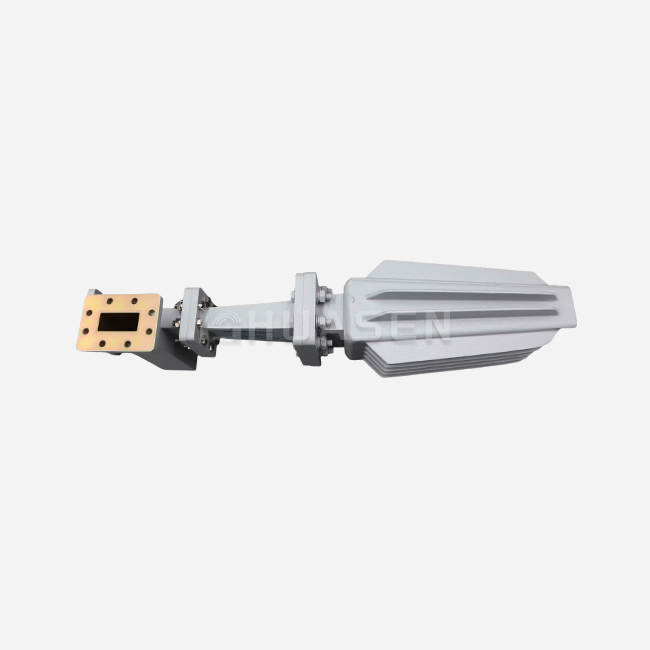
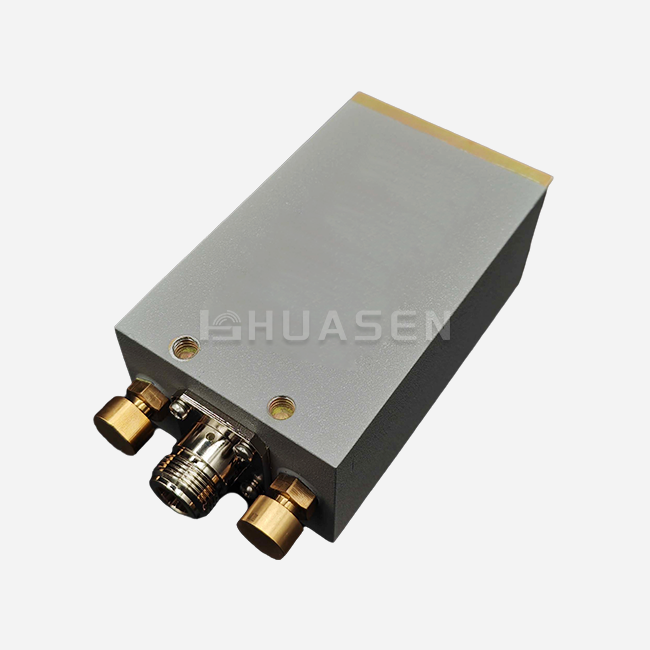
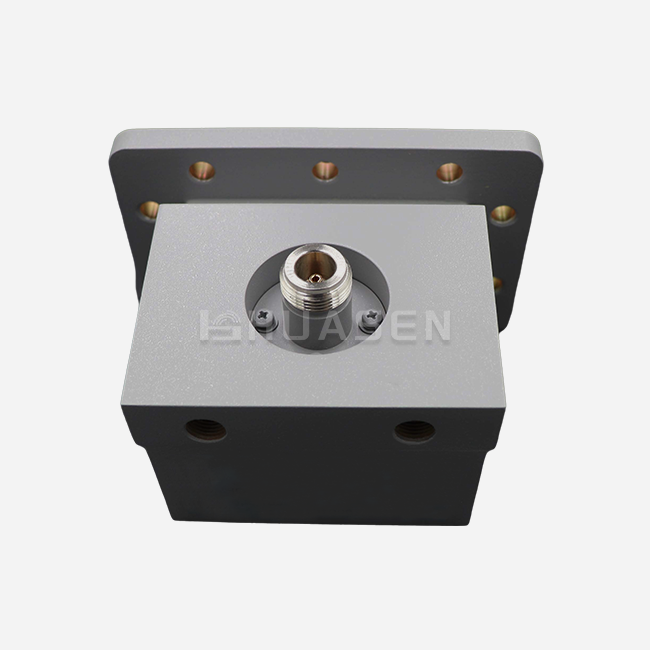
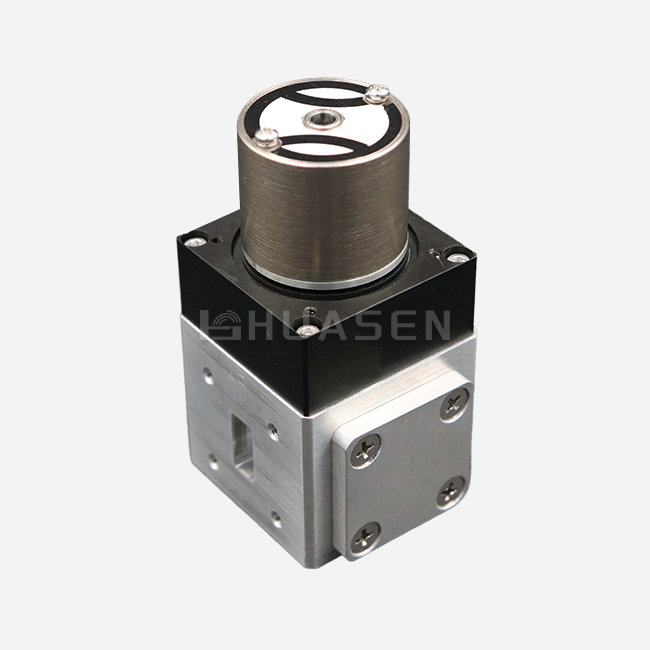
A circular waveguide termination reduces reflection as much as possible by carefully engineering materials that absorb electromagnetic energy and matching their impedance. The conical shape slowly changes the waveguide's impedance to match the absorbing load. This keeps the impedance from changing quickly, which can cause reflections. The VSWR value is less than 1.15 because this design can handle many propagation modes over a wide frequency range. The bulk absorption material gives off RF energy as heat, which keeps signal bounce-back to a minimum so it doesn't mess up sensitive equipment or make measurements less accurate in testing settings.
Understanding Circular Waveguide Termination and Reflection
What are Circular Waveguide Terminations?
In RF and microwave engineering, we depend on precise parts to keep signals safe in transmission systems that are very complicated. At the end of a waveguide, there is a termination that takes in electromagnetic energy instead of letting it bounce back toward the source. When working with circular cross-section waveguides—often found in rotary joints, satellite feeds, and high-power radar—the circular waveguide termination needs to be able to handle different propagation properties than when using rectangular designs.
These parts act as fake loads while the system is being tested or calibrated, or when an output port is not being used. If you don't terminate reflected power properly, it creates standing waves that mess up measurements, hurt transmitters, and add signal noise. Impedance matching is what makes reflection less likely. By slowly switching from the waveguide's characteristic impedance to the resistive load, the boundary discontinuity that causes energy to bounce back is removed.
How Reflections Impact System Performance
The reflection coefficient is directly related to VSWR, which is a very important metric that procurement teams look at when they are looking for RF components. Even small reflections, which are only a few percent of the forward power, add up across system stages and lower signal-to-noise ratios in receivers that are sensitive to them. In high-power settings like broadcast transmitters or particle accelerator RF systems, reflected energy raises the temperature of source components above what is safe for operation. This shortens their life and increases the chance of a catastrophic failure.
In radar installations, we've seen that uncontrolled reflections cause false echoes, which makes it harder to find targets. Similar problems happen at satellite ground stations when cross-polarization leakage from orthomode transducer ports that aren't properly sealed affects channels next to them. The financial effects go beyond replacing parts; in mission-critical telecommunications infrastructure, system downtime for diagnosis and repair has high operational costs.
Technical Specifications That Matter
Operational bandwidth is defined by the number of frequencies that can be used. These days, requirements cover many bands, from L to W. The terminations from Huasen Microwave meet this need with their 1.76–116 GHz range, which helps with everything from millimeter-wave research to 5G backhaul. Specifications for VSWR show how well the reflection works. Values at or below 1.15 mean that less than 0.7% of the power is lost, which meets strict needs for lab-grade tests and defense uses.
Commercial-grade and industrial solutions are different in how much power they can handle. Continuous wave ratings of 20 kilowatts allow high-power transmission testing to be done without damaging absorbing materials with heat. Choosing the right materials is important for two reasons: the waveguide body is usually made of copper or aluminum alloys, which conduct electricity well and keep the heat in, and the absorptive elements are made of silicon carbide or other special composites that turn RF energy into heat without releasing gases in vacuums or breaking down when the temperature changes.
Industry standards are used as guides for procurement. Compliance with MIL-DTL-3928 makes sure that defense contractors get parts that have been tested for vibration, shock, and exposure to high and low temperatures. IEC 60154 makes sure that commercial telecommunications equipment meets safety and performance standards around the world. Buying managers can be sure that these certifications will ensure long-term dependability and supply chain stability.
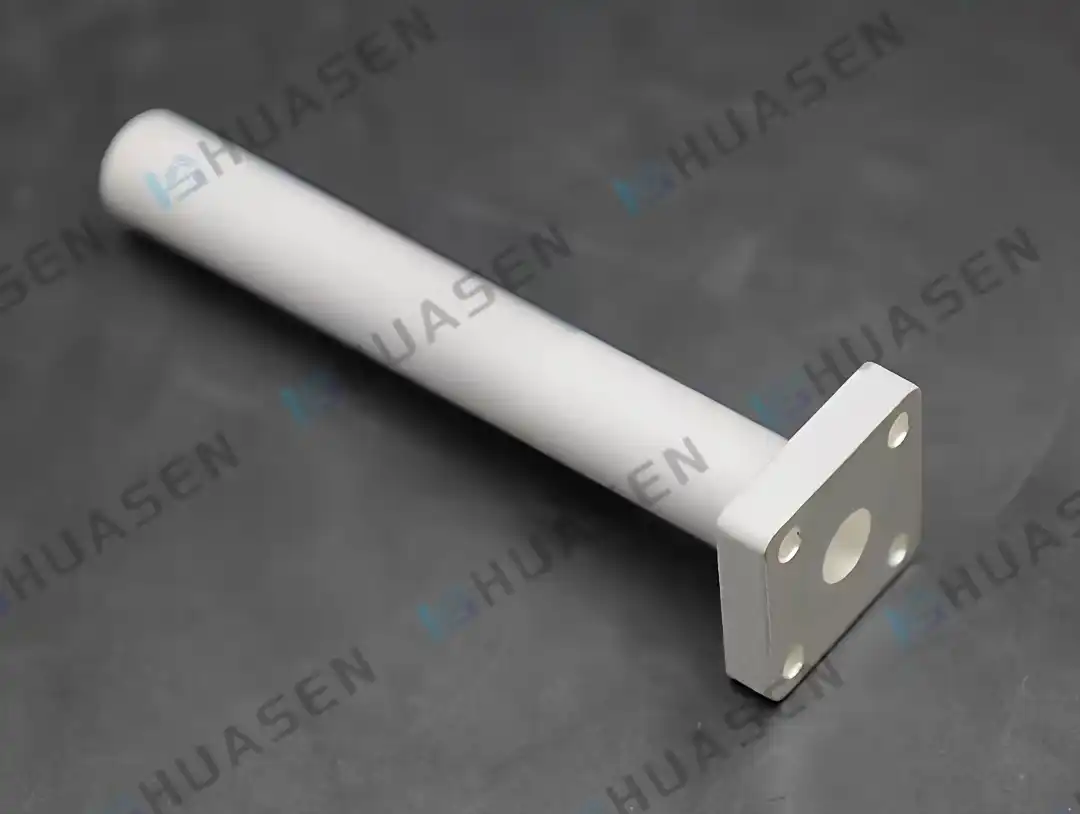
Comparing Circular Waveguide Termination with Other Termination Types
Structural Differences and Their Consequences
Many applications use rectangular waveguides because they are easy to make and come with well-known design tools. However, because they are polarization-sensitive, they can't be used in systems that need to be able to handle dual-polarization or rotational symmetry. Circular Waveguide Termination: Because they don't change shape when rotated, circular geometries are essential for antenna feed networks and rotating radar assemblies where the orientation is always changing.
These modal characteristics must be taken into account in the design of the circular waveguide termination. A lot of the time, resistive cards or pyramidal absorbers that are lined up with the electric field direction are used with rectangular loads. To evenly weaken all azimuthal field components, circular terminations need axially symmetric absorption structures. These are usually conical tapers filled with lossy dielectric material. This geometric requirement makes manufacturing more difficult, but it gives better performance in environments with more than one mode.
Performance Trade-Offs in Real-World Scenarios
Measuring return loss shows differences in real life. When it comes to narrow bands, premium rectangular loads get 30 dB of return loss (VSWR 1.065), while circular designs usually get 20–25 dB (VSWR 1.10–1.22) over wider frequency ranges. This trade-off shows how hard it is to match multiple propagation modes at the same time. Whether applications need extreme reflection suppression in a narrow bandwidth or good performance across a wider spectrum allocation affects the decision of what to buy.
Environmental Durability Across Conditions
When buying in bulk, cost is an important factor. Rectangular terminations have lower unit prices for common waveguide sizes because their manufacturing processes are more mature and their flange interfaces are standardized. Because they are harder to machine and are only made in small quantities, circular variants are more expensive. System-level analysis, on the other hand, often makes the investment worthwhile: a single dual-polarization Circular waveguide termination can replace two rectangular units plus a polarization combiner, cutting down on the number of parts and the difficulty of assembly.
How long something lasts in the environment depends on how it was built. When rectangular designs with resistive film cards are exposed to humidity or temperature changes that cause delamination, they may break down. Solid dielectric loads in round housings show better stability over -55°C to +85°C temperature ranges needed for aerospace and maritime applications. This makes it easier to maintain and extend the service life in harsh deployment environments.
Design Principles and Advantages of Circular Waveguide Terminations
Engineering the Impedance Transition
To keep reflections to a minimum, the impedance must change slowly from the waveguide's characteristic impedance to the resistive load. When there are sudden changes, discontinuities appear that scatter energy backwards. To fix this, the absorptive element needs to get thinner over distances that are proportional to the wavelength. Huasen Microwave uses cone-shaped structures whose taper angle and length are optimized through electromagnetic simulation to find the best balance between size and reflection performance.
Through dielectric and magnetic losses, bulk absorption materials turn microwave energy into heat. Silicon carbide composites have high loss tangent values and stay mechanically stable at high temperatures that happen during high-power operation. It is important to carefully control the material's volume resistivity. Materials that are too conductive cause reflections, and materials that are too resistive don't absorb well. To get the best balance, the filler concentrations and binder chemistry must be carefully controlled while the circular waveguide termination is being made.
Advantages Across High-Frequency Applications
In circular waveguides, mode suppression is a unique problem that needs to be solved. Geometric asymmetries make it so that the dominant TE11 mode can be absorbed without setting off any higher-order modes. Axially symmetric designs make sure that the field is always coupled evenly to the absorptive taper, no matter which way the polarization is facing. This feature is very important in situations where the input polarization changes or where more than one mode is propagating at the same time, like in high-power microwave systems where overmoded waveguides are used.
Broadband coverage makes designing systems and keeping track of inventory easier. Instead of keeping a bunch of different narrow-band terminations on hand for different frequencies, one unit that covers 18–40 GHz can be used for both the K and Ka bands, which are used for satellite communications. This consolidation makes buying easier and makes sure that different types of equipment can work together, including the Waveguide Circular Termination. The 1.76–116 GHz range that Huasen Microwave provides covers new millimeter-wave uses in 5G infrastructure and car radar.
Proven Performance in Demanding Environments
When testing radio waves, a low VSWR directly means accurate measurements. When calibrating network analyzers or describing the performance of amplifiers, terminations with VSWR ≤1.15 don't add much uncertainty compared to changes in the device being tested. Managers of laboratories know that this level of accuracy makes it possible to confidently describe low-noise amplifiers and sensitive receivers, where reflected power could hide how well the device actually works. Because it stays the same across the whole frequency range, there's no need for more than one reference load when measuring swept signals.
Power handling capacity helps with high-stakes tasks where protecting equipment is very important. When engineers are making radar transmitters, they put full output power into circular waveguide termination units instead of antennas that send out waves. Modern solid-state transmitters can work with a 20-kilowatt continuous rating, so they don't need complicated liquid cooling systems. This feature shortens the time it takes to develop something by letting realistic testing happen in the lab instead of costly field trials.

Procurement Guide for Circular Waveguide Terminations
Critical Evaluation Factors
The selection criteria are based on how well the frequency range matches the needs of the system. Managers in charge of buying things should match the operating bands of the equipment to the termination requirements, making sure that the coverage goes a little beyond what is actually used to allow for future upgrades. Upgrading satellite communication systems that are switching from X-band to Ku-band operation needs parts that can handle 8–18 GHz so they don't become obsolete too soon.
Reflection requirements must be sensitive to the application. VSWR 1.20 is good enough for general-purpose test setups, but 1.10 or better is needed for precision metrology. By knowing this difference, you can avoid over-specification, which raises costs without improving performance. On the other hand, components that aren't specified well can make measurements less accurate and could damage sensitive sources by reflecting too much power.
Supplier Evaluation and Selection
Power ratings need to be carefully matched to the conditions of use. When pulsed radar is used, where instantaneous levels are many orders of magnitude higher than average power, peak power handling is important. In broadcast and communication systems, continuous wave ratings control how heat is handled. In order to make sure that thermal limits stay within safe limits in all expected operating scenarios, procurement specifications should include both average and peak values, as well as duty cycle and pulse width.
Reliability of a product and support after the sale are strongly linked to the reputation of the manufacturer. Suppliers that have been around for a while put money into quality control infrastructure and keep up with the paperwork that is needed for defense and aerospace applications. Huasen Microwave has been dedicated to making the best microwave components for 30 years, which gives procurement teams confidence in the company's technical ability and ability to keep doing business.
Optimizing Procurement Logistics
Quality certifications show that strict testing procedures have been followed. For example, ISO 9001 registration means that quality management systems are written down, and AS9100 certification covers the needs of the aerospace industry, covering things like configuration control and risk management. RoHS compliance makes sure that limits on dangerous materials are followed, which is becoming more and more important for equipment going to European markets or installations in places that care about the environment.
When customization or integration help is needed, suppliers with different levels of technical support stand out. Procurement managers can avoid delays in projects by making sure that responsive engineering teams translate system requirements into component specifications. Huasen Microwave offers design help, sample testing programs, and calibration data packages for the waveguide circular termination that make the qualification process easier. This support lowers the risk of procurement and speeds up the time it takes to deploy a circular waveguide termination.
Conclusion
Minimizing reflection through proper termination design and choice is still an important part of how well RF systems work in radar, aerospace, and telecommunications. Gradual impedance transformation, broadband absorption, and strong construction are the engineering ideas behind circular waveguide terminations. They solve important problems in the industry, ranging from measuring accurately to protecting equipment. The solutions from Huasen Microwave meet the technical requirements, quality standards, and customization options that procurement professionals need. When engineering teams know the evaluation criteria, supplier qualifications, and best practices for integration, they can confidently choose parts that make systems more reliable while keeping costs and delivery times in check.
FAQ
1. What materials are used in circular waveguide terminations, and how do they affect performance?
Waveguide bodies are usually made of aluminum or copper alloys, which are good at conducting electricity and letting heat escape. The important part that absorbs energy uses silicon carbide composites or loaded epoxy formulations that were designed to have certain loss tangent values. Material choice has a direct effect on how much power it can handle and how long it will last in different environments. Silicon carbide stays stable over a wide range of temperatures and doesn't break down in damp places, so it can be used in outdoor telecommunications equipment. For vacuum-compatible uses, special low-outgassing materials are needed to keep sealed systems like satellite parts or particle accelerators from getting contaminated.
2. Can circular waveguide terminations be customized for specific frequency applications?
Customization options include changing the inner diameter, the way the flanges connect, and the frequency. When standard catalog items don't work with proprietary waveguide systems or specialized operating bands, Huasen Microwave can make custom solutions. You can change the taper of the conical absorber and the material it's made of to focus on performance in specific frequency ranges. This makes it possible to get better VSWR results than with broadband designs. Because each system has its own architecture, this flexibility is useful in research settings or defense applications. To make sure of the right impedance matching, customization usually requires giving detailed mechanical drawings and electrical specifications.
3. How do I verify the quality of circular waveguide terminations before deployment?
Checking the quality starts with looking at test results from the manufacturer that show VSWR readings across the given frequency range. Reliable suppliers give calibrated network analyzer traces that show performance compliance. A visual check should confirm that the flange is the right size and that the surface is smooth and free of any machining flaws or corrosion. When there are a lot of orders, procurement managers often ask for sample units to be tested by someone else in their own labs. Burn-in testing at rated power levels is helpful for high-power applications to make sure they work well at high temperatures before they are put into use in the field. For installations in harsh environments, having proof of environmental testing that meets MIL-STD or similar standards adds to the confidence.
Partner with Huasen Microwave for Superior Circular Waveguide Termination Solutions
Huasen Microwave has precision-engineered termination products available from 1.76 GHz to 116 GHz to meet your RF system needs. Our cone-shaped absorption design keeps the VSWR below 1.15 over the whole frequency range and can handle 20 kW of continuous power. As a well-known Circular Waveguide Termination manufacturer with more than 30 years of experience making microwave components, we can customize our services to meet your specific inner diameter and interface needs. During the whole procurement process, our engineering team is available to help with design, provide detailed test data, and provide quick technical support. Email us at sales@huasenmicrowave.com to talk about how our products can improve the performance and reliability of your system.
References
1. Pozar, David M. "Microwave Engineering, 4th Edition." John Wiley & Sons, 2012.
2. Balanis, Constantine A. "Advanced Engineering Electromagnetics, 2nd Edition." Wiley, 2012.
3. Saad, Theodore S. "Microwave Engineers' Handbook, Volume 1." Artech House, 1971.
4. Collin, Robert E. "Foundations for Microwave Engineering, 2nd Edition." IEEE Press, 2001.
5. Maloratsky, Leo G. "Passive RF and Microwave Integrated Circuits." Elsevier, 2004.
6. IEEE Standard 145-2013. "IEEE Standard for Definitions of Terms for Antennas." Institute of Electrical and Electronics Engineers, 2014.
Send Inquiry