High Power Differential Phase Shift Isolator Explained






2026-05-19 22:37:28
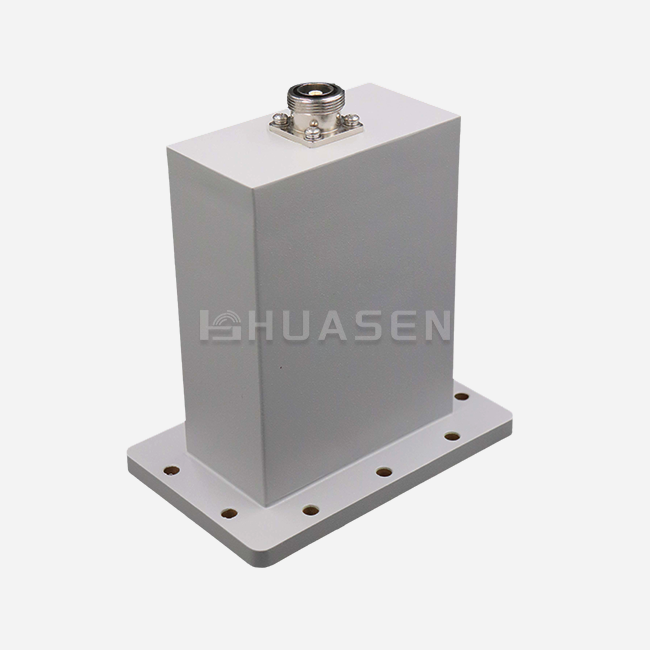
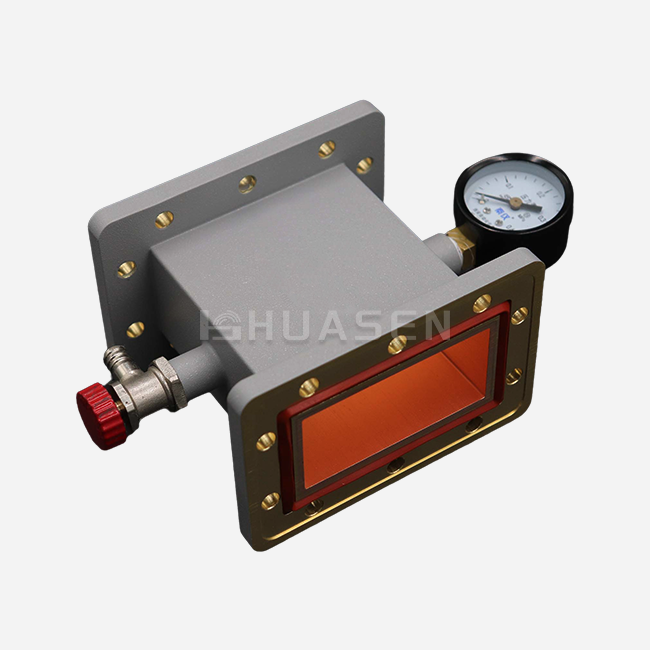
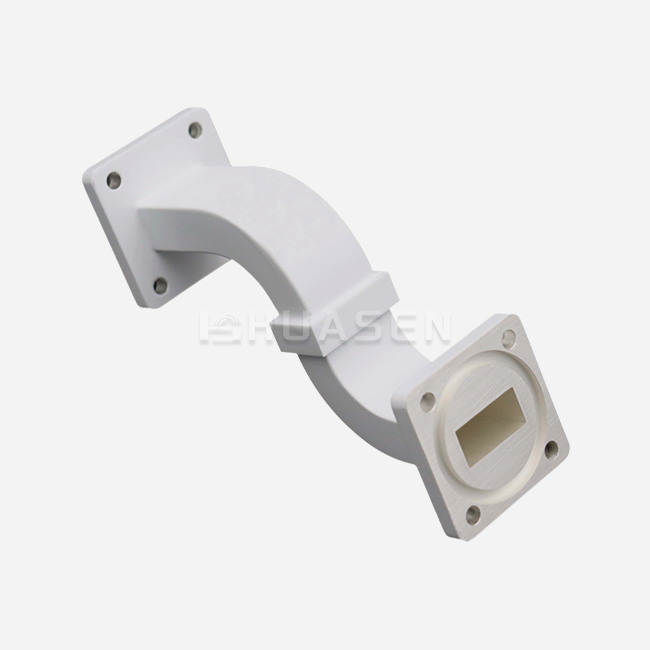
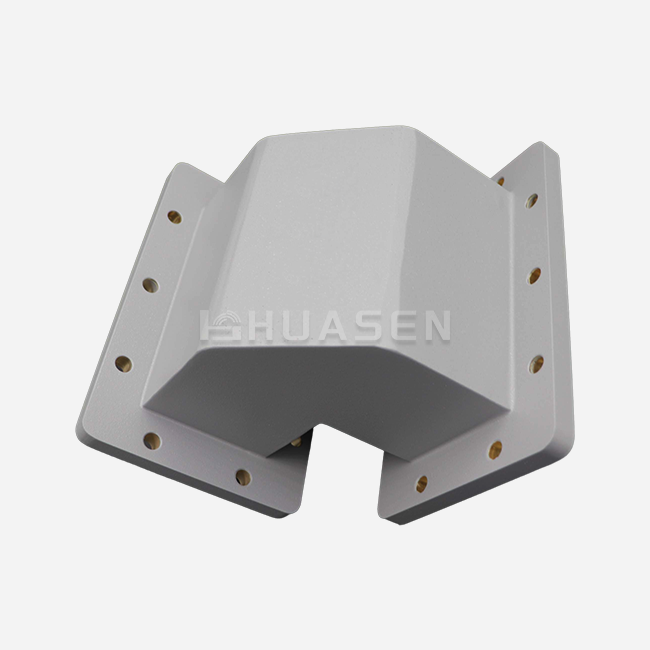
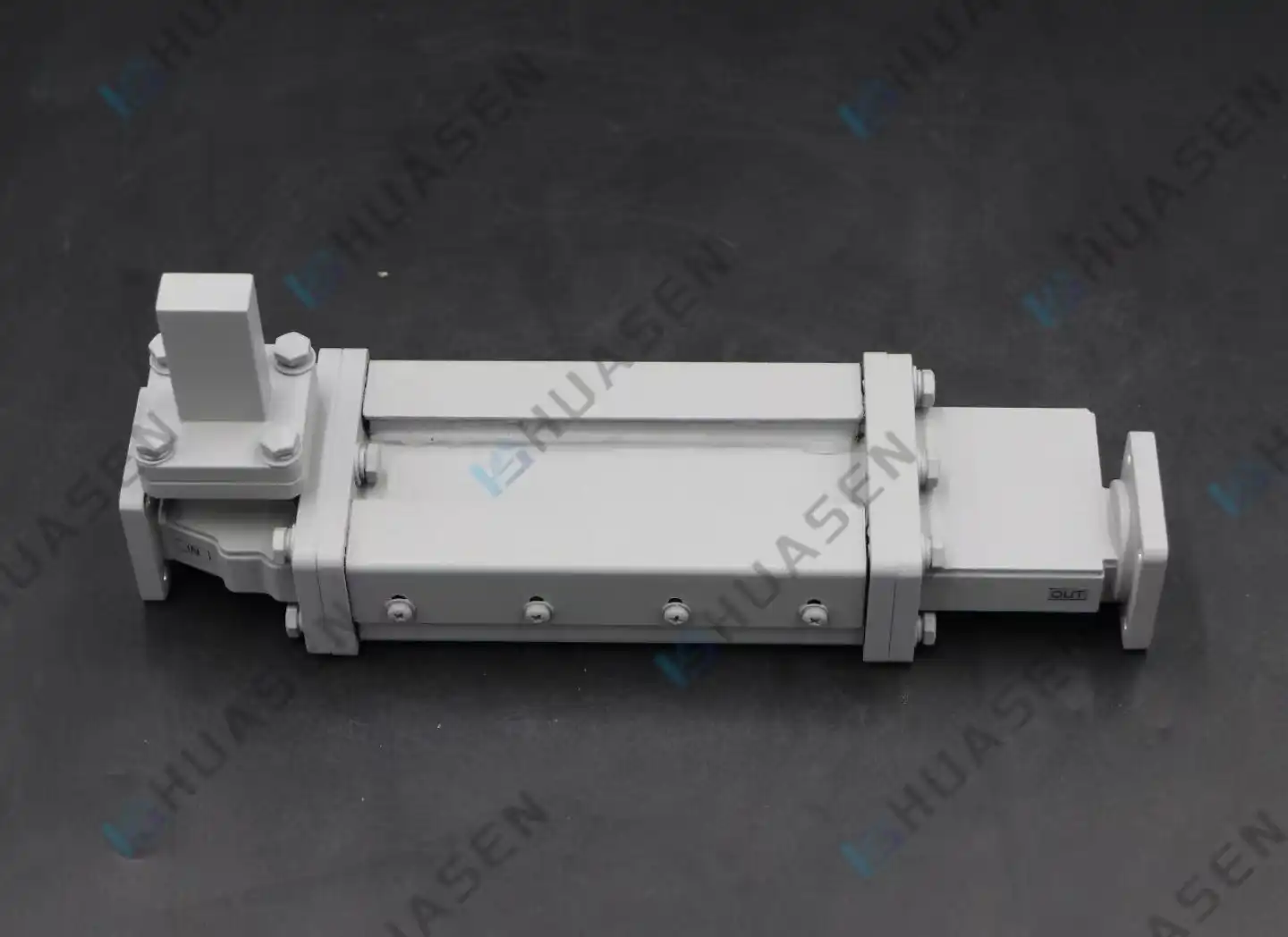
Normal junction isolators can't handle the heat and electricity stress of protecting megawatt-level microwave sources from damaging echoes. There is a special non-reciprocal device called a High Power Waveguide Differential Phase Shift Isolator that is used to protect klystrons, magnetrons, and solid-state power amplifiers in radar, particle accelerators, and industrial heating systems. This device has a dual-mode design with 3dB hybrid couplers and longitudinally magnetized ferrite bars. It spreads RF energy absorption over larger surface areas and sends reflected power to external high-capacity loads instead of back to weak sources.
Understanding High Power Waveguide Differential Phase Shift Isolators
With these devices, a major weakness in high-energy radio systems is fixed by the way they work. Traditional isolators use centralized ferrite disks that get too hot when they have to deal with normal power in the kilowatt range or peak power of 1 megawatt. The High Power Waveguide Differential Phase Shift Isolator architecture takes care of this by managing the signal paths in a smart way.
Operating Principles and Waveguide Mechanics
Input signals are split into two parallel waveguide arms by a Magic-T or short-slot hybrid coupler. This is how the device works at its core. There are magnetized ferrite slabs on the walls of each waveguide in each arm. These slabs form a 45-degree Faraday spin per section. Signals moving forward have matched phase shifts and recombine positively at the output port with little loss. But reverse signals run into differential phase relationships that send them straight to a separate termination port. This beautiful separation keeps reflected energy from getting to the source, while keeping the forward transfer rate above 99.5%.
Frequency Coverage and System Compatibility
Standard microwave bands that these isolators work with are L-band (1-2 GHz) through Ku-band (12-18 GHz). For certain uses, unique designs can go as far as Ka-band. The way the waveguide is built naturally gives broadband performance within each standard waveguide size, usually providing 10–20% fractional bandwidth. This feature is helpful for system designers who work with frequency-agile radar or multi-channel communication links because it cuts down on the number of parts they need to keep on hand while still protecting all operating bands.
Performance Metrics Critical to Procurement
When judging these gadgets, three factors have a direct effect on how reliable and efficient the system is. Insertion loss below 0.25 dB makes sure that the ferrite elements lose as little power as possible, which lowers the need for cooling and raises the efficiency of the transmission. When there is an imbalance, isolation levels higher than 20 dB make sure that less than 1% of the power that is returned goes back to the source. As long as the VSWR stays below 1.15:1 across the working band, the impedance matching is correct. This stops standing waves that could cause voltage breakdown in high-power parts. Our experience with installing particle accelerators shows that to meet all of these requirements at the same time, you need to choose the ferrite material very carefully and make sure that the mechanical assembly tolerances are very tight.
Comparing High Power Differential Phase Shift Isolators with Alternatives
Knowing the differences between security devices helps you make smart buying choices that meet the needs of your individual application.
Differential Phase Shift Versus Junction Circulators
Junction circulators put a ferrite disk in the middle of three or four waveguide ports. This makes the device small and provides enough separation for low power levels. However, the center ferrite doesn't have any good cooling lines, so it can only handle hundreds of watts of power on average. High Power Waveguide Differential Phase Shift Isolators spread ferrite material along the walls of the waveguide, which makes it possible for direct liquid cooling pathways that remove heat effectively. Because of this difference in architecture, they can handle 10 to 100 times more continuous power, which makes them essential for industrial microwave heating systems that use 50 to 100 kW of power on average. Larger size and higher starting cost are the trade-offs that must be made when stopping thermal runaway is essential.
Faraday Rotation Isolators in Comparative Context
The non-reciprocal behavior of standard Faraday isolators is achieved by a single 45-degree spin section followed by the absorptive end of the orthogonal polarization. They work well for laboratory equipment and low-power transmissions, but they have trouble with high peak power because the ferrite volume is small and the absorption is concentrated. The differential phase shift design completely gets rid of internal absorption by sending extra energy to an outside, water-cooled dummy load that can handle full source power. This external load can be fixed, upgraded, or replaced without affecting the isolator assembly. This gives radar repair teams valuable operating freedom.
Manufacturer Landscape and Selection Criteria
There are well-known companies in the 2024 market that specialize in high-power microwave parts. Their product lines include both standard catalog items and custom-engineered solutions. Leading makers set themselves apart by using pure ferrite materials, getting pressure vessel certifications for SF6 or nitrogen atmospheres, and designing cooling manifolds that are built into the main design. When looking at what different manufacturers have to offer, make sure they meet MIL-STD-202 standards for environmental resilience, look at the thermal modeling paperwork for the cooling setups they suggest, and ask for sample test data that shows the performance is stable across a range of temperatures. Our purchasing team has seen that makers who offer full thermal modeling reports and on-site testing help make system integration go more smoothly and require fewer changes in the field.
Key Design Considerations for High Power Waveguide Differential Phase Shift Isolators
To choose the right isolator configuration, you have to weigh a lot of scientific and operational factors that have an immediate effect on how well the system works in the long run.
Power Handling and Thermal Management
Peak power depends on keeping the voltage from dropping inside the waveguide structure, and average power relies on how well the ferrite elements remove heat. Devices made for particle accelerator klystrons usually deal with 5–10 MW of peak power by pressurizing to 30–50 psi with dry nitrogen or SF6 gas. This raises the dielectric breakdown level above 50 kV/cm of electric field strength. At 50 kW constant running, the average power loss is 1% to 3%, which means that 500 to 1500 watts of heat need to be removed. We suggest defining cooling systems that use low-conductivity water (LCW) with input temperatures between 20°C and 30°C and flow rates that keep ferrite surfaces below 150°C, which is well below the Curie temperature of 200°C, where magnetic properties start to break down.
Material Science and Environmental Durability
For high-power uses, high-grade yttrium iron garnet (YIG) and lithium ferrite mixtures give you the low-loss tangent and high saturation magnetization you need. These materials need to be able to handle temperature shock during frequent power cycles and keep their magnetic qualities for 15 to 20 years of use. The mechanical housing usually uses waveguides made of aluminum or brass that have been coated to avoid corrosion. These waveguides can be used in marine or outdoor setups. Standards for sealing that are at least IP65 protect the inside parts from dust and moisture that could cause arcing at high field strengths. For radar uses in space or on ships, shock and vibration testing according to MIL-STD-810 makes sure that the mechanical integrity is maintained under operating stresses.
Customization for System Integration
Customization choices for specific frequency bands, flange types, and mounting setups are helpful for OEM partners and system integrators. For narrow-band radar uses, custom ferrite lengths make the best trade-offs between insertion loss and bandwidth, and changeable magnet assemblies let the center frequency be tuned. You can choose the direction of the cooling manifolds to match the wiring that is already in place. This cuts down on installation time and the number of possible leak points. We have successfully provided customized isolators that have built-in directional couplers for tracking both forward and reflected power. This gets rid of the need for different diagnostic parts and makes the waveguide run simpler.
Procurement Guide: How to Source High Power Waveguide Differential Phase Shift Isolators
To make sure the project goes well, the buying process needs to be carefully managed by thoroughly reviewing providers, technical documents, and business terms for any High Power Waveguide Differential Phase Shift Isolator.
Supplier Qualification and Certification Verification
First, make sure that any potential sources are certified to ISO 9001 for quality control and have clear documentation for tracking ferrite materials and important subassemblies. For uses that need defense-grade parts, ask for proof that they have been tested to meet MIL-STD standards. For network analyzer measures of insertion loss, isolation, and VSWR, well-known providers offer calibration certificates that can be traced back to national standards. Ask the seller about ferrite aging features, pressure tank inspection intervals, and thermal modeling skills during the first meeting to get a sense of how technical they are. When suppliers offer plant acceptance testing with customer proof points, it shows that they are honest and trusting in their manufacturing processes.
Technical Specification Review and Datasheet Analysis
Detailed datasheets should present performance charts that show insertion loss and separation across the whole frequency range, not just at the center frequency. Examine how temperature affects performance drift during warm-up times, which is especially important for pulsed radar systems that use duty cycles that change. Specifications for cooling must include pressure drop versus flow rate curves that help choose the right pump and thermal contact measurements that make sure the new system will work with existing heat exchangers. The mounting hole patterns, waveguide flange standards (such as UG-series or IEC labels), and general envelope measurements should all be shown on the mechanical plans so that clearance can be checked. We suggest getting thermal imaging data from high-power tests to reveal hotspot locations that inform installation orientation and ventilation planning.
Pricing Dynamics and Commercial Negotiation
High-power waveguide isolators are expensive pieces of capital equipment whose prices are based on the cost of materials, precise machining, and tests to make sure they work well. Standard catalog items have unit prices that run from $8,000 to $25,000, based on the frequency band and power rating. For solutions that are specifically made to fit your needs, the price can go over $50,000. Volume price usually gives savings of 10-15% for orders over five units, and for multi-year supply deals, more discounts can be negotiated. Payment terms usually include a deposit when the order is placed, payments at set points as the fabrication is finished, and the full amount due upon delivery or successful plant acceptance testing. Lead times range from 12 weeks for catalog setups to 20–26 weeks for unique designs that need to be tested on a prototype.
Building Trust: Why Choose Huasen Microwave's High Power Waveguide Differential Phase Shift Isolators
Since its start in 1993, Huasen Microwave has focused on high-frequency component engineering, learning a lot about waveguide technology and how to make ferrite devices work better over the years. Our factory is ISO 9001 certified and has written quality control procedures that include inspecting arriving materials, checking work in progress, and making sure the end product works well by using calibrated network analyzers and high-power test ranges.
Proven Performance in Demanding Applications
Right now, our differential phase shift isolators are keeping klystron sources safe in medical linear accelerators all over North America and Europe. They have been used for millions of treatment pulses and have never failed. Customers who use microwaves for warmth in factories say that their setups are up 99.7% of the time, even when the load changes quickly and the power level is between 50 and 75 kW. Defense radar engineers have successfully used our isolators in mobile ground stations and onboard phased arrays, where they work well even in harsh conditions like salt fog and mechanical shock. These operations show that our thermal design method and material selection method work well in real-world stress situations.
Comprehensive Support Throughout Product Lifecycle
During the specification phase, we help customers match the isolator rates to the source features and load conditions with the help of application engineering. Thermal modeling services use duty cycle patterns and ambient variables to estimate how much cooling a system will need. This takes the guessing out of designing the system. Sample units can be evaluated and tested in customer locations, so performance can be confirmed before a large order is placed. After delivery, our expert team provides commissioning support, which includes checking the flow of coolant, keeping records of pressure tests, and taking baseline measures of performance to set standards for future maintenance. We're confident in the quality of our products, so we offer extended warranties that last up to 36 months.
Customization Capabilities Meeting Unique Requirements
Our engineering team often changes standard designs to fit non-standard frequency bands, odd flange combinations, or built-in tracking features. Isolators with two cooling circuits for backup, pressurized housings approved for placements in hazardous areas, and small designs suitable for retrofit uses with limited room are some of the special projects that have been completed recently. Because production is flexible, customization is cost-effective even for small orders, and usually only takes two extra weeks on top of standard wait times. This ability to respond quickly is especially helpful for OEM partners making next-generation systems where standard parts can't meet new requirements.
Conclusion
High Power Waveguide Differential Phase Shift Isolators are very important for protecting microwave sources that work at high power levels, where a single component failing could mean the whole system isn't working right. Because of their spread thermal design and external load structure, they can do things that junction circulators and normal Faraday isolators can't. This is why they are used in radar, particle accelerators, and industrial heating. To make a good purchase, you need to pay close attention to power ratings with enough room for error, the compatibility of the thermal management infrastructure, and the supplier's approval through certification proof. As microwave systems keep working to get higher power densities for 5G backhaul, improved radar, and directed energy uses, these isolators will stay important parts that keep things running smoothly and keep expensive sources from getting damaged.
FAQ
1. What distinguishes a differential phase shift isolator from a junction circulator in high-power systems?
The main change is in how the thermal management system is set up. When junction circulators put a ferrite disk at the center of the junction, they create a heat source that is hard to cool down. This means that it can only handle a few hundred watts of power on average, even though it can handle more power at peak. Differential phase shift isolators spread ferrite material along the walls of the waveguide so that it is directly in touch with cooling pathways. This makes it possible to remove heat efficiently. This makes it possible to run continuously at 10-100 times the average power, which is very important for heating in factories and high-duty-cycle radar uses where thermal runaway would damage junction devices.
2. How do cooling requirements scale with operating power?
The amount of cooling needed is based on the percentage of insertion loss and the total forward power. If an isolator that handles 50 kW of constant power has 0.3 dB of insertion loss, which is about 7% power loss, it needs to lose 3.5 kW of heat. A 10°C temperature rise in low-conductivity water needs a flow rate of about 8 liters per minute. Using the right kind of coolant stops electrolysis and rust, and keeping the inlet temperature between 20°C and 30°C keeps the Curie point of the ferrite surfaces low enough. Flow tracking and temperature interlocks that stop activity without enough cooling should be built into systems.
3. What causes ferrite cracking, and how can it be prevented?
Thermal shock is the main way that things break. It happens when ferrite elements are exposed to sudden changes in temperature that are too much for them to handle. This happens when the power goes out quickly and comes back on again, without any time to warm up, or when the cooling system fails, causing fast temperature drops. To prevent this, you should use controlled power ramp patterns when the system first starts up, keep the coolant moving even when the system is not in use, and keep it away from temperature changes of more than ±50°C per minute. When the pressure is right, arcing events that can cause cracks to spread don't damage the surface.
Partner with Huasen Microwave for Reliable High Power Waveguide Differential Phase Shift Isolator Solutions
Every High Power Waveguide Differential Phase Shift Isolator that Huasen Microwave sends out is made with over 30 years of specialized production experience. Our research team works with system developers and original equipment makers (OEMs) to come up with the best setups that meet all of the needs for power levels, frequency bands, and thermal interfaces. We offer full technical support from the initial specification stage through commissioning and lifetime maintenance, whether you need catalog components for quick rollout or custom-engineered solutions for special uses. Our ISO-certified production quality and quick after-sales service are what our customers in the telecommunications, defense, and industry sectors around the world depend on. As a reliable high-power waveguide differential phase shift isolator provider, we offer low bulk discounts, fast shipping choices for urgent projects, and full warranty coverage to ensure long-term operational faith. You can email our expert sales team at sales@huasenmicrowave.com to talk about your specific needs, get full datasheets, or set up sample evaluation units that show how well they protect your important microwave sources.
References
1. Baden Fuller, A.J. (1987). Ferrites at Microwave Frequencies. London: Peter Peregrinus Ltd.
2. Helszajn, J. (2000). The Stripline Circulators: Theory and Practice. Hoboken: Wiley-IEEE Press.
3. Linkhart, D.K. (2008). Microwave Circulators and Isolators. Norwood: Artech House.
4. Pozar, D.M. (2011). Microwave Engineering (4th Edition). Hoboken: John Wiley & Sons.
5. Ragan, G.L. (1965). Microwave Transmission Circuits (MIT Radiation Laboratory Series Volume 9). New York: McGraw-Hill.
6. Schloemann, E.F. (1988). "Advances in Ferrite Microwave Materials and Devices." Journal of Magnetism and Magnetic Materials, 73(1), 46-54.
Send Inquiry