High Gain Four Arm Helical Antenna Applications in Satellite and UAV Communication






2026-01-12 21:09:50
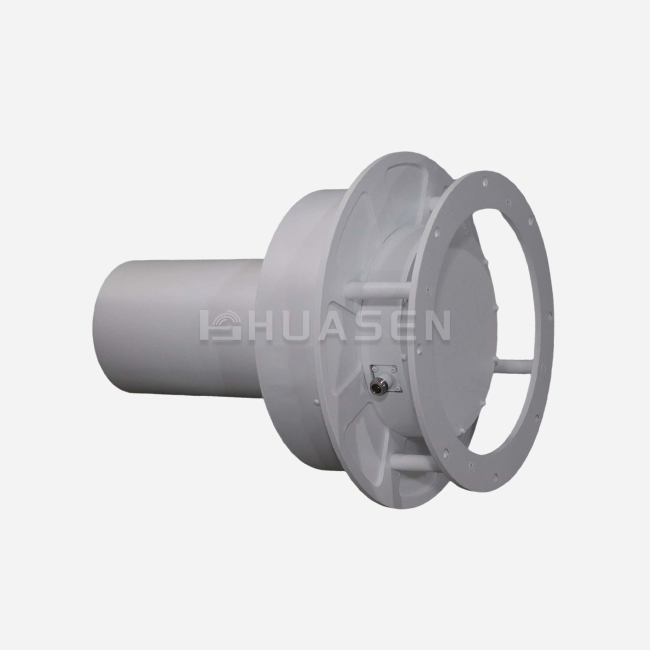
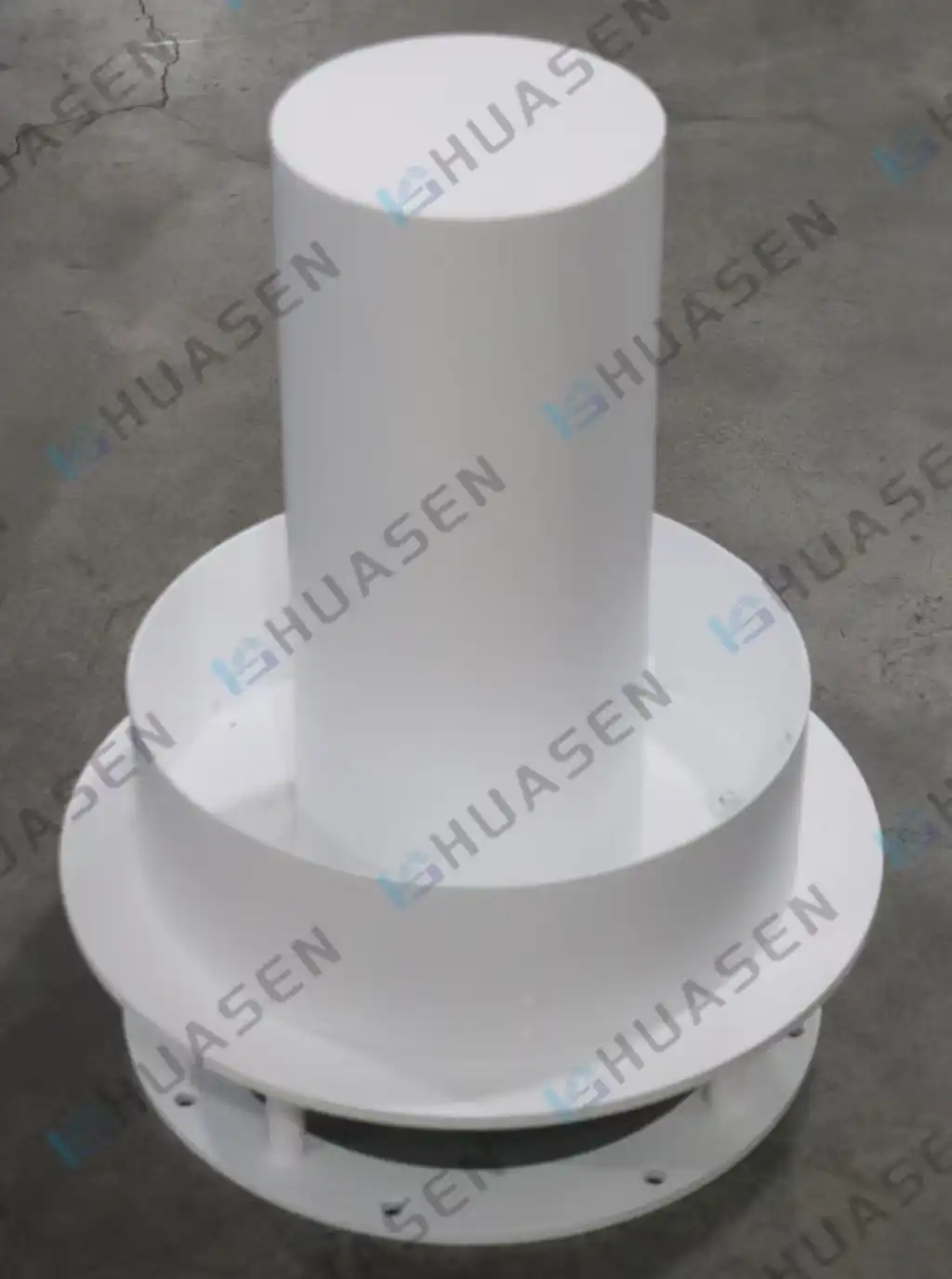
There is a new device called the Four Arm Helical Antenna that is changing the way satellite and UAV transmission systems work. In these tough situations, this new antenna design is perfect because it has great performance qualities. The four arm helical antenna can achieve high gain, circular polarization, and wide bandwidth. It does this by providing reliable and efficient communication links for satellites and robotic aerial vehicles that are working in difficult settings. Its small size and light weight also make it a good choice for platforms with limited room. The four arm helical antenna has better axial ratio and voltage standing wave ratio (VSWR) performance over a wider frequency range, thanks to its use of modern materials and precise production methods. These features make it possible for mission-critical satellite and UAV communication systems to receive signals more clearly, deal with clutter better, and send and receive more data. The military and defense industries need antennas that are strong and can be used in a variety of situations. The four arm helical antenna is seen as an important part of next-generation communication networks.

Key Features and Advantages of Four Arm Helical Antennas
The Four Arm Helical Antenna's unique shape gives it a number of perks that make it stand out from other types of antennas. One of the best things about it is that it can get high gain over a wide frequency range. Engineers can make antennas with gains of 10-15 dBi or more by carefully tuning the shape of the spiral arms and the feed network. This high gain makes it possible for communication links to be farther apart and for satellite and UAV uses to get better signal quality.
The antenna's ability to use circular polarization is another important trait. Circularly polarized radiation is naturally produced by the helical shape. This helps reduce signal fade and multipath effects. If users change the way of the spiral windings, they can choose between left-hand and right-hand circular polarization. This adaptability is very helpful for satellite communications, which need circular polarization a lot of the time.
It has great axial ratio performance—usually less than 3 dB across the working band—thanks to its four-arm design. A low axial ratio makes sure that the circular polarization is always pure, which is very important for keeping the signal's integrity in transmission settings that are always changing. Aside from that, the antenna has a large impedance spread, usually 20% or more of the center frequency. This wide bandwidth lets a single receiver cover many frequency bands, which makes the system simpler.
Compact and Lightweight Construction
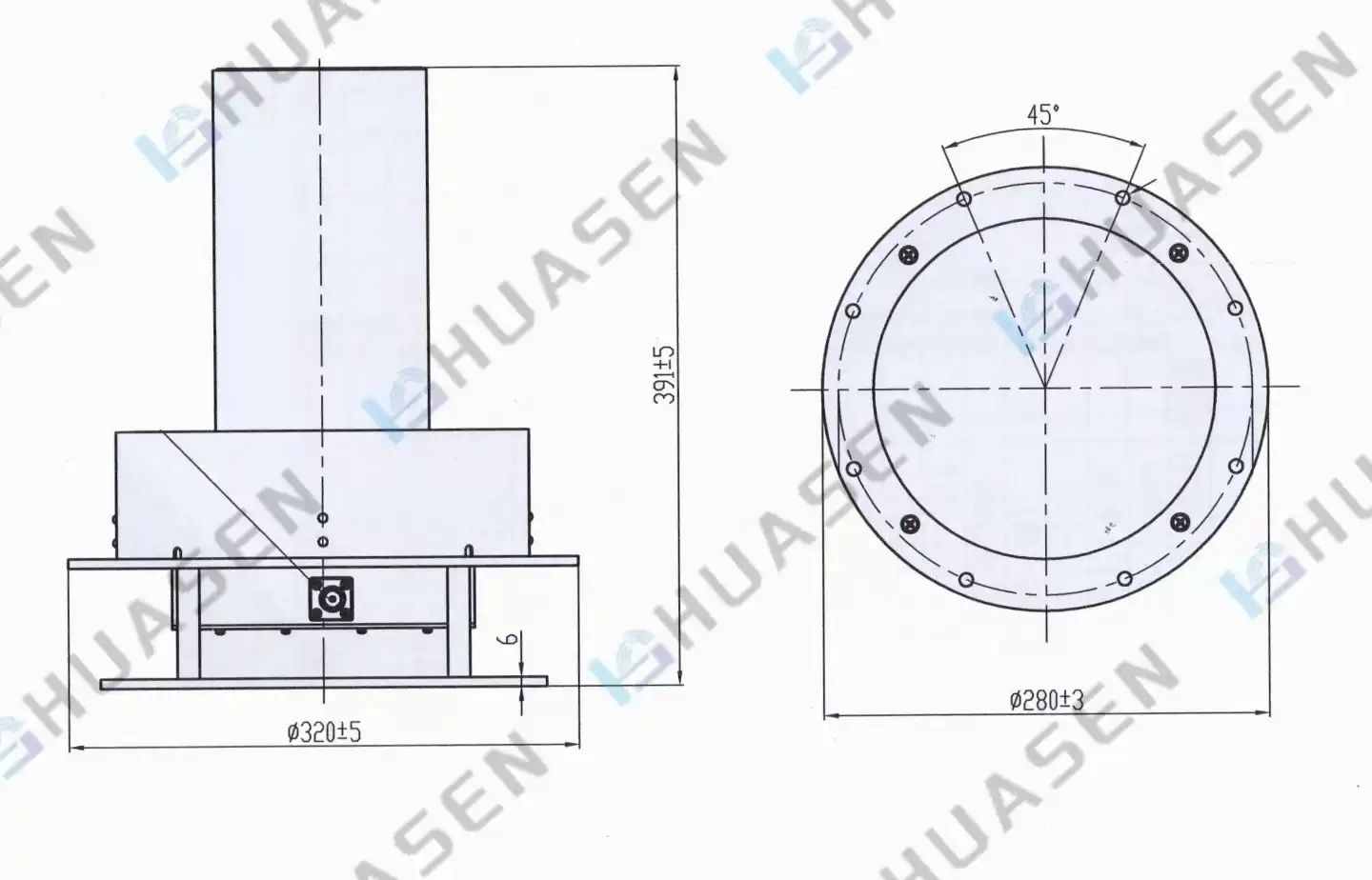
While still having high performance features, the four arm helical antenna stays in a relatively small package. This works really well at lower frequencies, since this antenna isn't as big as some other high-gain versions. It's a good choice for systems that need to be light, like small satellites and unmanned aerial vehicles (UAVs). New materials, like carbon fiber alloys, can make the antenna even lighter while keeping its structure strong.
Applications in Satellite Communication Systems
To keep links between ground stations, spaceships, and other assets in orbit strong, satellite communication systems depend on antenna technology that works well and is reliable. Due to its great performance in the harsh space environment, the Four Arm Helical Antenna has become widely used in this area.
Satellite transmission, tracking, and command (TT&C) systems are one of the main places where it is used. To keep talking to satellites throughout their paths, these important links need antennas with a lot of gain, circular polarization, and a lot of bandwidth. The four arm helical antenna can keep its low axial ratio over a wide frequency range, which makes it ideal for TT&C operations on satellites in both low Earth orbit (LEO) and geostationary orbit (GEO).
Platforms for Earth tracking and remote sensing that are built on satellites are another important use case. The four arm helical antenna can give these devices great gain and pattern features in the UHF, L-band, and S-band frequency bands, where they are usually used. The circular polarization of the antenna is especially helpful for reducing the effects of the environment and making sure that data reception is uniform from all scanning directions.
Enhancing Satellite Internet and Broadband Services
Four arm helical antennas are becoming more and more important in these networks as the demand for global satellite internet and broadband services continues to rise. Their high gain and wide bandwidth make it possible for users in rural or underserved areas to get faster data speeds and better service. The antennas can be used in ground station groups or as feeds for bigger reflector antennas, which gives designers and operators more options for how to set up and run the system.
Revolutionizing UAV Communication and Control
Unmanned Aerial Vehicles (UAVs) are hard to build antennas for because they have to be small, move around, and communicate reliably over long distances. Many UAV uses have found the Four Arm Helical Antenna to be very useful because it has a great mix of function and form factor.
For command and control lines, helix antennas are one of the main things that UAVs use them for. For long-distance communication to stay strong, these links need both high gain and circular polarization to prevent signal loss caused by airplane movements. The four-arm helical form has both of these features in a small package that is easy to attach to the UAV's body.
Many unmanned aerial vehicles (UAVs) have advanced sensor packages that need fast data lines so they can send video, images, and other sensor data in real time. Four arm helical antennas are well-suited for these difficult uses due to their wide bandwidth capabilities. A single antenna can often handle both control and payload data links because it supports multiple frequency bands. This makes the overall system design simpler.
Enhancing UAV Navigation and Positioning
Four arm helical antennas are useful for navigation and positioning devices on UAVs in addition to their transmission functions. Because they have circular polarization, they can easily pick up Global Navigation Satellite System (GNSS) signals like Galileo, GPS, and GLONASS. The high gain of these antennas can make tracking more accurate and reliable, especially in tough settings where signals might be blocked or interfered with.
As UAV technology keeps getting better, there will likely be a greater need for small, high-performance antennas like the four-arm spiral version. These flexible antennas let a lot of different robotic aircraft systems fly for longer periods of time, over longer distances, and with more advanced task capabilities.
Conclusion
We have found that the Four Arm Helical Antenna works well and can be used for a lot of different satellite and UAV transmission needs. Because it has a high gain, circular polarization, and a wide bandwidth, it is the best choice for systems that need stable and effective communication lines. As the defense and aircraft industries continue to push the limits of technology, new antenna designs like the four-arm helical will become essential for making next-generation transmission possible.
Huasen Microwave Technology Co., Ltd. has a wide selection of high-quality parts, such as modern helix antenna designs, for businesses that need microwave and millimeter-wave solutions that are on the cutting edge. Huasen has been working with RF and microwave technology for many years and is dedicated to making reliable and new goods that meet the changing needs of the aerospace, radar, and telecoms industries. Our team of experienced engineers is ready to help you with your project, whether you need standard parts or solutions that are made just for you.
FAQ
1. What is the typical frequency range for Four Arm Helical Antennas?
Four Arm Helical Antennas typically operate in the range of 200 MHz to 5 GHz, making them suitable for a wide variety of satellite and UAV communication applications.
2. How does the gain of a Four Arm Helical Antenna compare to other antenna types?
Four Arm Helical Antennas can achieve gains of 3-12 dBi or higher, which is competitive with many other high-performance antenna designs while maintaining a compact form factor.
3. Can Four Arm Helical Antennas be customized for specific applications?
Yes, these antennas can be customized in terms of frequency range, polarization, gain, and mechanical design to meet specific application requirements.
4. What are the advantages of circular polarization in satellite and UAV communications?
Circular polarization helps reduce signal fading due to multipath effects and atmospheric conditions, resulting in more reliable communication links for satellites and UAVs.
Elevate Your RF Performance with Four Arm Helical Antennas | Huasen Microwave
Ready to enhance your satellite or UAV communication systems with high-performance Four Arm Helical Antennas? Huasen Microwave offers cutting-edge solutions tailored to your specific needs. Our team of expert engineers is standing by to help you select the perfect antenna for your application or develop a custom design to meet your unique requirements. Don't settle for subpar communication links – upgrade to Huasen's advanced helical antenna technology today. Contact us at sales@huasenmicrowave.com to discuss your project and discover how our Four Arm Helical Antennas can revolutionize your RF performance.
References
1. Johnson, R.C. and Jasik, H. (2021) "Antenna Engineering Handbook", McGraw-Hill Education.
2. Balanis, C.A. (2019) "Antenna Theory: Analysis and Design", Wiley.
3. Kraus, J.D. and Marhefka, R.J. (2020) "Antennas for All Applications", McGraw-Hill Education.
4. Stutzman, W.L. and Thiele, G.A. (2018) "Antenna Theory and Design", Wiley.
5. Volakis, J.L. (2017) "Antenna Engineering Handbook", McGraw-Hill Education.
6. Orfanidis, S.J. (2016) "Electromagnetic Waves and Antennas", Rutgers University.
Send Inquiry