Double Ridged Waveguide Bend in Test Systems






2026-04-20 22:25:22
When setting up a precise test system for measuring broadband RF or calibrating radar, it's important that every part of the signal path works properly. The double-ridged waveguide bend is an important passive part that lets engineers send high-frequency signals through complicated physical layouts without losing bandwidth or adding too much reflection. Standard rectangular waveguide bends can only work with a small range of frequencies. These special bends have two ridges inside them that load the waveguide structure capacitively. This makes the usable bandwidth much wider while still maintaining excellent electrical performance. Getting multi-octave frequency coverage in small, geometrically limited enclosures where signal routing requires precise angular transitions has been a problem for a long time. This new design solves that problem.
Understanding Double-Ridged Waveguide Bends
Adding metallic ridges along the center of the broad walls lowers the cutoff frequency by a large amount. This discovery changed the fundamental structure of ridged waveguide technology and revolutionized broadband microwave transmission. Because of this capacitive loading effect, a single waveguide size can work across frequency ratios of more than 2.4:1 or even 3.6:1. This is different from standard rectangular guides, which can only work in narrow bands. When engineers make bends for these structures, they have to deal with special electromagnetic problems. This is because any change in the physical direction can throw off the carefully balanced impedance profile that allows for wideband operation.
Core Electromagnetic Principles
The two-ridge shape makes the electric field not spread out evenly, with most of the strength being in the space between the ridges. Because of this concentration, lower-frequency signals can travel through a waveguide where they would normally be blocked. When a bend is added, it is important to keep the characteristic impedance the same along the curve. Modern designs use swept radius transitions or precision-mitered corners to change the direction of wave propagation slowly while keeping the mode purity. Testing labs use this property to make measurement systems that can go from 6 GHz to 40 GHz without having to be set up again by hand.
Key Performance Differentiators
There are three measurable factors that directly affect the accuracy of the test system that tell high-performance bends apart from standard ones. The Voltage Standing Wave Ratio (VSWR) measures how well the impedance matches. High-quality units have VSWR values below 1.25 across their entire operating band, which keeps signal reflections from messing up measurement data. Insertion loss, which is usually less than 0.15 dB per bend, makes sure that test signals get to antennas or devices being tested with little loss. When calibrating high-power amplifiers or radar parts, where peak power levels can reach kilowatts in pulsed operation, the ability to handle power is important.
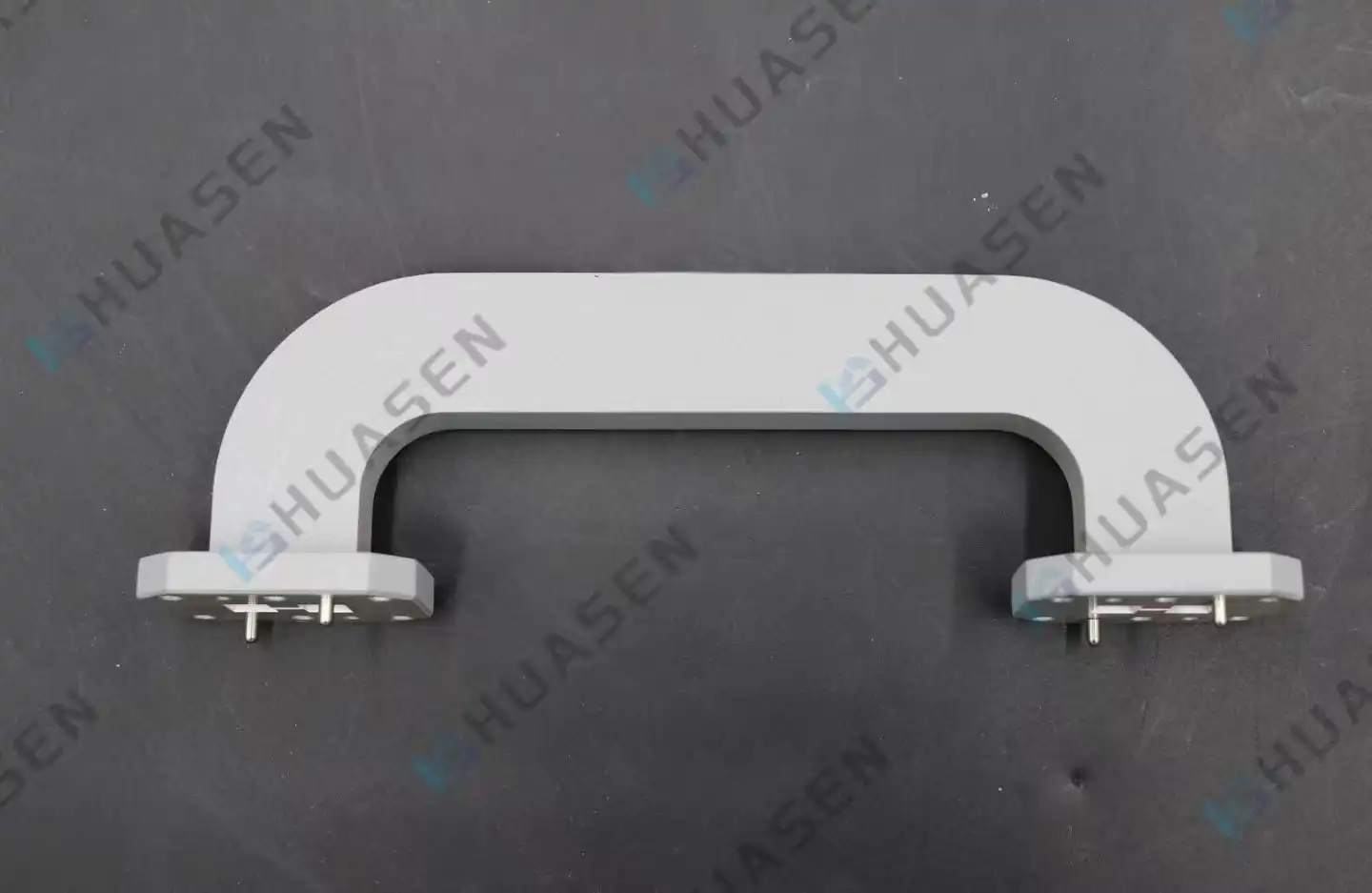
Design Principles and Technical Specifications for Optimal Performance
To make double-ridged waveguide bend components, you need to use very precise machining tolerances that are too tight for many mechanical tasks. Ridge gap sizes need to be kept within ±0.01 mm because even small changes can change the characteristic impedance, which can cause resonant reflection spikes at certain frequencies. To stop mode conversion, which happens when energy couples into unwanted higher-order modes that mess up the signal, the bend radius must be calculated based on the wavelength at the highest operating frequency.
Material Selection and Surface Treatment
When making our parts at Huasen Microwave, we use aerospace-grade aluminum alloys with oxidized coatings or high-conductivity copper with silver plating, depending on what the application needs. For test equipment that is used in the air and in aerospace, where every gram counts when it comes to fuel efficiency or payload capacity, aluminum construction is a big plus. The oxidation coating keeps the RF conductivity high while also protecting against corrosion in harsh environments. Copper varieties that have been plated with silver offer the best conductivity for uses where skin effect losses need to be kept to a minimum at millimeter-wave frequencies. These choices of materials directly meet the needs of outdoor test ranges and maritime communication systems that have to be able to adapt to salt spray, changing temperatures, and high and low humidity.
Mechanical and Electrical Specifications
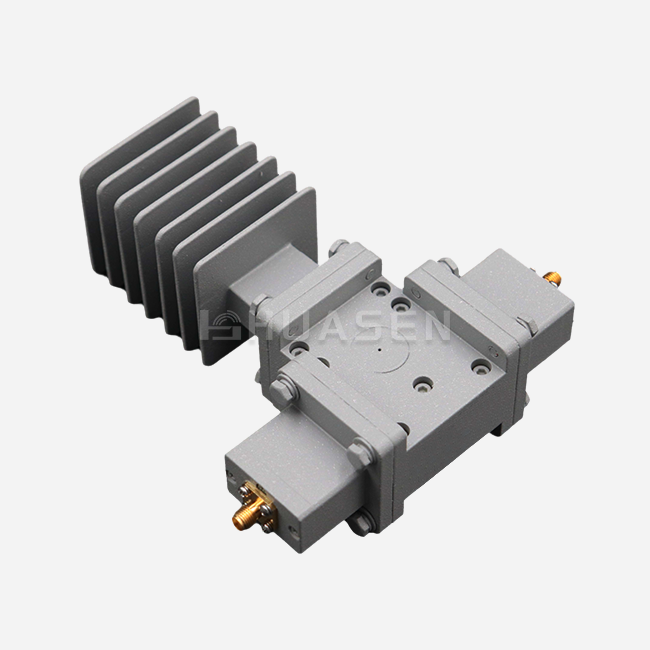
Our standard product line includes frequencies from 0.84 GHz to 40 GHz, so it can be used for everything from testing cellular bands to calibrating millimeter-wave radar. VSWR requirements must be at least 1.25:1 for most of the band. They only get tighter to 1.3:1 at the very high-frequency edge, where physical limits apply. Standard FP (female) and FM (male) interfaces are used for flange connections, but they can be fully customized for use with special test fixtures or to connect to older systems. There are two types of bend directions: E-plane (DRWEB designation, where the bend is parallel to the electric field) and H-plane (DRWHB series, where the bend is perpendicular to the magnetic field). A double-ridged waveguide bend is included in this product line. This lets system designers choose the best physical routing based on the chassis geometry and where the equipment is placed.
Thermal and Mechanical Stability
The dependability of a test system depends on how stable its parts are across a range of temperatures and vibration levels. Precision test labs may have temperature-controlled rooms, but systems that are used in the field can be exposed to temperature changes of -55°C to +85°C. As part of our manufacturing process, we use stress-relieving steps and check the dimensions at different temperatures to make sure that the VSWR and insertion loss specs stay accurate for the whole life of the product. By paying attention to thermal stability, measurement drift is stopped, which can get rid of calibration data and require expensive testing again.
Comparison Guide: Choosing the Right Waveguide Bend for Your Test System
When setting up test systems, procurement managers often have to choose between different waveguide technologies. Standard rectangular waveguide bends work very well in the frequency range they were made for, but they need to have all of their hardware changed when measurements need to be done in a different frequency range. Coaxial cable assemblies are flexible and easy to install, but as the frequency goes above 18 GHz, they lose more signal and can't handle as much power. Double Ridged Waveguide Bend technology fills in this gap by providing coaxial-like bandwidth in a rigid package that can handle a lot of power.
Performance Trade-offs Across Technologies
Each interconnect technology has its own benefits that work best with certain types of test systems:
- Smooth-walled rectangular waveguide: A rectangular waveguide with smooth walls has the lowest insertion loss and can handle the most power within its design band. This makes it perfect for testing single-frequency radars or communication systems that use fixed frequencies.
- Flexible coaxial cables: Flexible coaxial cables make installation easier in equipment racks that are already full, and they can be rearranged easily, which is helpful for research labs that change test setups all the time.
- Double Ridged Waveguide Bend: These bends have a wider bandwidth than rectangular guides but better power handling and less loss than coaxial solutions above 10 GHz.
Application Suitability Analysis
The calibration of radar systems is a difficult task where ridged waveguide technology clearly shines. Modern phased-array radar systems work over multiple octave bandwidths to help with frequency agility and make radar cross-section visibility less clear. To make sure these features work, test systems need to send out calibrated reference signals that cover the whole operational band without using any switching hardware. Our bends make this frequency coverage possible while also being able to handle the high peak power of pulsed radar waveforms. In order to do an electromagnetic compatibility test, which is similar, broadband fields must be swept across the device under test (DUT) units while the exact field strength must be maintained. A ridged waveguide's low insertion loss keeps amplifier power efficiency, which lowers operating costs in test facilities with a lot of users.
Sourcing Considerations
Besides technical specs, decisions about what to buy must also take into account how reliable the supply chain is and how well the vendor can help with technical issues. Established manufacturers have decades of RF engineering experience that is very helpful when figuring out problems with system integration or making custom designs work better. Delivery times vary a lot from one supplier to the next. Items from a standard catalog may ship within days, but custom configurations may need weeks for design validation and production. Building partnerships with suppliers who provide thorough technical documentation and quick engineering support lowers project risk and speeds up the time it takes to start using new test capabilities.
Procurement Insights: Buying and Sourcing Double Ridged Waveguide Bends
Knowing what affects the price of a component is helpful for procurement teams to make accurate budgets and negotiate well. The main thing that affects costs is how complicated the customization is, since standard catalog bends use tried-and-true manufacturing methods and tools that are worn out over many production runs. When you need custom frequency bands, non-standard flange interfaces, or special materials, you need to do engineering analysis, test the prototype, and maybe even make new manufacturing fixtures. The number of orders has a big effect on the price per unit, especially for custom designs where setup costs are high for small orders but not so much for large ones using the Double Ridged Bend.
Supplier Evaluation Criteria
When deciding which vendors to work with on strategic partnerships, evaluating their technical skills is more than just comparing specification sheets. Manufacturers who have their own RF measurement equipment can give performance data that has been checked in the factory and can be traced back to national standards. This makes sure that parts meet published specifications when they are actually used. When buying parts for calibration standards or primary reference systems that need to figure out how uncertain measurements are, this factory testing feature becomes very important. Supply chain transparency is important because knowing where the raw materials come from and where the products are made helps assess geopolitical risks and keeps things running when there are supply disruptions.
Documentation and Sample Programs
Full datasheets, which include not only nominal specifications but also tolerance ranges, test conditions, and environmental ratings, help people make sure they are making good purchasing decisions. At Huasen Microwave, we keep a lot of technical information. This includes mechanical drawings with important measurements, electrical performance curves that show how well the microwaves work at different temperatures and frequencies, and material certifications that show they meet RoHS, REACH, and military standards when they apply. Our sample program lets engineering teams test how well parts work in real-world system setups before committing to large-scale production orders. This lowers the risk of integration issues and speeds up the qualification process.
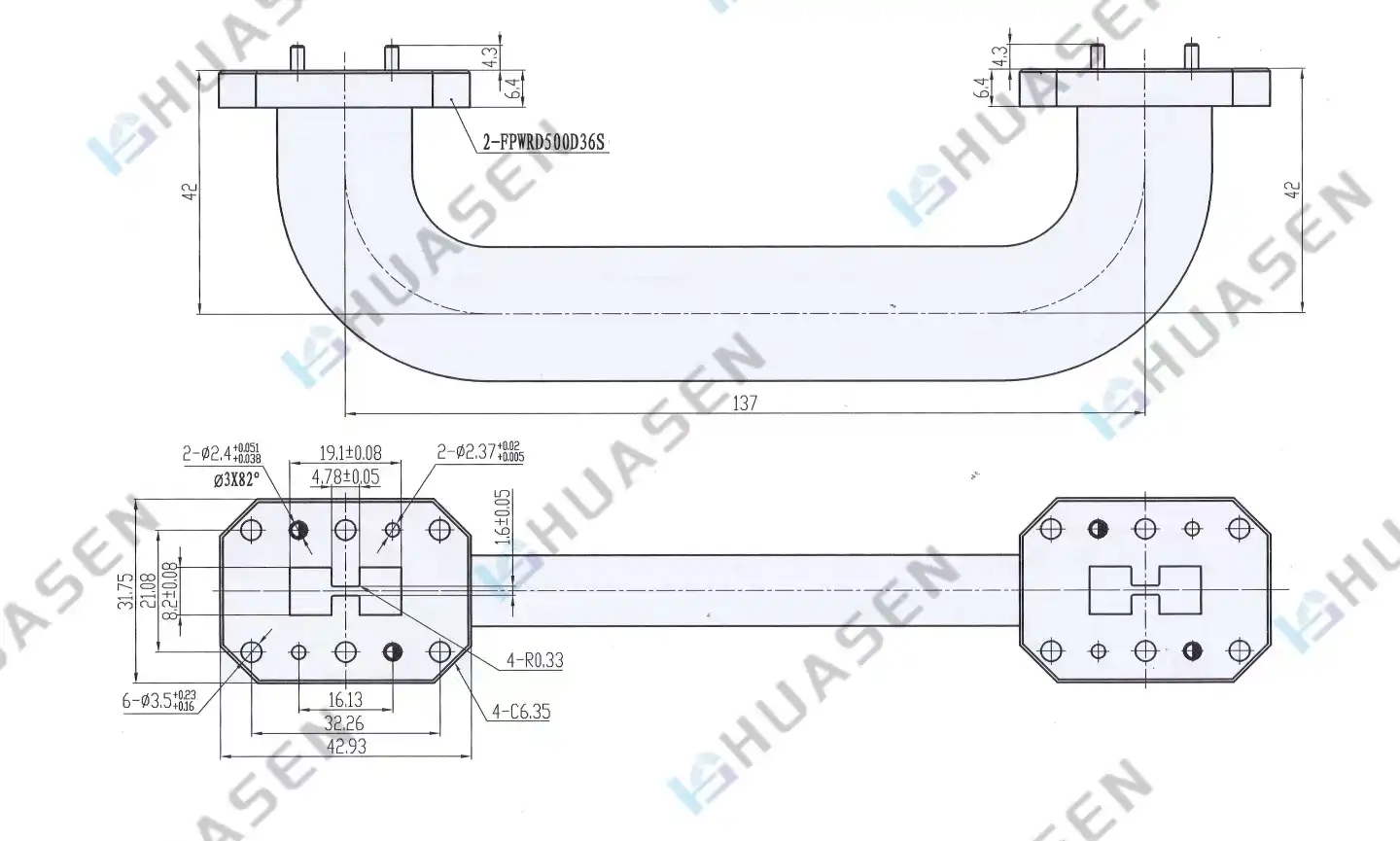
Application Spotlight: Leveraging Double Ridged Waveguide Bends in Test Systems
Real-life examples of deployment show how ridged waveguide technology solves engineering problems in a wide range of test applications. A big aerospace company recently improved their antenna pattern measurement range by switching from coaxial feed networks to rigid waveguides for the 6–18 GHz range. Compared to the old coaxial system, this change cut insertion loss by 2.3 dB. This directly increased the measurement dynamic range and made it possible to find lower sidelobe levels, which are necessary for validating the stealth platform. The double-ridged waveguide bend design also got rid of the cable flexure issues that were common in the coaxial system. When the positioner moved back and forth a lot, the cables slowly stopped working properly and had to be replaced more often.
EMC Testing Laboratory Implementation
When they do radiated immunity tests across broad frequency ranges, electromagnetic compatibility test facilities have to deal with some unique problems. High-power amplifiers that drive test antennas need to keep the field strength calibrated from 1 GHz to 40 GHz. This means they need low-loss transmission paths that keep the amplifiers working efficiently. Our H-plane bends were used by a European auto testing lab in their anechoic chamber feed network. They sent signals from amplifier racks to dual-polarized horn antennas that were placed around the test volume. The installation had to work with the tight physical limits that the chamber geometry put on it while keeping the VSWR below 1.25 across the whole frequency range. This performance let them meet the test standards for ISO 11452-2 while also cutting the power needs of the amplifiers by 30% compared to their old coaxial-based system.
Emerging Technology Trends
New developments in additive manufacturing and precise machining are making waveguide technology more useful, including the Double Ridged Bend. Computational electromagnetic optimization now makes it possible to make designs that weren't possible with older methods. These designs have complex internal geometries that make bandwidth even better and size smaller. As material science advances, it brings about new coating technologies that lower surface resistance and make power handling better. This is especially important as test systems move into millimeter-wave frequencies, which make skin depth very shallow. Because of these improvements, ridged waveguides are now seen as an important technology for next-generation test systems that will help with the development of 5G/6G, quantum communication research, and new ideas for radar.
Conclusion
The double-ridged waveguide bend is an example of an old technology that is still useful in modern test system designs. Their special mix of wide bandwidth, low insertion loss, and high power handling solves some of the most important problems in RF measurement and calibration. These parts get rid of the need for system designers to choose between narrowband accuracy and broadband flexibility. The technical details we've talked about so far, such as VSWR performance, material choice, and flange compatibility, make it possible to confidently specify and buy. As test needs keep changing to include higher frequencies and wider bandwidths, ridged waveguide technology is still an important part of the infrastructure that makes measurements accurate and systems reliable.
FAQ
1. What frequency coverage can ridged waveguide bends provide?
Standard designs cover overlapping bands from 0.84 GHz to 40 GHz, while some models cover ranges like 1-18 GHz or 18-40 GHz, depending on the size of the waveguide. Custom designs can make it possible to cover millimeter-wave areas above 40 GHz or improve performance for narrower bands within the standard range. The main benefit is the wide frequency range that a single double-ridged waveguide bend covers—more than two to one, or even three to one.
2. How do I assess compatibility with my existing test system?
The first step in figuring out if two things are compatible is to see if the frequency ranges of the bend specifications and your test requirements match up. Next is matching the flange interface. If needed, our FP/FM flange types can connect to standard UG-style connectors with adapter sections. In installations with limited space, physical dimensions are important, so you need to make sure that the bend radius and overall envelope fit inside your equipment chassis. Your measurement uncertainty budget needs to match the VSWR specifications. This will make sure that bent reflections don't affect the accuracy of your tests.
3. Can specifications be customized without extended lead times?
Standard parameter changes, like choosing a different flange style or material from our standard options, usually ship within two to three weeks. Customizations that involve new frequency bands or different bend angles take longer to make because they need engineering analysis and prototype validation, which takes another 6 to 8 weeks. We stay in close contact with procurement teams throughout custom projects by reviewing the designs and giving them regular updates. This keeps them informed and reduces the chance of schedule changes.
Partner with Huasen Microwave for Your Double-Ridged Waveguide Bend Requirements
The performance of a test system depends on the quality of its parts. With 30 years of experience in RF engineering, we make sure that every Double Ridged Waveguide Bend that leaves our facility meets the strict requirements your applications need. As a dedicated manufacturer, we oversee the whole production process, from choosing the materials to testing them one last time. This gives procurement managers the confidence that there will be consistency and traceability. Our product line includes everything from sub-GHz to millimeter-wave frequencies, and we have E-plane and H-plane configurations to meet any physical routing need. Our engineering team has the technical knowledge to help you make decisions about specifications and make sure that the system works well together, whether you need catalog parts that can be shipped right away or custom designs that work best for certain test applications. Email our experts at sales@huasenmicrowave.com to talk about your specific needs, get detailed datasheets, or set up an evaluation sample. We provide a trustworthy, top-notch supplier relationship that changes the capabilities of test systems and boosts confidence in measurements.
References
1. Marcuvitz, N. (1986). "Waveguide Handbook: Waveguide Components and Microwave Circuit Design," Institution of Engineering and Technology, London.
2. Chen, Y. & Wang, S. (2015). "Design and Optimization of Broadband Double-Ridged Waveguide Transitions," IEEE Transactions on Microwave Theory and Techniques, Vol. 63, pp. 2789-2798.
3. Saad, T. S. (1971). "Handbook of Microwave Integrated Circuits: Ridge Waveguide and Passive Microwave Components," Artech House, Boston.
4. Kumar, A. & Gupta, R. K. (2019). "Analysis of E-Plane and H-Plane Bends in Ridge Waveguides for Broadband Applications," International Journal of RF and Microwave Computer-Aided Engineering, Vol. 29, Issue 8.
5. Military Standard MIL-DTL-85/3C (2008). "Waveguide, Rigid, Rectangular, Aluminum, General Specification For," U.S. Department of Defense, Washington D.C.
6. Ramo, S., Whinnery, J. R., & Van Duzer, T. (1994). "Fields and Waves in Communication Electronics: Third Edition, Waveguide Components," John Wiley & Sons, New York.
Send Inquiry