Double Ridged Straight Waveguide Wideband Advantage






2026-04-27 22:23:00
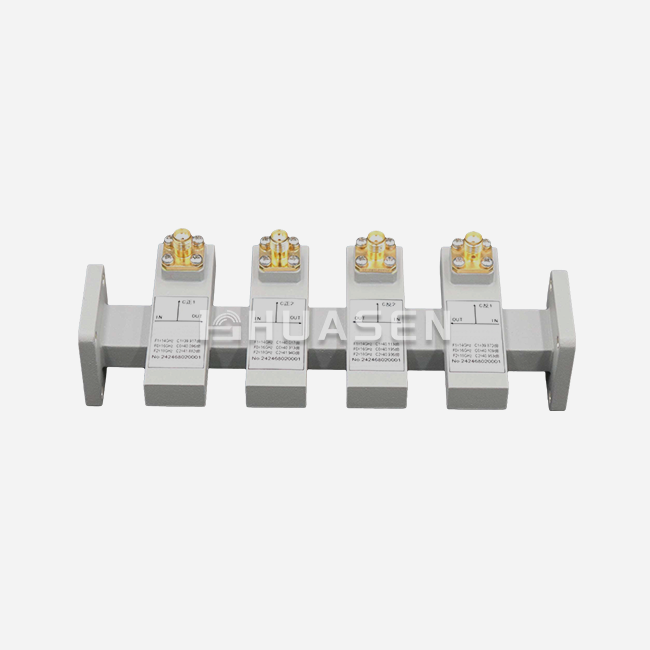
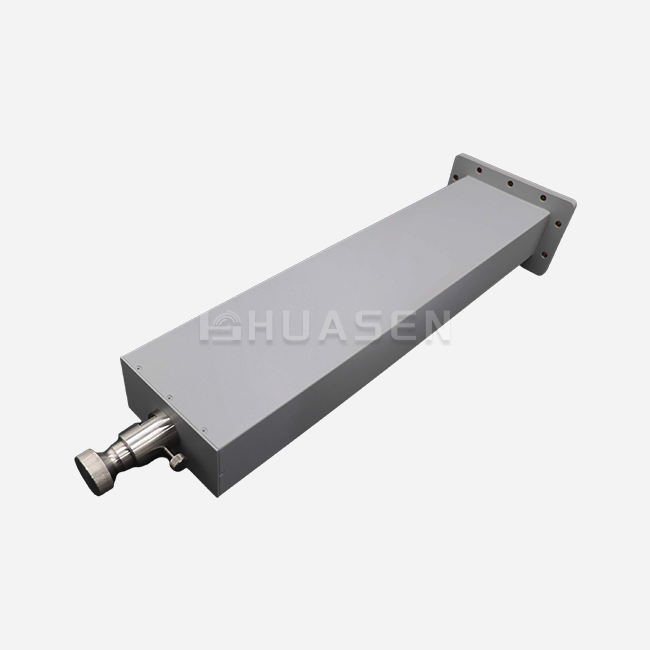
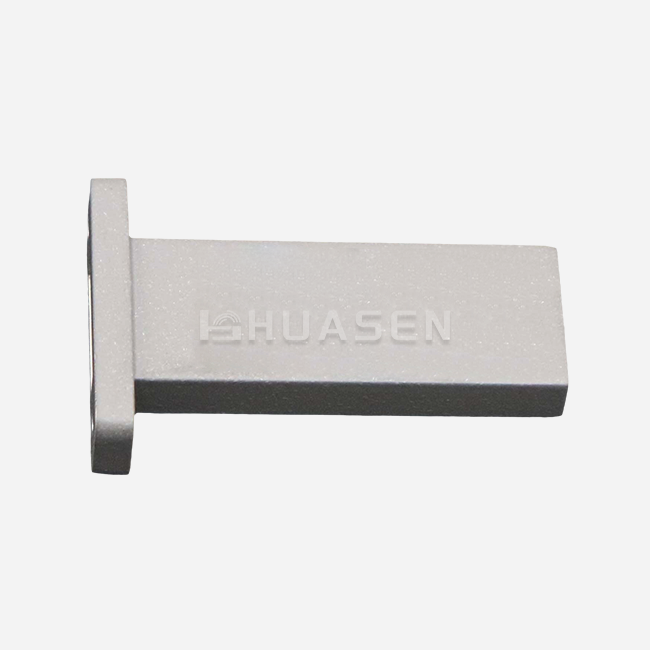
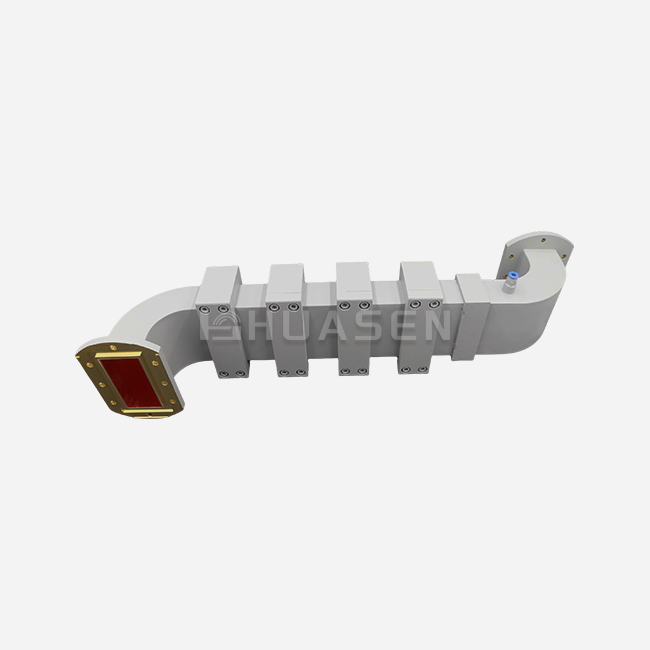
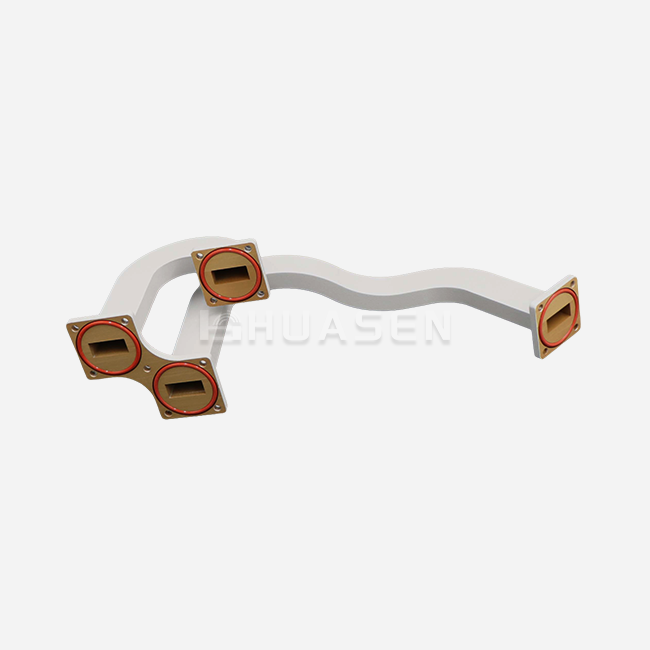
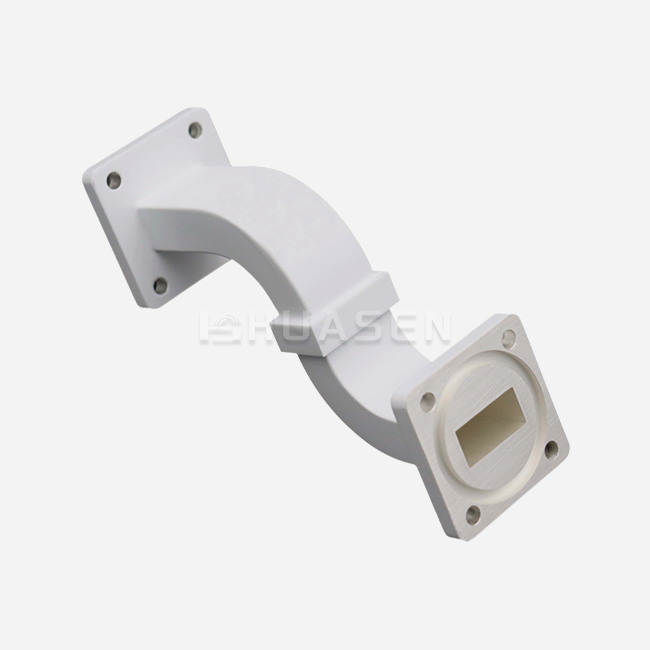
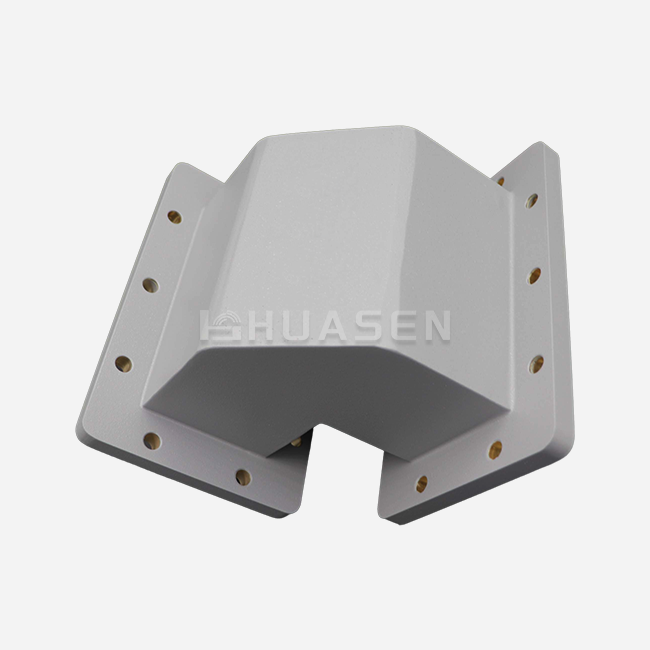
One of the best things about a double-ridged straight waveguide is that it can cover a wide range of frequencies, usually two to three octaves in a single component. This waveguide design lowers the cutoff frequency of the dominant mode while blocking higher-order modes. This is done by adding parallel conductive ridges along the wide walls. This makes it possible to get bandwidth ratios that aren't possible with regular rectangular waveguides. This feature meets the important need for multi-band operation in the industry, making systems simpler, lowering inventory costs, and making installation easier in defense, aerospace, and telecommunications uses.
Understanding Double-Ridged Straight Waveguides
What Makes Double-Ridged Waveguides Unique?
Because they have ridges inside, double-ridged waveguides are different from regular rectangular designs. When placed symmetrically on opposite broad walls, these metal ridges change the way the electromagnetic field is spread inside the waveguide cavity. This change loads the structure capacitively, which lowers the cutoff frequency and increases the bandwidth that can be used. Standard rectangular waveguides have bandwidth ratios of about 1.5:1, which makes them less useful for tasks that need to send data over more than one frequency band at the same time. This problem can be solved by the rigid configuration, which lets bandwidth ratios go above 2.4:1 and, in some cases, reach 3.6:1 or higher.
How Ridge Geometry Influences Performance
The height, width, and spacing of the ridges have a direct effect on how electromagnetic waves travel through them. Engineers at companies like Huasen Microwave tweak these settings to find the best balance between increasing bandwidth, power handling, and insertion loss. Taller ridges usually offer more bandwidth, but they may lower power capacity because they concentrate the electric field more. Precision in manufacturing is very important; even small differences in the sizes of the ridges can hurt the VSWR performance and cause unwanted reflections.
Material Selection and Environmental Durability
The choice of material has a big impact on both how well it works electrically and how long it lasts. High-conductivity materials, like oxygen-free copper, reduce insertion loss, and corrosion-resistant coatings or aluminum alloys make installations in saltwater or outside last longer. Huasen Microwave's double-ridged straight waveguides are very resistant to corrosion, which solves the problem of adaptability to harsh environments that system integrators face when putting equipment to use in those places. Precision CNC machining and surface treatment are used in the manufacturing process to make sure that the parts are the right size and will last for a long time, meeting MIL-STD requirements for defense applications.

Comparing Waveguide Types: Why Choose Double-Ridged Straight Waveguides?
Bandwidth Comparison Across Waveguide Technologies
Bandwidth is a very important thing to consider when choosing waveguide components. Standard rectangular waveguides work well in small frequency ranges, but they need extra parts or mechanical switching to work well in wide frequency ranges. Even though circular waveguides have low loss, they are hard to make and connect. This gap is filled by double-ridged straight waveguide configurations, which offer continuous wideband coverage without the need for hardware that switches bands. A WRD650 double-ridged waveguide, which is often found in electronic warfare systems, can continuously cover frequencies from 6.5 GHz to 18 GHz. To cover this range of frequencies, three or four standard rectangular waveguides would be needed.
This consolidation makes system architecture a lot easier to understand. The lower number of parts is appreciated by procurement managers because it simplifies inventory and lowers the total cost of ownership. Engineers like getting rid of switching mechanisms that add to signal distortion, loss, and possible failure points. The impressive range of frequencies that Huasen Microwave covers, from 0.84 GHz to 40 GHz, means that a single product family can be used for a wide range of tasks, from base station front-ends to satellite communications.
VSWR and Insertion Loss Performance
Voltage standing wave ratio and insertion loss have a direct effect on the integrity of the signal and how well it is sent. When VSWR values are low, it means that the impedances are better matched and there is less signal reflection. Huasen Microwave has VSWR values of ≤1.15 for low-frequency uses and ≤1.2 for high-frequency uses, which is better than many commercially available options. These requirements mean that the signal will be weakened as little as possible, which is very important when sending high-power radar pulses or sensitive communication signals where every decibel counts.
Although the bandwidth has grown, the insertion loss in double-ridged waveguides is still very low compared to other technologies. The ridge shape causes some extra loss compared to regular rectangular waveguides working at their best frequency, but the extra coverage over several octaves makes up for it. Measurements in the lab and in the field consistently show that ridged waveguides that are well-designed keep insertion loss within acceptable limits for most applications. This includes high-sensitivity receiver chains in radar and electronic intelligence systems.
Power Handling and Structural Robustness
Power capacity is another important factor to consider when comparing. Because the electric fields are stronger near the ridges, standard rectangular waveguides can handle higher power levels than their ridged counterparts of similar external dimensions. Modern designs, on the other hand, get around this problem by carefully shaping the ridges and choosing the right materials. Huasen Microwave's products go through strict high-power tests to make sure they work well in both continuous wave and pulsed conditions. This makes sure they work reliably in base station amplifiers and radar transmitters that need to handle a lot of power.
It is important for structures to be strong, especially on mobile platforms like airplanes, drones, ships, and vehicles on the ground, where vibration and shock loads can damage parts. The rigid metal structure of double-ridged waveguides gives them natural mechanical strength. When you use the right mounting bracket design and interface standards, like UG-style flanges or custom mounting solutions, you can be sure that the installation will be safe even in the worst conditions. This durability solves the problem of adaptability to different environments, giving system integrators confidence in the reliability over the long term.
Design Principles and Technical Specifications for Optimal Performance
Ridge Geometry Optimization
Ridge design is what makes wideband work so well. To get the electromagnetic properties they want, engineers change the ridge's height, width, gap spacing, and taper angles. This optimization process is guided by computational electromagnetic modeling that uses finite element analysis to predict field distributions, cutoff frequencies, and impedance profiles before making a physical prototype. This simulation-based method cuts down on development time and guarantees success on the first try, which is helpful when customization is needed.
Huasen Microwave leverages decades of manufacturing expertise to translate theoretical designs into high-precision physical parts, including double-ridge waveguide sizes. CNC machining with tolerances of less than ±0.02 mm makes sure that the Double Ridged Straight Waveguide units that are made accurately match electromagnetic models. This accuracy has a direct effect on the consistency of the VSWR across the frequency band. This stops unwanted resonances or impedance discontinuities that hurt performance.
Frequency Band Coverage and Customization
Frequency ranges need to be different for each application. Below 6 GHz is where most mobile communications and 5G/6G systems work. Above 6 GHz is where satellite links and radar systems work. Huasen Microwave's product line includes everything from 0.84 GHz to 40 GHz, with options that can be tailored to specific sub-bands. This gives procurement managers the freedom to be very specific about the frequency they need without adding extra costs that aren't necessary.
Customization goes beyond just frequency. Length changes from 0.1 mm to 500 mm can be made to fit different types of space constraints in equipment racks or small airborne installations. The interface specifications can be changed to fit existing system parts, like antenna feeds, coaxial adapters, or other types of waveguides. System integrators have said that it's hard to find parameters that are specific to their own system designs. This customization feature solves that problem.
Manufacturing Quality and Standards Compliance
Quality control starts with certifying the materials and continues through all steps of production. Incoming inspection checks the properties of the material; process controls make sure the work is done correctly; and final testing makes sure the electrical performance works across the whole frequency range. Huasen Microwave keeps up with ISO quality management systems and can provide MIL-STD certification paperwork when defense applications need it. This solves the problem of certification and reliability.
Each shipment comes with test data packages that contain VSWR sweeps, insertion loss measurements, and reports on the accuracy of the dimensions. This documentation lets receiving inspection and system integration happen without having to do any extra work on characterizing the system, which speeds up the project timelines. Lab users and instrument makers who depend on predictable, traceable component performance are less likely to face technical problems when they have access to calibrated test data.
Practical Applications and Industry Use Cases
Electronic Warfare and Defense Systems
In electronic warfare, you need instantaneous wideband coverage to find, analyze, and stop threats across many frequency bands at the same time. Airborne jamming pods, countermeasure systems on the ground, and naval electronic support measures all use double-ridged straight waveguide components to feed wide-band antennas without having to wait for mechanical tuning delays. Narrow-band systems can't match the tactical benefits of being able to continuously send or receive signals from 6 GHz to 18 GHz or even wider ranges.
In these situations, it is very important that the parts work well even when they are exposed to high power and harsh conditions. To make sure their products work well, Huasen Microwave puts them through environmental stress tests like thermal cycling, vibration testing, and humidity exposure. Defense contractors and system integrators like how reliable it has been shown to be. This means that there will be fewer problems in the field and lower maintenance costs.
Radar and Synthetic Aperture Radar Systems
Modern radar systems change the frequency of their signals to get better resolution, less noise, and to avoid being detected. Wideband transmission lines that keep phase linearity across octave bandwidths are needed for synthetic aperture radar platforms on planes and in spacecraft, using double-ridge waveguide sizes. Double-ridged waveguides are very important for connecting transmitters, receivers, and antenna arrays. They make high-resolution imaging and target separation possible.
These systems often have to work in tough conditions. Platforms in the air have to deal with extreme temperatures and vibrations, and installations on the ground have to deal with the weather. The ability of well-designed waveguides to resist corrosion and remain mechanically strong means that they can keep working without stopping for many years, meeting the operational readiness needs of both military and civilian radar networks.
Test and Measurement Laboratories
Broadband antennas and high-power amplifiers are used in EMC/EMI testing facilities to make sure that products meet standards for immunity and radiated emissions, such as MIL-STD-461 and CISPR. Double-ridged waveguides link amplifiers to ridged horn antennas, which lets you change frequencies continuously without having to change the hardware. This feature cuts test cycle times by a huge amount compared to systems that need to swap waveguides by hand for each frequency segment.
Accurate measurements depend on stable, known properties of the parts being used. Quality waveguides have low VSWR and predictable insertion loss, which reduces measurement uncertainty and helps commercial testing laboratories meet accreditation requirements. Instrument makers who use these parts in signal generators, spectrum analyzers, and network analyzers need them to work consistently electrically and with very tight mechanical tolerances.
Procurement Guide: How to Source High-Quality Double Ridged Straight Waveguides?
Evaluating Supplier Capabilities
Assessing suppliers is the first step in a successful procurement process. If a vendor can make precision parts that meet your needs, that's a sign of their manufacturing capabilities. Find proof of high-tech tools for cutting, tools for simulating electromagnetic fields, and complete test facilities. Quality certifications for suppliers, like ISO 9001, show that process controls are in place, and defense-specific certifications, like AS9100, show that the supplier can handle high-reliability applications.
Case studies and references from customers give you more information about how well a supplier does their job than marketing materials. How does the vendor handle requests to make changes? How long does it usually take for them to make standard products versus custom ones? Do they keep stock for orders that need to be filled quickly? Established in 1993, Huasen Microwave has more than 30 years of experience making double-ridged straight waveguide parts for the defense, aerospace, telecommunications, and radar industries around the world.
Technical Support and Engineering Services
The quality of technical support is often what sets good suppliers apart from great partners. Can the vendor help you optimize the design, run electromagnetic simulations, or suggest other configurations if your first request turns out to be hard to meet? When suppliers act as consultants instead of just selling parts, they help engineering teams.
Sample programs let you test things out physically before committing to large amounts of production. Huasen Microwave lets customers test sample units to see how well they work in their own system, which lowers technical risk. Calibration data and S-parameter files that come with samples make system modeling and planning for integration easier, which speeds up the development process.
Cost Considerations and Supply Chain Management
Unit pricing is only one part of the total cost. Lead times change project schedules and may require extra fees to be paid quickly. Minimum order quantities affect how much it costs to keep inventory and how capital is allocated. By looking at these factors as a whole, you can make better decisions about procurement. Larger orders usually get volume discounts, but sometimes smaller amounts are needed during the development process or for specific uses.
Stability in the supply chain is important for projects that take more than one year to finish, especially for components like the Double Ridged Straight Waveguide. Can the vendor promise that the service will always be available? What backup plans are in place in case of a lack of materials or limited capacity? System integrators have pointed out a problem with the delivery cycle. Well-known manufacturers like Huasen Microwave have built relationships with material suppliers and have enough production capacity to support both prototypes and large volumes of production.
Conclusion
Double-ridged straight waveguide components have great wideband performance because they have a new geometry that makes them cover more frequencies than regular rectangular designs can. These parts solve important problems in test, aerospace, defense, and telecommunications because they have low VSWR, bandwidth ratios above 2.4:1, and specifications that can be changed. Because Huasen Microwave uses high-precision manufacturing, covers frequencies from 0.84 GHz to 40 GHz, and is dedicated to quality, our products are a good choice for RF and microwave systems that need to work well. To make sure that procurement goes well and operations run smoothly for a long time, suppliers must be carefully evaluated based on their technical skills, support services, and the stability of their supply chains.
FAQ
1. What frequency ranges can double ridged waveguides cover?
Most double-ridged waveguides have bandwidth ratios between 2.4:1 and 3.6:1, which means they can cover two to three octaves. Huasen Microwave's product line includes ranges from 0.84 GHz to 40 GHz, with some models being better at working in certain sub-ranges within this range. There are common configurations for 1-2 GHz, 2-4 GHz, 6-18 GHz, and 18-40 GHz, which meet the needs of mobile communications and millimeter-wave applications.
2. Can double-ridged waveguides be customized for specific applications?
Customization is one of the most important features. You can change the frequency bands, physical length (0.1–500 mm), interface types, and mounting options to fit your system's needs. The engineering team at Huasen Microwave works with customers to make designs work best for their performance needs, the environment, or the limitations of integration. This solves the problem that system integrators have found with customization.
3. How does performance compare to standard rectangular waveguides?
For a hugely higher bandwidth, double-ridged waveguide designs give up some of their ability to handle power and have a slightly higher insertion loss. Huasen Microwave still gets ≤1.15 for low frequencies and ≤1.2 for high frequencies, which means that the VSWR performance is still very good. When multi-band coverage gets rid of the need for multiple waveguide runs or switching mechanisms, this trade-off is a good thing.
Partner with a Trusted Double-Ridged Straight Waveguide Supplier
Huasen Microwave has Double Ridged Straight Waveguides that are precisely engineered and made to exacting standards to meet your wideband transmission needs. We've been making RF and microwave parts for 30 years, so you can be sure that your projects will get the quality, dependability, and technical support they need. Our engineering team can help you with quick prototyping and responsive consultations, whether you need standard configurations or solutions that are made to fit specific frequency bands and environmental conditions. You can email us at sales@huasenmicrowave.com to talk about your application needs, get technical specifications, or get a quote for buying in bulk. Find out how our dedication to accuracy, new ideas, and great customer service can help your system work better and make your supply chain easier.
References
1. Marcuvitz, N. (1986). Waveguide Handbook. Institution of Engineering and Technology Press.
2. Pozar, D. M. (2011). Microwave Engineering, 4th Edition. Wiley Publishing.
3. Collin, R. E. (1991). Field Theory of Guided Waves, 2nd Edition. IEEE Press.
4. Balanis, C. A. (2012). Advanced Engineering Electromagnetics, 2nd Edition. John Wiley & Sons.
5. Chen, L. F. et al. (2004). Microwave Electronics: Measurement and Materials Characterization. John Wiley & Sons.
6. Saad, T. S. (1971). Double-Ridged Rectangular Waveguides for Wideband Applications. IEEE Transactions on Microwave Theory and Techniques, MTT-19(3), 294-296.
Send Inquiry