Curved Surface Integration Challenges in Microstrip Conformal Array Antenna






2026-07-05 16:54:57
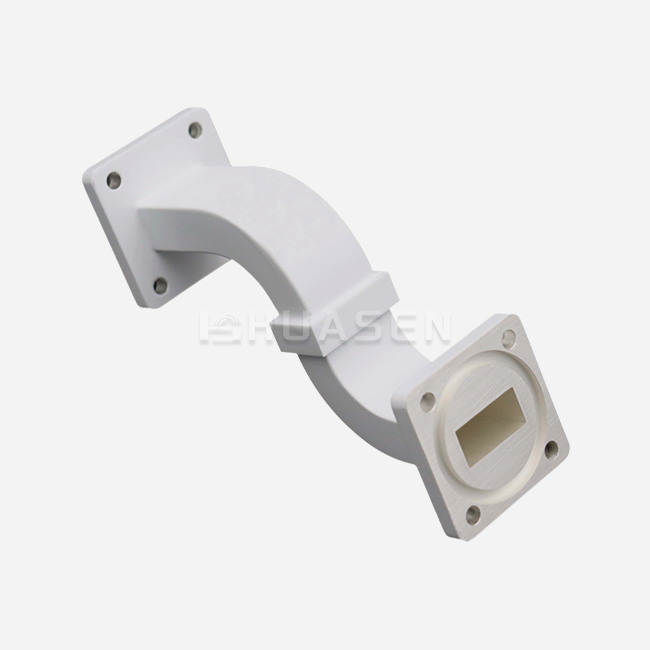
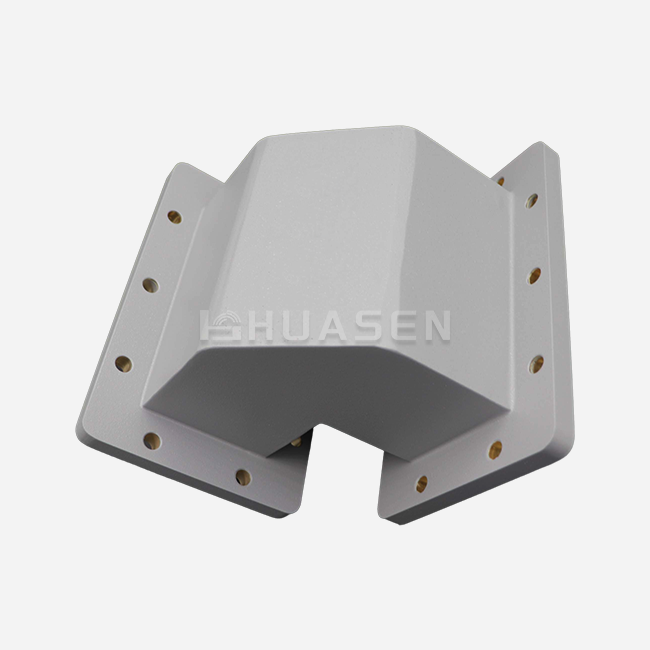
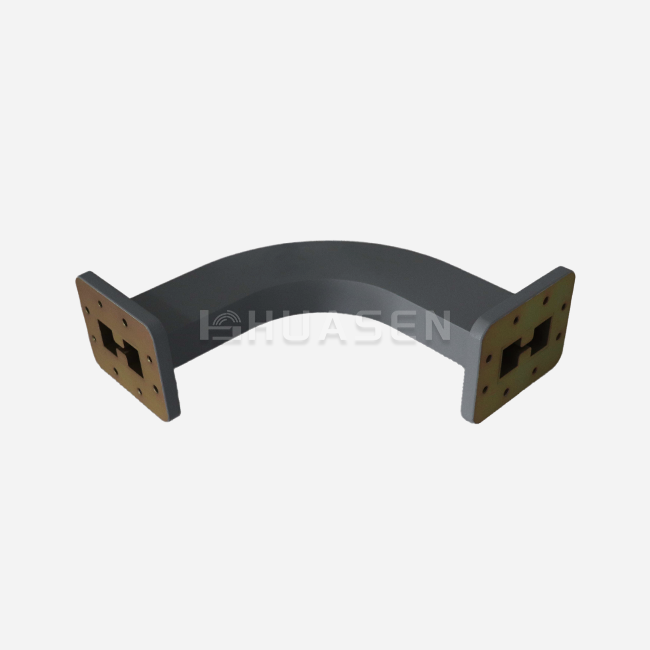
When flight engineers create the next generation of unmanned aerial vehicles (UAVs) or telecoms experts prepare 5G base stations for installations on curved rooftops, they both have to deal with the same problem: how to mount antenna arrays on surfaces that aren't flat without affecting performance. The next step to solve this problem is a microstrip conformal array antenna, which has antenna elements that are placed on or built into curved structures like aeroplane fuselages, missile nose cones or car roofs. Instead of flat surfaces needed by traditional planar designs, conformal arrays change shape to fit the host platform's aerodynamics, which eliminates drag and lowers radar cross-section. This feature is very important for military flight applications, mobile communications infrastructure, and self-driving car systems that need to fit together seamlessly because of limited room and concerns about how things look.
Introduction
This article talks about conformal antenna technology and why curved surface integration is so important in today's RF system design. Antennas that can fit into complicated shapes without affecting electrical performance are becoming more and more important in areas like space, UAV operations, 5G networks, and satellite communications. System designers, equipment makers, and procurement experts who are choosing parts for next-generation platforms need to understand the difficulties of integration.
This piece talks about main design problems, how performance affects radiation properties, and buying tactics that make sure a project succeeds. The information here will help you make smart choices about antennas for stealth aeroplanes, maritime communication systems, or base stations on land. This way, you can make the best system designs for tough tasks.
Understanding Curved Surface Integration Challenges in Microstrip Conformal Array Antennas
When antenna parts are added to curved surfaces, they cause mechanical and electrical problems that don't happen in flat designs. Curvature changes how precisely elements are placed, what base material is used, and how reliable the array is as a whole. These changes have a direct effect on the antenna's transmission pattern and how well it works.
Substrate Material Limitations
Flexible dielectric materials, like PTFE composites or liquid crystal polymers, need to keep their electrical properties stable even when they bend to fit the shape of the host surface. These surfaces have to meet two different needs: they need to be flexible enough to bend without breaking under stress, and they also need to be stiff enough to keep the accuracy of the element spacing within microns. Changing temperatures from -55°C to +125°C in aircraft settings makes it worse when the copper metallisation and dielectric layers don't expand at the same rate. This can lead to delamination or changes in impedance.
Physical Deformation and Element Spacing
When the base curve doesn't match the design specs, the accuracy of the antenna element spacing is lost. Deviations as small as a millimetre can change how neighbouring radiators interact with each other, which can change the resonant frequencies and make impedance matching worse. When millimetre waves are used at high frequencies, and widths are only a few millimetres, this spacing sensitivity stands out even more.
Phase Error Compensation Requirements
Curved surfaces make path lengths between array elements different in a microstrip conformal array antenna, which doesn't happen with flat designs. If these phase differences aren't fixed, they make the main beam wider, raise the levels of the sidelobes, and make the beam less directed. Curvature-induced phase mistakes can be fixed with advanced beamforming techniques and digital phase shifters, but doing so makes the system more complicated and costs more. When engineers define conformal solutions for tight budgets or quick deployment plans, they have to weigh the benefits of better performance against the limited resources that are available.
Analysing Effects of Curved Surfaces on Antenna Performance
Compared to flat arrays, curved shapes fundamentally change how electromagnetic waves behave, affecting radiation properties, gain stability, working bandwidth, and beam steering accuracy.
Radiation Pattern Distortion
When mounting surfaces are cylindrical or spherical, they form uneven far-field patterns that don't happen with flat designs. When elements are placed along different axes of a curve, they spread with different phase relationships. This causes beam squint, which is when the main lobe direction changes with frequency. When system designers figure out the link budget and coverage plan, they need to take these effects into account so that there aren't any blind spots in important operating areas.
Gain Reduction and Bandwidth Trade-offs
Due to non-optimal element timing, curvature usually lowers the gain that can be achieved compared to similar flat arrays. When our microstrip conformal array antennas are set up in a flat pattern, they provide 18 dB gain and an 18°×18° beamwidth. However, when the same design is applied to a cylinder with a 500mm radius, the gain may drop by 1-2dB based on how the curve is orientated in relation to the main beam direction. Bandwidth performance is also limited because twisting the base changes the size and shape of the resonant chamber and the ways it is coupled.
Mutual Coupling Variations
Putting three-dimensional elements on curved surfaces changes how nearby radiators interact with each other in ways that are hard to guess using flat array theory. This change in coupling affects matching impedance across the operating band, which could make return loss higher at the band ends. During development, it is necessary to use a vector network analyser to make sure that the S11 parameters stay below -10dB across the given frequency range, even when taking into account the effects of curves.
When buying, teams ask for quotes, they can set realistic requirements when they know about these performance factors. Instead of just asking for a "conformal antenna with the same performance as the planar reference", smart buyers make sure that the limits on gain reduction, frequency narrowing, and pattern distortion are reasonable for their needs.
Comparison: Microstrip Conformal Array Antenna vs. Traditional and Other Antenna Types
To choose the best antenna layout, you need to know how conformal arrays, planar patch antennas, phased arrays, and aperture-based systems stack up in terms of performance in a number of areas.
Structural Adaptability Advantages
When aerodynamics or aesthetics make it impossible for protrusions to stick out from the array, conformal arrays are the best choice. Flush-mounted designs that don't add any drag and keep their stealth qualities are good for aircraft uses. The car V2X industry uses conformal designs that are built into curved rooflines to avoid the "porcupine" look of multiple visible parts while still providing full coverage for communications between the vehicle and everything else.
Performance Trade-offs
Due to better control over element timing and coupling, traditional planar arrays often have higher gain and wider bandwidth than conformal designs that do the same thing. In flat setups, our phased array antennas, microstrip array antennas, have a ranging range of ±60° and a beam switching speed of 100 μs. However, they are limited in their abilities when they have to fit into tight-radius curves. But conformal arrays get rid of the need for mechanical turning devices. This makes them lighter, uses less power, and has fewer failure modes in defence applications that need to be reliable.
Manufacturing Complexity Considerations
To make a conformal antenna, you need special tools and non-planar lamination methods that aren't used to make regular printed circuit boards. This makes things more complicated, which raises unit costs and lengthens lead times, especially for small production runs. When deciding between conformal and flat options, procurement professionals have to weigh performance needs against budget limits and delivery times. Planar arrays are often more cost-effective for large base station setups with flat mounting surfaces. On the other hand, mechanical needs make conformal designs necessary for UAV and missile uses, even though they are more expensive.
Practical Solutions and Design Best Practices for Curved Surface Integration
For conformal antenna placement to go well, you need to use advanced simulation tools, new materials, and tried-and-true design methods that have been developed through experience in the aircraft and telecommunications fields.
Electromagnetic Simulation and Modelling
Full-wave electromagnetic models that use the method of moments or finite element analysis can accurately predict how something will work before making a prototype. These platforms simulate how a substrate curve affects radiation patterns, impedance matching, and mutual coupling. This lets designers find the best places for elements and the best ways to feed them. Simulation-driven design cuts down on expensive testing processes during development. This is especially helpful when making solutions fit the specific shapes of a platform.
Flexible Substrate Technologies
Flexible high-performance surfaces keep their dielectric constants stable across a wide range of temperatures and can bend without cracking. Liquid crystal polymer materials don't absorb much water and keep their shape better than regular PTFE composites. This makes them better suited for use in the maritime and aircraft industries that are subject to changes in temperature and humidity. The choice of materials has a big effect on how reliable something will be in the long run, so suppliers need to be carefully evaluated during the approval process.
Phase Compensation Techniques
Digital beamforming networks fix phase mistakes caused by curvature by using element-specific phase corrections found in electromagnetic models or calibration measures. Our circularly polarised directed array products have a gain range of 3–12dB and a bandwidth of 10%. This is made possible by optimised feeding networks that keep the axial ratio stable even when the substrate bends. These methods make it possible for conformal arrays to work as well as flat arrays in situations where the system can handle more complexity.
Case studies from military UAV operations show how these methods work in real life. One military prime contractor met the needs for a conformal nose-cone antenna by using thermoplastic composite plates and real-time digital phase correction. This kept the beam pointing accuracy within 0.5° at temperatures ranging from -40°C to +85°C. These kinds of wins back up the design practices that teams in charge of buying things should make sellers show through test data and historical records.
Procurement Considerations for Microstrip Conformal Array Antennas
To get conformal antenna solutions, you have to carefully check out suppliers in terms of their professional skills, quality systems, ability to adapt to your needs, and support infrastructure.
Supplier Technical Capability Assessment
Companies that say they know a lot about conformal antennas, such as microstrip array antennas, should show that they do by giving customer references, performance data that has been made public, and facility certifications. We at Huasen Microwave keep our MIL-STD-810 environmental test skills and IPC-6012 flexible circuit production certifications up to date. This makes sure that our products meet the reliability standards for flight and defence. To be sure that a seller can do what they say they can, buyers should ask to see examples of similar projects that they have done in the past with similar curvature radii, frequency bands, and environmental requirements.
Customisation and Design Support
For most conformal uses, custom solutions are needed that are made to fit the platform's shape and wiring needs. Suppliers who give full design help, electromagnetic modelling services, and prototyping support cut down on development times and lower the risk of problems during integration. Before they buy tools, we give them thorough modelling studies that show how the radiation will behave for their specific curvature profiles. Together, they make sure that the finished goods meet the requirements without having to go through expensive redesigns.
Quality Control and Testing Protocols
For conformal antennas such as Microstrip Array Antenna to work reliably, they need to go through strict checking processes. Using coordinate measuring tools to check the dimensions ensures that the substrate's curve is within the design limits of a few microns. This stops installation gaps that could compromise sealing against the environment. Testing with a vector network analyser makes sure that the impedance matching is correct across all operating bands, and readings taken in an anechoic chamber make sure that the radiation patterns haven't changed because of curvature effects. For each production lot, buyers should ask providers to send full test data packages that show proof of these checks.
Lead Time and Inventory Management
The process of making conformal antennas is more complicated and takes longer than making normal components. Setting up blanket buy orders with planned releases is helpful for large system integrators because it makes sure that the supply of parts matches up with production builds. We help our customers predict demand and set aside goods for important projects ahead of time, which lowers the risk of schedule slip-ups caused by problems in the supply chain. Understanding the supplier's limitations on capacity and the schedule for production during the quote phase keeps shipping delays from happening during execution.
Conclusion
Curved surface integration problems in conformal array antenna design mean that mechanical limits, electromagnetic effects, and manufacturing issues that aren't present in standard flat designs need to be carefully thought through. To be successful, you have to find a good mix between the performance needs and the real limits that come from curvature, material properties, and cost. Procurement workers help their companies set reasonable needs and choose qualified suppliers by knowing how radiation pattern distortion works, what substrate materials can do, and how to compensate for phase shifts. The information in this article helps people make smart choices in the defence, maritime, aircraft, and telecoms industries, where conformal solutions make it possible for next-generation systems to work.
FAQ
1. What specific challenges arise when integrating antennas onto curved surfaces?
Physical integration challenges include keeping the exact spacing between elements even when supports bend, stopping delamination under thermal stress, and making sure that mechanical attachments can handle shaking and shock loads. Curvature changes the phase mistakes between electromagnetic elements, which changes radiation patterns and lowers gain if they aren't fixed by digital beamforming or custom feeding networks.
2. How does curvature impact antenna gain and operational bandwidth?
Due to imperfect element phasing, curved placement usually lowers the gain that can be achieved by 1-3dB compared to flat versions. When a substrate is bent, it can change the size of the resonant chamber and the ways that it is coupled. This can make the bandwidth narrow, and it might be necessary to rethink the matching networks to keep the VSWR within acceptable limits.
3. Which industries benefit most from conformal antenna designs?
Flush-mounted designs that keep stealth profiles and aerodynamic efficiency are very useful for military aircraft uses. Manufacturers of unmanned aerial vehicles (UAVs), car V2X systems, marine communications, and wearable tech all benefit when they have to deal with curved surfaces and can't use or like protrusions from the outside.
4. Can conformal arrays achieve full 360-degree coverage?
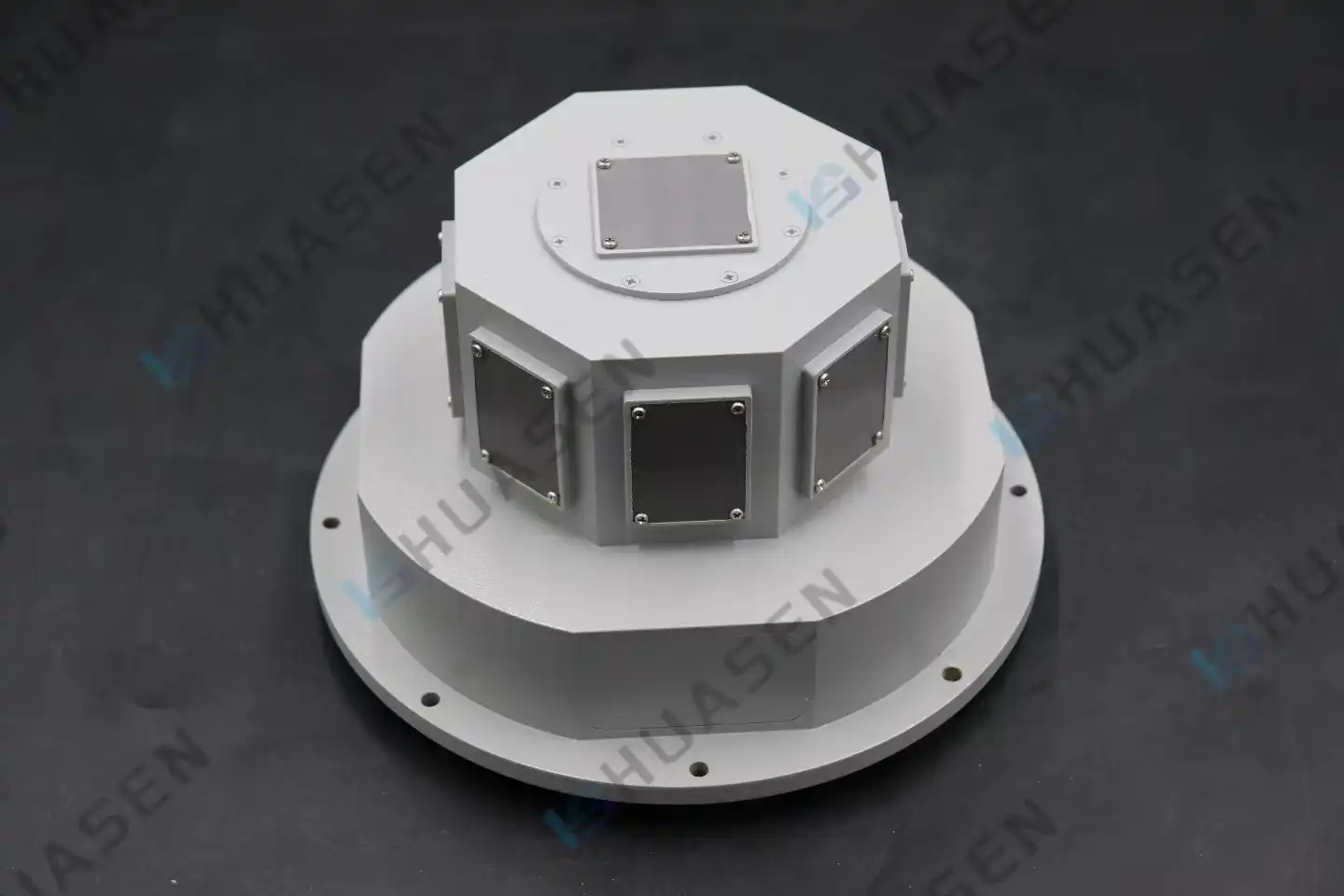
Depending on the radius of the curve, single conformal arrays usually cover areas that are 120° to 180° wide. For full coverage in all directions, you need multiple arrays set up around cylinder- or cone-shaped structures with electronic switching between panels. This is a typical way to set up marine communication systems on masts and missile bodies that are cylinder-shaped.
Partner with Huasen Microwave for Advanced Conformal Antenna Solutions
Huasen Microwave Technology can help you with your hardest curved surface antenna problems because they have been great at RF engineering for 30 years. We are a reliable company that makes Microstrip Conformal Array Antennas. We offer unique solutions for applications ranging from 1 to 110 GHz for radar systems, 5G infrastructure, and satellite communications. Microstrip array antennas with 18dB gain, circularly polarised directed arrays with 3–12dB gain ranges, and phased array antennas with 100μs beam swapping across ±60° scanning angles are all in our product line. Email our technical team at sales@huasenmicrowave.com to talk about your platform-specific needs, ask for design models, or get full quotes. Let us help you solve your problems with curved surface integration. Our solutions have been tested thoroughly, meet MIL-STD requirements, and come with fast engineering support throughout the entire development process.
References
1. Josefsson, L., & Persson, P. (2006). Conformal Array Antenna Theory and Design. IEEE Press Series on Electromagnetic Wave Theory.
2. Milligan, T. A. (2005). Modern Antenna Design (2nd ed.). John Wiley & Sons, Chapter 12: Conformal Antennas.
3. Kumar, G., & Ray, K. P. (2003). Broadband Microstrip Antennas. Artech House Antennas and Propagation Library.
4. Hansen, R. C. (2009). Phased Array Antennas (2nd ed.). John Wiley & Sons, Section 8.4: Conformal Array Analysis.
5. Balanis, C. A. (2016). Antenna Theory: Analysis and Design (4th ed.). John Wiley & Sons, Chapter 14: Microstrip Antennas.
6. Mailloux, R. J. (2017). Phased Array Antenna Handbook (3rd ed.). Artech House, Chapter 9: Conformal Arrays and Array Pattern Synthesis.
Send Inquiry