Corrugated Conical Horn Antenna for Reflector Systems






2026-07-05 16:54:51
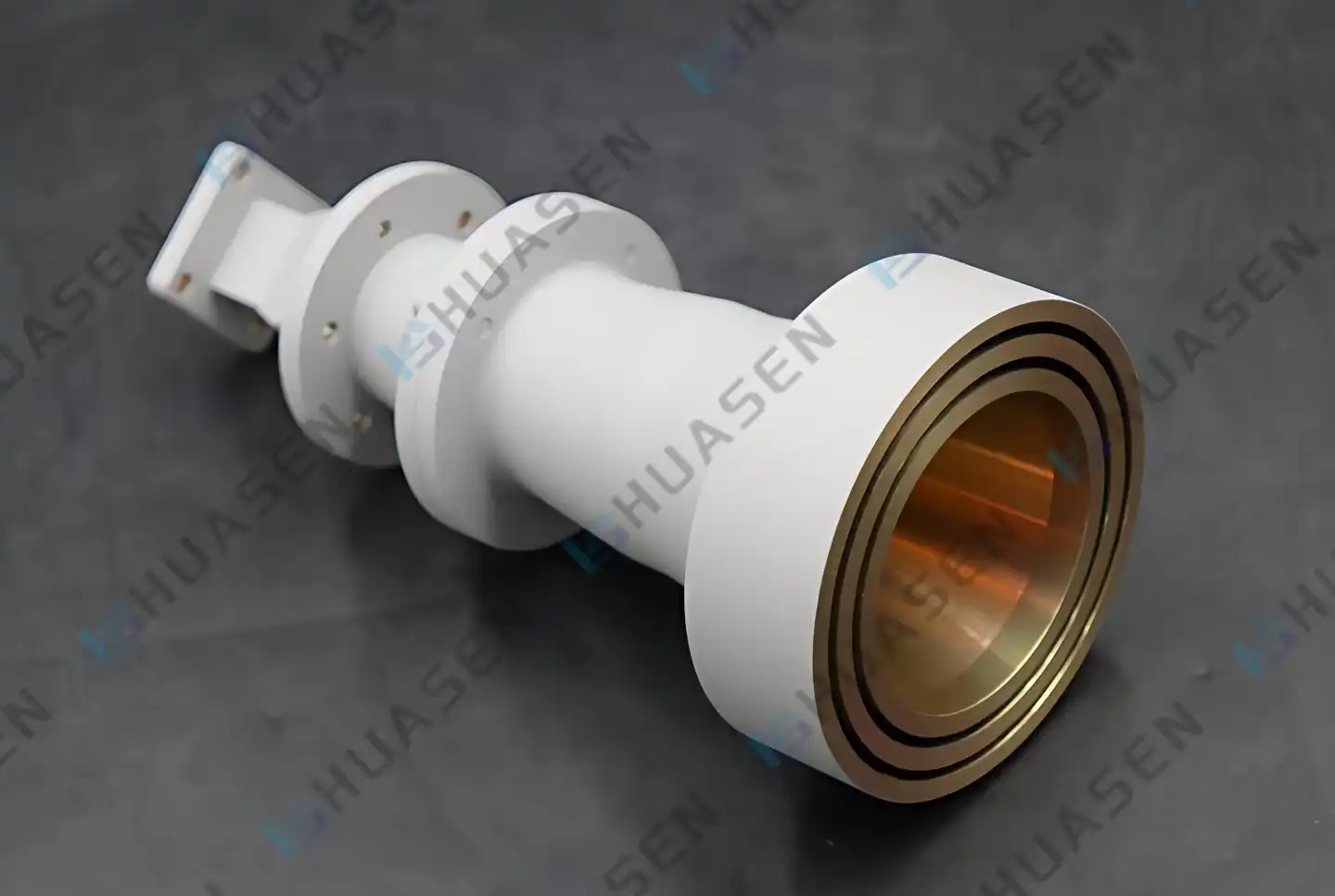
The corrugated conical horn antenna is the standard when it comes to making high-performance reflector systems for satellite communications, radar sites, or high-precision testing settings. This special feed part has holes inside it that create a balanced hybrid HE11 mode. This mode creates very pure radiation patterns that are rotationally uniform. Unlike regular smooth-wall horns, which produce elliptical beams and a lot of cross-polarization, these antennas provide identical E-plane and H-plane beamwidths while reducing sidelobes to almost nothing. This directly leads to better reflector illumination efficiency and system gain-to-noise temperature ratios.
Understanding Corrugated Conical Horn Antennas
Structural Foundation and Operating Principles
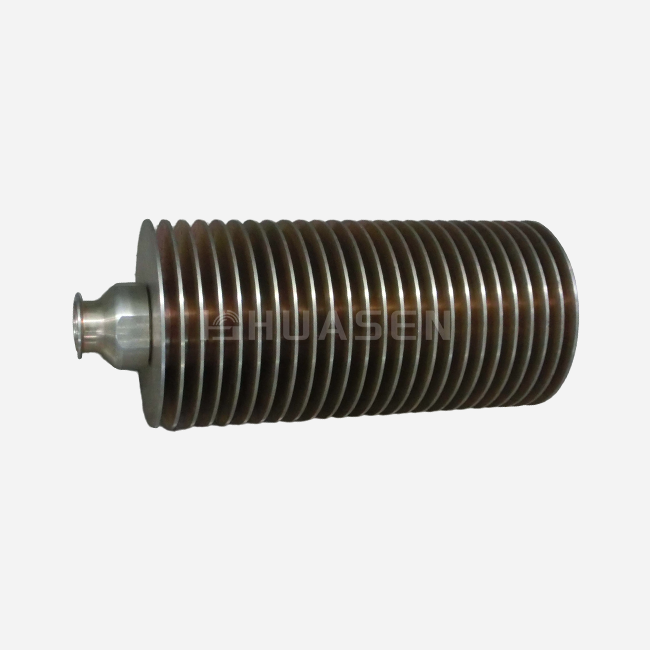
The internal structure of these corrugated conical horn antennas is the result of many years of improving electromagnetic engineering. Slots that are precisely cut and have depths between λ/4 and λ/2 form reactive boundary conditions along the flare walls. These conditions change the way electromagnetic energy moves through the structure in a fundamental way. This wavy surface works with the hybrid HE11 mode, which mixes horizontal electric and magnetic field components in the right amounts.
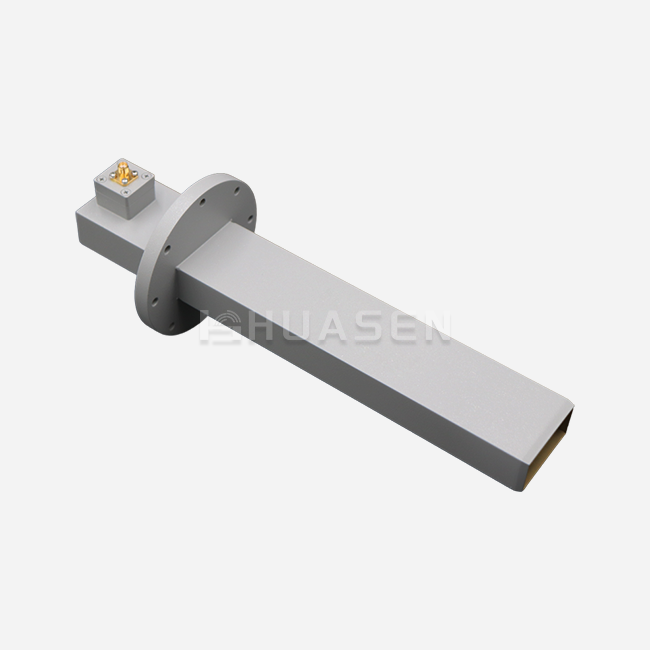
The versions from Huasen Microwave use large-angle horn shapes and precise slot structures to cover frequencies from 1.76 GHz to 300 GHz. The devices keep the VSWR below 1.30 when they are working at full bandwidth, and they get even better when they are working at narrow band, keeping it below 1.06. Standard circular waveguide connections with sizes ranging from Φ2.388 mm to Φ114.58 mm make sure that new equipment can work with old equipment in both aircraft and telecommunications.
Radiation Pattern Characteristics
Pattern consistency is what makes performance what it is. The HE11 mode excitation makes it possible for these antennas to achieve E-H plane beam equalization with incredibly tight tolerances—the -15 dB beam equalization mistake stays within ±5° across all operating bandwidths. When lighting up parabolic or shaped mirrors, this property is very important because uneven feeds cause spillover losses that lower aperture efficiency.
Electromagnetic models and tests in an anechoic chamber regularly show cross-polarization isolation above 35 dB. This is a requirement that has a direct effect on the signal quality in dual-polarized satellite links and radar systems. The phase center, which is where sphere wavefronts seem to start, doesn't move much depending on frequency. This makes aligning the reflectors easier and keeps the focus accurate across octave bandwidths.
Corrugated Conical Horn Antenna Performance Optimization
Addressing Common Implementation Challenges
When switching from rectangular waveguide distribution networks to circular corrugated conical horn antenna designs, system engineers often run into impedance discontinuities. These mismatches show up as return loss decline and standing wave formation, which lowers the efficiency of the emitter and the sensitivity of the receiver. To keep the impedance change smooth, the right optimization starts with choosing the throat width and creating the taper profile.
Corrugated conical horn antenna. Beam curvature is another very important issue, especially in offset-fed reflector setups where the feed lights up the dish at an angle. The symmetrical design of the corrugated horn makes this problem less of a problem than with other types of feed, but it is still important to pay close attention to the regularity of the corrugation depth. When slots are manufactured with limits smaller than ±0.01mm, they have a direct effect on mode purity and pattern stability.
Design Refinement Strategies
There are more factors to consider than just conductivity when choosing a material. For millimeter-wave uses with high frequencies, the inside surfaces need to be finished with silver or gold finishing to cut down on resistive losses that lower efficiency. The thickness of the plating has to be able to meet the skin depth needs across all working ranges while still adhering during temperature cycling and shaking exposure.
Aligning the shape of the reflector is also very important. For Cassegrain and Gregorian dual-reflector devices to work, the phase center must be precisely placed in relation to the focus point of the subreflector. Engineers can use computational electromagnetic modeling tools to imagine the whole interaction between the feed and the reflector. This lets them guess the spillover efficiency, blockage losses, and far-field gain patterns before they make a real prototype. We've seen gains of 0.8 dB to 1.2 dB in measurements go up when design teams use full-wave modeling testing before manufacturing.
Coordinate measuring tools are used in advanced production facilities to make sure that the slot width is always the same and that the aperture is round. Vector network analyzer runs make sure that the return loss performance is good across certain bands, and pattern range testing in quiet places makes sure that the sidelobe suppression and cross-polarization detection meet the requirements.
Comparing Corrugated Conical Horn Antennas with Other Horn Antenna Types
Performance Metrics Analysis
While smooth cylindrical horns are simple and cheap, they have an uneven design that can't be fixed. The E-plane and H-plane beamwidths are 20% to 40% different, which makes irregular lighting shapes that waste reflector aperture area. Sidelobe values are usually between -18 dB and -22 dB, which lets thermal noise from ground radiation be picked up in Earth station sites.
Similar imbalances are introduced by pyramidal horns with rectangular openings, but polarization purity issues are also raised. Cross-polarization isolation rarely goes above 25 dB, which makes them less useful for dual-polarized frequency reuse systems that are popular in current satellite communications architecture.
The mode-balancing slot structure in corrugated conical horn antennas gets around these problems. The circle beam profile easily fits the shape of a parabolic reflector, which makes aperture efficiencies close to 75% to 80%, compared to 55% to 65% for smooth options. When sidelobe suppression is -30 dB or lower, interference is less likely to happen in settings with a lot of bandwidth. This is a very important benefit for 5G backhaul links that use shared frequency licenses.
Application-Specific Trade-offs
The better performance comes with more work when making it. Deep internal grooving needs special CNC turning tools or electroforming methods, which increases the cost per unit and production wait times compared to simple casts. System budgets need to compare this extra cost to the changes in link speed that can be seen.
When designing for high-power gearbox uses, extra care needs to be taken. Internal grooves can start a multipactor discharge in a vacuum or an arcing process when the field is very strong. Designs made for kilowatt-level operation have smooth corrugation ends and special cooling features to stop breakdowns from happening.
Procurement Guide for Corrugated Conical Horn Antennas
Specification Alignment Process
A clear description of requirements is the first step to successful buying. People who make decisions should write down what frequency bands they need to cover, taking into account both basic working ranges and possible harmonic content in transmit applications. Gain requirements must take into account both antenna directivity and true efficiency factors, as well as system link budgets.
Constraints on physical merging should also be taken into account. Compatibility with current reflector arrays and RF distribution networks, including corrugated conical horn, is based on the mounting flange configurations, waveguide interface standards, and total envelope measurements. When installing things in the air or space, weight limits are very important because every gram affects fuel costs and the ability to put things into orbit.
Different implementation scenarios have very different environmental qualification needs. Military radar systems need to meet MIL-STD-810 standards for shock and shaking, while ground-based Earth stations need to be resistant to weather and UV light. When you know about these qualification needs early on, you can avoid expensive remake rounds during acceptance testing.
Manufacturer Evaluation Criteria
When evaluating a production capability, both technical skills and quality control methods should be looked at. Instead of using type-tested design data, manufacturers who have their own anechoic chambers can give recorded pattern data that is unique to each output unit. This feature is very useful in important situations where checking each corrugated conical horn antenna individually is worth the extra cost.
Compliance with ISO 9001 quality management, RoHS material restrictions, and application-specific standards like RTCA DO-160 for aircraft systems are common things that need to be shown in certification documents. Material tracking and test data files that back up these certifications should be easy for vendors to provide.
System managers who plan production runs that last more than one year care a lot about how stable the supply chain is. Material sources and process controls that are uniform across established makers keep device-to-device performance differences to a minimum. Lead time promises and the ability to increase production numbers without lowering quality are what set trustworthy suppliers apart from suppliers who are just looking for a quick buck.
In this specialized market, the best suppliers are those who can provide excellent technical help. Help with design during the definition phase makes it easier to choose the best feed horn for each reflection geometry. Before committing to production numbers, sample evaluation programs let you check how well the system works in common setups. Long-term operating success is guaranteed by calibration data help and quick service after the sale.
Applications and Future Trends in Corrugated Conical Horn Antennas
Current Industrial Deployments
These corrugated conical horn antennas are what satellite ground stations use to set up the high-gain uplinks and sensitive downlinks that make global communications possible. The low spread properties make G/T ratios as high as possible, which lets Earth stations keep strong links even when the weather is bad. Large-aperture corrugated lines are used in deep space network sites to pick up weak signals from interplanetary vehicles that are millions of kilometers away.
These gadgets are used in places that test small antennas as precise light sources for the parabolic collimating mirrors that make the quiet-zone fields that are regular. When measuring the radar cross-section of stealth aircraft and military ships, where measurement errors of less than 0.5 dB are common, the stable phase center and clean Gaussian beam profile are important for getting accurate results.
Radio astronomy setups need the highest level of pattern clarity and sensitivity. When looking at weak signals from space, the very low sidelobe levels keep thermal noise from Earth's sources from getting in the way. Cross-polarization suppression lets us measure the full Stokes parameters of polarized cosmic sources, which shows us the patterns of magnetic fields in galaxies and molecular clouds far away.
A broadband corrugated conical horn is used for multi-function aperture uses in military radar and electronic warfare systems. A single feed that covers 2:1 frequency ratios makes system design easier and lets search, tracking, and communication functions run at the same time across the assigned spectrum.
Emerging Technology Directions
Efforts to make things smaller are still making progress with additive manufacturing. Metal 3D printing makes it possible to make complicated internal shapes that aren't possible with traditional machining. This could help platforms that are limited in space by lowering their weight and envelope size. New developments in material science look into making metals and hybrid structures that are lighter while keeping the electrical performance of the system the same.
Millimeter-wave and sub-terahertz frequency growth meets the rising need for wireless links with high data rates and radar sensors in cars. To make operations work at frequencies higher than 300 GHz, manufacturing tolerances must be tightened and new measurement methods must be used to check sub-millimeter slot dimensions.
Active feed systems with low-noise amplifiers or solid-state power amplifiers built right into the radio interface are becoming more popular as a way to integrate electronics. In phased array designs, these configurations make it easier to control heat while minimizing transmission line losses. The mechanical accuracy that comes with making a corrugated horn makes it a safe way to place MMIC components that work at high frequencies.
Adaptive beamforming ideas mix standard corrugated feeds with subreflector placement that can be changed automatically. This mixed method gives a wide field of view without the hassle of big phased arrays, and it can be used in satellite communication ports and monitoring platforms in the air.
Conclusion
In conclusion, the corrugated conical horn antenna is still the best choice when pattern symmetry, cross-polarization purity, or sidelobe suppression can't be compromised in the performance of a reflector system. In satellite communications, precision metrology, radio astronomy, and defense uses, its hybrid mode operation improves link efficiency and interference avoidance in ways that can be measured. For procurement to go well, detailed specifications must be made, manufacturers must be carefully evaluated, and it must be understood that the extra cost of manufacturing complexity directly leads to better system performance. As the millimeter-wave spectrum is used more and more and sensitivity needs keep going up, corrugated feed technology will still be useful in new and changing communication and sensor systems because of its basic benefits.
FAQ
1. What differentiates corrugated feeds from smooth-wall horn designs?
The layout of the internal slots allows a balanced hybrid HE11 mode that creates symmetrical, circular beam patterns with the same E-plane and H-plane properties. In comparison tests, smooth horns produce elliptical patterns with 20% to 40% beamwidth imbalance and higher sidelobe levels. These patterns make corrugated conical horn antenna illumination 15% to 20% less effective.
2. Can these antennas accommodate octave-bandwidth operation?
Standard designs can easily handle frequency ratios of 2:1 while keeping the pattern stable and matching the resistance. Specialized scalar feed designs use multi-section corrugation patterns to increase this bandwidth even more, but they do so at the cost of more mechanical complexity and sensitivity to dimensions.
3. How does manufacturing tolerance impact electrical performance?
Changes in slot depth greater than ±0.01mm hurt the clarity of the mode, raising cross-polarization levels and causing pattern confusion. Impedance matching and gain accuracy are affected by mistakes in the aperture width. Precision CNC machining or electroforming methods keep the tight tolerances needed to meet specifications across large amounts of output.
Partner with Huasen Microwave for Premium Corrugated Horn Solutions
Huasen Microwave Technology has been providing high-quality feed components to the defense, aircraft, and telecoms industries since 1993. Our range of corrugated conical horn antennas works well from 1.76 GHz to 300 GHz, with VSWR values below 1.30 across the whole range. Coordinate-measured slot verification and anechoic chamber pattern validation are two manufacturing skills that are used for every output unit. Our engineering team offers full technical support from the initial specification phase through post-delivery calibration help, whether you need catalogue setups or custom designs that are optimized for specific reflector shapes. Get in touch with our experts at sales@huasenmicrowave.com to talk about your corrugated conical horn antenna needs with a maker that cares about quality and on-time delivery.
References
1. Clarricoats, P.J.B. and Olver, A.D. (1984). Corrugated Horns for Microwave Antennas. London: Peter Peregrinus Ltd.
2. Olver, A.D., Clarricoats, P.J.B., Kishk, A.A., and Shafai, L. (1994). Microwave Horns and Feeds. IEEE Press and IET Electromagnetic Waves Series.
3. Granet, C. and Bird, T.S. (2010). "Design and Performance of Broadband Corrugated Horns for Cassegrain Antennas." IEEE Transactions on Antennas and Propagation, 58(6), 2122-2130.
4. Thomas, B.M. (2001). "Design of Corrugated Conical Horns." IEEE Transactions on Antennas and Propagation, 26(2), 367-372.
5. Johansson, J.F. and Whyborn, N.D. (1992). "The Diagonal Horn as a Sub-millimeter Wave Antenna." IEEE Transactions on Microwave Theory and Techniques, 40(5), 795-800.
6. Teniente, J., Gonzalo, R., and Del-Rio, C. (2005). "Fast Mode-Matching Method for the Analysis of Corrugated Waveguides and Horns." IEEE Transactions on Antennas and Propagation, 53(9), 2926-2934.
Send Inquiry