Why Is a Low Noise Amplifier Essential for Weak Signals?






2026-07-02 21:00:08
In current RF systems, a Low Noise Amplifier is in charge of making sure that the signals are correct. When signals get to your receiver after going through kilometres of wire, bouncing off satellites, or fighting interference from the air, they are often hard to tell apart from background noise. The main job of the Low Noise Amplifier is to boost these weak signals while adding as little extra noise as possible. Its noise figure shows how well it does this. Even the most advanced processing further down the line won't be able to restore signal clarity if this specific part isn't at the beginning of your receiver chain. This is the reason why every radar system, 5G base station, and satellite dish needs good amplification to turn very quiet signals into data that can be used.
Understanding Low Noise Amplifiers: Basics and Importance
The Core Function of Signal Amplification
When we talk about RF front-end design, the sensitivity of the whole system depends on the Low Noise Amplifier that comes right after the antenna. Incoming signals, which are usually recorded in microvolts, are boosted by this gadget to levels that can be used for further processing. Specialised Low Noise Amplifiers focus on keeping the signal-to-noise ratio high, while regular gain blocks only raise the amplitude. This has a direct effect on how well your system can recognise and process information.
Usually, Gallium Arsenide or Silicon Germanium semiconductor technologies are used in transistor-based circuit designs that make the system work. These materials have better electron mobility than regular silicon, which lets them switch on and off faster and make less noise. The input stage of the Low Noise Amplifier needs to match the antenna's resistance as closely as possible, and the output stage needs to drive any mixing or filter stages that come after it without distorting the signal.
Key Performance Metrics That Matter
The most important parameter is the noise figure, which tells you how much noise the Low Noise Amplifier adds to the signal line. When measured in decibels, a smaller number means better performance. Noise levels in modern devices are as low as 1.3dB at frequencies from 0.01GHz to 100GHz. This makes sure that the Low Noise Amplifier doesn't weaken weak messages too much. This standard is especially important when your application needs to be as sensitive as possible, like when you need to find satellite data or radar targets far away.
Why Positioning Matters in Your Signal Chain
It is theoretically necessary to put the Low Noise Amplifier after the receiver as the first active part. Friis's formula for the cascaded noise figure shows that the noise input from the first stage affects the performance of the whole receiver chain. As long as the first stage has enough gain, even if later levels add a lot of noise, they won't make a difference. This is the reason why cell phone base stations, military radar sites, and satellite ground stations all put their Low Noise Amplifiers right at the antenna feed point, usually inside weatherproof cases to keep cable losses to a minimum.
Challenges in Amplifying Weak Signals and How LNAs Solve Them
Signal Attenuation and Path Loss
It is a basic rule of science that as radio waves travel through space, they get weaker. Before reaching listeners on Earth, a satellite signal sent from geostationary orbit loses about 200dB due to path loss in free space. More losses happen because of atmospheric absorption, rain fade, and wire resistance. The messages may be 20 to 30dB below the thermal noise floor by the time they get to your listener. The Low Noise Amplifier has to boost these signals above the noise level while keeping the phase and amplitude regularity throughout the whole working range.
Interference and Noise Contamination
There are a lot of causes of interference in modern electromagnetic environments. These include nearby communication lines, industrial equipment, and noise in the air. These unwanted messages block the signal you want to send, which lowers the useful signal-to-interference-plus-noise ratio. Careful frequency selection is used in high-quality amplification by combining filters and bandwidth optimisation. Ultra-wideband Low Noise Amplifiers that work with frequencies from microwaves to millimetre waves use complex circuit layouts that keep the gain response flat and block out-of-band interference. This is especially important in places with a lot of bandwidth, like cities where 5G is being used or in electronic warfare, where many messages must work together at the same time.
Maintaining Signal Integrity Across Temperature Extremes
Temperature changes from -40°C to +85°C can happen in outdoor setups, which causes component values to drift. Under temperature stress, standard Low Noise Amplifiers show changes in gain, noise figure, and impedance mismatch. Professional-level devices have temperature adjustment circuits and are made of materials that have the same thermal expansion coefficient. When your radar system is on an aeroplane that changes altitude quickly or when the weather at your base station changes with the seasons, steady amplification keeps link costs stable and stops connections from dropping. This dependability comes from the careful design evaluation and material selection that we do at every stage of the development process.
Choosing the Right Low-Noise Amplifier for Your Application
Critical Specifications for System Integration
To choose the right Low Noise Amplifier, you need to look at your whole link budget and know how to balance different factors. The amount of gain needed depends on the noise levels of the next stage and how sensitive the system needs to be. If your receiver doesn't have enough gain, it can't handle noise, but if it has too much gain, it could overload mixers or cause stability problems. The noise level directly affects the weakest signal levels that can be picked up; each decibel increase lets you pick up broadcasts that are proportionally lower.
How well your Low Noise Amplifier handles strong sounds that interfere with it is based on its linearity specs, which include the P1dB compression point and third-order intercept. When your predictability isn't good, intermodulation products show up in your passband as false signals. High IP3 values are needed to keep signals pure in situations with many carriers or a lot of dynamic range, like spectrum tracking or cellular uplinks. The operating frequency range needs to cover the whole band you're interested in, and the gain level needs to be good, usually within ±1-2dB.
Connector Types and Mechanical Considerations
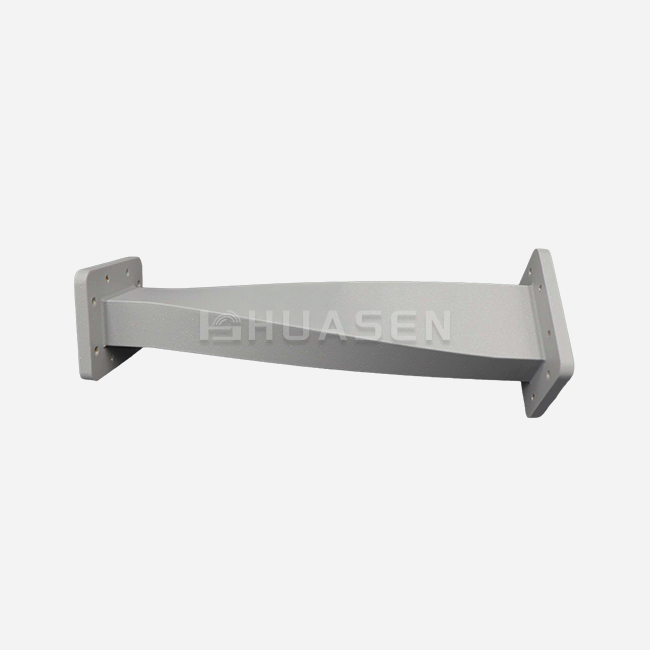
Physical connections have a big effect on how flexible and reliable a system is over time (wideband LNA). Standard coaxial connections, such as the N-type, SMA, and K-type, work with a range of frequencies and power levels. For base station uses, N-type connectors are perfect because they can handle more power and are very weatherproof for outdoor installs. SMA links work reliably up to 18GHz and have small sizes that make them good for equipment racks that are very close together. For millimeter-wave Low Noise Amplifiers, K-type connectors make the operating range go up to 40GHz. At frequencies above 30GHz, waveguide interfaces get rid of dielectric losses. This makes them necessary for high-frequency radar sites and satellite communications where every tenth of a decibel counts.
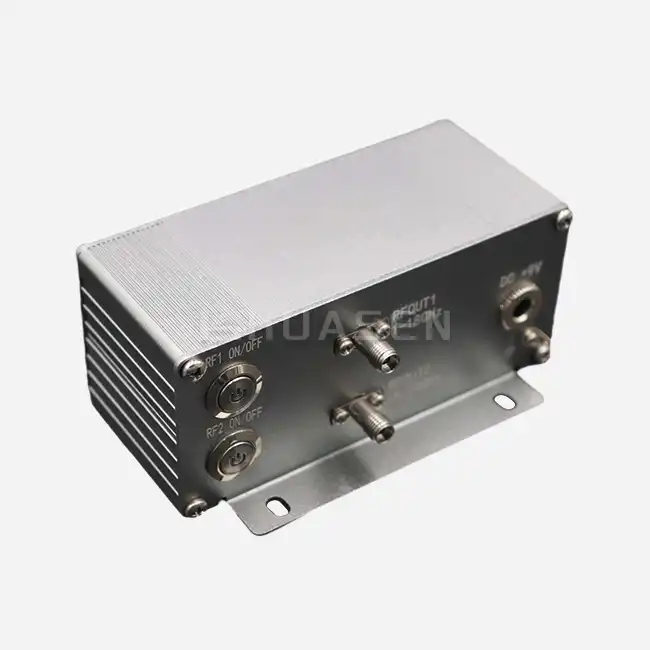
Mounting choices are limited by size and weight, especially when room is limited, like when drone payloads or small test equipment are used. Standard Low Noise Amplifiers take up a few cubic inches of space and are easy to install with a flange. AC-powered versions have built-in power transfer units that make installation even easier. Our product lines cover a wide range of installation situations because they are made in a flexible way that lets you make your own brackets without affecting the electrical performance.
Customisation Capabilities for Specialised Requirements
For many difficult uses, parameter optimisation goes beyond what is described in the catalogue. For example, frequency bands may need to be changed to work with specific communication protocols, or gain profiles may need to be changed to account for antenna patterns. Custom-tuned Low Noise Amplifiers that work best in certain spectrum parts help satellite ground stations that use extended C-band or Ka-band licenses do their jobs better. For electromagnetic compatibility, military systems need to meet MIL-STD-461 standards, which means that devices need more filters and protection than commercial-grade devices.
You can also customise the mechanical package, with choices like hermetically sealed housings, conformal coatings that resist humidity, and shock-mounting for installations that are likely to shake. We've made versions of the Low Noise Amplifier that are specifically made for marine settings that protect against corrosion better and for aircraft uses that meet DO-160 environmental standards. Customising the orientations, mounting hole patterns, and bias needs of connectors makes it easier to integrate them into current system designs. Depending on how complicated the configuration is, the procurement process for custom setups usually takes 8 to 12 weeks. During the definition and approval steps, engineering help is given.
Future-Proofing Your RF Systems with Advanced LNA Technologies
Emerging Semiconductor Materials
Gallium Nitride technology is a big step forward in Low Noise Amplifier design. It offers higher power density and better efficiency than older GaAs devices. GaN has mostly been used in power amplifiers, but new developments have made it possible for Low Noise Amplifier uses that can benefit from better uniformity and wider bandwidth. Extreme temperature ranges don't affect how well these devices work, which makes them useful in military and defence uses where dependability can't be compromised.
Silicon Germanium BiCMOS methods keep getting better, which lets digital control circuitry and amplification circuitry be combined on a single die. This combination cuts down on the number of parts needed, makes it easier to reproduce, and makes it possible for advanced features like digitally controlled gain steps and self-testing built right in. These units make it easier to keep track of supplies and lower the cost of putting together thousands of base stations or communication terminals for companies that make a lot of them.
Bandwidth Expansion and Multi-Band Operation
Ultra-wideband amplification that covers many octaves is in high demand because software-defined radio designs are becoming more popular. Modern systems use single wideband front-ends with digital channelisation more and more, instead of keeping separate Low Noise Amplifier lines for each frequency band. This design reduction is possible with devices that span 2–20GHz or 6–40GHz and have flat gain. This makes the hardware less complicated and the system more flexible.
This method works especially well for 5G massive MIMO systems that need to handle data from both the FR1 and FR2 frequency bands at the same time (RF LNA). Wideband Low Noise Amplifier amplification gets rid of hardware variations that are only used in certain bands. This simplifies processes and lets the spectrum be allocated in a way that changes as regulations do. Future 6G systems will probably use bands above 100GHz, which means amplification methods that keep noise levels low are needed. This is something we're working on right now to support the next generation of wireless infrastructure.
Power Efficiency and Integrated Solutions
Applications that run on batteries, like IoT devices and mobile terminals, need to use very little power. Modern low-noise amplifier designs use less than a milliwatt of power when they're not working, but they still have enough gain and noise to work for short-range conversation. Adding clever power management allows duty-cycled operation, where the Low Noise Amplifier only turns on during receive windows. This greatly increases the battery life.
AC-powered versions have built-in power conversion units that accept normal wall voltage and make their own regulated bias sources. This combination gets rid of the need for an external power source, which makes the installation simpler and cuts down on the number of possible ways for noise to travel. For equipment that is placed on a rack or that is kept outside, these self-contained units make setup easier and make the system more reliable by cutting down on the number of places where connections can go wrong.
Conclusion
In all RF uses, weak signal Low Noise Amplifier amplification is still needed for effective contact and sensing. Putting optimised Low Noise Amplifiers in the right places at key receiver front-ends is what makes the difference between your system meeting its sensitivity goals and not meeting practical needs. As wireless systems get better at handling higher frequencies, wider bandwidths, and harsher weather conditions, amplification technology keeps getting better by using better semiconductor materials, integrating power management, and making setups that can be changed to fit specific needs. Investing in high-quality amplification parts pays off in the form of higher link profits, lower infrastructure costs, and the ability to grow in the future. By knowing how these Low Noise Amplifiers work, the trade-offs in performance, and the specific needs of each application, you can make smart purchasing choices that balance technical needs with budget limits and delivery plans.
FAQ
1. What exactly determines an amplifier's noise figure?
The noise figure tells you how much noise the Low Noise Amplifier adds on top of what is thermally present at the input. This quantity is affected by the noise that is built into the transistor, the design of the matching network, and the working bias conditions. To get lower noise levels, all of these things need to be carefully optimised. That's why specialised Low Noise Amplifiers work much better in sensitive situations than general-purpose gain blocks.
2. How do these differ from power amplifiers in transmit chains?
The gadgets we've talked about focus on adding little noise and being very sensitive, and they usually work with low input power levels. Power amplifiers work in compression modes that aren't good for signal detection because they are focused on giving the most power with the best efficiency possible. Each part of a communication system does something very different and works best at the opposite end of the signal chain.
3. What specifications matter most when reviewing datasheets?
Noise figure at your working frequency should come first, then gain and frequency response stability. Check that the P1dB compression point gives you enough headroom above the expected signal levels, and make sure that the VSWR specs make sure that the Low Noise Amplifier works well with your antenna or the stages that came before it. For placements outside or in harsh environments, pay close attention to the power source needs and temperature stability requirements.
Partner with Huasen Microwave for Precision RF Amplification Solutions
Our research team at Huasen Microwave has spent thirty years making amplifier technologies better for the toughest uses in the world. We make devices that work with frequencies from 0.01GHz to 100GHz, have noise levels of up to 1.3dB, and have gains of 15dB to 50dB. These devices can connect to a wide range of devices, including those with N-type, K-type, and waveguide connections. Our basic product lines meet urgent needs, and our customisation options take into account specific frequency bands, environmental needs, and integration limitations. Whether you're planning the next generation of 5G infrastructure, improving satellite ground stations, or making advanced radar systems, our application engineers can help you with everything from the initial design to putting the system into production. Contact our team at sales@huasenmicrowave.com to talk about your amplification needs with an experienced Low Noise Amplifier source and get full technical specs, price for bulk purchases, and delivery schedules that fit your project needs.
References
1. Pozar, David M. Microwave Engineering, 4th Edition. Wiley, 2011.
2. González, Guillermo. Microwave Transistor Amplifiers: Analysis and Design, 2nd Edition. Prentice Hall, 1997.
3. Razavi, Behzad. RF Microelectronics, 2nd Edition. Prentice Hall, 2011.
4. Vendelin, George D., Anthony M. Pavio, and Ulrich L. Rohde. Microwave Circuit Design Using Linear and Nonlinear Techniques, 2nd Edition. Wiley, 2005.
5. Maas, Stephen A. Noise in Linear and Nonlinear Circuits. Artech House, 2005.
6. Gilmore, Rowan and Les Besser. Practical RF Circuit Design for Modern Wireless Systems, Volume II: Active Circuits and Systems. Artech House, 2003.
Send Inquiry