Yagi Antenna vs Omnidirectional Antenna: Which Performs Better?






2026-07-02 21:00:09
When comparing directional and omnidirectional options, the Yagi antenna always does better for targeted long-range communications because it has a small beamwidth and focused gain. This directional design gives stronger signals, less confusion, and more reliable links in point-to-point situations like 5G backhaul, satellite data, and radar systems. Most of the time, omnidirectional antennas work best when they need to cover a full 360 degrees. However, directional Yagi designs are still the best choice for system designers and RF engineers who care more about performance measures than broad coverage.
Introduction
The antenna you choose is one of the most important parts of modern wireless communication networks. It affects the quality of the signal, how well the network works, and how much it costs. The antenna type you choose has a direct effect on network uptime, data throughput, and repair processes. This is true whether you're setting up marine satellite links, launching base station front-ends for 5G infrastructure, or designing radar systems for aerospace uses.
When engineers and buying managers look for RF components, they have to make tough choices. Choosing between Yagi antennas and bidirectional antennas affects everything from how hard it is to set up to how easily the system can grow in the future. This comparison gives detailed details about changes in performance, which applications are best, and things to think about when buying. Knowing these differences can help you match the antenna's features with the needs of the operation. This way, you can make sure that your wireless infrastructure meets high standards for uptime while keeping the total cost of ownership low over long-term use.
Understanding Yagi and Omnidirectional Antennas
Yagi Antenna Design and Directional Characteristics
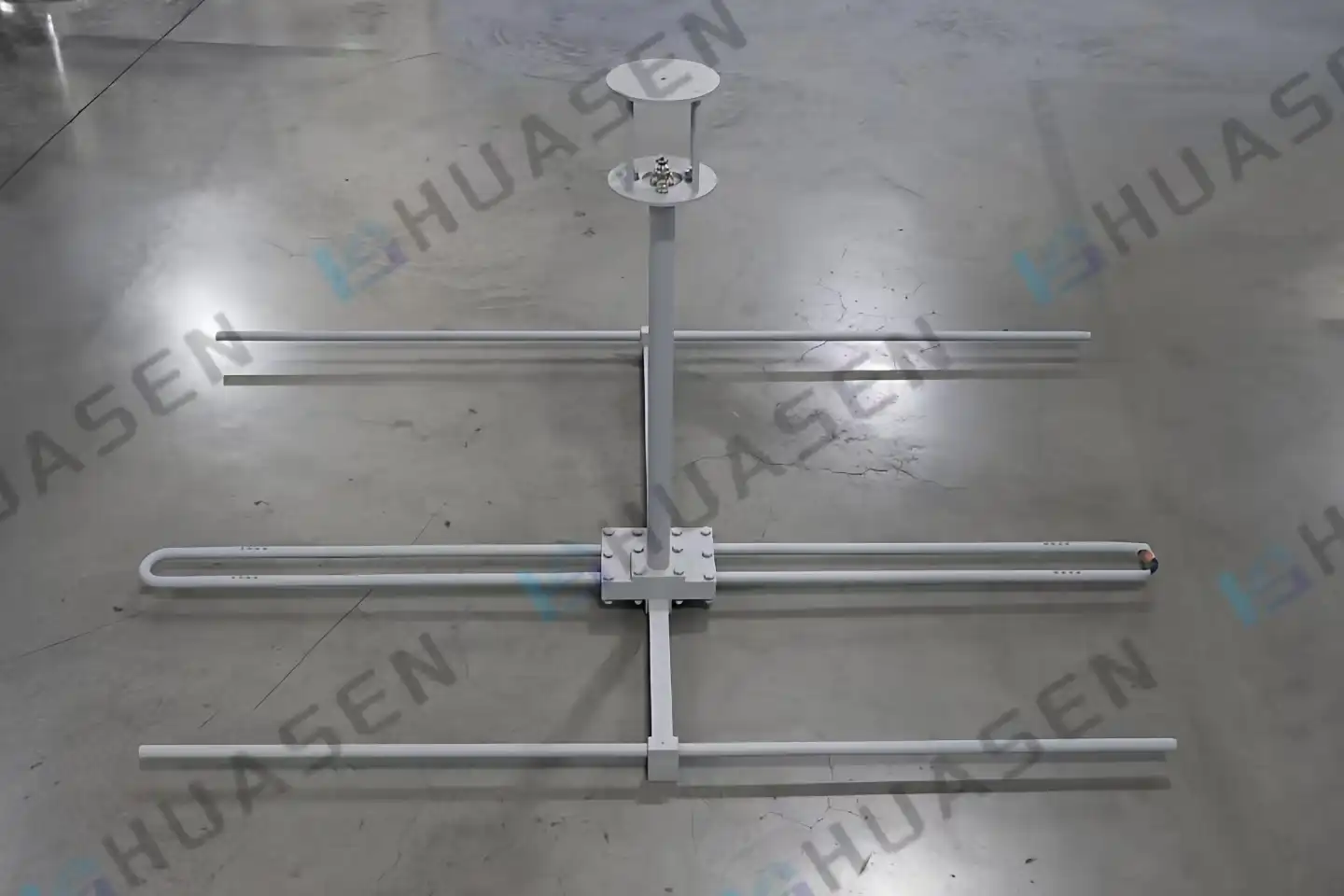
The Yagi antenna has a high gain because it has a parasitic element array, which is made up of a driven element, a reflector, and several directors. This makes the radiation pattern very directed. The RF energy is focused into a narrow band that is usually between 35° and 60° in both the horizontal and vertical directions. The Dual-polarized Yagi (DCP+DA series) from Huasen Microwave is an example of this design. It has a 3-12dB gain range from 200MHz to 2500MHz and is made of modules that can be put together in less than 15 minutes. It is necessary for backup connections between base stations or ground-to-aircraft communications where pinpoint accuracy is required because the narrow beamwidth reduces interference from nearby emitters and boosts the signal-to-noise ratio in point-to-point links.
Omnidirectional Antenna Coverage Patterns
Omnidirectional antennas send out energy evenly across a horizontal plane that is 360 degrees wide. This creates a donut-shaped pattern that works well in places where multiple client devices need to be connected at the same time. These antennas are often used in IoT sensor networks, Wi-Fi access points, and mobile base stations that serve urban cells. They don't need to be perfectly aligned when they are installed. On the other hand, they have less gain (2–6dB) than directional peers, which means they have a shorter useful range. Omnidirectional designs let you support changing device locations without having to manually reorient them. However, they use more power per link for point-to-multipoint uses like TV program distribution or warehouse inventory tracking systems.
Technical Comparison: Performance and Operational Differences
Gain and Radiation Pattern Analysis
The data shows big changes in how well things work. Depending on the length of the boom and the number of elements, Yagi antennas send 8 to 18dBi of power in specific directions. The Tri-band Yagi Standard Gain Antenna (SGABM) from Huasen Microwave has a fixed gain of 5.3dB and a bandwidth of 10% across the VHF and UHF bands. It is best for use with measurement tools and in RF testing situations. With the same amount of broadcast power, this directed energy means a longer range, often 5–10 times farther than omnidirectional options. Front-to-back ratios higher than 18dB actively block interference from unwanted directions. This is very important in areas with a lot of interference, such as cities with 5G deployments or military electronic countermeasure systems.
Omnidirectional antennas give up gain to cover a wide area evenly. The horizontal radiation pattern keeps the signal strength the same at all direction angles. However, vertical beamwidth compression (often 30 to 45°) slightly raises gain. This trait works well for cell phone base stations in service areas where mobile phones come from different directions.
Frequency Range and Polarization Capabilities
Operating frequencies set the limits on the size and efficiency of an antenna. Yagi designs work well in the VHF to microwave bands. Huasen Microwave's frequency range can be changed from 30MHz to 5800MHz, so it can be used for a wide range of things, from marine VHF radio to millimetre-wave radar systems. Advanced Yagi models with dual-polarization support MIMO setups, allowing 2x2 spatial multiplexing that doubles speed without adding more airwaves. Cross-polarization separation greater than 25dB keeps separate data streams from getting messed up, which is important for high-capacity wireless backhaul lines.
Omnidirectional antennas usually work with a single polarization and smaller bandwidths, which makes them less useful in complex MIMO setups. If the emitter and listener don't have the same polarisation, it can cost 3dB, so even with omnidirectional patterns, orientation is very important.
Installation Requirements and Environmental Resilience
To set up effective links, Yagi sites need to be perfectly aligned in terms of both azimuth and elevation. The mounting hardware has to be able to handle wind loads. Huasen Microwave's designs use 6063-T5 aluminum that has been anodized over 12 microns to make it resistant to rust, along with passivated stainless steel hardware that stops galvanic reactions. Because it is directional, it needs to be checked every so often to make sure that the position hasn't changed because of structural movement or extreme weather. Low wind resistance shapes keep mounting structures from being stressed, which is very important for installations on rooftops and towers higher than 30 meters.
Omnidirectional antennas are easier to install because they don't need to be aimed as precisely, but they still need to be mounted vertically with great accuracy for the best pattern symmetry. For outdoor industry settings, weatherproofing standards must meet at least IP67 grades. Lightning arrestors and good grounding are good for both types of antennas, especially in outdoor setups that serve remote telemetry or communications from an offshore station.
Application Scenarios: Which Antenna Fits Your Business Needs?
Point-to-Point Communication Excellence
The best way to use Yagi antenna systems is to connect faraway cell towers to key networks using wireless backhaul. A 15dBi Yagi pair that is 10 kilometres apart can keep a Gigabit Ethernet speed at 5.8GHz as long as there is a clear line of sight. This means that fibre installation across difficult terrain is not necessary, which would be expensive. Ground stations that track LEO groups use Yagi arrays with customizable beamwidth to stay locked on during satellite passes. The narrow pattern blocks interference from Earth. Yagi antennas are used in aerospace tracking systems on test ranges to keep an eye on aircraft instruments from far away. The directional gain makes up for the inverse square law power loss that comes with RF transmission.
Point-to-Multipoint Network Coverage
Omnidirectional systems work best in distribution networks that serve many ends. Omnidirectional receivers placed on the ceiling help warehouse management systems that use hundreds of RFID readers by providing even coverage across all inventory zones. When cities set up Wi-Fi in parks or train stops, they use omnidirectional base stations to serve devices that people come from any direction. Smart agriculture IoT networks that keep an eye on soil sensors in crop fields use bidirectional gateway antennas to connect to battery-powered nodes spread out in farming areas. The nodes' 360-degree pattern lets the sensors move with the seasons.
Harsh Environment Operations
Commercial ships' marine radio systems have to deal with vibrations, salt spray, and changes in temperature. Yagi antennas made with marine-grade materials and sealed connector kits keep working perfectly even after years of use offshore, serving important VHF emergency bands and satellite uplink channels. Yagi flexibility is used in defence applications like mobile radar units and tactical communication systems. Huasen Microwave's quick-deployment design lets it be put together in the field in less than 15 minutes without any special tools, which is very important when quick shifting is needed to keep up with operations. Antennas can withstand salty environments like those found in coastal sites and offshore platforms by passing tests like ASTM B117 salt spray validation for 500 hours or more.
Procurement Insights: Buying and Supply Considerations
Cost Structure and Bulk Purchasing Dynamics
The price of a Yagi antenna depends on how complicated it is to make and how precisely it needs to be made. Standard gain models usually cost 40–60% more than bidirectional units of the same type. However, dual-polarized Yagi systems with MIMO support are more expensive, but their higher efficiency makes up for it. Buying in bulk can save you money because orders over 50 units often qualify for tiered discounts that cut the cost per unit by 15–25%. When figuring out the total cost of ownership, you need to take into account differences in installation labour. For example, Yagi alignment needs 30–45 minutes more time per site than bidirectional installs, which can affect large-scale deployments with hundreds of base stations or test facilities.
Vendor Reliability and Certification Compliance
Reputable makers keep their quality management systems up to date with ISO 9001 and provide documents for MIL-STD-810 environmental testing. Huasen Microwave has been in business since 1993, which shows that it has the long-term technical skills and stable supply chain security that are needed for long-term infrastructure projects. Documentation that shows agreement with RoHS keeps purchasing from getting complicated in places that limit dangerous substances. Calibration certificates from vendors that can be traced back to national standards bodies give measurement-grade antennas used in RF testing and monitoring applications more confidence. This is because uncertainty budgets have a direct effect on the certification processes for these products.
Turnkey Solution Evaluation
Putting together antennas is easier when you buy complete systems that include mounting tools, RF cables, and weatherproofing items. Checking the compatibility of connectors (SMA, N-type, or waveguide connections) makes sure that the new equipment can work with old transceiver equipment without any problems. Lightning safety parts built into antenna assemblies keep sensitive receiver front ends safe from short-lived power spikes that often happen in open installations. Technical support that includes design advice, sample evaluation, and troubleshooting after deployment sets apart vendors who can work with you in more ways than just selling you parts. This is especially helpful when you need to change the frequency response or polarisation characteristics for specific uses.
Making the Right Choice: Decision Support for B2B Buyers
Assessing Project-Specific Requirements
Coverage area shape is the most important factor in deciding which antenna type (antenna yagi) is best. The Yagi antenna works best for linear paths between set ends, like microwave backhaul lines, building-to-building bridges, or point-of-sale terminal connections. Service areas that need to be connected all the time, like school Wi-Fi, teams of vehicles for tracking, or sensor meshes, need omnidirectional topology even though it lowers the efficiency of each link. Using the Friis transmission equation to figure out distances shows that Yagi antennas have a range that is 3–5 times longer than omnidirectional antennas of the same broadcast power and frequency. This means that there may not be a need for as many relay sites, which would save money on infrastructure.
Balancing Performance Metrics With Budget Constraints
Specifications for gain, beamwidth, and VSWR are all directly related to how well the link budget works. Omnidirectional economy may be fine for applications that don't mind higher mistake rates or lower throughput, but Yagi reliability gaps are needed for mission-critical systems like emergency services dispatch, utility SCADA networks, or rocket telemetry. When there is no line of sight (NLOS), dual-polarized Yagi setups with polarisation diversity reduce multipath fading. This lowers the chance of a loss from 5% to less than 0.1% in urban canyons where signal reflections cause harmful interference. This increase in stability makes charging more fair when the costs of downtime are higher than the differences between tools.
Future-Proofing Infrastructure Investments
Modular Yagi designs that let you change the frequency band protect you from changing spectrum assignments. Huasen Microwave's platforms, which range from 30MHz to 5800MHz and have field-changeable elements, can adapt to changes in regulations or service growth into nearby bands without having to update the whole antenna. Standardized mechanical interfaces across product lines make it possible to switch from single-polarization to dual-polarization setups as the needs of the network grow. This protects the growing investments in infrastructure. When vendors make their roadmaps public about new technologies like beamforming integration, active antenna systems, and millimetre-wave extensions, it helps procurement teams make sure that the purchases they're making now are in line with long-term plans for network evolution that usually last between 5 and 10 years in industry and defence settings.
Conclusion
In conclusion, when range, gain, and interference avoidance are important, Yagi antennas are the only way to go. This is why they are essential for point-to-point links, satellite communications, and precise RF tests. Omnidirectional designs are still the best for situations with multiple covering points where freedom is more important than directionality. Performance needs, environmental factors, and price constraints all play a role in choosing an antenna. Procurement managers gain when they work with manufacturers that offer customization options, strict testing methods, and quick expert help. When it comes to telecommunications infrastructure, aircraft systems, and industrial IoT deployments, strategic antenna choices directly improve network stability and operational efficiency.
FAQ
1. Can I Replace an Omnidirectional Antenna With a Yagi in My Wi-Fi Network?
If you use a Yagi antenna instead of a horizontal antenna, the Wi-Fi coverage is focused into a single direction, which could leave dead spots behind and next to the antenna. This is good for making connections go down hallways or across parking lots to certain buildings, but it slows things down for devices that are outside the narrow beamwidth. Careful site studies using predictive RF modelling help find out if directional concentration makes the network easier to use or less easy to use.
2. What Troubleshooting Steps Address Yagi Antenna Installation Problems?
Antenna pointing precision is confirmed by using spectrum analyzers or received signal strength markers to check the alignment. Common installation mistakes can be fixed by making sure the connectors are tight and checking the coaxial cable route for sharp turns that could cause impedance discontinuities. Cross-polarization error can cause a 3dB loss, but this can be avoided by making sure that the sender and receiver have the same polarization. Using inclinometers to check the vertical tilt angle makes sure that the beam centerline crosses the target receiver point, taking into account the curve of the Earth on long paths.
3. How Does Polarization Affect Signal Quality in Industrial Environments?
Metal buildings and machines in workshops cause multipath echoes that change the polarisation of signals in unpredictable ways. When signals fade on one polarisation path, dual-polarized Yagi antennas use polarisation diversity combining to restore them by using the orthogonal path. This keeps the connection going when single-polarization systems fail. Cross-polarization isolation greater than 25dB stops interference between the two lines, which allows MIMO operation that doubles output in these tough RF situations.
Partner With Huasen Microwave for Superior Antenna Solutions
Huasen Microwave can help you with your wireless infrastructure problems because they have over 30 years of experience in RF engineering. We have a wide range of products, such as Standard Gain Yagi antennas, Tri-band measurement-grade models, and new Dual-polarized Yagi systems that can work with bands from 30MHz to 5.8GHz. To make sure they work well in tough aircraft, telecommunications, and defence uses, each antenna goes through a lot of tests, such as PIM validation, anechoic chamber pattern verification, and environmental stress screening. We are a well-known company that makes Yagi antennas and have ISO 9001 certification and MIL-STD compliance paperwork. We offer customization services that let you make the frequency response, polarisation configuration, and mechanical connections exactly how you want them. Get in touch with our engineering team at sales@huasenmicrowave.com to talk about your project needs and get thorough technical proposals with cheap bulk prices for procurement managers and system integrators.
References
1. Balanis, Constantine A. "Antenna Theory: Analysis and Design." 4th Edition, John Wiley & Sons, 2016.
2. Stutzman, Warren L., and Gary A. Thiele. "Antenna Theory and Design." 3rd Edition, John Wiley & Sons, 2012.
3. Kraus, John D., and Ronald J. Marhefka. "Antennas for All Applications." 3rd Edition, McGraw-Hill Education, 2002.
4. Volakis, John L. "Antenna Engineering Handbook." 4th Edition, McGraw-Hill Education, 2007.
5. IEEE Standard 145-2013. "IEEE Standard for Definitions of Terms for Antennas." Institute of Electrical and Electronics Engineers, 2014.
6. Huang, Yi, and Kevin Boyle. "Antennas: From Theory to Practice." John Wiley & Sons, 2008.
Send Inquiry