Coaxial Directional Coupler Frequency Response Characteristics






2026-01-27 22:09:35
Engineers and system designers in satellite communications, radar systems, and RF test equipment face a critical challenge when attempting to maintain accurate signal monitoring across multi-octave frequency bands. The Coaxial Directional Coupler frequency response characteristics directly determine whether your power measurements remain reliable from 30 MHz to 40 GHz, or whether coupling flatness variations introduce measurement errors that compromise system performance, VSWR detection accuracy, and transmitter protection circuits. This comprehensive guide explores the technical factors governing frequency response behavior in coaxial directional couplers, empowering RF engineers to select and specify components that deliver consistent coupling performance across their required operating bandwidth while minimizing insertion loss and maintaining high directivity.
Understanding Coaxial Directional Coupler Frequency Response Fundamentals
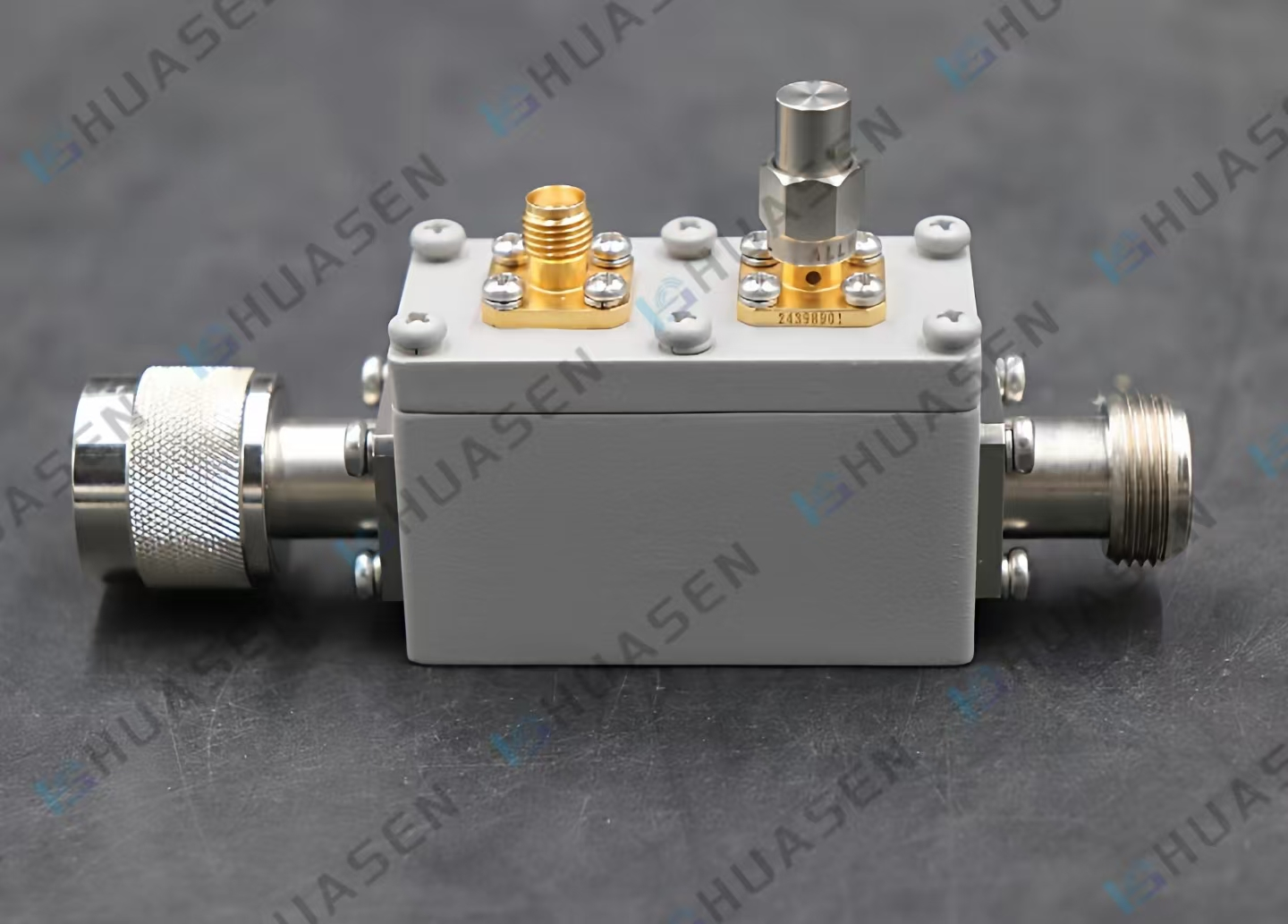
The frequency response characteristics of a Coaxial Directional Coupler represent one of the most critical performance parameters in RF and microwave systems, defining how the coupling factor varies across the operational bandwidth. Unlike simple passive components that exhibit relatively uniform behavior across frequency, directional couplers demonstrate inherently frequency-sensitive coupling mechanisms tied to the physical dimensions of their coupling structures. In quarter-wavelength coupled-line designs, which form the foundation of most broadband Coaxial Directional Coupler implementations, the coupling region measures precisely one-quarter wavelength at the center frequency of operation. As the operating frequency deviates from this center point, the electrical length of the coupling section changes relative to the signal wavelength, causing the coupling coefficient to vary and introducing what engineers term coupling flatness variation.
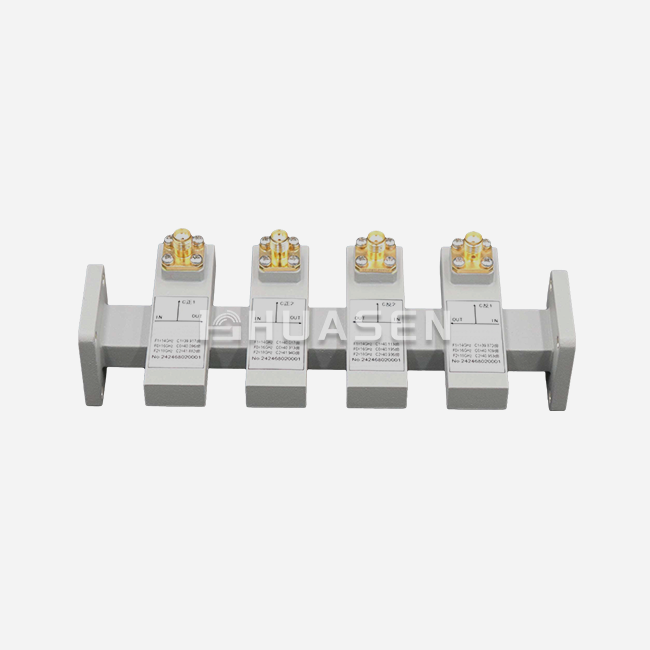
The relationship between physical geometry and electromagnetic wavelength creates a fundamental trade-off between coupling flatness and operational bandwidth. A single-section quarter-wavelength Coaxial Directional Coupler typically maintains acceptable coupling flatness within plus or minus 0.75 dB across an octave bandwidth, with center frequency positioning being critical to optimizing performance. Engineers designing systems requiring operation across multiple octaves must either accept greater coupling variation or implement multi-section coupling designs that employ multiple quarter-wavelength segments with progressively adjusted coupling factors. These multi-section architectures apply filter theory principles similar to those used in distributed-element filters, creating Butterworth, Chebyshev, or other response shapes that extend usable bandwidth while controlling ripple magnitude within specified tolerances. Huasen Microwave Technology Co., Ltd. has developed advanced multi-section Coaxial Directional Coupler designs that achieve flat coupling response from 0.03 to 40 GHz, addressing the broadband requirements of modern satellite ground stations, aerospace systems, and telecommunications infrastructure.
Coupling Mechanism and Wavelength Dependencies
The physical coupling mechanism in a Coaxial Directional Coupler relies on controlled electromagnetic field interaction between parallel transmission line structures separated by a precise gap dimension. When RF energy propagates along the main transmission line, time-varying electric and magnetic fields extend into the surrounding space, including the region between the main line and the adjacent coupled line. The coupled line positioned in proximity to the main line intercepts a fraction of these fields, inducing currents that propagate in both forward and backward directions along the secondary conductor. The directional characteristic that distinguishes these devices from simple power splitters emerges from the phase relationships between these induced currents. At the quarter-wavelength design frequency, forward-traveling waves coupled from different points along the coupling region arrive at the coupled port with proper phase alignment to add constructively, while backward-traveling components experience destructive interference and cancel at the isolated port.
This phase-sensitive coupling behavior means that frequency response characteristics depend critically on maintaining precise quarter-wavelength electrical length at the operating frequency. As frequency increases above the design center point, the physical coupling section becomes electrically longer than one quarter wavelength, shifting the phase relationships and altering both the coupling coefficient and the directivity performance. Conversely, at frequencies below center, the coupling section appears electrically shorter, again disrupting the ideal phase conditions. The Coaxial Directional Coupler designs from Huasen Microwave employ proprietary compensation techniques including tapered coupling sections and impedance transformation networks that mitigate these wavelength-dependent effects, extending flat frequency response across ultra-wide bandwidths. These advanced engineering approaches enable single Coaxial Directional Coupler units to replace multiple narrowband components in software-defined radio systems, multi-band satellite terminals, and broadband test equipment, reducing system complexity and improving reliability.
Temperature Effects on Frequency Response Stability
Environmental temperature variations introduce another dimension to Coaxial Directional Coupler frequency response characteristics through their influence on both physical dimensions and electrical properties of component materials. The coefficient of thermal expansion determines how the physical length of the coupling section changes with temperature, directly affecting the electrical length at any given frequency. A coupling section designed for optimal quarter-wavelength operation at room temperature will exhibit shifted frequency response when operating at temperature extremes ranging from minus 40 degrees Celsius to plus 85 degrees Celsius or beyond. Even relatively small thermal expansion coefficients on the order of 15 to 25 parts per million per degree Celsius can shift center frequency by several megahertz in high-frequency Coaxial Directional Coupler implementations, potentially degrading coupling flatness at band edges.
Beyond dimensional changes, the dielectric constant of insulating materials used in the coupling structure exhibits temperature dependence that further affects frequency response stability. Materials with high dielectric constant sensitivity to temperature cause the effective wavelength within the coupling region to change, shifting the frequency response curve along the frequency axis. Huasen Microwave Technology Co., Ltd. addresses these thermal stability challenges through careful material selection, matching the thermal expansion coefficients of housing materials with internal conductor structures to maintain consistent spacing across temperature excursions. The company's Coaxial Directional Coupler products incorporate temperature-compensated dielectric materials and mechanical design features that preserve frequency response characteristics within stringent specifications across extreme environmental conditions encountered in outdoor telecommunications installations, maritime communication systems, and aerospace applications where reliable performance cannot depend on controlled temperature environments.
Performance Parameters Defining Frequency Response Quality
Coupling Flatness and Ripple Specifications
Coupling flatness quantifies the maximum variation in coupling coefficient across the specified operating bandwidth, representing perhaps the most direct measure of Coaxial Directional Coupler frequency response quality. Engineers typically specify coupling flatness as a plus-or-minus decibel tolerance relative to the nominal coupling factor, such as within 1.0 dB across the full frequency range. This specification directly impacts measurement accuracy in applications requiring precise power monitoring, since variations in coupling factor translate directly into errors in the sampled signal amplitude relative to the main line power. A Coaxial Directional Coupler with poor coupling flatness requires frequency-dependent calibration curves and compensation algorithms, increasing system complexity and potentially limiting measurement speed in swept-frequency test applications.
Ripple, a related parameter, describes the periodic variation pattern that appears in the coupling response of multi-section designs, analogous to passband ripple in filter responses. While coupling flatness provides an overall tolerance envelope, ripple characterization reveals the fine structure of frequency response behavior, indicating whether the coupling varies smoothly or exhibits oscillatory behavior across the band. Stronger coupling factors such as 6 dB or 10 dB typically demonstrate superior flatness compared to weaker coupling levels of 30 dB or 40 dB, because the tighter coupling requires larger coupling apertures or closer line spacing that exhibits less sensitivity to small dimensional or frequency variations. Huasen Microwave's Coaxial Directional Coupler product line offers coupling factors from 10 dB to 50 dB with carefully optimized coupling flatness specifications tailored to each coupling level, ensuring that system designers can select appropriate devices that deliver the required measurement accuracy without over-specifying performance parameters that increase cost or compromise other characteristics.
Insertion Loss Frequency Behavior
Insertion loss represents the power dissipated in the Coaxial Directional Coupler main transmission path, reducing signal strength between input and output ports and directly impacting system link budgets. While coupling factor describes the designed power extraction to the coupled port, insertion loss accounts for resistive losses in conductors, dielectric losses in insulating materials, and reflection losses from impedance discontinuities. The frequency dependence of insertion loss stems primarily from skin effect in metal conductors, which causes current to concentrate in increasingly thin surface layers as frequency rises, effectively reducing the cross-sectional area available for current flow and increasing resistance. This phenomenon causes insertion loss to increase approximately with the square root of frequency, meaning that a Coaxial Directional Coupler exhibiting 0.2 dB insertion loss at 1 GHz might show 0.4 dB at 4 GHz and 0.6 dB at 9 GHz.
Dielectric losses contribute an additional frequency-dependent component, with loss tangent values determining how much electromagnetic energy converts to heat in insulating materials. Air-dielectric Coaxial Directional Coupler designs minimize these losses by eliminating solid dielectric materials from critical regions, achieving the lowest possible insertion loss across the frequency range while simultaneously providing superior power handling capability. Huasen Microwave's high-power CHPC series Coaxial Directional Coupler products employ air-dielectric construction and precision silver-plated conductors to minimize insertion loss, typically maintaining values below 0.5 dB even at frequencies approaching 40 GHz. This low insertion loss preserves precious transmitter power in high-power satellite uplink systems and ensures that measurement equipment introduces minimal disturbance to signals under test, maintaining the fidelity of complex modulated waveforms in telecommunications test environments.
Directivity and Isolation Performance Across Frequency
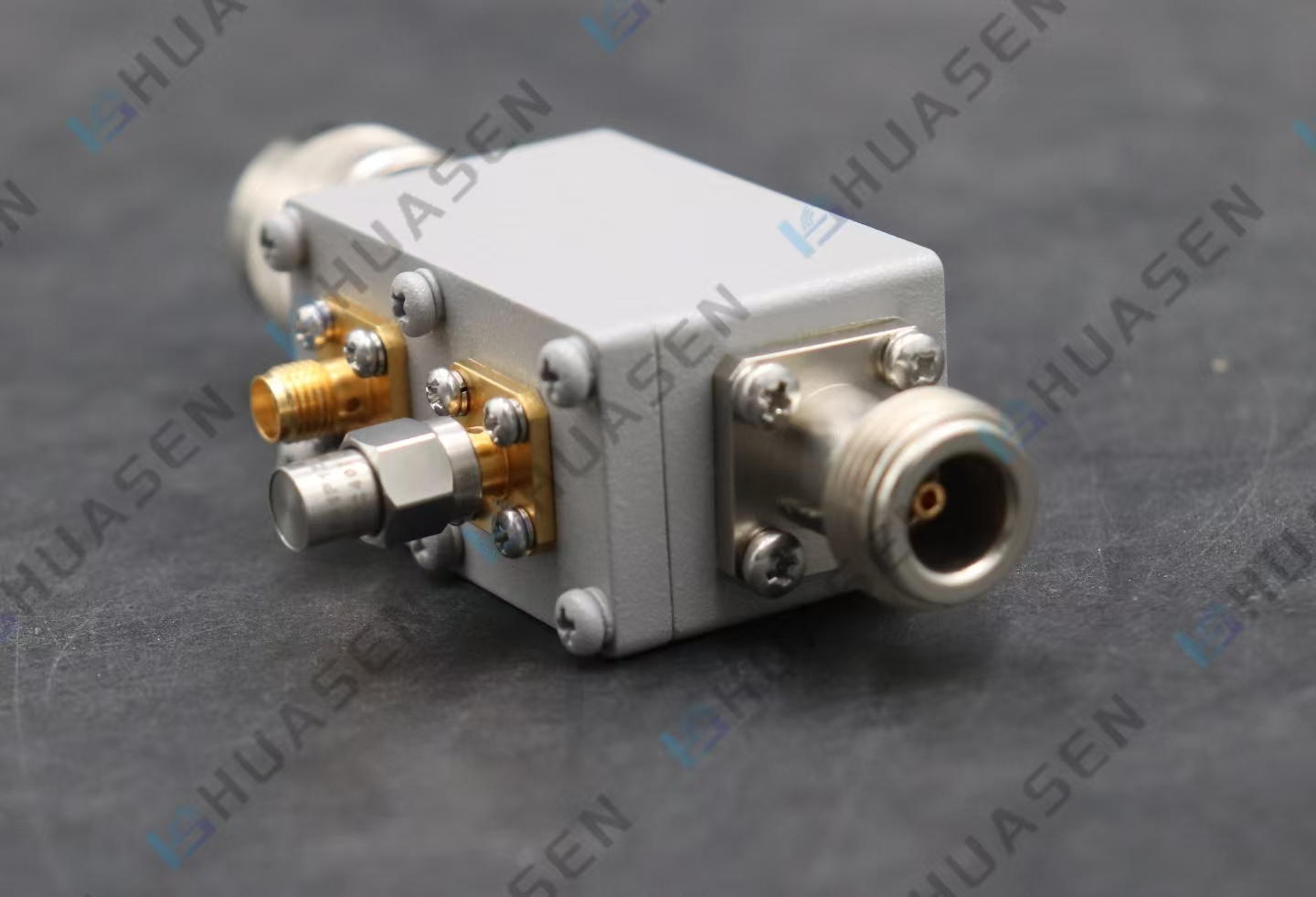
Directivity measures the Coaxial Directional Coupler's ability to discriminate between forward and backward traveling waves, quantified as the ratio of power coupled from a forward wave to power appearing at the coupled port from a backward wave of equal magnitude. High directivity ensures that the coupled port provides an accurate sample of forward power without contamination from reflected signals, enabling precise VSWR measurements and transmitter protection functions. The frequency response of directivity typically shows degradation at the edges of the operating bandwidth, where the quarter-wavelength condition becomes less accurate and the phase cancellation at the isolated port becomes imperfect. A well-designed Coaxial Directional Coupler maintains directivity above 20 dB across the majority of its bandwidth, with values potentially dropping to 15 dB near band edges.
Isolation, the related parameter measuring the signal attenuation between input and isolated ports, similarly exhibits frequency dependence tied to the precision of phase cancellation mechanisms. The coupled-line geometry that produces directional behavior relies on destructive interference of signals reaching the isolated port through different coupling paths, with interference effectiveness depending on maintaining precise quarter-wavelength spacing. Temperature variations, manufacturing tolerances, and frequency deviations from the design center all degrade isolation performance. Huasen Microwave Technology Co., Ltd. manufactures Coaxial Directional Coupler products using precision CNC machining with tolerances measured in micrometers, ensuring consistent conductor spacing and coupling gap dimensions that preserve high directivity across temperature and frequency variations. The company's ISO 9001 certified manufacturing process and comprehensive testing protocols verify that every Coaxial Directional Coupler unit meets specified directivity and isolation performance before shipment, providing customers with reliable components for demanding applications in radar systems, satellite communications, and precision RF test equipment.
Advanced Design Techniques for Broadband Frequency Response
Multi-Section Coupling Architectures
Extending the operational bandwidth of a Coaxial Directional Coupler beyond a single octave requires implementing multi-section coupling designs that cascade multiple quarter-wavelength segments with progressively optimized coupling factors. Each coupling section contributes to the overall frequency response, with careful adjustment of individual section coupling values enabling engineers to synthesize desired response shapes that balance flatness, bandwidth, and ripple magnitude. The design methodology borrows concepts from distributed-element filter theory, treating each coupling section as analogous to a filter element and applying synthesis techniques that produce Butterworth maximally-flat responses, Chebyshev equal-ripple responses, or customized responses optimized for specific application requirements.
A three-section Coaxial Directional Coupler design, for example, might employ coupling factors of 15 dB, 18 dB, and 15 dB in successive sections to achieve a Butterworth response extending across two octaves with coupling flatness within 1 dB. The symmetrical coupling factor distribution provides matched impedance conditions and minimizes reflections while the intermediate section weaker coupling helps flatten the overall frequency response. More complex designs incorporating five or seven sections can extend bandwidth to three octaves or more, though each additional section contributes insertion loss and increases manufacturing complexity. Huasen Microwave Technology Co., Ltd. has developed proprietary multi-section Coaxial Directional Coupler designs that achieve exceptional broadband performance, with standard catalog products covering frequency ranges from 0.03 to 40 GHz in single units. These advanced designs eliminate the need for component substitution when testing or operating across multiple frequency bands, simplifying system architecture in broadband software-defined radio platforms, multi-band satellite ground terminals, and comprehensive RF test laboratories requiring versatile measurement capabilities.
Impedance Transformation and Compensation Networks
Impedance matching throughout the Coaxial Directional Coupler structure profoundly influences frequency response characteristics, with impedance discontinuities causing reflections that degrade directivity, increase insertion loss, and introduce ripple in the coupling response. The coupled-line sections must present proper characteristic impedance to maintain power transfer efficiency, while transitions between coupling regions and connection points require careful impedance transformation to minimize reflections across the operating bandwidth. Quarter-wavelength impedance transformers positioned at critical junctions can extend low-frequency response by providing impedance matching that remains effective down to frequencies where the transformer length becomes electrically short. These transformer sections gradually transition impedance levels over their physical length, reducing the severity of impedance steps and lowering reflection coefficients.
Compensation networks incorporating series inductance or shunt capacitance can correct for frequency-dependent impedance variations inherent in coupled-line structures, flattening the frequency response by counteracting the natural roll-off characteristics of the coupling mechanism. These reactive elements must be precisely calculated and carefully implemented to avoid introducing new resonances or instabilities that could degrade performance. The Coaxial Directional Coupler products from Huasen Microwave incorporate advanced impedance matching networks designed through electromagnetic simulation and validated through comprehensive frequency-swept measurements in calibrated anechoic test chambers. With testing capabilities extending from 30 MHz to 220 GHz across multiple anechoic chambers and utilizing over 60 advanced test instruments including 40 vector network analyzers, Huasen Microwave verifies that impedance matching remains optimal across the entire specified frequency range, ensuring that customers receive Coaxial Directional Coupler components exhibiting predictable, stable frequency response characteristics suitable for critical telecommunications, aerospace, and defense applications.
Application-Specific Frequency Response Requirements
Satellite Communication Systems
Satellite communication ground stations demand Coaxial Directional Coupler devices with exceptional frequency response characteristics across the C-band, X-band, Ku-band, and Ka-band frequency allocations used for commercial and military satellite services. The frequency response must remain flat within tight tolerances to ensure accurate power monitoring during satellite acquisition, tracking, and data transmission operations. Uplink power control systems rely on coupled port signals to regulate transmitter output, with coupling variations directly affecting the accuracy of automatic level control loops that maintain optimal signal strength to the satellite while avoiding interference to adjacent systems. A Coaxial Directional Coupler with 1 dB coupling flatness variation could introduce 1 dB error in power control, potentially degrading link margins or causing excessive power that violates regulatory limits.
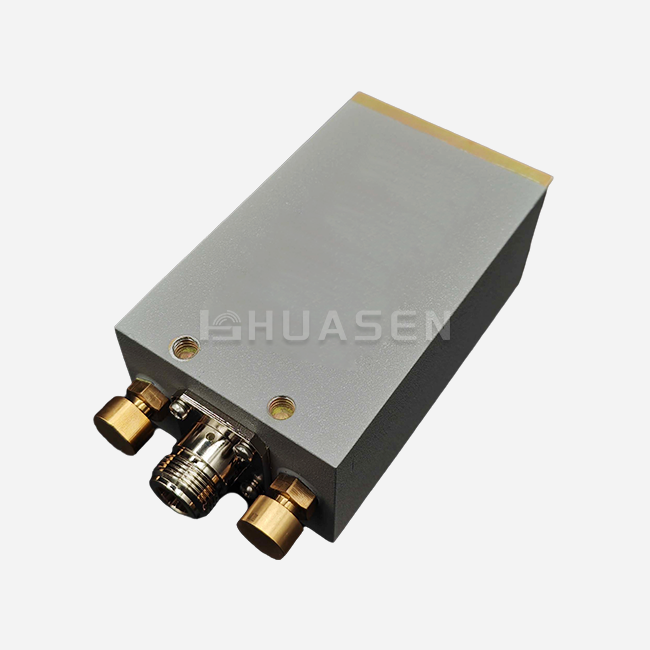
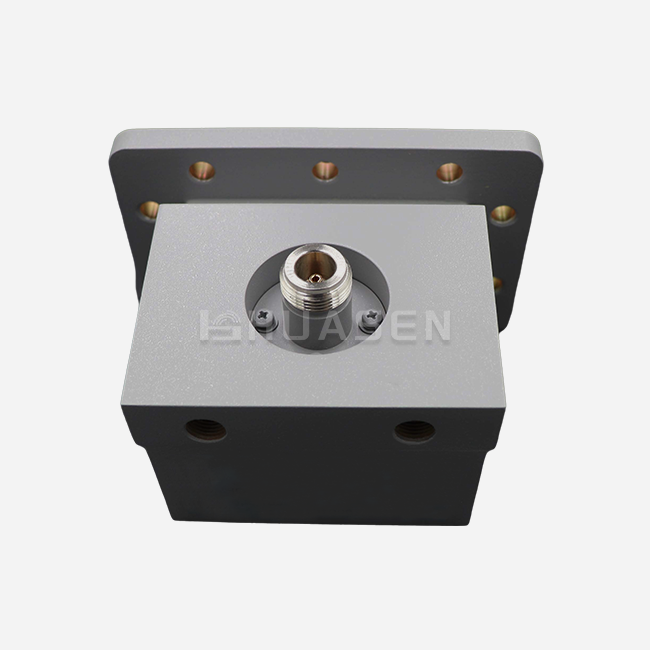
Huasen Microwave Technology Co., Ltd. specifically designs Coaxial Directional Coupler products for satellite ground station applications, with frequency coverage optimized for standard satellite bands and coupling flatness specifications that support precise uplink power control. The company's CDC bidirectional Coaxial Directional Coupler series enables simultaneous monitoring of forward power to the antenna and reflected power from impedance mismatches, providing comprehensive system monitoring in a single compact device. The fully sealed construction protects against moisture ingress and environmental contamination, ensuring stable frequency response characteristics during years of outdoor operation exposed to temperature cycling, humidity, and weather conditions. Installation compatibility with standard N-type, SMA, and 2.92 mm connectors simplifies integration into existing satellite terminal configurations, while the rugged aluminum housing with precision silver plating provides excellent shielding and long-term reliability demanded by commercial and government satellite communication providers worldwide.
Radar and Defense Systems
Radar systems operating across wide instantaneous bandwidths or frequency-hopping patterns require Coaxial Directional Coupler components with exceptionally flat frequency response to maintain measurement accuracy and system calibration across the operating spectrum. Modern phased array radars may transmit waveforms with several hundred megahertz of instantaneous bandwidth, demanding coupling flatness within fractions of a decibel to preserve the fidelity of sophisticated pulse compression waveforms and frequency-modulated continuous wave signals. Electronic warfare systems that must analyze and respond to unknown threats across multi-octave frequency ranges depend on wideband Coaxial Directional Coupler devices that maintain consistent coupling factors without requiring frequency-dependent calibration curves that would slow reaction times.
The high-power CHPC series Coaxial Directional Coupler from Huasen Microwave addresses the demanding requirements of radar and defense applications, supporting average power levels up to 500 watts while maintaining coupling flatness across frequency ranges extending from UHF through millimeter-wave bands. The robust construction with precision-machined metal housings and high-power internal terminations enables reliable operation in the high-field-strength environments characteristic of high-power radar transmitters. Military standards compliance including environmental testing to MIL-STD-810 specifications ensures reliable operation across temperature extremes, vibration, shock, and humidity conditions encountered in mobile radar platforms, airborne systems, and naval installations. Huasen Microwave's extensive testing capabilities, including microwave anechoic chambers ranging from 5 meters to 21 meters with frequency coverage to 220 GHz and dynamic ranges exceeding 50 dB, verify that frequency response characteristics meet stringent military and aerospace specifications before product release.
RF Test and Measurement Equipment
Vector network analyzers, spectrum analyzers with tracking generators, and automated test equipment rely fundamentally on Coaxial Directional Coupler components to separate forward and reflected signals, enabling accurate measurement of device characteristics across wide frequency spans. The frequency response flatness of the coupler directly impacts measurement uncertainty, with coupling variations appearing as systematic errors in reflection coefficient measurements, return loss determinations, and power measurements. Test equipment manufacturers specify extremely tight coupling flatness tolerances, often within 0.5 dB across multi-octave bandwidths, to achieve the measurement accuracy required for modern telecommunications components and systems. Coaxial Directional Coupler devices used in test equipment must also exhibit exceptional directivity to ensure that reflected signal measurements remain accurate even when measuring high-Q resonant devices or loads with significant impedance mismatches.
Huasen Microwave Technology Co., Ltd. serves the test and measurement industry with precision Coaxial Directional Coupler products designed specifically for laboratory and production test applications. The standard CC series provides coupling factors from 10 dB to 50 dB with directivity exceeding 20 dB, suitable for general-purpose test applications including swept frequency testing, production testing of RF components, and research laboratory characterization work. Custom coupling factor options enable test equipment manufacturers to optimize measurement range and sensitivity for specific applications, while frequency range customization supports specialized test requirements. With over 30 years of experience in RF and microwave component development and a dedicated technical office staffed by experienced RF engineers, Huasen Microwave provides application support to test equipment designers, helping optimize Coaxial Directional Coupler selection and integration to achieve desired measurement performance across the required frequency spans.
Conclusion
Coaxial Directional Coupler frequency response characteristics fundamentally determine measurement accuracy, system performance, and operational reliability across telecommunications, radar, aerospace, and test applications requiring precise RF power monitoring and signal analysis capabilities throughout broad frequency ranges.
Cooperate with Huasen Microwave Technology Co., Ltd.
Huasen Microwave Technology Co., Ltd., established in 1993, brings three decades of specialized expertise in high-frequency microwave and millimeter-wave component development, operating from a comprehensive 3,000-square-meter production and R&D facility. As a certified National High-Tech Enterprise and China Coaxial Directional Coupler manufacturer, we serve as a leading China Coaxial Directional Coupler supplier offering waveguide components, antennas, and coaxial devices to telecommunications, aerospace, and defense sectors globally. Our China Coaxial Directional Coupler factory employs advanced CNC machining, precision silver plating, and rigorous testing across three calibrated microwave anechoic chambers, ensuring every High Quality Coaxial Directional Coupler meets ISO 9001 standards. Contact our technical team at sales@huasenmicrowave.com to discuss your specific requirements and receive competitive Coaxial Directional Coupler price quotations for standard or custom designs. Whether you need Coaxial Directional Coupler for sale in small quantities or China Coaxial Directional Coupler wholesale volumes for production integration, our responsive engineering support and global shipping capabilities deliver reliable RF solutions that meet your performance specifications and delivery timelines.
References
1. Pozar, D.M. "Microwave Engineering, Fourth Edition" - Chapter on directional couplers and coupled-line theory, John Wiley & Sons, 2011
2. Riblet, H.J. "General Synthesis of Quarter-Wave Impedance Transformers" - IRE Transactions on Microwave Theory and Techniques, 1957
3. Cohn, S.B. "Optimum Design of Stepped Transmission-Line Transformers" - IRE Transactions on Microwave Theory and Techniques, 1955
4. Collin, R.E. "Foundations for Microwave Engineering, Second Edition" - IEEE Press Series on Electromagnetic Wave Theory, 2001
5. Jones, E.M.T. and Bolljahn, J.T. "Coupled-Strip-Transmission-Line Filters and Directional Couplers" - IRE Transactions on Microwave Theory and Techniques, 1956
Send Inquiry