Circularly Polarized Horn Antenna vs Linear Polarization Explained






2026-04-24 17:23:52
Selecting a circularly or linearly polarized horn antenna, such as a circularly polarized horn antenna, will greatly affect how well your system works in areas with varying tracks, how stable the signal is, and how easy it is to use. Electrical field waves that are circularly polarized move in a spiral shape. As a result, the signal is less sensitive to direction, and the fade takes longer. Least-squares polarized light waves move in a straight line. Just the right amount of waves is needed for this to make sense. By understanding these differences, engineers can pick the best choice for tasks like checking RF signals, satellite communications, and tracking systems that must not interfere with the signal.
Understanding Polarization: The Foundation of Antenna Design
Electricity waves from an antenna are facing one way or another, which is shown by their polarization. This is what makes messages move, connect with things, and reach people.
When electric forces are lined up in a certain way, this is called linear polarization. It could go up or down. These waves move through space in a straight line. It works well this way as long as the antennas on both ends stay straight. It's not as strong, though, if the antennas are flipped or not lined up straight.
As the wave moves, circular polarization keeps turning the electric field. The field moves in a circle or an ellipse, making designs that rotate to the right or left. When the antenna direction changes a lot, like in satellite communications with moving ground stations or marine links on ships that are moving, horn antennas with circular polarization work best.
This is what makes the three main differences:
- Orientation tolerance: circular shapes keep signal strength even if they aren't lined up straight.
- Multipath resilience: Waves that spin away from mirrored signals cause less disturbance.
- System complexity: Changing waves with circular polarization needs extra parts.
Linear polarization is a cost-effective option if you work in a controlled lab setting with fixed antenna sites. When used in the field where the direction can change quickly, circular polarization is a reliable option that is worth the money.
Technical Implementation: How Horn Antennas Achieve Circular Polarization
Creating circularly polarized waves requires transforming linear polarization into rotating fields. Two established methodologies dominate current designs.
Linear-to-circular polarization converters use dielectric plates or conductive elements inside the waveguide feed. These components introduce a 90-degree phase shift between orthogonal field components. The result: two perpendicular linear waves combine to form a circularly polarized wave. This approach suits narrowband applications requiring precise axial ratio control.
Dual linear polarization orthogonal excitation feeds two perpendicular linear modes simultaneously with a controlled phase difference. Engineers design specialized waveguide structures that maintain equal amplitude while introducing the necessary 90-degree temporal offset. This technique enables broader bandwidth operation compared to single-feed conversion methods.
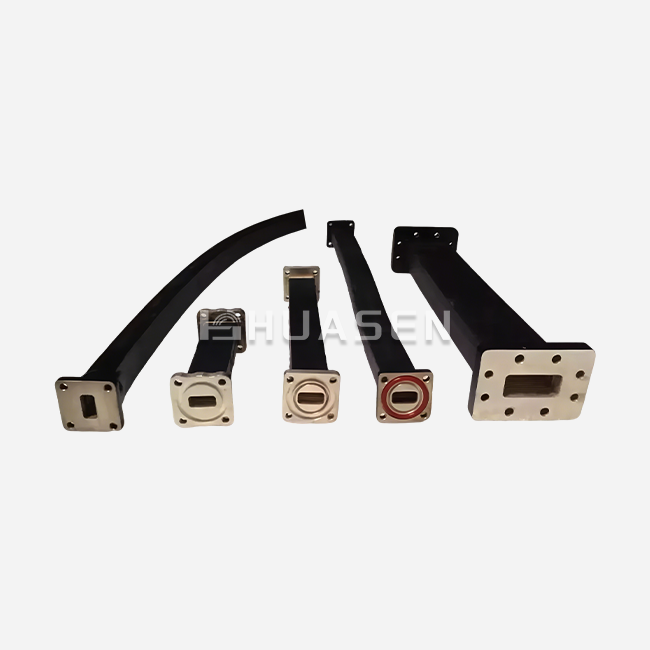
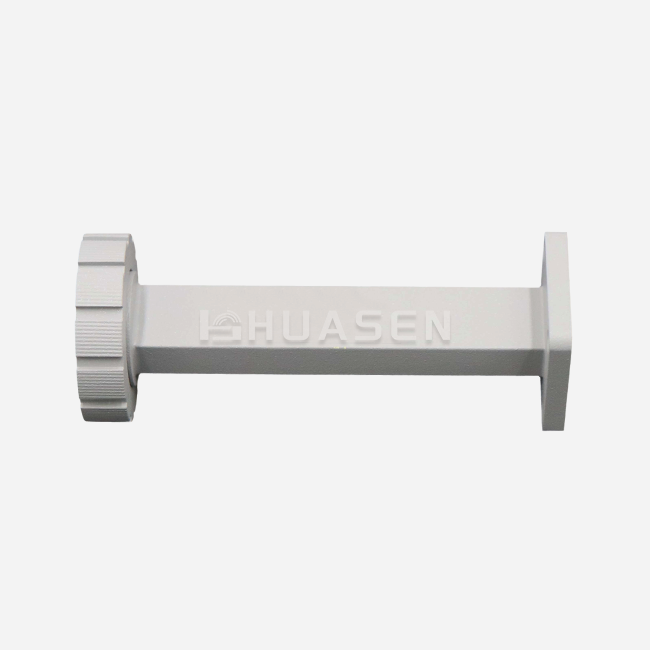
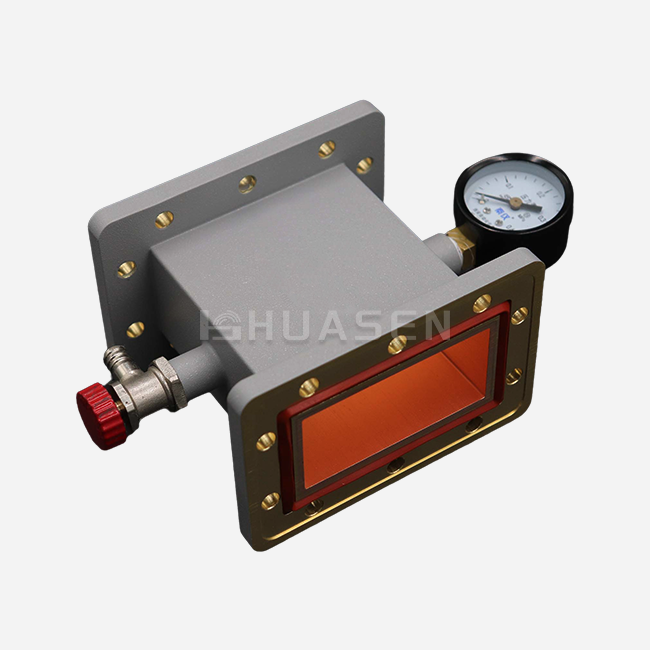
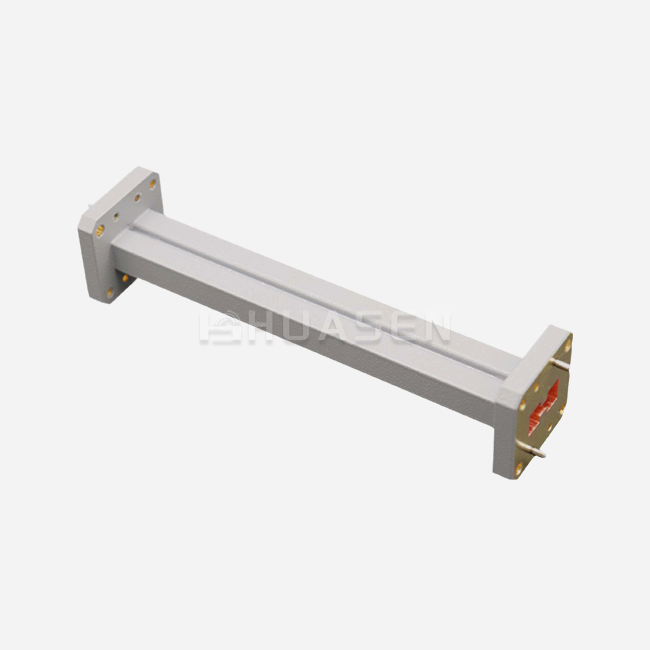
Huasen Microwave's Circularly Polarized Horn Antenna (CPHA) leverages both methodologies depending on frequency and bandwidth requirements. The cone-shaped horn geometry optimizes radiation patterns while step diaphragm structures fine-tune impedance matching across operational frequencies.
Design elements that determine performance:
- Waveguide feed geometry controls mode purity and phase consistency.
- Horn flare angle affects beam width and antenna gain distribution
- Dielectric or conductive inserts manage phase relationships between orthogonal components.
- Aperture dimensions establish antenna bandwidth and far-field pattern characteristics.
If you need ultra-wide bandwidth coverage spanning multiple communication bands, broadband dual linear polarization synthesis delivers superior performance. For applications demanding maximum axial ratio purity at specific frequencies, step diaphragm configurations provide exceptional results.
Performance Metrics: What Engineers Actually Measure
Understanding specification sheets for a circularly polarized horn antenna requires familiarity with key performance indicators that separate adequate solutions from exceptional ones.
Axial ratio quantifies polarization purity. Perfect circular polarization achieves 0 dB, meaning equal electric field components with a precise 90-degree phase difference. Real-world implementations introduce imperfections. Huasen Microwave's CPHA achieves axial ratio ≤ 0.5 dB across operational bands—a specification that directly translates to maintained signal quality in cross-polarized scenarios.
Antenna gain measures how effectively the antenna concentrates radiated power. Horn antenna design inherently provides moderate to high gain depending on aperture size. Huasen's offerings span 10-25 dB selectable gain, allowing system designers to balance beamwidth requirements against directivity needs.
Return loss and VSWR indicate impedance matching quality. Poor matching wastes transmitted power and introduces signal reflections that corrupt data. Achieving low VSWR across wide bandwidths challenges circular polarization designs because the phase-shifting components introduce frequency-dependent impedance variations.
S-parameters provide comprehensive antenna characterization. S11 measurements reveal input reflection coefficients, while S21 (in antenna array configurations) shows transmission characteristics. These metrics guide system integration and troubleshooting.
Application-Specific Advantages: Matching Technology to Requirements
Different operational contexts demand distinct polarization strategies. Real-world deployment experience reveals where each approach excels.
Satellite communications and telemetry represent the primary domain for circular polarization dominance. Spacecraft rotate during orbital maneuvers; ground terminals track across the sky. Horn antenna circular polarization implementations eliminate the need for constant mechanical rotation to maintain alignment. The 3 dB polarization mismatch loss that would occur with cross-polarized linear antennas disappears.
Base station front-end systems for 5G and emerging 6G networks face different challenges. Urban environments create severe multipath propagation as signals reflect from buildings and vehicles. Circular polarization's ability to reject reflected signals with opposite rotation senses reduces interference. Huasen's CPHA designs covering 0.5-110 GHz span from sub-6 GHz 5G bands through millimeter-wave frequencies planned for 6G deployment.
Radar and electronic countermeasures benefit from polarization diversity. Circular polarization enables target discrimination based on reflection characteristics. Metallic surfaces reverse the rotation sense, while complex targets create depolarization effects that reveal structural information.
Communications testing and RF evaluation laboratories require antennas with predictable, stable characteristics. The phase center stability and antenna radiation pattern consistency of well-designed horn antennas make them reference standards. Polarization purity directly affects measurement accuracy when characterizing devices under test.
Three operational scenarios where circular polarization proves essential:
- Mobile maritime communications—Ship motion makes fixed antenna alignment impossible
- Drone telemetry and control links – Aircraft attitude changes continuously during flight
- Point-to-multipoint broadcasting—Receiver antennas at various orientations need equal signal strength
If you deploy systems where environmental conditions prevent precise antenna alignment, circular polarization eliminates a critical failure mode. For controlled indoor environments with line-of-sight paths, linear polarization reduces system cost without performance penalties.
Engineering Considerations: Design Trade-offs and Solutions
No antenna technology delivers universal advantages. Informed selection requires understanding inherent trade-offs and mitigation strategies.
Bandwidth limitations affect circular polarization more severely than linear designs, particularly for horn antenna circular polarization. The phase-shifting components that create circular polarization introduce frequency-dependent behavior. Maintaining an axial ratio below 3 dB across wide fractional bandwidths demands sophisticated design. Huasen Microwave addresses this through customizable bandwidth configurations ranging from narrowband (≤5% fractional bandwidth) for single-frequency applications to ultra-wideband (≤67%) for frequency-agile systems.
Antenna efficiency suffers slightly in circular polarization implementations due to additional components in the signal path. Resistive losses in dielectric converters or imperfect mode coupling in dual-feed designs reduce radiated power. High-quality waveguide construction and precision manufacturing minimize these losses.
Mechanical complexity increases with circular polarization. Dual-feed implementations require precise orthogonal feed positioning and phase-matched power division networks. Single-feed converter designs add components inside the waveguide structure. These factors affect antenna size, weight, and manufacturing cost.
Environmental adaptability becomes crucial for outdoor deployments. Temperature variations alter dielectric properties and metallic dimensions, shifting axial ratio performance. Huasen's designs incorporate temperature-compensated materials and robust mechanical construction meeting MIL-STD environmental specifications.
Five practical design considerations:
- Connector compatibility – SMA, K-type, and WR-series waveguide interfaces match existing infrastructure
- Mounting configurations – Flange designs accommodate diverse installation scenarios
- Power handling—Peak and average power ratings must exceed operational requirements
- Antenna impedance matching – Broadband matching networks maintain VSWR across operational frequencies
- Phase center stability – Consistent phase center location across frequency prevents beam pointing errors
If you require ruggedized solutions for harsh outdoor environments, prioritize designs with proven environmental testing compliance. For laboratory applications, focus on electrical performance specifications like axial ratio and return loss.
Advantages of Huasen Microwave's Circularly Polarized Horn Antenna Solutions
Selecting antenna suppliers involves evaluating technical capability, manufacturing consistency, and support infrastructure. Huasen Microwave's three decades of specialized experience in RF and microwave components translates into measurable advantages:
- Exceptional axial ratio performance – Achieving a ≤0.5 dB axial ratio across operational bandwidths ensures polarization purity that maintains signal integrity in demanding applications, directly reducing bit error rates in digital communications
- Comprehensive frequency coverage – Spanning 0.5-110 GHz with continuous coverage options eliminates the need for multiple antenna types, simplifying inventory management and system design while reducing procurement complexity.
- Flexible gain configurations—Selectable gain from 10-25 dB allows precise beamwidth control, enabling engineers to optimize between coverage area and directivity based on specific link budget requirements
- Customization depth – Bandwidth tailoring from narrowband (≤5%) to ultra-wideband (≤67%) fractional bandwidth accommodates both single-frequency and frequency-agile applications without performance compromises
- Multiple technical implementations—Offering cone-shaped horn, broadband dual linear polarization synthesis, and step diaphragm type designs provide application-specific optimization rather than one-size-fits-all approaches
- Advanced design methodologies—Leveraging electromagnetic simulation tools alongside empirical validation ensures predictable performance that matches specification sheets to delivered hardware
- Connector variety—Supporting standard SMA, precision K-type, and waveguide interfaces (WR-series) ensures compatibility with existing test equipment, transceivers, and system architectures
- Environmental qualification—Designs meeting MIL-STD, RoHS, and ISO standards demonstrate reliability in temperature extremes, vibration, humidity, and corrosive atmospheres common in outdoor deployments
- Manufacturing precision—CNC machining and precision assembly techniques maintain tight dimensional tolerances critical for millimeter-wave frequency performance and consistent unit-to-unit characteristics
- Low insertion loss architecture – Optimized waveguide transitions and minimal component count in the signal path maximize transmission efficiency, preserving transmitted power and receiver sensitivity.
- Robust mechanical design – Antenna aperture construction and mounting interface engineering withstand installation stresses and operational loads in mobile platforms, including aircraft, drones, and maritime vessels
- Power handling capability – Thermal management and voltage breakdown considerations enable operation at power levels required for radar, jamming, and high-data-rate communications applications.
- Documented performance data—Comprehensive calibration and test data, including S-parameters, radiation patterns, and polarization characteristics, support system integration and regulatory compliance
- Supply chain stability – Established component sourcing and production capacity ensure reliable delivery schedules for both prototype quantities and volume production runs
- Technical support infrastructure—Applications engineering assistance with link budget analysis, mounting configuration optimization, and integration troubleshooting accelerates development timelines
Huasen Microwave's integration of waveguide component expertise with antenna design capability creates solutions that address the complete signal path. Components manufactured in-house maintain quality control that multi-vendor assemblies cannot match. This vertical integration reduces lead times and enables rapid customization iterations.
If you face demanding axial ratio requirements for satellite ground stations or need ruggedized antennas for military electronic warfare systems, Huasen's three-decade track record in aerospace and defense applications provides confidence. For high-volume 5G infrastructure deployments, established production capacity and consistent quality reduce procurement risk.
Cost-Benefit Analysis: Investment Versus Operational Value
Procurement decisions balance initial acquisition cost against lifecycle operational value, including for horn antenna circular polarization. Circular polarization commands price premiums over equivalent linear designs due to additional components and design complexity.
Quantifiable benefits that offset higher initial costs:
- Reduced installation labor—Elimination of precise angular alignment requirements decreases commissioning time
- Lower maintenance expenses – Systems tolerant of mechanical drift require fewer service calls
- Improved link availability – Maintained signal quality during platform motion prevents costly service interruptions
- Simplified ground segment design – Satellite earth stations eliminate mechanical polarization rotation mechanisms
- Multi-mission flexibility—A single antenna inventory serves diverse applications with different orientation requirements
Total cost of ownership calculations should include these operational factors. A satellite ground station using circular polarization may cost 40% more than a linear equivalent, but eliminating a motorized polarization rotator saves 30% while reducing failure modes.
Volume procurement considerations affect unit pricing significantly. Custom designs involve non-recurring engineering costs amortized across order quantities. Huasen Microwave's design-for-manufacturing methodology optimizes production efficiency, reducing per-unit costs in volume orders.
If you operate multiple ground stations tracking LEO satellite constellations, circular polarization's operational advantages justify premium pricing through reduced system complexity. For fixed point-to-point links with stationary endpoints, linear polarization delivers adequate performance at lower cost.
Integration and Testing: Ensuring Specification Compliance
Antenna performance depends critically on proper integration and validation. Even excellent antenna designs underperform when incorrectly installed or inadequately tested.
Mounting considerations affect radiation pattern integrity. Ground-plane interactions alter sidelobe levels and introduce pattern distortion. Huasen provides mounting guidelines specifying minimum clearances and recommended installation configurations based on electromagnetic simulation.
Connector torque specifications prevent intermittent contacts that corrupt signals. Under-torqued connectors introduce variable return loss as vibration causes micro-movements. Over-torquing damages the connector bodies and launches unwanted modes.
Weatherproofing requirements for outdoor installations protect against moisture infiltration that shifts electrical characteristics. Proper sealing of connector interfaces and antenna aperture covers prevents performance degradation.
Validation testing should verify:
- Return loss across operational bandwidth – Confirms impedance matching meets specifications
- Axial ratio measurements – Validates polarization purity at critical frequencies
- Radiation pattern cuts – Verifies beamwidth, sidelobe levels, and pattern symmetry
- Gain measurements – Establishes actual directivity against specification
Huasen Microwave provides test data with shipped antennas, including measured S-parameters and pattern data. This documentation supports system validation and provides baseline references for field troubleshooting.
If you lack in-house antenna test facilities, request comprehensive factory test data during procurement. For critical applications, consider independent third-party verification testing to validate performance claims.
Conclusion
Choosing between circular and linear polarization fundamentally shapes system architecture and operational capabilities. Circular polarization excels where antenna orientation varies, multipath interference threatens signal integrity, or operational simplicity outweighs component costs. Linear polarization remains appropriate for controlled environments with fixed geometries. Huasen Microwave's comprehensive CPHA portfolio addresses diverse requirements through customizable bandwidth, gain, and frequency configurations backed by rigorous testing and proven reliability. Understanding application-specific demands allows engineers to select optimal solutions that balance performance requirements against budget constraints. Proper integration practices and validation testing ensure delivered systems meet expectations across operational lifecycles.
Partner with Huasen Microwave for Your Circularly Polarized Horn Antenna Requirements
System designers and procurement specialists searching for a reliable Circularly Polarized Horn Antenna manufacturer require partners who combine technical depth with responsive support. Huasen Microwave Technology Co., Ltd. delivers three decades of specialized RF and microwave expertise, serving aerospace, defense, telecommunications, and research sectors worldwide. Our engineering team provides design assistance from initial specification review through integration testing. Request detailed technical specifications, custom bandwidth configurations, or sample units by contacting our applications engineering team at sales@huasenmicrowave.com. Let our proven track record in demanding applications support your next project's success.
References
1. Balanis, Constantine A. "Antenna Theory: Analysis and Design." Fourth Edition, John Wiley & Sons, 2016.
2. Milligan, Thomas A. "Modern Antenna Design." Second Edition, IEEE Press, 2005.
3. Rao, S.K. "Parametric Design and Analysis of Multiple-Ridged Waveguide Phasing Sections for Wideband Circular Polarization." IEEE Transactions on Microwave Theory and Techniques, Vol. 67, No. 12, 2019.
4. Granet, Christophe and Bird, Trevor S. "Horn Antennas." Encyclopedia of RF and Microwave Engineering, John Wiley & Sons, 2005.
5. IEEE Standard 145-2013. "IEEE Standard for Definitions of Terms for Antennas." Institute of Electrical and Electronics Engineers, 2014.
6. Kumar, Anil and Sharma, S.B. "Measurement of Antenna Radiation Characteristics on Far-Field Ranges." Defence Science Journal, Vol. 61, No. 4, 2011.
Send Inquiry