Circularly Polarized Horn Antenna Construction and Key Components






2026-04-22 21:34:27
When engineers design antenna systems for mission-critical satellite links, radar sites, or aerospace platforms, they often have to deal with the problem of keeping the signal strong when the sender and receiver orientations change without warning. This problem can be fixed by a Circularly Polarized Horn Antenna, Circularly Polarized Horn Antenna which sends out electromagnetic waves in which the electric field vector continuously turns in a circle, either to the right or to the left. This turn makes it possible for the antenna to keep communicating reliably even if the terminals are not physically lined up. This makes it essential for a wide range of tasks, from tracking LEO satellites to testing 5G base stations. Successful deployments are distinguished from expensive retrofits by an understanding of the internal design and component decisions that enable this performance.
Fundamentals of Circularly Polarized Horn Antennas
Defining Circular Polarization in Horn Structures
When two orthogonal linear electric field components fluctuate with the same amplitude but a 90-degree phase difference, you have circular polarization. This is possible in horn antennas thanks to special parts inside the antennas called polarizers. These parts change the linearly polarized wave from a waveguide feed into a circularly polarized output. Differential phase delays between the vertical and horizontal field components as they move through the antenna neck are what make the physical process work.
Operational Principles and Physics
The waveguide that feeds the horn starts out supporting a dominating mode, which is usually TE10 in rectangular guides. Polarizers, like stepped septa or dielectric vanes, divide this mode into two linear components that are not parallel to each other and add a quarter-wavelength phase shift. The electric field vector forms a spiral in space when they come back together at the opening. This is called circular polarization. Whichever part is in phase leads to the direction of rotation (RHCP or LHCP).
Key Design Elements Enabling Circular Polarization
To get circular polarization that stays the same over a large bandwidth, you need to carefully control a number of design factors. The horn taper angle determines how well the circular mode spreads, and the polarizer shape must keep the phase relationship across frequencies. Cone-shaped spikes naturally support symmetric field distributions, which makes the security of the axial ratio better. To keep impedance matching and phase balance from the cutoff frequency to the upper frequency limits, broadband designs often use curved surfaces or multi-section transformers.
Performance Metrics for Procurement Evaluation
Three technical specs should be the main target of procurement teams: the axial ratio, the cross-polarization discrimination, and the voltage standing wave ratio. When the axial ratio is less than 1.5 dB, it means that the polarization is very pure. Premium units can hit 0.5 dB. In dual-polarized systems, cross-polarization values above -20 dB make sure that crosstalk is kept to a minimum. VSWR less than 1.5:1 across the band shows that power is being transferred efficiently, lowering insertion loss and heat stress in high-power radar uses.
Construction and Key Components of Circularly Polarized Horn Antennas
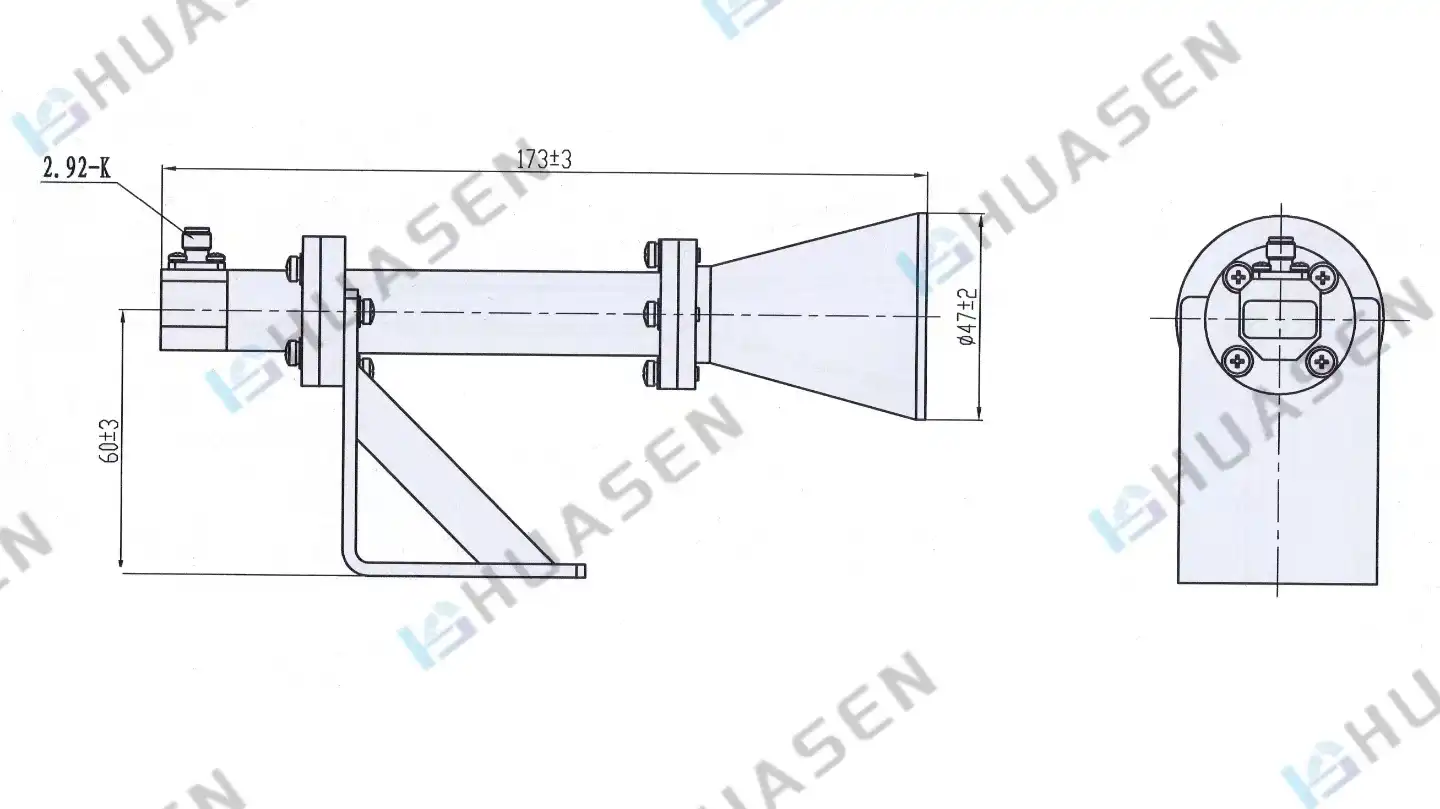
Horn Aperture and Flare Geometry
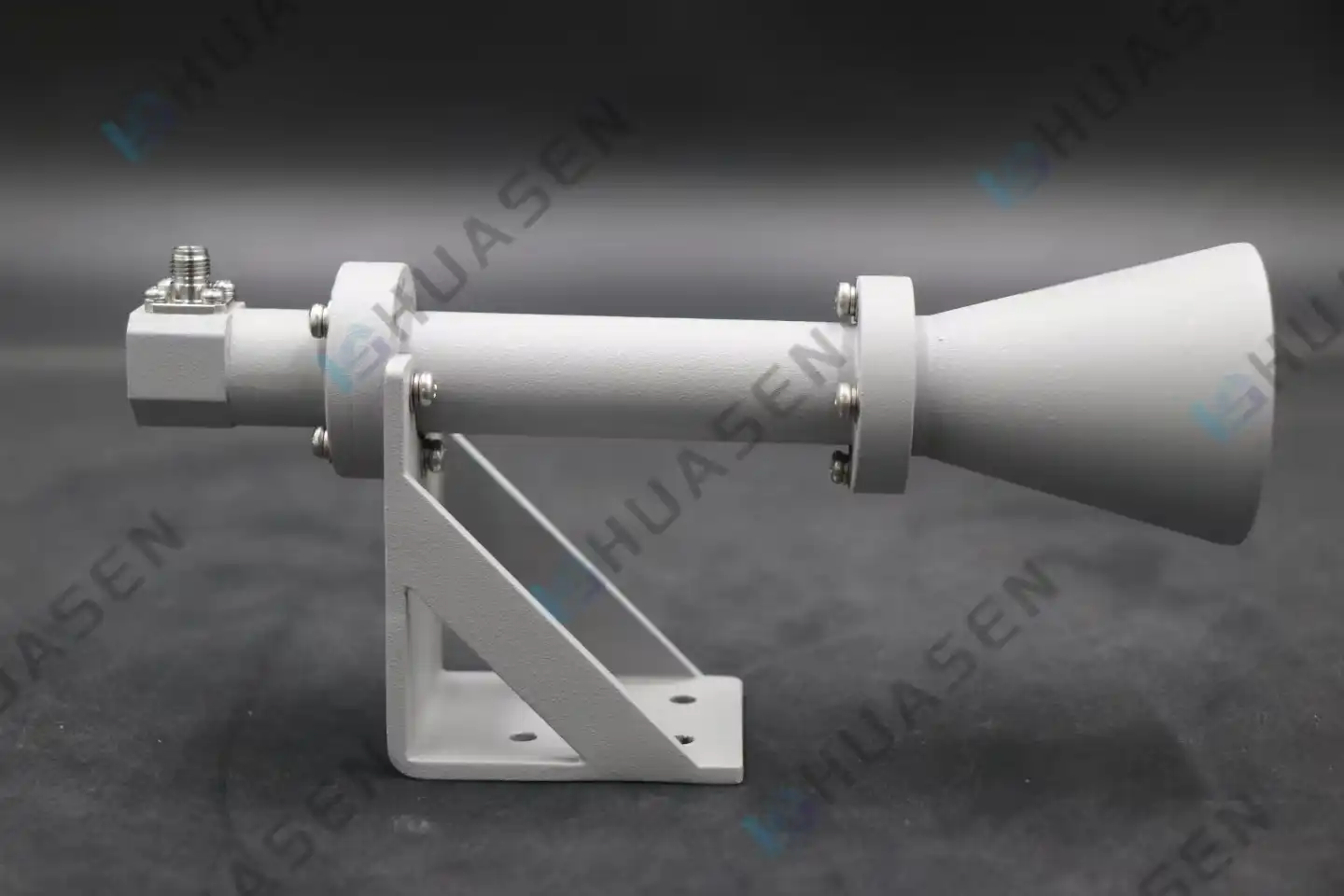
Gain and beamwidth are directly controlled by the size of the opening. Larger openings focus energy into smaller beams, which gives gains ranging from 10 dBi for small designs to 25 dBi for precise measurement horns. How easily the waveguide mode changes to free-space transmission depends on the flare shape, which can be pyramidal, conical, or corrugated. Smooth tapers cut down on reflections that hurt VSWR, while bold flares shorten the total length, but horn antenna circular polarization makes the side lobes bigger.
Waveguide Feeding Mechanisms
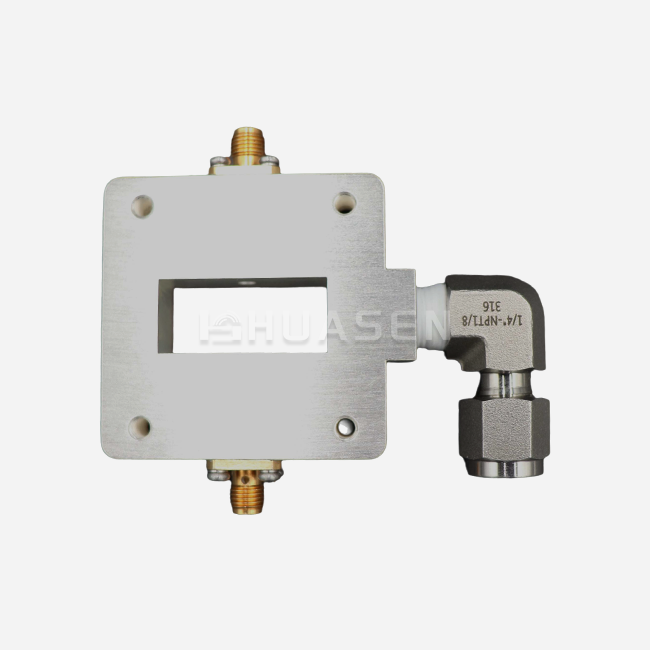
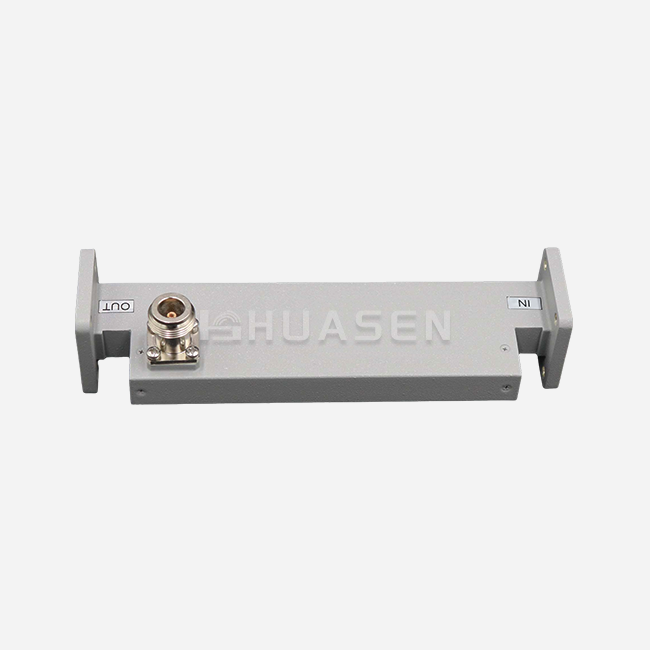
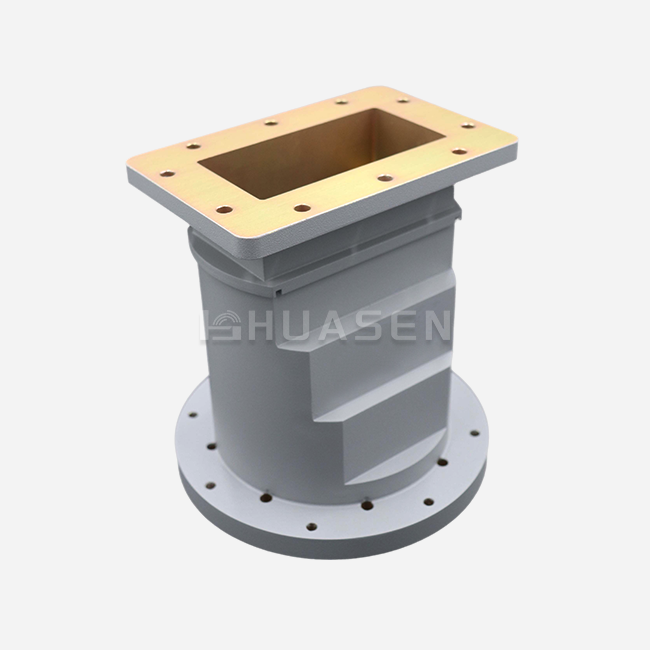
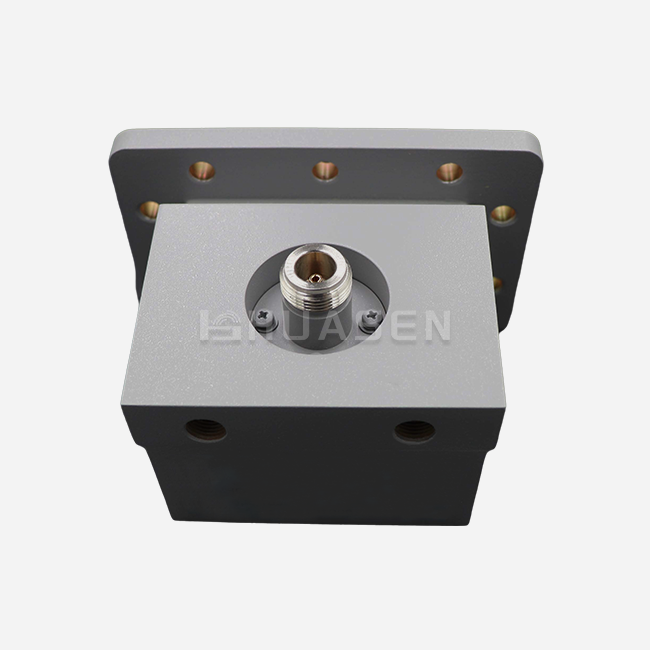
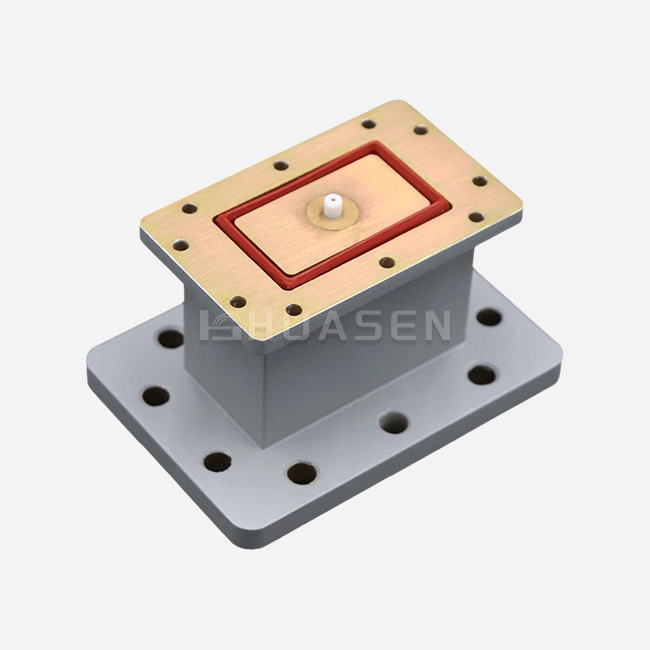
Standard waveguides that are square or round connect electromagnetic energy to the horn. Because of well-known connection standards like WR-90 or WR-28, rectangular guides are most common below 40 GHz. On the other hand, circular guides are better at supporting designs with both single and dual polarization. The choice affects how hard it is to make and how much power it can handle. For example, rectangular guides can handle higher peak powers in pulsed radar systems, while circular guides make it easier to integrate a filter for broadband operation.
Types of Polarizers and Their Implementation
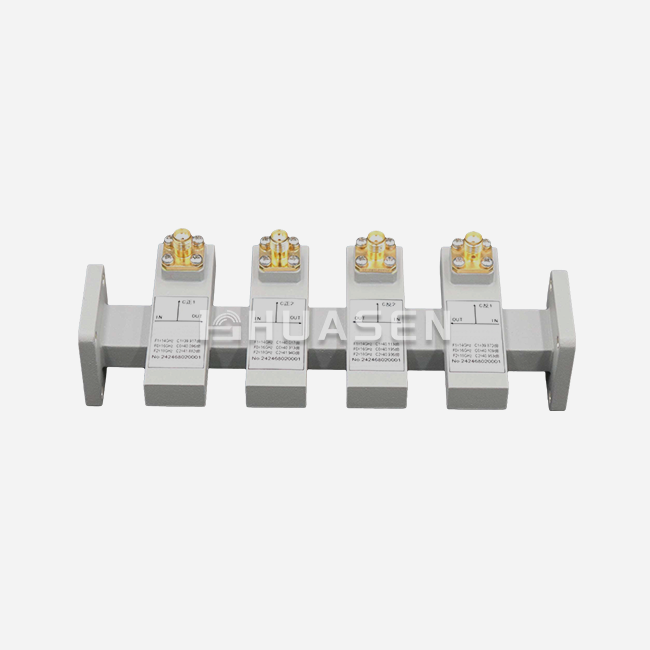
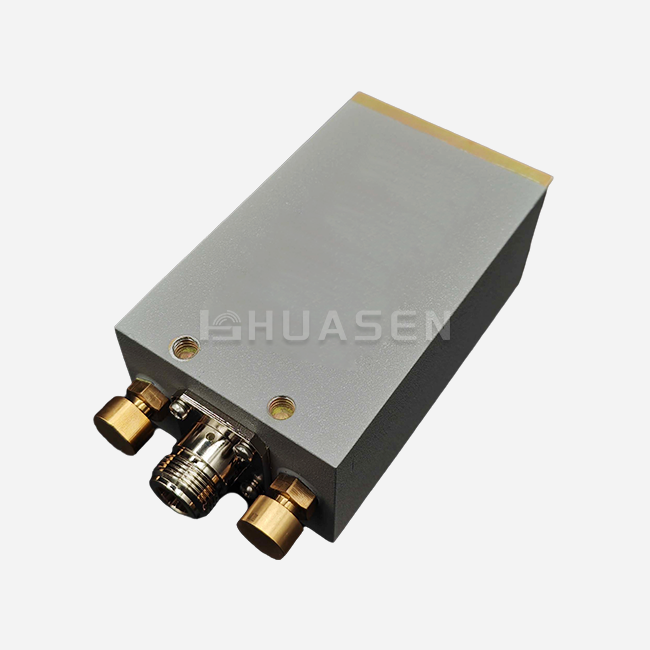
Most market designs are based on three polarizer layouts. A metal blade is put into the waveguide by stepped septum polarizers. This makes two paths with different electrical lengths. In narrowband uses, this method gives a great vertical ratio. Anisotropic materials are used in dielectric slab polarizers to add phase delays. These work well for millimeter-wave frequencies, where metal limits make cutting impossible. Dual-feed orthogonal excitation creates circular polarization by sending quadrature signals to two ports. It has the largest bandwidths but needs power dividers that are external. Huasen Microwave uses both the stepped diaphragm method for precise narrowband systems and dual linear orthogonal excitation for broadband needs that cover 67% of the bandwidth. Their CPHA series has a linear-to-circular polarization converter that keeps the axial ratio below 0.5 dB. This is 1 dB better than most market units across all frequency ranges, from 0.5 GHz to 110 GHz.
Material Selection for Durability and Performance
Aluminum alloys are most often used to make horns because they are strong for their weight and easy to work with. Electroless nickel plating protects against rust for marine systems, while silver or gold plating reduces ohmic losses above 40 GHz, which is when skin depth becomes very important. The polarizer needs to be made with tighter tolerances, and it is usually cut from copper or brass that doesn't contain oxygen. It is then plated to stop rust, which changes the phase response over time.
Manufacturing Techniques and Customization
Dimensional accuracy of modern CNC cutting is within ±0.025 mm, which is necessary to keep phase balance in Ka-band and higher frequencies. Electroforming makes it possible to make complicated corrugated profiles that would be hard to make any other way, but the cost per unit is higher. Huasen has been making things for 30 years and has a lot of experience with custom bandwidth specifications. They can make narrowband systems with less than 5% fractional bandwidth for military links that are limited by spectrum to ultra-wideband designs with up to 67% fractional bandwidth. They can also keep the mechanical interfaces compatible with SMA, K-connector, or waveguide flange standards based on what the customer wants.
Design Variants: Single vs. Dual Polarization
Single-polarization horns only send or receive RHCP or LHCP. They are easier to build and cost less. Dual-polarized versions have two orthogonal lines or polarizers that let RHCP and LHCP work at the same time. The two-pronged method increases the number of channels that can be used in satellite ground stations by two and gives radar meteorology a wider range of polarizations. Cross-talk can't happen with port-to-port separation above 30 dB, which is very important when frequency reuse needs spectral efficiency.
Quality Assurance and Industry Certifications
Suppliers you can trust follow MIL-STD-810 for tests in harsh environments to make sure the products work well with shock, pressure, and temperature changes. IEEE 149 sets the rules for measuring antennas and makes sure that promises about gain and pattern match up with measured standards. RoHS compliance proves that materials can't be used in certain ways in European markets, while ISO 9001 approval shows that the process is controlled across horn antenna circular polarizationall batches of production. Huasen keeps these certifications and also has internal testing processes that check the VSWR and axial ratio of every unit before it ships.
Applications and Market Use Cases in Global B2B Procurement
Satellite Communication and TT&C Systems
Operators on the ground section depend on circularly polarized feeds for parabolic mirrors to talk to geostationary and low-Earth orbit (LEO) constellations. Even if the spacecraft's attitude changes, the circular polarization keeps the data links going, even though the satellite spins and Faraday rotates through the ionosphere. When system designers buy these parts, they look for ones with low VSWR across both the uplink and downlink bands, high cross-polarization discrimination to separate the send and receive channels at the same time, and thermal stability for 24 hours a day, seven days a week, for use outside in temperatures ranging from -40°C to +60°C.
Radar and Electronic Countermeasures
In radar test areas, dual-polarized horns are used as calibration standards to send known reference signals that can be used to measure the cross-sections of targets. Weather radar sends out circular polarization to tell the difference between different types of precipitation. When raindrops reflect, they reverse the polarization sense, but ice crystals keep it, which makes the system automatically classify the precipitation. Electronic warfare systems use circular polarization to beat corner reflectors and chaff that are made for linear polarization. This makes it easier to tell the difference between targets in crowded areas.
5G and 6G Over-the-Air Testing
Horn antennas are used as probe sources in anechoic rooms where over-the-air (OTA) readings are being made on base station antennas and mobile devices. With circular polarization, you don't have to turn the probe through all of these different straight angles, which cuts the test time in half. Lab managers like stable gains that are measured and trends that can be traced back to national standards. This helps the labs meet 3GPP requirements. It is possible to change the gain rates so that they work with the needs of each test zone, from close-range compact ranges to far-field chambers.
Aerospace and Defense Platforms
Antennas for UAV datalinks and transmission pods in the air need to be able to handle shock, pressure, and aerodynamic loads while still working electrically. Aluminum alloys are used for lightweight building that fits mass budgets for airplane installations. There are conformal mounting choices and custom connector positions that can work with the limitations of installing in radomes. Defense companies only buy MIL-STD-qualified parts that can be tracked back through the supply chain. This keeps vital systems safe from counterfeit risks.
Procurement Guidance for Technical Buyers
Ask for measured data that shows the axial ratio across the whole band, not just the center frequency, when you are reviewing sources. Check to see if the cross-polarization patterns meet the needs for system separation. Check the technical designs to make sure they work with the mounting tools and connector standards that are already in place. Make sure that the wait times take into account the special plating and machining processes. Set up technical support routes for after the sale, such as access to engineers who know about your application area, to help with integration.
Trusted Brands and Suppliers of Circularly Polarized Horn Antennas
Leading Manufacturers in the Global Market
Well-known companies like Fairview Microwave and Pasternack keep huge catalogs with standard gain choices for popular frequency bands. One of their best qualities is that they can quickly fill orders from catalogs and ship things within days. Custom designs for defense and aircraft are what specialized makers do best. They offer tighter axial ratios and wider bandwidths. European suppliers stress following the CE marking and REACH guidelines, while North American makers follow the FCC rules,Circularly Polarized Horn Antenna,and ITAR controls for products that are sensitive to export.
Evaluating Authorized Distributors
Local inventory is provided by authorized delivery networks, which cuts down on wait times for prototype amounts. They provide extra services like installing connectors, organizing environmental tests, and helping with integration. To make sure you're getting real goods with valid warranties, check the manufacturer's websites to see if the seller is authorized. Customer reviews on sites like ThomasNet show how good the service is, how knowledgeable the staff is, and how quick they are to respond during complicated procurements.
Huasen Microwave: Precision Engineering Since 1993
Huasen Microwave Technology stands out because it has been specializing in high-frequency parts for 30 years. Our CPHA line shows this dedication by maintaining axial ratios at or below 0.5 dB across a wide range of bandwidths, from ultra-wideband flexibility to narrowband precision. With frequency ranges from 0.5 to 110 GHz and gains that can be set between 10 and 25 dB, this product can meet a wide range of system needs without pushing customers to buy options that are too specific. Our factory in Shenzhen can keep up with both fast prototyping and large-scale production, and we have established transportation partners that make sure products get to factories in North America, Europe, and the Asia-Pacific region on time.
Conclusion
To make Circularly Polarized Horn Antenna units, the horn shape, waveguide feeds, and polarizer systems must be carefully put together so that the electromagnetic field vector rotates. Antennas must meet strict axial ratio and cross-polarization requirements for satellite, radar, and wireless tests. This is checked by the materials used, the manufacturing tolerances, and quality assurance procedures. When procurement teams understand these parts, they can better evaluate providers, weighing professional performance against cost and delivery times. When requirements call for very pure polarization, a wide bandwidth, or resistance to harsh environments, working with experienced makers makes sure that systems meet design goals without having to be retrofitted in the field, which can be expensive.
FAQ
1. What is the typical axial ratio specification for high-performance horns?
The axial ratio of high-quality circularly polarized antennas stays below 1.0 dB at the center frequency and below 1.5 dB throughout the working band. Specialized measurement-grade units, like Huasen's CPHA series, can reach 0.5 dB. These are useful in situations where polarization purity has a direct effect on link margin or measurement accuracy.
2. How does bandwidth affect polarizer design choices?
For the best axial ratio, narrowband devices with less than 10% fractional bandwidth usually use septum polarizers. For broadband needs greater than 30%, dual-feed designs or multi-section transformers are better because they keep phase balance over a wider frequency range, but they are more difficult to build.
3. What connector standards suit millimeter-wave frequencies?
Waveguide flanges (WR-28, WR-15) are better than coaxial links above 40 GHz because they have less loss and can handle more power. Below 40 GHz, 2.92 mm, and K-connectors make it easy to switch to coaxial test tools while keeping the VSWR at a good level.
4. Can one antenna support both RHCP and LHCP simultaneously?
Dual-polarized systems have different feeds or polarizers for each sense, which lets them work together at the same time with more than 30 dB of separation between ports. This feature doubles the number of channels that can be used in satellite ground stations or gives radar systems a wider range of polarizations.
Partner with Huasen Microwave for Custom Circular Polarization Solutions
Choosing the right Circularly Polarized Horn Antenna manufacturer can affect how quickly a job is finished, how well the system works, and how reliable it is in the long run. Huasen Microwave combines reliable manufacturing skills with quick technical help to make antennas that meet the strictest requirements for use in satellite, radar, and telecommunications systems. Our CPHA line is the result of years of work to improve polarizer design, material science, and precision machining.
Our expert team is ready to take your system-level performance goals and turn them into the best antenna parameters, whether you need a narrowband feed horn for a Ka-band SATCOM terminal or a broadband measurement antenna for an anechoic chamber. We give you thorough test results, such as measured axial ratio, VSWR, and radiation patterns that can be linked to calibrated standards. These results will help your approval processes and meet customer acceptance requirements. Reach out to our specialists at sales@huasenmicrowave.com to talk about your unique needs. Let us show you how thirty years of experience with microwaves can be used to make antennas that go above and beyond what you expect.
References
1. Balanis, Constantine A. Antenna Theory: Analysis and Design, 4th Edition. Wiley, 2016.
2. Iliigan, Thomas A. Modern Antenna Design, 2nd Edition. IEEE Press, 2005.
3. Olver, A.D., et al. Microwave Horns and Feeds. Institution of Engineering and Technology, 1994.
4. Kraus, John D. and Marhefka, Ronald J. Antennas For All Applications, 3rd Edition. McGraw-Hill, 2002.
5. IEEE Standard 149-2021. IEEE Standard for Antenna Measurements. Institute of Electrical and Electronics Engineers, 2021.
6. Collin, Robert E. Foundations for Microwave Engineering, 2nd Edition. Wiley-IEEE Press, 2001.
Send Inquiry