Choosing the Right Waveguide Sliding Short for High-Power RF






2026-05-22 22:06:06
A high-performance waveguide sliding short is essential for accurate impedance adjustment in high-power RF systems. The Waveguide Sliding Short, a movable electrical short in waveguide assemblies, controls reflection phase for calibration, impedance matching, and system optimisation. We find that procurement professionals underestimate how a quality tunable shot affects system reliability and measurement accuracy, especially in radar, 5G infrastructure, and aerospace communications, where reflection coefficients and phase precision directly affect performance.
Understanding Waveguide Sliding Shorts and Their Role in High-Power RF Systems
What Defines a Waveguide Sliding Short?
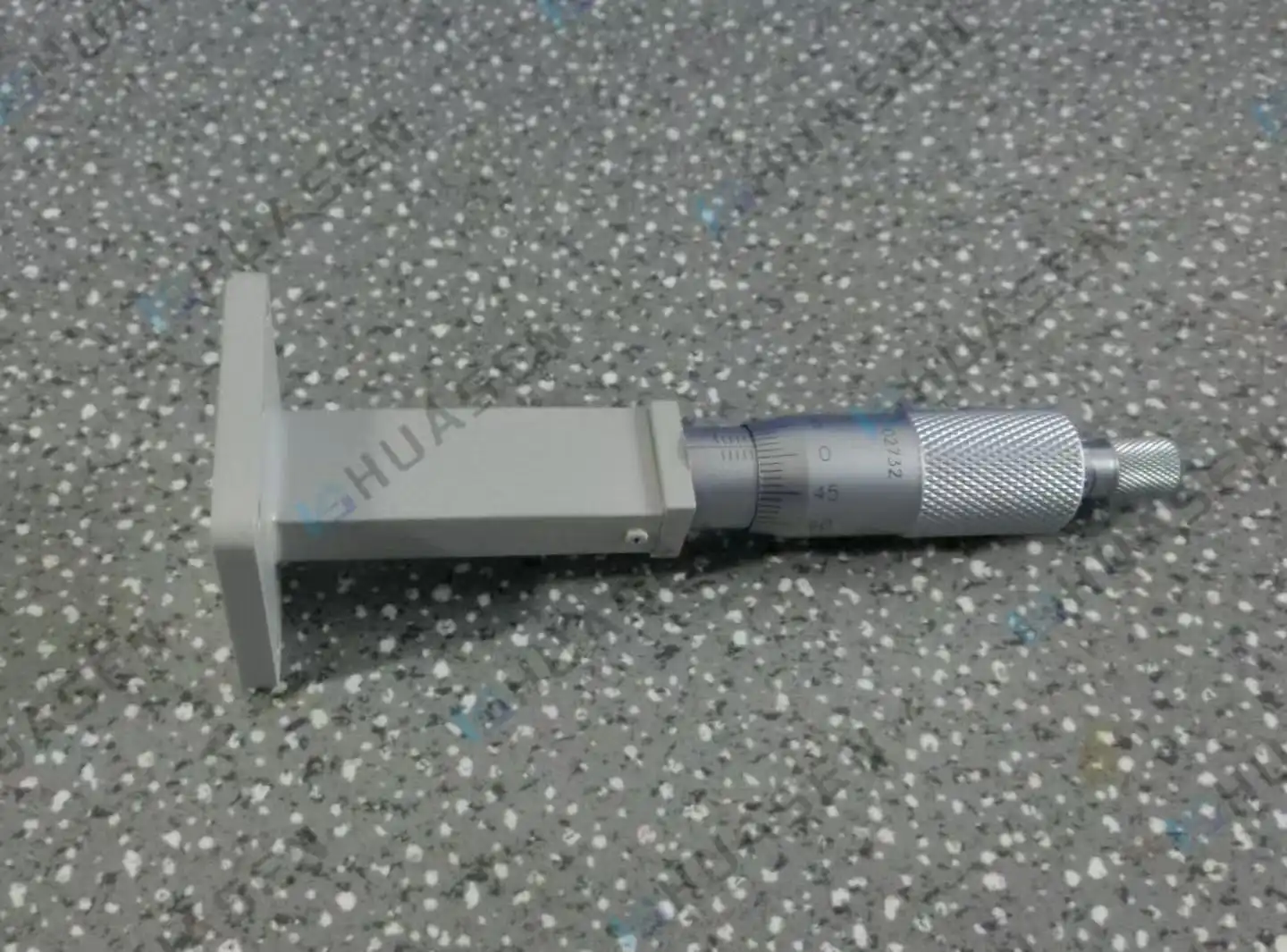
Waveguide Sliding Shorts have a precise plunger mechanism in a metal waveguide portion. A calibrated micrometre positions the plunger to generate a short-circuit plane. This design adjusts reactance without disturbing the transmission line's basic mode. The sliding design lets engineers change the reflected signal's phase while keeping reflection magnitude at unity, enabling VSWR levels above 50:1. Applications requiring precise impedance control spanning microwave and millimetre-wave frequencies require these devices.
Core Operating Principles
The gadget works by putting a conductive plunger perpendicular to electromagnetic field propagation. Rotating the micrometre mechanism moves the plunger along the waveguide's longitudinal axis, adjusting the plunger face's distance from the reference plane. This change directly affects the reflection phase angle. Non-contacting designs use RF choke geometry to create virtual electrical shorts without waveguide wall contact. This method minimises contact resistance fluctuation and mechanical wear, assuring measurement reproducibility throughout the device's life.
Advantages in High-Power Environments
High-power RF systems require components that can withstand high electromagnetic fields. Several properties make waveguide sliding shorts ideal for these settings. Their all-metal architecture carries kilowatt power, surpassing coaxial alternatives. Dielectric materials are absent at high field intensities, eliminating breakdown issues. Strong mechanical designs can endure heat expansion without degrading performance.
The adjustability feature meets another important need: dynamic tuning. Real-time coupling factor optimisation is possible in cavity resonators. For amplifier characterisation, engineers produce complicated impedances to map device performance. The sliding mechanism allows Through-Reflect-Line approaches for vector network analyser calibration, changing the reflect standard position consistently.
Critical Application Domains
These components provide traceable measurement standards in metrology labs. TRL methods use the sliding short as the variable reference for millimetre-wave vector network analyser calibration. De-embedding fixture effects requires phase precision, which requires micrometre-level positional accuracy.
Radar system integrators tune high-power transmitters with them. Technicians can reduce VSWR in waveguide lines between magnetrons and antenna feeds by presenting regulated reactive loads. They help satellite communication ground station workers detect impedance mismatches in complicated waveguide networks for troubleshooting.
Mechanical impedance tuners in semiconductor device characterisation R&D use sliding shorts. The tuners provide transistors under test with unique reflection coefficients, allowing engineers to plot power-added efficiency and noise figure contours throughout the Smith chart. This approach helps amplifier designers match network settings.
Comparing Waveguide Sliding Short Types and Alternatives
Contacting vs. Non-Contacting Designs
Traditional contacting designs place the plunger against the waveguide's large walls. Although technically simple, this method introduces contact resistance that fluctuates with pressure, surface oxidation, and wear. Precision applications experience measurement noise from these variances. Corroding designs create metallic debris that might contaminate critical systems.
Non-contacting plungers use RF choke topologies to overcome these constraints. Quarter-wave choke grooves on the plunger perimeter produce high-impedance channels that direct current through the plunger face instead of the waveguide walls. This design eliminates contact-related unpredictability and preserves reflection coefficient magnitude. For most applications, power capacity remains high despite additional manufacturing complexity and somewhat lower power handling compared to simple contact designs.
Fixed Shorts and Stub Alternatives
Fixing Waveguide Sliding Shorts terminate permanently at specific points. Their simplicity and cheap cost are advantages. After installation, they cannot be tuned. Fixed solutions are unsuitable for multi-frequency or thermal impedance adjustment applications. Lifecycle costs may favour sliding systems due to the cost of maintaining several fixed shorts for different frequency points.
Waveguide stubs use adjustable probes perpendicular to the waveguide axis for reactive adjustment. Stubbies match impedance but provide physical discontinuities that limit power management and raise higher-order mode problems. Sliding shorts circumvent these concerns by retaining fundamental mode structure throughout their working range.
Performance Across Frequency Bands
The operational frequency range dictates waveguide size and mechanical tolerances. Waveguide diameters allow relaxed production tolerances at X-band frequencies (8-12 GHz) while maintaining outstanding electrical performance. The Huasen Microwave portfolio covers L-band to W-band applications from 0.32 GHz to 112 GHz. Every frequency range has its own engineering problems.
Lower frequency designs provide larger sliding distances—Huasen devices change from 10 mm to 300 mm depending on the band. This wide range benefits applications requiring substantial phase changes or various calibration sites. Higher frequency implementations require tighter mechanical tolerances to maintain VSWR standards because dimensional differences imply greater wavelength fractions.
Lifecycle Cost Considerations
Initial purchase costs are only one part of ownership costs. Maintenance costs greatly affect lifespan economics. Non-contact designs eliminate wear-related calibration drift, reducing maintenance intervals. Environmental sealing extends operating lifetime in severe installations, especially outside telecommunications infrastructure and maritime applications.
When choosing suppliers, procurement professionals should consider support. Replacement wear parts, calibration, and technical support impact long-term cost predictability. When considering mission-critical system downtime costs for speedy replacement or repair, the value proposition changes substantially.
Design Guidelines and Technical Specifications for Waveguide Sliding Shorts
Power Handling and Thermal Management
Peak and average power parameters must be considered while choosing components. By considering breakdown voltage, the waveguide cross-section restricts fundamental power handling. Larger waveguides increase power but limit system integration. Copper and aluminium alloys dominate thermal dissipation due to their conductivity and heat transmission.
Non-contacting choke gaps concentrate the field at the plunger interface. These areas set practical power limits. Manufacturers list peak pulse and continuous wave power ratings. In radar transmitter applications, pulse duty cycles and peak field intensities can reach breakdown limits during pulse compression.
Material Selection and Surface Finish
Power dissipation and insertion loss depend on electrical conductivity. For optimum conductivity, high-purity copper needs surface oxidation prevention. Precision applications now use silver plating for its conductivity and environmental resilience. Gold plating is expensive yet suitable for corrosive situations.
High-power applications' higher-order mode suppression and multipactor prevention depend on internal surface polish. Electropolishing provides surface roughness below 0.5 micrometres Ra, needed for millimetre-wave frequencies where surface currents reach shallow depths. Aluminium waveguide components are anodised to prevent corrosion and retain conductivity.
Dimensional Compatibility
For each frequency range, waveguide standards establish cross-sectional dimensions. The WR-XX nomenclature (where XX means broad wall size in hundredths of an inch) assures manufacturer compatibility. Standard UG-series, CPR, and PDR flanges must be verified in procurement requirements. Outdoor galvanic corrosion is prevented by matching flange and plating.
The application needs to determine the sliding distance. Calibration may need certain travel ranges to obtain multiple reference standard locations. Cavity tuning may require longer adjustment ranges to account for manufacturing or environmental factors. Phase adjustment accuracy is determined by micrometre resolution, which is typically 0.01 mm for phase angle steps at the operating frequency of the waveguide short.
Troubleshooting Common Issues
Mechanical plunger adjustment binding frequently indicates particulate contamination or poor external mechanism lubrication. Internal waveguide surfaces should never be lubricated because dielectric constants impair electrical performance. Manufacturer-recommended lubricants help external micrometre mechanisms.
Surface contamination, oxidation, or mechanical damage to crucial surfaces degrades VSWR performance. Cleaning should not use abrasives that degrade finishes. Isopropyl alcohol and lint-free cloths clean optical components without degrading their surfaces.
Inconsistent measurement results may indicate intermittent electrical contact in connecting designs or field distribution issues due to particles. Most faults may be fixed by disassembly and examination per the manufacturer's instructions. Non-contacting designs are more resistant to these issues, explaining their premium in sensitive applications.
Maintenance Best Practices
Operating environment severity and use trends should determine preventive maintenance intervals. Laboratory devices in controlled surroundings only need yearly dimensional verification and visual examination. Outdoor systems need more regular inspections, especially in coastal situations where salt promotes corrosion.
Dimensional calibration confirms that mechanical micrometre measurements match electrical phase locations. This procedure uses vector network analyser readings to determine physical location and electrical phase angle. Documenting calibration curves allows later measurements to use correction factors.
Storage methods greatly impact component lifespan. Physical protection protects precise systems from impact damage, and humidity control prevents interior corrosion. For non-use components, manufacturers supply desiccant-storage boxes.
Procurement and Supply Chain Insights for Waveguide Sliding Shorts
Supplier Qualification Criteria
Multiple indications are needed to verify manufacturing capabilities. ISO 9001 accreditation shows quality management maturity. Compliance with MIL-STD standards means meeting strict military criteria in commercial applications. Request measurement traceability to national standards organisations to verify supply chain calibration accuracy of Waveguide Sliding Shorts.
Audits of manufacturing processes show sophisticated production control. Machines with five-axis CNC can produce millimetre-wave components with precise tolerances. Internal electroplating facilities regulate quality better than outsourced finishing. Characterising every unit with automated testing ensures specification conformance.
Lead Time and Minimum Order Considerations
Standard catalogue products from reputable manufacturers arrive in 2–4 weeks. Custom setups requiring flange kinds, frequency ranges, or mechanical adjustments take 8-12 weeks. Engineering assistance may be needed before manufacturing for complex projects with unique characteristics.
The minimum order quantity depends on the manufacturer and the customisation level. Catalogue standard goods generally have no minimum order, facilitating prototypes and small projects. Minimum numbers may be required to justify tooling and setup expenses in custom setups. Volume price starts at 10 units and decreases significantly at 50 units.
Global Logistics and Shipping Options
International transportation of precision components demands packing integrity and environmental protection. Anti-corrosion packing with desiccant prevents transport humidity. Precision mechanisms are protected by impact-resistant casings. Express delivery costs more but arrives in three to five business days worldwide.
Intercontinental shipment takes 10–15 business days with standard shipping. To avoid clearance delays, customs documentation must appropriately categorise waveguide components using harmonised system codes. Established manufacturers work with RF component logistics freight forwarders.
Warranty and After-Sales Support
Standard warranties cover manufacturing and workmanship problems for 12 months from delivery. Extended warranty packages address mission-critical applications where downtime costs justify the premium. Environmental damage, abuse, and illegal alterations usually invalidate warranties.
Tech support greatly affects procurement value, including Waveguide Short. Pre-sales engineering advice optimises component selection for applications. Post-delivery assistance helps with integration, measurement process creation, and troubleshooting. Maintenance personnel training packages from manufacturers are valuable for firms deploying numerous devices across sites.
Conclusion
Technical criteria, application requirements, and lifespan costs must be considered while choosing Waveguide Sliding Shorts. Adjustable reflection phase control is crucial for calibration accuracy, impedance optimisation, and high-power system tuning. Understand contacting and non-contacting designs, frequency band compatibility, and supplier capabilities to make long-term buying decisions. With three decades of RF component manufacturing experience, Huasen Microwave supports mission-critical applications in telecommunications, aerospace, military, and research.
FAQ
1. What distinguishes sliding shorts from fixed terminations?
Fixing shorts permanently terminates short circuits at defined places without adjusting. Waveguide sliding shorts use precise mechanisms to modify the short-circuit plane location for calibration, impedance tuning, and cavity optimisation. This versatility compensates for the higher cost in changeable reactive load or multiple calibration reference point applications.
2. How do I determine the correct waveguide size for my frequency range?
Waveguide selection follows typical operational frequency-cross-sectional dimension connections. The dominant mode cutoff frequency sets the lower limit, while higher-order mode concerns set the upper limit for each standard waveguide designation. Our technical staff will offer a standard designation and flange compatibility based on your frequency needs.
3. What are custom configuration lead times?
Standard catalogue items arrive within 2–4 weeks of purchase confirmation. Custom setups with mechanical modifications or non-standard flanges take 8-12 weeks, depending on complexity. Special needs require two to three weeks of engineering consulting before manufacture. Contact us early in project planning for realistic schedules.
4. Can these components operate across multiple waveguide bands?
Waveguide sliding shorts function in a single frequency range based on their cross-sectional size. The physical geometry that maximises X-band performance differs from W-band requirements. Cross-band operation risks higher-order mode excitation and performance degradation. Applications with several bands need frequency-specific components.
Partner with Huasen Microwave for Your RF Component Needs
Huasen Microwave offers high-power RF system precision waveguide sliding shorts for performance and reliability. We manufacture regular catalogue goods and totally tailored solutions for special application requirements. Our accuracy and endurance are ideal for improving 5G infrastructure, building next-generation radar systems, and setting metrology standards.
Ask our technical sales staff at sales@huasenmicrowave.com about your needs. We'll give project-specific requirements, performance statistics, and quotes. As a trusted waveguide sliding short manufacturer, we offer low pricing, clear cost structures, flexible minimum order quantities for prototype and production volumes, and extensive after-sales service, including technical consulting and maintenance guidance.
References
1. Pozar, David M. Microwave Engineering, 4th Edition. Wiley, 2011.
2. Montgomery, C.G., Dicke, R.H., and Purcell, E.M. Principles of Microwave Circuits. McGraw-Hill, 1948.
3. Marks, Roger B. "A Multiline Method of Network Analyzer Calibration." IEEE Transactions on Microwave Theory and Techniques, vol. 39, no. 7, 1991.
4. Engen, Glenn F. and Hoer, Cletus A. "Thru-Reflect-Line: An Improved Technique for Calibrating the Dual Six-Port Automatic Network Analyzer." IEEE Transactions on Microwave Theory and Techniques, vol. 27, no. 12, 1979.
5. Ramo, Simon, Whinnery, John R., and Van Duzer, Theodore. Fields and Waves in Communication Electronics, 3rd Edition. Wiley, 1994.
6. Saad, Theodore S. Microwave Engineers' Handbook. Artech House, 1971.
Send Inquiry