Broadband Horn Antenna for Satellite Communication: Selection Guide






2026-03-06 21:58:46
In order to choose the best broadband antenna for satellite communication, you need to know a lot of complicated technical details and operating needs. These specialised wideband horn antennas work well across a number of frequency ranges, usually between 1 and 18 GHz or 18 to 40 GHz. This makes them necessary for current satellite systems that need flexible, high-performance solutions. Broadband horn configurations, unlike traditional narrowband antennas, don't need multiple antenna systems because they keep the same impedance and radiation patterns across their entire working spectrum. This detailed selection guide covers important buying factors, technical specifications, and use-specific needs that make sure engineering teams and procurement workers get the best satellite communication performance.

Understanding Broadband Horn Antennas: Fundamentals and Applications
Broadband horn antennas are an advanced step forward in RF technology. They are designed to work consistently across a wide range of frequencies. When you combine flared horn geometry with advanced impedance matching methods, these radiating devices can handle multi-octave bandwidths that regular antenna designs can't match.
Design Principles and Architecture
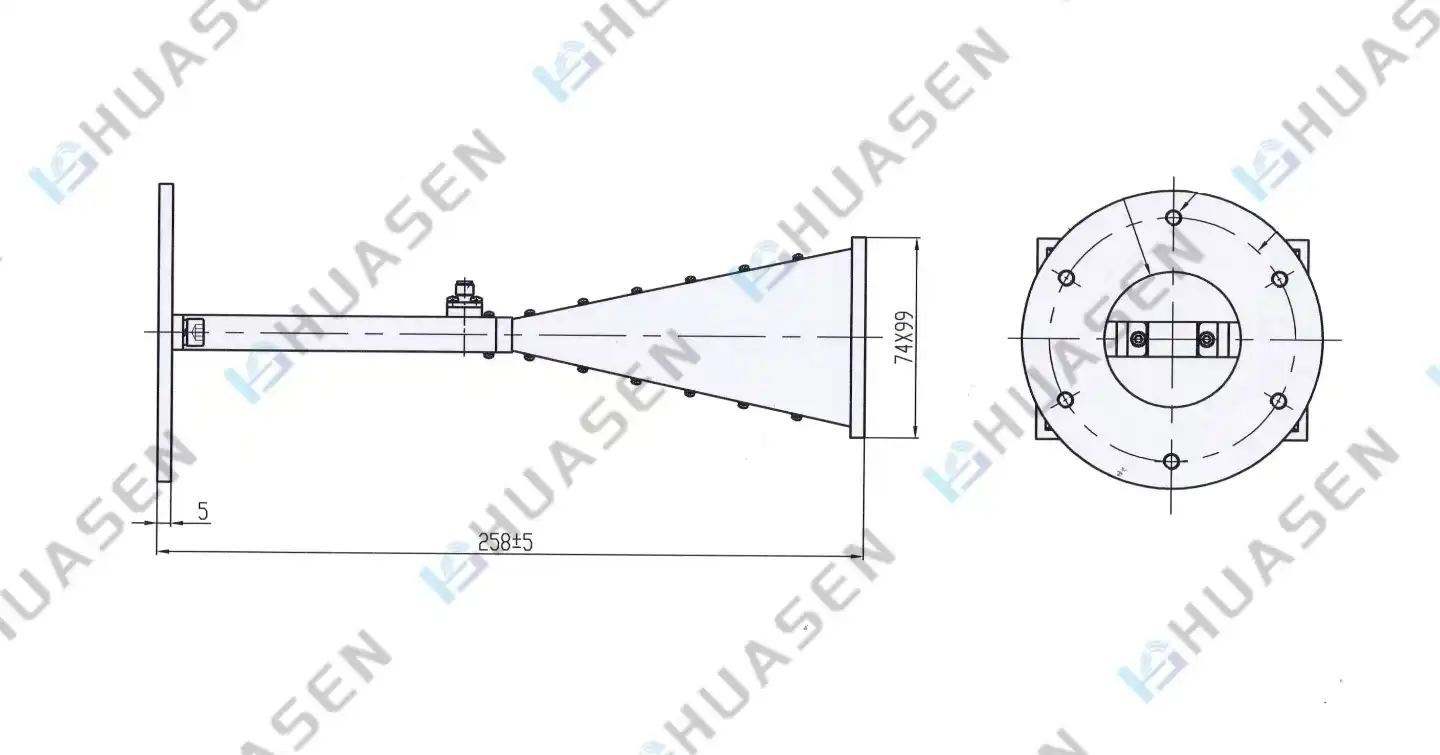
Broadband horn antennas are made up of carefully machined metal parts that change the impedance of a coaxial connector to the impedance of free space very effectively. Double-ridged horn shapes have metal ridges placed in the horn structure in a planned way, usually on E-plane walls that are opposite each other. The cutoff frequency is greatly lowered by this design, but the impedance stays the same across the operational bandwidth. Modern broadband horn antennas have Voltage Standing Wave Ratio (VSWR) values below 2.0:1 across most operational bands, with acceptable performance peaks up to 2.5:1 at band edges. The gain profile usually goes from 6 dBi at lower frequencies to 15 dBi at higher frequencies. This gives satellite communication systems the reliable performance scaling they need.
Satellite Communication Applications
Broadband antenna technology is very helpful for satellite transmission systems in a number of important ways. These antennas work great in multi-band satellite stations, where single-device solutions make the system simpler and less maintenance-intensive. Broadband horn antennas are used by ground stations to monitor multiple satellite frequency allocations at the same time, which gets rid of the need for complicated antenna switching networks. The wide bandwidth is especially useful for maritime and aerospace applications, since ships and planes move through different coverage zones that need different frequency bands. These antennas can handle a lot of power and have consistent radiation patterns, so they can be used for both uplink and downlink tasks in both business and military satellite networks.
Performance Characteristics in Real-World Environments
For satellite communication uses, environmental resilience is still very important. Broadband horn antennas of good quality are made of aluminium that doesn't rust and have special coatings that keep them working in harsh outdoor circumstances. Temperature stability from -40°C to +85°C makes sure that the antenna works reliably in a wide range of places and altitudes. The phase center stability of broadband horn antennas makes beam pointing accurate, which is important for tracking satellite systems. In omnidirectional antennas, the radiation patterns can change a lot depending on the frequency. But horn antennas keep their controlled directional properties that help satellite tracking and capture algorithms work more accurately.
Comparing Broadband Horn Antennas: Making Informed Choices
Knowing the differences between different antenna technologies helps you make smart buying choices that meet your specific needs for satellite communication. Each type of receiver has its own pros and cons that affect how well the system works and how much it costs to run.
Broadband vs. Narrowband Performance Trade-offs
Most of the time, traditional narrowband antennas work best within certain frequency ranges, with better pattern control and higher gain within those bands. However, putting together multiple narrowband antennas for satellite devices that need to work on multiple bands is very difficult. Broadband horn antennas give up some peak performance to be useful in a variety of situations. They work well over a wide range of frequencies, and the change in gain between frequency bands is an important thing to think about. Broadband horn antennas have gain that rises with frequency, Double Ridged Horn Antenna while narrowband antennas have gain that stays the same within their working range. Because of this, the system needs to be carefully planned so that there are enough link budgets at all operating frequencies and the higher frequency bands don't get too crowded.
Directional vs. Omnidirectional Considerations
When compared to omnidirectional designs, directional broadband horn antennas offer directed radiation patterns that improve signal-to-noise ratios and make interference less likely. The directed nature makes it possible to point satellites precisely while reducing interference from ground sources. However, this directional property means that mechanical pointing systems are needed for mobile applications or satellite tracking situations. Omnidirectional broadband antennas are easier to place and cover more areas automatically, but they lose the ability to block interference and gain. Which configuration to use—directional or omnidirectional—depends on the needs of the application, the need for movement, and the interference environment.
Multi-band Array vs. Single Broadband Solutions
A lot of the time, complex satellite communication systems compare single broadband options to multi-band antenna arrays. Array configurations can make performance better for certain frequency bands while still letting you handle each band separately. Arrays, on the other hand, make installation, calibration, and maintenance more difficult. Single broadband horn antennas, on the other hand, make system design easier while lowering the costs of installation and maintenance. Giving up some performance in return for easier operation and a lower total cost of ownership over the lifecycle of the system is the trade-off.
Key Selection Criteria for Broadband Horn Antennas in Satellite Communication
To choose the right antenna, you need to carefully compare the technical specs to the working needs. Important factors have a direct effect on how well satellite communications work and how reliable the system is over long periods of time.
Frequency Band Requirements and Coverage
Different frequency bands are used by satellite communication systems, such as the L-band (1-2 GHz), S-band (2-4 GHz), C-band (4-8 GHz), X-band (8-12 GHz), and Ku-band (12-18 GHz). Broadband horn antennas need to be able to cover all the necessary frequency bands and still perform well. An antenna's fractional bandwidth skills tell you how many different frequency bands it can effectively serve. Modern broadband horn antennas have fractional bandwidths that are higher than 10:1, which means they can cover more than one satellite frequency allocation with a single device. This feature gets rid of the need for frequency-specific antennas, which makes the system simpler and lowers the amount of material that needs to be kept.
Gain and Radiation Pattern Specifications
Link budget estimates look at satellite power levels, path losses, and receiver sensitivity parameters to figure out how much gain is needed. Depending on the frequency bands and link distances, most satellite transmission uses need gain values of at least 10 to 20 dBi. Broadband horn antennas have gain that changes predictably with frequency, which lets you do accurate link budget estimates across all operational bands. Controlling the radiation pattern is important for reducing interference and making the most of the spectrum. Broadband horn antennas of good quality keep single main lobe patterns and sidelobe levels below -20 dB in relation to the main beam. This pattern control makes the signal stronger in dense satellite settings and lessens interference with nearby satellite systems.
Environmental and Mechanical Requirements
Satellite communication installations have to deal with a variety of environmental problems that require strong antenna building. Changing temperatures, being exposed to damp, UV rays, and mechanical vibrations can all affect how well and how long an antenna works. For military and aircraft uses, it's important to meet environmental standards like MIL-STD-810 for resistance to shock, vibration, and changes in temperature. Mechanical requirements include compatibility with mounting interfaces, wind loading characteristics, and installation space limitations. Compact broadband horn antennas are useful for installations with limited room while still meeting performance standards. When it comes to mobile systems, weight is very important because every kilogram affects how much fuel is used and how much it costs to run.
Customization and Engineering Support
Many satellite communication applications require antenna modifications to meet specific operational requirements. Customization capabilities include frequency band optimization, connector interface modifications, mechanical mounting adaptations, and specialized coatings for extreme environments. Experienced manufacturers provide engineering support throughout the specification, design, and validation phases. Collaboration with manufacturers during the design phase ensures antenna specifications align with system requirements while identifying potential optimization opportunities. Technical support includes electromagnetic modeling, pattern prediction, and integration assistance that reduces deployment risks and accelerates project timelines.
Procurement Considerations: Where and How to Buy Broadband Horn Antennas
Strategic procurement planning ensures access to quality broadband horn antennas while optimizing costs and delivery schedules. Understanding the supply landscape and vendor capabilities enables informed sourcing decisions that support long-term project success.
Manufacturer Evaluation and Selection
Reputable broadband antenna manufacturers demonstrate proven track records in satellite communication applications through certifications, customer references, Double Ridged Horn Antenna, and technical documentation. Key evaluation criteria include ISO quality certifications, military standard compliance, and established customer support infrastructure. Companies like Huasen Microwave Technology, with over 30 years of microwave component expertise, provide the technical depth and manufacturing capabilities essential for demanding satellite applications. Manufacturing capabilities assessment includes production capacity, quality control processes, and technical support resources. Vendors should demonstrate experience with similar applications and provide detailed technical documentation, including test data, calibration certificates, and performance verification reports.
Supply Chain and Delivery Management
Global supply chain considerations impact delivery schedules and total project costs. Domestic suppliers often provide shorter delivery times and simplified logistics, while international suppliers may offer cost advantages or specialized capabilities. Risk mitigation strategies include qualified supplier diversification and adequate inventory planning for critical components. Delivery schedule management requires coordination between antenna procurement and overall project timelines. Custom antenna configurations typically require 6-12 weeks for design, manufacturing, and testing, while standard products may ship within 2-4 weeks. Early supplier engagement helps identify potential schedule conflicts and enables proactive mitigation planning.
Cost Optimization Strategies
Total cost of ownership extends beyond initial purchase prices to include installation, maintenance, and lifecycle support costs. Broadband horn antennas often provide cost advantages through reduced installation complexity and eliminated antenna switching requirements. Single-antenna solutions simplify system architecture while reducing maintenance overhead compared to multi-antenna configurations. Volume procurement strategies can achieve significant cost reductions for large projects or multi-site deployments. Many manufacturers offer quantity discounts and standardized configurations that reduce per-unit costs while maintaining performance requirements. Long-term supply agreements provide price stability and guaranteed capacity allocation for extended projects.
Case Studies and Practical Insights: Successful Broadband Horn Antenna Deployments
Real-world deployment examples demonstrate how broadband horn antennas solve complex satellite communication challenges across diverse applications and operational environments.
Maritime Satellite Communication Systems
A major shipping company required reliable satellite communication across global shipping routes covering multiple satellite coverage zones. Traditional narrowband antenna systems required complex switching networks and multiple antenna installations to maintain connectivity across different frequency bands and satellite operators. The solution involved deploying broadband horn antennas covering 1-18 GHz frequency ranges, enabling simultaneous operation across L-band, S-band, C-band, and Ku-band satellite services. The single-antenna approach reduced installation complexity, eliminated switching network failures, and provided seamless handoffs between satellite coverage zones. Operational benefits included 40% reduction in maintenance costs and improved communication reliability during critical navigation operations.
Military Satellite Terminal Applications
Defense applications require secure, reliable satellite communication capabilities that operate across multiple frequency bands while maintaining low-profile installations. A recent military terminal deployment utilized broadband horn antennas to support simultaneous operation across commercial and military satellite networks. The broadband approach enabled rapid frequency agility for anti-jamming operations while maintaining consistent performance across operational bands. Environmental testing demonstrated reliable operation through temperature extremes, vibration, and electromagnetic interference conditions typical of military deployments. The solution achieved mission availability rates exceeding 99.5% while reducing logistical complexity through standardized antenna configurations.
Commercial Ground Station Networks
Satellite service providers operate ground station networks that must adapt to evolving satellite constellations and frequency allocations. A major satellite operator upgraded legacy ground stations with broadband horn antennas to support next-generation satellite services while maintaining compatibility with existing satellite fleets. The upgrade enabled simultaneous monitoring across multiple satellite frequency bands, reducing the need for dedicated tracking antennas for each satellite service. Operational improvements included 60% reduction in antenna switching time and improved service availability during satellite handover operations. The broadband approach provided future-proofing capabilities as satellite operators deploy new frequency bands and service offerings.
Conclusion
Broadband horn antennas are very important for modern satellite transmission systems that need to be able to work on multiple bands and be flexible in how they do their jobs. In order for the system to work at its best, the decision process needs to carefully look at technical specs, environmental needs, broadband antenna, and costs. Frequency coverage needs, gain specifications, environmental resilience, and the ability to be customised to meet particular operational needs are some of the most important factors. For procurement strategies to work, they need to carefully look at vendors, plan the supply chain, and do a total cost of ownership study that looks at more than just the initial purchase price. Working with manufacturers that have been around for a while and offer full technical support and proven satellite communication knowledge is the best way to make sure that deployment goes smoothly and that the system will work reliably for a long time in demanding satellite applications.
FAQ
1. What frequency ranges do broadband horn antennas typically cover for satellite applications?
Broadband horn antennas for satellite communication typically operate across 1-18 GHz ranges, covering L-band through Ku-band allocations. Specialized designs extend coverage to 40 GHz for Ka-band applications. The specific frequency range depends on satellite system requirements and regional frequency allocations.
2. How do broadband horn antennas compare to parabolic reflector antennas for satellite communication?
Broadband horn antennas offer wider bandwidth capabilities and simpler installation compared to parabolic reflectors. However, parabolic antennas typically provide higher gain for long-distance satellite links. The choice depends on link budget requirements, installation constraints, and operational flexibility needs.
3. Can broadband horn antennas be customized for specific satellite applications?
Yes, experienced manufacturers provide customization services, including frequency optimization, mechanical interface modifications, and environmental hardening. Custom solutions address specific operational requirements while maintaining performance standards essential for satellite communication reliability.
4. What power-handling capabilities do broadband horn antennas offer?
Quality broadband horn antennas handle continuous wave power levels from 100W to 500W, depending on frequency range and construction. Peak power capabilities often exceed 1kW for pulsed applications. Power ratings depend on connector specifications and internal component thermal management.
5. How often do broadband horn antennas require calibration or maintenance?
Industry standards recommend calibration verification every 1-2 years for critical applications. Routine maintenance involves visual inspection and connector cleaning. Mechanical shock or environmental damage may require immediate recalibration to ensure performance specifications.
Partner with Huasen Microwave for Your Broadband Antenna Solutions
Engineering teams and procurement professionals seeking reliable broadband antenna solutions can leverage Huasen Microwave's three decades of microwave component expertise. Our comprehensive product portfolio includes precision-engineered broadband horn antennas designed specifically for demanding satellite communication applications. As a trusted broadband antenna manufacturer, we provide complete technical support from specification development through deployment, ensuring optimal performance across your satellite communication systems. Contact our engineering team at sales@huasenmicrowave.com to discuss your requirements and receive detailed technical specifications tailored to your satellite applications. Visit huasenmicrowave.com to explore our extensive broadband antenna catalog and discover how our proven solutions can enhance your satellite communication capabilities while reducing total system costs.
References
1. Balanis, Constantine A. "Antenna Theory: Analysis and Design for Broadband Horn Applications." 4th Edition, Wiley Engineering Press, 2016.
2. Johnson, Richard C. and Jasik, Henry. "Antenna Engineering Handbook: Broadband Systems for Satellite Communication." 3rd Edition, McGraw-Hill Professional, 2017.
3. IEEE Standard 149-2021. "IEEE Recommended Practice for Antenna Measurements in Satellite Communication Systems." Institute of Electrical and Electronics Engineers, 2021.
4. Milligan, Thomas A. "Modern Antenna Design: Broadband Horn Antenna Applications." 2nd Edition, IEEE Press Series on Electromagnetic Wave Theory, 2018.
5. Rao, S.M. "Advanced Antenna Systems for Satellite Communications: Broadband Design Principles." International Journal of Satellite Communications and Networking, Vol. 39, Issue 4, 2019.
6. Pozar, David M. "Microwave Engineering: Broadband Antenna System Design for Satellite Applications." 4th Edition, Wiley Global Education, 2020.
Send Inquiry