Best Planar Helical Antennas for GPS Systems: Features and Benefits






2026-01-12 21:09:50
Picking the right receiver is very important for getting the most out of GPS systems. Planar helix antennas have become a great choice because they offer a unique mix of performance and small size. Because they have ultra-wideband circular polarization, these new antennas are perfect for GPS and other satellite transmission uses. We will talk about the features and benefits of planar helical antennas in this piece, with a focus on how they can be used in GPS systems. Planar helix antennas are a big step forward in the science of antennas. Planar helical antennas are flat, making them easier to combine into small devices than traditional helical antennas, which are three-dimensional structures. This design makes radiation work well over a very large frequency range, usually between 0.2GHz and 18GHz. The spiral direction determines the polarization direction, which gives you options for how to set up the antenna. For GPS systems that depend on exact time and positioning data from satellites, how well the antenna works is very important. Planar helical antennas work really well in this area because they focus the power of the energy on the useful area while lowering sidelobe disturbance. This feature ensures the best signal transfer and detection, which makes GPS systems more accurate and reliable overall.
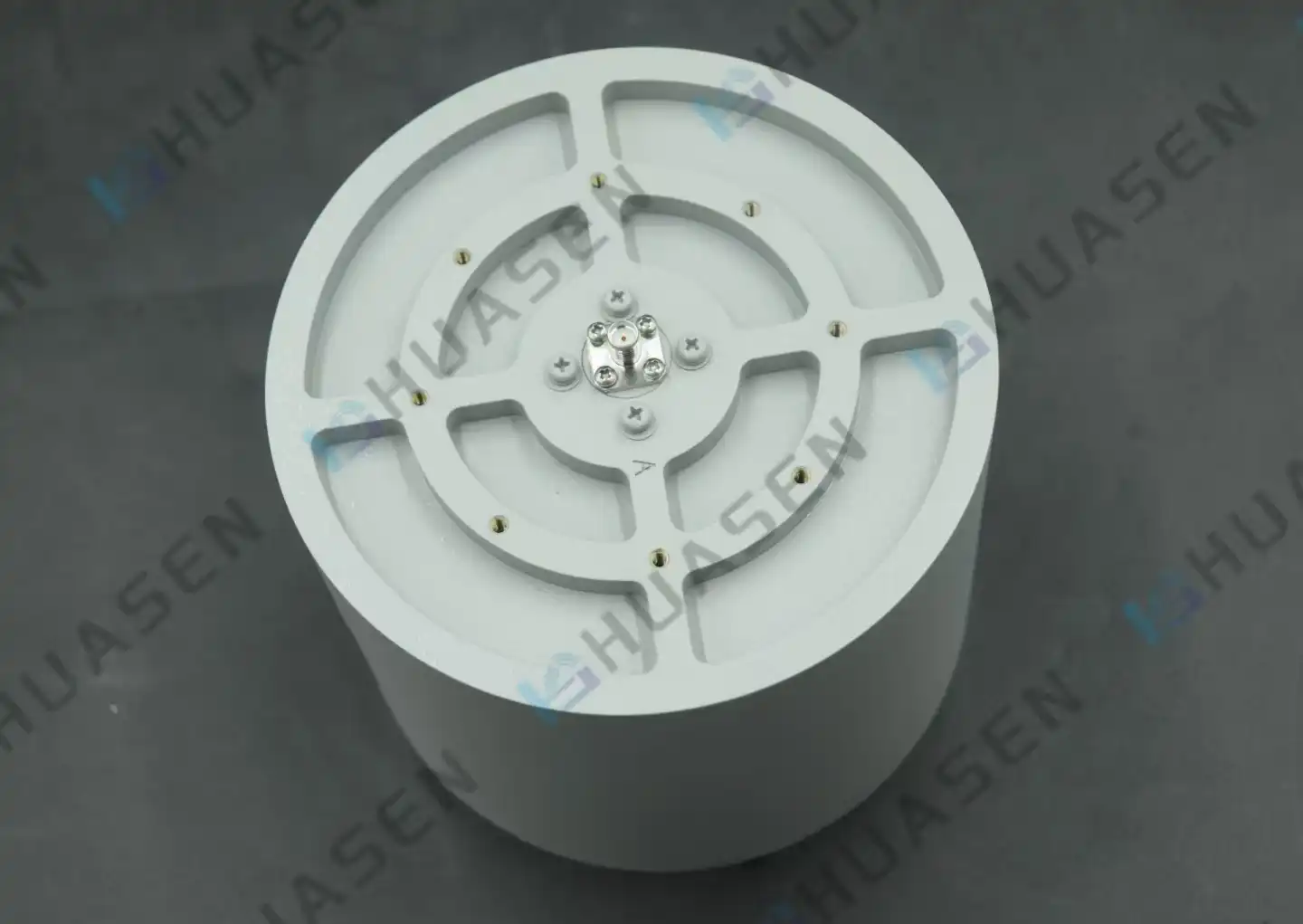
Key Features of Planar Helical Antennas for GPS Systems
Ultra-Wideband Performance
One great thing about planar helical antennas is that they can handle lots of different frequencies. It is possible for one antenna to work well across several radio bands because of this trait. GPS systems may need to get information from different groups of satellites that use different bands. This helps them a lot.
You don't need as many antennas because one can cover a wide range of frequencies. This makes system planning easy. This saves space and lowers the risk of communication problems that can happen when you use a lot of narrowband transmitters at once.
Customizable Circular Polarization
No matter which way the antenna is faced, GPS devices need circular polarization to improve signal reception and cut down on multipath interference. The circular polarization can go either left or right, so planar helix antennas can work with either.
This adaptability is very useful in GPS systems, where changing the polarization can make signal detection and power much better. System makers can fine-tune the antenna's performance to meet specific needs and situations by using the customization options.
Compact and Low-Profile Design
Because these antennas are flat, they work really well for building into small GPS devices. Unlike regular helical antennas, which can be big and stick out from devices, planar helical antennas stay out of the way while still working well.
This feature is especially useful in places where space is limited, like in portable GPS units, wearable tech, or systems that are placed on vehicles. Planar helical antennas have a thin shape that enables slimmer and more aerodynamic designs without sacrificing antenna performance.
Benefits of Using Planar Helical Antennas in GPS Systems
Enhanced Signal Reception and Accuracy
The focused radiation pattern of planar helical antennas makes GPS devices much better at receiving signals. These antennas can better pick up satellite signals even in difficult situations with possible obstructions or interference because they focus the antenna's power on the working area.
This better reception of signals directly leads to better GPS accuracy. If signals from satellites are stronger and clearer, GPS devices can do more accurate calculations for positioning, giving people more accurate location data. This level of accuracy is very important for many things, from navigation and mapping to making sure that key infrastructure time is always correct.
Reduced Multipath Interference
Multipath interference, which happens when signals bounce off objects and come in from different directions, can make GPS work much less well. By rejecting mirrored signals with the opposite polarization, circular polarization of planar helical antennas helps to address this problem.
Planar helical antennas make GPS performance steadier and more dependable by cutting down on multipath disturbance. This is especially helpful in cities or places with lots of shiny surfaces, where multipath effects can be stronger.
Versatility and Cost-Effectiveness
Planar helical antennas are highly adaptable due to their ultra-wideband design. One antenna can work with more than one GPS frequency and maybe even other satellite navigation systems. This means that you don't have to buy separate antennas for each band or system.
Cost-effectiveness is achieved by this flexibility for both producers and end users. Companies can simplify their product designs, cut down on the number of parts they need, and make managing their supplies easier by using a single antenna for multiple frequency bands. This means that users will be able to use GPS devices that are more powerful and mobile without having to buy a bunch of different antennas.

Applications and Future Prospects
Current Applications in GPS Systems
It is becoming more common to use planar helix antennas in many GPS uses because they are small, have a wide bandwidth, and work well. They work especially well in portable tracking devices that need antennas that are small but effective because of limited space. Automotive GPS systems depend on being able to receive signals reliably in changing settings, while precise farm equipment uses their accuracy for tracking and crop management. For accurate readings, surveying and mapping tools use their stable signal quality. Systems for timing, syncing, and search and rescue lights become more reliable and quicker to respond. Planar helical antennas improve the overall system's capabilities, improve the user experience, and make location-based services more precise and reliable across all of these uses.
Emerging Technologies and Future Applications
Planar helical antennas are anticipated to play a significant part in next-generation uses as GPS technology develops and converges with new systems. When they work with 5G networks and Internet of Things (IoT) devices, they can make tracking services more accurate and available everywhere. Small, high-performance receivers that can keep signals strong in tough settings will help advanced systems for self-driving cars find their way. Wearable GPS devices will be able to connect to miniaturized planar helical antennas, which will allow for personal navigation and fitness tracking. They will also be needed for high-precision timing uses in financial and internet networks. Also, small satellite and CubeSat uses in space are likely to grow as new technologies improve their efficiency, expand their frequency ranges, and allow for new satellite-based services.
Conclusion
Planar helix antennas are a big step forward in GPS antenna technology because they combine speed, flexibility, and a small size in a way that is very appealing. They work well for many GPS uses because they can handle ultra-wideband frequencies, circular polarization that can be changed, and efficient radiation patterns.
More and more, high-performance antennas are becoming important as GPS technology changes and becomes more integrated into our daily lives and important systems. Planar helical antennas are a good way to meet these growing needs because they offer the precision, dependability, and adaptability that are needed for next-generation GPS systems.
Consideration of planar helical antennas could be a game-changer for businesses and system developers trying to improve their GPS capabilities. They are an important part of any modern GPS because they improve signal reception, lower interference, and work across multiple frequency bands.
FAQ
Q1. What is the main advantage of planar helical antennas for GPS systems?
The main advantage is their ultra-wideband performance, allowing a single antenna to cover multiple GPS frequencies efficiently, simplifying system design and improving overall performance.
Q2. How do planar helical antennas compare to traditional GPS antennas?
Planar helical antennas offer a more compact and low-profile design while providing comparable or superior performance, especially in terms of bandwidth and circular polarization capabilities.
Q3. Can planar helical antennas be customized for specific GPS applications?
Yes, planar helical antennas can be customized in terms of frequency range, polarization direction, and mechanical specifications to meet specific application requirements.
Q4. Are planar helical antennas suitable for harsh environments?
Planar helical antennas can be designed to withstand harsh environments, with proper encapsulation and protective measures to ensure durability and reliable performance in challenging conditions.

Enhance Your GPS Systems with Advanced Planar Helical Antennas | Huasen Microwave
Ready to take your GPS systems to the next level? Huasen Microwave offers cutting-edge planar helical antennas designed to meet the most demanding requirements of modern GPS applications. Our team of experts is ready to help you find the perfect antenna solution for your specific needs. Contact us today at sales@huasenmicrowave.com to discuss how our advanced antenna technology can enhance your GPS systems' performance and reliability.
References
1. Johnson, R. C., & Jasik, H. (2021). "Antenna Engineering Handbook: Planar Helical Antennas for Satellite Communications." McGraw-Hill Education.
2. Smith, A. L., & Brown, K. P. (2020). "Advanced GPS Technologies: The Role of Planar Helical Antennas in Modern Navigation Systems." IEEE Transactions on Antennas and Propagation, 68(5), 3812-3825.
3. Chen, X., & Zhang, Y. (2019). "Design and Optimization of Planar Helical Antennas for GPS Applications." Progress In Electromagnetics Research, 157, 13-24.
4. Balanis, C. A. (2022). "Antenna Theory: Analysis and Design, 5th Edition." Wiley.
5. López, C. (2021). "Planar Antennas for Satellite Communications: A Comprehensive Review." International Journal of Satellite Communications and Networking, 39(2), 115-135.
6. Rao, Q., & Wang, W. (2020). "Compact Planar Helical Antennas for Multi-Band GNSS Receivers." IEEE Antennas and Wireless Propagation Letters, 19(8), 1352-1356.
Send Inquiry