Antenna Near Field Measurement Probe vs Far Field Methods






2026-06-25 21:08:17
When choosing between measuring antennas in the near field or far field, the choice rests on the limitations of your testing setting and the level of accuracy you need. An antenna near-field measurement probe collects electromagnetic field data in the near-field area, which is usually 3 to 10 wavelengths from the aperture. It then uses Fourier methods to turn this data into far-field patterns. This method works great in small labs where standard far-field lengths aren't possible. Far-field testing, on the other hand, checks antennas at faraway places where plane waves naturally form. This provides clear information about how they work but needs a lot of room. In 5G infrastructure, satellite systems, and military uses, both methods meet different engineering goals.
Understanding Antenna Near Field Measurement Probes
What Makes Near-Field Probes Unique?
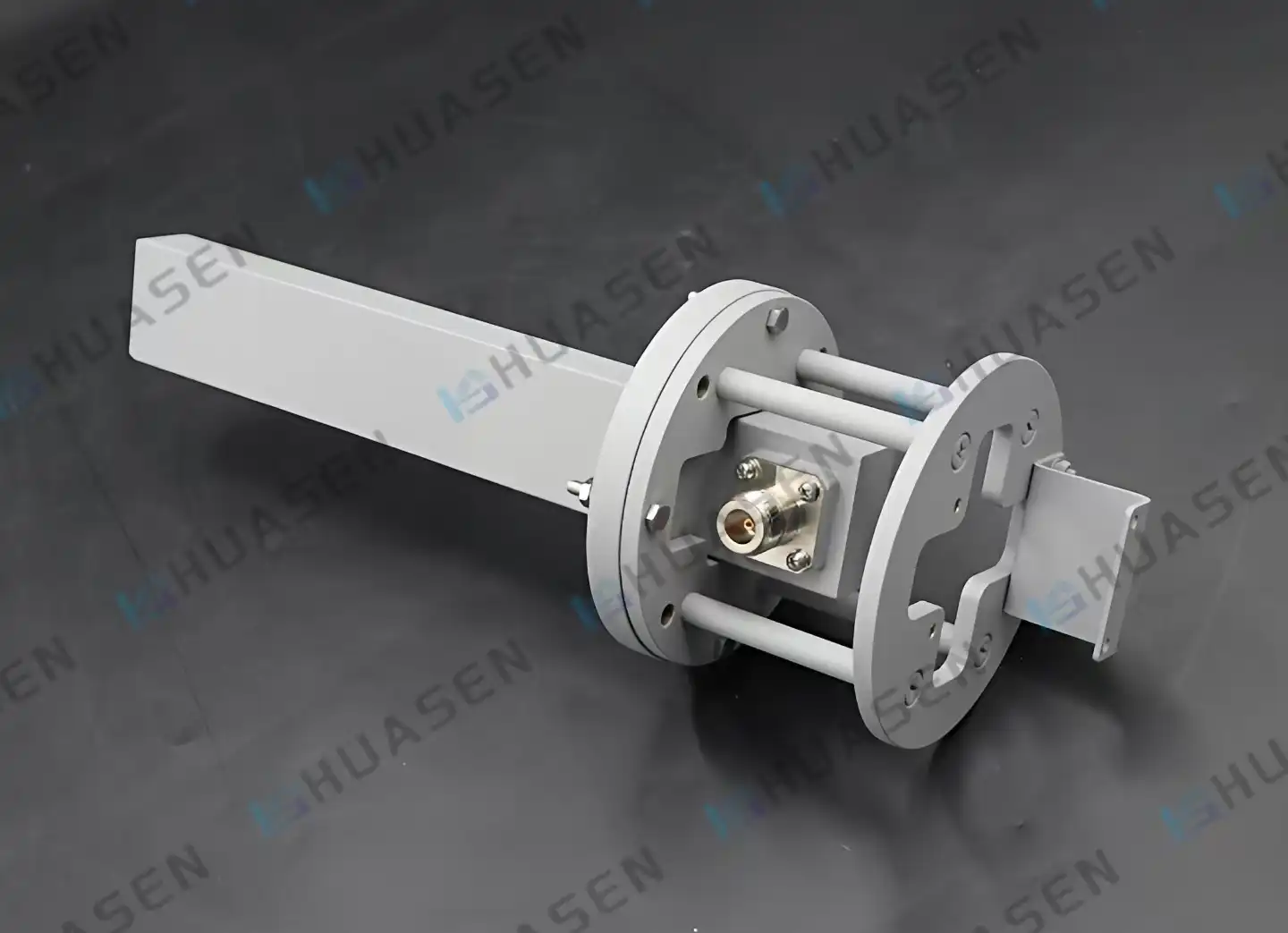
Highly accurate electromagnetic monitors, known as 'antenna near-field measurement probes,' measure field distributions within a few wavelengths of the antenna being evaluated. These specialized sensors have predetermined response patterns that allow mathematical probe adjustment after processing, unlike ordinary antennas. A scanning device's probe is a standardized sampling point, whether flat, spherical, or cylindrical.
Its key benefit is space efficiency. In the Fresnel region, engineers can analyze electrically large antenna systems like satellite phased arrays that are several meters long in chambers a small portion of the far field's distance. Near-field scanning allows a 2-meter array at 10 GHz to reach 133 meters in a 5-meter room.
Technical Architecture and Performance Parameters
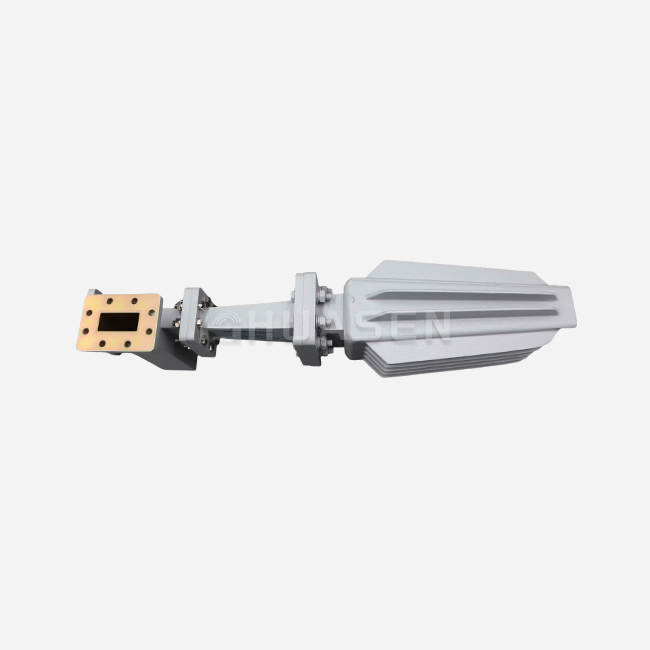
Open-ended waveguide (OEWG) or dual-ridged horn shapes are common in modern antenna near-field measurement probes. These arrangements reduce radar cross-section, which lowers measurement errors caused by probe scattering. Cross-polarization discrimination greater than 30 dB makes sure that co-polarized and cross-polarized components are clearly separated. This is a very important requirement for checking the purity of the polarization in base station antennas.
A voltage standing wave ratio (VSWR) of less than 1.5:1 keeps the measurement dynamic range stable by allowing the most power to flow. The probe's gold-plated, precision-machined aluminum design keeps the phase center stable even when the temperature changes. This lets it work like a point source during mathematical de-embedding. Pattern symmetry usually changes by less than ±0.1 dB in the main beam. This makes it easier for probe correction methods to find out how well the device being tested really works.
Probe Varieties for Diverse Applications
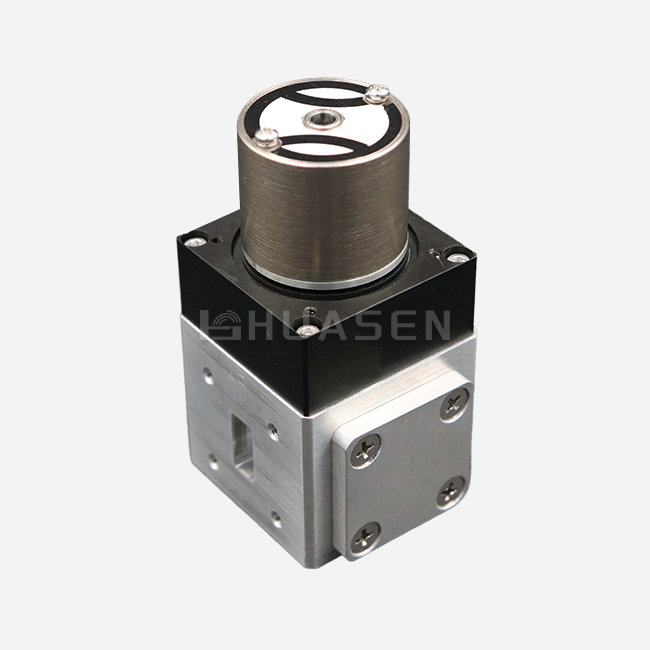
Huasen Microwave's range of probes can be used for a wide range of testing tasks across the frequency range. When measuring a single polarisation, the orthogonal feed (WOEWP) series provides very pure polarisation. Waveguide orthogonal feed Type I (WOEWPI) probes make it easier for mechanical parts to work together in automatic scanning systems. When measurements need to be taken at the same time with two different polarisations, the WOEWDP series cuts scan time in half by recording both polarisations in a single pass.
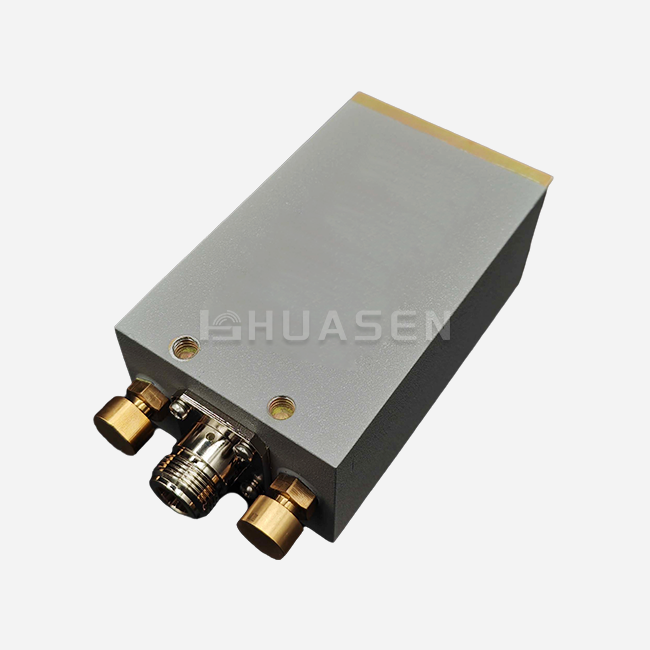
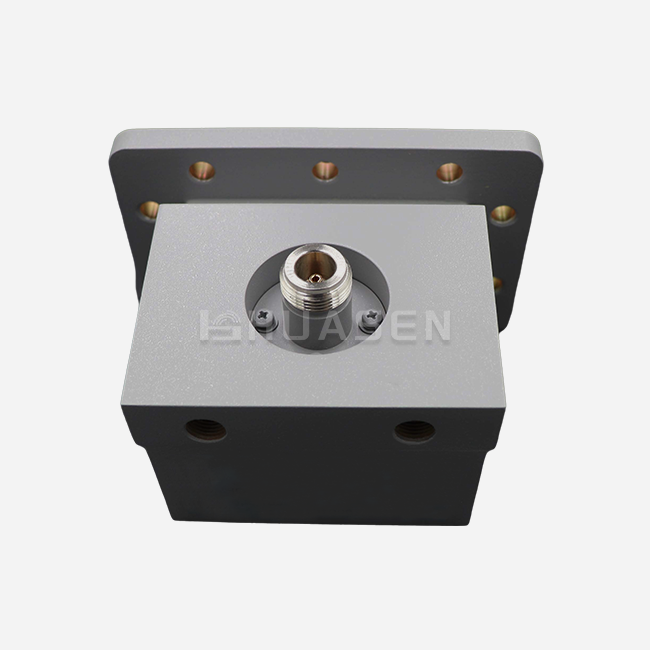
Broadband uses WBOEWP probes that work across a wide frequency range—Huasen's runs from 0.49 to 112 GHz—and keep cross-polarisation isolation levels above 25 dB. Coaxial symmetric dipole (COECP) setups work well in lower frequency ranges where waveguide sizes are too big to use. Standard connection ports, such as K, SMA-K, and 2.92-K, make sure that it works with measurement equipment from Keysight, Rohde & Schwarz, and Anritsu.
Exploring Far-Field Antenna Measurement Methods
Fundamental Principles of Far-Field Testing
Far-field measurement works at distances where spherical wavefronts are close to plane waves, usually farther than 2D²/λ (where D is the antenna opening width and λ is the wavelength). At these distances, the antenna's radiation patterns stay the same, which lets you see things like gain, beamwidth, and sidelobe levels directly. This close connection to real-world situations makes far-field data very useful for checking that standards like MIL-STD or telecommunications specifications are being followed.
Outdoor ranges use the outdoors, while anechoic rooms inside use absorbing materials to make it feel like you're in free space. Compact ranges use parabolic mirrors to change spherical waves into plane waves at shorter distances. This strikes a balance between the need for room and the accuracy of the measurements. Each setup has its own pros and cons when it comes to price, weather resistance, and frequency range.
Practical Constraints and Operational Considerations
The biggest problem is the need for physical room. A 30 GHz millimetre-wave antenna with a 50 cm diameter requires a far-field distance of about 10 meters. When you scale to lower frequencies or bigger openings, you quickly run out of space. Outdoor ranges that are affected by weather conditions like humidity, temperature, and rainfall make measurements less accurate and harder to repeat.
Building an anechoic chamber costs a lot of money—facilities that cover a wide range of frequencies often cost several million dollars. The performance of the chamber rests on the quality of the absorbers. Depending on the frequency and quality level, reflection specs usually range from -30 dB to -60 dB. These places also need climate control to keep the integrity of the absorbers and the accuracy of the measurements even when the temperature changes.
When Far-Field Methods Excel?
Some usages require far-field testing despite issues. Far-field readings in permitted areas are often required for regulatory permission. Small antenna systems, like naval communications antennas or broadcast equipment, can work in far-field areas without close-field infrastructure.
Simple far fields enable measuring patterns over huge angles more easily. While near-field systems utilize arithmetic to predict far-field trends, straight far-field observation eliminates transformation mistakes. Aligned measurement and modelling areas make it easier to compare measured trends with simulation models. If precise gain calibration is needed, a project may use far-field technologies to send calibrated gain standards without math.
Near Field vs Far Field: Key Comparisons for B2B Procurement
Measurement Accuracy and Spatial Resolution
Near-field probing is very good at resolving small changes in the field at sub-wavelength levels, which can show things like aperture lighting details, element failures in phased arrays, and manufacturing flaws. This troubleshooting feature is very helpful for developing antennas and making sure they are of high quality. The transformation methods make the computations more difficult, but current software handles this without any problems, and when the right probe correction is used, it can accurately get far-field patterns from near-field data within ±0.3 dB.
While far-field readings get rid of transformation errors, they lose the ability to diagnose problems in space. In a 64-element array, a broken element could change the far field pattern in a way that doesn't make the failure position obvious. Near-field amplitude and phase maps quickly find the part that isn't working right, which speeds up debugging and cuts down on development processes.
Cost Structure Analysis
The costs of capital tools are very different between the two methods. A full near-field scanning system with an accurate positioner, antenna near-field measurement probe, receiver, and software can cost anywhere from $150,000 to $500,000. The price depends on the frequency range, scanning volume, and amount of automation. Anechoic chambers for tests in the far field start at about $200,000 for small ones and go up to several million dollars for big ones that can fit big antennas and take low-frequency readings.
The operational costs tell a different story. The costs of antenna near-field measurement probe systems are mostly in setting them up and calibrating them on a regular basis. Long-range ranges, especially those that are outside, have ongoing costs for things like range upkeep, protection, and measurement delays caused by bad weather. Chamber absorbers need to be replaced every 10 to 15 years, which adds up to a lot of money. For complex pattern cuts that need dense angular sampling, automatic near-field systems are better for saving time because they can take measurements faster than human far-field turntable setups.
Frequency Range and 5G Compatibility
The millimetre-wave bands (24–100 GHz) that make up 5G systems are very difficult to work with. At these frequencies, it's physically easier to reach far-field distances because the wavelengths are shorter, but air absorption and alignment accuracy make things more difficult. When measuring near fields at millimetre waves, the mechanical accuracy has to be very high. At 60 GHz, a 0.5 mm positioning error can cause noticeable phase errors, but current scanning systems can regularly achieve repeatability of less than 0.1 mm.
Both methods work for a wide range of frequencies, but they have different "sweet spots" that work best in real life. When chamber-based testing is not possible, near-field methods work well for 1-100 GHz tasks. Sub-GHz readings put a strain on the economics of the near field because longer wavelengths require scanning openings that are proportionally bigger. As long as the range is long enough, far-field methods can naturally handle lower frequencies, which makes them appealing for testing VHF and UHF broadcast antennas.
Calibration and Supplier Support Requirements
Calibration of an antenna near-field measurement probe requires a lot of special understanding. To characterize a probe pattern, you have to measure it as a sending antenna and then use these measurements in correction methods. Once a year, the probe's stability is checked with a sweep of the vector network analyzer; any damage to the waveguide aperture will directly mess up readings. It's a lot easier to integrate when suppliers offer full calibration certificates, correction coefficient data files, and application engineering help.
Gain-standard antennas that can be traced back to national metrology centres are used for far-field testing. In substitution methods, the antenna being tested is compared to these standards while the testing settings are kept the same. Even though it seems easier in theory than probe correction, keeping the integrity of standard antennas and handling measurement error budgets are both very difficult tasks. When choosing measurement tools, companies need to look at how quickly suppliers can provide calibration services and how fast their technical support staff is.
How to Choose the Right Antenna Measurement Method and Equipment?
Matching Methods to Application Requirements
Application context guides approach. Development labs evaluating prototype antennas benefit from antenna near-field measurement probe systems' troubleshooting tools and fast repeat speed. For production test settings that prioritise speed and pass/fail criteria, simplified far-field setups or close-field automation may be best. Compliance testing labs must utilise regulatory-approved measurement methods. These methods frequently use approved chambers or distant field settings.
Consider antenna power size. Devices with the largest measurements, around 10 waves, function effectively in far-field settings with limited range. Large electrical systems like satellite earth station antennas, huge base station MIMO arrays, and radar phased arrays soon pay for themselves in building space and measuring capabilities.
Evaluating Supplier Capabilities and Product Portfolios
Top measurement tool manufacturers like Keysight Technologies, Rohde & Schwarz, and MVG offer full antenna measuring systems that use both methodologies. Check how well different sources' regular coverage matches your present and future product roadmaps. A company that supplies 500 MHz to 112 GHz equipment allows technology to grow with deployment frequencies.
Examine probe performance specs carefully. Cross-polarisation isolation affects measurement uncertainty in polarisation-sensitive applications. Most businesses can employ standards above 25 dB, while the military and research may demand 40 dB or more. The measurement dynamic range is good if the VSWR is under 1.5: 1. For antennas with low sidelobes or deep nulls, this is crucial.
Connector connectivity matters in real-world operations. SMA-K, 2.92-K, and precision K connectors link to existing measuring sensors and signal generators. Waveguide connections are appropriate for millimetre-wave applications where coaxial transmission losses are too large. Huasen microwave probes include industry-standard connections. This makes them easier to integrate into multi-provider measuring platforms.
Strategic Procurement Considerations
Talk to vendors if you need many measurement tools for multiple sites or production tests. Buying in quantity can save you money and allow you to adjust the flange size, frequency bands, or connectors to accommodate various measuring tools. Normal functioning is maintained by longer warranty terms and extra calibration services.
After-sales support determines the quality and usage of measurement systems. Application engineering consulting firms can optimise scanning settings, antenna near-field measurement probe selection, and data processing. Operator training reduces measurement errors and increases production by improving skill faster. Quality technical papers including probe correction data file formats, mechanical interface designs, and electromagnetic performance records provide seamless integration and problem resolution.
The overall cost of ownership goes beyond the automotive price. Consider the cost of testing every 18–24 months, probe repairs, and near-field post-processing tool software licensing. Large-stock suppliers reduce mechanical part servicing downtime. The proximity of service centres or regional support offices affects calibration cycles and urgent technical support.
Conclusion
When choosing between antenna near-field measurement probe tools and far-field methods, you must weigh the benefits of each technology option against its limitations. When it comes to electrically big antenna systems and development settings that stress iteration speed, near-field methods are especially useful because they improve spatial resolution and facility efficiency. For compliance reasons, small antenna sizes, and uses that value direct operating state correlation, far-field testing is still useful. More and more, modern antenna development uses a mix of approaches, starting with near-field tests during development and moving on to far-field validation for final compliance checks. When buying something, people have to weigh the cost of the tools against the costs of running it, the needs of the building, and the quality of the supplier's help. When companies buy antenna measurement tools today, they should focus on making them flexible, taking into account how frequency roadmaps will change and new application needs to get the most long-term value.
FAQ
1. What frequency range does a typical near-field probe cover?
The frequency range of an antenna near-field measurement probe depends on the type of design. Narrowband waveguide probes usually cover 1.3:1 to 2:1 bandwidths. For example, the WR-28 waveguide probe works from 26.5 GHz to 40 GHz. Using a dual-ridged waveguide or special transitions in broadband designs lets you cover more than one octavsuch asike 6–18 GHz or 18–40 GHz, though cross-polarisation purity often suffers a little in terms of performance. Huasen Microwave has a range of probes from 0.49 GHz to 112 GHz, so customers can choose the best probe design for their measurement frequency needs.
2. Can near-field systems measure electrically large antenna arrays?
Near-field measurement is especially good at describing electrically large antenna arrays that would otherwise need to be measured at far-field distances, which are not practical. A far-field distance of more than 300 meters is needed for a 2-metre satellite array working at 12 GHz, but the same antenna can scan the near field inside a 5-metre box. This method is perfect for 5G huge MIMO base station antennas, satellite communication arrays, and radar phased array systems because it can mathematically change near-field data to far-field patterns that have hundreds of separate elements.
3. How does probe correction affect measurement accuracy compared to far-field testing?
Probe correction analytically takes out the probe's own radiation pattern from the recorded data, leaving only the real performance of the antenna being tested. When tools are fully calibrated and correction techniques are used correctly, the accuracy of near-field measurements is the same as or better than that of far-field methods. Usually, errors are within ±0.3 dB for gain and ±2 degrees for phase. Pattern distortion and mutual coupling effects cause systematic mistakes when inferior probes don't have the right adjustment data. Quality probe correction needs careful initial definition, but it gives users measurements that are just as accurate as direct far-field methods while still meeting the needs of small facilities.
Partner with Huasen Microwave for Precision Antenna Measurement Solutions
Huasen Microwave Technology can help you with your antenna measurement needs because they have 30 years of experience making high-frequency microwave and millimeter-wave parts. We are a well-known company that sells antenna near-field measurement probes. We offer complete probe systems for frequencies between 0.49 and 112 GHz, with cross-polarization separation of more than 25 dB. Our orthogonal feed (WOEWP), dual-polarisation (WOEWDP), and broadband (WBOEWP) probe types can be used for a wide range of measurement tasks, from characterising 5G massive MIMO to developing space communication systems. The precision-machined and gold-plated construction guarantees phase stability and long-term dependability, which are important for test conditions in the lab and in production.
You can email our engineering team at sales@huasenmicrowave.com to talk about custom probe configurations, plans for buying in bulk, and measurement options that are made for your specific needs. We offer full documentation for calibration, probe correction coefficient files, and ongoing expert help to make sure that our products work seamlessly with your existing measurement infrastructure. Huasen Microwave has the precise instruments and application knowledge to help you meet your measurement accuracy and project schedule needs, whether you're setting up new antenna testing facilities or upgrading old ones for millimeter-wave uses.
References
1. Yaghjian, A.D. "An Overview of Near-Field Antenna Measurements," IEEE Transactions on Antennas and Propagation, vol. 34, no. 1, 1986, pp. 30-45.
2. Appel-Hansen, J., Dyson, J.D., Gillespie, E.S., and Hickman, T.G. "Antenna Measurements", in The Handbook of Antenna Design, Volume 1, IET Electromagnetic Waves Series, 1982.
3. Balanis, Constantine A. "Antenna Theory: Analysis and Design," 4th Edition, John Wiley & Sons, 2016, Chapter 17: Antenna Measurements.
4. IEEE Standard 1720-2012, "IEEE Recommended Practice for Near-Field Antenna Measurements", Institute of Electrical and Electronics Engineers, 2012.
5. Gillespie, E.S. "Special Issue on Near-Field Scanning Techniques," IEEE Transactions on Antennas and Propagation, vol. 36, no. 6, June 1988.
6. Hansen, J.E. "Spherical Near-Field Antenna Measurements," IET Electromagnetic Waves Series 26, Peter Peregrinus Ltd., 1988.
Send Inquiry