
Wideband DC Power Amplifier Applications in Test & Measurement






2026-07-27 10:02:21
When precision matters most in test and measurement environments, wideband DC power amplifiers deliver the signal integrity and stability that engineers demand. These specialized amplification devices handle signals from DC through high-frequency RF ranges, providing the clean power output required for accurate characterization of components, systems, and materials. Unlike conventional amplifiers limited to narrow frequency bands, wideband DC power amplifiers support multi-spectrum testing with a single instrument, reducing equipment costs while expanding measurement capabilities across telecommunications, aerospace, defense, and research applications.
Advantages and Performance Benefits of Wideband DC Power Amplifiers
With their unique design, wideband DC power amplifiers offer performance levels that can't be reached with regular RF or audio-frequency gear. When procurement teams know about these benefits, they can defend investments that directly improve measurement results.
Superior Linearity and Minimal Distortion
Linear operation over a wide range of frequencies keeps the signal pure, which is important for figuring out what nonlinear DUTs are. When checking power amplifiers, mixers, or analog-to-digital converters, the test tools must cause almost no distortion. If it does, the measurements will show test system artifacts instead of the real performance of the DUT. Wideband DC power amplifiers get THD values below -80 dBc, which means that produced harmonics can't be seen when compared to DUT-made products.
This linearity goes all the way to the dynamic range. Four-quadrant operation, which means that current can be sourced and sunk in both voltage polarities, lets you simulate complicated load situations. The amplifier reacts right away to changes in the input signal because it doesn't have any slew-rate limits, which can distort the waveform during fast transients.
Stable Multi-Spectrum Coverage
Multiple narrowband amplifiers can be replaced by a single wideband amplifier. This makes test sets easier and makes tuning easier. Huasen Microwave's linear DC power amplifiers cover frequencies from DC to 40 GHz, which makes them useful for checking power supply transients and characterizing millimeter-wave components. This adaptability is very helpful in labs that work on a variety of projects, as flexible equipment directly leads to more efficient operations.
Gain flatness stays within ±1 dB across this range, so there are no frequency-dependent correction factors that are needed with cascaded narrowband stages. Phase linearity keeps pulse fidelity and modulation accuracy, which are very important for making radar waveforms and simulating digital communication signals, the same.
Efficiency Trade-offs and Thermal Management
Class A amplifiers give off a lot of heat, which is a trade-off for their unmatched linearity. Even though efficiency may only hit 25–30%, this thermal load can still be handled with the right heat sinks and forced air cooling. Class A topology is the only option for sensitive measurement environments because it doesn't have any switching noise, which gets rid of the EMI/RFI problems that come with high-efficiency Class D designs.
Class AB designs are more efficient (up to 60% better) while still being linear enough for many test uses. When working in Class AB, the output stage changes between push and pull devices, which causes crossover distortion. This can be kept to a minimum by carefully adjusting the bias and choosing devices that work well together. When deciding between Class A and AB, you have to weigh the standards for linearity in different test situations against the amount of power they use.
- Noise Floor Performance: Very low output noise (often below 10 mVrms) makes sure that small signals can be told apart from background noise. This increases the dynamic range by 20 to 30 dB compared to switching amplifiers. This feature is very important for figuring out what low-noise amplifiers, oscillators, or frequency sources are made of and measuring phase noise in them.
- Impedance Matching Flexibility: Input/output impedances that can be changed can meet the needs of different DUTs without the need for external matching networks. Standard 50Ω operation works well for RF tests, and high-impedance inputs connect to sensors and actuators. This flexibility lowers the measurement error that comes from impedance mismatches, which cause standing waves and signal echoes.
- Transient Response: High slew rates of more than 10 V/µs accurately record fast edges and pulse characteristics. Traditional amplifiers with limited frequency change the shape of pulses, causing noise and overshoot that hide the real behavior of the DUT. For time-domain reflectometry, pulse radar modelling, and digital signal integrity analysis, DC power amplifier wideband systems that keep pulse fidelity are very important.
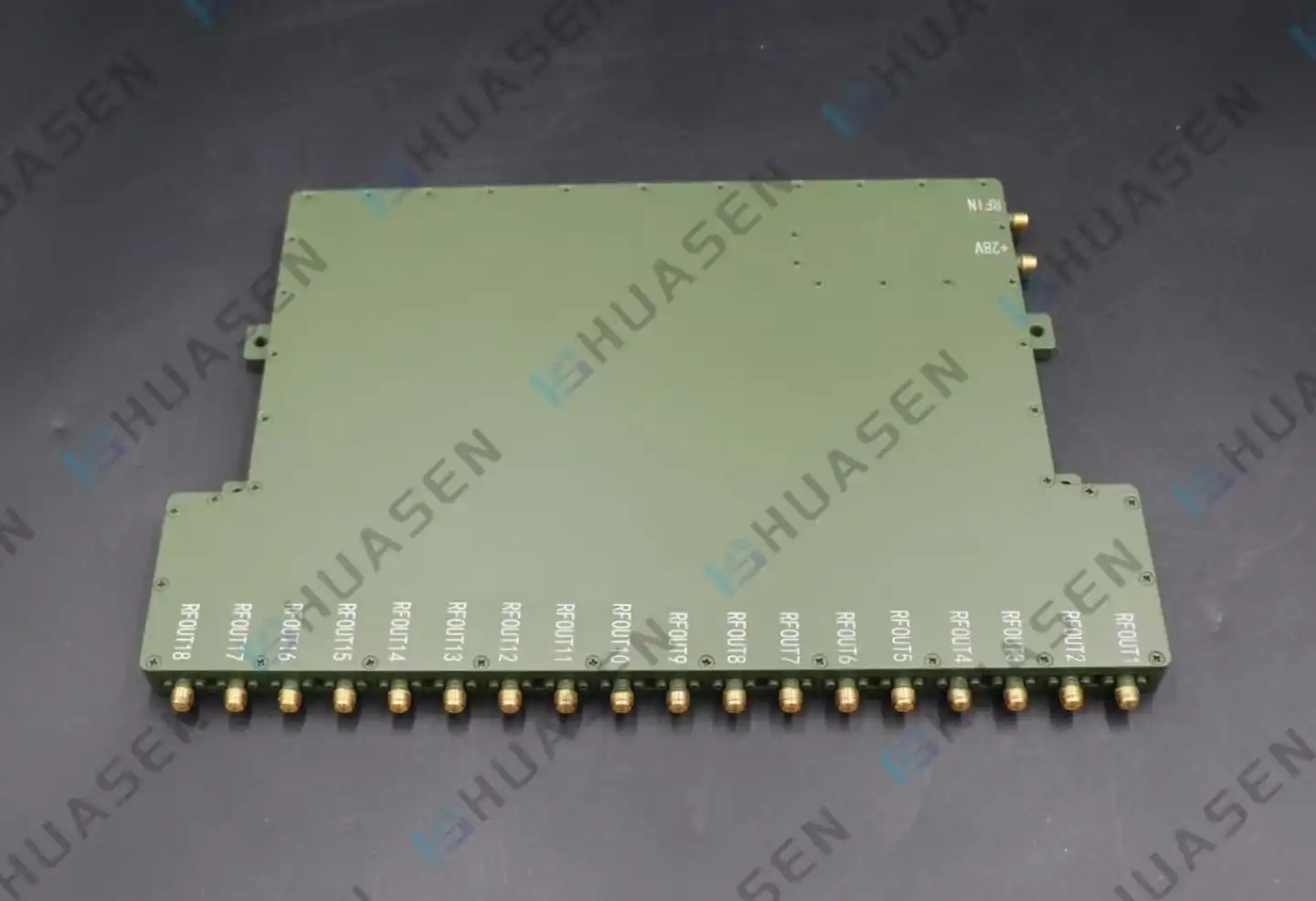
Troubleshooting and Optimizing Wideband DC Power Amplifier Setups
To successfully deploy wideband DC power amplifiers, you need to pay attention to connection factors that have a big impact on performance. When installed incorrectly or used outside of the recommended parameters, even high-end amplifiers don't work as well as they should.
Common Challenges and Diagnostic Approaches
The most common startup trouble is oscillations. These unwanted signals keep going on their own because of feedback loops that are caused by ground loops, not enough power supply bypassing, or bad cable routing. A network analyzer is used for frequency response analysis to find resonant peaks, which is the first step in the diagnosis. Some solutions are to use star-grounding, add ferrite beads to the power leads, and keep the input and output cables very far apart.
Thermal overload usually happens when there isn't enough cooling or when the system is used for longer than its designated duty cycle. When high power is used continuously, it creates heat that raises junction temperatures. This lowers the stability of the gain and finally sets off thermal safety circuits. Temperature problems can be avoided by keeping an eye on heat sink temperatures and making sure airflow isn't blocked. For installations that need a lot of power for a long time, liquid cooling or forced-air systems with certain cubic feet per minute (CFM) ratings may be needed.
Noise interference shows up as high noise floors or unwanted sounds in the output range. External sources, like rotating power supplies, digital equipment, and fluorescent lights, can connect to sensitive amplifier ports if they are not properly shielded or grounded. Systematic troubleshooting includes running the amplifier by itself to find the background noise and then slowly adding system parts back in to find the coupling routes. External interference can be reduced with shielded enclosures, filtered power entry modules, and differential input configurations.
Maintenance Routines for Extended Lifespan
Regular preventative maintenance extends the life of amplifiers and keeps tuning times the same. Cleaning heat sinks and cooling fans on a regular basis gets rid of the dust that builds up on them. Dust acts as thermal insulation, which makes cooling less effective. By checking the connections for wear or dirt, you can find contact resistance that is higher, which lowers the performance of the signal line.
Regular checks of the calibration make sure that the gain accuracy and uniformity stay within the limits. By comparing measurements to traceable standards, drift can be found before it affects the accuracy of the measurements. If an amplifier's parameters change outside of what is acceptable, it needs to be recalibrated at the maker or a part needs to be replaced.
| Maintenance Task | Frequency | Purpose |
|---|---|---|
| Heat sink cleaning | Every third | Keep up the thermal performance |
| Connector inspection | Every six months | Keep the signal from getting worse |
| Calibration verification | Every year | Make sure measurements are correct. |
| Fan bearing lubrication | Every two years | Make cooling systems last longer. |
| Power supply capacitor check | Every five years | Stop mistakes caused by getting older |
How to Choose the Best Wideband DC Power Amplifier for Your Test & Measurement Needs?
You can pick the best wideband DC power amplifier for your test and measurement needs by following these steps. When choosing the right amplification tools, you need to carefully match technical specs with application needs while keeping price and space limitations in mind.
Technical Parameter Alignment
The messages that are being checked or made determine the bandwidth needs. To avoid band-edge roll-off when testing 5G parts that work at 28 GHz, amplifiers must have a flat response above 30 GHz. On the other hand, DC to 1 MHz coverage may be enough for power source transient modelling for car systems. Over-specifying bandwidth makes costs go up for no reason, while under-specifying bandwidth makes measurements less accurate.
The need for gain depends on how strong the signals are throughout the test system. Find the necessary gain by finding the difference between the output of the signal generator and the input needs of the DUT. A 0 dBm generator that feeds a DUT that needs +30 dBm input needs 30 dB gain. Cable and socket insertion loss should be taken into account. At microwave frequencies, this is usually 1-2 dB per meter.
The output power must be higher than the highest input levels of the DUT, and there must be enough slack to avoid compression. Nonlinearities are introduced by amplifier saturation, which makes linearity measurements useless. In the linear region, operation is kept going by a safety margin of 3 to 6 dB above the highest signal levels.
The noise floor sets the limits of how sensitive a test can be. Take the desired dynamic range away from the highest signal level to get the needed noise floor. To allow for measurement error, noise floors must be at least 85 dB below the maximum output for frequencies with an 80 dB dynamic range.
Comparative Assessment Methodology
Making specification matrices that compare key parameters is part of evaluating competing products. In addition to the main specs, you should look at the test conditions. Gain flatness that is stated over small temperature ranges or frequency segments might not accurately reflect how it works in real life. Ask for detailed datasheets that show results that were measured in all possible working situations.
Evaluation of suppliers includes business factors as well as product specs. Manufacturing quality standards, like ISO 9001 and MIL-STD compliance, show that the process is mature and that the products are consistent. Stability in the supply chain affects lead times and the availability of parts, which are important things to think about when supporting production lines or keeping repair inventory levels high.
Warranty terms show how confident the maker is. Longer guarantees that cover more than one year are a sign of strong designs and high-quality parts. Carefully read through the warranty's exclusions. Some manufacturers won't cover certain operating conditions or uses.
Procurement Considerations for B2B Buyers
When negotiating bulk prices, promises to buy a lot of something can lead to lower per-unit costs. When you form partnerships with key suppliers, you can often get better prices, faster delivery of parts when they're in short supply, and better expert help. Frame deals that spell out pricing, shipping terms, and quality standards make it easier to make purchases over and over again.
Delivery times affect when projects get done. Standard catalogue items usually ship within a few weeks, but special designs could take months. When you ask for delivery promises in writing, you protect yourself against schedule slips. Keeping extra supplies of important parts on hand helps keep the supply chain running smoothly.
Custom OEM setups are made to meet specific needs. Huasen Microwave lets you change the frequency ranges, output power levels, mechanical shapes, and types of connectors. By including engineers in the planning stages of a project, you can be sure that the DC power amplifier specifications will perfectly match the system architectures, which will help you avoid expensive redesigns or performance losses.
| Parameter | Standard Catalog | Custom OEM |
|---|---|---|
| Frequency Range | 0.1 to 40 GHz (fixed) | application-specific (can be set up) |
| Output Power | From mW to kW (separate steps) | Details about how much power |
| Gain Flatness | about 1 dB normal | ±0.5 dB is possible |
| Mechanical Form | Rackmount or benchtop | Custom cases that are tough |
| Lead Time | 2 to 6 weeks | 8 to 16 weeks |
| Minimum Order | One unit | Usually 5 to 10 units |
Conclusion
Wideband DC power amplifiers are now essential tools in modern test and measurement labs because they allow accurate characterisation over frequency ranges that have never been seen before. Because they have a wide bandwidth, great linearity, and low noise floors, they solve important measurement problems in research, defence, telecommunications, and aerospace. Knowing how amplifiers work, the trade-offs between performance and reliability, and the best ways to integrate them gives procurement managers and engineers the power to choose equipment that improves measurement accuracy while lowering the total cost of ownership. As communications technologies move closer to 6G and electronics move into millimetre-wave frequencies, the flexibility and performance of wideband amplification become more important for organisations that want to keep measuring things accurately.
FAQ
1. What distinguishes wideband DC power amplifiers from standard RF amplifiers?
Standard RF amplifiers use AC coupling, which blocks DC and low-frequency parts. Wideband DC Power Amplifiers, on the other hand, keep the frequency response flat from true DC (0 Hz) to microwave frequencies. This DC-coupled architecture is very important for tasks that need to keep the static offset, like sensor excitation or power supply simulation. The wide continuous bandwidth gets rid of the breaks between frequency bands that are common in older amplifier designs.
2. How do I calculate the gain requirements for my test setup?
To find the gain, take the output level of your signal source and subtract it from the input level needed by the DUT. Then, add some room for cable losses and practical headroom. For instance, a signal generator that puts out -10 dBm and feeds it to a DUT that needs +20 dBm input needs 30 dB of gain. You need 36 dB of gain in total, which includes 3 dB for connection losses and 3 dB for the compression buffer.
3. Should I select Class A or Class B amplifier topology?
Class A has the best accuracy and the least amount of distortion, making it perfect for precise readings that need THD below -80 dBc. Class B is more efficient, so it needs less cooling and uses less power, but it has a little more distortion. Class A is best for uses that need very good uniformity, while Class B is fine for general tests where some distortion is okay.
Partner with Huasen Microwave for Your DC Power Amplifier Requirements
Huasen Microwave Technology can help you with your test and measurement needs because they have been working with RF and microwaves for 30 years. Our linear DC power amplifiers boost signals in a stable and high-quality way from 0.1 GHz to 40 GHz, and they can output in a variety of ways, from milliwatts to kilowatts. The accuracy of measurements is guaranteed by gain flatness within ±1 dB, and the signal integrity is maintained for the toughest applications by low distortion.
As a well-known company that makes DC power amplifiers, we offer full technical support throughout the whole buying process, from helping you figure out what you need to helping with installation and ongoing service. Our engineering team works closely with your designers to make sure that the amplifier configurations meet all of the needs of the system. This includes custom frequency ranges, output power levels, and mechanical packaging.
Get in touch with our sales team at sales@huasenmicrowave.com to talk about your boosting needs. When you buy a lot from us, we can offer you reasonable prices, quick quotes, and reliable shipping schedules that keep your projects on track. Huasen Microwave provides the performance, reliability, and support that demanding applications need, whether you're setting up a new lab, improving existing test capabilities, or making custom measurement solutions.
References
1. Razavi, B. (2012). RF Microelectronics, 2nd Edition. Prentice Hall, Upper Saddle River, NJ. Chapter 7: Power Amplifiers, pp. 312-385.
2. Bowick, C., Ajluni, C., & Blyler, J. (2007). RF Circuit Design, 2nd Edition. Newnes, Burlington, MA. Section 4.3: Wideband Amplifier Design Techniques, pp. 178-224.
3. Agilent Technologies. (2010). Fundamentals of RF and Microwave Power Measurements. Application Note 64-1A. Agilent Literature Library, Santa Clara, CA.
4. Pozar, D. M. (2011). Microwave Engineering, 4th Edition. John Wiley & Sons, Hoboken, NJ. Chapter 11: Active RF and Microwave Devices, pp. 621-678.
5. Rohde & Schwarz. (2015). Requirements for Amplifiers in Test and Measurement Applications. White Paper 1MA234, Munich, Germany.
6. IEEE Standard 1139-2008. IEEE Standard Definitions of Physical Quantities for Fundamental Frequency and Time Metrology—Random Instabilities. Institute of Electrical and Electronics Engineers, New York, NY.
Send Inquiry


Related Industry Knowledge
- 5 Key Parameters for Choosing Dual Polarized Parabolic Antennas
- Fixed vs. Variable Coaxial Loads: Which One Fits Your Test Scenarios Better?
- What key performance indicators should be prioritized when selecting a Dual Channel Waveguide Rotary Joint?
- Why do Dual Polarized Yagi Antennas suffer from reduced gain or poor isolation?
