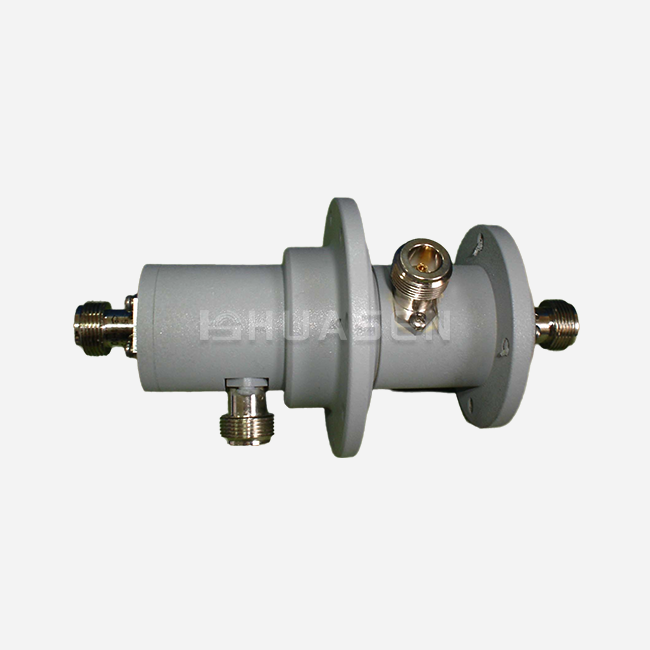
Why Use Differential Phase Shift Isolator in Radar?






2026-04-16 22:03:34
Modern radar systems work in very strong electromagnetic fields, and the success of the task depends on the purity of the signals they send. When megawatt-level pulses are sent out by radar emitters, even small echoes from parts that don't fit together right can destroy expensive equipment in milliseconds. This major flaw is fixed by the High Power Waveguide Differential Phase Shift Isolator, which directs reflected energy away from sensitive amps and into special cooling loads. This dual-path design spreads RF energy over larger surface areas than traditional junction isolators, which have trouble with thermal dissipation. This makes it possible for systems like military radar, weather monitoring, and aircraft tracking to work reliably in situations where downtime is not an option.
Understanding Differential Phase Shift Isolators in Radar Systems
Signal reflections are a damaging force that radar experts have to fight all the time. When pulses are sent and hit antenna flaws or strange things in the atmosphere, the energy bounces back toward the power generator. If these echoes are not stopped, they can lead to voltage arcing, ferrite burning, and catastrophic failure in solid-state amplifiers or traveling wave tubes.
What Makes This Technology Different?
The way it works depends on changing the phase inside waveguide structures. A typical junction isolator has a single ferrite disk that sits at the point where three ports meet. This disk absorbs reverse energy through magnetic spinning. This arrangement works for moderate power levels, but at kilowatt average powers, the center ferrite stops conducting heat. We use a bridge design with two waveguide arms for our differential phase shift method. Signals coming in are split by a 3dB hybrid coupler, which is usually a magic-T or short-slot hybrid. Each arm has ferrite bars that are magnetic along their length and are placed against the walls of the waveguide. Forward signals have phase changes that are the same, and they combine in a good way at the output. Signals that are reflected build up a 180-degree difference, which sends them straight to a water-cooled terminal load instead of the source.
Key Performance Metrics That Define Quality
Radar buying teams use strict technology benchmarks toHigh Power Waveguide Differential Phase Shift Isolatorjudge isolators. To keep the emitter working well and avoid self-heating, insertion loss must stay below 0.25 dB. Less than 0.3% of the power that is returned gets to the amplifier because the isolation is higher than 25 dB. When the voltage standing wave ratio (VSWR) is less than 1.10:1, the impedance matching stays the same across frequency changes. Peak power handling is what separates laboratory experiments from industrial-grade parts. During microsecond bursts, military phased array radars send out 5–10 MW waves. The shape of the waveguide needs to be able to handle being pressurized with SF6 gas or dry nitrogen. This raises the dielectric breakdown threshold from 30 kV/cm in air to more than 100 kV/cm. This pressure keeps internal arcing from happening, which would melt ferrite surfaces and make the whole RF chain dirty. Long-term dependability depends on how stable the temperature is. Up to 200°C Curie points, yttrium iron garnet ferrites keep their electromagnetic qualities, but changes in temperature cause mechanical stress. Direct liquid cooling channels are cut into the walls of the waveguides by manufacturers. These channels circulate low-conductivity pure water at controlled flow rates. This gets rid of heat 50 times better than forced-air convection, which lets weather radar sites run continuously at 100 kW average power.

Technical Aspects and Design Considerations for Radar Applications
When choosing protection devices for radar front ends, it's important to know how specs translate into working benefits. When looking at isolators for an X-band marine navigation radar, a procurement engineer has different goals than when building a system to track space junk.
Frequency Performance Across Operational Bands
Differential phase shift isolators work well across a wide frequency range by carefully choosing the ferrite materials they use and applying magnetic bias. For long-range monitoring, L-band devices (1-2 GHz) need waveguide sizes like WR-650, which can handle lower power densities but need precise phase matching over 40% fractional bandwidth. In fire control radars, X-band units (8–12 GHz) use WR-90 waveguides that are made with tighter limits to keep the band isolated. The useful bandwidth is based on the ferrite material. Lithium ferrite has a smaller temperature range but less insertion loss. Garnets doped with calcium and vanadium give better predictability at high field strengths. This is very important for pulse compression radar because phase noise makes range precision worse. We choose the right ferrite grades for your radar based on its waveform—continuous wave, pulsed wave, or frequency-modulated—to make sure that the magnetic reaction doesn't cause any confusion.
Power Capacity and Thermal Management Integration
How much power is handled on average depends on theHigh Power Waveguide Differential Phase Shift Isolator andhow well heat is removed. It's possible for a phased array radar with 128 transmit/receive units to lose 2 kW per channel. The platform's thermal control design must be able to talk to the isolator cooling system. Propylene glycol is used as a coolant for radar on aircraft between -40°C and +70°C. Even though there is a chance of corrosion, seawater heat exchanges are used in shipboard systems. We create cooling pipes with rough flow patterns that stop hotspots from forming near the surfaces of ferrite and waveguides. Computer models of fluid dynamics make sure that temperature differences stay within 15°C along the length of the ferrite. This keeps thermal expansion mismatches from happening, which would otherwise crack the layers that hold it together. For ground-based radar that is used in deserts, multiple cooling loops with automatic switchover keep the radar running while it is being serviced.
Environmental Resilience and Mechanical Strength
Defense radar works with the help of vibrations from weapons, shocks from planes taking off, and wave effects on ships. In the MIL-STD-810 test, isolators are put through 20G acceleration curves and random vibration bands up to 2000 Hz. The ferrite attachment system has flexible padding that takes the impact of shocks without breaking the fragile ceramic. In coastal and marine settings, where salt spray can damage waveguide flanges, corrosion protection is important. We use electroless nickel plating on aluminum housings and fittings made of stainless steel that have been tested for torque. There are leak monitoring valves in SF6 gas pressure ports that sound alarms before the dielectric strength drops. These design features make the product last longer than 15 years in harsh environments where other brands' goods break after only 36 months.
Comparing Differential Phase Shift Isolators with Alternative Solutions
During the planning step, radar system integrators look at a number of different isolation methods. Depending on the power levels, frequency ranges, and space limitations, each method has its own benefits. Faraday spin isolators are most common in uses with frequencies below 1 GHz. They use a single ferrite stick with a fixed magnet wrapped around it to rotate the polarization plane of the signal by 45 degrees. The orthogonally polarized reflection is taken in by a resistant fan. This simple structure works well for high-speed internet connections, but it can't handle the high power levels found in search radar. The center ferrite doesn't have a clear way to cool down, so the average power can only reach a few hundred watts before it gets too hot. For complicated radar designs, junction circulators separate multiple ports. A three-port circulator sends information in a circle from Port 1 to Port 2, then from Port 2 to Port 3, and finally from Port 3 to Port 1. It works as an insulator by ending Port 3 with a matching load. In bistatic radar devices, this arrangement works well for protecting the receiver. However, the Y-junction shape concentrates magnetic fields, which makes it harder to handle power compared to designs that use spread ferrite elements. Without active cooling, junction devices rarely have an average power of more than 10 kW. Differential phase shift isolators are great for protecting high-power transmitters. The bridge topology splits power into two parallel lines, which makes the useful ferrite volume twice as big. When ferrites are mounted on the wall, liquid cooling can take heat straight from the parts that dissipate it. This design normally handles power levels between 10 and 100 kW, and it can handle up to 10 MW of peak power when fully compressed. The downsides are that they are bigger and cost more, but they are the best choice for important radar uses where protecting the equipment is worth the extramoney.
Real-World Applications and Case Studies in Radar Systems
It has been shown that differential phase shift isolators are useful on a variety of radar systems where dependability has a direct effect on operating success.
Military Phased Array Radar Protection
A global defense contractor added high-power isolators to their S-band early warning radar network because amplifiers kept breaking down while tracking storms. The first junction circulators weren't able to handle echoes from the fast-changing weather. Lightning hits close to the antenna array caused short-term mismatches greater than 3:1 VSWR, which sent kilowatts of power back through the system. The radar was up 99.7% of the time for 18 months after differential phase shift isolators with 100 kW average power levels were installed. Using standard quick-disconnect fittings, the liquid cooling system was connected to the current thermal control infrastructure. Maintenance logs showed that no amplifiers had to be replaced, even though 14 had failed in the High Power Waveguide Differential Phase Shift Isolator over theprevious 18 months because the security supplier, we made full swasn't good enough. Signal-to-noise ratio increases of 1.2 dB increased the detecting range by 8%, making it easier to spot threats.
Weather Radar Continuous Operation
A national weather service runs 45 sites with C-band Doppler radar for tornado warning devices. At 1000 Hz repeat rates, these radars send out 250 kW peak power bursts, which make 25 kW of average power. The first isolators used forced air cooling, which didn't work well when the temperature outside was over 40°C in the summer. During critical bad weather events, three sites shut down because of high temperatures. Failures caused by temperature were stopped by adding water-cooled differential phase shift isolators to these systems. Even during eight-hour sessions of nonstop storm tracking, the ferrite working temperature stayed at 65°C. By lowering the insertion loss from 0.4 dB to 0.18 dB, 5% of the transmitter's power was restored. This made the radar's range longer without the need for amplifier upgrades. The closed-loop design of the cooling system meant that it only needed upkeep twice a year, while air-cooled units needed filter changes every month.
Putting together an airborne reconnaissance platform
There were tight limits on the size and weight of a synthetic aperture radar (SAR) device for unmanned aerial vehicles. The radar works in the X-band and has a peak power of 10 kW, but it flies above 50,000 feet, where the lower air pressure makes arcing more likely. The standard compressed isolators weighed 12 kg, which was too much for the platform to carry. Engineers used thin-wall waveguide construction and lightweight ferrite alloys to make a small differential phase shift isolator. The finished unit was 6.8 kg heavy and could handle up to 1 MW of peak power. It had 22 dB of separation. Pressurizing with dry nitrogen at 2 atmospheres stopped breakdowns caused by high altitude. Over 500 flying hours showed that the mechanical design could withstand vibrations during multiple takeoff and landing cycles. This meant that production orders could be placed.
Conclusion
Radar systems need security that matches the extremes of how they work. By managing heat evenly and sending signals in a way that doesn't mess up the phase, differential phase shift isolators solve the basic problem of keeping high-power emitters safe from damaging reflections. They are very important in defense radar, weather monitoring, and rocket tracking systems because they can handle megawatt peak powers while keeping insertion loss below a decibel. The bridge design spreads the absorption of energy across cooling ferrite elements. This keeps the thermal bottlenecks that normally stop conventional junction isolators from working. When radar reliability affects the success of a task, choosing the right isolation technology based on its ability to handle power, be resilient in harsh environments, and control heat is what separates successful operations from costly failures.
FAQ
1. How does the isolation ratio affect the radar system performance?
The isolation ratio directly affects how well the amplifier is protected. A 20 dB isolator sends back 1% of the power that was returned to the emitter. A 30 dB isolator cuts this down to 0.1%. Higher separation makes amplifiers last longer and keeps output power stable even when the load changes. When weather radar follows storms, it sees antenna resistance change very quickly as the patterns of the rain and snow change. Frequency drift and phase noise are caused by not enough separation. These mess up Doppler velocity readings, which makes it harder to find tornadoes.
2. Can these isolators handle rapid changes in temperature?
When units are properly built, they can handle temperatures ranging from -40°C to +70°C by compensating for thermal expansion. The ferrite-to-waveguide connection uses materials with matching coefficients, which keep stress from building up when temperatures change. Glycol mixes that stay flowing at low temperatures and stop corrosion are used in cooling systems. In order for Arctic radar systems to work, heaters must keep parts at a minimum temperature during quiet times. This keeps moisture from condensing, which weakens the dielectric.
3. How long will it take to get a custom order?
Most catalog items ship between two and four weeks after they are stocked by a dealer. It takes 10 to 14 weeks for engineers to create, build, and test a prototype for custom frequency bands or power rates. Due to material traceability documents and environmental screening, space-qualified units with radiation hardness guarantee cut lead times to 16 to 20 weeks. Keeping an inventory of strategic components during times of peace lowers the risk of having to buy them when global problems suddenly make more radars need to be made.
Partner with Huasen Microwave for Proven Radar Protection Solutions
Huasen Microwave has been developing RF components for 30 years and works with demanding radar users all over the world. As a reliable provider of High Power Waveguide Differential Phase Shift Isolator supplier, we make full solutions, from preparing the raw ferrite to testing the final system integration. Our factory is vertically integrated, so there are strict quality controls that meet MIL-STD-202 and AS9100 standards. This makes sure that every isolator can handle the harsh conditions your radar is exposed to.
Our engineering team can help with design from the first specifications all the way through acceptance testing, whether you need standard waveguide sizes or special flange configurations for retrofitting an old system. We can help you make a prototype by sending you sample units that can be tested in your unique radar design before they are made in large quantities. Email our expert sales team at sales@huasenmicrowave.com to talk about how much power you need, the limits of your cooling system, and when you need the microwave. We offer security options for your radar that keep it working when reliability is most important. Our global logistics partners and OEM customization tools make this possible.
References
1. Harvey, A. F. (1963). Microwave Engineering. Academic Press: Discusses fundamental principles of ferrite isolators and phase shift mechanisms in waveguide structures.
2. Baden Fuller, A. J. (1987). Ferrites at Microwave Frequencies. Peter Peregrinus Ltd: Comprehensive treatment of magnetic materials in high-power microwave applications.
3. Helszajn, J. (2008). The Stripline Circulator: Theory and Practice. Wiley-IEEE Press: Analysis of non-reciprocal devices, including differential phase shift topology comparisons.
4. Skolnik, M. I. (2008). Radar Handbook (Third Edition). McGraw-Hill Education: Chapter 7 covers transmitter protection requirements and isolator specifications for radar systems.
5. Kumar, A., & Sharma, S. (2019). "High Power Handling Waveguide Isolators for Radar Applications." IEEE Transactions on Microwave Theory and Techniques, 67(8), 3245-3257.
6. Richards, M. A., Scheer, J. A., & Holm, W. A. (2010). Principles of Modern Radar: Basic Principles. SciTech Publishing: Details system-level integration of protective components in phased array architectures.
Send Inquiry