Why standard gain horn antenna Is Essential for EMC Testing?






2026-04-17 21:39:52
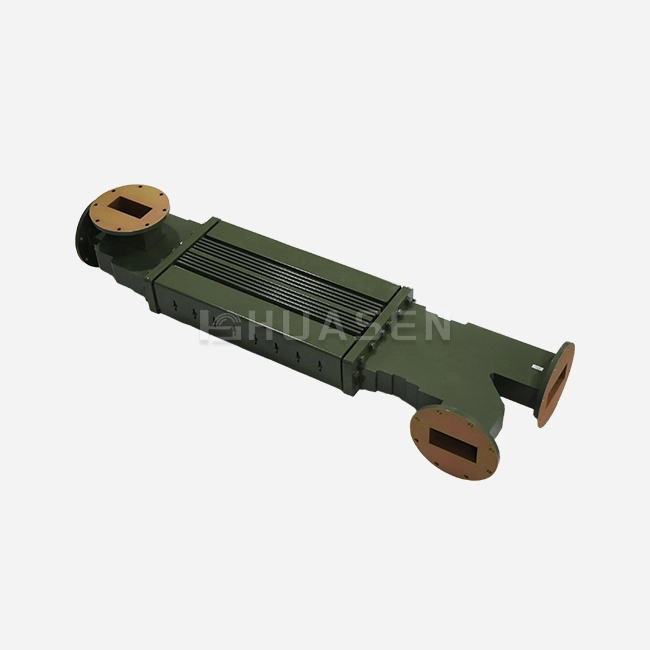
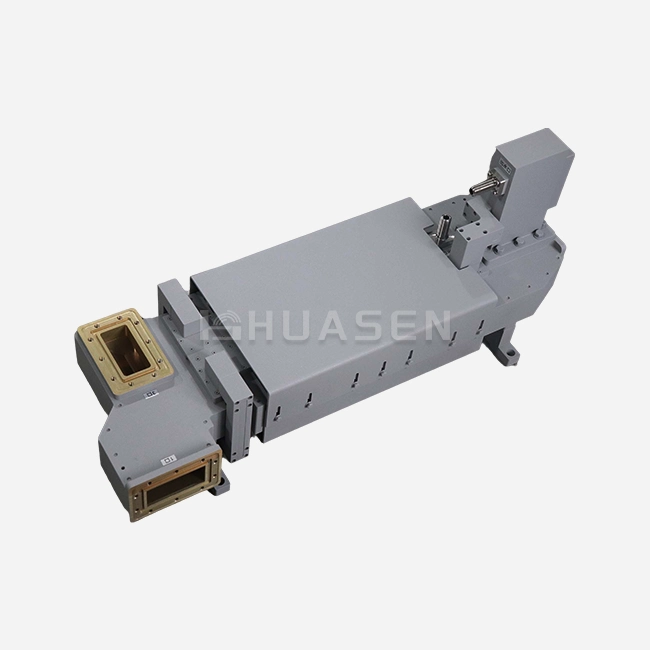
Electromagnetic Compatibility (EMC) testing stands as a non-negotiable requirement across modern electronics manufacturing and telecommunications. Without rigorous EMC validation, devices risk interference, regulatory rejection, standard gain horn antenna, and catastrophic system failures. At the heart of precise EMC measurement lies the standard gain horn antenna—a metrologically sound reference tool that delivers predictable, repeatable performance. This precision-engineered pyramidal aperture antenna functions as the "gold standard" for calibrating test chambers, verifying field strength, and ensuring compliance with international standards like FCC, CISPR, and MIL-STD-461. Its stable gain characteristics, narrow beamwidth, and theoretical calculability make it indispensable for labs seeking measurement traceability and regulatory confidence.
Understanding the Basics of Standard Gain Horn Antennas
The structure of these reference antennas comes from basic ideas in electromagnetics. A precision horn works within a particular waveguide band, like X-band (8–12 GHz) or K-band (18–27 GHz), where gain is directly related to physical measurements according to aperture theory. This is different from broadband devices that are meant for general surveillance.
How Gain Calculation Works
The formula for gain is G = (4πA)/λ², where A is the effective aperture and λ is the working wavelength. It shows how aperture area and wavelength are related. Because of this mathematical predictability, engineers can set known reference levels without just using observational measurements. This cuts down on error chains in the calibration process.
Beamwidth and Directivity Characteristics
If you change the frequency and opening size, the half-power beamwidth (HPBW) can be anywhere from 10° to 30°. This focused radiation pattern accurately focuses energy, which lets accurate field strength generation happen in immunity tests and reduces reflections in echo chambers. The antenna's actual size and directionality are directly related, which makes it easy to guess how well it will cover a test zone.
Comparison with Alternative Antenna Types
Double-ridged horns have a wider frequency range, but they have more gain waves and less stable VSWR. Log-periodic antennas cover a wide frequency range, but they are less directional, and their phase centers are hard to predict. The standard gain horn antenna gives up bandwidth for unmatched accuracy, which is a trade-off that EMC labs are happy to make when accuracy in measurements is more important than ease of use.
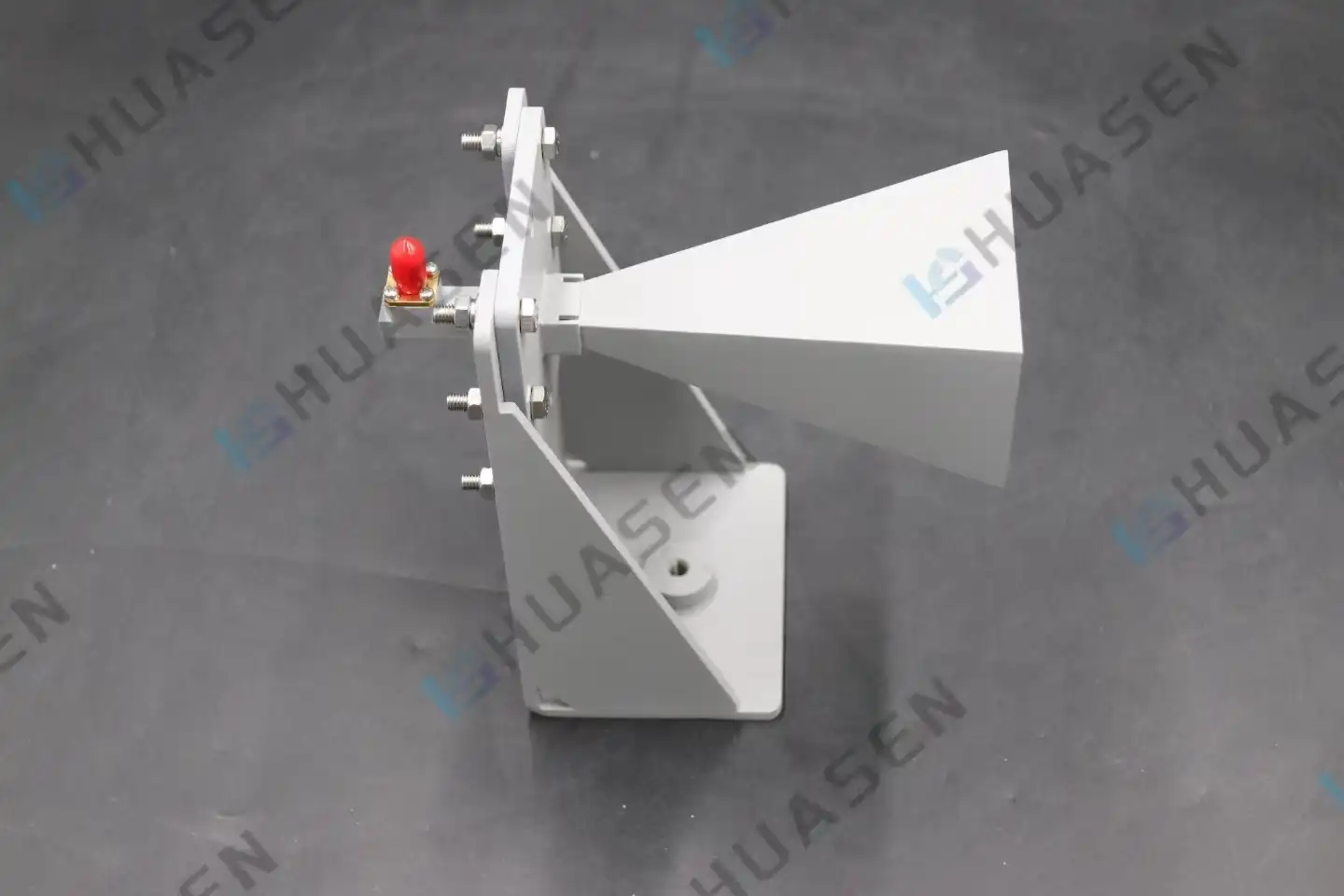
Why Standard Gain Horn Antennas Are Critical in EMC Testing
"Standard gain" refers to more than just formal specs. In an EMC facility, it's the first step toward a pledge to efficiency that can be tracked and checked. All other measurements are built on top of this.
Precision and Repeatability in Measurements
Because they are made of strong metal, reference horns keep their gain stable within ±0.5 dB across their entire working band, even after years of use. When replacement method calibrations are done, this uniformity is very important because the reference antenna sets the standard against which the devices under test (DUT) are compared. Changes in temperature and humidity, standard gain horn antenna,as well as normal treatment, don't affect efficiency much.
The Concept of "Standard Gain" Explained
Standard gain horn antennas, unlike antennas with nominal gain specs, give determined gain values that are backed up by National Measurement Institute-traceable dimensional limits. This traceability chain is important for getting ISO/IEC 17025 certification because it lets test labs show regulatory inspectors and customers that their measurements are accurate. The gain data usually comes with uncertainty budgets that list the causes of the gain.
Meeting Regulatory Compliance Requirements
According to IEC 61000-4-3, immunity testing needs field strengths of up to 200 V/m. To figure out the correct transmitting power, you need to know exactly how much antenna gain you are using. In the same way, CISPR guidelines for testing radiated emissions need readings that are corrected for gain to find the comparable isotropic radiated power (EIRP). Without a reliable reference, labs risk failing audits and having to go through expensive revalidation rounds.
Advantages Over Pyramidal and Log-Periodic Alternatives
In EMC uses, horn antennas are often compared to pyramidal antennas and log-periodic antennas. In important places, reference horns stand out in these ways:
Pyramidal horns that don't have gain standardization can't be used as main sources because they can't be traced back to their original sources. Log-periodic antennas work well from 200 MHz to 2 GHz, but their gain changes by about 3 dB, and at band ends, they don't always keep the same polarization. When reference horns work in separate waveguide bands, they keep the polarization clarity above 30 dB and keep the front-to-back ratios above 25 dB. This stability in performance directly leads to lower measurement uncertainty, which is often the decision factor in contract test labs where accreditation margins are tight. Reference horns can handle kilowatt-level CW power and peak pulse power topping 5 kW because they don't have any internal matching networks or ferrite components. This is necessary for military immunity tests. Because they can handle so much power and have almost no passive intermodulation (PIM) distortion, they can't be replaced in high-field testing situations where other antennas would overload or send out unwanted signals.
Selecting the Right Standard Gain Horn Antenna for Your EMC Needs
When procurement teams look for reference antennas, they have to make a lot of technical choices. They have to balance performance needs with price limits and operational processes.
Frequency Range and Waveguide Band Selection
For most business uses, EMC testing goes from DC to 40 GHz. For defense and military, it goes up to millimeter-wave frequencies. A single reference horn, like the WR-90 for 8.2-12.4 GHz, can usually handle a frequency range of 2:1. For full compliance testing, labs need a lot of horns that cover the L-band to the Ka-band range. This means that inventory needs to be carefully planned to avoid covering holes.
Gain Accuracy and Calibration Certificates
Reliable makers give calibration data at a number of different frequency points within the working band, usually between 10 and 20 separate frequencies. Standard standards for gain accuracy of ±0.4 dB are the best available, but ±0.7 dB is still fine for many business uses. Calibration certificates should include measurement error costs that are in line with ISO/IEC 17025 and show that the calibration can be traced back to NIST, NPL, or a similar national standards body.
Mechanical Specifications and Interface Compatibility
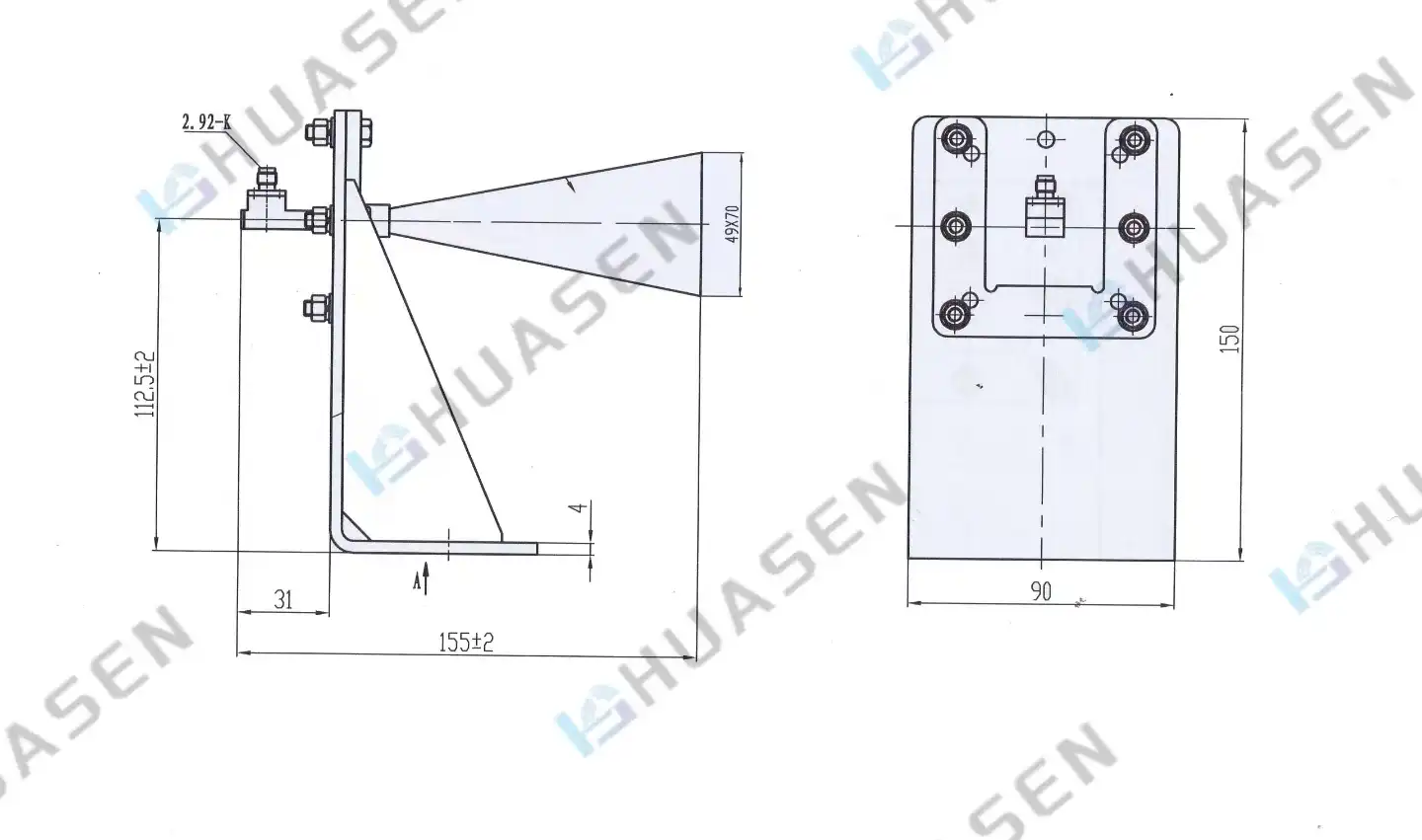
Because of the limited installation room in small anechoic chambers or compact antenna test ranges (CATR), it is important to pay attention to the measurements. The length of the horn can be anywhere from 15 cm for Ku-band models to over 60 cm for L-band models. Waveguide flange types, like UG-series or IEC standard flanges, need to work with test equipment that is already in use. Azimuth and elevation positioning tools should be able to be mounted with little shadow influence.
Customization Options for Specialized Testing
For some uses, non-standard combinations are needed. Dual-polarized standard gain horn antennareference horns are more complicated and expensive, but they allow testing of both horizontal and vertical polarization at the same time, which cuts test time in half in EMC facilities for cars. For far-field readings in rooms with limited space, extended aperture horns offer higher gain and narrower beamwidth. Versions that can handle pressure are used in altitude simulation rooms for aircraft qualification testing. When buying in bulk for businesses with multiple sites, there are extra things to think about. When you equip multiple labs with the same radio sets, you can get big savings on the prices. This makes sure that measurements are the same across all of your facilities. Manufacturers that offer calibration pooling services, in which antennas go through recalibration rounds without interrupting test plans, offer practical benefits that are worth the extra cost.
Practical Applications and Case Studies of Standard Gain Horn Antennas in EMC Testing
Real-life examples of application show how reference horns solve specific technology problems in a wide range of fields.
Antenna Range Calibration Using the Gain Transfer Method
A large aerospace company that ran a 10-meter semi-anechoic chamber had to check the quiet zone of its chamber before putting satellite transmission devices through their paces. Engineers used a standardized reference horn as the broadcast antenna and took readings of the received power at several locations in the test area. By comparing the expected and observed path loss, we found areas with high reflectivity that need more absorber treatment. The known gain of the horn took away the uncertainty in the transmission output power, which focused on problems with chamber performance.
5G Base Station Front-End Module Testing
With 5G huge MIMO arrays working at 28 GHz and 39 GHz, it's harder than ever for makers to make active antenna systems that work well. A company that makes communications equipment puts in reference horns in its CATR plant to check the accuracy of beam steering and make sure it meets EIRP standards. Even though the antenna being tested was electrically very big, exact pattern measurements were possible thanks to the horn's stable phase center position, which is important for changing from near-field to far-field. Repeatability of measurements within 0.3 dB gave trust in the test results for production.
Military Equipment Immunity Verification
To make sure their equipment met the RS103 standard for MIL-STD-461G (radiated susceptibility, 2 GHz to 40 GHz), defense companies used high-power reference horns to create field strengths of up to 200 V/m. The horns' ability to handle power and consistent pattern made it possible to precisely light up the test equipment without field probes getting in the way of the measurement. Documentation of horn gain tracking met government audit standards and kept the program from being held up.
Calibration Procedures and Best Practices
We suggest that calibrations be done every 24 months in production test environments and every 36 months in research labs that use controlled handling methods. Every three months, stable RF sources are used for verification checks to make sure that performance is stable between official recalibrations. Surface rust on waveguide walls or flange damage that could hurt VSWR performance should be found by a physical check. Proper storage in climate-controlled areas, preventing moisture from getting in, and changing the dielectric properties of mounting hardware. When moving reference horns from one facility to another, protection bags with impact-dampening foam keep them from getting mechanical shocks that could change the size of the aperture. Keeping track of the past handling helps find the root cause if standard gain horn antennacalibration data shows an unexpected shift.
Future Trends and Innovations in Standard Gain Horn Antenna Technology for EMC
New technologies and changes in the law are constantly changing the standards for reference antennas, which is good for early users.
Advanced Materials for Extended Frequency Coverage
Manufacturers now use electroformed copper and precise CNC cutting to get tighter specs on dimensions. This makes it possible to use frequency ranges that are outside the usual waveguide band limits. Ceramic-loaded openings in small designs cut down on size by 30% while keeping electrical performance, which is useful for field-deployed portable EMC test systems.
Integration with Automated Test Systems
More and more, software-defined test tools use antenna factor data directly in measurement processes, fixing gain and impedance mismatches automatically. Reference horns that have RFID chips or digital calibration certificates built in can automatically check the identification of an antenna and its calibration state. This cuts down on mistakes made by operators in test settings with a lot of data. This combination makes following the ISO 17025 quality system easier.
Relevance to 6G Research and mmWave Applications
As studies into 6G move into sub-terahertz bands (100–300 GHz), new reference antenna designs are being made to deal with problems that come up when making antennas on a wavelength scale. Quasi-optical horn shapes and photonic integration techniques could help with tuning in frequency ranges where waveguide methods aren't useful. Labs that invest in these technologies early on will be ready for the needs of next-generation wireless tests.
Evolving EMC Regulatory Frameworks
The EU Radio Equipment Directive and the FCC's current spectrum management projects keep lowering the amount of radiation that can be released and increasing the frequencies that must be covered. As rules change, reference antennas that meet new standards will not become obsolete. This is especially true for antennas that reject signals outside of their intended frequency range and cancel out harmonics. Keeping an eye on working groups in the industry, like CISPR and IEC TC77, helps you figure out when specifications will change.
Conclusion
This standard gain horn antenna is more than just an inactive RF part; it is the metrology base on which accurate EMC testing is based. Because its gain can be predicted theoretically, it is very stable, and its calibration can be tracked; there is no measurement error that could hurt product quality or compliance with regulations. These reference tools help engineers make accurate data that can stand up to technical and audit review. They can be used for everything from validating 5G infrastructure to qualifying defense systems. As wireless technologies get better at using higher bands and tighter emission limits, it is not only smart to buy precision reference antennas, it is necessary. When companies put measurement tracking first, they gain a competitive edge through faster certification cycles, fewer compliance fails, and more trust from customers in test results.
FAQ
1. How Do I Select the Appropriate Reference Horn for My Application?
Match the antenna's frequency range to the needs of your test, making sure there is enough overlap at the edges of the bands, where gain accuracy usually goes down. Check that the specs for gain include uncertainty limits and that the tracking of the calibration meets the needs of your accreditation body. Think about physical limitations, such as mounting options and waveguide flange compatibility with test equipment that is already in place.
2. What Are Recommended Calibration Intervals?
Best practices for ISO/IEC 17025 say that testing should be done every 24 to 36 months, based on how often it is used and how it is handled. High-volume production test labs may need to check more often, but study labs that handle things carefully can usually go up to three years between checks. Always recalibrate after fixes, physical damage, or anything else that could change the security of the dimensions.
3. Can Reference Horns Integrate with Automated EMC Systems?
These days, test tools can read antenna factor data files and fix values for gain and impedance instantly. Some makers offer digital certificates of calibration in XML or a similar file that can be read by automatic test software. This combination cuts down on operator error and speeds up test output, which is especially helpful in testing for cars and consumer goods, where throughput is what makes the business money.
Partner with a Trusted Standard Gain Horn Antenna Manufacturer
Huasen Microwave Technology can help you with your EMC testing needs because they have been doing precise RF engineering for more than 30 years. Our selection of standard gain horn antennas covers the L-band to the Ka-band range. Each one is individually measured and comes with NIST-traceable paperwork and an uncertainty analysis. We know that procurement managers need more than just specs. You need quick technical help, the ability to make changes to fit specific testing situations, astandard gain horn antenna,and reliable delivery schedules that keep your labs running. Our engineering team can help you with design, sample review, and volume price for multi-site deployments, whether you're setting up a new anechoic chamber or updating old test equipment to meet changing 5G standards. Email our solutions team at sales@huasenmicrowave.com to talk about your particular needs. We make reference antennas with great care so that measurement error can be turned into a competitive edge.
References
1. Institute of Electrical and Electronics Engineers (2021). IEEE Standard for Calibration of Electromagnetic Field Sensors and Probes, Excluding Antennas, from 9 kHz to 40 GHz. IEEE Std 1309-2021.
2. Hemming, L. H. (2017). Electromagnetic Anechoic Chambers: A Fundamental Design and Specification Guide. Wiley-IEEE Press.
3. Balanis, C. A. (2016). Antenna Theory: Analysis and Design, Fourth Edition. John Wiley & Sons, New Jersey.
4. International Electrotechnical Commission (2019). Electromagnetic Compatibility (EMC) – Part 4-3: Testing and Measurement Techniques – Radiated, Radio-Frequency, Electromagnetic Field Immunity Test. IEC 61000-4-3:2020.
5. Williams, D. F., & Dienstfrey, A. (2018). Rectangular-Waveguide Standard Gain Horns. National Institute of Standards and Technology Technical Note 1947.
6. European Telecommunications Standards Institute (2020). Electromagnetic Compatibility and Radio Spectrum Matters (ERM); Radiated Measurements Using Site Reference Method. ETSI TR 100 028-2 V1.5.1.
Send Inquiry