Why Businesses Choose Omnidirectional Antenna Solutions?






2026-07-22 17:04:16
Businesses choose Omnidirectional Antenna solutions because these devices deliver uniform 360-degree signal coverage, eliminating coverage gaps that plague directional systems. Unlike sector or panel antennas that require precise aiming, omnidirectional designs simplify deployment while maintaining consistent performance across industrial facilities, outdoor installations, and mobile platforms. Modern ultra-wideband variants support multiple frequency bands simultaneously, reducing component counts and streamlining system architecture. When procurement teams evaluate RF infrastructure for 5G base stations, maritime communications, or industrial IoT networks, omnidirectional antennas address critical pain points: wide bandwidth coverage, environmental robustness, and installation flexibility that directly impact total cost of ownership and network reliability.
Introduction
There is more and more pressure on wireless communication infrastructure to handle a wide range of protocols, such as 5G NR, Wi-Fi 6E, and satellite telemetry, in settings that are getting more complicated. This piece is a valuable resource for procurement managers, network engineers, and system integrators who need to choose antenna options that meet both academic and practical requirements for deployment. We look at how omnidirectional antenna radiation patterns help with connection problems that happen in mobile messaging, radar systems, and RF tests. When decision-makers look at bandwidth needs, mechanical specs, and the vendor environment, they will learn how to buy antennas that meet strict approval standards and delivery deadlines while also helping the organization reach its infrastructure goals.
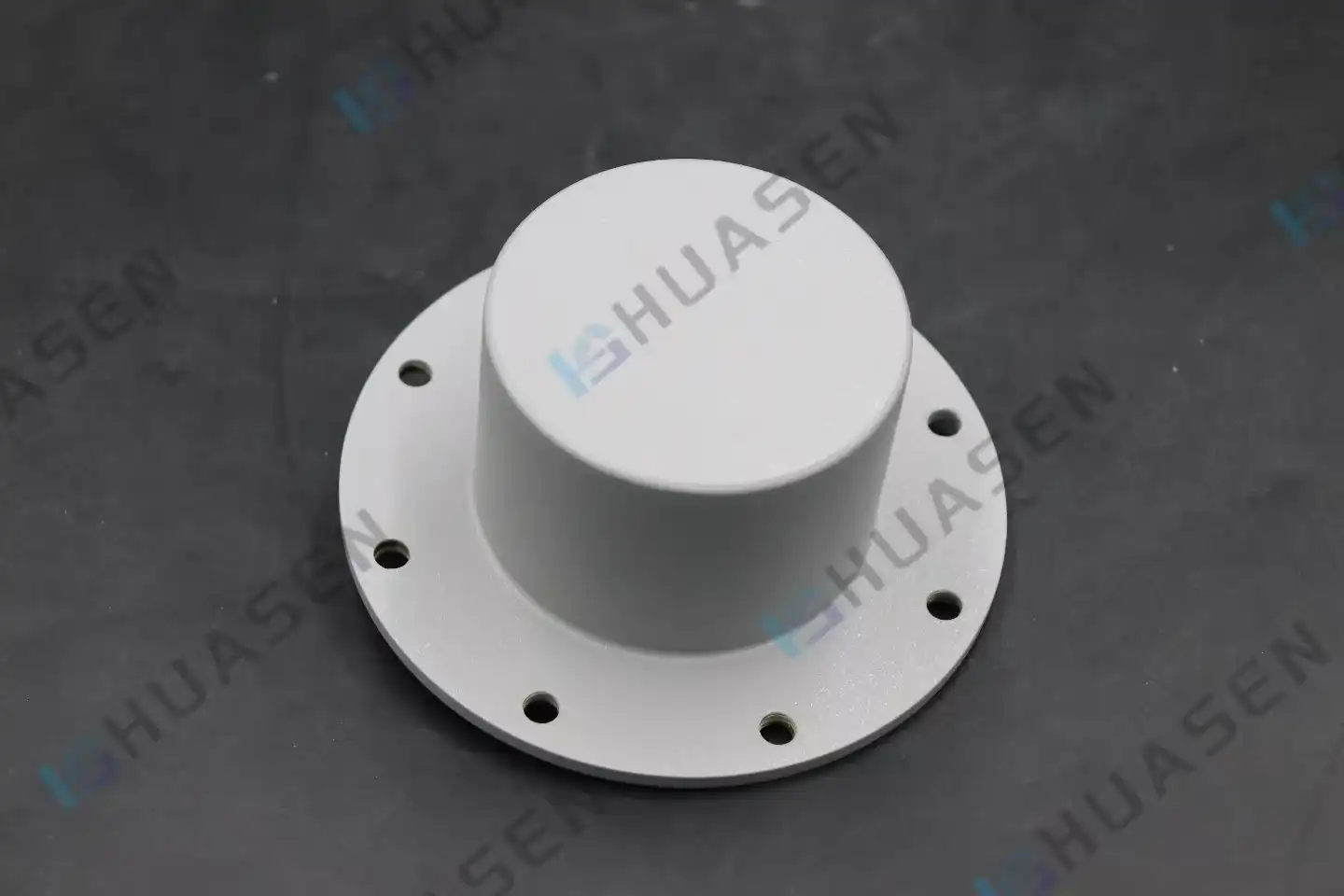
Understanding Omnidirectional Antennas and Their Business Value
The Fundamentals of 360-Degree Coverage
Omnidirectional antennas spread RF energy evenly across the horizontal plane, making a doughnut-shaped coverage pattern that works well in places where signal sources or receiving devices are constantly moving. This feature is very helpful for warehouse automation systems that need to keep track of hundreds of mobile robots, marine installations that serve ships as they come in or out of harbor, or base station deployments that cover urban routes. Instead of focusing energy into narrow beams like directional antennas do, omnidirectional antenna designs keep the signal strength the same no matter which way the device is facing. This cuts down on handoff failures and dead zones that can stop mission-critical communications.
Multi-Band Operation and System Simplification
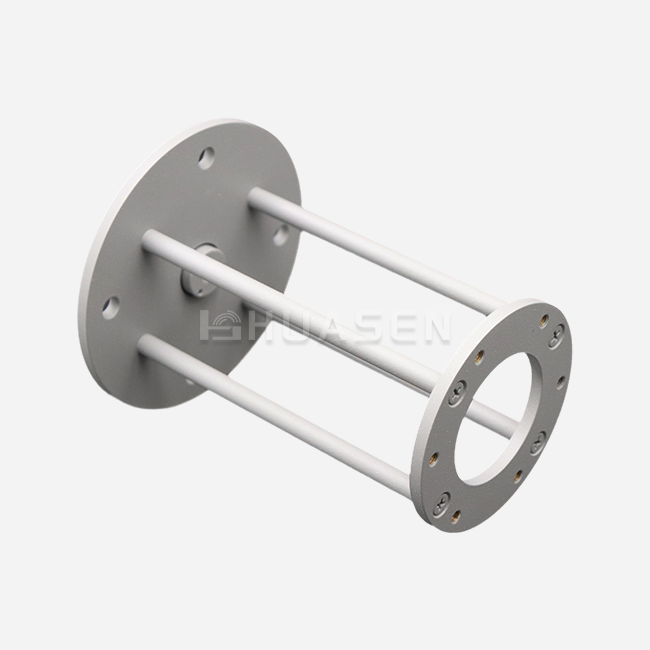
Support for fragmented frequency allocations is needed for modern wireless networks. For example, LTE Band 71 at 600 MHz, 5G n78 at 3.5 GHz, and C-band satellite downlinks at 4 GHz may all be used at the same time in the same rollout. By combining frequency ranges spanning eight octaves into a single physical element, ultra-wideband omnidirectional antennas address this fragmentation. The CVOA line from Huasen Microwave is an example of this method. It uses special cone and cage designs that keep their omnidirectional antenna properties from sub-GHz bands to millimeter-wave frequencies. This gets rid of complicated splitter networks, lowers the load on towers, and lowers the cost of stocking up—in most cellular backup situations, a single CVOA unit can replace three narrowband antennas.
Quantifiable Performance Metrics
The technical details have a direct effect on the business results. If the VSWR is less than 2.0:1, 89% of the power sent will hit the antenna instead of being reflected back and hurting the amps. Gain flatness within ±2 dB across operational bands stops coverage holes that change with frequency and need expensive gap-fillers. Huasen's Omnidirectional Antenna designs come standard with vertical polarization, which works with both mobile device antennas and vehicle-mounted systems to make the most of the link budget and the need for polarization diversity receivers. When base station builders compare these factors to different deployment scenarios, they find that omnidirectional antennas consistently provide better total cost per square kilometer of reliable coverage than multi-antenna directional arrays.
Comparing Omnidirectional Antenna Solutions: Making the Right Choice
Topology Trade-Offs Across Application Domains
When choosing an antenna, it's important to know how the installation limitations affect the radiation pattern, gain, and physical form factor. Here is a list of important things to compare:
| Antenna Type | Typical Gain | Azimuth Beamwidth | Primary Use Case | Installation Complexity |
|---|---|---|---|---|
| Omnidirectional (Biconical) | -6 to -2 dBi | 360° | Mobile platforms and base station coverage | Low (only one fixing point) |
| Dipole Array | 2 to 5 dBi | 360° | Test rooms and indoor DAS | Medium (needs balun) |
| Sector Antenna | 14 to 18 dBi | 60-120° | Linking points to multiple points | High (needs precise placement) |
| Panel Antenna | 8 to 23 dBi | 30-90° | Building-to-building links | High (analysis of structure stress) |
| Yagi Antenna | 10 to 17 dBi | 30-60° | Point-to-point over a long distance | Very High (weather, wind load) |
The table shows why Omnidirectional Antenna methods are best when coverage needs to be broad and traffic directionality isn't known ahead of time. The procurement teams that support drone command links or shipboard VSAT systems choose omnidirectional antenna designs because they are easier to install and work well regardless of orientation. They are willing to give up some gain in exchange for operational flexibility.
Frequency Band Considerations
For WiFi 6E to work at 6 GHz, antennas must keep their patterns stable as bands get shorter, to 5 cm. Cheaper omnidirectional antennas break up into various lobes and nulls at higher frequencies, resulting in uncertain coverage. High-end models, like Huasen's CVOA series, use special cone shapes that keep the circular azimuth patterns even at 3:1 frequency ratios. The test results show that the circularity deviation is less than 1.5 dB from 2 to 6 GHz. This is very important for interference-sensitive uses like spectrum tracking or electronic warfare systems that can't have blind spots because they make the task less effective.
Environmental Durability Requirements
Outdoor phone lines have to deal with temperature changes of -40°C in the Arctic to +85°C in the desert. They also have to deal with salt spray on the coast and vibrations on car mounts. The choice of materials is what separates solid options from ones that break down too soon. Huasen's Omnidirectional Antennas use UV-stabilized radomes on top of corrosion-resistant hardware to achieve IP67 protection against water and dust without affecting performance. Lab-based rapid life testing according to MIL-STD-810 confirms that connector seals and internal solder joints can last for 20 years, which lowers lifetime costs by extending the time between replacements. Environmental stress screening documentation should be required in the procurement specifications, especially for installations that can't be reached without expensively mobilizing tower crews or ships.
Procurement Considerations for Businesses Buying Omnidirectional Antennas
Technical Specification Deep Dive
In addition to the big-picture requirements, procurement workers need to look at factors that affect how well the system works together. A return loss of less than 14 dB across operating bands means that the impedances are matched, which keeps the waveforms from distorting in UWB location and pulsed radar systems. Group delay changes of less than 2 nanoseconds per 500 MHz keep timing accurate, which is needed for RTLS tracking to be accurate to the centimeter level in automated warehouses. Specifications for connectors are important. For example, SMA interfaces are good for testing on a bench, N-type connectors can handle 200W of continuous power for base station transmitters, and K-type connectors keep working well in millimeter-wave bands. These standard interfaces are available across all of Huasen Microwave's product lines. This makes it easier to connect to current RF chain components made by major equipment makers.
Huasen Microwave CVOA Series Technical Specifications
| Parameter | Specification | Significance |
|---|---|---|
| Frequency Range | 0.4 to 18 GHz (model dependent) | Covers cellular, WiFi, satellite, radar bands in single unit |
| VSWR | 2.0:1 typical | Guarantees power transfer rate of >89% |
| Gain Range | -20 to +6 dBi | Trade-off between tunable range and directivity |
| Polarization | Vertical | Aligns the antennas of mobile devices and vehicles |
| Dimensions | 23 mm x 399 mm (small version) | Fits aeroplane and UAV setups with limited space |
| Connectors | N-type, SMA, K-type | Standard RF test and support gear can use it. |
| Operating Temperature | -40°C to +85°C | Stands up to harsh environmental conditions |
| Ingress Protection | IP67 | Keeps dust and wetness out of outdoor installations |
This table of specifications shows how Huasen's engineering solves problems with procurement: the sub-2.0 VSWR lowers the stress and heat dissipation needs of the amplifier, and the small size makes it possible to install them on drones and small naval ships, where every gram counts when it comes to flight time or fuel consumption.
Vendor Ecosystem and Supply Chain Stability
Large-scale deployments need to know that parts will be available for a long time and that expert help will be quick to respond. Since 1993, Huasen Microwave has been in business for 30 years, which shows that they are consistent in their manufacturing and have gained a lot of experience making high-frequency components. Vertical integration in the company protects production from interruptions caused by subcontractors, from RF simulation to precise machining to environmental testing. Contracts for buying things should check that the vendor can do things like quality management according to ISO 9001, compliance with RoHS for international markets, and documented calibration traceability to national standards bodies. Interface compatibility problems go away when system integrators order Huasen Omnidirectional Antennas along with waveguide components and coaxial assemblies from the same manufacturer. This speeds up the deployment schedules.
Cost Structure and Volume Negotiations
Unit price is only one part of the total cost of acquisition. When doing a procurement study, you need to think about engineering help during the finalization of specifications, sample validation programs, and production wait times. The applications engineering team at Huasen helps with simulating omnidirectional antenna patterns in installation environments that are unique to each customer. They also help find mounting spots where structural reflections won't hurt coverage. Within two weeks, prototypes are sent out so that they can be tested for integration. Production numbers can grow to thousands of units per month, and prices are locked in through framework deals. When buyers combine their needs for multiple projects, they can get bulk discounts. For example, getting 500 antennas for a national base station upgrade can save 18–22% on the cost compared to buying them one at a time, which directly improves the project ROI estimates that are given to capital allocation committees.
Conclusion
From straightforward whip antennas to complicated ultra-wideband designs, omnidirectional antenna solutions have advanced to handle the complexity of modern communication. We looked at how 360-degree radiation patterns can help with deployment problems in mobile networks, maritime systems, and industrial automation. We also looked at factors that affect procurement, such as technical requirements and vendor stability. The CVOA series from Huasen Microwave has the performance features that system designers need for mission-critical uses, such as a wide frequency range, resistance to environmental damage, and low VSWR. As wireless infrastructure moves toward 5G, the Internet of Things (IoT), and spectrum-sharing models, omnidirectional antennas are becoming important parts of reliable, cost-effective network designs because they are easy to set up and can handle future-proof bandwidth.
FAQ
1. How do I determine the appropriate gain level for my coverage needs?
The coverage area and signal power are balanced by the gain option. For multi-story buildings or aeroplanes interacting with ground stations at different altitudes, lower-gain Omnidirectional Antennas (0–3 dBi) offer wider vertical beamwidths. Higher-gain models (4-6 dBi) focus energy horizontally, which increases range on flat surfaces like airport runways or harbors but leaves gaps in coverage directly above and below the antenna. Figure out the link budget by taking into account the transmitter's power, the cable's losses, the receiver's sensitivity, and the required fade margin. Next, choose the lowest gain that meets the range requirements to get the best vertical coverage.
2. Are omnidirectional antennas suitable for outdoor enterprise WiFi deployments?
Yes, as long as the environmental conditions match the exposure conditions. Omnidirectional coverage gets rid of dead spots as users move around on outdoor WiFi networks that cover campus quads, manufacturing yards, or resort properties. Choose antennas with an IP67 rating, such as Huasen's CVOA line, which has UV-resistant radomes and sealed connections. The height at which you mount something is important. Putting antennas 6 to 10 meters high clears out sight obstacles and keeps the vertical beam coverage good. You might want to look into models that work on both 2.4 GHz and 5 GHz so that you can use legacy devices and high-throughput applications at the same time without having to set up two separate antenna systems.
3. What practical distinctions exist between omnidirectional and directional antennas?
Omnidirectional antennas work well in situations where a lot of data needs to be sent from all directions, such as with mobile users, moving radar platforms, or IoT networks with many devices. When talking to fixed places like building-to-building lines, satellite ground stations, or point-to-point backhaul, directional antennas work best. Different types of installations are very different in how hard they are to do. Omnidirectional installations only need to be aligned vertically, while directional installations need exact adjustments to the azimuth and elevation, as well as regular upkeep to fix misalignment caused by wind. For system integrators, Omnidirectional Antenna designs make site surveys easier and commissioning time shorter. They also lower the cost of deployment, even though they may need extra units to match the range of directional antennas.
Partner with a Trusted Omnidirectional Antenna Manufacturer
Choosing the right antenna provider affects not only the performance of the parts but also the timeline of the whole project and how well it will work in the long run. Huasen Microwave brings 30 years of RF engineering experience to every Omnidirectional Antenna solution, from helping with the initial specifications to helping with optimization after the solution has been deployed. Our CVOA ultra-wideband line has the multi-octave bandwidth, environmental resistance, and mechanical accuracy that tough uses need. It comes with a lot of test data and MIL-STD validation to back it up. Our applications team is ready to take your coverage needs and turn them into the best hardware specs, whether you need 50 antennas for a regional network upgrade or custom versions for unique flight platforms. Send an email to sales@huasenmicrowave.com to talk about the details of your project, get detailed datasheets with measurements of the radiation pattern, and get a quote that takes into account volume discounts for serious buyers.
References
1. Balanis, Constantine A. Antenna Theory: Analysis and Design, 4th Edition. Wiley, 2016.
2. Volakis, John L. Antenna Engineering Handbook, 5th Edition. McGraw-Hill Education, 2019.
3. Rappaport, Theodore S. Wireless Communications: Principles and Practice, 2nd Edition. Prentice Hall, 2002.
4. Milligan, Thomas A. Modern Antenna Design, 2nd Edition. Wiley-IEEE Press, 2005.
5. Stutzman, Warren L., and Gary A. Thiele. Antenna Theory and Design, 3rd Edition. Wiley, 2012.
6. IEEE Standard for Definitions of Terms for Antennas. IEEE Std 145-2013. Institute of Electrical and Electronics Engineers, 2014.
Send Inquiry