When to Use a Directional Coupler Instead of a Power Splitter?






2026-04-05 22:16:29
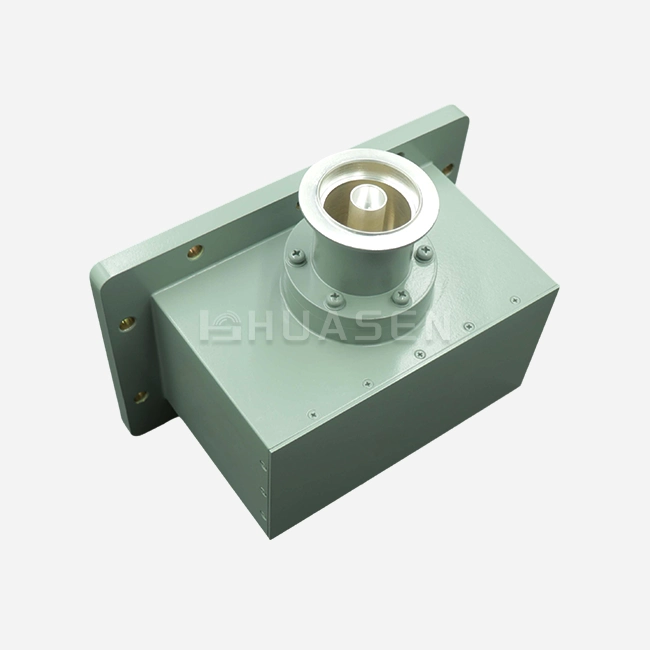
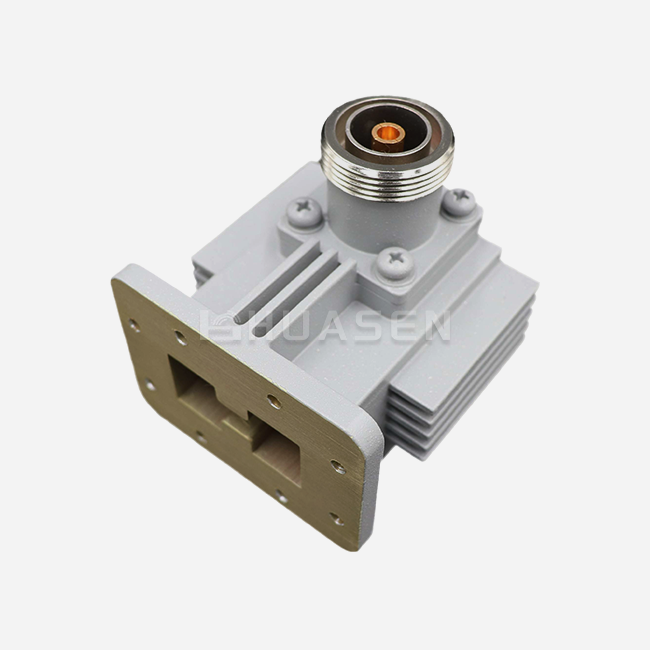
When your RF system needs to sample signals without blocking the main transmission line, you must choose a directional coupler over a power splitter. A power splitter splits signals evenly, but a directional coupler lets engineers precisely watch signals through electromagnetic coupling. This is possible by sampling forward power while keeping reflected signals very far away. Because of this, directional couplers are needed for real-time signal tracking, measuring VSWR, and feedback control loops where the integrity of the signal and accuracy of the measurements are very important.
Understanding Directional Couplers and Power Splitters
RF systems depend on a number of passive parts to handle the signal spread well. When engineers know the main differences between directional couplers and power splitters, they can make better choices for their specific needs.
Operating Principles of Directional Couplers
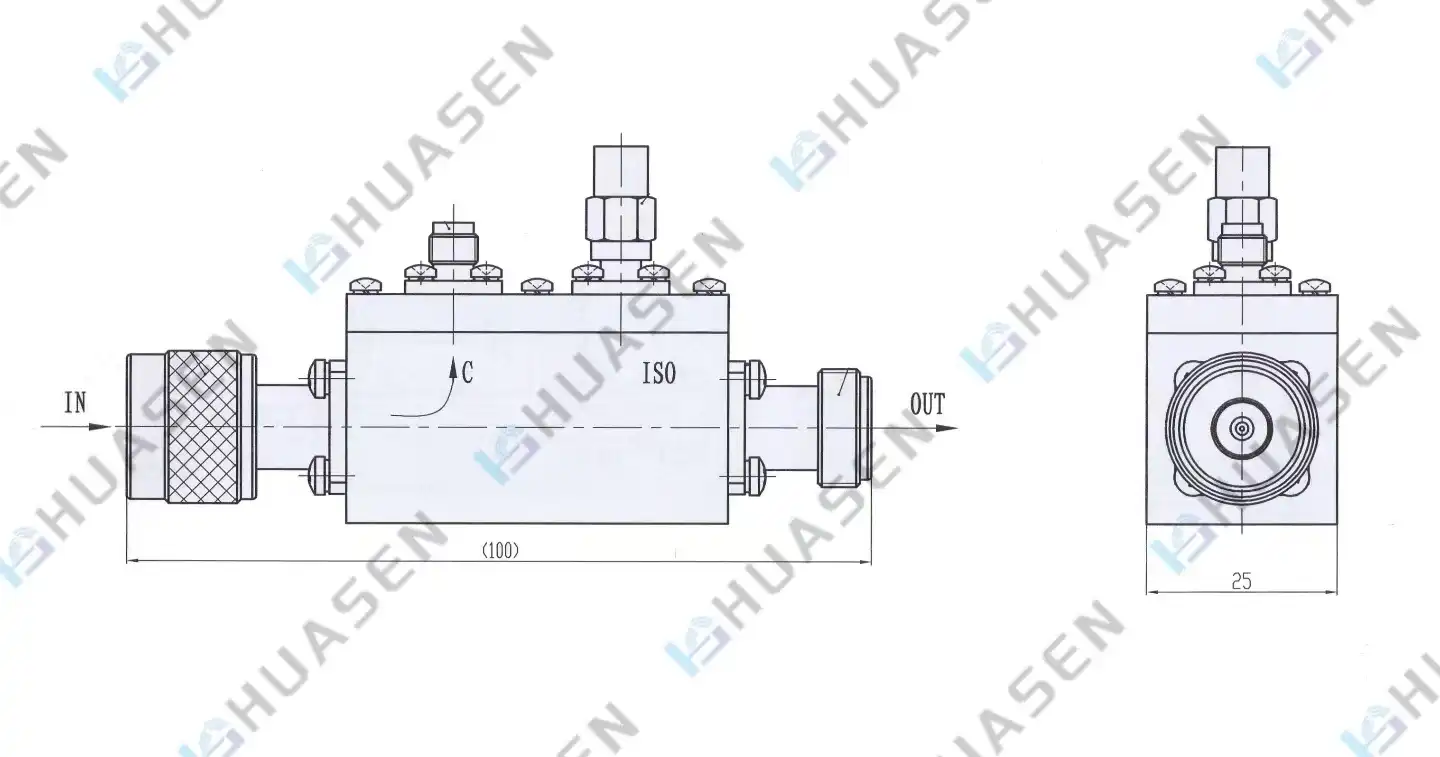
Directional couplers work by coupling electromagnetic waves between transmission lines that are housed in a shielded coaxial frame. These devices only take a very small part of the signal travelling forward, and they do a great job of blocking out signals travelling backward. Parallel coupled lines are used for the coupling process. These lines take power proportional to the main signal without having a big effect on the main transmission path. Key performance factors show how well directional couplers work. The amount of information sampled is set by the coupling factor, which is usually between 6dB and 40dB. Directivity measures how well the device can tell the difference between forward and reflected waves. Values above 20dB are ideal for measurement uses. When coupling loss is taken into account, insertion loss stays low, generally below 0.5dB. This keeps the main signal strong.
Power Splitter Fundamentals
In RF systems, power splitters do something different by spreading input data evenly across several output ports. These devices work great in situations where power needs to be distributed evenly without regard to signal direction. Power splitters, on the other hand, give you equal outputs with the same impedance across all ports . Power splitters can be useful in some situations because they are easy to build. Compared to directional couplers with similar specs, they usually have lower prices, wider bandwidths, and the ability to handle more power. Power splitters, on the other hand, can't sense directionality like couplers can, which is why couplers are better for measuring and tracking.

Core Considerations When Choosing Between a Directional Coupler and a Power Splitter
Selecting the appropriate RF component requires careful evaluation of system requirements and performance objectives. Several critical factors influence this decision-making process.
Application Requirements Analysis
The intended use case significantly impacts component selection. Signal monitoring applications benefit from directional couplers due to their ability to sample signals non-intrusively. These devices enable continuous power monitoring in base station amplifiers, allowing operators to implement automatic level control and hybrid coupler protection circuits. Power division applications often favor power splitters when equal signal distribution takes priority over directional sensing. Antenna feed networks commonly employ power splitters to distribute signals across multiple radiating elements while maintaining phase and amplitude balance.
Frequency and Bandwidth Considerations
Modern communication systems demand components capable of handling wide frequency ranges. 5G networks operate across multiple bands from sub-6 GHz to millimeter-wave frequencies, requiring components with exceptional bandwidth performance. Directional couplers designed for these applications must maintain consistent coupling and directivity across the entire operating range. Environmental constraints also influence component selection. Outdoor installations require ruggedized components capable of withstanding temperature extremes, moisture, and mechanical stress. Both directional couplers and power splitters are available in weatherproof configurations, but specific design requirements may favor one technology over another.
Performance Metrics Evaluation
Critical performance specifications guide the selection process between directional couplers and power splitters. Return loss characteristics affect system efficiency and signal quality. Low VSWR values, typically below 1.25:1, ensure minimal reflection at component interfaces. Isolation performance becomes crucial in applications where signal leakage between ports could cause interference. Directional couplers typically provide superior isolation compared to power splitters, making them preferable for sensitive measurement applications where cross-talk must be minimized.
Practical Use Cases Where Directional Couplers Are the Preferred Choice
Specific applications clearly demonstrate the advantages of directional couplers over alternative solutions. Understanding these scenarios helps engineers identify optimal component choices.
RF Measurement and Testing Applications
Laboratory environments rely heavily on directional couplers for accurate signal analysis. Vector network analyzers incorporate high-precision couplers to separate incident and reflected waves during impedance measurements. This capability enables engineers to characterize device performance with exceptional accuracy. Calibration procedures in test equipment benefit from the directional properties of couplers. Reference measurements require stable, hybrid coupler repeatable coupling factors across the specified frequency range. High-quality couplers provide coupling flatness within ±0.5dB, ensuring measurement consistency across broadband applications.
Communication System Monitoring
Modern base station architectures incorporate directional couplers for continuous performance monitoring. These devices enable real-time power measurement without interrupting service, allowing operators to detect amplifier degradation or antenna system faults immediately. Distributed antenna systems (DAS) utilize directional couplers extensively for signal monitoring and control. The ability to sample forward and reflected power separately enables sophisticated monitoring algorithms that optimize system performance while preventing equipment damage from high VSWR conditions.
Signal Injection and Isolation Tasks
Electronic warfare and radar systems require precise signal injection capabilities for testing and calibration purposes. Directional couplers enable engineers to introduce test signals while monitoring system response without affecting normal operation. The high isolation characteristics of quality directional couplers prevent unintended signal paths that could compromise system security or performance. Military applications particularly value this isolation capability for maintaining signal integrity in complex RF environments.
When Power Splitters Are More Suitable Than Directional Couplers
Even though directed couplers have some benefits, power splitters are still the best choice in some situations where their features better meet the needs of the system.
Antenna Distribution Networks
Power splitters are often used forantenna feed networks in broadcasting and cellular systems. In these situations, even power distribution is more important than directional sense, so hybrid couplers are a better value than directional couplers. Because power splitters are balanced, the phase balance across all output ports is already there. This trait is useful in phased array antennas, where keeping the exact phase relationships between elements affects how well the beam steers and how the radiation pattern is controlled.
High-Power Applications
Power splitters are often better for high-power gearbox systems because they can handle more power. Power splitters can handle more continuous and peak power levels than similar directional couplers because their internal structure is simpler. High-power splitters are built to last, which is good for setups of broadcast transmitters. Power splitters are a cheaper option for jobs that only need to divide power because they don't need to be able to sense direction, as couplers do.
Cost-Sensitive Implementations
In commercial uses, budget constraints often affect the choice of components. Power splitters usually have lower unit costs than directional couplers that have the same power and frequency requirements. This cost advantage becomes important in large-scale applications where the ability to sense direction is not needed. The simpler designs of power splitters also mean shorter delivery times and a wider range of options from more than one provider. When directional coupling features don't help the system work better, these factors help keep the total cost of the system cheaper.
Comparative Analysis of Market Solutions and Procurement Guidance
To find your way around the RF component market, you need to know what options are out there and what suppliers can do. With this information, procurement choices can be made that balance needs for performance, cost, and delivery.
Leading Manufacturer Offerings
You can choose from a wide range of directional couplers and power splitters made by well-known companies. Each supplier has their own skills when it comes to frequency coverage, power handling, and being able to make changes. Mini-Circuits has a huge selection of products from DC to 65 GHz, and they come in a lot of different packages, such as surface-mount and connectorized forms. Their directional couplers have tight coupling tolerances and great directivity specs that make them useful for measuring. Anritsu makes high-precision test equipment parts with directional couplers that are made for very precise uses. Their goods usually have better directivity and coupling flatness, which makes them the best choice for reference and calibration standards.
Customization and Special Requirements
For many uses, parts need adirectional coupler meet special requirements that aren't covered by standard catalogue items. Custom frequency directional couplers meet particular band needs while still working at their best in narrow frequency ranges. Often, the need for customisation is driven by environmental factors. Parts used in aerospace and defence may need to meet MIL-STD requirements for temperature, pressure, and altitude. These higher standards usually mean higher prices, but they make sure that the equipment works reliably in harsh conditions.
Procurement Planning Considerations
Lead times are very different for regular and custom parts. Items in stock from major sellers usually ship within days, but custom designs could take weeks or months to get to you. Project delays can be avoided by planning procurement plans around these dates. When choosing suppliers, quality assurance methods become very important. Manufacturers with a good reputation give full test results that include S-parameter measurements, power handling proof, and environmental stress screening results. This paperwork makes sure that the parts meet certain performance standards.
Conclusion
In the end, the choice between directed couplers and power splitters comes down to the needs and goals of the application. Directional couplers are great for applications that need to monitor signals, make accurate measurements, and sense direction. This makes them important for test equipment, base station monitoring, and precise RF needs. In situations where directional qualities don't help with operation, power splitters are a cost-effective way to divide power. By knowing these basic differences, engineers and procurement professionals can choose the best parts that meet the strict technical requirements of current RF systems while also meeting performance, cost, and reliability needs.
FAQ
1. What are the main differences between directional couplers and power splitters?
Directional couplers sample signals flowing in a specific direction through electromagnetic coupling, providing excellent isolation between forward and reverse signals. Power splitters evenly divide input power across multiple outputs without directional sensitivity. Couplers excel in measurement and monitoring applications, while splitters work better for pure power distribution tasks.
2. How does directivity affect measurement accuracy in RF systems?
Directivity measures a coupler's ability to distinguish between forward and reflected signals. Poor directivity allows reflected signals to contaminate measurements, causing significant errors in VSWR and power measurements. High directivity values above 30dB ensure accurate measurements by effectively isolating forward signals from unwanted reflections.
3. Can power splitters replace directional couplers in monitoring applications?
Power splitters cannot effectively replace directional couplers in monitoring applications because they lack directional sensitivity. Using splitters for monitoring results in a power loss equal to the splitting ratio and provides no information about signal direction. Directional couplers sample signals with minimal main-line loss while maintaining directional information essential for monitoring applications.
4. What factors determine power handling capability in RF components?
Power handling depends on conductor size, dielectric materials, thermal dissipation, and mechanical construction. Continuous wave power limits differ from peak power specifications, with peak power typically much higher. High-power applications require careful attention to connector ratings and thermal management to prevent component failure.
5. How do environmental conditions affect component selection?
Harsh environments require components with enhanced protection against temperature extremes, moisture, vibration, and corrosion. Outdoor installations often specify IP65 or higher ingress protection ratings. Aerospace applications may require MIL-STD compliance for altitude, shock, and electromagnetic compatibility. These requirements typically increase component costs but ensure reliable operation under demanding conditions.
Partner with Huasen Microwave for Superior RF Solutions
Huasen Microwave Technology stands as your trusted directional coupler manufacturer with over three decades of expertise in high-frequency component design and manufacturing. Our comprehensive product portfolio includes precision directional couplers engineered to meet the demanding requirements of 5G networks, aerospace systems, and critical RF applications. When you need reliable components with exceptional directivity, minimal insertion loss, and proven performance under harsh environmental conditions, our engineering team delivers customized solutions tailored to your specific requirements. Contact our technical specialists at sales@huasenmicrowave.com to discuss your project needs and discover how our advanced manufacturing capabilities can enhance your system performance.
References
1. Pozar, David M. "Microwave Engineering, Fourth Edition." John Wiley & Sons, 2012. Chapter 7: Power Dividers and Directional Couplers.
2. Ludwig, Reinhold, and Gene Bogdanov. "RF Circuit Design: Theory & Applications, Second Edition." Pearson Education, 2009. Section 8.3: Directional Couplers and Power Splitters.
3. IEEE Standard 287-2007. "IEEE Standard for Precision Coaxial Connectors (DC to 110 GHz)." Institute of Electrical and Electronics Engineers, 2007.
4. Vendelin, George D., Anthony M. Pavio, and Ulrich L. Rohde. "Microwave Circuit Design Using Linear and Nonlinear Techniques, Second Edition." John Wiley & Sons, 2005.
5. Collin, Robert E. "Foundations for Microwave Engineering, Second Edition." IEEE Press, 2001. Chapter 6: Passive Microwave Devices.
6. Rhea, Randall W. "HF Filter Design and Computer Simulation." Noble Publishing Corporation, 1994. Chapter 12: Directional Couplers in Filter Applications.
Send Inquiry